Home Blog Page 1893

Johnston Fernando granted bail. No foreign travels!

0

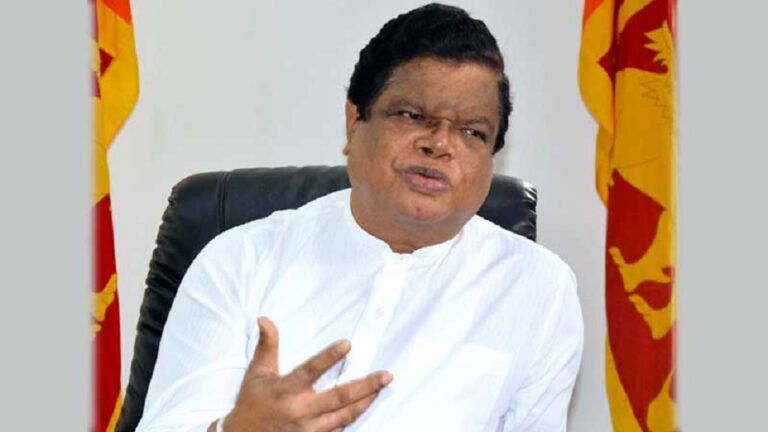
The Colombo High Court today (30) ordered three persons including Ruling Party MP Johnston Fernando be granted bail in connection with the case filed against them on the allegation of incurring a loss of over Rs. 1.1 million to the government by dismissing a group of employees of SATHOSA from their duties and deploying them for political affairs in 2013.

Accordingly, the three were released on a cash bail of Rs. 50,000 each and two sureties of Rs. 1 million each. The Court also banned their overseas travels until the end of the trial.

Along with MP Fernando are former Chairman of SATHOSA Eraj Fernando and its former Director Mohammed Zakir as defendants to the case.

MIAP

IT industry urges the government to lift the ban on IT devices

0

Sri Lanka’s Information Technology service sector, one of the leading US dollar earners of the country, is set to crash as a result of the decision of the Finance Ministry on the recommendation of the Central Bank headed by Governor Nandalal Weerasinghe to ban the importation of IT devices and peripherals.

This will badly affect working from home, total shutdown of many critical operations, huge cyber security threats to businesses and loss of its valuable data, asides the present exodus of skilled employees migrating an even larger amount likely to consider it, and the loss of employability to many.

The All Ceylon Communication Owners’ Association (ACCOA) said that the prices of mobile phones and accessories would go up again as per the prices announced by the major importers.

ACCOA Chairman Indrajith Perera noted that the prices of the existing mobile phones and accessories would go up to higher prices, which they could not determine.

Mobile phones have since become very essential and vital devices and the most common accessories such as chargers, back covers, displays, cables, screen protection shields and other electronic parts are also considered extremely vital to maintain the devices.

Federation of Information Technology Industry Sri Lanka (FITIS) cautioned that there is a serious danger of technological platforms in the country breaking down due to this decision to save dollars at present.

It also pointed out that imports of computers and allied peripherals and devices are already at a minimum level due to the shortage of US dollars in the country for the past few months.

“The proper maintenance of technological platforms has become challenging as a result of this.

Specially computer hardware items such as servers, networking equipment, notebook, laptop and desktop computers and firewall equipment are essential to carry out connected work of any type.

Issuing a statement, FITIS said that its members expect to meet President Ranil Wickremesinghe and have a discussion with him on relaxing the ban.

FITIS also pointed out that the inclusion of IT devices and peripherals in the list of proscribed articles could have been due to a genuine oversight.

FITIS noted that hardware, peripherals and devices are essential to maintain the information and communications technology without breaking down.

Keeping connected the peripherals and devices live is essential for updating data systems, maintaining computer and communications networks and renewing licenses,” FITIS said.

The apex IT body in Sri Lanka said the measure of constraining many hardware products banned from being imported whilst leaving many local entities crashing can further mean the exit of many multinationals. Many software development firms accounting for export revenue are foreseen to be reduced due to equipment shortages.

FITIS Chairman Dr. Prasad Samarasinghe said that the move can seen as reducing pressure on forex reserves with the dollar crisis, in reality, the damage may be more severe with this action.

TIS Hardware Chapter President Gnanam Sellathurrai stressed that “now with the ban specifically equipment’s such as servers, network appliances, notebooks and desktops, and firewalls are the key platforms that maintain all kinds of activity online.

It can be any software which runs on the hardware unit, but the hardware is the main unit that necessitates for any of the programs to be set on any digital activity”.

Adding to the burden when replacements are needed, Sellathurrai expressed displeasure asserting that: “When devices are to be serviced, replaced, or be renewed with the relevant licenses, the choice of postponement is not the solution.

If delayed, the entire country’s technological platform may crash part by part.
“Examples would be instances where the connectivity is lost between the head office’s central infrastructure and the branch when the interconnecting device breaks off, he said.

Therefore, it is essential that an understanding regarding the intensiveness of the problem is supposed; as already due to the forex shortage, where the country has been short supplied for the past three quarters, he added.

Prices of eggs surge by Rs. 05

0

The maximum retail price of an egg has been increased by Rs. 05. Accordingly, the price of eggs will surge up to Rs. 50.

The egg producers in Sri Lanka raised their objections to the recently issued gazette by the Trade Minister declaring the prices of eggs, saying that they could not sell eggs at those prices. According to the gazette, the maximum price of a white egg was Rs. 43 and a red or brown egg, Rs. 45.

The egg producers pointed out that the amount was not enough to cover the cost of production of an egg, demanding that the price of eggs be raised to at least Rs. 50. The egg producers also suspended the release of eggs to the wholesale market in objection to the gazette.

Given consideration to the producers’ continuous demand, the Trade Ministry has decided to increase the price of eggs up to Rs. 50. Ministry officials added that they will soon declare a fixed price for eggs.

Prior to the gazette declaration, eggs were sold for around Rs. 60 – 70 in the local market.

MIAP

SJB wins Marapana Cooperative Society overthrowing a 23 year-old rule!

0

The Samagi Jana Balawegaya (SJB) has won the division election of Pelmadulla, Bambarabotuwa, Marapana Various Services Cooperative Society in a historic move overthrowing a 23 year-old rule loyal to the political stream representing the Sri Lanka Podujana Peramuna (SLPP).

Accordingly, 65 SJB representatives have been elected and only 54 SLPP members managed to secure seats.

MIAP

Person killed by gunfire in Mattakkuliya!

0

A young person who was injured in a shooting in Aliwatta, Mattakkuliya Police division last night (29) has died.

The deceased is a 26 year-old resident in Mattakkuliya.

The victim was shot by two unknown people came on a motorcycle using a pistol, according to Police.

The Mattakkuliya Police are conducting further investigations.

MIAP

President’s interim budget speech in Parliament today

0

The second reading of the 2022 budget amendment bill is set to take place in Parliament today (30).

Accordingly, President Ranil Wickremesinghe in his capacity as the Finance Minister will deliver the budget speech in Parliament.

The 2022 budget is set for revision in this manner given the unique circumstances that have arisen amidst the economic crisis.

Attention is also believed to be paid to the tax revisions related to providing necessary relief to the people as well as to increase the state revenue.

MIAP

Govt. to enhance local dairy production to overcome shortages

0

The Government has taken prompt action to boost locally produced dairy products, to prevent any shortages in the market following the ban on the importation of several diary products .

Sri Lanka’s Department of Agriculture is still to take any step towards the development of dairy sector although it has signed a memorandum of understanding in June to implement a US$27 million project.

It is aimed to double the milk production of Sri Lankan dairy farmers under the U.S. Department of Agriculture’s “Food for Progress” initiative.

Top officials of the Agriculture Ministry should redouble their efforts to make this initiative a reality otherwise the country will lose much needed dolar assistance as an unutilised grant.

The Agriculture Ministry said attention has been drawn to producing dairy products such as butter, cheese, milk powder, and yoghurt, following the temporary ban imposed by the Government on the import of 300 products.

The move comes following an industry review meeting chaired by Agriculture Minister Mahinda Amaraweera with officials of the National Livestock Development Board (NLDB) and the MILCO Ltd.

Noting the shortage of animal feed in the country, the production of liquid milk has dropped by about 34%, and the liquid milk quantities received by the two companies have also reduced considerably.

Taking the facts into consideration, the Agriculture Minister has directed officials to prioritise the production of the most demanded and essential products such as milk powder.

He has also advised officials to promote liquid milk consumption among the public, as it was more nutritious and economical for the consumers and industries.It was pointed out that producing a kilo of milk powder, requires over four litres of liquid milk.

“US aided Food for Progress” project began in late 2017 and has already benefited 25,000 Sri Lankan dairy farmers, increasing their milk production by an average of 68 percent to date.

An estimated 80,000 Sri Lankans will ultimately receive assistance from this program, as part of the United States’ continued efforts to support food security and economic growth in Sri Lanka.

After unforeseen delays including the COVID pandemic, the U.S. Embassy and the Sri Lankan Department of Agriculture renewed this partnership agreement two months ago.

Food for Progress’ Market-Oriented Dairy Project partners with a U.S. non-profit organization called the International Executive Service Corps to help Sri Lankan farmers increase dairy production by providing them with the skills they need to improve farm operations and management.

It will also provide better access to financing, so farmers can expand their businesses and reach new markets.

Dhammika Perera ready to accept a ministry related to economic development

0

Sri Lanka Podujana Peramuna (SLPP) National List MP Dhammika Perera speaking to a political programme aired on TV Derana said he will be ready to accept a ministerial post that involves responsibilities related to economic development of the country.

“I previously held a ministerial position only for 16 days. Out of them, there were only 10 days to work. During those 10 days I served a work of two months, as I mentioned earlier. I am usually not the type of person who replaces even a clerk, am I? That being said, if we are leaders, we do not need to change people as such. We have to give people a vision that this is how it works. We cannot look for good people in the society, we have to know how to collect work from the existing people,” Perera said.

The ex Business giant went on: “I even told this President, that I am ready to accept a ministry of this government again, if it involves the management of this economic crisis. Otherwise there is no point of receiving a ministry without work. Even that could be a ten days’ work. But it needs the part ‘economic development.’ I have already informed them in writing.”

MIAP

Japan extends first tranche of US$ 1.5 aid to tackle SL’s food insecurity

0

Sri Lanka’s current food insecurity is to be handled with the financial assistance of US $1.5 million (Rs600 million) pledged by Japan in May this year by providing food for children and families in need of support.

The first tranche of Japan’s food assistance pledged has been provided through the United Nations World Food Programme (WFP) to Sri Lanka, where more than 6 million people – nearly 30 percent of the population, are facing a worsening food crisis

This first tranche forms part of the donation consisting of rice, lentils, and oil, and valued at US$1.5 million, which will be distributed by WFP to approximately 15,000 people in both urban and rural areas and 380,000 schoolchildren

Ambassador of Japan to Sri Lanka Mizukoshi Hideaki handed over the donation to Minister of Trade, Commerce and Food Security Nalin Fernando in the presence of WFP Representative and Country Director Abdur Rahim Siddiqui, during a ceremony held at the Ministry of Trade, Commerce and Food Security on Monday.

Ambassador of Japan to Sri Lanka, Mizukoshi Hideaki said, “Japan has been able to handover the first tranche of essential food supplies with the rapid procurement of WFP, which will be delivered to vulnerable families and children across the island who are facing extreme hardship, amidst prevailing food shortages and soaring food prices during this unprecedented economic crisis.

He expressed the hope that this humanitarian assistance will provide relief to all the people in need and help them meet their daily nutritional requirement.”

The Japanese Government was one of the first to pledge support to WFP’s appeal. The donation will go a long way in addressing Sri Lanka’s growing food insecurity while shortages of food and other essentials and skyrocketing prices continue to impact millions of people’s ability to maintain an adequate and nutritious diet,” said WFP’s Siddiqui.

A recent survey by WFP and FAO indicates that many of the households – over 60 percent – are resorting to coping mechanisms, such as reducing portion sizes and eating less nutritious food, which could aggravate the already-high malnutrition rates among women and children.

In response, WFP is mobilizing funds and support to provide emergency assistance to 3.4 million people, including 1.4 million people who are in dire need of emergency food assistance, through food, cash or voucher assistance as well one million schoolchildren and one million pregnant and breastfeeding women by supporting the existing national social safety net programmes

Growing concerns on temporary suspension of imported raw materials to manufacture hygienic soft tissue paper products

0

The hygiene soft tissue paper industry is a well-established industry in Sri Lanka since 1982, with over 40 years of manufacturing essential hygienic soft tissue products such as toilet rolls, paper serviettes, hand paper napkins, facial tissues, paper hand towels, industrial towels and rolls and various other related products.
While the hygienic soft tissue manufacturing industry is relatively small compared to other major industries, its products contribute significantly to the country’s overall personal hygiene and hospitality standards. Their “import substitution” production units, based in several parts of the country, and competing with global brands, saves considerably in foreign exchange. Some of the local manufacturers also export these products to many neighboring countries such as to the Maldives.
All tissue products are locally produced, by generating employment and income to well over 700 people and their families, directly and indirectly benefitting more than 5,000 families including all island distributors, their employees and families.

While it’s understandable to a certain extent, the possible reasons behind the recent temporary suspension on imports of nearly 305 non- essential finished products as per Gazette 2294/30 dated 23/8, there is no valid reason to suspend the imports of crucial essential raw materials for manufacturing into finished products at the factories in Sri Lanka, with a value addition process.
The recent restriction is a major setback to the current factory owners and their employees, and has caused a ripple effect, shocking many households that use such essential and hygiene soft tissue products for their everyday use. There is also a similar view among businesses in the hospitality and tourism, apparel and food industries, including hospitals and medical centers.
The Gazette indicates the restriction of the only two HS codes in the Sri Lanka Customs Tariff that relate to hygienic soft tissue papers; raw material tissue paper reels and finished product under subheadings of the main HS code 4803.00 (no subheadings) and 48.18.00 with subheadings.
The first HS code number 4803.00 is a main Heading, strictly for the raw materials of large jumbo reels of tissue which is over 36 cm in reel width, used for the process of manufacture. These reels are not finished products, and finish products cannot be imported under this main heading. Thus, all imports under this main heading are a raw material used for the manufacture of finished products.

The second HS code 4818.00 has many subheadings, of which, only one subheading, which is 4818.90.20 is related to raw materials of tissue, which are jumbo reels above 15 cm to 36 cm reel width and are heavy reels of raw materials and not finished products. The rest of the sub heading under 4818.00 relate to the import of the finish goods.
These essential tissue products play a silent yet a preventive role to keep away germs, and viruses, especially during the past two years of Covid-19 and has been used effectively and regularly as at today. Health professionals also recommend covering the mouth and nose with a facial tissue paper when coughing or sneezing.

The use of paper towels is encouraged too, for wiping hands after a hand wash using soap and water. The toilet roll is an essential necessity in all public places, such as hospitals, hotels, shopping malls, government and private institutions, banks, and factories.
All local soft tissue manufacturers are concerned that this restriction will soon cause their ongoing factories to shut down, resulting in a complete shortage and non availability of finish products to various institutions such as hotels, restaurants, cafes, hospitals, airlines, food and apparel factories, public institutions, along with the general public and households.
The tourism Industry at large, which is just experiencing a rebound, the private healthcare institutions as well as numerous manufacturers have a mandatory obligation in providing such sanitation standards and procedures to its hundreds and thousands of workers, patients, clients, tourist guests. They will feel the shortage of these hygiene tissue products soon and abruptly.
The current level of raw materials is sufficient to last up to mid September, resulting in a lack of basic sanitary expectations one can find in their own homes, workplaces and public spaces.
This undoubtedly calls for the high-level authorities and important decision makers for a de-list or the reversal on the “TS” as per the stated HS codes, to only resume the import of tissue paper raw materials in jumbo reels, so the local Sri Lankan owned factories can produce these important hygienic and essential tissue products to satisfy the basic hygiene needs of all Sri Lankans and the visiting tourist and guests to the country.

Thanzyl Thajudeen, Founder of Mark and Comm Ltd
Media Release
29th August 2022