
A few showers will occur in Northern, North-Central and Eastern provinces.
Showers or thundershowers will occur at a few places in Sabaragamuwa province and in Galle and Matara districts during the afternoon or night.

A few showers will occur in Northern, North-Central and Eastern provinces.
Showers or thundershowers will occur at a few places in Sabaragamuwa province and in Galle and Matara districts during the afternoon or night.
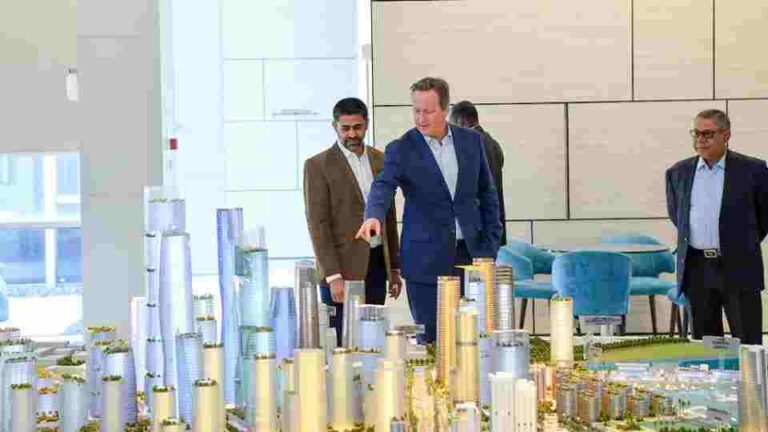
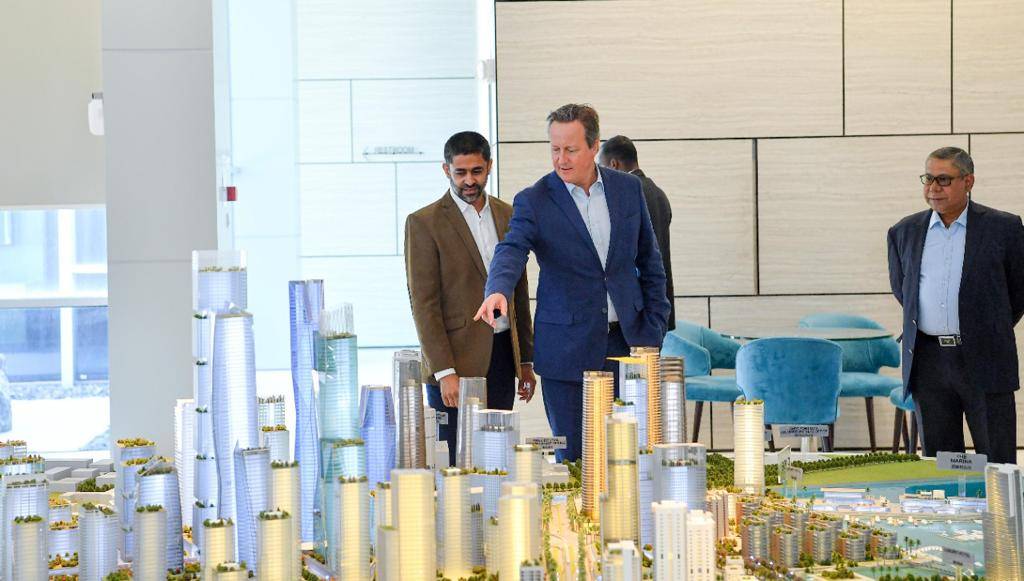
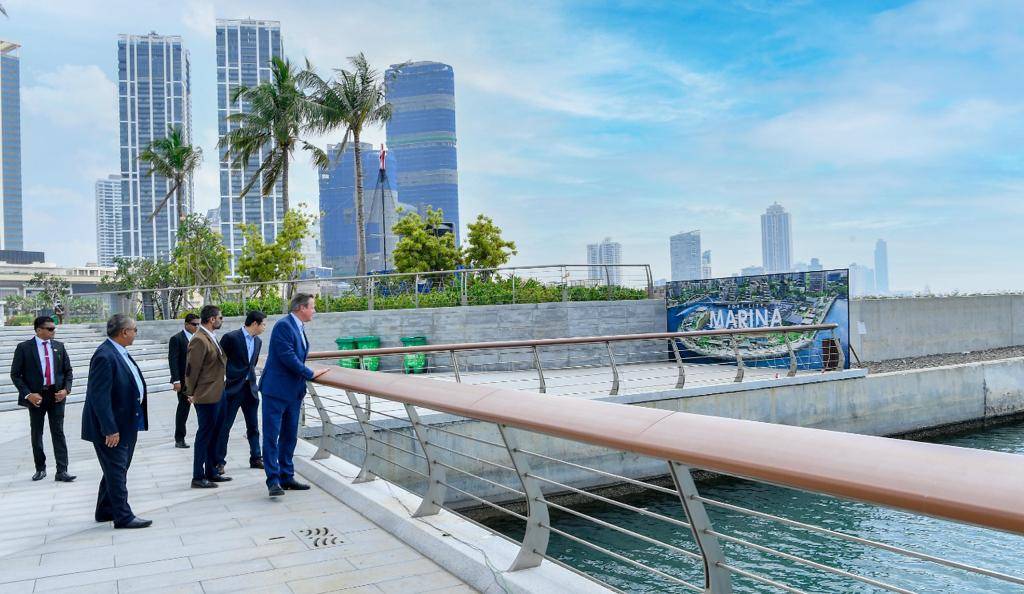
Former British Prime Minister David Cameron who arrived in Sri Lanka two days ago (01) on a goodwill tour has paid an observation tour at the Port City of Colombo today (03).
During his visit, Cameron also met with Sri Lankan President Ranil Wickremesinghe and exchanged views on the friendly ties between the two countries and the future path of Sri Lanka.
MIAP
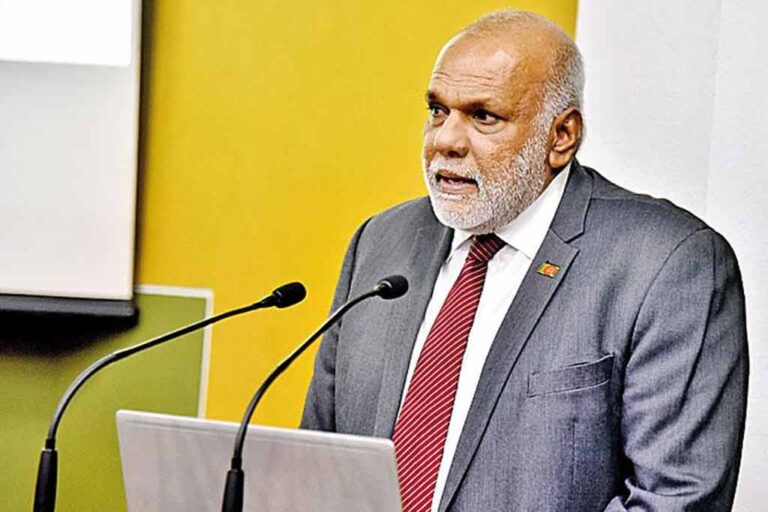
Footage surfaced on Social Media reveals employees of the Export Development Board walk out from a meeting held today (03) as the Board Chairman commences his speech, in what critics described as objection to his alleged failures as the Chair, in the latest event of the growing trend of public rejection towards politically biased government officials.
Suresh De Mel, the Export Development Board Chairman, appears to have been severely embarrassed by the employees’ action.
Earlier yesterday (02) the Chairman of the ‘Maganaguma’ Road Construction Machinery Company was reportedly chased away by the Company workers by throwing piles of milk rice at him.
MIAP
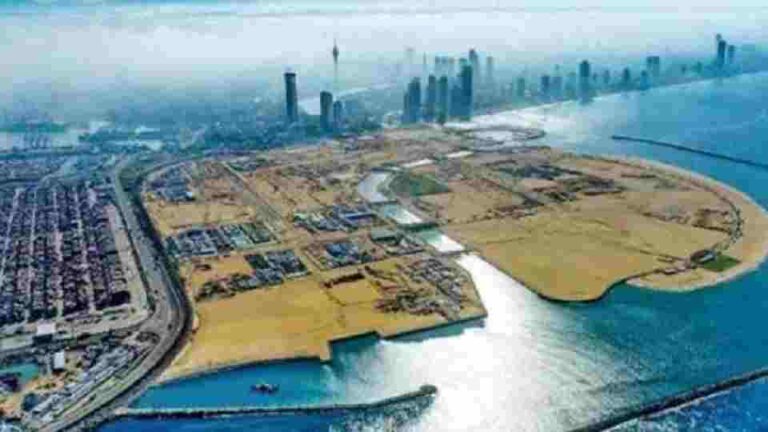
The Colombo Port City is set to attract US$ 1.5. billion of foreign direct investments (FDI) in its initiative of commencing mega projects contributing to development under the Colombo Port City Economic Commission Act, a report by the Finance Ministry revealed.
Accordingly, at least four mega projects with an investment flow of about US$ 953 million are to commence whilst the balance US $ 547 million will be attracted in logistic and infrastructure development activities.
These development initiatives come in with the infrastructure development slated for completion by the third quarter of 2023, and are said to be of potential investments greater than the island nation’s biggest FDI-funded Port City development project commenced earlier, with an amount of US $ 1.4 billion committed by China Harbour Engineering Company (CHEC) Port City Colombo Pvt Ltd, having US$ 1.2 billion already invested.
Company Deputy Managing Director Thulci Aluwihare said they will implement marketing strategies and proceed with other matters of logistics as soon as possible after the enactment of new regulations.
The Colombo Port City is expected to add US $ 13.7 billion per annum to the country’s gross domestic product (GDP) in its full manifestation as an economic hub in Sri Lanka featuring international investment, trade, finance, entertainment, leisure and other services, Aluwihare added.
It was earlier revealed that Ajlan and Brother Holdings, one of the largest business partners in the Middle East, entered into a strategic cooperation agreement with CHEC in Saudi Arabia to jointly develop the Colombo Port City, i.e. the Phase 01 of Port City International Financial Centre (CIFC), Marina Waterfront Commercial and Marina Hotel, Super Luxury Villa and Golf Court.
With the all-new infrastructure development at the Colombo International Financial City Special Economic Zone and the International Financial Centre currently under construction, the island nation is set to be on the ranking lists, and these initiatives may spark the vertical development and business operations within Port City.
President Ranil Wickremesinghe has appointed Ranjith Ariyarathne as the Chief Secretary of the North Western Province, effective from today (03).
According to the President’ Media Division, the appointment of Sri Lanka Administrative Service (Special Grade) Officer Ariyarathne as the Chief Secretary of the North Western Province will come into effect from today.
He previously served as the Post Master General at the Department of Posts.
MIAP

The Ceylon Electricity Board (CEB) Joint Trade Union Alliance has decided to postpone the series of hartal protests scheduled across the country today (03) against the increase in electricity tariffs, Union Convener Ranjan Jayalal said.
The decision comes in following a decision taken by the Cabinet at yesterday’s (02) Cabinet meeting to postpone the move to increase tariffs pending a final decision by a week.
The CEB trade unions were preparing to stage an island wide hartal movement if the Cabinet approved the proposed 65 per cent electricity tariff hike.
Nonetheless, discussions have already commenced to bring all parties together in the protests against any increase in the tariffs, Jayalal added.
MIAP
Sri Lanka’s State owned enterprises (SOES) will be re-structured in multiple ways and work on the sale of Sri Lanka Telecom has started, State Minister of Finance Ranjith Siyambalapitiya announced.
In 2021, a sum of Rs 367 billion s had had been given by the Treasury to maintain the 430 entities and the restructuring process is still not materialized he said adding that it will be a priority this year
The total loss of the key 52 SOEs was Rs. 726.9 billion for the first eight months of 2022 of which 31 SOEs recorded a profit before tax of Rs. 134.9 billion and the balance, 21 SOEs reported a net loss of Rs. 861.7 billion.
Notably, 99 percent of the total loss has been generated by three SOEs namely, CPC, CEB, and Sri Lankan Airlines (SLA) totaling a cumulative loss of Rs. 854.5 billion from these entities.
These three entities have been loss making for years which has resulted from debt overhang warranting cost reflective pricing for CPC and CEB and restructuring of SLA to mitigate large fiscal risks. The levy/ dividend collection dropped to about Rs. 17.8 billion in the first eight months of 2022 due to the contraction of the economy.
The government has already devised seven models for state enterprises that will be re-structured as soon as possible
Among these models are changing the structure into separate entities and managing them,-consolidating enterprises engaged in similar activities, keeping state management but giving operations to the private sector.
The other restructuring models are giving management to private sector and keeping ownership with the state,leasing parts of entity or as a whole,selling down a stake of 49 percent or less and transferring full ownership to another entity on a transparent mechanism
The SOE re-structuring unit had already started work on Sri Lanka Telecom, which was listed in the budget for 2023 for sale, but the model had not been decided, he said.
SLT is a publicly listed company in which the Treasury has a 49.5 percent stake and Global Telecommunications Holdings NV, a part of Malaysia’s Maxis group, has a 44.9 percent stake.The method of sell-down on SLT has not been decided, he said.
The business operations of State-Owned Enterprises (SOEs) have been disrupted during the first eight months of 2022 due to the supply chain disturbances stemming from the difficult economic situation in the country.
The unprecedented pressure exerted by the large rupee depreciation has become one of the contributors to the notable losses of the SOEs. The fiscal risks on the guaranteed debt of SOEs were also notably inclined during the first eight months of 2022.
Two state banks have been highly exposed to the credit risks on SOEs’ borrowings exerting pressure on banking operations. As such, a proactive and well informed balance sheet restructuring strategy for key SOEs needs to be implemented expeditiously to mitigate the fiscal risks to the government finances.
The difficult economic conditions of the country warranted much needed SOE reforms while mitigating the additional burden on the limited fiscal space. As such, energy prices including fuel and electricity have been adjusted to reduce the losses of Ceylon Petroleum Corporation (CPC) and Ceylon Electricity Board (CEB).
Meanwhile, a special unit has been set up to identify the methods for minimizing the financial burden shouldered by the General Treasury while enhancing the performance of SOEs more efficiently and productively.
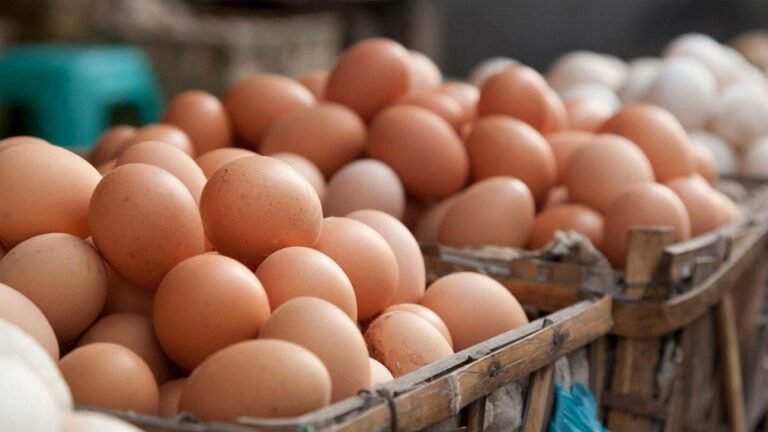
The Sri Lankan Government has decided to import eggs to meet the demand in the market.
The decision was taken during a Cabinet meeting held today.A proposal was put forward to import eggs and the proposal was approved.
Bakery owners had said last week that there was a serious shortage of eggs in the market.
The shortage was as a result of poultry associations refusing to sell eggs at Rs. 55 in the market.An egg was being sold at Rs. 60-70 in some places.
As a result, the Government had decided to import eggs and sell an egg at Rs. 55 or less.
The daily production of eggs had dropped to 3.5 million from eight million, All-Island Poultry Farmers’ Association Chairman, Ajith Gunasekara, said adding that farmers were not starving the market.
“We can only keep an egg for 14 or 15 days. After that they get rotten. The egg production has dropped. It’s impossible to produce eggs at the controlled price,” he said.
Meanwhile, the National Animal Farmers’ Union Convener, Sujeewa Dhammika, said that it was impossible to sell an egg at 55 rupees.
“We don’t want to increase prices. However, the cost of feed has gone through the roof. A lot of farmers have closed shop. They have also sold their chicken for meat. Most people can’t afford to buy parent chickens, so the industry is on the verge of collapse,” he said.
Dhammika alleged that during the Christmas and New Year season, Sri Lankans, on average, consumed about 200 million eggs.
“Some sections want to make the local production collapse and import eggs. Even if they have a two-rupee profit from an egg, they can make 400 million rupees in a few weeks. That’s what’s going on,” he said.
Meanwhile, Minister of Agriculture, Mahinda Amaraweera said that there the poultry industry was on the verge of collapse. The Cabinet would discuss the matter soon and take steps to ensure that the industry would remain afloat, he said.
The All Ceylon Bakery Owners’ Association has called upon President Ranil Wickremesinghe in writing yesterday not to allow the All-island Egg Producers’ Association to sell eggs at exorbitant prices to consumers, said the Bakery Owners’ Association’s Chairman N.K. Jayawardena.
The All Ceylon Bakery Association Members have sought President Wickremesinghe’s intervention to import eggs from India. He added that they called upon the Government to take steps to ensure that the consumers can buy eggs between Rs. 18 to Rs 20.
He said although the Government has said that the price of an egg should be about Rs. 43 for a white egg and Rs. 45 for a brown egg, there was no indication that the egg producers would reduce the prices. The supermarket shelves now have Rs. 70 per-egg cartons, he said.
Egg producers have problems feeding their poultry stocks due to higher animal feed costs. Jayawardena said, “Even with all their problems, they can still sell an egg at Rs 30 (retail) and yet make profits”.
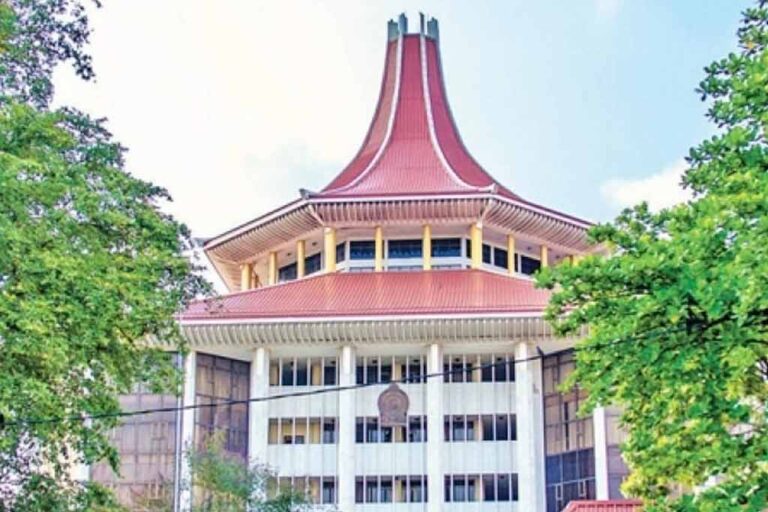
A writ lodged with the Supreme Court yesterday (02) by Retd Col. W.M.R. Wijesundara challenging the proposed holding of the Local Government Election claims that the petitioner was informed by the Election Commission that the holding of such an election can only be funded on the basis of ‘revenue or debt obtainment.’
The petition lodged in compliance with Section 140 of the Constitution of Sri Lanka cites the Chairman and the four Members of the Election Commission, the Prime Minister, the Secretary to the Ministry of Finance, the Cabinet Secretary and the Attorney General as respondents.
The petitioner argues that there is no benefit to the public, nor the country, by the holding of a Local Government Election in these times, adding that he, upon questioning the Commission under the Right-to-Information Act (RTI) two weeks ago whether funds are available to be allocated for the holding of an election, was informed in writing that Rs. 10 billion, in general, will be required to hold one and that the affair would only be possible in any event was it funded on the basis of what he described as ‘revenue generation or debt obtainment’.
Retd. Col. Wijesundara’s argument, which he backs by producing documented evidence to the Supreme Court, comes in amidst many demands by political parties to hold a Local Government Election, whilst media reports go on claiming that the Government of Sri Lanka has no money to hold one, depicting a growing grudge between democracy and economy.
The petitioner elaborates on the current income status of the country, the conditions imposed by the International Monetary Fund (IMF) and the ratings under which Sri Lanka is designated by international credit rating agencies at the moment, and the government’s income and expenditure for the past three years, thereby questioning as to what would be the benefit of calling in an election to the public, or the country, when;
In any event was Sri Lanka compelled to resorting to money-printing amidst the inability to receive debt from both bilateral and multilateral stakeholders, the inflation will once again skyrocket, he goes on, stressing that the occurrence of many crises and social pressure lowering the living standards would be inevitable, was the era of fuel and gas shortages and long-hour power cuts triggered by recession spawned by the aforementioned election costs to return.
The petitioner, therefore, demands that a writ command be issued to the respondents including the Chairman and the four Members of the Election Commission nullifying the organisations advocating for the holding of a Local Government Election, and he also demands that the documents produced before the Court and any other document required for further review be produced and reviewed. The petitioner also demands that a writ command be issued barring further changes in the hearing under time-appropriate interim injunctions until the conclusion of the trial, and barring the impact of the Election Commission’s decision to hold the Local Government Polls.
MIAP
Despite tightening of monetary policy and curtailing money printing, the Central Bank is to raise Rs 98 billion in the New Year through an auction on January 04 2023.
This was a result of the Finance Ministry’s proposal to raise the government borrowing ceiling to over Rs. 4.5 trillion from the present Rs.3.84 trillion.
The Government is now resorting to more short term borrowings by issuing treasury bills at a time where it has to pay loan installment and interest exceeding the income, official sources said.
The interest rate of treasury bills has been increased to over 32 percent at present amidst yields in Sri Lanka Treasury bills were falling in active trade as the market and investors awaited for clarity on the 2023 budget, dealers said
The proposal to Parliament to raise the state credit ceiling by Rs. 663 billion to Rs 4.51 trillion was passed in parliament midst the drop in money printing by 7.8 percent in 2022 compared to 2021 and bills were printed to meet essential recurrent expenditure.
In addition, a proposal was also passed to raise the limit for Treasury Bills from Rs. 4 trillion to Rs. 5 trillion.
The CB has no option other than the raising of reserve money to Rs. 2.4 trillion from the present level of Rs.1.4 trillion, finance ministry sources said.
This will result in massive monetary expansion in 2 -3 years’ time unless corrective measures are taken to raise revenue and increase foreign reserves by implementing economic reforms in accordance with commitments made to the International Monetary fund (IMF).
The Central Bank has to accommodate fiscal deficits by purchasing Treasury bills and bonds and providing temporary advances to the Government.
It will end up as Net Credit to the Government (NCG) on the asset side of the CB’s balance sheet causing a rise in the reserve money exerting pressure on the aggregate money supply and the overall liquidity level of the economy.
The government’s daily revenue is set to increase to Rs.9.5 billion in 2023 from Rs.6.53 billion in 2022 while expenditure is expected to rise to Rs.21.60 billion this year from Rs.17.05 billion lasts year, Finance Ministry estimates showed.
As per the budget 2023 revenue and expenditure estimates volume 01 , the government’s expenditure is estimated at Rs.5.82 trillion but the sum of Rs.3.80 trillion worth of Treasury Bills that should be repaid this year has not been included under the expenditure heading.
Therefore the actual expenditure is expected to be Rs.9.62 trillion. The IMF will deal with this Treasury bill amount when they consider the country’s debt structure this year.
The government is expected to collect Rs 3.42 trillion out of which Rs.915 billion would be from income tax and the balance Rs.2.50 trillion from other taxes. Raising such a massive amount from taxes is unrealistic under the present economic crisis, several economic experts and tax consultants said.