
The United Nations World Food Programme (WFP) is rapidly scaling up its emergency operations in Sri Lanka.
This was disclosed by Dustin Shiau, Senior Regional Program Officer of the U.S. Agency for International Development (USAID)’s Bureau for Humanitarian Assistance (BHA),who was on a visit to Sri Lanka recently.
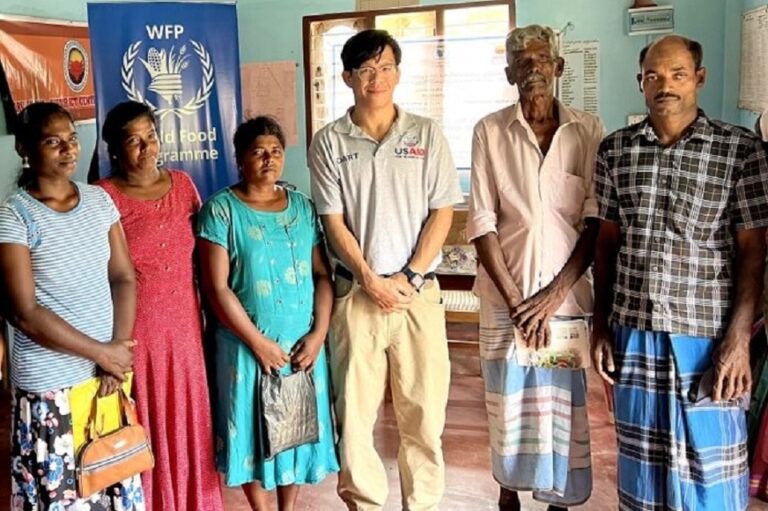
He met with food-insecure communities and heard first-hand accounts of the difficulties they are facing and how USAID and WFP support has helped provide regular meals for their families.
During his visit, Shiau met with communities from Mullaitivu in the North of Sri Lanka, who are among those worst affected by the economic crisis – including pregnant and breastfeeding mothers and people with disabilities – to better understand their nutritional needs.
During his visit, Shiau participated in a live demonstration of a mapping exercise in Moratuwa – an area susceptible to weather-related natural disasters – to understand the process by which authorities use Geographic Information System (GIS) software to identify where the most vulnerable communities may be hardest-hit during an emergency.
This year, the US has provided a record total US$20 million (approximately LKR 7.3 billion) to support WFP’s response to the economic crisis in Sri Lanka.
Of that, USAID’s most recent contribution of US$13 million (approximately LKR 4.7 billion) is providing cash assistance and food rations to families hard-hit by the economic crisis across the country. USAID also donated funds to WFP to help feed children enrolled in the national school meal programme.
“The United States of America is a significant contributor to WFP’s emergency operation in Sri Lanka and the single largest donor to WFP globally,” said Abdur Rahim Siddiqui, WFP Sri Lanka’s Representative and Country Director. “
USAID’s long-time support to WFP and the Government of Sri Lanka includes disaster risk reduction initiatives related to floods and landslides.
With support from donors like the US, WFP is rapidly scaling up its emergency operation – which commenced in June – with plans to provide food and nutrition assistance to 3.4 million people.
WFP has so far reached over one million people with cash, food and vouchers and through the national school meal programme.
UN WFP rapidly accelerates emergency operations in Sri Lanka.
UNFPA and Japan deliver on three-years of PROMISES in Sri Lanka
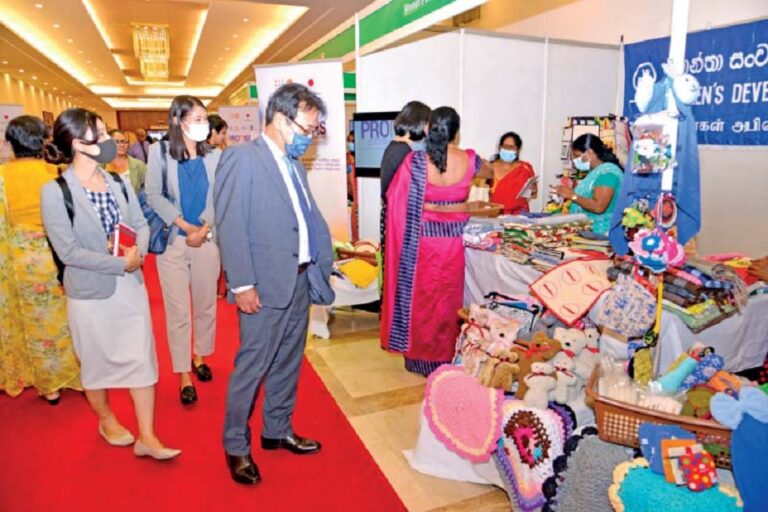
In Sri Lanka, 50% of young people are unaware about basic sexual health issues and one in five women have experienced intimate partner violence.
To address this issue, UNFPA and the Government of Japan joined hands in 2019 to deliver ‘PROMISES’, a project to improve access to information and services on sexual and reproductive health and gender-based violence, especially for women and young people.
The three-year project supported the Ministry of Health, Ministry of Education and the Ministry of Women and Child Affairs to improve access to youth friendly services and strengthen the capacity of shelters for survivors of violence.
Working together with implementing partners amidst several national crises, the project informed religious and community leaders on health and family planning, engaged civil society and youth-led organisations.
It has also trained instructors through online and in-person trainings that focused on strengthening capacities and knowledge to ensure every woman and young person has equitable access to life-saving information and services.
“Parents were reluctant to send their children to the Yowun Piyasa centre as it is associated with social stigma, especially when girls speak to a public health midwife.
Parents have a fear that society will look down upon their daughters thinking that they have become pregnant. Several educational and awareness programmes were conducted to parents to address these issues carefully and encourage young people to access services and information on their health and well being”, said a service provider from Kopai.
Through the PROMISES project, three-months’ worth of life-saving medication and medical supplies critical for upholding the health of women and girls were provided to the Ministry of Health.
The project also supported the infrastructure development of six shelters and worked with educators, police officers, state sector employees and service providers working with women, girls, and families.
Speaking on the partnership, the Ambassador of Japan to Sri Lanka Mizukoshi Hideaki stated: “The Government of Japan has supported this project in partnership with UNFPA aiming to empower the most vulnerable women, girls and families with access to health and medical services and information, to protect themselves and their families.
Speaking on the programme, UNFPA Representative in Sri Lanka Kunle Adeniyi said: “The PROMISES project focused on supporting the Government of Sri Lanka, civil society organisations and communities on strengthening access to family planning, sexual and reproductive health.
It was also improving young people’s access to health services, providing support to shelters and supporting women’s economic empowerment opportunities, all which are crucial to supporting families and individuals, especially amid crises.
Empowering women is important to ensure they are inclusive in the peace building and development processes of this country.”
What is DP Coding School?
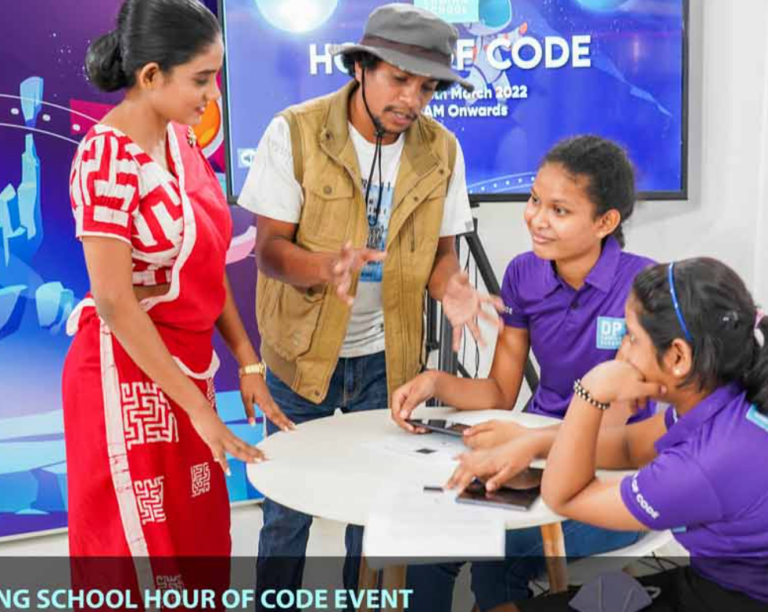
DP Coding School, is a new program launched under DP Education. This program is being implemented with the aim of opening the way to Sri Lankan school students and young people for the thousands of job opportunities that will be created in the future world through the field of information technology.
Apart from those related to the computer field, a question that comes to many other people is what is this coding school. So we thought to explain it very simply.
Many languages are used to communicate between people. Animals also have ways to communicate with each other. Usually when we use computers and smart phones, we use various languages like English, Sinhala, Tamil to get information. But a different language is used inside computers or smart phones. That’s computer language. Coding is the method of making something we want through a computer using this computer language.
Things like computer software, smart phone apps, and computer games are created through coding. You may have some idea how many coding-related job opportunities have been created in the world…
If you look back 20 years, computers were not everywhere at that time. But today almost every government or private office has at least one or two computers. Not only that, smart phones which were not available then are used by a large percentage of the population on a daily basis. So if we think about the future 10 or 20 years from now, it’s hard to imagine how much computer technology will be intertwined with human lives.
On the other hand, even now, computer programs and software are used in all fields including agriculture, education, medicine, sports, and not just the industrial sector. Accordingly, millions of these coding-related jobs are bound to emerge in the world in the future.
Also, you can get a high salary for coding related jobs in Sri Lanka. There are still job opportunities related to coding that can earn income directly in US dollars. In the video below, you can learn some information about the high salaries of coding-related jobs in the world.
One of the biggest problems we see in Sri Lanka is that many of the children who complete their schooling after going to school for 13 years do not have a goal or an understanding of what field they should focus on for a job. But if your child, or sibling gets the opportunity to enter the field of coding at school age and gain basic knowledge and experience, they will definitely have a clear vision of what to do next when they get out of school.
DP Coding School operates to provide that opportunity to our future generations.
DP Coding School can be joined by students of any age from first grade. No special knowledge of English is required, because the teaching is done in Sinhala. And this valuable education is provided to you completely free. If you have a computer you can join DP Coding School from home.
Activities have been arranged here in a very simple and attractive manner so that anyone from small children can grasp it very easily. Apart from that, DP Coding School also offers certificates according to the number of stages completed.
Do not miss this valuable opportunity and enter the DP Coding School today by referring to https://dpcode.lk/dashboard . Encourage your children, brothers and sisters to take the initial steps to apply for lakhs of job opportunities in various fields from IT to software engineers.
SRI LANKA ORIGINAL NARRATIVE SUMMARY: 21/12

- Alleged Organised Crime Gang Leader Kanjipani Imran released on bail by Colombo Additional Magistrate Harshana Kekunawela upon his bail conditions of 2 sureties of Rs.50 mn, being met: Sri Lankan underworld figures Kimbulaele Guna, Ladiya, Vella Suranga arrested in Tamil Nadu, India over their alleged involvement in drugs and arms smuggling.
- Forbes & Walker Tea Brokers say Tea crop in the first 11 months of 2022 has dipped to 231.9 mn kgs: also say it’s the lowest recorded since 1995 where it recorded 225.7 mn kgs.
- As per Joint Apparel Association Forum provisional data, Apparel export industry suffered its 2nd consecutive month of decline YoY in November, although early success in 2022 has ensured that the year is heading to be a record year: November exports dropped 9% while October exports dropped 14%.
- Cabinet grants approval to proposal by Public Security Minister Tiran Alles to promote 8,312 male & 1,105 female police officers between the ranks of PCs & IPs to their next ranks.
- Latest Treasury Bond auction raises only Rs.124 bn out of Rs.160 bn: as a result, Central Bank “prints” Rs.64 bn to meet debt repayments: bulk of domestic debts now being settled via “money printing” as no other funding sources are available.
- Cabinet approves draft Bill to bolster Central Bank autonomy: such approval said to be a vital precondition to unlock pending IMF’s USD 2.9 bn bailout: latest version of Bill not yet available, but said to be designed to end the Central Bank’s participation in Govt Treasury auctions.
- UNP’s Navin Dissanayake says Treasury should state whether it is possible to allocate Rs.10 bn needed for local govt elections: also says the UNP should be “fairly” represented in an alliance with the SLPP.
- Inter University Students Federation to meet with all political parties and groups of the Opposition to canvass support against Govt’s continued detention of IUSF Convenor Wasantha Mudalige under PTA.
- Govt seeks expert opinions on the disposal of USD 40 mn worth expired COVID-19 vaccines: previous plans to donate the excess vaccines to Myanmar fails: validity of the 6 mn vaccines due to expire on 31st December.
- SLPP’s “Independent” MP Dr Nalaka Godahewa says coal shipments are being delayed because of Govt’s attempts to issue a contract for procurement notwithstanding the Cabinet approval to buy coal at the lowest available rate: analysts say any delays in coal procurement will lead to lengthy power-cuts
Army Commander given a one-year service extension
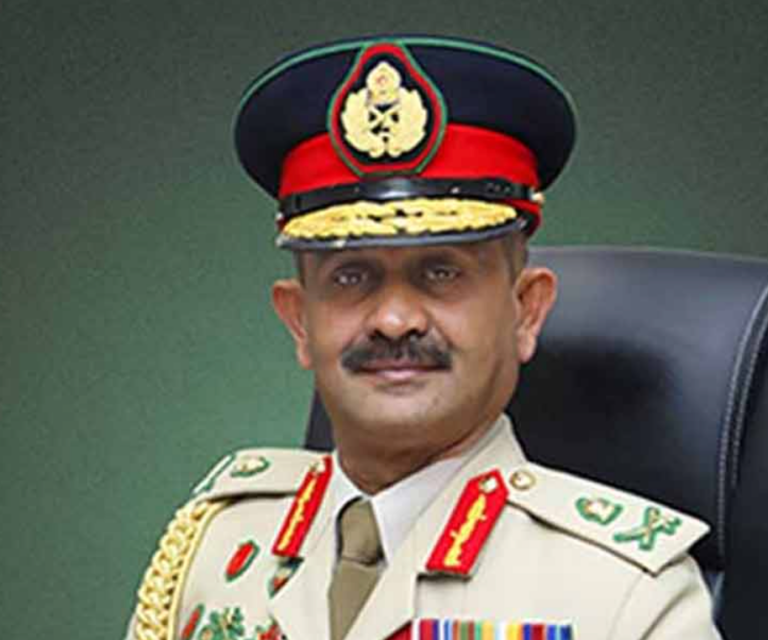
It is reported that President Ranil Wickremesinghe has given a one-year service extension to Army Commander Lt. Gen. Vikum Liyanage.
Accordingly, it is stated that the service period of the Army Commander has been extended from December 31, 2022 to December 31, 2023.
Mr. Vikum Liyanage assumed the position of Army Commander from June 1st.
Kurunegala MC budget defeated by 14 votes

The budget submitted by the Sri Lanka Podujana Peramuna for the year 2023 of the Kurunegala Municipal Council, which is in power, has been defeated by a majority of 07 votes.
Only 07 votes were received in favor of the budget presented by Mayor Thushara Sanjeeva and 14 votes were received against it.
Kurunegala is considered a stronghold of the Sri Lanka Podujana Peramuna and the mayor of Kurunegala, Thushara Sanjeeva, is a close disciple of Johnston Fernando, one of the strongest in Pohottuwa. Similarly, the leader of Pohottuwa, Mahinda Rajapaksa also contested the last two general elections from Kurunegala district.
The deadline for submission of applications for A/L students’ scholarships programme through the President’s Fund ends on December 23
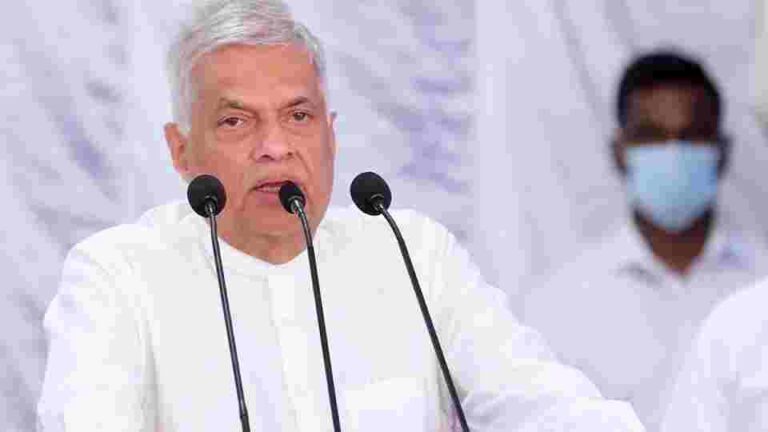
The deadline for submission of applications for A/L students’ scholarships programme through the President’s Fund ends on December 23
The accepting of applications for the scholarship award programme by the President’s Fund for students with economic difficulties who have successfully completed the G.C.E O/L examination in 2021 and will be sitting for the G.C.E. A/L examinations in 2024 will end on December 23.
The duly completed applications which were obtained from the school principals should be submitted to the respective school Principals on or before 23rd December 2022. The Grama Seva Officer should recommend the income status of the applicants’ family. The application forms will be handed over to the President’s office through the zonal education offices.
However, due to the lack of understanding of the application submission process, a large number of applications were directly sent to the President’s Fund. Therefore, all the scholarship candidates are informed to hand over the application forms to the respective principals instead of sending the application forms directly to the President’s Fund in order to facilitate the scholarship awarding process without delay.
To be eligible for the scholarship, the monthly income of the applicant’s family should not exceed Rs. 75,000/- and the applicant should be a student of a government school or in a private school that does not charge fees.
The applicant should be a student who has completed the G.C.E. O/L examination for the first time in 2021 and should be fully qualified to follow the G.E.C. A/L examination in the year 2024.
The number of scholarships per educational zone is 30, and the selected scholarship winners will receive a bursary of Rs. 5,000.00 each for a maximum period of 24 months.
President’s Media Division
Lionel Messi Achieves Cherished Dream As Argentina Take FIFA World Cup Home On Penalty Kicks

By Dwayne Ferreira
A fitting finish to a wonderful Qatari World Cup saw Argentina finally get their paws on a third World Cup title since 1986.
Lionel Messi and Argentina defeated a weak yet persistent French opposition in a final penalty shootout after a stunning hat-trick from Kylian Mbappe rescued Les Blues from an early two-goal deficit.
Kylian Mbappe sent shockwaves through the majority of thousands of sky blue and white fans at the Lusail Stadium, as he not once but twice equalized against Messi and the Albiceleste.
The South Americans however, were clearly the more dominant on the night and their built-up confidence throughout the 120 minutes of play helped in beating the 2018 World Cup champions in the closing stages on penalties.
Argentina and Lionel Messi were rightfully awarded with their fairytale ending after having overcome an almost catastrophic start to their campaign in the group stages and a few bumpy obstacles in the knockout rounds.
Lionel Messi was the star of the show yet again, scoring twice and becoming the first man to score in all four knockout stages of the World Cup.
The Paris Saint Germain talisman was able to give his side an early lead in the 27th minute with a well-struck penalty following a foul on Angel Di Maria by Barcelona’s Ousmane Dembele.
Di Maria then doubled Argentina’s lead with a goal ten minutes later thanks to a counter-attacking break from halfway, set up also by Lionel Messi.
Argentina was well on their way to an almost uncontested win over the reigning champs but unfortunately gave away a penalty in the 80th minute and sent Mbappe straight to the penalty spot.
Kylian was able to score France’s first goal of the night and suddenly Les Blues were wide awake and filled with newfound confidence.
Paris’ hero went on to then light up the eyes of many with an unbelievable right-foot volley into the bottom right corner just over a minute after scoring his first goal.
Tricolore fans filled the Stadium with long-awaited cheers and screams, as his brace was able to equalize a two-goal deficit and send the game straight into extra time.
Argentina and France then put on a show with outstanding displays of teamwork and individual brilliance, slogging away at each other until Lionel Messi finally made a breakthrough in the 108th minute.
Messi found himself on the end of a deflected shot that was initially saved by Hugo Lloris, and the Argentinian forward did not miss his opportunity to potentially see off the Europeans in extra time. His goal put him in joint first place for the golden boot alongside opponent Mbappe with 7 goals each.
Unfortunately for Messi, France was awarded yet another penalty due to a handball in the 118th minute and Kylian Mbappe was sent to the spot for the second.
Mbappe calmly banged in France’s third goal of the night to equalize the game three all, while also going one goal above Lionel in the race for the golden boot.
Mbappe’s hat trick sent the game into a shootout but France’s surprise burst of luck soon ran out and Argentina evidently walked away victorious in the Final of the World Cup.
Their South American grit and sheer determination outplayed the French both mentally and physically in the shootout, while Argentina’s goalkeeper Emiliano Martinez was also able to use this to his advantage and force a save, and a wide shot out of the French.
Four of the confident Albiceleste penalty takers scored all their shots past France’s goalkeeper Hugo Lloris and ended France’s well fought dream of winning two World Cups in a row.
Qatar ended the most controversial FIFA World Cup with a stunning closing ceremony that did the Middle Eastern nation and FIFA justice following a well organized tournament full of thrills and spills.
FIFA president and Qatar’s Emir awarded the best player on the planet and eight-time Ballon D’Or with his first-ever World Cup title in grand Qatari fashion while also handing over Argentina’s first World Cup title in 36 years.
Argentina’s Enzo Fernandez was awarded the FIFA Young Player Award while Emiliano Martinez received the Golden Glove Award for his heroics throughout the tournament.
Kylian Mbappe was awarded the Golden Boot for his total of 8 goals while Lionel Messi walked away with the Golden Ball for best player of the World Cup.
This will probably be the last time fans see Lionel Messi and Angel Di Maria grace a World Cup stage but the pair have certainly said goodbye to the World in the best way possible.
Qatari’s and Argentinian fans continued to cheer the victory late into the windy desert night, while fans back in Argentina wait patiently for the Jules Rimet Trophy to make its way home to Buenos Aires until 2026.
‘Aragalaya FM’ questioned by CID – Journalist Sasika Dissanayake vows fight will continue (VIDEO)

Social Activist and Journalist Sasika Dissanayake who worked at ‘Aragalaya FM,’ a media channel that served the ‘Aragalaya’ anti-government protests in Galleface, has been summoned to the Criminal Investigation Department (CID) today (20) for questioning.
On his way out, Dissanayake told the reporters that he was questioned regarding ‘Aragalaya FM,’ but no proper notice was given.
The public funds are wasted in the CID’s conduct of summoning those who speak out for the country instead of the Parliament representatives, who, in reality, should be questioned, he emphasised.
He added that each time repression is laid on those speaking out the willingness to stand up will grow.
MIAP
New VISA categories introduced for Colombo Port City!
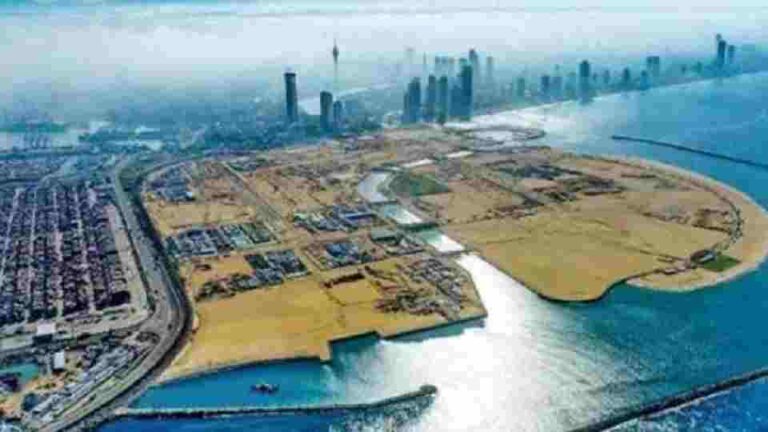
Issuance of VISA and fulfilling other relevant activities to the investors and other relevant parties expected to arrive for various services such as international trade, navel and monitoring, financial, information technology and tourism etc. that is expected to be established in the Colombo Port City should be done by the Department of Immigration and Emigration.
Accordingly, the Cabinet of Ministers granted approval to the proposal furnished by the Minister of Public Security to take necessary steps to introduce following VISA categories subject to the recommendations of the Colombo Port City Commission:
- ‘Investment VISA’ category for investors under residential VISA category.
- ‘Employment VISA’ for employees
- ‘CPC residential property lease vendor’ VISA category for foreigners who reside
within the Colombo Port City on lease.
MIAP