
Sri Lanka’s arduous road ahead for external debt restructuring saw some progress last week with the International Monetary Fund (IMF), requesting China to play its part and the biggest bilateral lender indicating willingness.
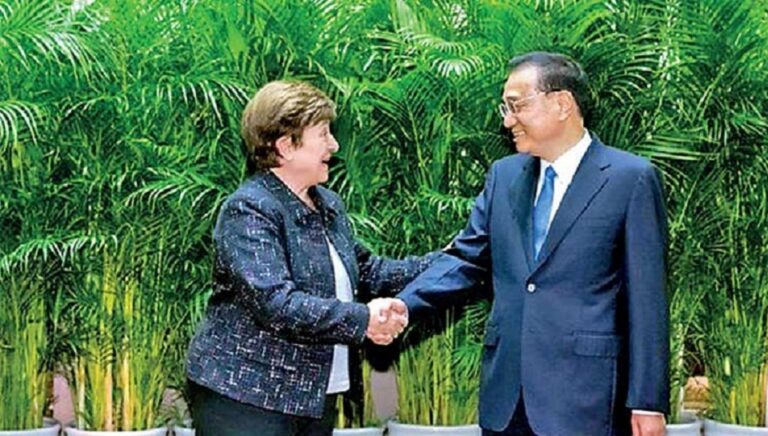
In a statement following the fruitful meeting with China’s Premier Li Keqiang and following the Seventh “1+6” Roundtable in China, IMF Managing Director Kristalina Georgieva said several issues concerning the need to reduce the risk of debt crises were discussed.
“We need to build on the momentum of the agreement on Chad’s debt treatment and accelerate and finalize the debt treatments for Zambia and Sri Lanka, which would allow for disbursements from the IMF and multilateral development banks,” Georgieva said.
With $ 7.3 billion, China is Sri Lanka’s biggest bilateral creditor accounting for 52% of the total worth $ 14 billion.
“We are also seeing new cases that are coming in this time of tightening global financial conditions. We talked about how we can prevent individual cases of debt distress from triggering a global debt crisis. The application of the G20 framework must become much faster and more predictable, and it needs to reach a broader set of countries. We also see space for a platform for more systematic engagement on debt issues, where China can play an active role,” she added.
China said all parties expressed that they would give full play to their respective advantages in the future, and continue to strengthen coordination and cooperation in related fields on international development and debt issues of developing countries etc.
“China will implement the G20’s Debt Service Suspension Initiative in all respects, and work with relevant G20 members to formulate and participate in a fair and equitable debt-restructuring plan,” said Li Keqiang in a tweet.
Separately, the presidents of China Exim Bank and China Development Bank co-hosted a working dinner last week for the visiting IMF Managing Director and World Bank Group President David Malpass. “They had a positive discussion on int’l economic situation and the debt of developing countries including Sri Lanka,” China said.
Consensus emerging on Sri Lanka debt resolution after IMF meets China
SJB MP Dr. Harsha calls on the Govt to revise the Inland Revenue bill
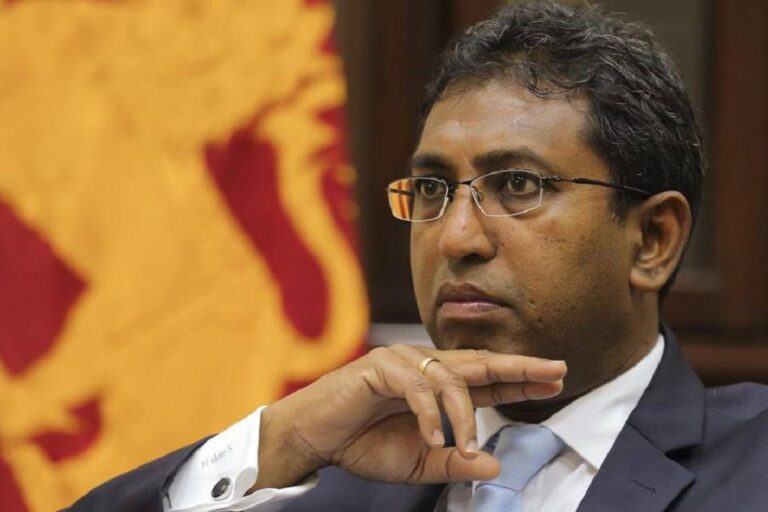
Main Opposition MP Dr. Harsha de Silva is calling on the Government to further revise the Inland Revenue bill on behalf of all professionals and to resolve the intensified brain-drain of late.
“Many professionals and associations representing various fields including healthcare, IT, engineering, architects, and professors have written to us asking to cease the proposed tax burden on them, especially considering the economic crisis. Higher taxes as much as 36% is actually contributing to the brain drain of this country,” he said.
The third reading of the Inland Revenue (Amendment) Bill was passed in Parliament last Friday with 79 MPs voted in favour whilst 36 voted against.
Noting that only after the Committee on Public Finance (COPF) refused to approve the proposed personal income tax amendment, he said the Finance Ministry came up with a comparative tax scheme to generate the target revenue of Rs. 68 billion.
“After analyzing data provided by the Finance Ministry and looking at the Indian tax model, it is quite evident that we are able to utilize the Indian tax schemes of 5%, 20% and 30% slabs and still generate Rs 62 billion which is just Rs. 6 billion short of what the Government expects from their 6%, 12%, 18%, 24%, 30% and 36% income tax,” he pointed out.
He said this way it will certainly give the middle income earners that the President Ranil Wickremesinghe used to be very concerned of, some breathing space.
Dr. De Silva also described how the Government could still achieve the set target income avoiding the shortfall of Rs. 6 billion.
“There are numerous ways to find the deficit of Rs. 6 billion. One way is to collect at least Rs. 2 billion from casinos that have evaded taxes and the other is by cutting down on all non-essential sectors,” he explained.
He argued how reasonable for the Government to have 38 State Ministers and 20 Cabinet Ministers in an economy that is declared bankrupt.
“We have large Government comprising nearly 60 MPs and they want it to further expand it to 70 with 10 new appointments. How can the Government even explain the rationale of these appointments knowing that our economy is bankrupt and telling public to fasten their belts only?” Dr. De Silva asked.
He asserted that there are alternate ways to gain expected revenue, while protecting the hard hit middle class professionals of this country.
BOI inflates FDI inflows to cover up its failure to achieve targets
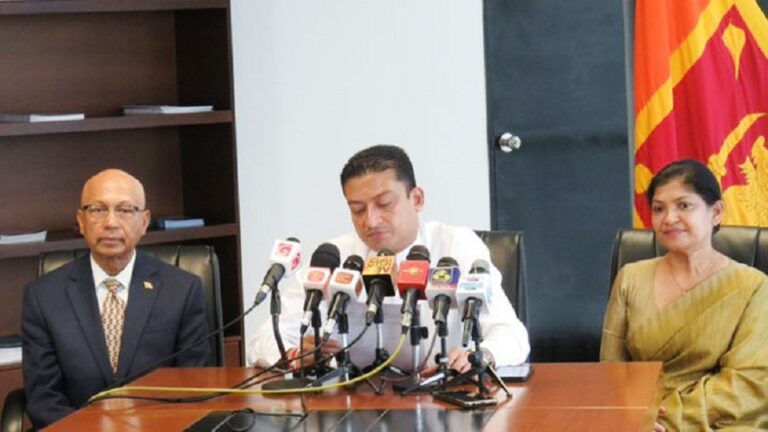
Sri Lanka’s Foreign Direct Investment (FDI ) has been falling down under the present economic set back, policy uncertainty and political instability along with the removal of tax concessions including tax holidays, ministerial consultative committee report revealed.
The Board of Investment (BOI) now acting as an intermediary rather than facilitator has been directed to provide actual FDI data to the Central Bank and the Treasury as it should be armed with clear record on foreign investment projects and the actual value of investments, the committee advised.
It observed that there were no investments coming under the new enhance capital- based package and BOI data on FDI should be clearly communicated to the Central Bank and the Treasury enabling them carry out negotiations with the International Monetary Fund (IMF).
The Ministerial Consultative Committee on investment Promotion instructed the BOI to clearly communicate to the Central Bank (CB) and the Treasury on foreign investment information with relevant documents on FDI inflows in the past five years.
It has been observed that the granting of tax exemptions was one of the BOI’s main roles until the responsibility moved to the ministry of finance (MOF) in 2011.
However the lack of clarity in BOI records of FDI inflows, number of project proposals received and number of projects approved or registered has jumbled actual data.
The removal of tax concessions including tax holidays for investors has triggered the slowdown of e FDI inflow, several BOI officials claimed, consultative committee minutes indicated.
With no plans and strategies properly being implemented, the BOI has become a burden for the state as a dormant institution after four decades of poor performance in its role of investment facilitator, foreign investment report of finance ministry revealed.
Since the establishment of this export promotion entity approximately 40 years ago, the institution has managed to attract only US $ 20 billion in Foreign Direct Investment (FDI), it added.
It has been observed that the average annual FDI inflow has merely been $ 500 million
Another main accounting practice of the BOI was the inclusion of foreign loans to Direct Investment Enterprises in annual FDI while publicizing dollar earnings of existing free trade zone enterprises
The BOI has attracted foreign direct investment (FDI) inflows amounting to $ 713 million in the first nine months of 2022, which is 71 percent of the 2022 full-year target of $ 1 billion, State Minister of Investment Promotion Dilum Amunugama said recently.
BOI has inked a total of 123 agreements to the value of $ 1.9 billion, which consists of US$ 1.5 billion in new projects and US$ 400 million in expansions as of the first eleven months, he added.
However according to finance ministry estimates computed by using mathematical models, the FDI in 2022 will be in the region of $ 476 million excluding foreign loans obtained for ongoing projects.
FDIs, excluding foreign loans to Direct Investment Enterprises, amounted to $598 million in 2021, in comparison to $548 million in 2020, $793 million in 2019 and $1.6 billion in 2018.
The main BOI function during previous regimes was to hand over concessional Government lands on lease for mixed development projects offering tax holidays as incentives for Investments, finance ministry investment assessment report divulged.
Govt pin hopes on India Japan, Singapore or a donor agency for bridge financing
Dollar strapped Sri Lanka is now trying persuade India Japan, Singapore or some other donor agency to obtain a bridge finance loan amounting to US$ 850 million to survive until the receiving of executive board approval for $2.9 billion IMF bailout before beginning to rebuild usable foreign reserves next year, finance ministry sources disclosed.
Sri Lanka could get as much as $ 6-8 billion in “bridge financing” from India Japan and Singapore and talks are underway with those donor countries to get funds for a short period of six months
It has obtained foreign financing of $ 1.87 billion by entering into 8 agreements with foreign development partners and lending agencies in the first nine months of 2022, finance ministry data shows.
The government will have to manage imports with available foreign exchange inflows instead of bridging finance if it is not forthcoming, state finance minister Shehan Semasinghe said.
Negotiations are now underway with donor countries and international financial agencies to reach agreement on foreign fund mobilization for 2023 considering it as an emergency matter, he revealed.
Japan and India have both responded well for foreign exchange mobilization and debt restructuring while Japan is likely to agree on bridge financing and all of these issues have been conveyed to the President, minister Semasinghe confirmed.
The World Bank and ADB have already informed its inability on lending to Sri Lanka until debt is made sustainable and the macro-fiscal stability is restored but the two agencies are considering alternate ways to assist Sri Lanka he disclosed.
The World Bank this week approved Sri Lanka’s request to access concessional financing from the International Development Association (IDA).
This type of financing, will enable Sri Lanka to get IDA loan facility at low interest rates, to implement economic reform programme to stabilize the economy and protect the livelihood of millions of people facing poverty and hunger, he added.
Eight member Presidential committee is negotiating debt restructuring with China and India and the outcome so far was positive senior finance ministry official divulged.
The members of the committee are Minister of Foreign Affairs Ali Sabry, State Minister of Finance Shehan Semasinghe, Chief of Staff Sagala Ratnayake, Presidential Secretary Saman Ekanayake, Presidential Economic Adviser Dr.R.H.S. Samaratunga, Treasury Secretary Mahinda Siriwardena, Central Bank Governor Dr. Nandalal Weerasinghe and former Governor Indrajit Coomaraswamy.
He said ‘World Bank, ADB and the small amount of IMF debt would not be restructured. If it were to be restructured, those institutions could stop their operations in Sri Lanka, and even their financing in the pipeline may not be disbursed.”
Sri Lanka Original Narrative Summary: 15/12
- Foreign Minister Ali Sabry assures Sri Lanka is expecting loans of up to USD 5 bn next year from multilateral agencies besides the deal with the IMF which is USD 2.9 bn: asserts Govt could raise a further USD 3 bn through the restructuring of state assets.
- State Finance Minister Shehan Semasinghe says Sri Lanka yet to receive assurances from bilateral creditors: also says discussions and exchange of information is continuing: admits Sri Lanka will miss IMF approval in December and working to complete the process by early 2023.
- President’s Office says President Ranil Wickremesinghe will brief the Cabinet in February 2023 on the progress of the decisions taken at the All-Party Conference to resolve the major issues in the reconciliation process.
- President Ranil Wickremesinghe says he will work towards resurrecting the country from bankruptcy: stresses he will build an economy that is free from debt and stable so that it is able to pay its debts.
- Arts Faculty Teachers Association of Peradeniya University decide to observe a complete work stoppage from 14th to 18th December since the University Administration has failed to protect the staff.
- CB Governor Nandalal Weerasinghe says it is the public who opposed SOE sale or restructuring moves every time by accusing successive governments of selling those assets: also says SoEs have become a bane for taxpayers due to their corruption, inefficiency and accumulated losses, and the Treasury can no longer stand such losses.
- Ceylon Tea faces significant sales drop in 2 of its key markets, Iran and Syria that are reeling from economic crises: former Tea Exporters Association Chairman Jayantha Karunaratne says there have been sales declines between 30-50% in some months.
- Secretary, Ministry of Environment Dr Anil Jasinghe says Govt will assist private sector to gain access to concessionary green financing from the Green Climate Fund to invest in projects that will increase the climate change resilience of vulnerable communities.
- President Ranil Wickremesinghe presents Proclamation for the development of the Hunupitiya Gangaramaya Temple as a place of worship to Ven. Galaboda Gnanissara Nayaka Thera, the Chief Incumbent of the temple.
- The Co-operative Wholesale Establishment (Sathosa) reduces prices of 5 essential food items: accordingly, price of Dhal reduced by Rs.4 per kg, Wheat Flour by Rs.15, Garlic by Rs.35, Big Onion by Rs.9, and canned fish (local) by Rs.5.
Direct flights between Chennai and Jaffna resume with tax bonanza
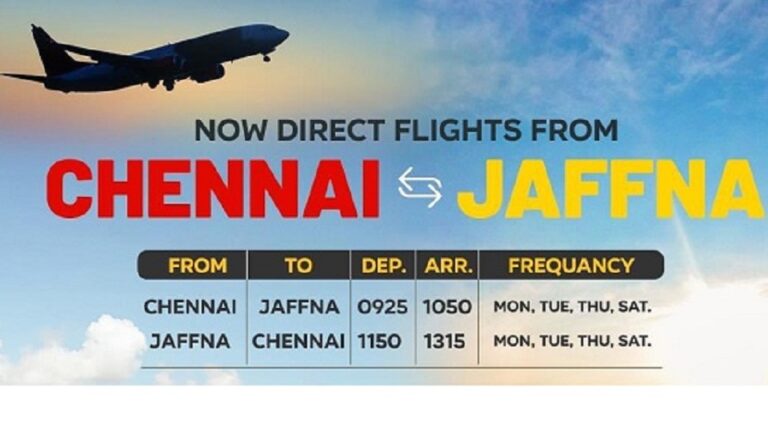
India and Sri Lanka have taken giant step towards the restoration of a significant connectivity with the resumption of direct flights between Chennai and Jaffna on Monday 12 offering many concession.
Alliance Air, a wholly owned subsidiary of AIAHL resumed its direct services connecting Chennai and Jaffna yesterday, after nearly three-year pandemic-caused break.
The inaugural flight from Chennai post-2020 landed at the Jaffna International Airport in Palaly round 11.25 a.m.on day before yesterday.
Sri Lanka is taking off landing and parking charges, slashing embarkation taxes and ground handling fees at these airports to draw South Asian carriers, Minister Bandula Gunawardana said.
The cabinet of ministers had cleared a proposal by the Civil Aviation and Tourism Minister to boost operations at the Mattala, Ratmalana and Jafna airports.
The new concesstions included the removal of landing and parking fees, the lifting of 60 dollar embarkation tax on passengers for two years, discounts for ground handling. And the slashing of the embarkation tax for passengers by 50 percent for a year.
“India remains the top source market year-to-date for Sri Lanka and the resumption of Chennai and Jaffna direct flight will indeed be a big boost to draw more travelers from the neighbouring giant,” Tourism Minister Harin Fernando said.
As per the provisional data by the Sri Lanka Tourism Development Authority, India remains strong as the top tourist source market for year-to-date with a cumulative number of arrivals at 110,077.
The airline is all set to expand globally and commence commercial flight operations from Jaffna International Airport to Chennai International Airport with direct flight operations on Monday, Tuesday, Thursday and Saturday.
The Palaly airport was reopened as Jaffna International Airport on 11 November 2019, following the completion of the redevelopment project, with the support of India.
However, its operational activities were suspended from 15 March 2020 again, as a result of the COVID–pandemic.
At present, the JIA runway can only accommodate 75-seater flights and it is learned that the runway is expected to be redeveloped to accommodate larger aircrafts in future.
Being an island nation, Minister Fernando emphasized it was important to prioritize the tourism industry and change the overall attitude to develop the sector, as the third largest foreign exchange earner for the overall economy.
Sri Lanka has welcomed 25,024 tourists during the first 11-days of the month, pushing the YTD figure to 653,041.
Govt to take final decision on SLT restructuring after committee report
The final decision on restructuring Sri Lanka Telecom (SLT) will be decided upon, when the report of the Finance Ministry’s state institutions restructuring unit comes out, State Minister of Finance Shehan Semasinghe disclosed.
“A special unit has been appointed to look into the restructuring of state institutions as per the budget, he said adding that this unit will look into how each institution should be restructured. Therefore, the final decision on how SLT is to be restructured will be made after the report is submitted.
Also he assured that the government will not negotiate with country’s security and the approval of the parliament would be sought for restructuring of state institutions.
National telecommunications services provider, Sri Lanka Telecom PLC (SLT), has decided to restructure two of its subsidiaries and its ride-hailing venture, SLT muve,(multi- user virtual environments )after evaluating the past performances and considering the opportunities and challenges in the post-COVID-19 environment.
After extensive discussions, SLT director board recently decided to restructure SLT Human Capital Solutions (Private) Limited and Sri Lanka Telecom (Services) Limited as well as SLT muve venture, which comes under SLT Digital Info Services (Private) Limited.
Accordingly, the SLT management has already commenced the restructuring process on SLT Human Capital Solutions (Private) Limited, which would be soon followed by Sri Lanka Telecom (Services) Limited. Meanwhile, the operations of its ride-hailing venture, SLT muve, remain suspended since late March.
Although the board of directors of SLT has given the nod for the restructure of the venture, SLT also needs the approval of its strategic partner in this venture, Australia-based Technology
Network Australia, to move ahead with the restructuring process. Some SLT employees have also raised concerns on the credibility of Technology Network Australia.
An SLT official noted that SLT is now looking for new investors to expand the ride-hailing service, which was launched last year.
However, Technology Network Australia and SLT are yet to reach an agreement on the future operations of the venture while discussions are continuing, as both parties are revisiting the business case for the venture.
The performance of the ride-hailing industry remains eroded due to COVID-19-related restrictions in Sri Lanka and globally.
Further, the SLT group is also increasingly looking at providing innovative solutions to its cooperate clientele, which include both state and private sector institutions.
It is also currently revisiting the entire business plan for SLT and its key subsidiary Mobitel.
Sri Lanka seeks to engage with the G20 during India’s presidency.
Sri Lanka has sought India‘s support to engage with the work of the G20 and its assistance to overcome the economic crisis.
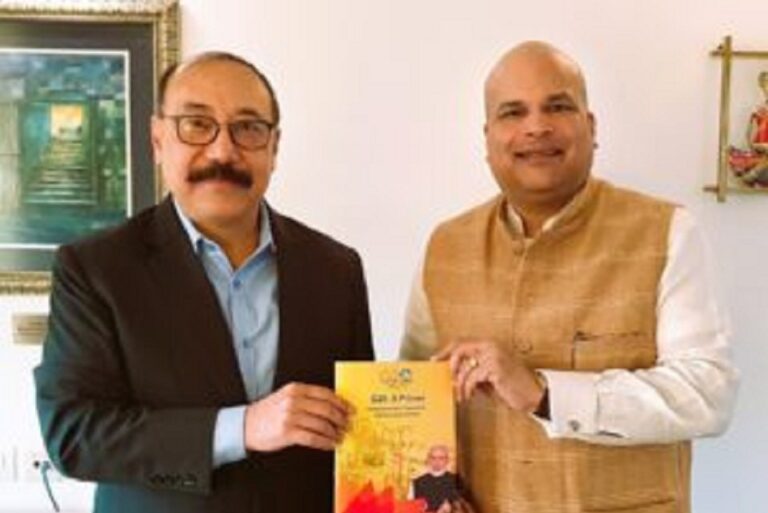
This request was made by Sri Lanka’s High Commissioner to India Milinda Moragoda when he met with the Chief Coordinator for India’s G20 Presidency for 2023, Harsh Vardhan Shringla in New Delhi.
The discussion especially focused on various avenues through which Sri Lanka could engage with the G20 during India’s presidency of the Group and also the possibility of understanding G20 approach towards international financial cooperation and debt restructuring.
High Commissioner Moragoda and the Chief Coordinator discussed the opportunities available to Sri Lanka, as a neighbouring country of India, to engage with the work of the G20.
India assumed the presidency of the G20 on 01 December 2022 for a period of one year. Under its Presidency, India is expected to host over 200 G20 meetings in 56 cities across the country, beginning December 2022.
The G20 Leaders’ Summit at the level of Heads of State / Government is scheduled to be held on 09 and 10 September 2023 in New Delhi.
The G20 or Group of Twenty is an intergovernmental forum comprising 19 countries and the European Union, which works to address major issues related to the global economy, such as international financial stability, climate change mitigation, and sustainable development.
Before assuming office as the Chief Coordinator for India’s G20 Presidency, Harsh Vardhan Shringla was the Foreign Secretary of India. An officer from the Indian Foreign Service, he had previously served as India’s envoy to Thailand, Bangladesh and the United States.
U.N. chief Antonio Guterres sought India’s support in mobilizing G20 nations to help out developing countries saddled with debt, with three of India’s neighbours Sri Lanka Pakistan and Bangladesh already seeking IMF loans as their economies struggle.
India has taken over the G20 presidency from Indonesia for a year from Dec 1. India’s neighbours Sri Lanka, Pakistan and Bangladesh have in recent months sought IMF loans as high oil prices complicate efforts to recover from the economic damage of the COVID-19 pandemic.
“I count on India’s support in mobilizing G20 countries around debt relief,” Guterres said adding that many developing countries are at or near debt distress and require multilateral action, including the expansion and extension of the G20 Debt Service Suspension Initiative.”
Established in May 2020 during the pandemic, the initiative allowed nearly 50 countries to suspend $12.9 billion in debt-service payments until the end of last year.
Guterres said climate change was “already a grave threat” to India’s economy, agriculture and food sector, and to the health, lives and livelihoods of hundreds of millions of people.
He said G20 countries were responsible for 80% of global emissions and must take the lead in cutting those. Rich countries should also financially help developing ones do so, he said.
Uma oya power connects to the national grid by June next year
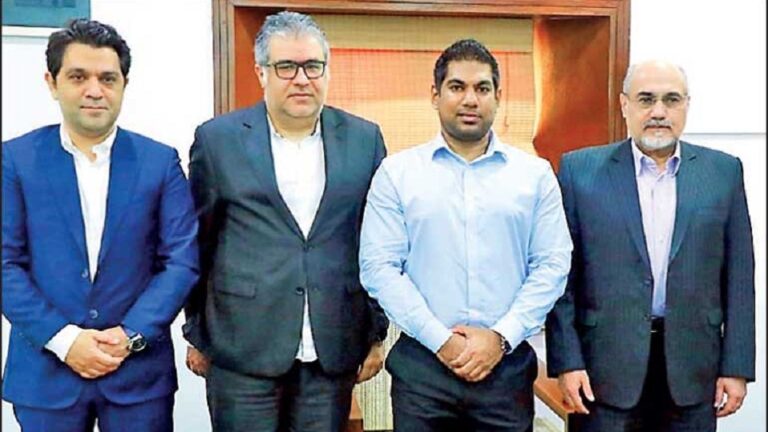
The Uma Oya multipurpose development project is expected to be connected to the National Grid by June 2023, Minister of Power and Energy Kanchana Wijesekera said on Tuesday (13).
The Uma Oya Hydropower Complex is an irrigation and hydroelectric complex currently under construction in the Badulla District of Sri Lanka.
In a Twitter message, Minister Wijesekera said that a meeting was held on the Uma Oya project which will add 120MW of Hydropower to the National Grid.
“Officials of Farab Energy and Water projects of Iran and Farab International FZE, the construction and engineering company, have assured that the construction will be completed by end of April 2023,” he said.
The minister added that they have also assured that the Uma Oya project will be connected to the national grid by June 2023.
The agreement on the Uma Oya Project was signed in April 2008 between the Irrigation Ministry and the Farab Energy and water projects of Iran and Farab International FZE collectively with a 5-year contract period plus one year maintenance period.
The completion of the Uma Oya Multipurpose Development Project was delayed, due un availability of US$ 12mn required to complete the remaining five per cent of the scheme, a senior official said.
Funds were requested through the Power and Energy Ministry from the Treasury but there has been no response, said senior project officer . This will delay the possibility of adding a further 120 MW to the national grid.
The money was needed to pay for expertise, essential equipment and material for final testing. An additional Rs 1.5 billion was required for salaries of local employees and related matters. The project was due to be completed by May 25 this year.
But the financial matter is now settled and the work is progressing rapidly, he added.
An additional 120MW would ease the burden on the Ceylon Electricity Board to find fuel for thermal power plants, he said.
The Rs 1.5bn were for subcontractor payments. Farab Co of Iran was the principal contractor. If funding was released, the project could close by December, after which the plant could be commissioned.
“A cabinet memorandum on this has already been submitted, and we are hopeful that it would draw the attention of the government,” he said.
The project was to be commissioned in 2015 but delayed by a leak. The original agreement was signed in 2008, estimated to cost US$ 529mn — US$ 450mn from the Export Development Bank of Iran and the rest from Sri Lanka.
Due to sanctions imposed by the US on Iran, however, funding was affected and the Treasury had to take over a majority of the financing.
The project aims to provide drinking water to Moneragala, Badulla, Hambantota and Wellawaya; and irrigation to Wellawaya, Thanamalwila and Lunugamvehera in addition to generating power.
FDI flow into Colombo Port City retards due to regulations deferral
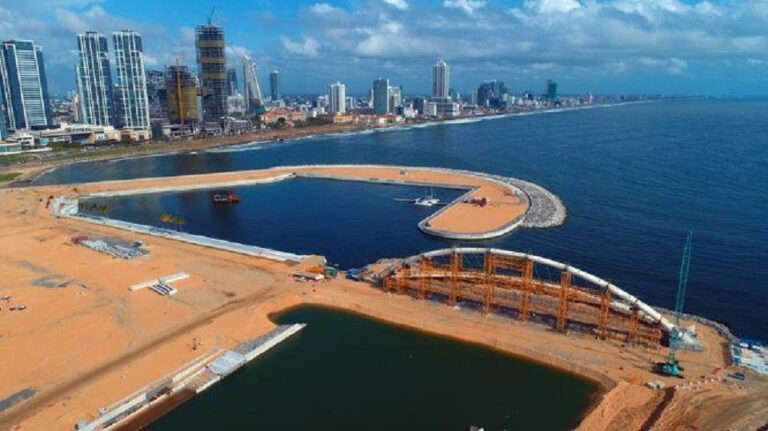
Foreign Direct Investment (FDI) into the Colombo Port city will be delayed due to non finalization of relevant regulations a top official of managing company said.
Foreigners are used to invest in infrastructure in Sri Lanka, for the long-term leaving the investment value permanently remain in the island, and it can continue to create even more value through trade and commerce, he claimed.
This helps to bridge the Balance of Payments gap and strengthen the local currency, while creating new economic opportunities for locals.
Port City Colombo is Sri Lanka’s biggest FDI project, with billions of dollars waiting to flow in, but investors are hesitant as the Port City Colombo Special Economic Zone regulations are not yet finalized, he disclosed
Speaking at the Sri Lanka Economic Summit 2022, held at the Shangri-La Hotel in Colombo recently Thulci Aluwihare, Deputy Managing Director at CHEC Port City Colombo (Private) Limited said, “They were unable to execute marketing strategies due to this reason.
It also cannot proceed with other matters of logistics and outreach until the regulatory framework, as provided for by the Colombo Port City Economic Commission Act, is finalized and published by the Government of Sri Lanka.
The company cannot make any official representations to any parties until this is completed, and until there is clarity over regulations related to taxation.
He said If these matters aren’t finalized soon, it may send the wrong signals to investors and cause them to become hesitant, which will impede the progress of development, which at present is proceeding exceedingly well.”
With infrastructure development slated for completion by Q3 of 2023, Port City Colombo is Sri Lanka’s biggest FDI-funded development project with US$ 1.4 Bn committed by the project company,$1.2 Bn already having been invested, and a further $1.5 billion expected to flow in during the vertical development phase, which will commence thereafter.
A $7-million Duty-Free Shopping Mall, the first of its kind in South Asia, and a magnet for shopping and tourism, is also expected to open doors at Port City Colombo in April 2023.
The Port City Colombo Special Economic Zone (PCC SEZ) is a game changer, especially for financial services, trade, IT/BPM, tourism, retail and many other sectors. This is because of its special status as an SEZ, governed by the Port City Economic Commission.
However, although the Port City Economic Commission bill was passed in Parliament on the 20th of May 2021, there are still some delays with regard to finalizing the regulatory frameworks.
This has resulted in a virtual standstill in terms of the actual moving in of businesses, and the development of the project to its full potential, as investors and others are unsure as to the legal and regulatory procedures and processes.