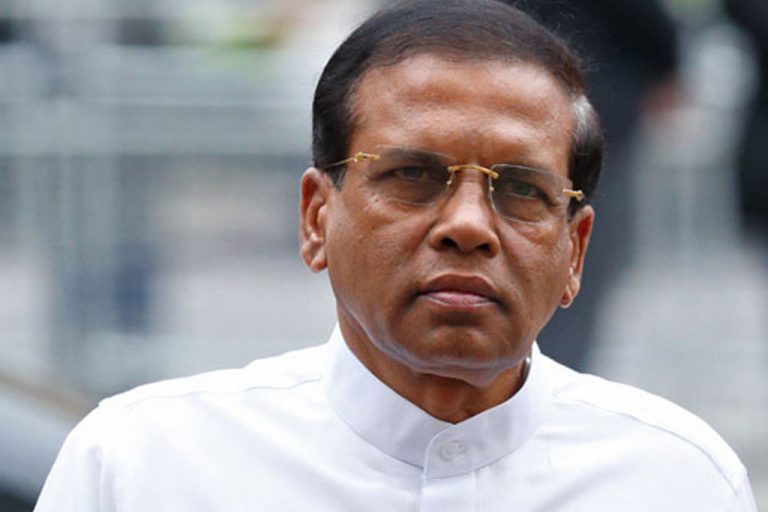
A decision on the manner in which the Sri Lanka Freedom Party (SLFP) will contest the upcoming Local Government Election in 18 districts will be made today (16), said Secretary General of the United People’s Freedom Alliance (UPFA) former MP Thilanga Sumathipala.
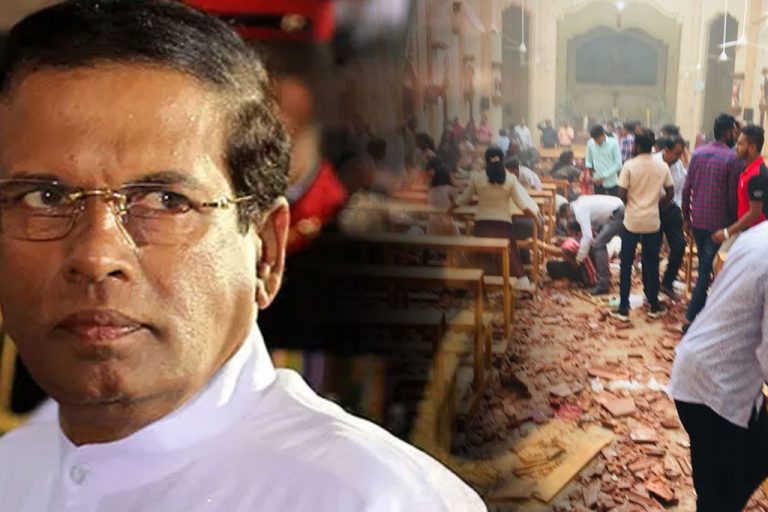
Responding to reporters, the former MP revealed that SLFPers are heavily urging former President Maithripala Sirisena to contest alone from the ‘Palm’ symbol in several districts including Polonnaruwa.
Q: Did you decided to drop from the ‘Helicopter’ ?
A: It was decided to call in the Executive Committee meeting of the UPFA on the 16th at 6 pm. There it was decided to make a final decision together with all the stakeholders. A high demand has occurred for many contenders in the North-East and Polonnaruwa.
Q: Were there any pressures to drop from the ‘Helicopter’?
A: No, no, no. No such thing. The Helicopter will contest from 18 districts. Considering Polonnaruwa in particular, a high demand has occurred to contest from the ‘Palm’ symbol under the leadership of the former President. So, we all agree, to carry out the election affairs under the leadership of Mr. Maithripala Sirisena in that district.
Q: What is Mr. Maithripala Sirisena’s opinion in this regard?
A: He’s from Rajarata, isn’t he? The people of Rajarata want him big time. So, he will lead Rajarata.
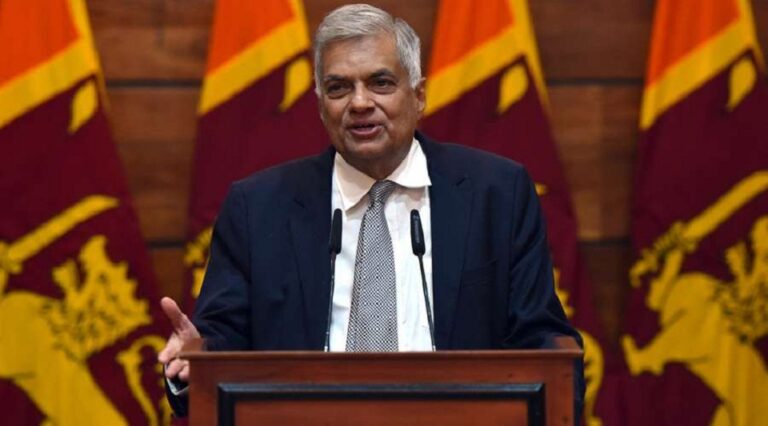
President Ranil Wickremesinghe said that the Social Justice Commission will be established in order to build a country where everyone can live in harmony, by solving the problems of the people belonging to all sections of the population and that the government expects to fully implement the 13th Amendment to the Constitution.
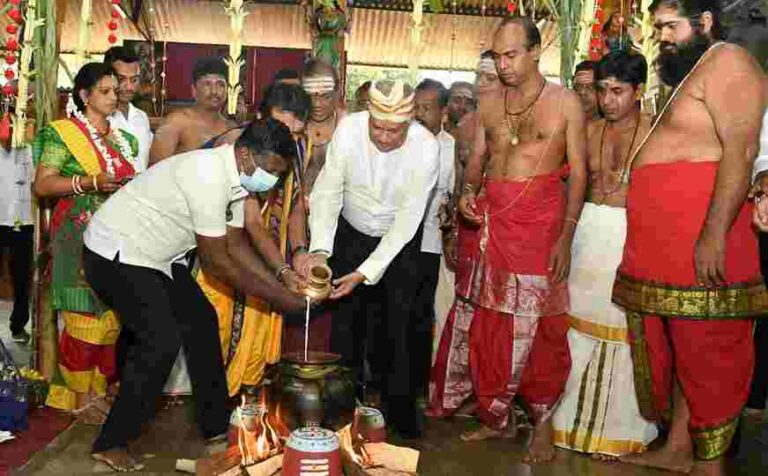
The President said this during his address at the National Thai Pongal Festival held at the Jaffna Durga Hall yesterday afternoon (15).
The President, who was escorted to the venue by a Tamil cultural procession, was received according to Hindu rituals. Many Tamil cultural performances added colour to the event.
In addition, the President stated that in order to build a country where all races coexist and achieve economic prosperity, everyone must return to the Sri Lankan identity established by the late Mr D.S Senanayake 75 years ago.
The President stated that a statement on the government’s steps toward reconciliation will be made public in February and that a meeting of party leaders will be convened next week to discuss the matter.
President Wickremesinghe also stated that the Truth and Reconciliation Commission’s work will be accelerated in order to provide relief to the families of the disappeared.
The full speech of President Ranil Wickremesinghe is as follows:
First of all, I wish everyone a very Happy Thai Pongal. Thai Pongal festival in particular is a national festival. We were an agricultural country in the past. After harvesting the annual harvest, we thanked the gods and performed these rituals.
I would like to express my appreciation to the students of Ramanathan Faculty of Aesthetics who made a splendid presentation at this event today. I would like to say that it is a high-level drama. The Nadasalam band also performed according to traditional knowledge. I express my thanks to all of them.
Both these teams can compete in international competitions. As Sri Lankans, we should be proud of that. This afternoon we decided to hold an art festival in Jaffna as well, similar to the Galle festival. We have created a new Tamil culture’ and we should show it to the world. The cultural aspects of this festival ended with harmony.
This country needs reconciliation. As well as 30 years of war and insurgency, our country has been divided by divisive, racist, sectarian and bankrupt politics. As we all have to live in one country, we must return to the Sri Lankan identity and build the economy that Late Mr. D. S. Senanayake created 75 years ago
I saw people pouring water, milk, rice, and jaggery into the pot kept on fire on the stage where the Thai Pongal festival is taking place. Pongal is coming. So, in this difficult time, let’s put Sinhala, Tamil, Muslim, and Burghers together and take a Sri Lankan identity.
We are discussing the problems of the North and the Tamil people. I called all the party leaders to the Parliament and said let us work to unite this country and restore harmony. I also discussed with the Tamil Party MPs in Parliament. Also, I hope to announce to the country in February about the measures taken by the government to create Reconciliation in the country. I have informed the Parliament to take that decision and have called a meeting of party leaders next week to discuss it.
These issues cannot be put aside and resolved by delaying them. The solution should be told to the country and the Parliament. That is why Parliament’s views are first sought. We have discussed a number of issues. To provide comfort to the families of the disappeared, to find the truth, to find out what happened. And we are discussing appointing the Truth and Reconciliation Commission (TRC) to look into this.
Three weeks ago, I asked our Army Commander’s idea about the establishment of the TRC. He said to fix it, and then we can answer the allegations. No one has any objection to this.
And instead of the Prevention of Terrorism Act, we are bringing a new law. Some say that this bill is used against the North. No, we use this to create stability in the country. I could have deployed this to the south last year. And we could bring new laws.
Next is the land issue. Today we are discussing the issues related to the Wildlife Department. We are also discussing the return of land in Jaffna. During the war, the army kept about 30,000 acres under their control because they wanted to protect these areas.
Today only 3,000 acres are left under the security forces. The army has expressed its willingness to hand over another part of it. We are discussing it.
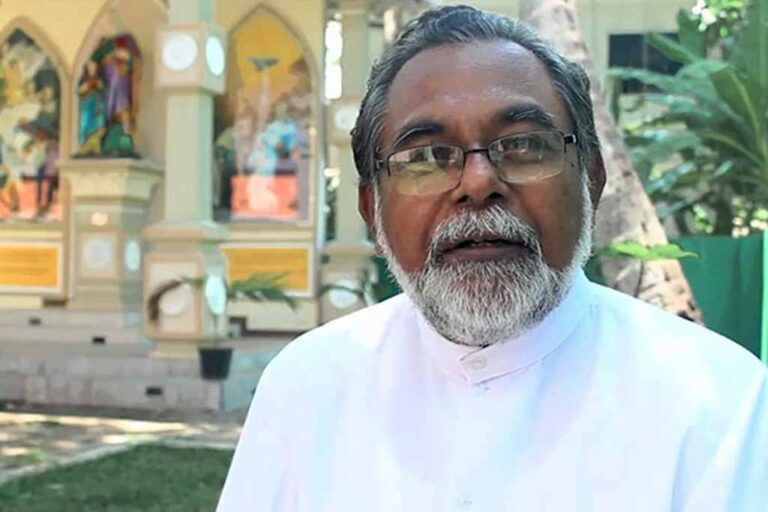
As our Bishop said, we are taking steps to build those Catholic and Hindu churches. There are offerings that have been held for hundreds of years, there are newly started ones, we should continue all of them.
We hope to fully implement the 13th Amendment of the Constitution. Not only in the North but also in the South, the Chief Ministers are demanding that it be implemented. We are continuing those activities. In the next two years, we will continue this work systematically. Today, poverty, hunger and deprivation are not limited to the Sinhalese or the Tamils, we all suffer. We all have to overcome these challenges together.
It is not only the problems of the Tamil people in the North and East. There are other issues to discuss. After this meeting, I will call the MPs representing the Tamil people in the hills and the parliamentary party leaders and start the second round of those discussions. The Tamil people of the hills are fully integrated into our society and given the same rights and privileges enjoyed by the Sinhalese, Tamil, and Muslim people. The country cannot marginalize this group that earns foreign exchange. They must be joined with others.
After that, Muslim MPs and party leaders are expected to be invited for discussion. Muslims have many problems. Therefore, those people should be brought to discuss those issues and provide solutions. There are problems not only for Tamils and Muslims but also for Sinhalese. There are isolated villages. In some places, casteism is an issue. Poor people are marginalized. The Christian people fear for their safety. A social justice commission is expected to be established to talk about them. I tell everyone that we should talk about these and further strengthen the Sri Lankan identity.
President Ranil Wickremasinghe says “We are looking at full implementation of the 13th amendment within next few years”: also says a Social Justice Commission is being established to solve the problems of the people from all sections of the population.
Protesters in Jaffna demand information about missing persons and demand their return from President Wickremesinghe when he attended the Thai Pongal celebrations in Jaffna.
Former President Maithripala Sirisena refers to Supreme Court judgement ordering him to pay Rs.100 mn in compensation to Easter Sunday victims: says he respects judgement by the judiciary: also says he asked his friends whether he can stand in front of the Bo tree in Pettah with a till to collect money.
Weekend special tourist train service, ‘Seethawaka Odyssey,’ added to railway operations to boost tourism: journey to be from Colombo Fort to the Waga Railway Station on the Kelani Valley railway line.
IMF MD Kristalina Georgieva discusses debt resolution in countries like Chad, Zambia, Sri Lanka and Suriname at a roundtable: says a “haircut” in the Chinese context is politically very difficult: also says there might be a way to reach the same objective by stretching maturities, reducing or eliminating interest rates, and payments.
Global Tamil Forum urges India, US, EU, UK, South Africa, Singapore, Malaysia, Mauritius, Australia and New Zealand to emulate Canada which has imposed sanctions on former Sri Lankan Presidents Mahinda Rajapaksa and Gotabaya Rajapaksa, over alleged war crimes.
Authorities in France repatriate 46 Sri Lankans who were apprehended while attempting to migrate to the Réunion Island illegally.
JVP Leader Anura Kumara Dissanayake says the Presidential Secretariat has launched a media campaign to turn public opinion against the local council elections, scheduled to be held soon: says he has a document which has the names of journalists who could be bought over to carry out the propaganda drive.
Agriculture Minister Mahinda Amaraweera says a devastating paddy infestation caused by low nutrient levels and some pests has spread to all 25 Districts in the country: also says the spread poses no significant threat as of now because it is still on a small-scale: assures officials are assessing the situation.
India thrashes Sri Lanka by 317 runs in the 3rd Cricket ODI and clinch a 3-0 series whitewash: INDIA – 390/5 (50): SRI LANKA – 73 all out (22): this 317 run defeat suffered by Sri Lanka is the biggest ever margin of loss in the history of One Day International Cricket.
H.E President Ranil Wickremesinghe participates in theVoice of Global South Summit
India hosted a two-day Voice of Global South Summit virtually on 12-13 January 2023. With 10 sessions in total, the Summit saw the participation of Leaders and Ministers from 125 countries of the Global South including Sri Lanka.
2. Under the theme “Unity of Voice, Unity of Purpose”, this one of a kind Summit focused on priorities, perspectives and concerns of the developing world. The Summit was particularly relevant as the world passes through a difficult period marked by challenges to health, food security, affordable access to energy, climate finance and technologies, and economic growth.
3. Prime Minister Narendra Modi presided over the Inaugural Leaders’ session on 12 January 2023. This was followed by eight Ministerial-level thematic segments dedicated to addressing the most pressing concerns of the developing world. The Summit wrapped up on 13 January 2023 with a Concluding Leaders’ Session also hosted by Prime Minister Narendra Modi.
4. H.E President Ranil Wickremesinghe attended the Concluding Leaders’ session. In his remarks, the President of Sri Lanka focused on economic issues of the developing world. He said that India was in the best position to act as a bridge between the developing countries which are facing a debt crisis and the G20.
5. Prime Minister Narendra Modi announced a number of new initiatives at the Concluding Leaders’ session such as:
· Aarogya Maitri
· Global South Centre of Excellence
· Global South Science and Technology Initiative
· Global South Young Diplomats Forum
· Global South Scholarships
6. State Minister of Finance Hon’ble Shehan Semasinghe attended the Finance Ministers’ session on 12 January 2023. In this session, Ministers exchanged views on financing the development needs of the Global South, achieving financial inclusion, implementation of digital public goods in the financial sector, and development partnerships that are outcome-oriented and financially sustainable.
7. Participating countries recognized with appreciation that the Summit produced fruitful conversations and charted a new path through an action oriented agenda that strives to address their priorities and challenges. They underscored the agenda and quest for solutions to global challenges must include the voices of its biggest stakeholders, the Global South.
*Below is an article published by General, Dr Boniface Perera on Daily Mirror on 21.05.2019 providing an in-depth scientific analysis as to who should be held accountable for the April 21 Easter Sunday carnage that took away more than 270 people. In his elaboration, Perera explains the grounds on which these parties should be held responsible as designated government officials at the time of the attack. LNW recirculates this feature in compliance with the recent Supreme Court ruling pertaining to the Fundamental Rights (FR) petitions filed over the Easter Sunday genocide, enabling our readers to bridge the events from a perspective of past-and-present comparison.
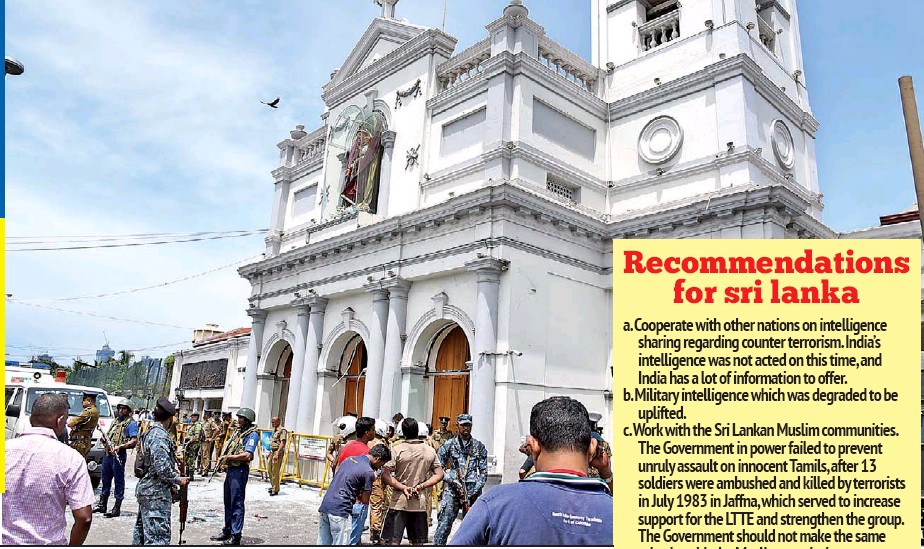
A series of bombings struck churches and hotels in Sri Lanka on Easter Sunday killing more than 250 people including 40 foreigners and wounding more than 500 others following the Easter Sunday suicide attacks that also devastated the livelihood of the entire nation. The attacks were the deadliest since the end of the civil war 10 years ago, and targeted three churches as well as four tourist hotels in Colombo.
These attacks were carried out by a little-known Islamic organization named National Thawheed Jama’ath (NTJ), which sent shock waves across all directions in the country.
WHO SHOULD BE HELD RESPONSIBLE?
At the outset, I would like to place a question before citizens of this country – who should be held responsible for the Easter Sunday attack for not taking prompt actions?
Majority of Sri Lankans believe that the President, the Prime Minister, the Secretary of Defence, the Commander of the Army and Inspector General of Police.
WHY THE PRESIDENT?
Because the President is the Commander in Chief of the Armed forces, head of the Security Council and Minister of Defence and also Minister of Law and Order.
The information of a possible bomb attack had been brought to the notice of the President many a time at the Security Council by Intelligence Chief and responsible Defence and Police Officers.
This will be further proved by the information provided by Indian authorities.
Indian intelligence managed to break into National Thawheed s communications and began tapping into the plot, according to Ajai Sahni, Executive Director of the Institute for Conflict Management in New Delhi.
“That is why the kind of detailing of the incident they received was very, very specific,” Sahni said.
“They knew the group, they knew the targets, they knew the time, they knew the whereabouts of the suicide bombers, and all of this was communicated to the Sri Lankan Government.”
Top Sri Lankan officials also have acknowledged that some of the island nation’s intelligence units were given advance notice about the attacks and that little was done to prevent them. Accordingly, although ample and accurate pieces of information were provided well in advance, the Commander in Chief failed to take either preemptive nor preventive actions causing a massive human disaster in the Sri Lanka history creating a lot of uncertainties, tension and panic among people and ruining the national security, national economy, national culture, national intelligence, which have a correlation with political leadership directly impacting national survival.
Furthermore, Jonah Blank a principal investigator and senior political scientist for the RAND Corporation said, “In this case, it does appear as if there was a political failure which led to a poor Government response. The warning from an external intelligence agency ( almost certainly India) was reported relayed to the office of President Sirisena. It seems as if these warning were not acted on sufficiently and were not relayed to Prime Minister Ranil Wickremesinghe. There are two reasons for this! First, the President doesn’t trust the Prime Minister (He tried to have him ousted in October 2018), and there is bad blood between them. Second, the President believes that India favoured the Prime Minister over him, so he may have discounted the intelligence on these grounds.”
Therefore, President Sirisena cannot wash his hands off from his responsibility for national security simply by sacking the Secretary of Defence and the Police Chief. As per Article 30(1) of the Constitution, “The President of the Republic-of Sri Lanka who is the Head of the State, Head of the Executive and of the Government and the Commander – in Chief of the Armed Forces.”
Accordingly, the SC judgement re-19th Amendment, national security is an inalienable part of people’s sovereignty reposed on the President in trust. As per the opinions of legal experts, inaction of commander in chief has amounted to violation of fundamental rights of victims and citizens.
Similarly in France, the credibility of King Louis XVI was deeply undermined and the abolition of the monarchy and the establishment of a republic became an ever increasing possibility. Louis XVI was the last king of France and the first part of his reign was marked by attempts to reform the French Government in accordance with enlightenment ideas like yahapalanaya.
The king failed to fulfil promises made including to provide basic need bread which was the staple food. It says when people asked for bread, the queen replied “Why? Don’t they have cake?” This amply demonstrated and knowledge he had on people and towards humanity. King’s indecisiveness and conservatism led by some elements of the people of France to view him as a symbol of the perceived tyranny in addition to being ineffective, inefficient and useless to the nation.
The king was arrested and tried by national convention, found guilty of high treason and executed by guillotine on January 21, 1793 as a desacralized French citizen.
WHY THE PRIME MINISTER?
After the 19th Amendment two sources of authorities were created. In terms of practicality the incumbent PM is the key responsible person behind most of the policy issues of the Government. As the PM, who is likely to have the command of Parliament and the leader of the political party who formed the board of ministers is under the effective control of the executive powers including the national security. Therefore, Prime Minister is also responsible for the human disaster for failing.
THE IGP AND THE DEFENCE SECRETARY
Both of them were asked to resign as they were held responsible and were pending inquiries. It is unfair and unrealistic to hold Navy and Air Force commanders responsible as extremists carried out a land attack and there was no violation of air and sea.
WHY THE ARMY COMMANDER?
The Army Commander is personally responsible for handling, directing, managing, controlling and commanding military intelligence.
Military intelligence includes information on other countries’ military forces, plans, and operations gained through a variety of collection methods. It helps civilian policymakers and military leaders understand political and military trends around the world, the sources of potential regional conflict, and emerging threats to the global and regional security environment, and provides recommendations on how best to employ information-gathering techniques and technologies. All these process fails when military intelligence is neglected.
The Sri Lanka Army is a classic example of negligence of military intelligence by the Army Chief.
It has reduced the military effectiveness and efficiency and put the military into a darker side allowing the enemy to capitalize on the weak security situation. The Easter Sunday attack on Sri Lankan Christian churches and tourist hotels killing more than 250 civilians including 40 foreigners proved the consequences of negligence of military intelligence where Army commander himself should be held responsible and he cannot blame police saying that police didn’t pass down the information. It is the prime responsibility of the Commander of the Army to find, analyze and take actions against a threat to national security, where he failed. Therefore, inexperienced Army commander who lacks required knowledge in national security same as dismissed the Secretary of Defence, should resign without further proving to the world his inability.
Similarly, India’s Naval Chief Adm. D.K. Joshi, resigned after a Russian-made Indian submarine caught fire off the coast of Mumbai, injuring seven officers and leaving two missing. After the accident, Adm. D. K. Joshi, the Chief of the Indian Naval Staff, submitted his resignation, “Taking moral responsibility for the accident.”
Likewise in USA, the Air Force’s General Ronald R. Fogleman, top officer retired citing “a variety of reasons” that included differences over responsibility for failing to defend against a terrorist attack that killed 19 U.S. servicemen last year in Saudi Arabia.
“I do not want the institution to suffer and I am afraid it will if I am seen as a divisive force and not a team player,” Gen. Ronald R. Fogleman, the Air Force chief of staff, said in a written statement. He becomes the first of 16 Air Force chiefs to step down voluntarily before completing his full term.
The chief of France’s armed forces resigned in a dispute with Emmanuel Macron over defence budget cuts. In a statement, 60 year-old Pierre de Villiers said he had tried to keep the armed forces fit for an ever more difficult task within the financial constraints imposed on it, but was no longer able to sustain that.
“In the current circumstances I see myself as no longer able to guarantee the robust defence force I believe is necessary to guarantee the protection of France and the French people, today and tomorrow, and to sustain the aims of our country,” he said.
Above examples amply demonstrate qualities of an officer and a gentleman of professional Armed Forces in the world, more than command responsibility.
One must understand that, one cannot demand respect, but that it should be commanded. This is the most important moment in Sri Lankan history. It was proved beyond doubt that the person who holds the office of Commander of the Sri Lanka Army lacks competency and experience to tackle Sri Lanka Army, which had an immense reputation in defeating the world’s most ruthless terrorist organization and therefore, he should not try to further stay in the seat for personal benefits at the mercy of politicians specially the President.
PRESIDENT’S PROMISE TO CHANGE HEADS OF DEFENCE FORCES
Sri Lankan President Maithripala Sirisena said he expected to change the heads of the country’s defence forces within a day following their failure to prevent the Easter Sunday bombings, despite the fact they had prior information about the attacks.
“I will completely restructure the Police and Security Forces in the coming weeks. I expect to change the heads of defence establishments within the next 24 hours,” Sirisena said in a televised address to family members. They may struggle with or face new challenges following the event and they may suffer from post stress traumatic disorder (PSTD) which authorities must take prompt actions. Interethnic anxiety has also risen in the affected districts as well as in the country.
There are a lot of uncertainties, tension and panic among people, due to ongoing threats of another round of explosions, ongoing security checking across country, suspicion about terrorists and state of emergency being issued and authorities warned that the country still faces the threat of ISIS terror attacks.
IMPACTS POLITICAL
The Inspector General of Police, Pujith Jayasundara, came under heavy criticism following the bombings with the United People’s Freedom Alliance urging that he resign for this total failure to prevent the bombings. Later, former Presidential candidate Field Marshal Sarath Fonseka claimed it was unfair to blame the IGP and claimed it was a conflict between the functioning of military intelligence and criminal investigators, and called for better intelligence mechanisms and security clearances to be streamlined.
In a speech delivered in Parliament, former President and Current Opposition Leader Mahinda Rajapaksa slammed the Government for weakening the intelligence services over the years.
He stated that in January 2015, he handed over a secure and peaceful country with a strong national security apparatus.
He claimed the present Government was squarely responsible for the 2019 Easter Sunday bombings, stating that on an important occasion such as Easter, representatives of the Government usually attend Mass; on this occasion, no representatives were present in or near churches.
He blamed the Government for diluting the powers of the national security apparatus and claimed this terrorist attack would never have occurred under his administration. Additionally, the Government was preparing to repeal the Prevention of Terrorism Act; he questioned what kind of position the Government would have been in to respond to the incident had they been successful in having the Act repealed.
On April 24, 2019, President Sirisena promised major changes to the leadership of the security forces within the next 24 hours and pledged a “complete restructure” of the police and national security forces in the coming weeks. These changes come amidst allegations that a rift between the President and Prime Minister contributed to the failure to effectively respond to threats that undermine national security.
The incident also caused a major setback for the Government and for other political parties just before the 2019 Sri Lankan presidential election. Prime Minister Ranil Wickremesinghe later apologised for failing to stop the attacks issuing a statement on twitter stating “We take collective responsibility and apologise to our fellow citizens for our failure to protect victims of these tragic events. We pledge to rebuild our churches, revive our economy, and take all measures to prevent terrorism, with the support of the international community.
ECONOMIC
Tourism in Sri Lanka is the country’s third largest foreign exchange earner and employs around 135,000 to 150,000 in the industry. The industry had expected three million tourist arrivals and a revenue of $5 billion in 2019. Due to the attack on tourists, The Hotels Association of Sri Lanka estimated a loss of $1.5 billion in tourism earnings for the year.
The Government’s plan to grant visa-onarrival to visitors from 39 countries has been suspended due to the current security situation.
SOCIAL
Minister Patali Champika Ranawaka called for the Batticaloa Campus and Islamic Study Centres (Madrasas) in Beruwala, Maharagama, Trincomalee and Addalaichchenai be brought under the control and supervision of the University Grants Commission (UGC) and the Education Ministry.
On April 27, 2019, Sri Lanka Cricket called off an under-19 tour of the country by the Pakistan cricket team, scheduled to take place in May, saying “We didn’t want to take any chances”.
In the wake of the attacks thousands of Sri Lankans bought terrorism insurance. Islamic channel Peace TV, which is run by preacher and televangelist Zakir Naik was officially banned in the country by the main satellite cable operators Dialog TV, PEO TV and Lanka Broadband Network following the attacks even before the Governmental intervention.
The channel is also alleged for its hate speech and also accused to have been used by the Islamic State to brainwash the youngsters and was previously banned in India and Bangladesh.
REACTIONS DOMESTIC RESPONSES
Leaders of the country condemned the attacks: President Maithripala Sirisena said “I have given instructions to take very stern action against the persons who are responsible for this conspiracy”, the Prime Minister Ranil Wickremesinghe said “I strongly condemn the cowardly attacks on our people today, Opposition Leader and former President Mahinda Rajapaksa called the attacks “absolutely barbaric” and said that the nation will stand united as one against “acts of terrorism”, and Finance Minister Mangala Samaraweera described the attacks as a “well co-ordinated attempt to create murder, mayhem and anarchy”.
Roman Catholic Archbishop of Colombo, His Eminence Cardinal Malcolm Ranjith said “It’s a very, very sad day for all of us. I wish therefore to express my deepest sorrow and sympathy I condemn to the utmost of my capacity this act that has caused so much death and suffering to the people.”
Following the attack, the Archbishop’s House in Colombo cancelled all Catholic Easter services planned for the evening of Easter Sunday.
INTERNATIONAL RESPONSE
Numerous world leaders expressed condolences and condemnation. President of the European Parliament Antonio Tajani referred to the bombings as an act of genocide.
The Finlandia Hall in Helsinki illuminated in the colours of the Sri Lankan flag to express solidarity.
After the bombings, numerous buildings around the world were illuminated in Sri Lanka’s colours, some of which included the Flinders Street railway station in Melbourne, the Opera House in Sydney, the Finlandia Hall in Helsinki, the Northern Spire Bridge and Penshaw Monument in Sunderland, the Burj Khalifa in Dubai, the Emirates Palace, ADNOC Headquarters, Capital Gate and Marina Mall in Abu Dhabi, the City Hall in Tel Aviv, the Pennsylvania State Capitol in Harrisburg, and the Sky Tower in Auckland. The Eiffel Tower in Paris went dark as a memorial for the victims of the bombings.
The New York Stock Exchange paused for a moment of silence before the opening bell on the day after the attacks. Real Madrid CF also had a moment of silence before the La Liga match on the night of the attacks. Candlelight vigils were held and flags were also flown at half-mast around the world including in Pakistan, Canada, Indonesia, New Zealand, Australia and the United Kingdom.
ISIS CLAIMED RESPONSIBILITY
In the meantime, the Islamic State of Iraq and the Levant (ISIL or ISIS or IS) group claimed responsibility for the bombings via its Amaq news portal.
“Those who carried out the attack that targeted the citizens of the coalition and Christians in Sri Lanka were Islamic State fighters,” the group said in a statement. In a later statement, the group gave the names of seven people, who it said were behind the “jihadist attack” that targeted Christians during their “blasphemous holiday”, referring to Easter. It also released a photo of eight men it said were behind the blasts.
SURVIVAL OF SRI LANKA AND WHERE ARE WE?
Survival of any nation on this planet depends on national security, economic capability, Diplomatic Capability, science and innovation capability, Information capability, strategic culture and finally political capability.
When political capability or the political leadership is weak, first and foremost national security will be threatened. Then it will hit the national economy. Followed by diplomacy, national science and innovation, national culture and information structure.
At present all the pillars of survival have been badly affected in our country. How did it happen? I believe, It is not that difficult for someone with common sense to understand where the real problem lies in our motherland?
Deshakeerthi Lanka Puthra, General, Dr Boniface Perera (PHD)
Reports on Rev. Fr. Cyril Gmaini, a prominent voice among those struggling for justice for the Easter Sunday attack, being summoned to the Criminal Investigation Department (CID) tomorrow (16) are false, LNW learned.
Queried on the matter, LNW was briefed by Fr. Gamini’s delegation that no such summoning has been made.
Meanwhile, a silent assembly will take place from 9 am to 12 noon in the precincts of the CID tomorrow. A number of priests and religious people will join in a silent recitation of the Rosary, and the lay people are also welcome to join.
Faiszer Musthapha PC, one of the senior vice presidents of the Sri Lanka Freedom Party (SLFP), has reportedly resigned from all of his designated Party titles.
His letter of resignation has been handed over to Party Leader, former President Maithripala Sirisena this (15) afternoon.
His resignation was announced during the special discussion held by the SLFP this afternoon.
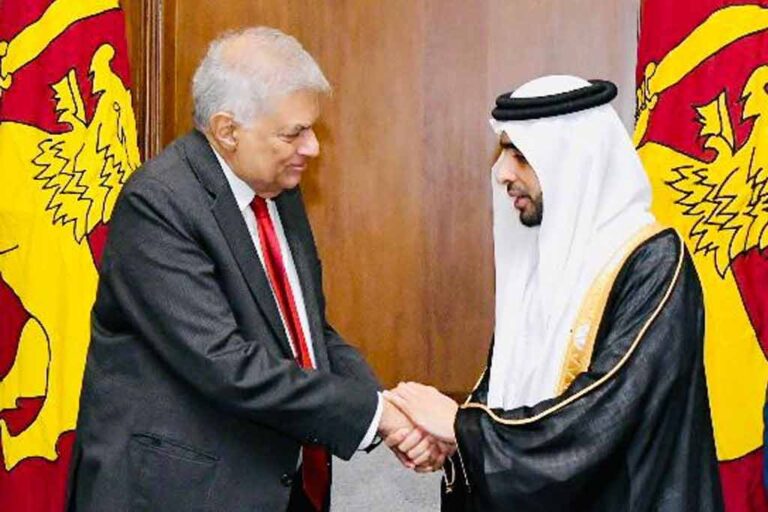
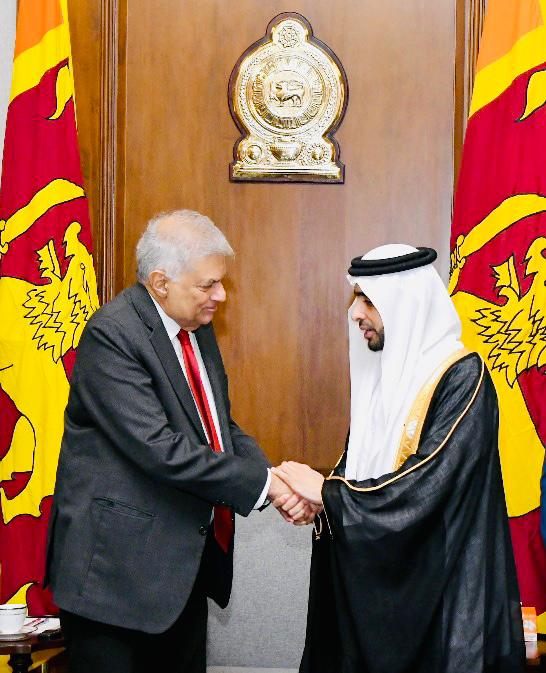
A meeting between HRH Sheikh Mohammed Bin Maktoum Bin Juma Al Maktoum, Member of UAE Ruling Family, and President Ranil Wickremesinghe was held today (15).
The two parties exchanged views on the country’s current situation, and Prince Bin Juma Al Maktoum has expressed his support for Sri Lanka.
The two parties also discussed investments into the energy, technology and agriculture sectors in the country.
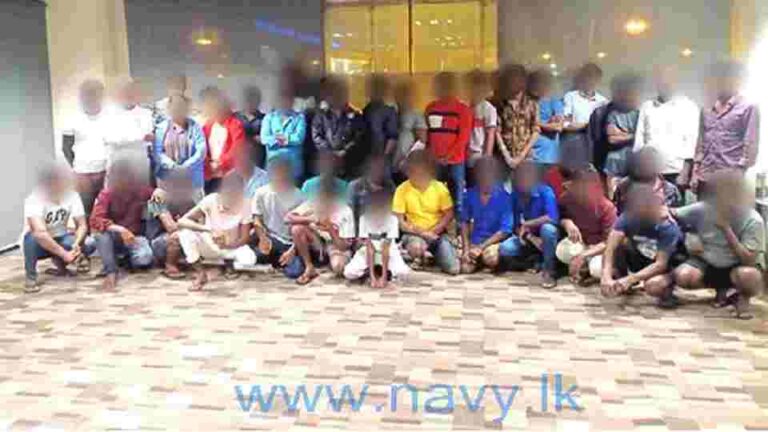
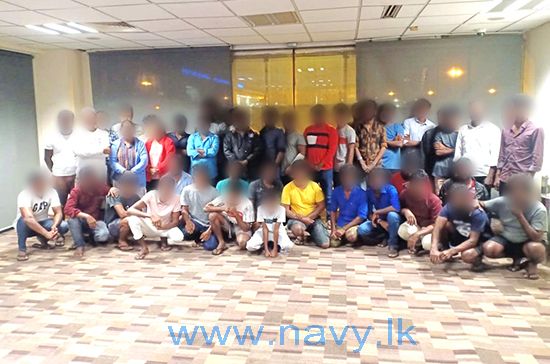
Authorities of the Réunion Island of France repatriated 46 Sri Lankan nationals to Sri Lanka by air on the evening of 13th January 2023. Reportedly, the group of Sri Lankans was apprehended as they were attempting to migrate to the Réunion Island illegally by sea.
The suspects set out aboard a multiday fishing trawler (IMUL – A- 0559 CHW) from Negombo on 02nd December 2022. The group of individuals comprises 43 males including the crew of the multiday fishing vessel, 02 females and 01 boy. They were apprehended as they were attempting to illegally enter the Réunion Island of France on 24th December 2022. They have been identified as residents of Jaffna, Kilinochchi, Mullaitivu, Mannar, Batticaloa, Chilaw and Negombo, from 13 to 53 years of age.
Meanwhile, the group of individuals will be handed over to the Criminal Investigation Department for onward legal action.
It has been revealed that the smugglers in Dehiwala area, who led this smuggling, charged an amount from Rs. 200,000 rupees to Rs. 4,500,000 from one person. Smugglers orchestrate this nature of unlawful acts with the intention of making a fast buck, by defrauding innocent people. Therefore, the Navy urges the public to avoid being victimized to such ploys and waste their hard-earned money.
The French government does not entertain the illegal entry of people to the Réunion Island and such people will be immediately repatriated upon apprehension.
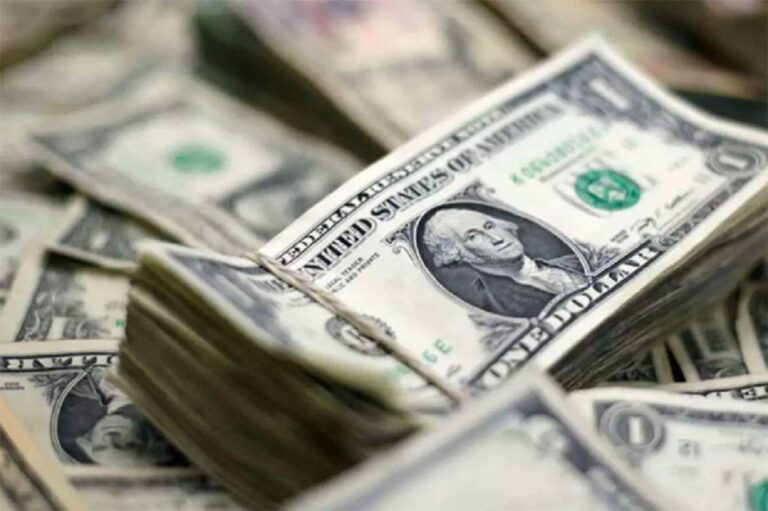
Sri Lanka has set an ambitious target of US $1 billion monthly foreign inflow from worker remittance by end-2023 with more people leaving the island nation for offshore jobs after an unprecedented economic crisis, Foreign Employment and Labour Minister Manusha Nanayakkara said.
Workers’ remittance inflows have historically been a driving force of the Sri Lankan economy. Sri Lankan migrant workers’ foreign remittances have increased to US$ 475.6 million in December 2022 from US$ 325.2 million in December 2021, he disclosed.
He tweeted that this is a 46% (US$ 150 million) increase compared to the inflows recorded in December 2021.
However, the inflow of workers’ remittances contracted significantly in 2021 reflecting the implications of the COVID-19 pandemic and the increased tendency to remit money through informal channels.
At the same time, the external sector continues to show significant vulnerabilities making numerous challenges for the economy.
In this context, promoting workers’ remittance inflows to the country is imperative to overcome the heightened external shocks, Minister Nanyakkara added. .
Also, the importance of workers’ remittances as a steady source of foreign exchange in Sri Lanka has grown among the researchers and the policy makers
Worker remittances sent by Sri Lankan expatriates jumped 46 percent in December, but the inflows were still 31 percent down for the year after a record high number of the people migrated in 2022.
The remittances, which were the top foreign exchange earners fell from December 2021 most workers sought to send money via illegal hawala and undiyal methods in the face of the central bank kept the rupee propped up artificially.
Even after the currency was allowed to depreciate sharply from 200 rupees per dollar to 360, the worker remittances were down.
The remittances jumped 46 percent to $475.6 million in December 2022, compared to $325.2 million in the same month of the previous year.
However, the inflows fell 31 percent for the whole 2022 to $3,786.5 million from the previous year’s 5,491.5 million, the latest central bank data showed.
Though the island nation saw a record 311,269 people leaving the country as migrant workers last year, the worker remittances have yet to rise.