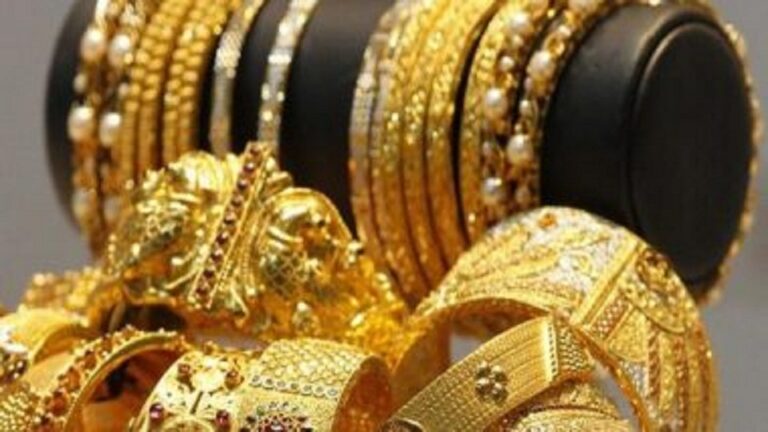
The government is planning to secure US $1 billion from jewellery exports in 2023 facilitating value addition of local gems, Minister of Industries and Plantations Ramesh Pathirana disclosed.
Participating as the Chief Guestat the opening ceremony of FACETS gems and jewellery exhibition in Colombo yesterday Minister Pathirana detailed the government’s plans for the gem and jewellery industry saying, “all technology and equipment related to value addition will be duty free.
A committee will also be appointed to facilitate a pension plan for gem miners and other related occupations, he added.
One of the most sought after international gem and jewellery shows on the global procurement and sourcing calendar, FACETS Sri Lanka Premier Edition was inaugurated by Minister of Industries and Plantations Ramesh Pathirana.
Hosted by Cinnamon Grand and organised by the National Gem & Jewellery Authority and Sri Lanka Gem and Jewellery Association, FACETS Sri Lanka also signals that the island-country is ready and open for business.
In his welcome address, Chairman of SLGJA Ajward Deen stated that the Government of Sri Lanka must recognize the industry as a key forex earner. “The Government must be a facilitator towards the future continuance of this industry which most often is plagued by numerous and inefficient bureaucratic challenges which hinders its growth.
The incentives that have been eliminated recently should be reconsidered. The public-private sector partnership which is very much at the heart of this year’s exhibition, stands as testimony to a collaborative partnership which will benefit not just the industry, but the entire nation.”
Chairman FACETS Sri Lanka Altaf Iqbal emphasized two points about the exhibition; the fact that the exhibition signals to the world that Sri Lanka is ready and open for business and it being the first to example a solid and working public-private partnership.
“This is probably one of the rare instances where we see the government being the facilitator and the private sector being the driver, a paradigm that can be cascaded to other industries as well.”
The Sri Lanka Gem & Jewellery Association (SLGJA) is the apex private sector organisation representing the interests of all industry sub-sectors from mining through manufacturing, wholesale and retail. It organizes FACETS Sri Lanka in partnership with the National Gem and Jewellery Authority and the Sri Lanka Export Development Board.
Government aims to generate US $1 billion from jewellery exports in 2023
‘Tooth Relic Temple lookalike’ building in Pothuhera smashed!
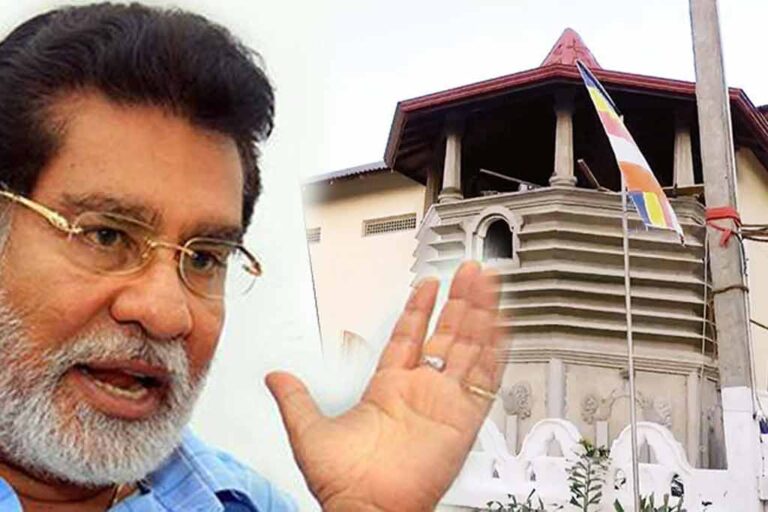
The owner of the octagon-shaped building in Pothuhera, Kurunegala which is speculated to be ‘mocking’ the holy Temple of Tooth Relic in Kandy has agreed to wreck his property and carried out the operation this (08) morning, following complaints from a number of parties.
Complainants including the Chief Prelates of Buddhism had urged the Police to conduct an immediate probe into the said building and accordingly, a probe was launched by the Police.
Meanwhile, former Minister Mervyn Silva accompanying a group of supporters barged into the said location yesterday (07) and ‘ordered’ the owner to wreck the building within two weeks.
Accordingly, the building owner has commenced the wrecking of the octagon-shaped ‘Paththirippuwa’ resembling the Tooth Relic Temple this morning.
Previous report:
MIAP
CB to limit overnight standing facilities for several banks
In a bid to force commercial lenders to participate in the domestic money markets, Sri Lanka’s central bank capped their ability to tap an emergency liquidity window to a maximum five times per month.
“The Central Bank of Sri Lanka has decided to impose restrictions on the availability of the Standing Facilities to Licensed Commercial Banks under the Open Market Operations,” it said in a statement Saturday
In a bid to force commercial lenders to participate in the domestic money markets, Sri Lanka’s central bank capped their ability to tap an emergency liquidity window to a maximum five times per month.
“The Central Bank of Sri Lanka has decided to impose restrictions on the availability of the Standing Facilities to Licensed Commercial Banks under the Open Market Operations,” it said in a statement Saturday
The Central Bank of Sri Lanka (CBSL) has decided to impose restrictions on the availability of the Standing Facilities to Licensed Commercial Banks (LCBs) under the Open Market Operations (OMOs) of CBSL, without considering market-based funding options to address their structural liquidity needs.
Accordingly, effective from 16 January, the Standing Deposit Facility (SDF) — the overnight deposit facility that allows LCBs to park excess liquidity and earn interest — will be limited to a maximum of five (05) times per calendar month.
Meanwhile, the Standing Lending facility (SLF), which is the collateralised facility provided for LCBs to fulfill any further shortage of the liquidity requirements from the Central Bank at the end of the day, would also be limited to 90% of the Statutory Reserve Requirement (SRR) of each LCB at any given day.
The decision was reached after it was observed that several LCBs have continued to depend excessively on the overnight Standing Facilities under CBSL’s OMOs, CBSL stated.
Although OMOs have been made available to be used as fallback options after utilizing all other funding options, CBSL noted that as several of these LCBs show no signs of adapting to remedial measures in this regard, such actions continue to affect the efforts of the Central Bank to reactivate the money markets.
Such LCBs also stand to pose a threat to the smooth channeling of funds in the economy with a possibility of clogging the payment and settlement systems, CBSL warned.
CB Governor blames closed economy as one of the reasons for crisis
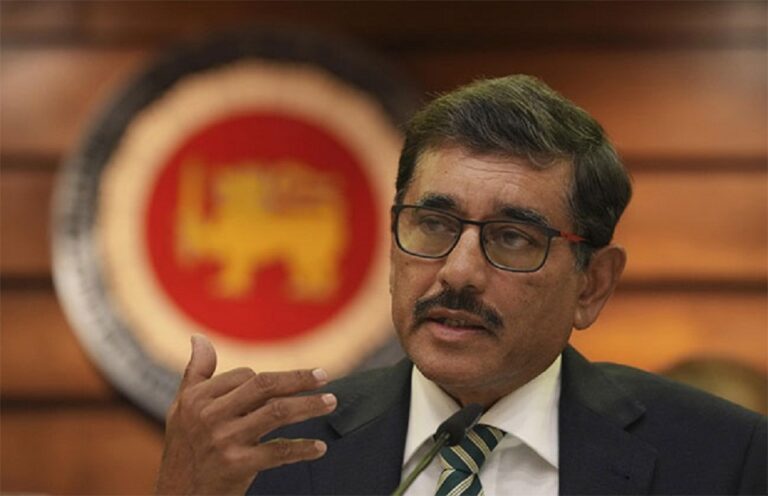
In another drivel statement, Central Bank Governor Nandalal Weerasinghe claims that Sri Lanka is both externally and internally fragmented and the worst affected by the ‘post-Covid world.’
He was speaking at a Panel Discussion on ‘Strengthening Institutions for Sustainable Growth in the Post-COVID World’, held in New Delhi on Friday 06.
Externally, he said, giving an example of Iran being sanctioned by the US when Sri Lanka’s refinery uses Iran crude oil, but due to the sanction Sri Lanka had to stop buying oil from Iran.
Local media had given wide publicity to these observations made by the Central Bank Governor at the panel discussion.
Expressing dismay on these remarks made by Central Bank Governor Nandalal responsible for the people and who is bound to divulge the absolute truth, several energy experts said that there was no such requirement of using Iran crude only although the refinery was a gift from Iran.
It can use light crude oil with less sulfur and the Ceylon Petroleum Corporation took measures to replace Iranian crude imports with alternative grades, including Oman crude, Saudi Arab Light or Malaysia’s Miri Light.
Sri Lanka now buys crude and refined products from countries such as Oman, Saudi Arabia, Singapore and Vietnam at a much higher price.
Even during the period of US sanctions imposed on Iran, the CPC was sourcing all its crude requirements from the spot market after its regular supply from Iran was cut, corporation sources said.
They said fuel purchases from Iraq, Saudi Arabia and Oman were options available for Sri Lanka and it had started purchasing Saudi Arabian Light Oil instead of Iranian Light Oil in the recent past.
Sri Lanka is the latest Asian nation to accept Russian crude after Moscow’s invasion of Ukraine prompted widespread condemnation and sanctions.
The Sapugaskanda refinery is using Siberian Light crude, a CPC official said, adding that it’s one of several grades of crude that our refinery can process, alongside Abu Dhabi’s Murban and Iranian Light oil.
Therefore the CB Governor should not make such comments without verifying facts as the whole world knows what is happening in Sri Lanka and its economic crisis triggered due to tools and policies adopted since 2020.
Speaking on the internal policies, he recalled Sri Lanka’s trade integration, where it was one of the first countries in Asia that opened the economy in 1977.
“We integrated with the region and the world at the beginning for several decades and then moved backwards due to internal policies and nationalistic protectionism. From an open economy we became a more protectionist closed economy which is one of the reasons why we are facing the crisis.”
But he has failed to mention about the introduction of policy tools by the Central Bank in 2020 by turning the whole monetary policy upside down following the verbal attack leveled at CB top officials including former Governor W D Lakshman and Senior Deputy Governor Nandalal Weerasinghe by then President Gotabaya Rajapaksa on June 16 2020.
He told these officials “You have several tools that can be used. Those tools have to be utilized. However, our Central Bank does not use a single tool. It just stays idle.”
“Give me your suggestions on how to strengthen the economy, how to assist banks under these dire circumstances, and how to categorically assist small scale and medium scale businesses as soon as possible, ” he demanded.
As a response the Central Bank deployed an array of monetary policy tools in 2020, while being one of the first central banks in the world to ease monetary policy citing the outbreak of COVID-19.
These policies, including unconventional measures, were executed at an extraordinary pace, size, and scope, aimed at injecting sufficient liquidity into the market and lowering borrowing costs, thus supporting financial markets and the recovery.
NMSJ urges govt to immediately address environmental crisis
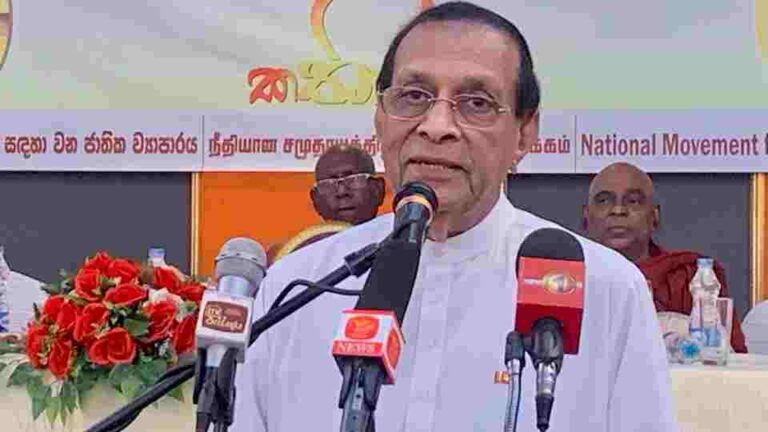
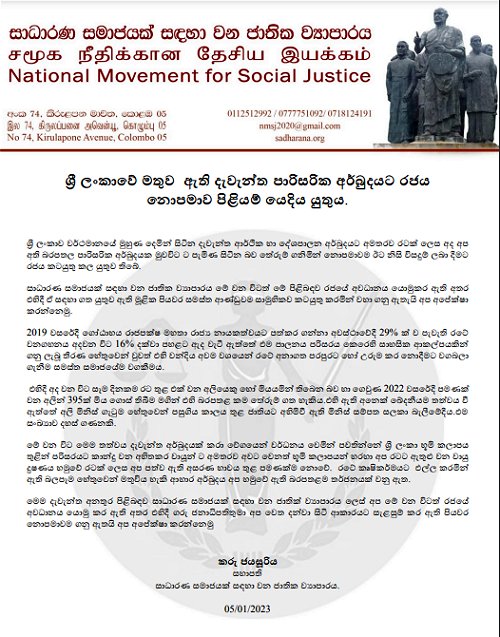
The National Movement for Social Justice (NMSJ) chaired by former Speaker Karu Jayasuriya has urged the government of Sri Lanka to immediately address the emerging environmental crisis following reports that the island nation’s forest density has dropped to 16 per cent.
NMSJ Chief Jayasuriya in a statement emphasised that the government should understand that Sri Lanka is facing a very serious environmental crisis in addition to the massive economic and political crisis befallen it, and urged that immediate and appropriate solutions should be taken.
MIAP
Govt to grant a Rs. 45,000 food allowance for pregnant women

A project to provide a nutritional food allowance amounting to Rs. 45,000 will be granted to pregnant mothers during their pregnancy period starting from this year, the Ministry of Women, Child Affairs and Social Empowerment announced.
The nutritional allowance, which was introduced by the previous Good Governance Regime amounting to Rs. 20,000 evenly divided throughout the ten months of pregnancy, has now been revised to Rs. 45,000.
MIAP
President to leave for India to attend ‘Voice of Global South’ summit
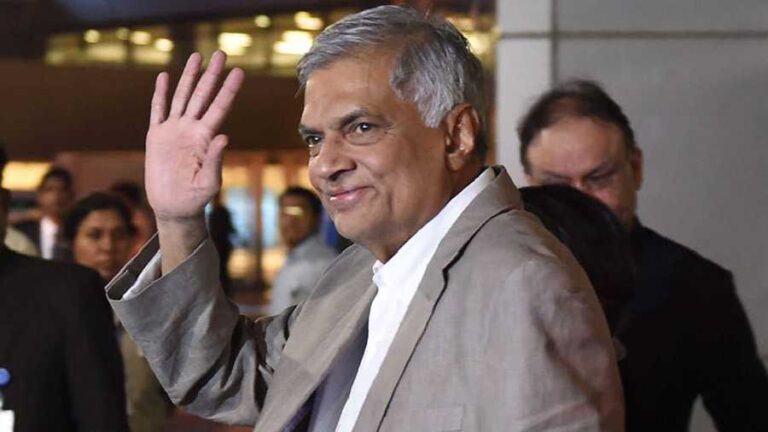
Sri Lanka’s President Ranil Wickremesinghe will be among twenty other world leaders to attend the ‘Voice of Global South’ virtual summit in India next week, Indian media claimed.
The event will be hosted by India and the President is set to leave soon, according to reports.
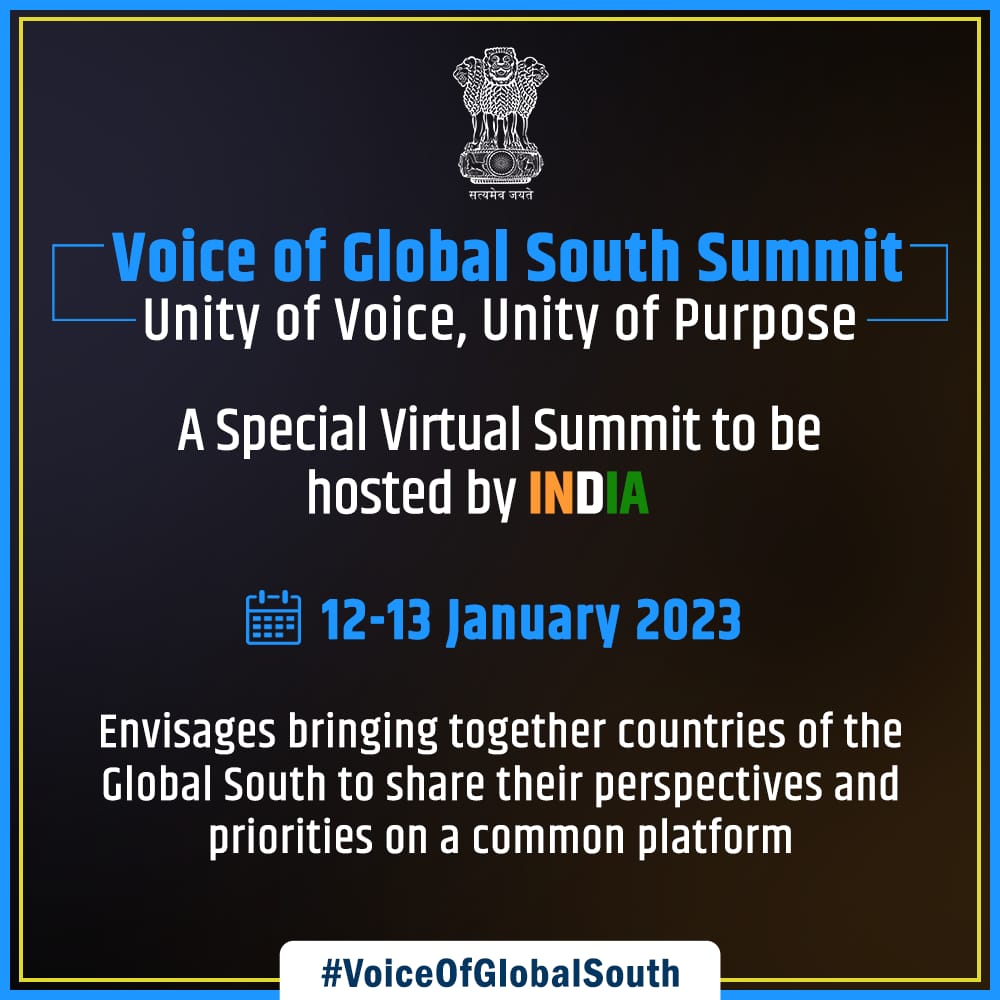
Over 120 countries have been invited to join the summit, which will be held on January 12 – 13, 2023, and it will have two sessions of heads of State and government to be chaired by Indian Premier Narendra Modi.
Other than neigbourhood countries, leaders from five countries from Africa (Angola, Ghana, Nigeria, Mozambique, and Senegal), three countries from the ASEAN grouping (Thailand, Cambodia, Vietnam) will be present, along with leaders of Uzbekistan, Mongolia, UAE, and Papua New Guinea, the reports added.
MIAP
Agalawatta SLFP Chief Organiser joins SJB
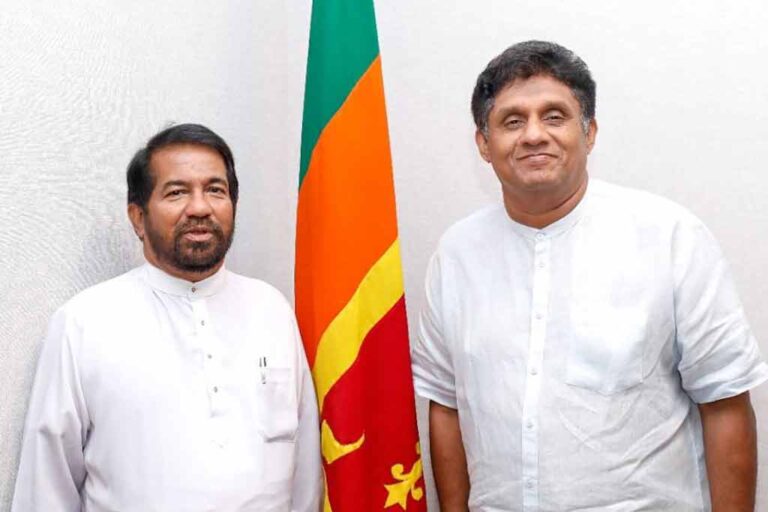
Ranjith Somawansa who served as the Sri Lanka Freedom Party (SLFP) Chief Organiser of Agalawatta met with Leader of the Opposition Sajith Premadasa and joined the Samagi Jana Balawegaya (SJB) yesterday (07).
Somawansa, a graduate of the University of Colombo and a prominent former student activist, previously served as the Minister of Health, Indigenous Medical Affairs, Probation and Child Care of the Western Province and the Minister of Education, Culture and Arts and delivered many services during his tenures.
He also served as the President of the Progressive Students Front and the President of the United Students Front of the University of Colombo, and entered politics through the SLFP at the invitation of Lady Sirimawo Bandaranaike.
He was elected as a Provincial Council member in 1993 and served under many titles including the House Leader and the Deputy House Leader of the Western Provincial Council for many decades.
MIAP
Ex Minister Mervyn Silva orders owner of ‘Tooth Relic Temple lookalike’ building to wreck his property
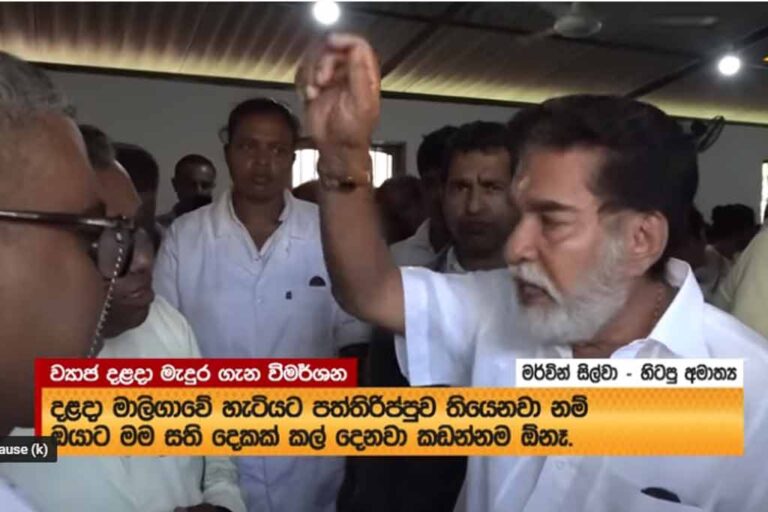
Former Deputy Minister Mervyn Silva, a politician with a notorious history of delinquent conduct by the abuse power who had not been much active in politics over the last decade, has once again appeared to turn the tide by barging into what it appears to be an octagon-shaped building resembling the holy Temple of Tooth Relic in Kandy currently in development in Wadakada, Pothuhera – Kurunegala yesterday (07) morning and ‘ordering’ its owner to smash it within two weeks.
The ex Minister’s move comes in following the the said building being at the centre of attention in a wider ongoing dialogue against the so called blasphemy, which according to critics is influenced by a political agenda to regain power, where a number of parties including the Chief Prelates of Buddhism had lodged a complaint to the Police that a ‘fake Tooth Relic Temple’ is being built. The President had also instructed the Police to launch a probe into the said construction.
Silva accompanying his supporters who barged into the building ‘ordered’ the building owner Bosath Senadhipathi to immediately change his name ‘Bosath’ to something else, and to wreck the whole place as its octagon shape resembles the Tooth Relic Temple within a period of two weeks.
MIAP
Sri Lanka Original Narrative Summary: 08/01

- UNP Chairman MP Wajira Abeywardana says holding the Local Government elections at this juncture will not solve the country’s burning issues: asserts it will not turnaround the bankrupt country: also says the total number of LG members has to be reduced to at least 4000.
- Cabinet approves President Ranil Wickremesinghe’s proposal to set aside all state lands under the guidance of Divisional Secretaries.
- President Ranil Wickramasinghe says Govt expects to receive India’s “response” regarding debt restructuring at the end of this month, “negotiations with China have re-commenced”, and expects the IMF facility to be received in the “first half of this year”: in May 2022, CB Governor Weerasinghe had assured the IMF facility would be in place and the economy stabilized by Aug’22.
- All Ceylon Medical Officers’ Association General Secretary Dr Jayantha Bandara warns the lives of 10,000 cancer patients are in danger due to shortages in 15 vital cancer drugs: says 90% of the drugs used by them were in short supply.
- Former President Gotabaya Rajapaksa returns from a private visit to Dubai: pictures of Rajapaksa with exotic animals in an exclusive animal park in Dubai go viral in social media.
- Under the Indian “credit line”, 75 buses imported by the Govt: another 425 buses to be received this year: the buses “handed over” by Indian High Commissioner Gopal Baglay to Transport Minister Dr Bandula Gunawardena, Ports Minister Nimal Siripala de Silva, and Trade Minister Nalin Fernando.
- Justice Minister Dr. Wijeyadasa Rajapakshe says Govt will introduce new laws as proposed by the Law Commission.
- Several high-ranking Sri Lankan Buddhist Monks, who were on a pilgrimage to Bodh Gaya recently, seek a visit by the Dalai Lama to Sri Lanka.
- Sri Lanka begins fresh austerity drive: freezes Govt recruitment: introduce new
taxes and higher electricity and fuel prices: desperately try to secure the elusive IMF bailout: the IMF has so far ordered that the Govt’s 1.5 mn strong public service be trimmed, taxes sharply raised, and several State enterprises be sold. - India wins 3rd T20 Cricket International against Sri Lanka by 91 runs and win the series 2-1: IND – 228/5 (20): Sri Lanka 137 all out (16.4).