Sri Lanka government is to ease the oppressive taxes imposed on the people after the economic situation is improved as the tax hikes were aimed at supporting 90 per cent of the people who need the state assistance, a senior minister said.
A great deal of indignation and fury as to the impact on their disposable income and lifestyle have been expressed by many over the media and social media.
In addition, concern has been expressed that the country will lose many skilled professionals who might migrate to countries with higher tax rates and compliance of nearly 100%!
The corporate sector, which is also being impacted, has demanded from the government greater restraint, accountability, and transparency on its spending.
Unfortunately, Sri Lankans, have, in addition to accepting corruption as part of country’s DNA, turned a blind eye to the civic responsibility of being a tax-compliant citizen for multiple reasons.
State Minister of Finance, Ranjith Siyambalapitiya says that the imposition of new taxes has been done in order to support 90 per cent of the people who need the government’s assistance.
Speaking to the media while joining an observation tour at Embilipitiya Excise Station, the State Minister mentioned that he hopes to revise the oppressive taxes for the people at the first possible opportunity.
“Taxes are not something that will continue forever. We are ready to reduce them at the first possible moment and provide relief to the taxpayer. But until then we have to keep this society alive.”
Social security contribution levy was criticized by many people, the State Minister said, mentioning that he also believes that it is not that much of a good tax to be imposed.
Further, he expressed that they hope to remove some parts of the social security contribution levy which has some effects, by the beginning of next year.
“The first meeting of the Treasury which will be held on January 02, is to talk about the taxes”, he said.
Government to ease oppressive taxes after economy gains momentum.

Rail service deteriorates day by day despite IRCON upgrading works

Sri Lanka’s Rail transport service is deteriorating day by day despite efforts to repair and rebuild railway lines country wide with the involvement of IRCON International, a fully owned company of the Indian Government, in upgrading railway lines.
Upgrading crucial lines of Sri Lanka’s railway system could cost the Government up to US $4.5 billion but the move will provide a significant impetus to economic growth, a railway expert said.
No daily maintenance, no dollar for spare parts 60-70 trains a day are cancelled, train service delays, derailments and timetable changes are all due to financial crunch, General Secretary of All Sri Lanka Railway Employees General Employees Union and co-convener of Railway Union Alliance S. B. Vithanage said.
He said that there is informal management and inefficiency in the department and that railway tracks should be maintained daily and now due to lack of proper maintenance train derailments occur frequently.
He said that due to the lack of dollars required for the importation of the spare parts and the maintenance of the train carriages, the railway is now in a very bad condition and because of this 60 or 70 trains are running a day is canceled.
Stating that 9,000 posts are unfilled in various sections of the railway service, Vithanage said another 700 will retire by December 31, 2022 and the number of vacancies will increase by January 1, 2023.
Apart from this, he said that due to lack of tools like shoes, pen roll, clips etc. required for railways, the railway tracks are dilapidated day by day.
He noted that the speed of the coastal train has been reduced by 30 to 40 km per hour due to maintenance crisis as planned by Indian IRCON.
IRCON International, a fully owned company of the Indian Government, is on the verge of marking 12 year in Sri Lanka, having completed upgrading to the tsunami railway line and the much publicised northern railway link.
Similar upgrades to the railway lines to Kandy, Omanthai and Trincomalee would increase connectivity and fast track transport at a cheaper cost to the country, opined IRCON Project Manager in Sri Lanka S.L Gupta.
India’s state-run IRCON will begin a 33 billion rupee (about 90 million dollars) upgrade of section rail track to the northern city of Jaffna from January 05, Transport Minister Bandula Gunawardana said.
The upgrade from Maho to Omanthai in Vavuniya will see the track capable of running trains at speeds of up to 100 kilometres an hour.
The track from Omanthai to Jaffna was previously upgraded under an Indian credit line.The travel time from Colombo to Jaffna will be cut by about an hour after the upgrade. The track will be closed for five months from January five.
Sri Lanka Railways will operate 5 trains to Anuradhapura daily and busses will be provided by state-run Ceylon Transport Board and other operators to carry passengers to Jaffna.The section of the track has 213 culverts and 90 bridges an IRCON official said.
The track now has speed restrictions on 27 locations where the train can be run at 10 to 40 kilometres an hour. After the upgrade the minimum speed will be 70 kmph.
The track will be re-built from the bottom up, with new ballast and welded tracks, which will allow for fast smooth travel without the current ‘jerks’.
New Commissioner General appointed to Department of Examinations
Amith Jayasundara has been appointed as the New Commissioner General of Examinations at the Department of Examinations.
The appointment takes place following predecessor L.M.D. Dharmasena’s retirement.
MIAP
Government to introduce first ever National Agricultural Policy soon

Sri Lanka is set to introduce first ever National Agricultural Policy and it will be presented in Parliament shortly by the subject Minister Mahinda Amaraweera.
The expert committee appointed to prepare the National Agricultural Policy informed that they have already finalized draft of this new policy.
Former Agriculture Director Generals, Ministry Secretaries as well as university professors and agricultural representatives were in the committee including Senior Prof. Buddhi Marambe, Prof. Udith Jayasinghe, Prof. Palitha Weerakkody, Prof. M.B. Rathnathilaka, Dr. B.V.R. Punyawardena, Dr. D.S. Kuruppuarachchi, former Director Generals of Agriculture Dr. Ajanta de Silva and Dr. W.M.M Weerakoon.
The Minister said that the final draft will be submitted to the parliament for approval, and after that everyone should work for the implementation of the new Agriculture Act.
“ A s um of US $400 million have been spent on the import of rice in a period of 10 months. Therefore, it is necessary to give everyone’s support for the implementation of the national agricultural policy,” he added.
Following the identification of about 100,000 acres of uncultivated land, the Ministry of Agriculture has planned to acquire the land for the Government for a period of five years, with effect from this year 2023.
Minister of Agriculture Mahinda Amaraweera said that the approximately 100,000 acres of land remain uncultivated although most are suited for cultivation purposes.
The Agricultural Lands Act, No. 42 of 1973 will be amended accordingly so that these lands can be given to youths who have no lands to cultivate,” he said.
Upon establishing an agreement with those who cultivate the respective land under the five-year programme, Amaraweera said that landowners may opt to cultivate the land if they so desire, at the end of the five-year period.
If the landowners choose to not cultivate the land, he said that steps will be taken to direct those who cultivate the land to give a part of the harvest to the landlords as ground rent.
Sri Lanka’s agriculture sector, mainly paddy cultivation, has suffered a major setback since April 2021 with the Cabinet of Ministers’ decision to ban the import and use of chemical fertilizers and agrochemicals, as per a proposal made by then-President Gotabaya Rajapaksa.
Since then, many farmers are reported to have abandoned cultivating their fields, resulting in the fall of harvests in several cultivating seasons since.
The Asian Development Bank will grant Rs. 8 billion to be distributed among the 1.2 million farmer families and youths who will participate in the massive paddy cultivation programme.
In addition to these 100,000 acres, another 800,000 hectares of paddy fields will be cultivated in the next Yala season in 2023.
The utilisation of 5,000 hectares of land in Moneragala, Kotiyagala and Kabilitta for farming was also proposed as a precautionary measure to prevent the food crisis which is expected in the future.
This decision was taken at a meeting held at the Presidential Secretariat under the patronage of the President’s Senior Adviser on National Security and Chief of Presidential Staff Sagala Ratnayake recently.
Although nearly 8,000 hectares of land in these areas were owned by the Forest Department for reforestation, it has been decided to commence reforestation activities in only 3,000 hectares of land in which saplings have already been planted.
The temporary distribution of the remaining 5,000 hectares of land amongst farmers for cultivation until the necessary facilities for reforestation were prepared was also discussed at the meeting.
New Year’s joy not so felicity for Sri Lankans battling inflation

Cash strapped and crisis ridden Sri Lankans welcomes the dawn of the New Year 2023 with celebrations on 31st night in low key due to economic woes in 2022 lighting crackers and fireworks glittering the sky in main city centers countrywide.
Sounds of crackers faint and fire works glitter became dim as New Year revelers had to curtail spending in made made economic crisis and central banks monetary policy tightening and treasury’s fiscal policy of tax hiking without considering the plight of the people.
People countrywide bid goodbye to the year 2022 and gear up to ring in 2023 with out much funfair dampened by economic distress coupled with shrinking real incomes and rising prices.
However they embraced the new year with new hopes of economic recovery but not prosperity this time engaging in traditional celebrations at open air spaces specially at Colombo Galle face green erasing good, bad and ugly memories of the previous regime’s stupid rule and Gota go Gama youth strugglers episode.
Sri Lanka’s economy finds itself in choppy waters with new Covid variant omicron, ongoing geopolitical tensions and the fear of recession.
Eminent economic experts and international financial agencies like World Bank, IMF and ADB are forecasting a severe economic contraction in the New Year2023.
They have revised the economic growth forecast to -9.3% YoY for 2022E (from -8.7% YoY previously) and -2.1% YoY for 2023E (from -3.1% previously),”
In its World Economic Outlook (WEO) released in October the International Monetary Fund (IMF) estimated the Lankan economy to contract by 8.7% last year and by 3% next year.
The World Bank in its forecast estimated a contraction of 9.2% this year and 4.2% in 2023. In September, the Asian Development Bank (ADB) lowered Sri Lanka’s growth outlook to a negative 8.8% this year as opposed to a positive 2.4% estimated in April.
ADB is also forecasting a 3.3% negative growth this year for Sri Lanka revising from a 2.5% positive growth previously estimated.
Economic analysis said although relaxation in fuel quota and supply of fuel has been consistent in 4Q2022 compared to 3Q2022 it expects the economic activities to further contract given indicators depicting highest contraction in both Manufacturing and Services.
They noted that with the current contraction in demand due to heightened inflationary pressures, the higher direct taxes to be effective from 2023 together with prevailing supply constraints in sourcing raw materials and woes in supply of electricity is expected to contract the economy in the1 H2023.
The completion of the Board Level Agreement with the IMF and other bilateral finances flowing into the country is expected to boost the economy in 2023 and economic experts expect a slight recovery in GDP due to low base effect as well.
On year-on-year basis, CCPI based headline inflation decreased to 57.2 per cent in December 2022 from 61.0 per cent in November 2022 recording the lowest reading in the second half of 2022. The Food inflation recorded at 64.4 per cent in December 2022, while the Non-Food inflation recorded at 53.4 per cent in December 2022.
Furthermore, the CCPI measured on an annual average basis, increased to 46.4 per cent in December 2022 from 42.6 per cent in November 2022.
The reserve money decreased to Rs. 1.357 trillion during the week ending December 2022 compared to Rs.1.348 trillon in the previous week mainly due to decrease in the deposits held by the commercial banks with the Central Bank.
The total outstanding market liquidity was a deficit of Rs. 361.250 bn by end of the week ending December 30 2022, compared to a deficit of Rs. 369.002 bn by the end of previous week.
The gross official reserves were provisionally estimated at US dollars 1,806 mn as at end November 2022 including the PBOC swap equivalent to around US dollars 1.4 bn, which is subject to conditionalities on usability.
Govt likely to lose simple majority in Parliament in 2023
Another group of MPs from the Sri Lanka Podujana Peramuna (SLPP) have decided to unplug themselves from the government to serve independently in Parliament, risking the simple majority of 113 seats secured by the regime, political sources disclosed.
The matter has also been briefed to Party Leader Mahinda Rajapaksa, and the move has been taken due to the non-reception of solutions to the grievances they had been forwarding to the Party leadership for a long time, according to sources.
Are these MPs to actually leave the government, chances are high that the Ruling Party loses the simple majority of 113 seats in Parliament, and the declining support was even visible during the last vote on the 2023 Budget, where the government secured 123 votes in favour.
MIAP
President Ranil Wickremesinghe’s New Year Message
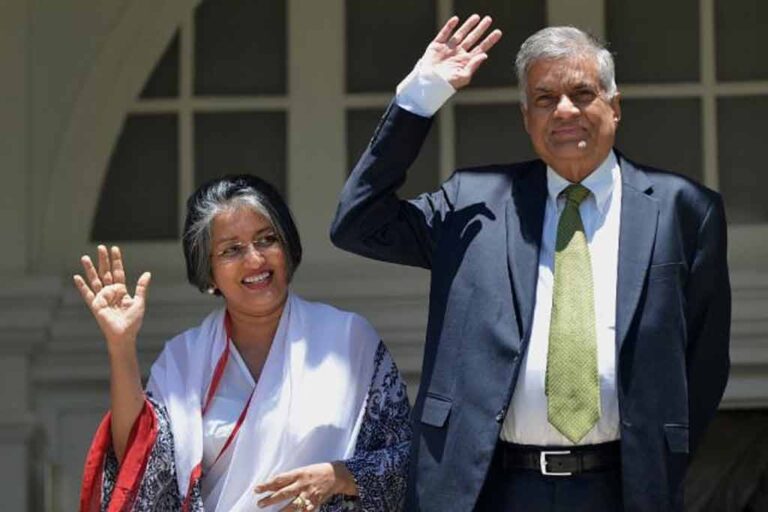
We are looking at the New Year 2023 after having undergone the bleakest of times, immense hardships, as well as the uncertainties and hopelessness of the last year. I understand the great burdens that are placed on all of us and the setbacks that a majority of us have suffered due to the country’s abject economic collapse. Yet I believe that we have already gone through the worst of these times. I sincerely appreciate all of you who are committed to our country first and I thank you for your patience and courage as we took the critical, initial steps to stabilise the economy.
Indeed, 2023 will be a critical year in which we plan to turn around the economy.
2023 is also the 75th year of independence from the British Empire. Looking back, it is obvious that we have not done as well as other ex-colonies. This is why the youth of our country are calling for a system change – especially at this juncture. This cannot be ignored.
Therefore, we must boldly implement the proposed social, economic and political reforms to build a prosperous and productive Sri Lanka in the coming decade.
I wish all of you a happy and peaceful new year!

New Year Message from LNW Media Team

Following a tremendous amount of hardships put on the shoulders of the people of Sri Lanka through from one catastrophe to another amidst an economic crisis, the worst of its kind since independence, provoking a political turmoil across the land, we, the citizens of this small island, yet managed to pass another year without letting ourselves submit to inhumanity. This, on all accounts, will be the most important remark that is being written in history books from hereon.
Are we at the liberty to wish for a prosperous New Year which is starting from today, 01.01.2023? Honestly no, at least not without an unconscious mind. The year itself steps out of the crib with astronomically high electricity tariffs imposed on the people, along with a potential hike on the prices of many commodities and service in the near future. It is undeniable that life would be more difficult this year.
Meanwhile, several progressive measures are being taken to address the National Crisis, one that has been contaminating for too long, through a political solution. Are to solve this seemingly unsolvable crisis once and for all, it will undoubtedly be a head start to recover ourselves from the recession.
Signs that 2023 is prone to elections are already on the radar, where Local Government and Provincial Council polls are believed to be held this year, hence many political parties’ engagement towards expanding their campaigns. They too represent the hopes of the people of Sri Lanka, and therefore, it is very important to keep hope about democracy.
Whilst the year 2023 being also predominantly notable for marking the 75th Independence Day of Sri Lanka, it is important to denote that we as a country are suffering the consequences of the very wrong decisions taken by our administration economically, socially and politically in the last 74 years. Nonetheless, we, after all, are human, and are we to understand this pattern running up for more than seven decades, the 75th year will be enough for us to achieve a change.
In the simple goal of understanding that reality, we as the LNW Family wish everyone strength, goodwill and courage to face this New Year. And yes, may we find courage, big time..
LNW Media Team
Sri Lanka Original Narrative Summary: 01/01

- People must boldly implement the proposed social, economic and political reforms to build a prosperous and productive Sri Lanka in the coming decade, President Ranil Wickremesinghe says in his New Year message – stresses he understands the great burdens that are placed on and the setbacks that have suffered by the people due to the abject economic collapse.
- The Ministry of Public Administration, Home Affairs, Provincial Councils and Local Government issues circular stating that a special advance exceeding not more than Rs. 4,000 will be paid to government officers for the year 2023.
- President Ranil Wickremesinghe expresses condolences over the demise of Pope Emeritus Benedict XVI aged 95 – states Pope Emeritus Benedict XVI leaves a footprint of “ecumenical dialogue.” – The former Pope led the Catholic Church for fewer than eight years until 2013, becoming the first Pope to resign since Pope Gregory XII in 1415.
- Former President of Peradeniya University’s Students Union Anuradha Vidanage, who was arrested in connection with the assault on former Vice Chancellor of the University Prof. Athula Senaratne and his son, remanded until January 04 after being produced before the Kandy Magistrate’s Court.
- International economic news aggregator Bloomberg reports Sri Lanka’s inflation slowed in December for a third straight month as ‘tight monetary policy’ crumpled demand and supply conditions ‘normalised.’ – says the CCPI eased to 57.2% from a year ago as claimed by the statistics department compared with 61% in November and a median of 56.6% in a Bloomberg survey – Data shows moderating global commodity and food prices eased price pressures, transport costs rose 132.1% from a year go, while food prices rose 64.4%.
- The Department of Motor Traffic (DMT) amends the MTA6 and MTA8 forms used for vehicle ownership transfers, effective from December 30, 2022, says the forms have been amended with the aim of improving customer service.
- Kanrich Finance Limited (KFL) directed to settle its public liabilities in full within the period from 26.12.2022 to 28.02.2023 in terms of the Finance Business Act, due to continuous capital deficiencies faced by the finance company – CBSL Monetary Board issued the directive as a move to strengthen the non-bank financial sector under the ‘Masterplan for Consolidation.’
- Social Activist and prominent Catholic Voice Chirantha Amarasinghe accuses ‘devotees’ of the Rajapaksa clan of hijacking the ‘Aragalaya’ protest, produces evidence for one ‘Master Sunil Jayantha’ claiming that his involvement with the Aragalaya leads to a bigger plot along with controversial pro-Rajapaksa critic Dan Priyasad.
- President Ranil Wickremesinghe directs the Secretary of the President’s Fund to clear applications backlog by December 31st, allocates Rs. 1,500 million for medical aid, asserts work has been completed on 10,360 applications of the 11,000 applications received.
- Press conference called in by JVP/NPP Leader MP Anura Kumara Dissanayake ends without any questions from media persons for the first time in history – MP stresses the government shall not gamble with the mandate of the people.
In 2023, Malaysians have a right to see Anwar govern
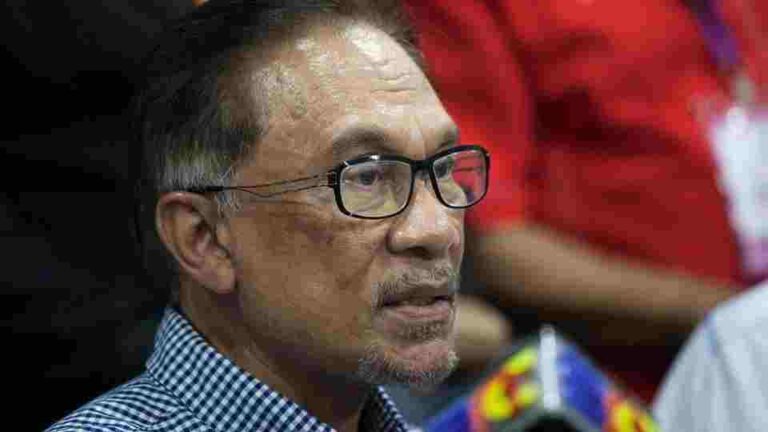
By Krishantha Prasad Cooray
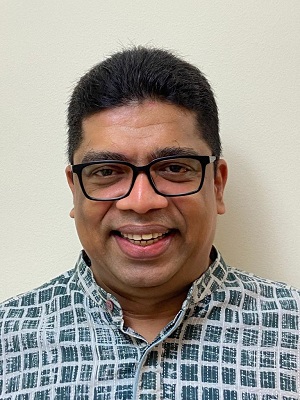
2023 will be a challenging year for the whole world. Between economic uncertainty, violent weather and the ravages of war, there is no country that does not face tough decisions and uncertainty in the year to come. Malaysia is no exception. But unlike many countries, Malaysia is fortunate enough to have a new government, with a new, mature leader who is respected and trusted worldwide. This is a privilege that few countries enjoy today.
But it is a small miracle that Malaysia emerged with this privilege, thanks solely to its new Prime Minister’s ability to unite political allies and enemies alike to work together and serve Malaysians. Unfortunately, it seems that some senior political leaders are intent to find ways to scuttle and sabotage the government at any cost.
The essence of democratic governance is that it puts the people in charge of their destiny. Political parties build platforms, take them to the people, and those with the most persuasive arguments are, rightly or wrongly, chosen by the people to govern. When they fail, it is again up to the people to decide whether it is worth giving them another chance, or whether it is time to try something new. In theory, such a Darwinian method of selecting rulers should tend towards better leadership. In practice, rulers often abuse their power to distort the process and in doing so, erode the sovereignty a democracy needs to succeed.
Malaysia has been a victim of this pattern for decades. Whatever else can be said about Yang Amat Berhormat Dato’ Seri Anwar Ibrahim, no one can deny that successive governments moved mountains to repeatedly deny the Malaysian people a chance to decide on the merits of the policy platform that Ibrahim brought to the table. Whenever the prospect of him becoming a serious political contender arose, criminal charges or political “moves” materialized like clockwork, the actions of an elite few, to deny the will of the many. When the bag of dirty tricks was finally empty, and when other parties had exhausted their options to stop him, Anwar finally achieved the impossible and secured a political victory that stunned his opponents.
The greatest risk that Malaysia faces in 2023 is that the same cabal of powerful people and vested interests that bent the law to keep Anwar from coming into office will now seek to scuttle his government out of spite, not with an alternative plan to form a government, but to politically paralyze Malaysia once again and blame it on Anwar.
As of right now, his opponents have their work cut out for them. There is no stronger sign of Anwar’s strength in parliament than the fact that the opposition went through such great lengths to block a roll call vote and prevent the government from showing Malaysia the extent of Anwar’s majority. If it was indeed a slim majority, the opposition would have had no reason to try and obscure that fact, let alone to be so proud of having done so. The only fathomable reason for the opposition to be proud of having stopped a roll call vote is that they did not want the Malaysian people to see how many Parliamentarians Anwar had succeeded in bringing into his fold.
Some may celebrate this sort of political gamesmanship as a clever tactic to ‘outfox’ Anwar and deny him a chance to prove his numbers. But Anwar is not the real victim of this focus on gamesmanship, on ‘moves’, and on rule-by-sabotage. At a time like this, politics is not a game. For the poorest of the poor, it is a matter of life or death, of feast or famine. It does no favors to ordinary Malaysians whose faith in democracy is waning after successive hung Parliaments and paralyzed regimes.
Advocates of free speech often remind people that the right of free speech is not just about the right of someone to speak, but also about the right of the audience to hear what the speaker has to say. For decades, people found ways to deny Malaysians of their right to hear what Anwar Ibrahim had to say. Now, those same people, discredited by the electorate, must not be allowed to deny Malaysians a chance to see how Anwar would govern.
This is not just an Anwar Ibrahim moment. It is a Malaysian moment. If his government is paralyzed by another “move”, it is unlikely to be replaced in the short term, and the paralysis that follows will do unspeakable damage to the economy and Malaysia’s world standing. This is why ordinary Malaysians, more and more of whom are being exposed to what he has to say, are likely to follow Anwar and strengthen him, not weaken him.
This is why any serious attempt to scuttle the government is bound to backfire on those who try to cause such a calamity. This time, Malaysians will blame them for the bedlam that follows. They will not get to dictate who to blame, because it is clear to all who are willing to see that Anwar is a popular world leader and Malaysia’s best chance to rejuvenate the economy and retake the spotlight in the international order.
As Anwar has long been an outspoken victim of many of the injustices and inequalities that he aims to correct, Malaysians, foreign investors and statesmen are all building their confidence in the independence of the judiciary and the freedom of the press in Malaysia under a ruler who is sincerely invested in such principles.
Even in his first month on the job, Anwar has moved governance in a direction unlike ever before seen in Malaysia. He has shunned luxuries, declared war on corruption and bureaucracy, put the spotlight on the untapped economic potential of East Malaysia. He is trying to transform the economy to focus on creating value, and do away with patronage networks and middlemen. As he conceded at his very first press conference, this is not the hand of cards that Anwar wanted to play, but instead it is the coalition with which the King and Malaysian people are counting on him to succeed with.
The challenges this government must address are daunting. From cleaning up the public sector, grappling with the devastating impact of the floods, and unleashing the prosperity that will come from releasing the economic potential of every Malaysian, Anwar and his coalition have their work cut out for them. No opposition should give a government a free pass. But Malaysians deserve a mature opposition that will engage on an intellectual level with Anwar’s policy proposals. Where they disagree with his policies they can articulate and defend alternate views, insist on transparency and take a clear stance on issues – as Anwar has – that Malaysians can judge at the next election.
Malaysia has waited far too long to have the opportunity to try, if not the man Anwar Ibrahim, the political vision that he has incubated for so long. Some of his ambitions, such as curtailing waste and bloat in the public sector, may sound uncomfortable, but are inevitable if Malaysia is to realize the same prosperity and efficiency of its tiny neighbor, Singapore.
In 2023, Malaysians must insist that they get a chance to see whether the Prime Minister can realize his vision and his promises and deliver the prosperity and dignity that Malaysians deserve. Now that the fearmongering has failed to keep him from power or oust him, the people can see for themselves whether Anwar’s vision was dangerous enough to justify imprisoning him to keep him off the ballot. They can see if it makes a difference to have a leader at the helm who is taken seriously by the international community and who is well read on Islam, economics and international relations. Once he has had a chance to try and deliver on his promises, whether he has succeeded or failed will be for Malaysians to decide one day, at GE16.
Even though Anwar and his allies have managed so far to stay one step ahead of the opposition, every minute he is forced to spend on petty politics is a minute wasted that they could otherwise spent delivering on his promise to the King and the people to unite and govern Malaysians.
As unlikely as it may seem today, if the opposition somehow manages to pull off another underhand maneuver, and some other hotel lobby becomes the next “Sheraton” for a move to cut the government off at its knees and deny Anwar a chance to deliver, it is Malaysians who will lose, as they may never again have the chance to learn whether a truly transparent, egalitarian liberal democracy is the destiny that Malaysia deserves. And if Malaysians lose that opportunity, those who denied it to them may pay a hefty political price.