- Analysts forecast severe economic contraction in the 4Q 2022 and full year contraction of -9.3% YoY in 2022: down from forecast of -8.7% YoY previously: growth revised down for 2023 as well.
- Cardinal Ranjith says Sri Lanka should not go around the world with a begging bowl in 2023: calls for the establishment of a new structure to build the nation: critics say Cardinal is now involved heavily in political matters while the Catholic Church in Sri Lanka is losing its devotees to emerging Christian sects.
- Year-on-Year inflation based on CCPI decreases to 57.2% in December from 61.0% in November; Food Inflation decreases to 64.4% in December from 73.7% in November: analysts show this result is due to the higher base effect since November 2021.
- Local businesses urge the Central Bank to extend the moratorium beyond 31st December 2022: say SME borrowings have reached Rs.1,000 bn, which the sector is struggling to pay back, due to the prevailing high-interest rates: warn the banking sector would fall if the extension is not granted.
- Public Utilities Commission Chairman Janaka Ratnayake says he is awaiting for a call from President Ranil Wickremasinghe to discuss the allegations against him that he has been leading society astray with his claims that he would not allow an increase in electricity tariffs.
- UN Resident Coordinator’s Office announces the UN Humanitarian Appeal for Sri Lanka has received a response of USD 101.5 mn: says it hopes to provide humanitarian assistance to 3.4 mn vulnerable people with such funds.
- Rupee marks over 7-1/2 months of being “fixed” by the Central Bank within a pre-determined range: analysts previously critical that the Rupee was “fixed” under CB Governor Cabraal now beginning to accept the “fixed” exchange rate policy which current CB Governor Weerasinghe has also been following since 12th May 2022.
- Former MP Professor Ashu Marasinghe claims Rs.1.5 bn as damages from former MP Hirunika Premachandra and his former woman-friend Adarsha Karandana for insulting him by publicising an allegedly edited video carrying damaging and misleading content.
- President Ranil Wickremesinghe condoles the demise of Indian PM Narendra Modi’s mother, Hiraben Modi, 99: PM Modi tweets that “a glorious century rests at the feet of God”.
- Home Affairs State Minister Ashok Priyantha says services provided by govt institutions will not be hindered even though 30,000 public officials retire from service on 31st December 2022.
Sri Lanka Original Narrative Summary: 31/12
Foreign Ministry revises consular fees!
As per the Extraordinary Gazette No 2306/35 dated 16.11.2022, fees in respect of attestation of Certificates/Documents by the Consular Affairs Division of the Ministry of Foreign Affairs in Colombo, Regional Consular Offices and Sri Lanka Missions/Posts abroad have been revised with effect from 01 January 2023
New Fee structure to attest certificates/ documents through the Consular Affairs Division of the Ministry of Foreign Affairs in Colombo & its Regional Consular Offices is as follows.
| Consular Functions | Fees (Rs.) | |
| 1. | Examination certificates issued by the Department of Examinations | 800.00 |
| 2. | Any document issued by the Government of Sri Lanka for a foreign national | 3000.00 |
| 3. | Any export document | 8000.00 |
| 4. | Any other document | 1200.00 |
Please refer to the Extraordinary Gazette No.2306/35 dated 16.11.2022 for the revised fee structures, which are applicable for Overseas Sri Lankans.
President directs President’s Fund Secretary to clear applications backlog by Dec 31
• Of the 11,000 applications received by the President’s Fund in 2022, work has been completed on 10,360.
• In 2022, Rs. 1,500 million has been paid as medical aid.
• President Ranil Wickremesinghe issues instructions to carry out the work of the President’s Fund more efficiently and comprehensively in 2023.
• Measures to increase the allowances paid as medical aid and to update the list of diseases for which medical aid is paid.
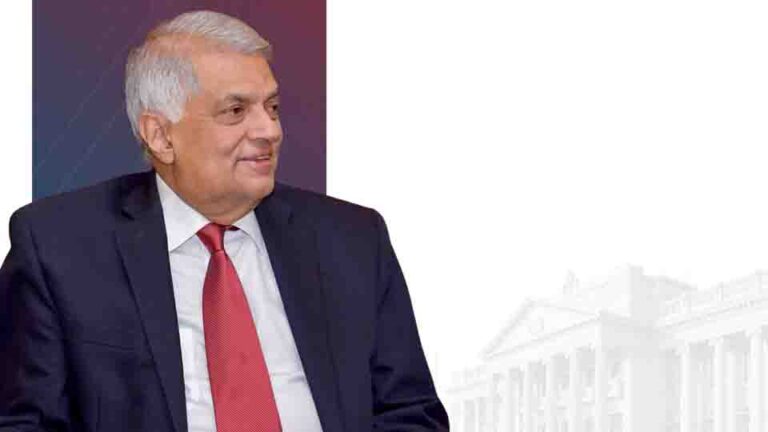
Secretary to the President’s Fund W.A. Sarath Kumara said that steps have been taken to complete the work on 10,360 applications out of the 11,000 applications received by the end of 2022.
Mr Sarath Kumara said that most of the payments related to the applications have already been made and the remaining applications are being cleared promptly and the documents are scheduled to be completed within the next few weeks.
Accordingly, he noted that nearly Rs. 1500 million has already been paid for medical aid within this year.
As of 01st August 2022, the President’s Fund had 8,210 applications piling up without any work being done. President Ranil Wickremesinghe and President’s Secretary Mr Saman Ekanayake instructed the President’s Fund to complete the work related to these applications before December 31. Accordingly, Secretary to the President’s Fund W.A. Sarath Kumara has expedited the work.
Accordingly, work on 10,360 applications has been completed so far and 642 applications received at the end of the year where the work haf not been completed due to various reasons, the related money will be settled promptly and the work is scheduled to be completed within the next few weeks.
Mr Sarath Kumara said that the President has given instructions to speed up the provision of medical aid to needy patients giving priority to the piled-up applications. He also stated that it is expected to complete and expedite the relevant payments, thereby providing prompt service to needy patients.
He also said that in addition to the hospitals currently registered with the President’s Fund, new hospitals have also been registered to reduce the need for patients from distant areas to come to the cities to get medical assistance.
In addition, a committee consisting of medical experts has been appointed to obtain the necessary recommendations to increase the financial assistance currently paid for surgery and treatment, and President Ranil Wickremesinghe has instructed to increase the amount of medical assistance paid as soon as the recommendations of the committee are made.
Accordingly, in the first few months of 2023, the allowances paid as medical aid will be increased.
Apart from the number of diseases for which medical aid will be paid, the committee has been instructed to give necessary recommendations about the conditions for which further medical aid should be paid. As soon as the instructions are received, the necessary approvals will be obtained and the amount of medical aid paid as well as the list of diseases for which medical aid will be paid will be updated.
According to the approved provisions of the Presidential Fund Act, Rs. 20 million has been released for charitable grants and the improvement of religious activities, while about Rs. 1,300 million has been released for the Mahapola higher education scholarships from the money received by the presidential fund in 2022.
In addition, with effect from January 2023, based on the instructions of the President, arrangements have been made for the selection of students to receive Rs. 5,000 each for two years. Today (30) is the last date for accepting applications from eligible students.
Taking into account the transportation and other economic difficulties faced by the public who submit applications to the President’s Fund for receiving medical aid, short messages (SMS) will be sent on six occasions to cover each occasion from the time the application is submitted to the point the payment is made. It is also planned to further streamline these activities in 2023.
PMD
Sri Lanka participates at the OTOP City-2022 in Thailand for the first time
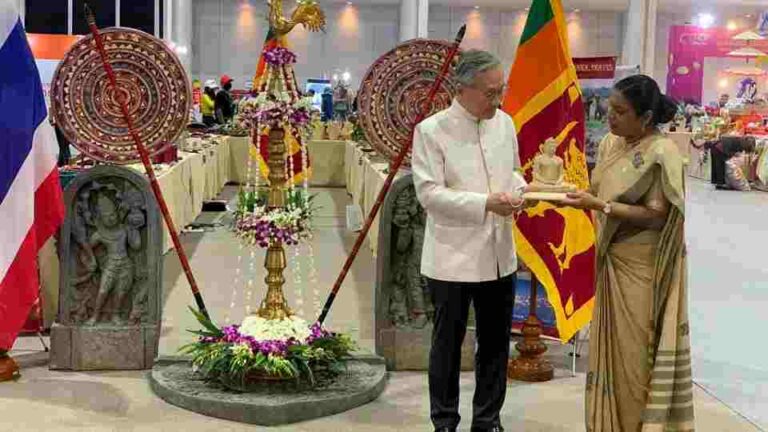
The Embassy and Permanent Mission of Sri Lanka in Bangkok in consultation with the Community Development Department of the Ministry of Interior of Thailand, for the very first time, made arrangements to showcase and sell Sri Lankan products from National Crafts Council, Spices and Allied Products Marketing Board, Sri Lanka Export Development Board, Industrial Development Board and Handicrafts Board at the “OTOP City-2022” from 17-25 December 2022 at the IMPACT Exhibition and Convention Centre, Nonthaburi, Thailand.
The “OTOP City-2022” was organized with the concept; “Giving happiness from wisdom, passing on the value of Thai people’s craftsmanship” with the objective of promoting, showcasing and selling products manufactured under the One Tabon One Product (OTOP) concept in Thailand. The event was inaugurated by the Prime Minister of Thailand, Prayut Chan-O-Cha and attracted over 200,000 visitors. More than 2,700 entrepenuers participated.
Under the Sufficiency Economy Philosophy, Thailand has introduced its One Tambon One Product (OTOP) concept to Sri Lanka as “One Village One Product (OVOP)” funded by Thailand International Cooperation Agency (TICA) and both sides have entered into a Joint Action Programme during the visit by Prime Minister Prayut Chan-O-Cha to Sri Lanka in 2018.
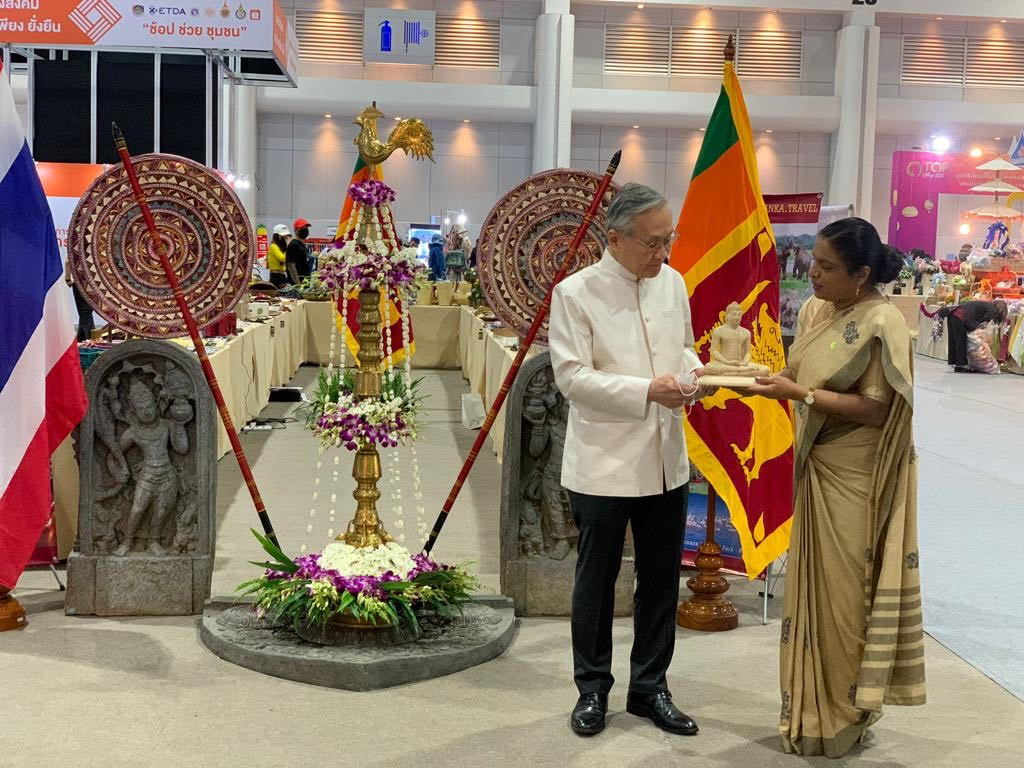
Deputy Prime Minister and the Minister of Foreign Affairs of Thailand, Don Pramudwinai visited the Sri Lanka pavilion and were impressed with Sri Lankan products. The pavilion also attracted many visitors of the general public.
Coinciding with the event, the Mission also made arrangements for the Additional Secretary (Small and Medium Enterprise Development) of the Ministry of Industries of Sri Lanka A. Lakkathas and the Chairman of the National Crafts Council Sampath Erahapola, to meet virtually with ten OTOP traders from different parts of Thailand. Senior level officials from the Community Development Department of the Ministry of Interior of Thailand also participated in the meeting.

The Ambassador of Sri Lanka to the Kingdom of Thailand & Permanent Representative to the UNESCAP, C. A. Chaminda I. Colonne thanked Deputy Permanent Secretary of the Ministry of Interior Somkid Chanthamaruk, and Director General of the Community Development Department Unsit Sampuntharat, for the unique opportunity provided for Sri Lanka, at her request. First Secretary/Head of Chancery, A. W. S. Samanmali and First Secretary (Commercial), Vireshika Bandara of the Mission were also present.
Embassy & Permanent Mission of Sri Lanka
Bangkok
30 December 2022
Another donation of urgent medicine worth USD 7.2 million from Heart to Heart International in the United States to the people of Sri Lanka
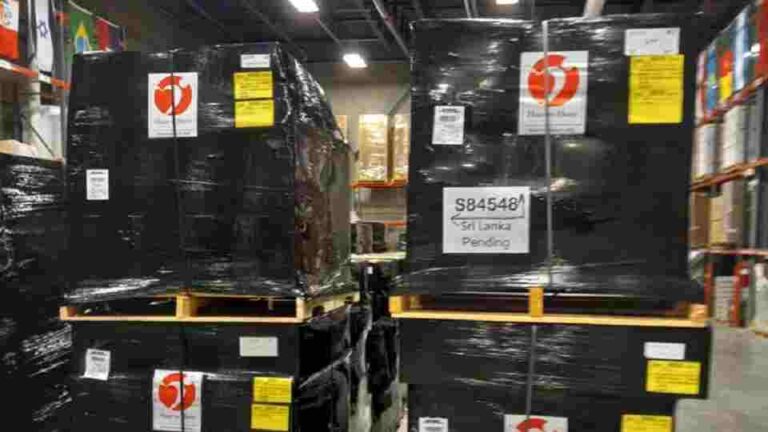
Joint Press Release by the Embassy of Sri Lanka, Washington D.C., and Heart to Heart International, United States
Under the guidance of His Excellency Ambassador Mahinda Samarasinghe, Heart to Heart International has now obtained all necessary government approvals for the third in-kind donation of urgent medical aid, worth an approximate of $7,270,756.31 USD (i.e., LKR 2.7 billion), to the people of Sri Lanka. The latest donation includes an extensive volume of urgent medicines such as: Propranolol Hydrochloride and Labetalol HCL to treat high blood pressure and other heart problems; Potassium Chloride to treat low levels of potassium in the body; Quetiapine Fumarate to treat certain mental/mood conditions such as depression, schizophrenia, bipolar disorders etc.; and Allopurinol to decrease high blood uric acid levels and prevent gout (a form of arthritis).

The Embassy of Sri Lanka in Washington D.C. is eternally grateful to Heart to Heart International for the generous donations that have been extended to the people of Sri Lanka at this critical juncture. In coordination with the Ministry of Health in Sri Lanka and this Embassy, the third donation is due to reach Colombo, Sri Lanka, via air on 29 December 2022. Similar to former donations, all expenses will be borne by Heart to Heart International, and the Ministry of Health will receive the donation for immediate distribution at no cost to the people of Sri Lanka.
Thus far, the total in-kind donation provided by Heart to Heart International to the people of Sri Lanka is worth an approx. total of $19,915,909.38 USD (i.e., LKR 7.4 billion).
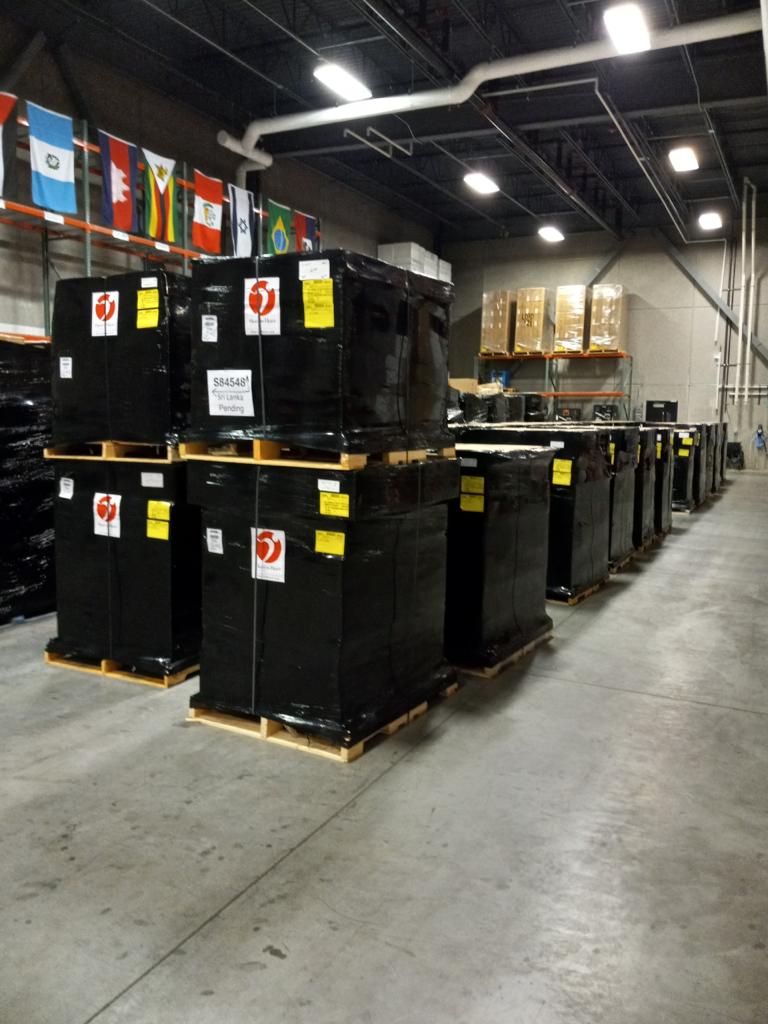
Headquartered in Lenexa, Kansas, Heart to Heart International (HHI) is a global humanitarian organization focused on improving access to health. Since its inception in 1992, HHI has delivered medical aid and supplies worth $2.5 billion to more than 130 countries, including within the United States. HHI responds to natural disasters both domestically and internationally by supplying medical relief and mobilizing volunteers. The organization is a 4-star Charity Navigator charity, a BBB Accredited charity and is on the “Philanthropy 400.”
Embassy of Sri Lanka,
Washington, D.C.
Heart to Heart International,
Kansas
28 December 2022
Public Interest: The biggest collapse yet to come
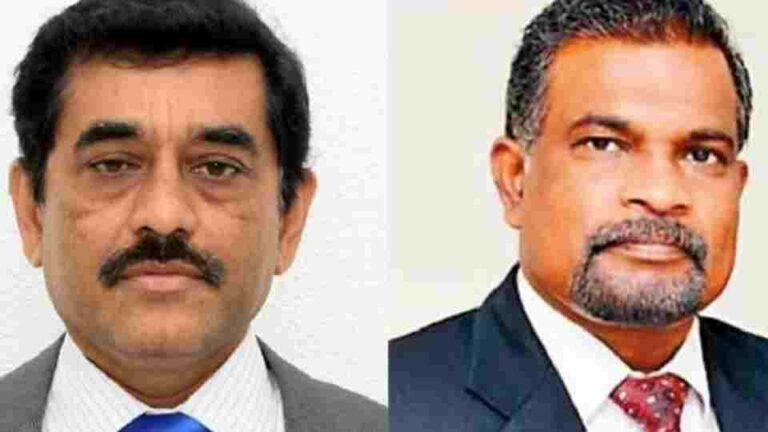
The Governor of Central Bank Dr Nandalal Weerasinghe is now responsible for aggravating the crisis by increasing interest rates 30%. He is doing nothing bring it down. He is justifying all the IMF conditions without bargaining hard on behalf of the poor. The team of Weerasinghe and Mahinda Siriwardana must read this and respond to this if not true.
The story I am telling here. Write it in an indelible place in your home with today’s date.
The biggest collapse of the Sri Lankan economy, the dark chapter of Sri Lankan politics is going to be written by July 2023. Due to power cut due to coal problem, abnormal hike in electricity tariffs, Olamotala decision on interest rates, increase in taxes from 14% to 30% on tourism, education, export industries, agro-crop processing, small and medium scale industries, garment industry Including, the country’s industry will be completely destroyed.
By the month of March, the fall in apparel products will be displayed. Due to the arbitrary decision taken in relation to personal income tax, doctors, engineers, bank officers, university students etc. will leave the country to the extent that you will not find enough doctors in government hospitals let alone a channeling center.
Banks and financial institutions in this country will face a crisis created by the government which has never existed before, due to the inability to pay bank loan premiums, leasing premiums and insurance premiums to fixed salary earners. In the midst of all this, the education and health services in this country continue to collapse, unable to earn even half of the tax revenue estimated by the government, and money has to be printed again to pay the government’s salaries.
The debt crisis that all these destructions are trying to achieve will fail, and we will end up a nation with slightly less debt than twice what we were. With the failure to solve the debt crisis, the further collapse of the rupee will bring this country to an irreparable level of destruction by the middle of next year by these rulers and bureaucrats.
The crisis that is going to happen next year is a national crime created by the ‘Olamottala’ rulers and their subordinates.
Write this in an indelible place in your home with today’s date that we are a miserable country that invites and embraces this crisis even though we have the ability to prevent all of this.
Dr. Nandasiri Keembiahetti,
Senior Lecturer in Economics.
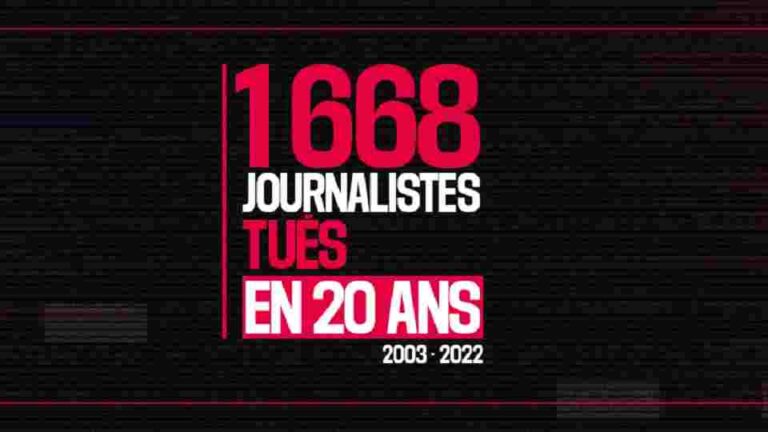
1,668 journalists killed in past 20 years (2003-2022), average of 80 per year
At the end of a year in which the number of journalists killed in connection with their work rose again, Reporters Without Borders (RSF) has compiled and analysed the figures for journalists killed during the past 20 years – two especially deadly decades for those in the service of the right to inform.
What with murders, contract killings, ambushes, war zone deaths and fatal injuries, a staggering total of 1,668 journalists have been killed worldwide in connection with their work in the last two decades (2003-2022), according to RSF’s tallies based above all on its annual round-ups. This gives an average of more than 80 journalists killed every year. The total killed since 2000 is 1,787.
“Behind the figures, there are the faces, personalities, talent and commitment of those who have paid with their lives for their information gathering, their search for the truth and their passion for journalism. In each of its annual round-ups, RSF has continued to document the unjustifiable violence that has specifically targeted media workers. This year’s end is an appropriate time to pay tribute to them and to appeal for full respect for the safety of journalists wherever they work and bear witness to the world’s realities.
Christophe Deloire
RSF secretary-general
Darkest years
The annual death tolls peaked in 2012 and 2013 with 144 and 142 journalists killed, respectively. These peaks, due in large measure to the war in Syria, were followed by a gradual fall and then historically low figures from 2019 onwards.
Sadly, the number of journalists killed in connection with their work in 2022 – 58 according to RSF’s Press Freedom Barometer on 28 December – was the highest in the past four years and was 13.7% higher than in 2021, when 51 journalists were killed.
15 most dangerous countries
During the past two decades, 80% of the media fatalities have occurred in 15 countries. The two countries with the highest death tolls are Iraq and Syria, with a combined total of 578 journalists killed in the past 20 years, or more than a third of the worldwide total. They are followed by Afghanistan, Yemen and Palestine. Africa has not been spared, with Somalia coming next.
Most dangerous European countries
Russia continues to be Europe’s deadliest country for the media, with the biggest number of journalists killed during the past 20 years. Since Vladimir Putin took over, Russia has seen systematic attacks on press freedom – including deadly ones – as RSF has repeatedly reported. They include Anna Politkovskaya’s high-profile murder on 7 October 2006.
The war that began in Ukraine on 24 February 2022 is one of the reasons why this country has Europe’s second highest death toll. Eight journalists have been killed in Ukraine since Russia invaded. But an additional 12 were killed there during the 19 preceding years.
France ranks as the fourth deadliest European country as a result of the massacre at the satirical weekly Charlie Hebdo in Paris in 2015.
Journalists killed in war zones
During the past decade, reporters have run the greatest risks in areas where armed clashes were taking place. Of the 686 killings since 2014, 335 have been in war zones (including Syria, Afghanistan and Yemen). The five deadliest years were from 2012 to 2016, with 94 killed in 2012, 92 in 2013, 64 in 2014, 52 in 2015 and 53 in 2016.
Some slight encouragement can be derived from the fact that the annual total of journalists killed in war zones has not exceeded 20 during the past three years. Aside from a decline in the intensity of some wars, these figures reflect the effectiveness of preventive and protective measures taken by news organisations as well as, sometimes, reporting precautions and restrictions.
“Zones at peace” where journalists are also in danger
Countries where no war is officially taking place are not necessarily safe for reporters and some of them are near the top of the list of those where killings have occurred. In fact, more journalists have been killed in “zones at peace” than in “zones at war” during the past two decades, in most cases because they were investigating organised crime and corruption.
With 47.4% of the journalists killed in 2022, America is nowadays clearly the world’s most dangerous continent for the media, which justifies the implementation of specific protection policies. Four countries – Mexico, Brazil, Colombia and Honduras – are among the world’s 15 most dangerous countries. Asia also has many countries on this tragic list, including the Philippines, with more than 100 journalists killed since the start of 2003, Pakistan with 93, and India with 58.
Women journalists also victims
Finally, while many more male journalists (more than 95%) have been killed in war zones or in other circumstances than their female counterparts, the latter have not been spared. A total of 81 women journalists have been killed in the past 20 years – 4.86% of the total media fatalities. Since 2012, 52 have been killed, in many cases after investigating women’s rights. Some years have seen spikes in the number of women journalists killed, and some of the spikes have been particularly alarming. In 2017, ten women journalists were killed (as against 64 male journalists) – a record 13.5% of that year’s total media fatalities.
Reporters Without Borders (RSF)
Govt adamant to hike power tariffs by 65 percent to meet high earning CEB costs
Government fully determines to increase power tariffs by up to 65 percent in January 2023 through Cabinet approval to offset costs. Sri Lanka’s Power Minister Kanchan Wijesekara has said that his Ministry with Cabinet’s approval for the price hike.
The Minister added that all religious places would be supplied with a free-of-charge solar power unit generating 5 kilowatts of electricity.
These solar power units will be provided within a period of three months, under an Indian credit facility. Mr. Wijesekara added that three shipments of coal for the Norochcholai coal power plant are expected to arrive by mid-January.
State-run Ceylon Electricity Board had on several occasions this year asked the regulator, the Public Utilities Commission of Sri Lanka to hike rates.
This year Sri Lanka faced its worst-ever economic crisis since its Independence in 1948 and was left unable to import fuel and coal resulting in power cuts of up to 13 hours.
Vowing to take legal action against the CEB and Energy minister if they overlook the energy prizing regulatory authority, Chairman of the Public Utilities Commission of Sri Lanka (PUCSL) Janaka Ratnayake has claimed that he is yet to be called on by the President o discuss this shocking issue .
Ratnayake said that he is, in fact, waiting for such a call from President Ranil Wickremesinghe, so as to discuss the ongoing concerns.
Speaking in Parliament recently, President Wickremesinghe made several allegations against Ratnayake, accusing him of leading society astray with his claims that he would not allow an increase in electricity tariffs.
He also revealed that Ratnayake is the chairman of several organizations, including Trillium, which currently buys the most units of electricity. “When the tariffs on electricity are increased, his own expenses increase,” he said, attributing this to Ratnayake’s hesitance towards the increase.
Speaking with regards to the proposed electricity tariffs, Ratnayake stated that the Ceylon Electricity Board (CEB) is yet to notify PUCSL of an increase in electricity tariffs, asserting that no such revision can be made without the approval of PUCSL.
He accused CEB of attempting to create a wave of ‘fear’ amongst society by claiming that the proposed tariffs are due to be presented before the Cabinet, reiterating that for this to happen, the proposal needs to be presented to PUCSL first.
The Ceylon Electricity Board (CEB) had to pay its staff nearly Rs 11 billion in salaries and allowances for the months of September, October and November 2022.
Accordingly, CEB had paid sums of Rs 3,535.62 million, Rs 3,589.21 million and Rs 3,662.28 million for the months of September, October and November, respectively.
Minister of Power and Energy Kanchana Wijesekara yesterday (29), publicised the CEB staff’s total salaries and allowances for months of September, October and November.
He tweeted that the salaries and the allowances ranges from Rs 3.5 billion to Rs 3.7 Billion monthly.While announcing that no new recruitments will be made, he said more than 1,100 employees are set to retire in 2023.
Meanwhile, the Minister also said with the current electricity tariff structure, CEB’s total revenue for October was Rs 33.6 billion and November Rs 35.6 billion.
CEB’s requirement of Heavy Fuel Oil, Naptha and Diesel to operate power stations for the month of January is Rs 35 billion and requirement for coal payments for January is Rs 38.45 billion.
In a meeting with CEB Trade Unions, Wijesekara discussed the proposed electricity tariff adjustments, restructuring of CEB, management of CEB expenses and other service issues.
The meeting was held with the representatives of CEB Senior Engineers Union, Electrical Superintendents Union, technical services and other union members.
SL Food sector MSMEs get lifeline from USAID with Keells, and HNB
Sri Lanka’s micro, small, and medium-sized enterprises (MSMEs) in the food sector is to get a lifeline of accessing capital with the assistance of the United States Agency for International Development (USAID).
The USAID coordinates with Keells Supermarkets and Hatton National Bank (HNB) on an innovative supply chain financing facility that supports micro, small, and medium-sized enterprises (MSMEs) in the food sector as capital infusion.
Through greater access to capital, this facility reduces the supply chain disruptions that emerged during the COVID-19 pandemic and were exacerbated by the country’s recent economic crisis, Charitha Subasinghe, the President of John Keells Holdings, parent company of Keells Supermarkets, said.
“This facility supports Keells Supermarkets goal of creating shared value for stakeholders, supporting the local economy, and ensuring uninterrupted product availability for r customers,”he added.
The facility provides MSMEs with competitive fixed interest rate financing it will provide a total US$ 430,000 to eight suppliers in its first weeks of operations.
The partnership plans to support approximately 100 MSMEs to obtain $4 million worth of credit over six months.
“This will enable MSMEs to meet their working capital needs, such as purchasing raw materials, paying salaries, and covering other short-term expenses, so businesses continue running smoothly” stated Sanjay Wijemanne, HNB’s Deputy General Manager for SME & Retail Banking.
.”We are confident that this will further empower MSMEs to achieve their business objectives. We thank both USAID and Keells for partnering with HNB on this initiative.” Gabriel Grau, the USAID/Sri Lanka and Maldives Mission Director said:
“Sri Lankan enterprises face increasing pressures due to recent global supply chain disruptions, high energy costs, volatile inflation rates, and economic instability, he said adding that This supply chain financing facility alleviates some of the pressures and enables MSMEs to optimize their working capital.”
The USAID) Sri Lanka invested in a private sector approach to help SMEs expand their businesses, invest in their supply chains, and nurture market linkages.
the USAID-funded BIZ plus program supports Sri Lankan enterprises with matching grants, business training and technical assistance to strengthen their capacity to meet market demand and stimulate economic growth.
Over seven years the program has generated more than US $5 million in capital investments in the food processing sector and created nearly 2,500 jobs and income earning opportunities in the food and agriculture industry.
SL remittances record 14-month high in Nov 22 aiming the US$1 billion target in 2023
Sri Lanka’s ambitious target of US $1 billion monthly foreign inflow from worker remittance by end-2023 is set to become reality amidst signs of sending more money by expatriates via banking channels.
This target could be achieved with more people leaving the country for offshore jobs after an unprecedented economic crisis, Foreign Employment and Labour Minister Manusha Nanayakkara said.
Worker’s remittances have fallen 40.2 percent to $2.9 billion in the first 10 months of this year mainly as most Sri Lankan expatriate workers sought informal methods like Undiyal or Hawala to send the money due to higher exchange rate than that offered by the formal banking system in Sri Lanka.
Nanayakkara has introduced several incentives to encourage Sri Lankan workers in foreign countries to send their money through the formal system and the island nation has witnessed a reversal in year-on-year fall in monthly remittances for the first time in September 16 months.
In a sign of increasing foreign exchange inflows in the New Year workers’ remittances had peaked to a new high of $ 384 million in November but given losses earlier, the year-to-date figure remains down by 36 percent.
The November 2022 figure is the highest since August last year when $ 447 million was achieved. It also reflects an increase in inflows despite a slight drop in October compared to September.
Workers’ remittances in the first 11 months of 2022 were down by 36 percent to $ 3.3 billion. As a result of rebound in inflow, the year-on-year deficit in the first 11 months had been reduced in comparison to 51.6 percent in the first half of 2022 and 44 percent in the first nine months.
Labour Minister Manusha Nanayakkara recently revealed that a record 300,000 people had migrated for overseas jobs.
Central Bank of Sri Lanka citing data up to October disclosed that total departures for foreign employment during January-October 2022 were recorded at 251,151 which has exceeded the annual departures in pre-pandemic period.
In October, departures for foreign employment were recorded at 28,473 with unskilled being (11,399), skilled (7,887) and domestic aid (6,165).
Sri Lanka recorded a high foreign remittances of $7.4 billion in 2020 and analysts believe the minister’s $1 billion monthly target is “highly ambitious” unless the central bank creates confidence among foreign expatriates on formal banking system.
The government has taken some steps to encourage foreign employees send money via proper banking channels by promising high duty-free allowance, pension benefits, and vehicle imports to boost foreign remittances.
The government has also focused on sending skilled labourers for foreign employment, instead of unskilled, the minister said.
A record 273,988 Sri Lankans have left the country for foreign jobs as of November 14 this year, compared to 203,087 outward labour migrations in 2019.