- CEB Engineers’ Union to proceed with protest outside Norochcholai Coal Power Plant: insist coal stocks will run out on 31st December, leading to approximately 10-hour power cuts: assert the Ministry of Energy cannot take legal action against trade unionists for voicing concerns.
- Public Utilities Commission Chairman Janaka Ratnayake says the present stocks of coal will be exhausted by 2nd January 2023, and if new shipments do not reach the country, the power cuts as warned by the engineers will be a reality.
- President Ranil Wickremasinghe says land grants to plantations companies will be abolished but lands given to the people: hopes to have the activity completed by 4th February 2023.
- The Mahanayakes of the Malwatte and Asgiri Chapters say steps should be taken to reopen the Sri Lanka Buddhist and Pali University for educational activities after conducting urgent investigations into causes that led to the present situation in the University.
- SJB MP Sarath Fonseka says there is a campaign that attempts to instill fear about “born-again” Christians among majority Sinhala-Buddhists: asserts the “born-again” is a denomination of Christianity, similar to sects such as Theravada and Mahayana in Buddhism.
- President Ranil Wickremesinghe grants an year’s service extension to Army Commander Lieutenant General Vikum Liyanage with effect from 31st December 2022: also appoints General H S H Kottegoda (Rtd) as the Chancellor of the General Sir John Kotelawala Defence University.
- CB Governor Nandalal Weerasinghe says India has underscored the need for “creditor equitability” from the time the “Sri Lankan government entered the provisional agreement with the IMF”: also says “we can manage without bridge financing, and that’s how we have been managing since July”: Weerasinghe has now served as Governor for nearly 9 months, but not been successful in obtaining a single dollar as a new inflow.
- Sri Lanka Human Rights Commission says if the electricity bill is increased in a way that violates the basic rights of the public, it is ready to intervene as a stakeholder, without a complaint.
- Census and Statistics Department points out that the economy has suffered a massive shock in the 3rd Quarter of 2022: decline in the industrial sector has been a massive 21.2%, while the agriculture sector suffered a decline of 1.7% and the services sector declined by 2.1%.
- South Korea Disaster Relief Foundation President Cho Sung Lea publicly reprimands the top invitee State Minister Anupa Pasqual who arrived late for a function: says if that delay had occurred in Korea, the person would have been removed from the position and deemed unsuitable.
SRI LANKA ORIGINAL NARRATIVE SUMMARY: 24/12

A special discussion about amending the Police Ordinance
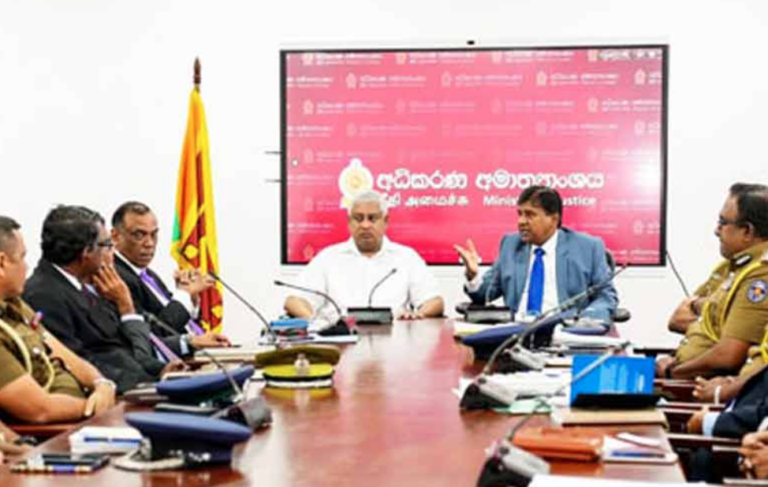
A discussion was held at the Ministry of Justice yesterday (23) on identifying the shortcomings of the existing Police Ordinance and amending it to suit the present.
It was headed by Justice Minister Wijedasa Rajapaksa and Public Security Minister Tiran Alas.
Three committees headed by three senior DIGs have been appointed to identify the deficiencies in the Police Ordinance Act and it is said that the new bill is to be prepared taking into consideration the recommendations given by those committees and the draft prepared to amend the Police Ordinance Act in 2017.
Ashu Marasinghe resigns
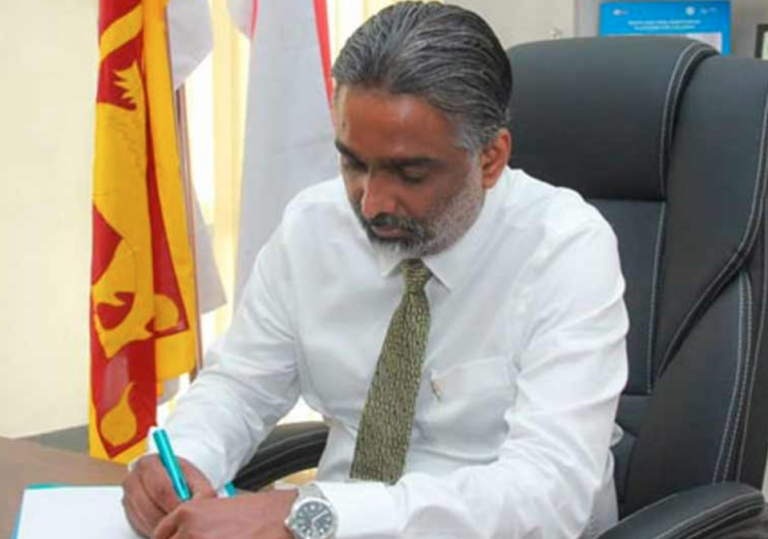
The Presidential Adviser on Parliamentary Affairs, Professor Ashu Marasinghe has resigned from that position.
The Presidential Media Unit stated that he has resigned due to personal reasons.
Customs seizes drugs sent by post
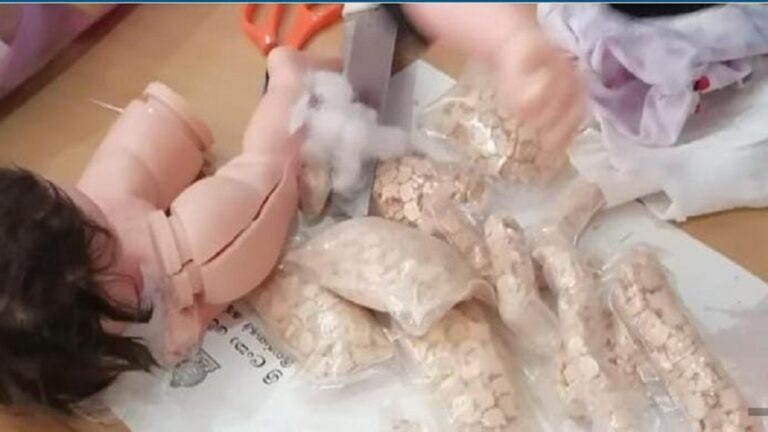
Sri Lanka Customs on Friday (23) seized Rs. 165 Mn worth of narcotics sent to the country from Spain, UK, Germany, Canada, and the Netherlands.
A total of seven parcels that were not claimed for weeks were inspected in the presence of representatives from Sri Lanka Customs, Sri Lanka Post, and the Police Narcotic Bureau.
These parcels were stuffed inside toys and food cans, and concealed inside these items were drugs worth Rs. 165 Mn.
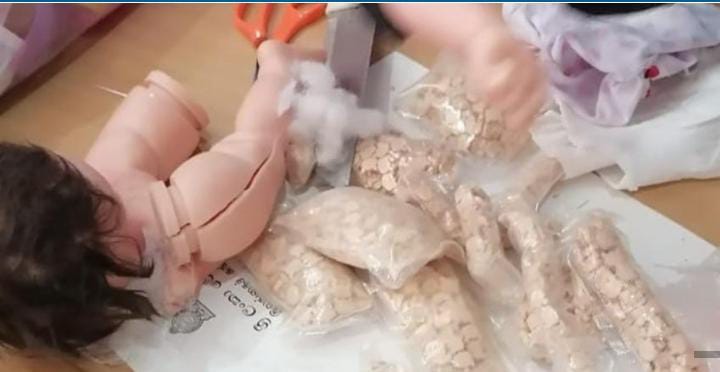
Sri Lanka Customs Spokesperson Sudaththa Silva stated that 4.673 kg of Kush worth Rs. 70 Million was discovered.
In addition, a total of 9,586 Crystal Meth pills valued at Rs. 95 Million were also seized.
The Police Narcotic Bureau is conducting further investigations.
Rashika Hennayake
ILO opens maritime sector doors for SL migrant worker returnees
In response to strengthening the socio-economic resilience of the returning migrant workers, the International Labour Organization (ILO) has identified the maritime sector as having the potential to generate ample employment opportunities for the returnees and aspirant migrant workers.
The Mahapola Port and Maritime Academy, supported by the ILO, Government of Japan, with the facilitation of the National Union of Seafarers of Sri Lanka (NUSS), has successfully conducted the graduation ceremony for the 22 trainees who completed the Training Course on Maritime and Seamanship on 20 December.
This training course provided systematic and organised training to assist trainees in acquiring the skills and knowledge required to assist deck officers on a daily basis.
The training covered all routine operational activities, such as hands on experience to operate deck-rated machinery and equipment and to assist the deck officer on watch, and watch-keeping duties.
Attending the certificate award ceremony, Japanese Ambassador Mizukoshi Hideaki said: “I am pleased to see that Japan’s assistance can be of help to the migrant returnees to obtain actual employment and skill-up opportunities.
Through the project, the Government of Japan aims to strengthen the returnees’ practical skills and encourage their entrepreneurship.”
ILO Country Director for Sri Lanka and the Maldives Simrin Singh applauded both the idea and the energy put together by the Port Authority,
Mahapola training centre and National Union of Seafarers who joined hands to deliver a training package that will result in the creation of much needed jobs and also improve the lives of the vulnerable.
She congratulated the first batch of graduates who have successfully completed their learning and reinforced the ILO’s longstanding commitment to create more decent employment for Sri Lankans.
This initiative has been initiated through the ILO’s ‘Socioeconomic Reintegration of Sri Lankan Migrant Workers Project’ with the support of the people of Japan.
“Silver Spirit,” luxury cruise ship calls over the Colombo port boosting nautical tourism
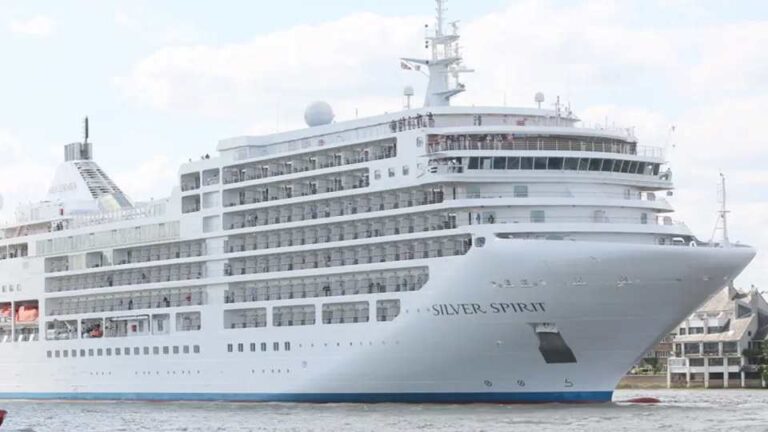
The Tourism Ministry is planning to promote nautical tourism and the luxury passenger cruise ship arrivals harnessing the potential in the economic Development of Sri Lanka.
All ingredients already provided by nature, it is time, Sri Lanka to take a special interest in emphasizing that Sri Lanka really concentrates on developing Nautical Tourism as a special niche in its new phase of Tourism Development”.
The Tourism Ministry also explores the possibility of partnering top blue-chip companies to enter the lucrative 40 billion dollar cruise line business that is estimated to carry 22.3 million passengers, with the market growing at 3.2 percent in volume.
Aitken Spence Travels will boost -up cruise tourism with the arrival of “Silver Spirit,” a luxury cruise ship calling over to the port of Colombo on the 23rd of December 2022.
Under the ownership of the Lefebvre Family (Rome, Italy), “Silver Spirit” is operated by Silversea Cruises and Royal Caribbean Cruises Ltd (RCCL). The local ground operations will be managed by Micato India and Aitken Spence Travels.
Silver Spirit consists of 270 cabins and 412 crew members will be on board to serve the cruise guests. This luxurious cruise ship can carry 608 passengers (on double occupancy) and 648 (maximum passengers) onboard.
The 16-day voyage, will be operated under the theme “New Year cruise”, will call at the port of Colombo on the 23rd of December, and at the port of Trincomalee on the 26th of December 2022.
Aitken Spence Travels will be offering an array of Sri Lankan shore excursions covering major cities and attractions across the voyage, allowing the visitors to explore and discover the goodness Sri Lanka has to offer.
During their time in Colombo, the tourists will be enjoying the taste of Ceylon tea, the Colombo city walk, the Temple of Kelaniya, unique shopping experiences coupled with live music, and high tea.
The ship will then be docked at the port of Trincomalee on the 26th, allowing the clients to bask and enjoy the Eastern splendour of Sri Lanka. Leaving the port of Trincomalee Silver Spirit will be continuing its voyage across Thailand, Malaysia, and Singapore.
“Silver Spirit” will be the fourth cruise ship handled by Aitken Spence Travels in 2022, offering excursions exclusively to passengers stepping ashore to explore the country.
Since November 16th, the company has handled 4 ships with a combined number of 5000 guests who have come to Sri Lanka to experience the country’s hospitality and explore the wide range of excursions on offer.
The ports of Colombo, Hambanthota, and Trincomalee have been used for cruise calls and some of the captains have given incredible testimonials about how beautiful our ports are.
Aitken Spence Travels will welcome 19 other cruise calls and end the cruise season by May 2023.
Govt to re-expropriate under-utilised plantation company lands
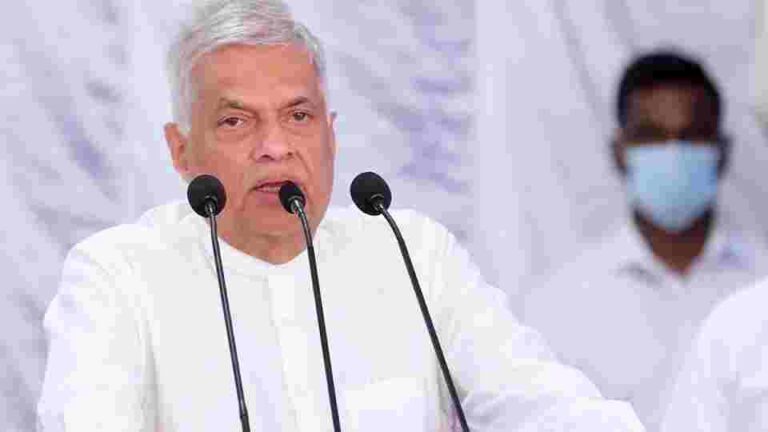
Government is set to re-expropriate assets of Sri Lanka’s privatised commercial plantations being under-utilised with the aim of handing it to the people for crop cultivation making it for productive use, the presidential media division announced.
The Government has decided to cancel land licenses issued to plantation companies, President Ranil Wickremesinghe said.
“All the land licenses given to the plantation companies will be cancelled and steps will be taken to provide the land needed by the people and we hope to complete these activities before February 04,” the president’s media division quoted Mr. Wickremesinghe as saying.
The President said that urgent solutions should be given to the land issues faced by the public in Nuwara Eliya.
He expressed these views while attending the Nuwara Eliya District Development Committee meeting held at the Nuwara Eliya District Secretariat yesterday morning (22).
The President requested the District Secretariat, Ministry of Plantation and Land Registration Department to jointly prepare a report on Government owned land in the district within a month.
Sri Lanka’s privatised plantations which are on 50-year lease have only 70,000 hectares of land.
Plantations are an emblematic case in Sri Lanka’s post-independence economic decline where they were expropriated from foreign and domestic owners under ‘land reform’.
Many foreign owners were given land in African nations like Kenya where they set up tea plantations.
Sri Lanka state is now bankrupt and the President Ranil Wickremesinghe is trying to attract foreign investment into privatisations.
Renewed expropriation fears arose after reports that a proposal had been given to the cabinet to take-over so-called ‘under-utilized’ land of privatised plantations.
Sri Lanka in 2011 expropriated a number of private properties including publicly listed Pelwatte Sugar and Hotel Developers, claiming the land was ‘under-utilised’.
Land of several Board of Investment firms were also taken back despite a constitutional guarantee that they will not be expropriated.
Given the past experience with nationalised plantations and other companies, then President J R Jayewardene put in the guarantee to assure foreign investors, but the country has not been able to draw large scale foreign investors unlike East Asia.
Sri Lanka expropriated peoples lands into the Janatha Estate Development Board and the Sri Lanka State Plantations Corporation from which the privatised plantations were hived off after taking monthly handouts from the Treasury to pay workers.
There are still two plantations companies in state hands making losses, raising questions as to how well utilised units like Elkaduwa Plantations is, according to critics.
In Sri Lanka, like most countries before freehold developed in Britain, land use was governed by various types of tenure and Rajakariya.
However the British Waste Land Ordinance took over large tracts of land which were not being used by the people at a time when free hold was under-developed making the state a big owner of land.
After independence established private property was expropriated under ‘land reform’ making the state the largest owner of land and reversing freehold.
USAID assists Sri Lanka on combatting plastic pollution
The United States Agency for International Development (USAID) announced the official launch of a planned 5-year project in Sri Lanka and Maldives to reduce environmental plastic by decreasing industrial use of plastic and improving integrated solid waste management practices in the two countries.
The project’s consortium, led by Research Triangle International (RTI) works alongside local partners to target system inefficiencies and areas of reliance on virgin plastics. The project’s overall goal is to increase participation in solid waste management and reduction programs, preventing thousands of tons of plastic from leaking into the environment.
“USAID is proud to partner with the governments of Sri Lanka and Maldives, the private sector, civil society, and communities to reduce, reuse and recycle plastic products, which threaten the health and environment of the Sri Lankan and Maldivian people” stated Gabe Grau, the USAID/Sri Lanka and Maldives Mission Director.
“Combatting plastic pollution will reduce threats to marine ecosystems and livelihoods, food security, and ultimately, human health.”
Ocean plastic pollution threatens the world’s delicate marine ecosystems, the fishing and tourism sectors, food security, and human health.
The equivalent of an entire garbage truck of plastic makes its way into the world’s oceans every minute—roughly eleven million tons annually.
Stopping plastic pollution at the source is the most effective way to address this challenge. The majority of plastic ocean debris comes from rapidly growing cities along coastal areas in the developing world where governments struggle with growing populations and increasing amounts of waste.
Sri Lanka and Maldives face unique challenges in waste management. In Sri Lanka, the country’s solid waste management systems struggle to keep pace with growing urban populations.
Maldives, an archipelago of 1,200 coral islands, has extremely limited amounts of land to store waste, and is overwhelmed by managing both domestic waste and marine debris carried in by ocean currents from other countries.
India hands over 125 SUVs to Sri Lanka Police
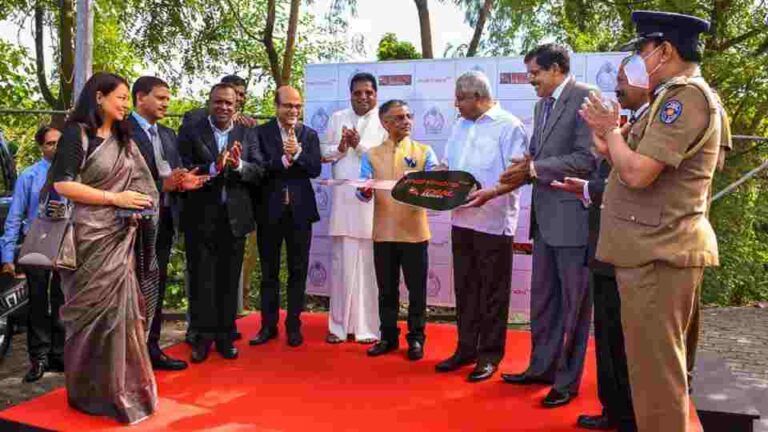
India has handed 125 SUVs to the Sri Lankan police under a line of credit as part of its ongoing efforts to support the cash-strapped island nation and address the serious mobility restriction issues faced by the police due to non-availability of vehicles.
As part of its ‘Neighbourhood First’ policy, India has extended multi-pronged assistance to Sri Lanka over the last 12 months to help the country tide over its worst economic and humanitarian crisis since its independence from Great Britain in 1948.
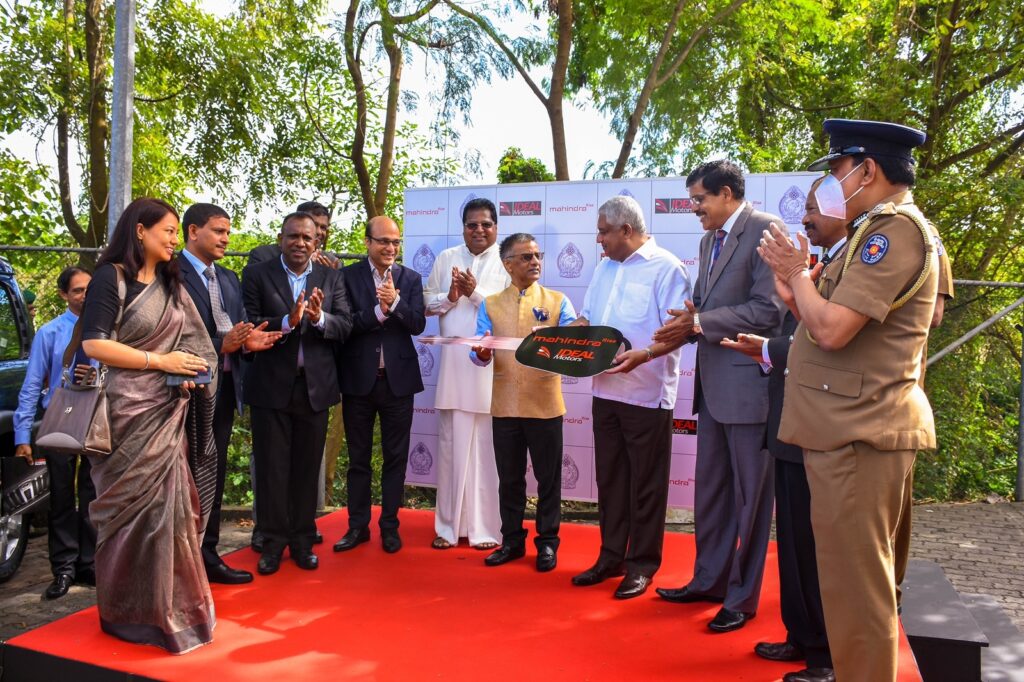
Indian High Commissioner Gopal Baglay on Thursday handed over 125 SUVs to Sri Lanka’s Minister of Public Security Tiran Alles for Sri Lanka Police in an official ceremony in Colombo yesterday.
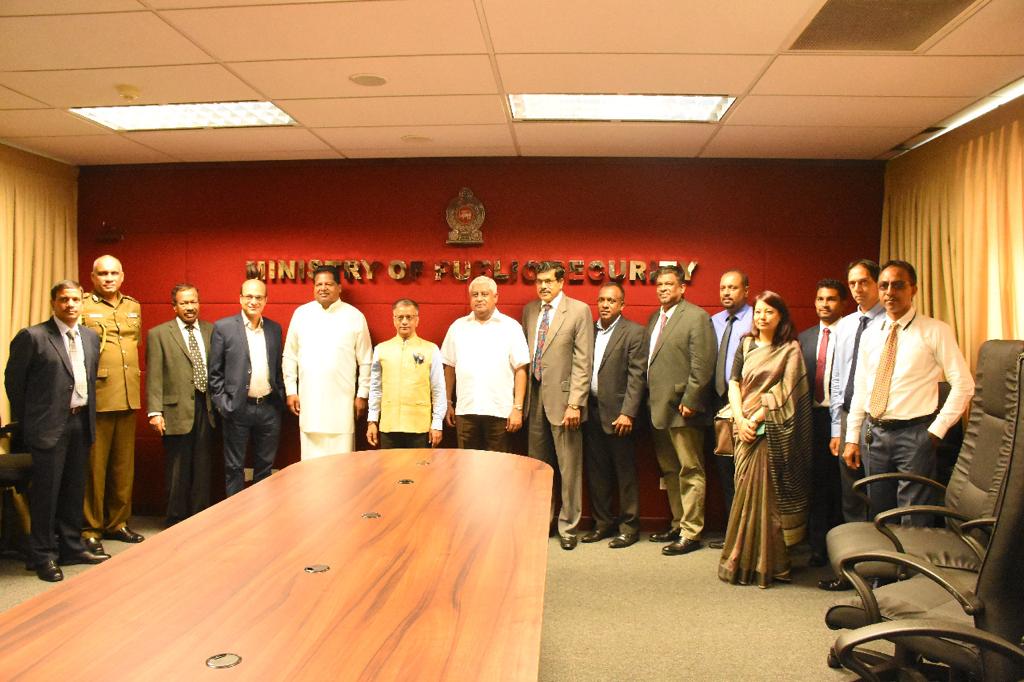
Taking to Twitter, the Indian High Commission in Sri Lanka said that another 375 SUVs will be dispatched to Colombo under an existing line of credit.
“India’s Support to Sri Lanka continues. The High Commissioner ceremonially handed over 125 Mahindra SUVs to Minister of Public Security, Tiran Alles for Sri Lanka. Police 2day. More out of a total 500 state of the art SUVs under an existing Line of credit coming soon! Contract was signed earlier this year,” it said
Alles said Sri Lanka police faced serious mobility restriction issues due to non-availability of vehicles as fleet replenishments were not possible for the last three years.
The support India provided ranges from economic assistance of close to USD 4 billion to help secure Sri Lanka’s food, health and energy security by supplying essential items like food, medicines, fuel and kerosene.
These 125 SUVs constitute the first batch of the planned supply of 500 vehicles for Sri Lankan law enforcement agencies and armed forces under an existing Line of Credit of US$ 100 mn extended by Government of India to Sri Lanka sometime ago.
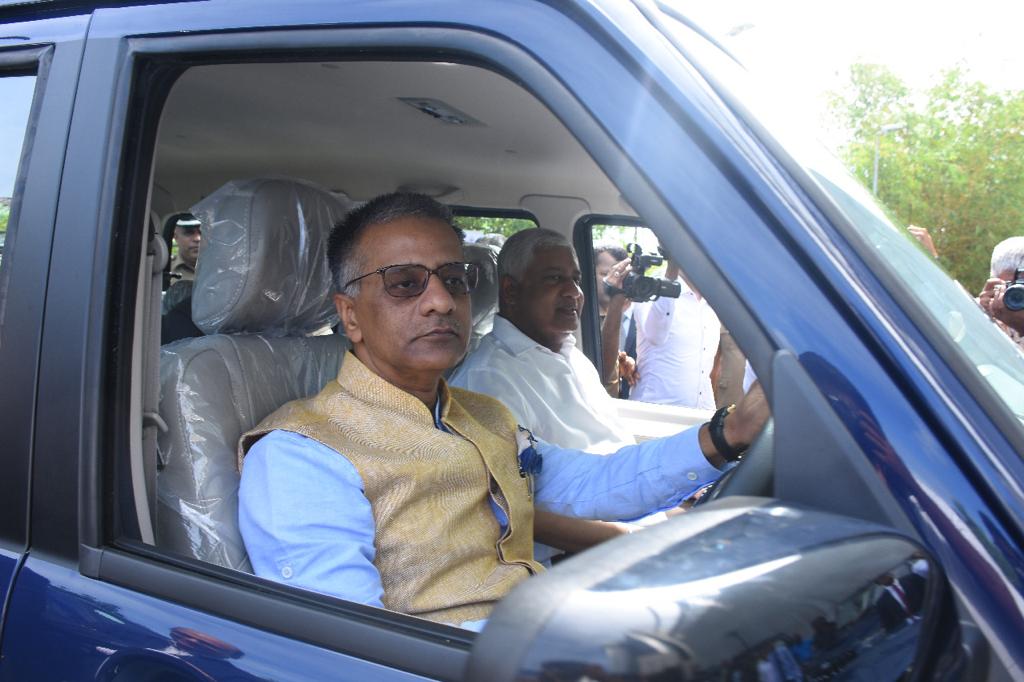
These vehicles with state of the art facilities will help address Sri Lanka’s requirements and augment capacities across the country.
India and Sri Lanka enjoy a multi-faceted and multi-sectoral partnership. In line with its ‘Neighbourhood First’ policy, Government of India’s assistance to the people of Sri Lanka is extended in various forms, including in implementation of various projects under concessional Lines of Credit.
This assistance continues even in the current situation. Till date, Lines of Credit worth about US$ 3.2 billion have been extended to Sri Lanka in diverse sectors including railways, infrastructure, defence, renewable energy, supply of petroleum, fertilizers, etc.

Separately, in March 2022, Government of India also extended a concessional Credit Facility of USD 1 billion to GOSL through the State Bank of India for supply of essential items like food, medicines, fuel, etc.
Capitol Hill Riots: Trump engaged in ‘multi-part conspiracy’ to overturn lawful 2020 presidential election result, final report reveals

Thousands of Donald Trump’s supporters raged through the Capitol on 6 January 2021, assaulting police officers and threatening politicians.
Donald Trump was engaged in a “multi-part conspiracy” to overturn the lawful results of the 2020 presidential election, according to a report by US politicians.
The House of Representatives’ January 6 committee has issued its final report, based on interviews of more than 1,000 witnesses, 10 hearings and millions of pages of documents.
Amounting to more than 814 pages, the seven Democrats and two Republicans documented their 18-month investigation into the insurrection at the US Capitol on 6 January 2021.
They concluded that the evidence “has led to an overriding and straightforward conclusion: the central cause of January 6th was one man, former President Donald Trump, whom many others followed.
“None of the events of January 6th would have happened without him.”
The investigation detailed Mr Trump’s actions in the weeks leading to the insurrection and how his campaign to overturn his election defeat influenced those who were involved.
It said that, between Joe Biden’s election victory and the certification of that victory – on the day of the insurrection – Mr Trump or his inner circle “engaged in at least 200 apparent acts of public or private outreach, pressure, or condemnation, targeting either state legislators, or state or local election administrators, to overturn state election results”.
“Knowing that he and his supporters had lost dozens of election lawsuits, and despite his own senior advisers refuting his election fraud claims and urging him to concede his election loss, Donald Trump refused to accept the lawful result of the 2020 election,” the report said.
“Rather than honour his constitutional obligation to ‘take care that the laws be faithfully executed’, President Trump instead plotted to overturn the election outcome.”
The committee said Mr Trump had pressured states, federal officials, politicians and even Mike Pence, his vice-president, in an effort to get what he wanted.

They said his claims of voter fraud were widely spread on social media, building on the distrust of government he had fostered during his four years as president.
And he did little to stop his followers when they violently took matters into their own hands.
The report found that 187 minutes went by between Mr Trump finishing a speech urging his supporters to march on the Capitol, and his first effort to get the rioters to disperse, which was done while reassuring them: “We love you, you’re very special.”
Several of his staffers pleaded with him to say something stronger, but he did not.
The report also detailed failings by law enforcement and intelligence agencies but it said these did not lead to the insurrection.
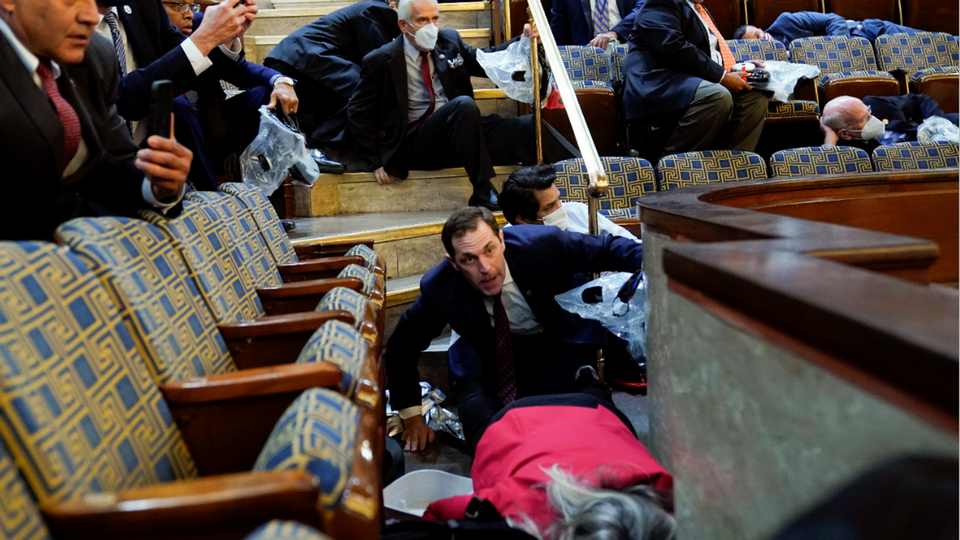
The committee’s chairman, Bennie Thompson, said in a foreword to the report: “The president of the United States inciting a mob to march on the Capitol and impede the work of Congress is not a scenario our intelligence and law enforcement communities envisioned for this country.”
The report recommends that Congress create “a mechanism for evaluating” whether to ban people mentioned in the report from future federal or state office.
The panel has also passed its investigation to the Justice Department, recommending the department investigate the former president on four crimes, including aiding an insurrection, but these referrals have no legal standing.
Mr Trump called the report “highly partisan” and a “witch hunt”.
Writing on his Truth Social platform, he said: “The highly partisan Unselect Committee Report purposely fails to mention the failure of Pelosi to heed my recommendation for troops to be used in DC, show the “Peacefully and Patrioticly” words I used, or study the reason for the protest, Election Fraud. WITCH HUNT!”