Marking one of the biggest turning points in Sri Lanka’s political history, hundreds of thousands of people flocked to Colombo demanding the stepping down of President Gotabaya Rajapaksa and the government and managed to take control of the President’s House and the Presidential Secretariat. By the time the historic move was made, the President had already fled the scene.
These protesters started arriving in Colombo from the afternoon of July 08 and the university students who endorsed the struggle came on foot from near the Kelaniya University and continued to stay in the Fort area.
Thereafter, thousands more had gathered at GotaGoGama agitation site in Galleface despite curfew being enforced.
These protesters came to Colombo in tens of thousands amidst heavy transportation difficulties and entered the President’s House by breaking the road barriers, with zero giving in to tear gas and water canons, finally breaching the President’s House and thereafter the Presidential Secretariat.
Even this morning, a large number of anti-government protesters are seen staying around the premises.
Sri Lanka’s five key state owned business enterprises (SOBEs) posted losses amounting to Rs. 931 billion rupees in the first four months of 2022, official data shows, with a collapse of a soft-peg due to aggressive open market operations of the central bank contributing to most losses.
The Ceylon Petroleum Corporation lost Rs 628billion with Rs 541 billion of the gap coming from a foreign exchange loss as a soft-peg operated by the Central Bankcollapsed steeply after two years of money printing.
The forex loans were also taken to buy oil when the central bank created forex shortages through aggressive open market operations during the current and past currency crises.Currency crises and forex shortages are a problem associated with soft pegs where money and exchange policies conflict.
Oncea clean floating regime or a hard peg is adopted forex shortages disappear as if by magic.
The CPC also assumes the losses of the CeylonElectricity Board indirectly by giving fuel on credit and taking loans to fund its own cash flow shortages due to delays by the Public Utilities Commission ofSri Lanka to grant it price increases.
The prices are hurriedly raised under an IMFprogram. CEB prices were raised through an IMF program in 2012, prior to a float of the currency, but it was later reversed as a China-funded coal plant came online and a price increase was not granted despite several requests.
The Finance Ministry implemented a price formula for CPC under an IMF program in 2018 as a structural benchmark as prices are directly under political controls but the CEB which was under regulation missed structural benchmarks and indicative targets.
“Ceylon Electricity Board (CEB) continued to record losses throughout 2019H1 (-0.5 percent of GDP), due to hydropower shortages,high generation costs, and lack of adjustments in retail prices,” an IMF staff report said in 2019 at the tail end of the last program.
Sri Lanka re-nationalized state enterprises like Sri Lankan Airlines and Litro Gas under then-President Mahinda Rajapaksa and his economic advisors who advocated state expansion and the next administration which critics say had policy fright did not privatize a single entity.
“In 2022, unrest will not only be found in SriLanka. Strikes are spreading and incumbent rulers are losing office in Europeand elsewhere after the Federal Reserve, the European Central Bank, and theBank of England also printed money to ‘create jobs in 2020 and 2021.
Three persons have been arrested in connection with the arson attack on Prime Minister Ranil Wickremesinghe last night, revealed Police Spokesman Senior Superintendent of Police Nihal Thalduwa.
Accordingly, a 19 year-old resident of Mount Lavinia and a 24 year-old and a 28 year-old from Galle have been arrested in connection with the attack.
The Kollupitiya Police have launched a special investigation into the arson attack and several more suspects are to be arrested, according to reports.
A part of the protesters who occupied the President’s House and the Presidential Secretariat in a historic move yesterday allegedly set the Prime Minister’s private residence on fire last night.
Whether these people are linked with the anti-government protesters is yet to be revealed.
Even in the wake of mass uprising, mayhem in governance and uncertainty The International Monetary Fund(IMF) has not given up hopes in extending its assistance to Sri Lanka.
The IMF stated that it was hoping a political crisis will be resolved to resume discussions on a program as President Gotabaya Rajapaksa and Prime Minister Ranil Wickremesinghe decided to resign after historic protest in Colombo.
“We are closely monitoring the ongoing developments in Sri Lanka,” Peter Breuer, IMF Senior Mission Chief for Sri Lanka, and Masahiro Nozaki, IMF Mission Chief for Sri Lanka said in a statement. “We hope for a resolution of the current situation that will allow for resumption of our dialogue on an IMF-supported program, while we plan to continue technical discussions with our counterparts in the Ministry of Finance and Central Bank of Sri Lanka.” The IMF has concluded a round of policy level talk with Prime Minister Ranil Wickremesinghe who is also Finance Minister and there were some fiscal issues to be resolved, while Central Bank Governor Nandalal Weerasinghe said the monetary program targets were wrapped up. An interim budget was also due in July or August.On July 09, protestors overran the Presidential palace, his office and also torched Prime Minister Wickremesinghe’s private residence after police special task force squad guarding suddenly attacked a group of journalist covering protestors. Speaker Mahinda Abeywardena told reporters President Rajapaksa had agreed to step down on July 13 while Prime Minister Wickremesinghe said he will resign as soon as an all party government was ready to take over. Sri Lanka’s inflation topped 50 percent in June after two years of money printing and an attempted float botched with a surrender requirement which sent the rupee sliding to 360 to the US dollar from 200. “We are deeply concerned about the impact of the ongoing economic crisis on the people, particularly the poor and vulnerable groups, and reaffirm our commitment to support Sri Lanka at this difficult time, in line with the IMF’s policies,” the IMF statement said. The IMF will formally agree to a deal until re-structuring discussions with creditors are initiated but a staff level deal was expected around August 2022.
Sri Lanka has suspended interest payment on a 175 million US dollar sovereign guaranteed bond of the national carrier and loans taken to build a China-backed airport and expand a runway at the main airport, a Finance Ministry report said.
The bond was sold to fund losses after then President Mahinda Rajapaksa terminated a management contract with Emirates and re-nationalized the airline.Interest on the bond is “on hold”, the report said.
Repayment on two loans by the Airport and Aviation Services Sri Lanka taken to expand at airport at the main Katunayake Airport in Colombo and loan from China to build an airport in Mattala in the South was also suspended.
Sri Lanka defaulted on its foreign debt after running out of reserves in the wake of seven years of aggressive open market operations under discretionary flexible inflation targeting and output targeting (printing money for growth).
The state was expanded rapidly under ‘revenue based fiscal consolidation’ where cutting costs (spending based consolidation) was abandoned, leading to spending as a share of GDP rising from 17 percent to 20 percent.
In December 2019 taxes were cut saying there was a persistent output gap after two currency crises reduced growth. The International Monetary Fund taught the central bank to calculate an output gap effectively encouraging it to print money to boost growth.
State-run Airport and Aviation Services (Sri Lanka) Ltd entrusted with the task of Airport operations is running at a total loss of Rs. Rs. 755 million last year as the country gradually opens up for international traffic.
Coupled with the reduction of administrative cost and Net Finance cost, the bottom-line impact of the AASL shows an improvement in 2021 having a reduction of total loss to Rs. 755 million in 2021 from the loss of Rs. 3,733 million in previous year, the company balance sheet showed.
Operational revenue of the Airport and Aviation Services (Sri Lanka) Limited (AASL) has declined by 5 percent to Rs. 7.4 billion in 2021.
The revenue streams of AASL mainly comprise the aeronautical operations and non-aeronautical activities amounted to Rs. 2.3 billion and Rs. 5.1 billion, respectively in 2021.
However, the other operational income of AASL in 2021 has shown a trivial declined to Rs. 3.8 billion compared to Rs. 3.9 billion in 2020.
Airport and Aviation Services (Sri Lanka) Limited Airport operation is one of the key industries which facilitates for connecting people, countries, and cultures, providing access to global markets by generating trade and tourism, and forging ties between developed and developing countries.
The year 2020 and 2021 proved difficult for the aviation industry’s existence due to the global spread the COVID-19 disease.
Majority of aircraft operations around the world have been constrained or grounded, with very few flight movements recorded over the years.
According to the International Air Transport Association (IATA), net industry losses approximated to US $ 51.8 billion in 2021, demand was around 40 percent of 2019 levels in 2021, total passenger numbers was around 2.3 billion in 2021.
Mahinda Amaraweera has decided to resign from his post as the Minister of Agriculture, Wildlife and Forest Resources.
Accordingly, the reception of the ship carrying urea from India due on arrival in the island today would be his last official duty.
Following the events yesterday leading to the anti-government protests’ peak a number of ministers resigned from their ministerial portfolios. Among the resigned ministers were Bandula Gunawardena, Harin Fernando and Manusha Nanayakkara, making Amaraweera the fourth to resign.
Leader of the Opposition Sajith Premadasa has vehemently condemned the recent arson attack on Prime Minister Ranil Wickremesinghe yesterday (09).
“I join all peaceful Sri Lankans in fiercely condemning the barbaric arson attack on Prime Minister Ranil Wickremesinghe’s private residence. This is not the way that problems are solved in civilised democracies. There’s no excuse for violence or burning down houses,” the Opposition Leader wrote on his twitter handle.
He added: “My thoughts are with the Prime Minister and his wife Maithri at this difficult time. Immediate steps must be taken to prevent further violence and those who were truly responsible for this act of barbarism must be held accountable.”
I join all peaceful Sri Lankans in fiercely condemning the barbaric arson attack on Prime Minister @RW_UNP's private residence. This is not the way that problems are solved in civilized democracies. There's no excuse for violence or burning down houses. My thoughts are with (1/2)
— Sajith Premadasa (@sajithpremadasa) July 9, 2022
President Gotabaya Rajapaksa is set to officially announce his resignation on July 13, revealed Speaker Mahinda Yapa Abeywardena.
Revealing his telephone conversation with the President, the Speaker noted that Gotabaya Rajapaksa wished no more unrest in the country as there should be a peaceful transition of power.
We earlier revealed of Rajapaksa’s decision to resign as he had confirmed his move in the afternoon. The President, however, is delaying his official announcement to avoid the occurrence of Ranil Wickremesinghe being spontaneously appointed as the acting President upon such a resignation.
Accordingly, Rajapaksa has willingly delayed his announcement.
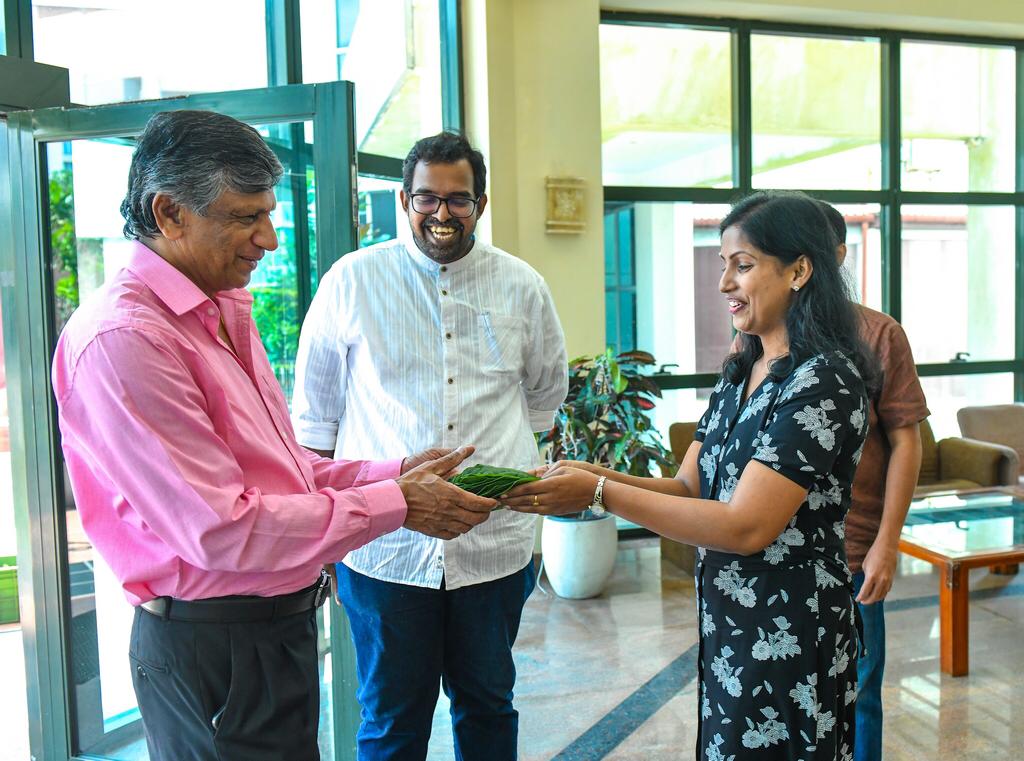
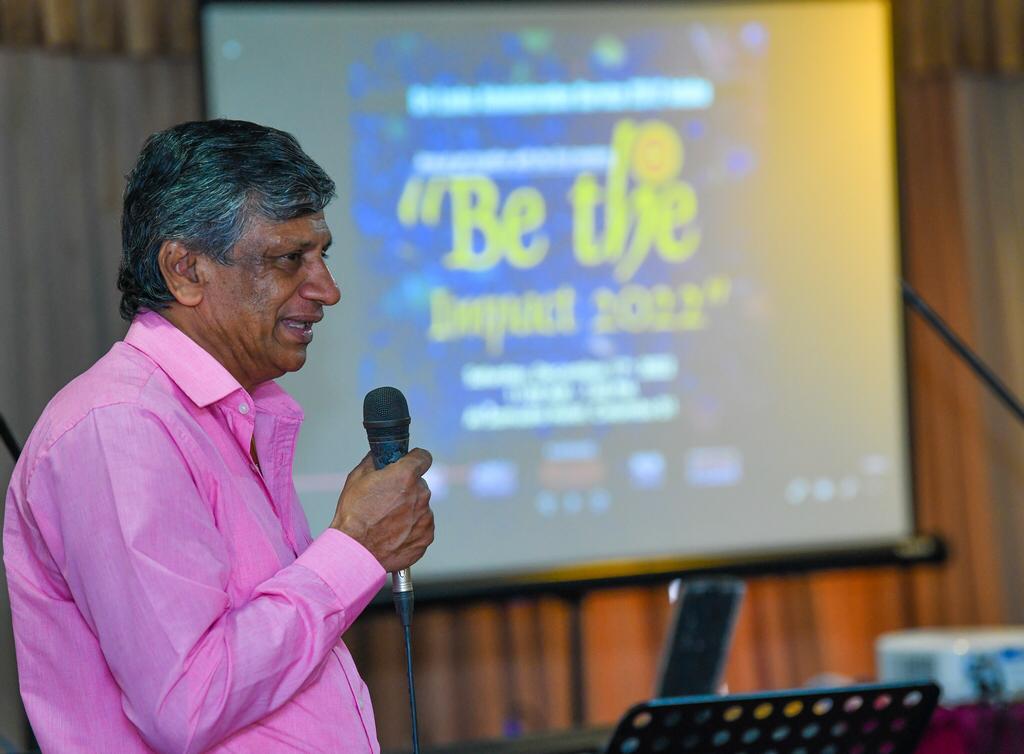
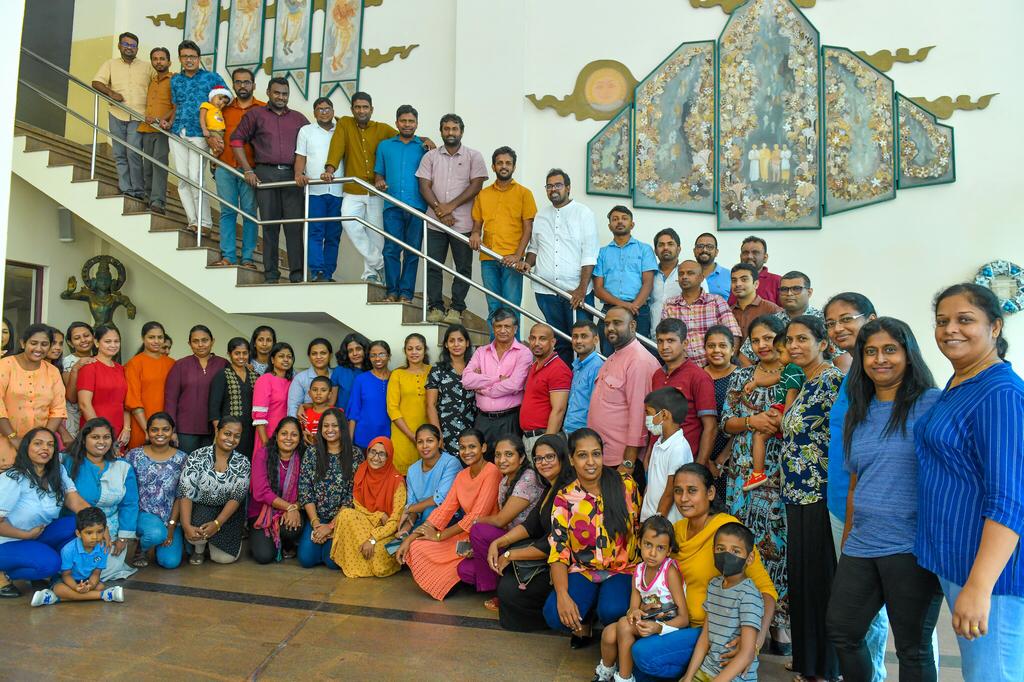
Intrepid Colombo, part of Intrepid Travel, the world leader in sustainable experience-rich travel with a mission to create positive change through the joy of travel, was bestowed with the Great Place to Work Certification™ in recognition of its vibrant and distinctive workplace culture, garnering an overall 98 percent in the Trust Index Survey.
The survey received a score of over 94 percent in various aspects such as engagement, justice, integrity, and leadership behavior, with 98 percent agreeing to the company’s approach on equality, working environment, and going onto strongly endorse Intrepid Colombo to friends and family.
“Intrepid isn’t just a business that is here to make a profit. We want to create positive change in the world – whether that’s for our staff, our customers, our colleagues or the communities we visit on our trips. I’m thrilled that this certification recognises our culture and values and the work of our amazing team here in Colombo,” said Intrepid’s Managing Director Asia, Anu Karunatilaka.
Intrepid Colombo was started back in October 2012 to provide IT development services to the Intrepid (then PEAK) group. Since then, it has grown fast and now not only provide IT development but also IT service support, financial services (AP/AR/System), customer services, HR services as well as support services for back-office travel related processes for the Intrepid Global offices, also a Destination Management Company. Intrepid Colombo has grown fast from a handful of staff to now over 170 in 10 years on track to be the biggest office in head count and are fast becoming a centre of excellence for services within Intrepid.
Employees at Intrepid Colombo enjoy a relaxed and vibrant work environment with access to an open office concept, hot desks and a leisure area including pool table and resting pods. They can opt-in for flexible work schedules, balancing their work with other commitments at home. The ‘four-week work-from-anywhere’ option at Intrepid lets one work from any location, preferably another of Intrepid’s 26 global offices, too.
Every employee at Intrepid is offered one free tour per year, plus five additional days leave to use towards this. This enables employees to experience trips for themselves, meet tour leaders and customers and have the opportunity to explore the world. There are also generous travel discounts for friends and family. Other benefits include salaries pegged to the Australian dollar, two weeks paid parental leave for new parents in addition to any government parental leave.
Intrepid is a certified Benefit Corporation (B Corp), independently verified to have the highest environmental, social and governance standards. As a B Corp, Intrepid balances making a profit with having a purpose. This means that its financial bottom line must be balanced equally with its environmental and social impact on the people and places visited.
As a certified B Corp, Intrepid is committed to building an inclusive global culture. The global team includes members from 65 different nationalities with the opportunity to work and collaborate globally with a diversity of cultures, languages and ethnicities.
As a certified B Corp, Intrepid is deeply committed to the wellbeing of its employees. Last year, despite the impacts of COVID-19 on the travel industry, the company received the highest ever staff engagement score of 82 per cent. Every employee plus their immediate family can access four free counselling sessions per year via its Employee Assistance Program. Employees are also encouraged and given 20 hours per year to use towards volunteer work for a project or cause in their local community that they feel passionately about.