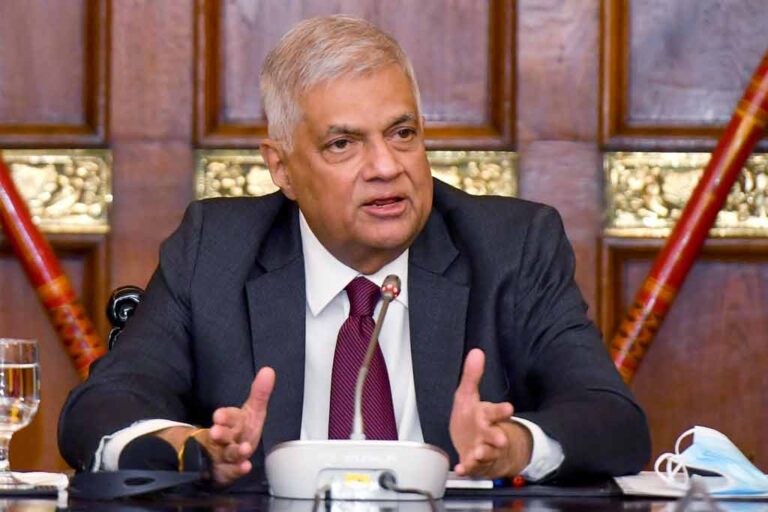
President Ranil Wickremesinghe met Na Kyung- Won, Special Presidential Envoy for Climate and Environment and Head of the Korean delegation, on the sideline of COP 27 in Egypt yesterday (07).
While appreciating the efforts taken by Sri Lanka to address the challenges of Climate change, Ms. Na Kyung- Won also commended Sri Lanka for the measures taken to reduce carbon emissions despite the country already having a low carbon emission rate.
President Wickremesinghe stressed that capacity building is vital for climate action to be successful. In this perspective, it is his desire to establish an International Climate Change University in Sri Lanka, a higher learning, multi stakeholder institution which strengthens people’s capacities. The President said that he has already held discussion with the Commonwealth Secretariat and the ADB in this regard and he looks forward to receiving the support and endorsement of the international community.
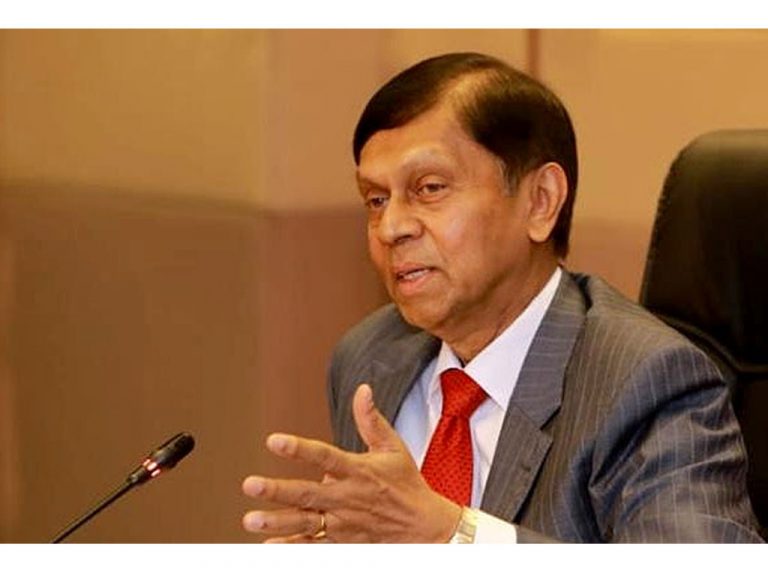
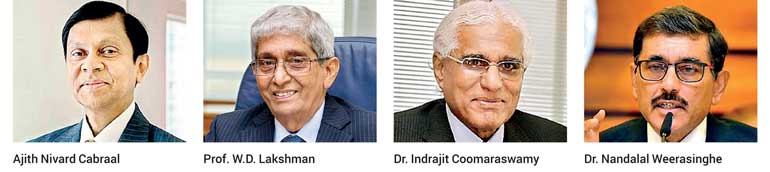
Former Central Bank Governor Ajith Nivard Cabraal in reference to Daily FT’s short Editorial titled “Getting away with Economic Crimes,” published on 31 October 2022 (https://www.ft.lk/ft_view__editorial/Getting-away-with-economic-crimes/58-741478) said he strongly objects to the “vituperative and damaging Editorial.” Following is the full text of Cabraal’s reply.
In your Editorial, you have referred to a payment of “$ 6.5 million to Pakistani American political donor Imaad Zuberi without the approval of the Cabinet Ministers and as a result committed criminal breach of trust”. In this regard, I wish to state that the payment of $ 6.5 million was made by the Government in respect of a Communication Program of the Government, and that the Central Bank effected the payment on the official written instructions of the appropriate government authority, while following the respective payment protocols and procedures. Therefore, there has been no procedural or other violation in making these payments.
Re. your allegation that “Cabraal and those who caused the outright economic collapse should be investigated and prosecuted by the State”, I set out below the manner in which “the economy was handled” in relation to the matters referred to, by you. In this context, as stated in several Cabinet memoranda, Sri Lanka’s debt challenges were mainly caused by the rapid and irresponsible forex borrowing spree whereby the forex debt of the country ballooned by a massive 65% from $ 23.4 b to $ 38.7 b in five years – 2015 to 2019. During that period, the Government borrowed $ 10 b (net) in International Sovereign Bonds (ISBs) often at interest rates of over 7.0%, of which $ 6.9 b in ISBs was issued in a blitz of 15 months from April 2018 to June 2019. The Government had further borrowed $ 2.0 b as a “term loan” from China, and received $ 1.1 b as sales proceeds for the sale of the Hambantota Port. When considering that the Forex Reserve by end-2014 was $ 8.2 b, calculations indicate that if the Forex Reserve had been prudently managed, the authorities should have had a Forex Reserve of at least $ 32.7 b instead of the mere $ 7.6 b by end-2019.
The ISB settlement of $ 500 m on 18 January 2022
The ISB settlement of $ 500 m on 18 January 2022 was a Parliament-approved budgeted debt repayment that accounted for about 7% of the Government’s forex debt-servicing and about 2.3% of the total debt-servicing in 2022. In that regard, some persons have stated that Sri Lanka should not have serviced its sovereign forex debt, particularly the maturing ISB of $ 500 m and had even claimed that the settlement of the maturing ISB was done at the behest of top officials and politicians including this writer in order to enable certain unspecified investors to make undue profits. In their haste to place blame on specific officials, they had even ignored the fact that about 16% out of the total ISBs outstanding in January 2022 of $ 13,000 m was reportedly being held mainly by Sri Lankan banks and other investors, and that a default by the Government of these ISBs would lead to the serious destabilisation of the entire Sri Lankan banking system.
Accordingly, while refuting the preposterous claim that the country was facing bankruptcy as a result of the settlement of the ISB, it must be categorically stated that Sri Lanka actually averted bankruptcy by settling the ISB. In any event, it must be noted that a decision to default by a country is so serious that it should properly receive the formal prior approval of the Monetary Board of the Central Bank, the Attorney General, the Cabinet of Ministers, as well as Parliament, and not be carried out according to the whims of a few officials.
As per the Monetary Law Act, the Central Bank’s Public Debt Department manages the public debt as the Agent of the Government. It is therefore the primary responsibility of the Government, to borrow and to repay the Government Debt. It should therefore be clear that until a decision to default is taken by the Government, it is the bounden duty of the Borrower and its Agent to honour the repayments of Government debts falling due.
It must also be noted that the repayment exercise is dependent not just upon the quantum of the available funds in hand, but on the funds inflows and outflows, as well as the roll-over of debt, which is dependent upon public confidence. Therefore, it is vital that the authorities ensure public confidence in the financial system and carefully arrange the cash flows. If the only criteria for debt repayment was the availability of liquid funds in possession, it would have not been possible to manage the debt repayment programs of the Government over the past years.
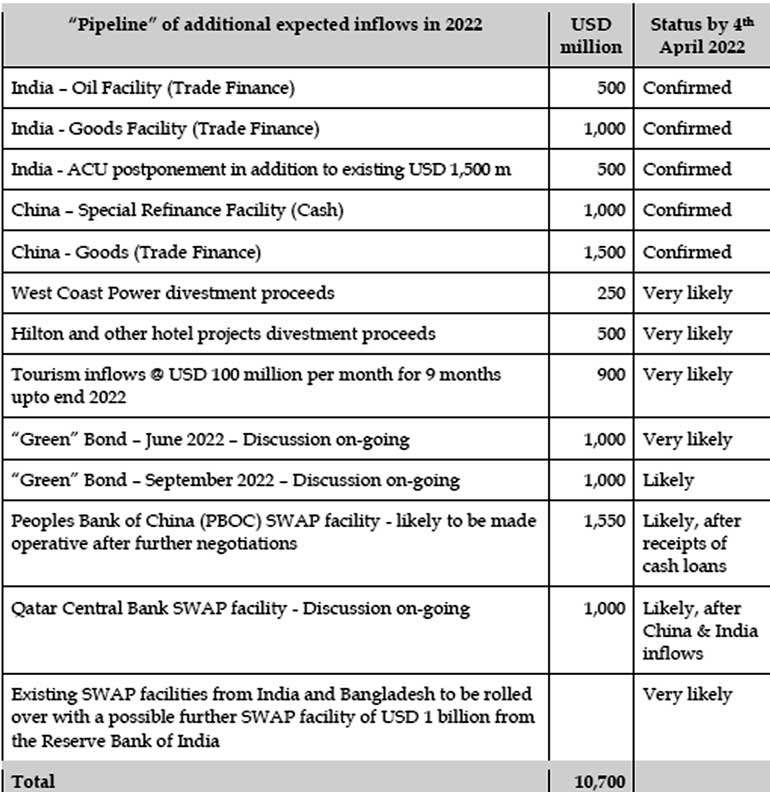
The controversial “debt default” announcement on 12 April 2022 pushed the country into default, and it is seriously suspicious as to why that was done when the “pipeline of inflows” at that time amounted to $ 10.7 b, a list of which has been submitted to the Supreme Court via my “affidavit” dated 15 July 2022 in connection with a Fundamental Rights petition. Accordingly, there was absolutely no necessity for the hurried, inexplicable and highly suspicious “debt default” of 12 April 2022, which was announced without the necessary formal approvals.
See References:
Sri Lanka in talks with China for $ 2.5 billion credit support, China official says – Reuters on 21st March 2022
Negotiations were also at an advanced stage on “lines of credit” of $ 1 b for goods and $ 500 m for oil from India, and $ 500 m (approximately) from the Reserve Bank of India through the postponement of Asian Clearing Union settlements.
The sudden “default” announcement of 12 April 2022 completely disrupted the above expected inflows, while the non-payment of the July 2022 $ 1,000 m ISB led to a “cross-default” fall-out as well.
Since December 2020, then CB Governors Professor W.D. Lakshman and this writer as well as former Treasury Secretary S.R. Attygalle had secured and arranged the required forex inflows to settle or roll-over maturing debt. This was done while allocating forex to buy fuel, coal, medicine, gas, foodstuffs, and to clear the containers of imports, even though there were a few delays due to exporters and expatriates holding back forex receipts and importers attempting to stockpile imported goods. The Government also serviced all maturing forex debts in the first quarter totalling $ 3.1 b. Thereafter, in the next 3 quarters, forex debt servicing was comparatively easier, at $ 3.9 b only, of which, the settlement in the second quarter was around $ 1.0 billion only.
The settlement and expected roll-over of those amounts were comfortably manageable with the inflows expected from the 25% export conversions to be mandatorily sold to the Central Bank by the commercial banks, the roll-over of maturing SLDBs and FCBU loans being arranged as in the past, and the expected substantial new cash inflows from China, India, “Green” Bonds and other non-debt sources.
Default repercussions
When sovereign forex loans are defaulted, the repercussions are frightful. The credibility of the country is lost. Investors shun that country. The defaulting country cannot obtain new forex loans thereafter. Access to International Bond Markets is lost. The banking system is placed under pressure. Banks face serious difficulties when opening letters of credit and doing forex transactions. Forex loans and investments are halted. Local firms doing business overseas face hardships. Most forex-funded infrastructure projects stop. Foreign Direct Investors adopt a “wait and see” attitude. Small and medium sized import-based businesses and entrepreneurs face the risk of collapse. Hundreds of thousands of jobs and livelihoods are in jeopardy. Inflation and interest rates rise. The Government is compelled to sell valuable state assets. Forex creditors institute legal action to recover their dues. The Government incurs huge litigation costs and experiences “black-listing”.
If local debt is restructured, it could lead to serious socio-economic consequences. Issue of Treasury Bills to the Central Bank increases. The local currency loses value. The Government’s local currency payments, including salary and pension payments, are stressed. The country’s foreign policy is compromised. In a nutshell, grievous prejudice is caused to the economy and the country. Sadly, almost all the above outcomes are being experienced in Sri Lanka already.
Further, if a “hair-cut” of 40% (as being mentioned in Government circles) is applied on the ISBs, that would mean that the nine Sri Lankan banks who reportedly hold around $1,750 million of Sri Lanka’s ISBs collectively would stand to suffer a loss of 40% of that value Rupees, which works out to over Rs. 250 billion. According to Central Bank data, the total Domestic Debt at end September 2022 was around Rs. 13,900 billion. As is well known, the bulk of this Debt is held by the Employees Provident Fund, Employees Trust Fund, Bank of Ceylon, People’s Bank, National Savings Bank, private banks and insurance companies. In that background, if the IMF and Debt Restructuring “Advisors” insist on a “hair-cut” of even 20% of the Domestic Debt to fulfil the IMF’s “Debt Sustainability” requirements, that would amount to a huge write-off of over Rs. 2,750 billion! Obviously, that would be a massive shock that the Sri Lankan banking and financial sector would not be able to afford or withstand.
Artificial exchange and burning the precious foreign currency reserve
Your Editorial states the economic collapse was precipitated “in no small measure by the Central Bank’s highly questionable decisions to maintain an artificial exchange and burning the precious foreign currency reserves”. In response to that allegation, it must be categorically stated that not one single dollar was used (or burnt as alleged by you) by the Monetary Board “to maintain an artificial exchange” during my second term of just over six months. In direct contrast, at the Government’s request, approximately $ 1.8 b was supplied by the Central Bank to purchase food, fuel, medicine, coal, gas, etc. that was urgently needed, while about $ 2.0 b was provided to keep the BOC and People’s Bank solvent. Further, in relation to the Monetary Board’s decision to maintain a “stable currency” during that same period, it must be stated that if the Rupee had been “floated” as demanded by some opposition MPs and others while the COVID pandemic was at its peak, and the Rupee had depreciated to around Rs. 300 or Rs. 350 per $ at that time, that would have resulted in a serious panic and instability. If so, these same politicians and others would have then taken a completely different attitude and blamed the Monetary Board saying that the decision to “float” was reckless.
Even though many don’t seem to be ready to acknowledge, Sri Lanka had secured forex “bridging finance” inflows of around $ 5 b from 2020 to end-March 2022 from bi-lateral sources, without any tough conditions or burdens being imposed on the people. Of that sum, about $ 3.8 b was obtained during my brief 6½ months as Governor.
If, as some argue today, Sri Lanka had sought IMF assistance without obtaining such funding, it is likely that not a single dollar would have been forthcoming from the IMF or from any other source during those 6½ months. In fact, by 31 October 2022, it’s more than 7½ months after seeking IMF assistance, and Sri Lanka has not received any funding whatsoever from the IMF, or from any other bilateral lender! Needless to say, Sri Lanka’s plight would have been disastrous if that had happened, and if so, everyone would have probably found fault with the authorities and demanded to know as to why the Government had sought an IMF program for the 17th time, instead of securing funds from bi-lateral sources.
Accountability
You have stated: “A handful of individuals are responsible for the economic collapse of the country. They must be held accountable for the misery they have caused. A thorough investigation into their corruption, incompetence, dereliction of duty and negligence should be carried out immediately”. In assessing such “incompetence, dereliction of duty and negligence”, I am sure the International Monetary Fund (IMF) Article IV statement of 2 March 2022 could serve as a very useful reference point. In that report, the IMF categorically states Sri Lanka had “inadequate external buffers” and was “vulnerable” at the “eve of the pandemic”.
As you know, the new Government took office around end-2019, which then means the Sri Lankan economy was already “vulnerable” and with “inadequate external buffers” at the time it took office. Such “vulnerability” had therefore obviously arisen mainly through the rapid accumulation of ISBs and equally rapid dissipation of forex reserves during the tenure of Finance Minister Mangala Samaraweera, Governor Indrajith Coomaraswamy and Senior Deputy Governor Nandalal Weerasinghe. Hence, a thorough investigation is warranted at which the latter two officials could explain how and what caused the Sri Lankan economy to be so “vulnerable” by end 2019.
The IMF Article IV Report of 2 March 2022 also specifically states that “Sri Lanka lost access to the international sovereign bond market at the onset of the pandemic”. That meant that there were no opportunities to issue new ISBs in the wake of COVID-driven inactivity in the global bond markets by the time the new Government took office. That fact too, has been ignored by many critics when assigning blame to the post-2019 administration.
In this context, I have, on 5 September 2022 urged the President, to initiate an impartial High-level Inquiry to identify those persons who are responsible for the heinous economic crime of leading the country towards financial vulnerability and thereafter announcing an unwarranted “bankruptcy”, since such persons definitely “must face justice” as urged by you.
Shocking details of how some corrupted top officials of state-run Ceylon Petroleum Corporation(CPC) siphoning large sums of dollars in the procurement of oil from its favorite selected suppliers while penalising others who stepped into ease the shortage of fuel in the country have been revealed, Energy Ministry sources confirmed.
The Ministry has also received complaints regarding activities of the CPC and the Ceylon Petroleum Storage Terminal Ltd regarding fuel procurement, evaluation of proposals, non-placement of orders, selection of suppliers and delays in payments.
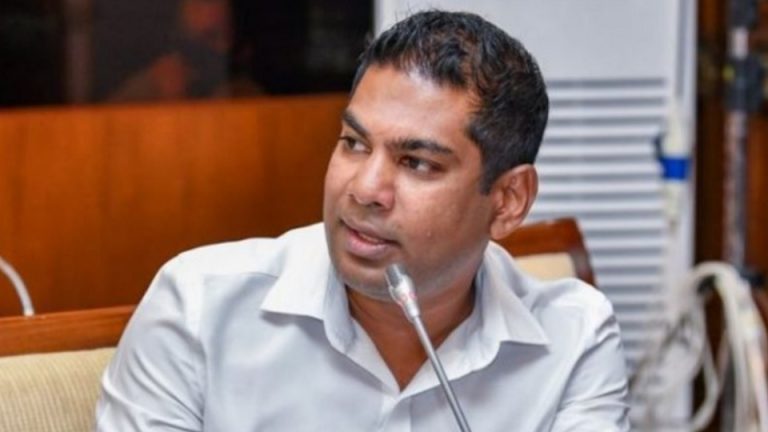
Power and Energy Minister Kanchana Wijesekera has lodged a complaint with the Criminal Investigation Department (CID) seeking a probe into these allegations of siphoning of money to selected fuel suppliers and financial misappropriations. .
It has come to light that some top officials of CPC have been siphoning over Rs.25,000 Million worth US Dollars to their favorite companies by adopting a novel system of making ‘Advance Payments of110 percent of the Cargo Value’ for the last 06 months.
This practice of paying 10 percent extra money to the suppliers has created a loss of over US$ 60 Million – Rs.25, 000 million which none of the suppliers have ever returned.
Two main suppliers, namely Vitol Singapore and BB Energy have been receiving most of these 10 percent extra advance payments and the practice is still ongoing at Ceylon Petroleum Corporation.
A leading lawyer together with a famous Buddhist monk is now contemplating legal action against CPC in an attempt to stop this daylight robbery and bring the culprits before the judiciary on national interest.
At a time when the country is suffering to even pay USD 1 million for essential items including medicine, it is shocking to know that the corrupt officials of CPC are robbing the nation’s US Dollars and taking it out of the country unnecessarily just to get their commissions paid even before the cargoes arrive in Sri Lanka, this legal luminary said
Several Petroleum Industry experts claim that despite there are suppliers who are willing to supply without the 110 percent advance payments, CPC officials are now making it mandatory for all suppliers to accept at least 10 percent advance payments to cover their past malpractices and to
Justify the ‘110 percent advance payment robbery’ to cover up the foreign exchange loss of over Rs.25000 million made by the two suppliers.
It is widely questioned as to why the Governor and the Central Bank too are in favor of this ‘Advance Payment method’ despite the many pleas made by genuine suppliers who are not in favor of receiving such extra advance payments considering the plight of the country at present.
If this trend continue, Sri Lanka will lose over Rs.50,000 million every year, paying an unnecessary 10 percent extra advance payment and this money will never come back since the suppliers will hold them against their past claims, demurrages etc.
The State-run Urban Development Authority (UDA) has joined the bandwagon to rake in foreign exchange in an effort to overcome the ongoing economic crisis.
The government programme to sell apartments built by the Urban Development Authority (UDA) for dollars to Sri Lankan Migrant Workers has commenced.
Two apartment complexes built for middle-income families by the UDA in Borella and Angoda consist of 608 and 500 houses each, respectively.
The UDA Board has approved a 10% discount for Sri Lankans living overseas and Sri Lankan migrant workers who use dollars to purchase houses in the two apartment complexes.
Under the programme, the first housing unit from the Viyathpura Housing Scheme has been sold for US$ 40,000 to a Sri Lankan migrant worker employed in Dubai, UAE.
Urban Development and Housing Minister Prasanna Ranatunga said three more housing units valued at around $ 143,700 were sold as part of the Government’s scheme to sell the UDA-built apartments for foreign currency to Sri Lankan migrant workers.
He made these remarks following a progress review meeting of the scheme held on Monday.
As per the Minister, the first house sold under the program was bought by a Sri Lankan living in Dubai on 27 September.
He said the applications have been submitted by Sri Lankan migrant workers in the US, Canada, Australia, the UAE, Britain, and Bangladesh.
The apartments are part of the Viyathpura Housing Scheme built by the UDA in the Pannipitiya, Kottawa, and Malabe areas.
“Already applications have been submitted for the purchase of another 10 houses at the apartment complexes built for middle-income families by the UDA,” he added.
He also said that they expect to achieve a target of $ 500,000 by the end of this year and $ 1.5 million via the project next year.
Sri Lankan migrant workers can receive a discount of 10% for outright payment of the full value or a discount of 5% for installment payment.
The first house sold under the program was bought by a Sri Lankan living in Dubai on 27 September.
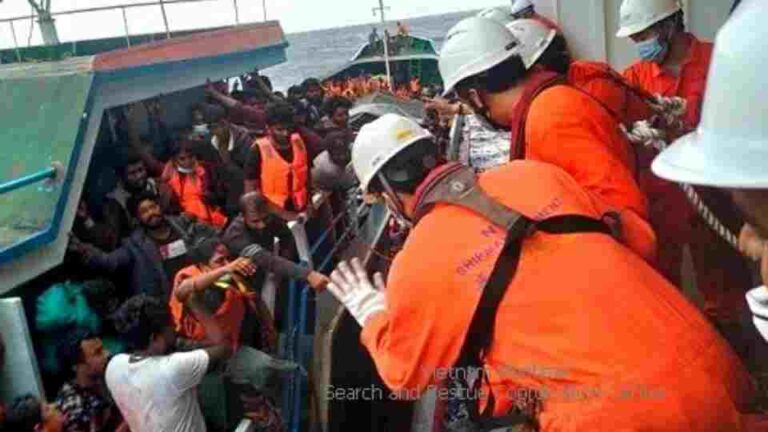
303 Sri Lankans who were stranded in the Vietnamese waters have been rescued by Japanese authorities.
The stranded Sri Lankans were discovered at sea off the Spratly Islands after their fishing boat was damaged and found adrift.
The story comes in following the Vietnam Maritime Search and Rescue Coordination Centre receiving information that the Myanmar-flagged ‘Lady R3’ with 303 Sri Lankans suspected to be headed for Canada was in trouble.
On Monday (07), the Japanese-flagged ‘Helios Leader’ was in the area and was requested by the Centre to make a detour and rescue the stranded vessel carrying the Sri Lankans.
The passengers on board the vessel were rescued and provided medical assistance immediately to whoever needed it.
Meanwhile, the Vietnam Maritime Search and Rescue Coordination Centre mobilised five other ships and instructed them to circle the area to provide support if needed.
Among the rescued were 264 men, 19 women and 20 children, according to reports.
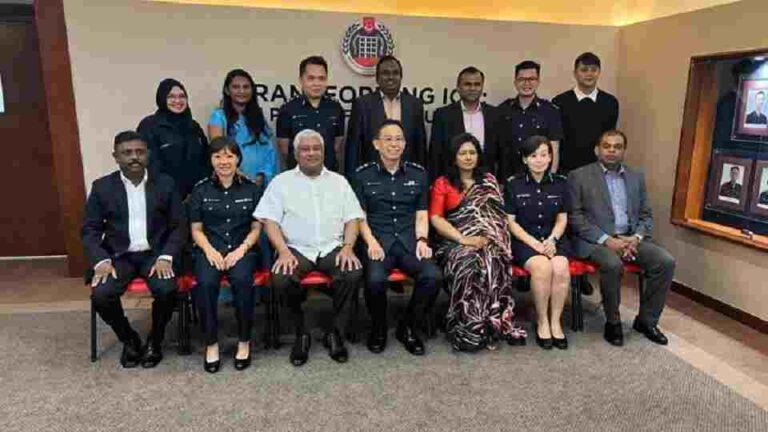
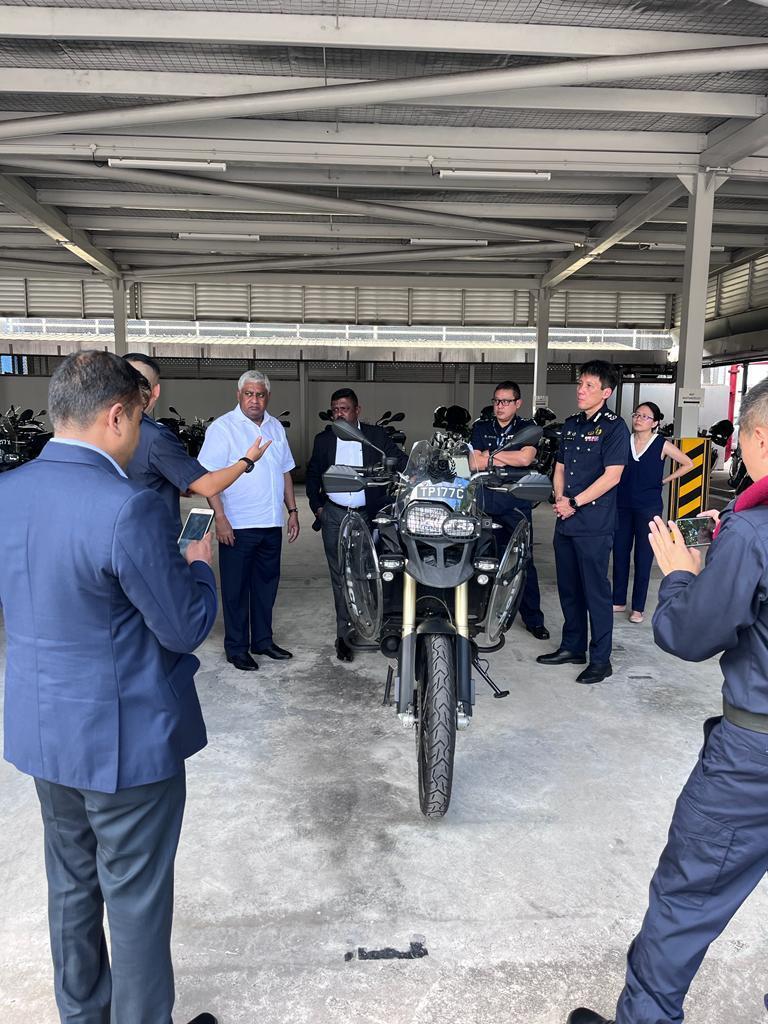
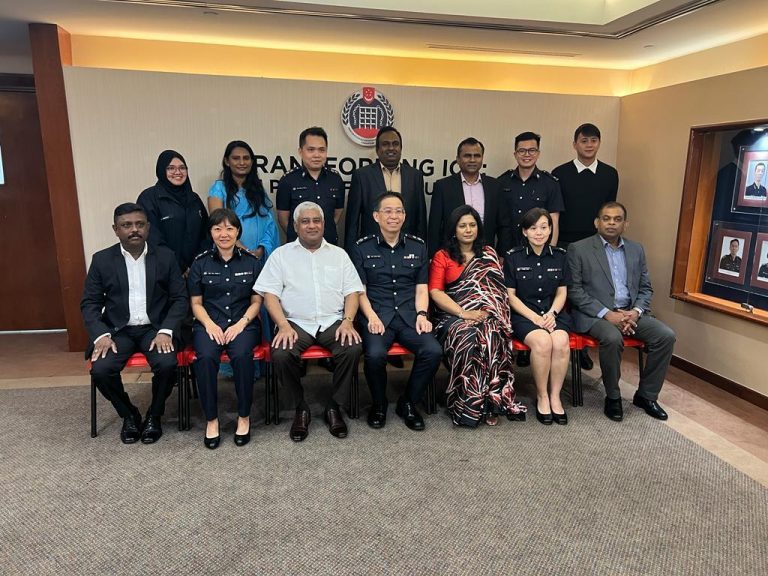
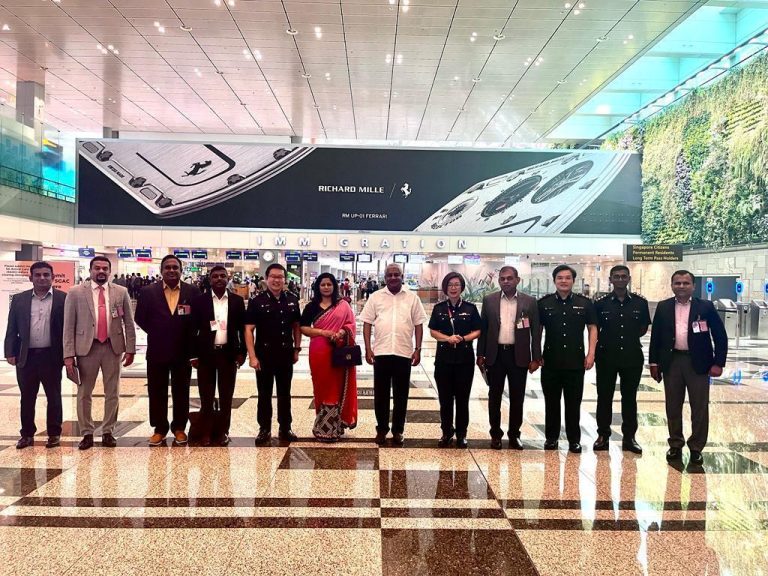
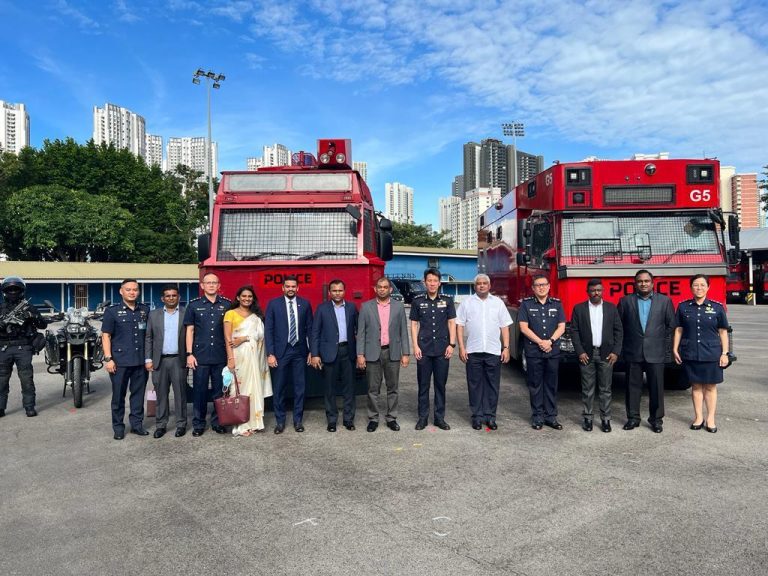
Minister of Public Security Tiran Alles undertook an official visit to Singapore at the invitation of Minister for Home Affairs and Minister for Law of Singapore K Shanmugam from 25-29 October, 2022.
The delegation participated in a briefing session, arranged by the Ministry of Home Affairs and the Central Narcotics Bureau (CNB) on Singapore’s legal frameworks in maintaining public order and combating drugs. Minister Shanmugam who joined the briefing provided an overview of the legal frameworks and the amendments introduced in recent years in both these areas. The two sides also had useful exchanges on lessons learnt in the operational aspects of the related legislation and amendments in a separate session which was joined by Minister of State for Home Affairs Sun Xueling and senior officials from the Singapore side.
The Minister’s programme in Singapore also included an interaction with the officials of the Immigration and Checkpoints Authority (ICA) during which a briefing was provided on the transformation and digitalisation plans of ICA documentation and included a tour of the Identity Authentication and Documents Analysis (IADA) Lab. The two sides exchanged views on current measures being adopted at immigration checkpoints in Singapore and the process that was undertaken during the establishment of the ICA in 2003 to merge the Singapore Immigration & Registration (SIR) and the checkpoint operations of the Customs & Excise Department (CED to meet emerging security challenges.
The Singapore Police Force officials provided a detailed overview of criminal investigation, intelligence, and operational aspects of their work including on the special operations command. A visit to Changi Airport was also conducted where a briefing was provided on Singapore’s latest border security measures.
Minister Shanmugam hosted Minister Alles and delegation to lunch at the conclusion of the visit where matters of mutual interest were discussed.
The delegation accompanying the Minister included the Controller General of Immigration and Emigration, senior officials from the Sri Lanka Police and Special Task Force, the High Commissioner of Sri Lanka to Singapore and senior officials of the High Commission.
The High Commission of Sri Lanka in Singapore coordinated the visit with the support of the Ministries of Home Affairs and Foreign Affairs of Singapore, and the Ministry of Public Security of Sri Lanka.
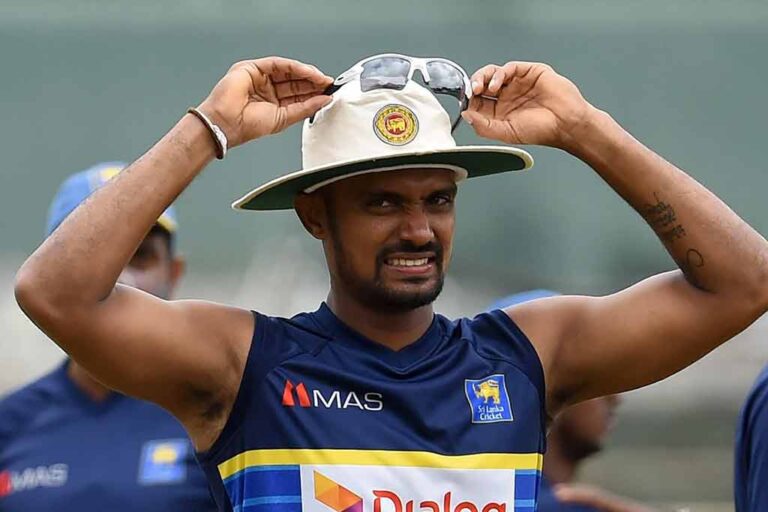
Sri Lanka Cricket (SLC) today (08) said it has appointed a three-member committee of inquiry to probe into the allegations levelled against Sri Lankan Cricketer Danushka Gunathilaka, who was accused of sexual assault against a woman during his tour for T20 World Cup in Australia.
The panel consists of High Court (retd) Judge Sisira Ratnayake, Attorney-at-Law Niroshan Perera and Attorney-at-Law Asela Rekawa, the SLC said in its statement.
It added that the committee will also focus the inquiry on various alleged events which are said to have allegedly taken place during the National Cricket Team’s stay in Australia.
The committee of inquiry appointed by the SLC will call for an immediate explanation from the Team Manager involving his conduct, with references to the occurrence of such incidents. Based on the findings, the Executive Committee of SLC will take stern disciplinary action against the players and or officials, in any event were the allegations of misconduct proven, it added.
When Fernando Sugath arrived in Lebanon in the mid-1990s, cricket was an underground sport. Literally. After living in Beirut for a year as one of the country’s 80,000 Sri Lankan migrant workers, a fellow countryman he met in a supermarket invited him to a game. “I had been looking for somewhere to play,” says Sugath. “Also, I didn’t have any friends.” He turned up at the address he was given to discover the players crammed into a tiny underground car park beneath an apartment building.
Sugath is a man used to improvising. “As kids we didn’t need a big playing area or good equipment to play,” he says. “We used plastic balls, the old base of a coconut leaf for a bat.” Within 10 years, he had founded Nomads CC, who played in another, open-air car park behind a Jesuit church. Sugath was the captain, star batter and organiser extraordinaire.
In 2005 they staged a tournament for migrant workers in the excavated foundations of a yet-to-be-built high-rise. The Sri Lankan ambassador was in attendance, but that didn’t prevent the Lebanese army surrounding the players with guns and demanding to see everyone’s papers. Of the 500 people present, 30 were detained for not having the correct documents; it cost the community $35,000 to bail out their friends and colleagues.
While attention is fixed on the football World Cup, and sport reckons with the treatment of migrant workers in Qatar, the far smaller-scale tale of cricket in Lebanon is worth considering. It is an upbeat one too, although it has not been without trials and setbacks. A few weeks ago, Sri Lankan migrant workers returned cricket to the streets of Beirut after a five-year ban – and in doing so, mounted a celebration of everything we want and hope sport to be.
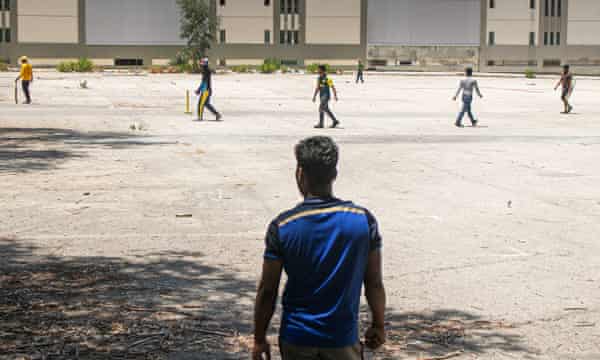
The 36-team Sri Lankan Ambassador Trophy tournament that took place at the end of September transformed the car park behind the Jesuit church into a mini-festival site. There were DJs and dancing, a calypso band and all manner of stalls selling South Asian street-food. Most of the players were migrant workers, some were Syrian refugees; there were teams from the British and Australian embassies, others which had travelled from Damascus, and no fewer than four sides representing the Indian and Pakistani peacekeeping troops that serve on the Blue Line bordering Israel.
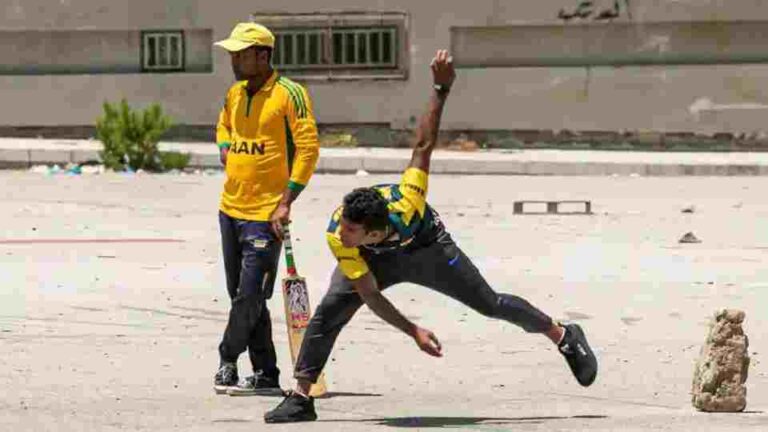
There had been such cricket gatherings in Beirut in the past, although none quite so big. The local rules are well known: if the tennis ball hits the wall behind the wicketkeeper, the batter gets a bye and swaps ends; if it goes into the trees behind the bowler’s arm, they can run for as long as it takes to re-emerge without fear of being caught. The five-over games went on all day; when Sugath was asked by a local reporter what it meant to see so many people enjoying the game, and each other’s company, he wept.
For 26 years, cricket has been the activity that ameliorates a hard life, thousands of miles from his family in Sri Lanka. He works 12 hours a day, six days a week, for a furniture depot. His employer treats him well; when Sugath first arrived he worked as a cleaner and now he is the boss’s PA. It is a rare example of personal development in the exploitative kafala system practised in the Gulf states, that gives employers control over their employees’ immigration status.
Members of the Bangladeshi community play in Beirut in July 2020. Sri Lankan Fernando Sugath says: ‘When we’re at work, every one of us is counting the days til Sunday.’ Photograph: Amer Ghazzal/Shutterstock
But the economic crisis in Lebanon has halved the value of Sugath’s monthly earnings and when he finishes his day job he returns to the small subterranean maids’ room – bed, toilet and gas hob almost abutting each other – where he has a second role as the building’s concierge. His sacrifices have enabled him to send home enough money to build a house for his parents, his brother and himself. But the light at the end of each week is cricket. “It makes my life here much easier to handle,” he says.
In 2017 the owners of the car park suddenly and unexpectedly refused permission to play cricket there, threatening to have anyone who showed up arrested. With a dearth of alternative venues, the scene threatened to wither and die. A new women’s project at a camp for Syrian refugees, Alsama Cricket, meant the game continued to be played in Lebanon – but not by the migrant workers.
It has taken five years to reinstate permission to use the car park – and when the game finally returned, it brought together the workers with the refugee players for the first time. “These two disparate communities have never had any interaction before,” says William Dobson, a Beirut bookshop owner from England who co-founded the September tournament with Sugath. “Now these teenage refugees who have only been playing for three years are turning up each week to learn from 50-year-old Sri Lankan guys.”
There were four teams of women at the tournament, including some who were playing for the first time. “After that we realised how excited women are to play cricket,” said Sugath. “Now we have 10 women’s teams practising every week.” He recalls how a woman called Pradeep told him: “For six days of the week I’m in Lebanon and I’m nobody. On Sunday I come to cricket and I’m back in Sri Lanka again.”
Dobson says: “In England it’s easy to take cricket for granted. But for a 50-year-old Sri Lankan woman who has lived in Beirut for 30 years, and hasn’t seen her family for two years, to be with other women in a similar situation and connecting to something from their homeland and their childhood – that’s something else.” Sugath has already arranged for a women’s tournament at the end of November. “When we’re at work, every one of us is counting the days til Sunday,” he says.
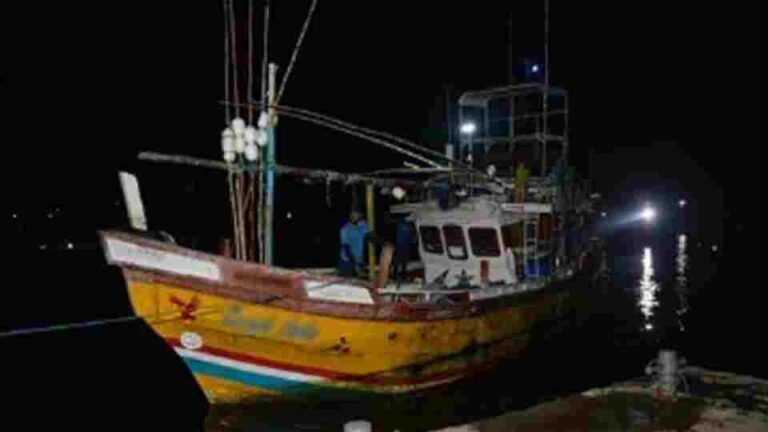
A special operation conducted by the Navy in coordination with the Police Special Task Force and Police Narcotics Bureau off Hambantota, led to the interception of a local fishing trawler carrying over 300kg of heroin (Including packages), worth approx. gross street value of over Rs. 6000 million and apprehension of 06 suspects on 05th November 2022.
The drug-carrying trawler and the suspects were brought to the Galle Harbour this morning (07th November). Meanwhile, Commander of the Navy Vice Admiral Nishantha Ulugetenne also arrived at the Galle Harbour to inspect the consignment.
The special operation was mounted by the Offshore Patrol Vessel SLNS Wickrama II, based on a coordinated intelligence operation of the Police Special Task Force, Police Narcotics Bureau and Navy Intelligence. Accordingly, the Navy’s sea unit deployed in this special mission intercepted a suspicious local fishing trawler in southern waters about 10 nautical miles (about 18km) off the Little Basses Reef Lighthouse.
Subsequent search led to the recovery of 300 packages of the substance stuffed in 12 sacks which had been concealed in the trawler. Thus, the Navy nabbed 06 locals aboard and the fishing trawler used for this illegal act on 05th November.
Moreover, the Navy, Police Narcotic Bureau and Police STF held a dinghy, which is suspected to have been made ready to fetch the stock of narcotics from mid-sea, and arrested 03 male and 01 female suspects involved in the land-network of this racket, in an operation mounted off Nillwella and its beach area on 06th November. Meanwhile, the Police Narcotic Bureau is conducting further operations in search of more suspects in connection to this illegal act.
The suspects held in this operation were identified as residents of Hambantota, Kottegoda, Dikwella and Mahamadala, who are from 31 to 62 years of age. Currently, the weight of the heroin stock is being measured. The haul of narcotics, multiday fishing trawler, dinghy and 10 suspects will be handed over to the Police Narcotic Bureau for onward legal action, after those proceedings.
With the mediation of the Defence Secretary General Kamal Gunaratne (Retd), a number of successful drug raids have been carried out, having mobilized intelligence services towards a common goal. In these efforts, the Sri Lanka Navy under the able leadership of Commander of the Navy, Vice Admiral Nishantha Ulugetenne has played a major role to thwart the influx of narcotics into the country.
Including the latest seizure, the Sri Lanka Navy has held drugs with a gross street value of over Rs. 22.5 billion during operations in 2022. Sri Lanka Navy – the country’s First Line of Defence is committed to coordinating with other law enforcement authorities, to carry out anti-drug operations of this nature in order to foil drug smuggling attempts being made in the guise of fishing.
A comprehensive report on the fuel tenders submitted from January 01, 2022 to October 01, 2022 has been tabled in Parliament by Energy Minister Kanchana Wijesekara today (08).
The report consists of all information pertaining to the manner in which the tenders operated for fuel imports and the methods by which fuel were delivered outside the tender process, the Minister noted.
The report will be submitted as response to the continuous questioning by the Opposition with regard to fuel imports, he added.

 In your Editorial, you have referred to a payment of “$ 6.5 million to Pakistani American political donor Imaad Zuberi without the approval of the Cabinet Ministers and as a result committed criminal breach of trust”. In this regard, I wish to state that the payment of $ 6.5 million was made by the Government in respect of a Communication Program of the Government, and that the Central Bank effected the payment on the official written instructions of the appropriate government authority, while following the respective payment protocols and procedures. Therefore, there has been no procedural or other violation in making these payments.