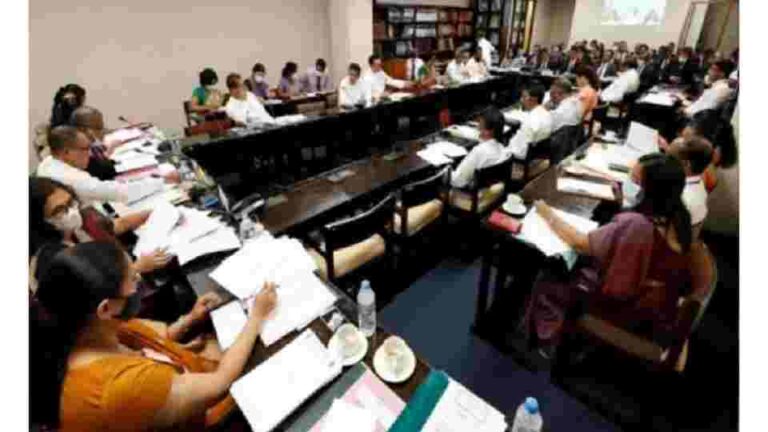
The Government is grappling to save the country’s economy from a possible US$10 billion contraction amidst an impending recessionary period, according to econometric models and provisional data of the Finance Ministry.
Due to rising inflation and lower growth, the Sri Lankan economy is approaching stagflation. Growth expectations for the country have nosedived after the sovereign default with the economy projected to decline by -7.8 per cent in 2022 and -3.7 per cent in 2023.
The International Monetary Fund (IMF) this week forecasted a lower contraction of the Sri Lankan economy than the World Bank.
In its World Economic Outlook (WEO) released this week IMF estimated Lankan economy to contract by 8.7% this year and by 3% next year. However, the World Bank in its forecast released last week estimated a contraction of 9.2% this year and 4.2% in 2023.
The rising prices have compelled the Central Bank to increase the interest rates to face the country’s impending recession with 85 per cent probability, official sources revealed.
The World Bank estimated that over 500,000 people in Sri Lanka had fallen below the poverty line. The country was experiencing food, medicine and fuel shortages as well as daily blackouts and an economy in freefall, a senior Finance Ministry official divulged.
The Government’s move to increase taxes would intensify the rate of economic shrinking and places the whole economic system and other connected financial institutions including banks at a great risk, Head of the Department of Business Studies at the University of Sri Jayewardenepura Prof. Janak Kumarasinghe warned.
The shock caused by the increasing of interest rates up to over 25 per cent and taxes would exert an impact on business enterprises big or small as well as MSMES depriving them of obtaining loans from banks and financial institutions to tackle their liquidity issues, he pointed out.
While a fiscal stimulus package is not possible at present, the government has to meet the needs of the most vulnerable groups in providing emergency subsidies, as rising inflation and job losses have led to lower standards of living, State Minister of Finance Ranjith Siyambalapitiya disclosed.
Due to financial constraints, Sri Lanka will have to look for further bilateral and multilateral aid in securing funding for short-term, targeted “in-kind” transfers such as food stamps for the poorest of the poor.
It is also important to look at bridge financing arrangements to import essential commodities like fuel so that supply shortages reduce. This should help in keeping productivity intact and inflationary pressure in check, he added.
As of August 31, 2022, the total income of the country was recorded as Rs. 1.23 trillion, while the total expenditure of the country was Rs. 3.54 trillion, the minister said, adding that government revenue this year should reach Rs.2.47 trillion.
He also stressed that the relevant austerity procedures should not cause any additional pressure on the low-income families of the country.
According to the draft Appropriation Bill, the estimated total expenditure is Rs.7.92 trillion in the budget 2023 to be presented in Parliament under the theme of ‘making a transformative change via minimum inputs’ in line with the 2023-2025 medium-term fiscal policy framework
Government grapples to save US$10 billion SL economy contraction
Water supply cut for 12 hrs in many places of Colombo
The water supply will be cut off for 12 hours in a number of places in Colombo, announced the National Water Supply and Drainage Board (NWSDB).
Accordingly, the water supply will be cut in Colombo 02 – 10 areas for 12 hours starting from 10 pm tonight (15).
The move is due to a repair at the General Colombo Water and Wastewater Management System, according to the NWSDB.
MIAP
Heavy showers above 100mm expected!
The low-level atmospheric disturbance still persists in the vicinity of the island and therefore, the cloudy sky is expected in most parts of the island, the Department of Meteorology said in a statement
Showers or thundershowers will occur at times in Western, Sabaragamuwa, Central and North-Western provinces and in Galle and Matara districts.
Heavy showers above 100 mm can be expected at some places in Western, Sabaragamuwa, and Centralprovinces and in Galle and Matara districts.
Showers or thundershowers will occur elsewhere over the Island during the afternoon or night. Fairly heavy showers above 75 mm can be expected at some places.
General public is kindly requested to take adequate precautions to minimize damages caused by temporary localized strong winds and lightning during thundershowers.
Marine Weather
| Condition of Rain: |
| Showers or thundershowers will occur at times in the sea areas off the coast extending from Puttalam to Matara via Colombo. Showers or thundershowers may occur at several places in the other sea areas around the island during the afternoon or night. |
| Winds: |
| Winds will be south-westerly and wind speed will be (25-35) kmph. Wind speed may increase up to (45-50) kmph at timesin the sea areas off the coast extending from Galle to Pottuvil via Matara and Hambantota. |
| State of Sea: |
| The sea areas off the coast extending from Galle to Pottuvil via Matara and Hambantota will be fairly rough at times. Temporarily strong gusty winds and very rough seas can be expected during thundershowers. |
President emphasises importance of ensuring food security in SL by cultivating all arable lands
President Ranil Wickremesinghe emphasised the importance of ensuring food security in the country by cultivating all arable agricultural lands.
These remarks were made by the President participating in a discussion held at the Eastern Province Governor’s office yesterday afternoon (14), with the farmers of Trincomalee District regarding the land issues faced by them.
During the meeting, it was discussed in detail regarding the handing over of lands to the farmers in the area, which were traditionally cultivated by them and compelled to abandon due to the war.
Emphasising the need to solve the problems of the farmers immediately, the President explained the need of preparing for the possible food crisis in 2023 by making the upcoming Yala and Maha seasons a success.
Also, the progress of implementation of the programme on food security and nutrition introduced recently under the direction of President Ranil Wickremesinghe in Trincomalee district was also reviewed.
Minister Nimal Siripala de Silva, State Minister Dilum Amunugama, Presidential Senior Adviser on National Security and Chief of Staff to the President Sagala Ratnayake, Secretary to the President Saman Ekanayake, Eastern Province Governor Mrs. Anuradha Yahampath and Trincomalee District Secretary, Provincial Chief Secretary, Governor’s Secretary and other government officials and heads of security forces of the province participated in this discussion.
PMD


Sri Lanka Original Narrative Summary: 15/10
- IMF states Sri Lanka will record the lowest growth rate among 30 Asian ‘Emerging Markets and Developing Economies’ in 2022: forecasts contraction by 8.7% in 2022: contraction of 3% in 2023: no forecast from 2024 to 2026: forecasts growth of 3.1% in 2027.
- IMF Chief Kristalina Georgieva says the IMF wants equal treatment to all creditors: says the Agency is also pressing for an effective debt resolution mechanism: seeks ways to expand donor coordination to middle-income countries like Sri Lanka.
- “Paris Club” reaches out to China and India to coordinate Sri Lanka’s debt talks: but, say they have still not received a reply from either country.
- UNP Chairman & MP Vajira Abeywardene says elections will be held only after national policy framework to stabilize the nation is formulated: rules out an election soon: also says it is essential to reduce number of local government members to 4000 from 8000, and abolish the preferential voting system.
- President’s Chief-of-Staff Sagala Ratnayake says discussions with regards the insurance claim for MV X-Press Pearl disaster amounting to millions of dollars have been successful.
- Specialist doctor complains to CID that Thilini Priyamali, who has allegedly misappropriated large sums of money, had “taken” Rs.750 mn from him: another multi millionaire woman also complains that Priyamali “took” Rs.45 mn from her.
- Central Bank T-Bond borrowings interest rates rise further to astronomical heights: 3-year Bonds @ 31.93% : 7 year Bonds @ 30.85% : analysts say this week’s auction alone cost the government an additional Rs.22.5 bn, when compared with rates prevailing at end-March 22.
- Bangladesh Bank Governor Abdur Rouf Talukder meets CB Governor Nandalal Weerasinghe in Washington: says Bangladesh is hoping Sri Lanka will repay USD 200 mn owed to Bangladesh by March 2023.
- Department for Registration of Persons increases fees for issuing National Identity Cards: first time NIC Rs. 200: duplicate copies Rs.1,000.
- State Finance Minister Ranjith Siyambalapitiya warns legal action against people who come from abroad wearing gold jewellery exceeding limits: says country loses about USD 30 mn monthly due to smuggling of gold.
Maxim launches first solo exhibition in a decade, at Miart Gallery, London, during Frieze Week
Fresh from sellout UK Tour with The Prodigy, the artist and musician held a VIP preview to his show ‘Infinite Drama’ exhibiting paintings, sculptures and a wall-size NFT Fresh from a sell-out UK tour, talented fine artist, musician and Prodigy frontman Maxim launched a retrospective of his art last night at Miart Gallery in Mayfair. The exhibition titled ‘Infinite Drama’ will run from 14th October to 7th November, during Frieze Week in London, and will take over two floors of Miart Gallery London, formerly a bank in Mayfair. WHO: Dynamo, Louis Starkey, Leo Crabtree, Robbie Furze, Dan Pearce, Robi Walters, Dan Kapp, Lady Victoria Hervey, Philip Sallon, Azzi Glasser, Andy Cole, Lloyd De Boltz, Cordelia Plunkett, Joshua Scacheri, Flora Fairburn, Stuart Watts, Jan YoungHusband, John Fairs, Mercy Cutler, Peter Ogunsalu, Basia Briggs, Tatum & Rocky Mazzilli, Tiger Savage WHAT: Cocktails by Beaufort Spirits, tunes spun by T-Rex, “ballerina in balaclava” dance performance by Helga Paris-Morales Getty images here Wide edit of pics from the night(photo credit Rahul Singh – Prodigy photographer) Installation pics here(photo credit IG @jutiarphoto / www.jutiarphotography.com) Maxim artworks here |


Sri Lanka private sector engages on measures to boost exports
Involvement of the public and private sector in the development of the country’s economy has been further strengthened to boost exports .
It is not possible to achieve any sector development by focusing interventions solely on the private or public sector. In fact, many of the challenges faced by the private sector can be overcome only in partnership with the public sector, official sources said.
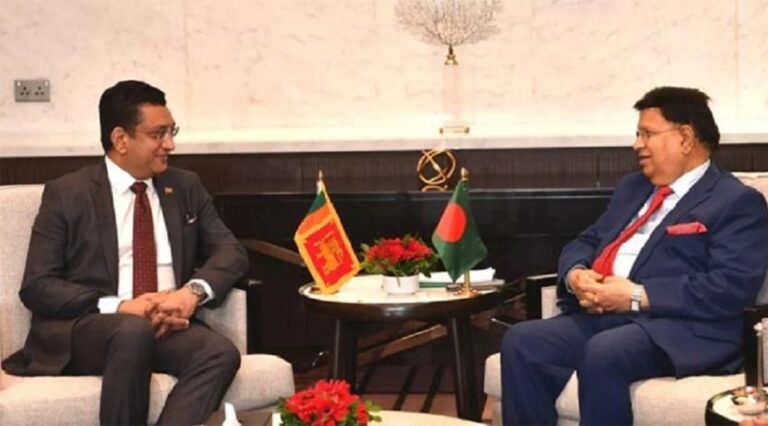
Foreign Affairs Minister Ali Sabry recently met with private sector to discuss and to expound the opportunities and potential for exporters as well as the challenges that they confront in exporting goods and services of Sri Lanka, amongst others.
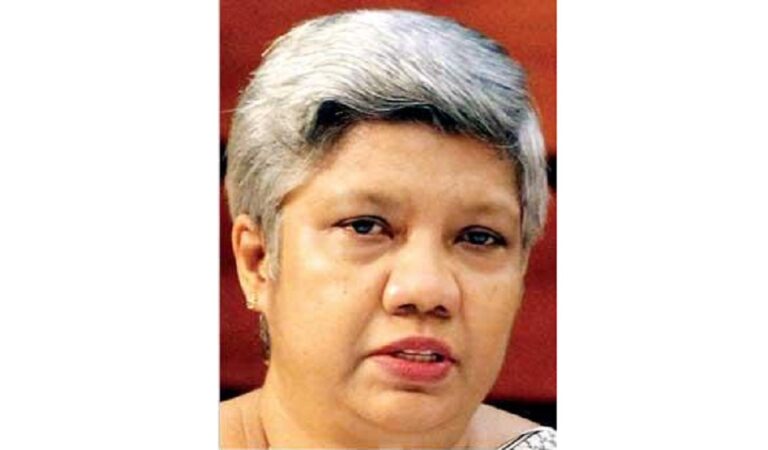
Foreign Secretary Ambassador Aruni Wijewardane and other senior officials participated in the discussion at the meeting with Minister Sabry.
Presidents, Secretaries General, senior officials and business leaders representing a large number of export oriented organisations and chambers of commerce attended the meeting.
This meeting with the private sector corporates and chambers was hosted by the Ministry of Foreign Affairs in order to obtain views, ideas and propositions on the most efficacious courses of action that the Ministry could assist and facilitate the business community to develop their business endeavors and boost exports.
Addressing the gathering, the Foreign Affairs Minister stated that the Ministry is committed to cooperate with the private sector, chambers and to support their business endeavors, thus accruing much needed economic advancement and provide assistance to the export sector of the country.
He assured that all Missions which are under the purview of the Ministry, would assist and facilitate the private and corporate sector in realizing their economic and trade objectives and continue to engage professionally with the private sector in connecting them to openings overseas.
Participating organisations and chambers who expressed their views added that the successful conclusion of free trade agreements (FTAs) with key countries should be considered as a priority of the Foreign Ministry at this juncture in order to aggrandize and boost exports.
They also expressed that the Government should adopt a well-structured mechanism to address issues arising from negative media coverage, thus enhancing the image and profile of the country.
The meeting was attended by over 20 leading chambers of commerce and export oriented organisations including the Ceylon Chamber of Commerce, National Chamber of Commerce, Federation of Chamber of Commerce and Industry, Sri Lanka Exporter’s Association, Tea Trader’s Association, Sri Lanka Apparel Exports Association and Joint Apparel Association Forum, amongst others.
Gulf Airlines support “FIFA Zone “in Sri Lanka to boost tourism
The out-of-the-box plan to attract a fraction of the FIFA World Cup 2022 fan base to Sri Lanka will materialize, as key Gulf Airlines have committed to support the initiative, Tourism Minister Harin Fernando said.
Noting that Flydubai and Qatar Airways have agreed in principle to support the initiative with increased frequencies, he said the final plan will be announced by next week.
“Given the support we have received so far from all stakeholders, I am confident that the initiative will be successful,” Minister Fernando told the Daily FT.
Over 1.2 million football fans from around the world are expected to attend the FIFA World Cup 2022 from 20 November to 18 December. However, accommodation in Qatar has soared with increased demand for the 40,000 total room capacity.
The collective effort of Sri Lanka Tourism is to capitalize on the proximity, affordability, air connectivity and entertainment culture to seize a fraction of the visitors during the four to five-day break between the matches.
“Flydubai has assured support to the promotional packages discussed to attract global football fans to Sri Lanka. We are capitalizing on the codeshare partnership SriLankan Airlines has with Qatar Airways to get a higher frequency during the FIFA World Cup season. A final package on the initiative will be made available by next week,” he said.
With over 1,300 rooms within Negombo, Minister Fernando said all hotels and other stakeholders have stepped up their efforts to set up a FIFA Zone to accommodate and entertain the visitors from the third week of November to the end of December.
As per the Minister tour operators have already created packages for four days and three nights starting from $ 235 per person-sharing doubles to over $ 330 depending on the star classification of hotels.
“We have discussed modalities of this initiative at the recent meeting with the Tourism Committee to review the progress of the initiative and then announce the outcome by next week,” Fernando added.
This is the first Football World Cup ever to be held in the Gulf region and the second World Cup to be held entirely in Asia after the 2002 tournament in South Korea and Japan.
Cash strapped Sri Lanka introduces tax hike to enhance revenue
In light of the financial constraints placed on the government budget owing to 2019 tax relief granted to business stooges of the former President Gotabya Rajapksa regime under the guise of stimulating the economy ,Sri Lanka’s latest tax rate hike has been gazetted recently.
President Ranil Wickremesinghe as the Minister of Finance has increased personal income tax with an aim to double tax to GDP ratio by 2025 as the island nation is in the process to finds ways to come out of an unprecedented economic crisis.
– A person who earns more than 100,000 Sri Lankan rupees will have to pay taxes depending on the additional amount they earn. This means the annual threshold-free income is 1,200,000 rupees. This threshold level was 3,000,000 rupees earlier and now has been cut by 60 percent.
– The tax slabs of 3,000,000 after the threshold-free income is now reduced by over 83 percent to 500,000 rupees.
– For each 500,000 tax slab, there is an incremental 6 percent tax. If a person annually earns 3 million rupees, which was tax-free earlier, the first 500,000 rupees after the 1,200,000 rupee tax-free threshold, he will be changed 6 percent, next 500,000 at 12 percent, next 500,000 at 18 percent and the remaining 300,000 at 24 percent.
– A 1,200,000 rupee expenditure relief that was available for a resident individual under an earlier system is not available anymore. This relief was provided for children’s education, interest on housing and solar panel loans.
– Corporate tax rate is raised to 30 percent from earlier 24 percent.– A 10 percent Advance Income Tax is charged on an income made out of rent exceeding 100,000 rupees, while 5 percent is charged on an interest income or discount.
The gazette shows that a 15 percent AIT is applicable on dividend payments and 14 percent for any other payments.
– A 5 percent withholding tax rate is charged on the service fee of more than 100,000 rupees for teaching, lecturing, examining, invigilating or supervising an examination, service fee as a commission or brokerage to resident insurance, sales or canvassing agent.
The same 5 percent withholding tax is applicable for services provided by individuals in the capacity of independent service providers such as doctors, engineers, accountants, lawyers, software developers, researchers, academics or any individual service provider as may be prescribed by regulation.
Sri Lanka’s proposed tax hikes may lead to lower interest rates in the future as the expected increase in state revenue could reduce the dependency on treasury bills and bonds, dealers said.
The key changes include reducing the tax-free threshold for personal income tax to 1.2 million rupees from 3.0 million and raising the corporate tax to 30 percent from 24 percent.
Capital gains tax for companies has been proposed to be raised to 30 percent from 10 percent for investment assets.
Dealers said there was no significant reaction for the tax hike proposal yet, but however investors may seek on the best Return on Investment (ROI) opportunities such as real estate or the stock market, if the interest rates fall.
Sri Lanka’s risk free interest rates are hovering around 30 percent, but investors still see negative returns because the inflation has reached an unprecedented 70 percent.
The foreign borrowings have completely dried up in Sri Lanka after the island nation declared sovereign debt default in April this year. Since then the government has been heavily depending on local borrowing mainly through T-bills and T-bonds.
The yields in both government securities reached around 30 percent after the central bank raised its key monetary policy rates by an unprecedentedly higher amount to tame a skyrocketing inflation despite higher borrowing by the government.
51st SESSION UNHRC RESOLUTION ON SRI LANKA AND WAY FORWARD
Geo-politics Prevails the Humanity
Unquestionably the whole world knows that the Mullivaikkal genocidal intended Tamil massacre in Sri Lanka is the first and the worst in this 21st century. Despite the awareness of well-substantiated documents pertaining to Tamil massacre, the international community not only assisted Sri Lankan state to execute its purpose but continue to disregard Tamil peoples’ call for justice for the atrocity crimes inflicted on them by the Sri Lankan state.
Had the international community been considerate on humanities, rather than paying their geo-politics, many Tamil peoples’ lives could have been saved. It is not only the loss of lives, but several people have been maimed, lost their limbs, eyes, widowed, orphaned and have been living into destitute situation due to the destruction of their properties and belongings and also due to the occupation of concentrated Sri Lankan military in their lands.
Had the world-leaders proactively set an example by intervening with the Sri Lankan government and stopped the massacre of Tamil people, that precedence could have saved many peoples’ lives in other countries too. A good recent example is Ukraine – Russian war.
Nevertheless, there are 1000s of well documented evidence are available the UN Member states continue to fail to acknowledge merits to establish an international criminal justice mechanism due to lack of political will and geopolitical interests. Had there been a drive, international community should have ensured the (a) reporting of these crimes to other UN mechanisms and (b) referring to the General assembly for an international criminal justice mechanism.
The Core Cause for Sri Lanka’s Economic Crisis
Majority of the countries were sympathetic with Sri Lanka’s pretence that imposition of stringent resolution against it, while it undergoes economic upheaval, is unfair without knowing the true cause for its current dilemma.
These countries must understand and acknowledge that there is a disconnection between the current economic crisis and the seven decades of Sinhala Buddhist exclusivity, impunity, cycles of violence, conflict driven political agenda and highly centralised state institutions,
We met the diplomats of several countries and internationally reputed NGOs to comprehensively explain them with facts and figures in convincing them that the root cause for Sri Lanka’s current economic problem has been its racial hegemony of Sinhala-Buddhist chauvinism since Sri Lanka became independence in 1948.
Among the many things cited:
· the Sinhala-only Act followed by the premeditated deployment of more military camps in Tamil homeland from 1963 when the Tamil people were conducting nonviolent resistance,
· the prolongation of Prevention of Terrorism Act (PTA) as a temporary provision enacted in 1979 till to date, arbitrary arrest, detention, enforced disappearance, extra judicial killings, torture, sexual violence, vulnerability of the women & children and the effect of impunity,
· national budget spent for defence for 27 years, between 1983 and 2009 was $14 billion, whereas the post-war defence expenditure for the 10 years, from 2010 to 2019 has been $17 billion causing the frenzy borrowing led to $51 Billion foreign debt, and
· the additional defence expenditure predominantly was to deploy 16 out of 19 military divisions in Tamil homeland with the increase of 318,000 military personnel in 2018 from 220,000 at the end of war in 2009.
Imposition of Leverages
The despotic nature of the Sinhala-Buddhist chauvinistic Sri Lankan state has proved over the past seven decades, by defying several negotiations & pacts for the devolution of powers to the Tamil people, that it is not going to fulfil the legitimate aspirations of Tamil people in the island for prospering through the process of peaceful coexistence.
Undeniably, the international community is fully aware not only from the many cycles of violence staged against Tamil people, but also from disregarding the UNHRC Resolutions over the years, particularly A/HRC/RES/46/1 of March 2021 and A/HRC/51/L.1/Rev.1 of October 2022.
It is the time for the international community to take tangible actions, one of which is applying calibrated leverages against Sri Lanka avoiding the sufferings of innocent civilians. otherwise, it will continue its atrocities endlessly, leading the country further economic and political crisis.
As Sri Lanka is totally depending on foreign aids and support such as the GSP+ privileges, applying leverages at this stage can bring significant changes to the political structure in the island.
By using all the available leverages on Sri Lanka, when it is in weakest stage and fully dependant on the international community, particularly the USA, UK, India and EU should be able to prevail on the decision makers of Sri Lanka to arbitrate a power sharing arrangement based on the right to self-determination and the principles of federalism. Resolution 51/1 progressively included the political solution and devolution.
Implications of 51/1 UNHRC Resolution
It is worth mentioning at this juncture that Sri Lanka, arrived with an arrogant attitude of defying the resolution as if the countries would extend their support on sympathy of its economic crisis and also demanding not to interfere with its sovereignty, severely lost with receiving only seven votes, which was four less than its position if 2021. India emphasised on the devolution of powers and the aspiration Tamil people for a lasting peace in Sri Lanka.
Unlike Resolution 46/1 low allocation of budget, which was subsequently unduly curtailed by the friendly countries of Sri Lanka, Resolution 51/1 has allocated a moderate budget for the evidence collection, preservation and analysation of human rights violations and related crimes in Sri Lanka.
Resolution 46/1 does not restrict the time limit for the evidence collection of atrocious deed inflicted on innocent victims. Thus, this permits us to collect evidence of all atrocity crimes including Genocide even up to the date Sri Lanka attained independence in 1948.
This implies that Tamil people, particularly the diaspora organisations, Victims & Witnesses and the human rights defending countries must work hard in providing and assisting the Sri Lanka Accountability Project, UNHRC with truthful and genuine evidence collections.
Considering that “unity is strength” the Tamil diaspora organisations collectively must take responsibility to ensure the revelation of the unreported crimes especially the crime of Genocide in the future reports of the OHCHR. We call upon the like-minded Tamil organisations to join us to explore the avenues leading to international criminal justice mechanisms and mobilise the resources to establish such international mechanisms for Sri Lanka
Tamil political parties and civil society to work in unison towards finding a long-term political solution by involving India, the United States, The European Union, the United Kingdom and Canada to play as arbitrators of the devolution of power sharing mechanism.
The Way Forward
Considering the foregoing, among the many other things stipulated in current resolution, 51/1, we must ensure to strengthen the Evidence Collection Mechanism by fully resourcing without further delay by enabling the team reach out to the victims and witnesses globally and to secure their evidence, prepare case files, share with relevant host countries and international justice mechanisms to initiate the judicial proceedings. More proactive we are, will result in strong reporting on the 53rd session validating the elements of genocidal intent and other atrocity crimes.
In the interim, we request the states to address the underlying causes of the crisis, including impunity for human rights violations and economic crimes by pursuing a number of options to advance accountability at the international level, by helping the victims seek justice, reconciliation and human rights; and requests UNHRC to pursue the prosecution of the available emblematic cases through appropriate mechanisms and also requests the council to refer through the General Assembly to establish an International criminal justice mechanism for Sri Lanka.
We also request the International Community to work towards a negotiated political solution for the Tamil people through international arbitration and to undertake to implement it in Sri Lanka.