The government has taken prompt action to boost export crop sectors such as cinnamon, coconut and related products, dairy and establishment of 10 Agro-entrepreneurship villages.
It has announced plans shortly to ensure productive use of a vast extent of State-owned land especially to boost agri-exports.
Un the context President Ranil Wickremesinghe has assured immediate solutions to land, housing, health, irrigation, and agriculture-related issues in the Northern Province, the President’s Media Division (PMD) says.
The Head of State also stated that 08 committees would be appointed at the provincial level to resolve the land issues.
He pointed out that all the land-related issues in the North and South of the country would be resolved accordingly.
President and Finance Minister Ranil Wickremesinghe said vast amount of land belonging to Janatha Estate Development Board (JEDB), Sri Lanka State Plantation Corporation (SPC), and Land Reform Commission (LRC) remains without being cultivated or productively utilized for a long time. This he said was due to various reasons such as legal issues, institutional conflicts, lack of capital.
“There are possibilities of productively using such lands for the betterment of the economy. Accordingly, a program will be devised to allow investors to productively utilize the land in a manner to increase both the production and exports,” he said.
The Government proposes to lease out large parcels of unutilized/unproductively used lands on a long-term basis to grow exportable crops. Further, a new law to facilitate the proposed agricultural land lease program will also be presented to Parliament, the President said.
Plans with regard to disposal of Government lands were also mentioned in the 2023 Budget. The President said although preliminary activities related to the disposal of government lands are carried out by District Secretaries/Government Agents through Divisional Secretaries/Additional Government Agents, at a later stage such duties were also allocated to Sri Lanka Mahaweli Authority and the Land Reform Commission which were established for special requirements.
It is reported that there are occurrences of discrimination and malpractice as preliminary activities related to disposal of lands are done in various ways by the respective entities.
Therefore, as the special requirements have already been met, a program will be prepared during the next year to enable preliminary activities in relation to the disposal of all government lands including the disposal of lands under the above two institutions only by the Divisional Secretaries, the President said.
In the 2023 Budget several other measures were also announced to boost the agriculture sector. One was the proposal to establish a separate Department for the development of the cinnamon industry in the Karandeniya area where cinnamon cultivation is widespread.
To enhance coconut and related products fragmentation of coconut lands will be restricted to those with less than one acre in extent as opposed to 4 hectares as at present.
State land to be leased to boost agri-exports promoting Agro-entrepreneurship

Sri Lanka lures one million Chinese tourists improving bilateral contacts
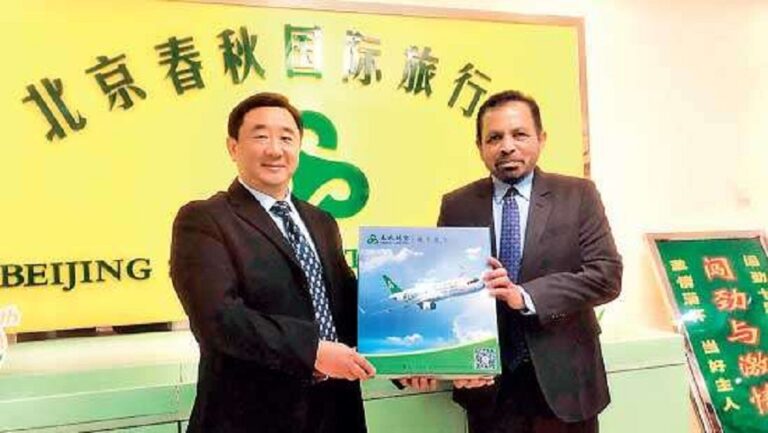
The Sri Lanka Embassy in Beijing, consistent with its efforts to continuously promote Sri Lankan tourism in the Chinese market, is targeting one million Chinese tourists to visit Sri Lanka after the China travel restrictions are relaxed, a statement from the mission said.
Ambassador Dr. Palitha Kohona met with the General Manager of Beijing Spring Travel Service Co., Ltd, Mr.Yang Yang, on November 16, 2022, in order to further bilateral cooperation in the tourism industry.
The Ambassador Dr. Kohona said that the Embassy is also exploring all possible ways to position Sri Lanka as a preferred destination in the Chinese Market including a formal request to the authorities.
General Manager Mr. Yang said that Beijing Spring Travel Service Co., Ltd is among the top 10 Travel companies in Beijing and Shanghai and has been accorded award certificates many times by the Chinese Government and the travel trade. The annual business turnover of Spring Travel in 2019 was 24.5 billion RMB (3.5 billion USD). Spring Airlines is valued at 50 billion RMB.
The company is already well established in the Sri Lanka travel trade and connected with local travel companies. They have organised a series of group visits to Sri Lanka before the pandemic. The company owns Spring Airlines with 110 aircraft (A320).
The Ambassador has already spoken with the airlines of Chongqing, Shanghai, Shandong and Sichuan. The Ambassador and Mr.Yang also discussed the possibility of Spring Airlines establishing air connectivity with Colombo from Chongqing, Chengdu, and Kunming.
In order too further encourage major Chinese travel operators to promote Sri Lanka as a destination of choice, post-COVID-19, The Embassy of Sri Lanka in Beijing, hosted a ‘Sri Lanka Tourism and Culture Event’ recently in collaboration with around 60-70 tour operators, travel agencies and media.
Among the participants were the UN Resident Coordinator in China, CITS, Smile Time, Sri Lanka Airlines in Beijing, CYTS, Zhonghe Travel, CAISSA Travel, Spring International Travel, China Cruise Industry Development, Ctrip, Wu Zhouxing Travel, Fashion Travel, and other travel agencies specializing on Sri Lanka tourism.
Ties with the major Chinese travel agencies and tour operators have been enhanced and would likely increase the flow of tourists to Sri Lanka once the China travel restrictions are relaxed.
The Ambassador Dr. Palitha Kohona addressing the gathering said “Sri Lanka has opened its borders for some time now and travelers can enter Sri Lanka without any restrictions.
Almost every place of tourist interest has been reopened to travelers. Despite the social unrest, earlier this year, Sri Lanka tourism has been gradually returning to normalcy. So far, we are receiving visitors from all over the world.”
SL foreign job seekers barred from travelling to UAE, Oman on tourist visa
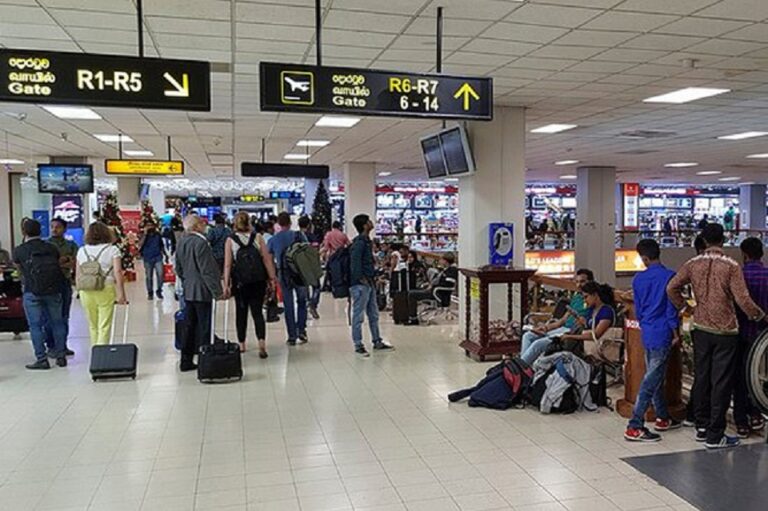
The Foreign Employment Bureau (SLBFE) has now barred Sri Lankans travelling to Oman and the United Arab Emirates (UAE) on tourist visa seeking employment opportunities after information about a human trafficking ring, which had been auctioning off Sri Lankan female domestic workers in these countries, came to light recently.
State Minister of Foreign Employment Promotion Jagath Pushpakumara vowed stern legal actions against those who were involved in this racket.
Meanwhile, the main suspect in this human trafficking ring was arrested by the airport police at the Bandaranaike International Airport (BIA) in Katunayake yesterday morning (Nov. 19) while returning to the island.
According to the Criminal Investigation Department’s findings, Sri Lankan women who were taken to Oman on the promise of jobs in Oman and the UAE, had been auctioned off to sultans for bids ranging from Rs. 10 million to Rs. 2.5 million.
Initiating a probe after being informed of the complaints received by Foreign Affairs Ministry on the matter, a three-member team of the CID, led by the director of Human Trafficking, Smuggling Investigation and Maritime Crime Investigation Division, had departed to Oman on October 03.
The investigation officers, after recording statements from a total of 45 Sri Lankan women who are sheltered at a safe house belonging to the Sri Lankan Embassy in Muscat, uncovered that they had arrived in Oman on tourist visas. They also found that these women had fled houses they were employed at for various reasons including the harassment.
To make matters worse, an officer of the Sri Lankan Embassy has sexually harassed the women who are sheltered at the safe house. His services have since been suspended.
Further probes into the matter disclosed that this sex trafficking ring had been operated by a group of officers of the Immigration & Emigration Department through the representatives of employment agencies stationed in Sri Lanka and Oman. Their target had been underprivileged local women facing financial difficulties.
The Sri Lankan Embassy in Muscat, in a statement, stated that at present, at least 90 Sri Lankan female domestic workers are stranded in Oman seeking repatriation assistance.
They are unable to afford the repatriation-related expenses such as visa, overstay penalty, air ticket, agent fees, and the cost of recruitment demanded by their respective sponsors.
The embassy said it has also sought the assistance of the International Organization for Migration (IOM) to assist such victims.
Govt to tackle Banks risk of collapse and reform economic stabilization laws
The Sri Lanka Banking sector protection measures from the risk of collapsing and reform of laws relating to the economic stabilization of the country will be presented to the country at the end of December.
Official reserves and net foreign assets in the Sri Lanka banking system have been depleted, as the country continued to service debt and facilitate imports without access to international financial markets.
Banks Balance Sheet in Sri Lanka decreased to Rs1.533 trillion in August from Rs1.534 trillion in July of 2022..In the long-term, the Sri Lanka Banks Balance Sheet is projected to trend around Rs. 1.584 trillion in 2023, according to Finance Ministry econometric models.
The Central Bank has recently submitted report on the present status of the banking sector and its measures taken to prevent the risk of collapsing the banking system to the economic stability sub committee functioning under the national council.
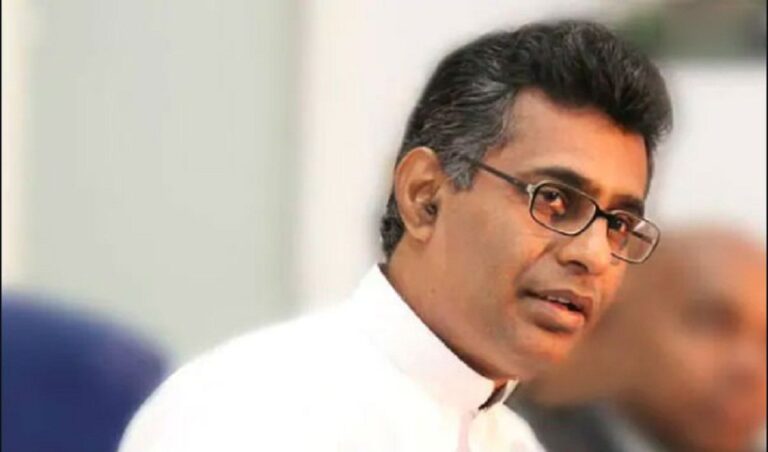
Chairman of the National Council sub-committee on identifying short- and medium-term programs related to economic stabilization, Chairman of the subcommittee Patali Champika Ranawaka, MP stated that steps will be taken to present the new proposals for the improvement of the banking, insurance and business sectors in the country by next December.
He said that proposals for the reform of laws related to the economic stabilization of the country will be presented to the country at the end of December.
The chairman said that it is important to discuss whether there are shortcomings in the law among the reasons that led to the country’s economic bankruptcy, and to discuss the next steps to be taken.
The experts participated in the committee expressed their views on the reforms that should be made in the country’s legal system in order to obtain local and international support to create economic stability in the country.
The role of the Central Bank, the role and accountability of the Treasury, the role and accountability of the government, the accountability of government officials, politicians and the business community dealing with them were discussed at the committee. Also, proposals were presented on the need for a large-scale anti-corruption process and the importance of implementing the law on assets and liabilities.
Officials of the Ministry of Justice said that 55 new laws and amendments to existing laws are currently underway.
Proposal on monthly revision of fuel price to be presented to Cabinet tomorrow: Subject Minister
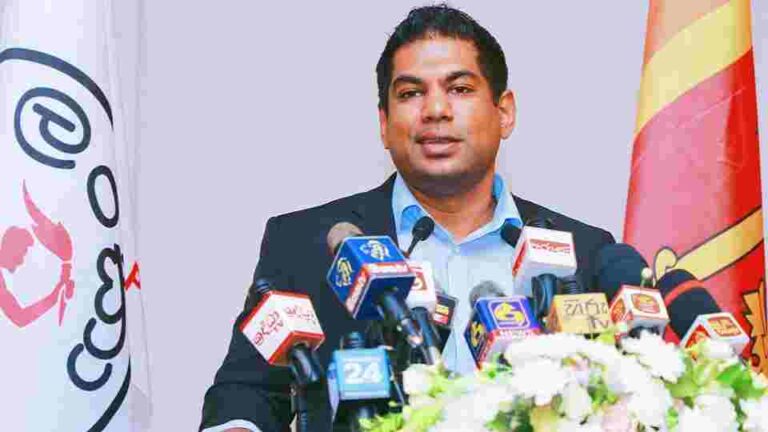
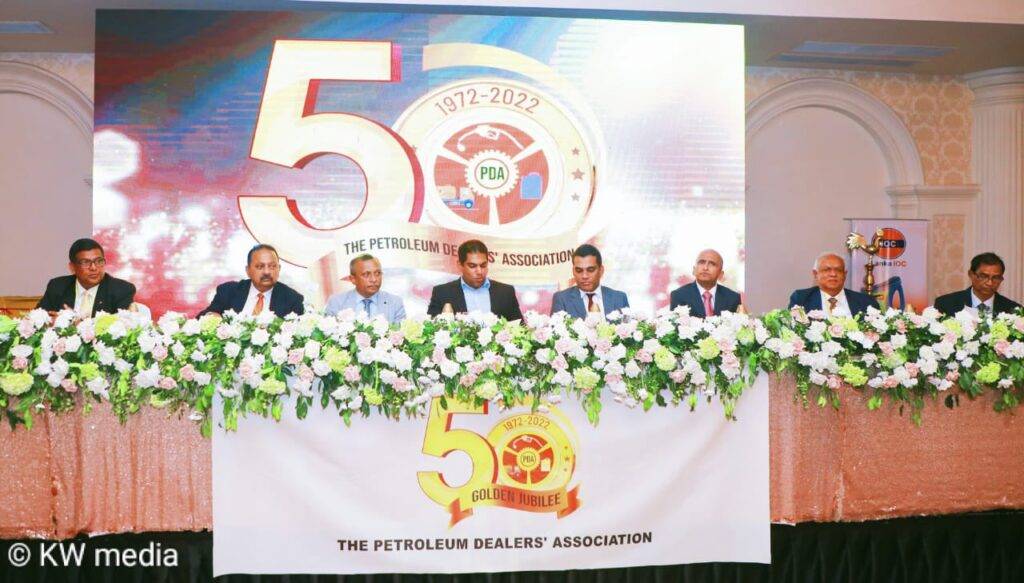
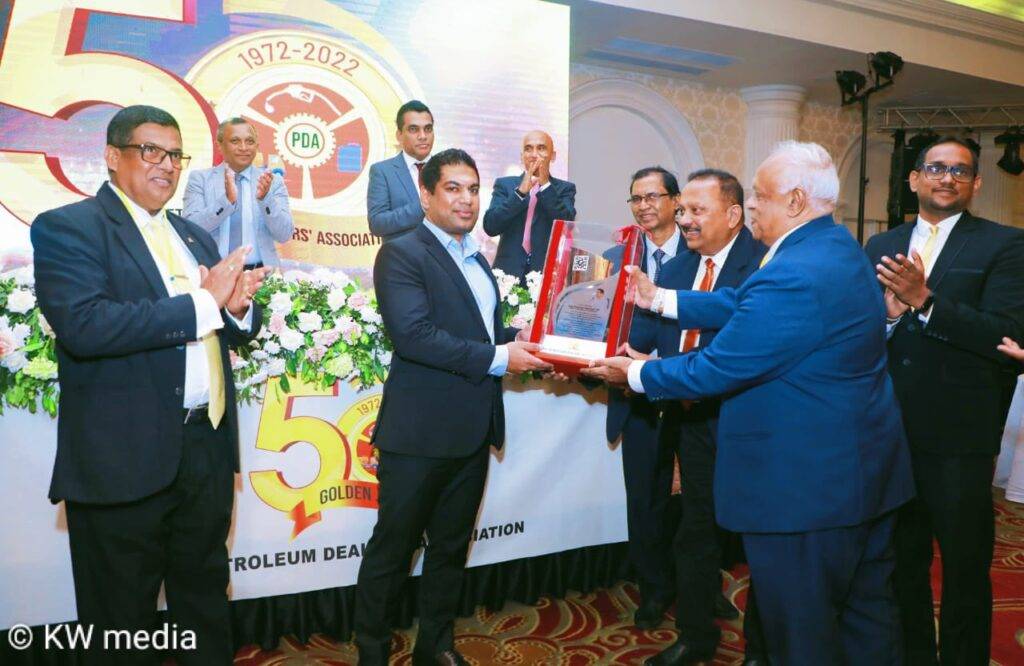
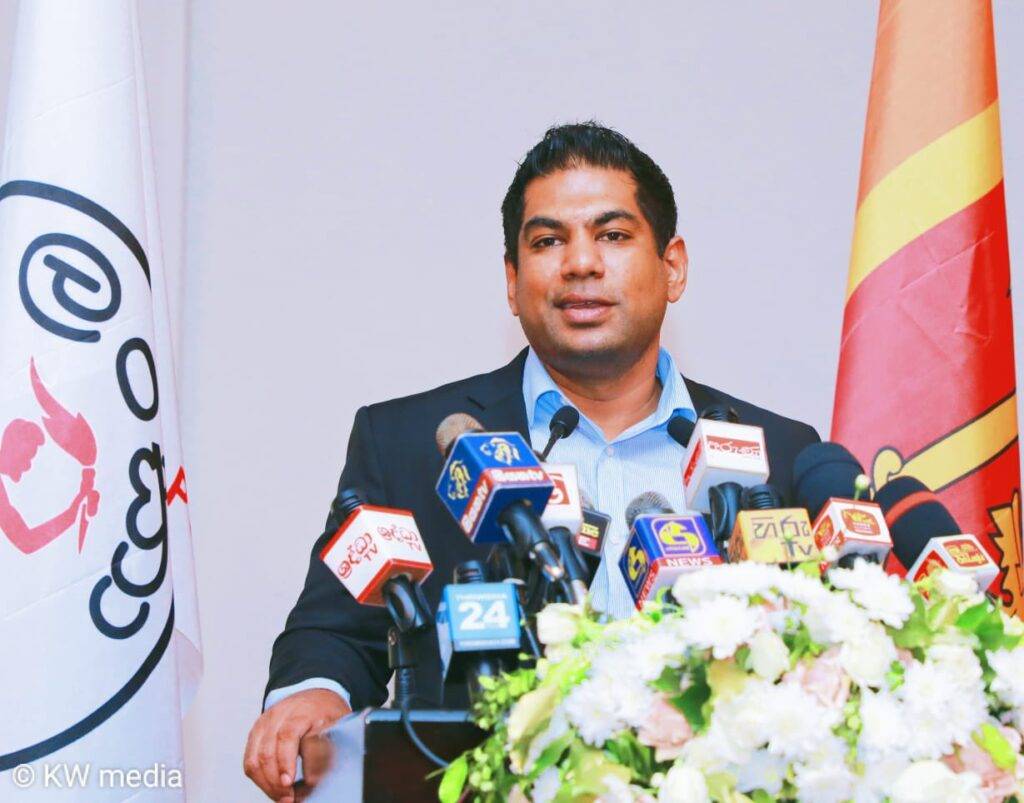
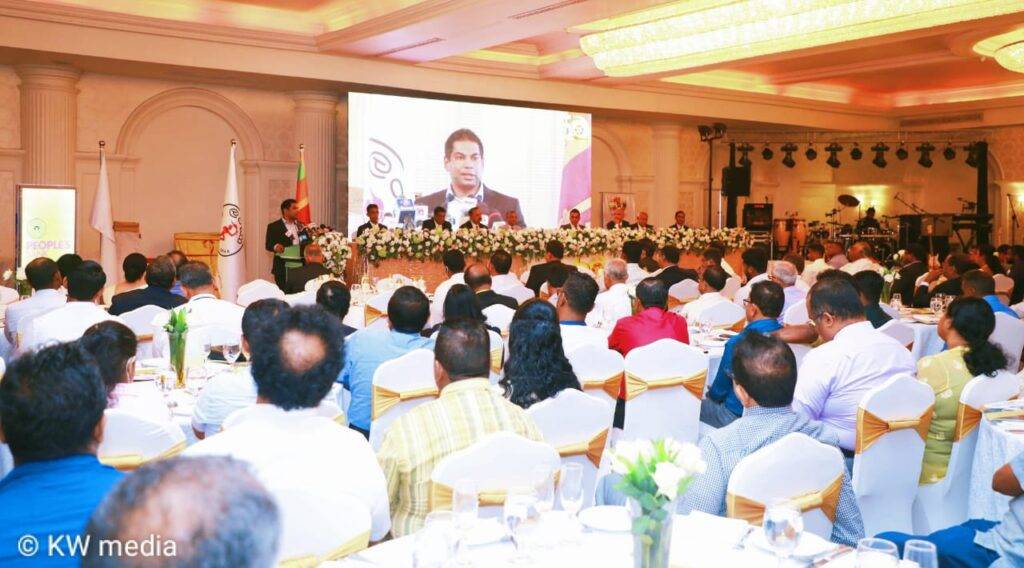
A proposal for a monthly revision of fuel price will be presented to the Cabinet tomorrow (21), said Energy Minister Kanchana Wijesekara, addressing the 50th Annual General Meeting of the Petroleum Dealers Association yesterday (19).
Earlier, the fuel price was revised on the first and fifteenth date of every month.
MIAP
BR returns to SL
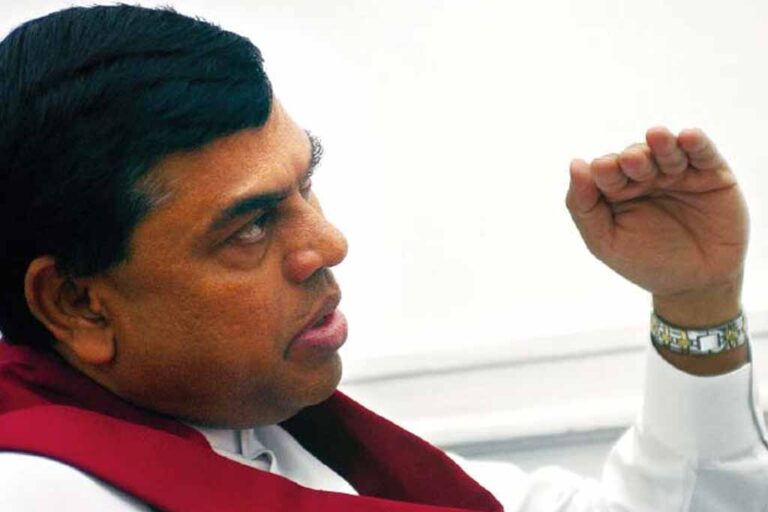
Former Minister and National Organiser of the Sri Lanka Podujana Peramuna (SLPP) Basil Rajapaksa has reportedly returned to Sri Lanka this (20) morning, following an about one and a half month stay in the United States.
MIAP
President says initial steps taken through Budget to strengthen Economy under a five-year plan
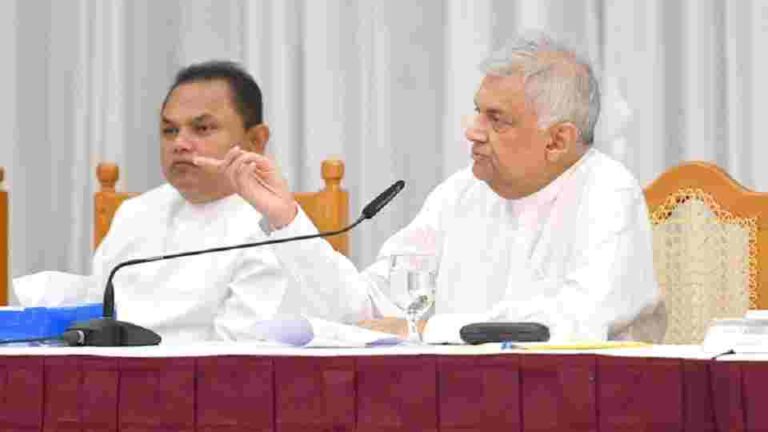
President Ranil Wickremesinghe stated that the measures to strengthen the economy under a five-year plan are envisaged in the budget proposal for 2023 which has the potential to bring about a transformative economic change within the period between 2023 and 2027.
The President made this observation during the District Development Progress Review Meeting held at the Vavuniya Town Hall yesterday (19).
The statement made by President Ranil Wickremesinghe is as follows;
“It is clear to us that the government’s program for food security has been implemented in Vavuniya, Mannar, and Mullaitivu Districts. Four officers from each Divisional Secretariat have been appointed for the implementation of the food security program.
The liquid milk industry would be developed in the Northern Province under Indian aid. Particularly, you were called on this occasion to raise awareness of the food shortage in the country and to discuss the implementation of the food security program. We hope to address the imminent food shortage issue in the country. It is planned to continue this program until the end of 2023. We will consider later if this program is required to continue. A global food shortage may be imminent and this food security program is important to protect Sri Lanka in the face of this imminent danger. Africa is already suffering from food shortages.
The country’s Maha season cultivation is successful and if other crops also achieved similar success, we can face the food shortage easily. Apart from that, we have to control malnutrition and protect the yield. We should take measures to minimize wastage during harvesting. We would strengthen the food storage process and supply them to customers. Vavuniya and Mannar Districts have a big responsibility in securing the available surplus food.
Several issues related to education and health in these districts were revealed during the discussions and we hope to provide solutions to address them soon. We have planned to work with the International Monetary Fund IMF) which would enable us to create considerable growth in the economy. We have to make massive changes in the export economy and move towards to a larger foreign exchange-earning economy.
I have presented proposals in the 2023 budget to achieve this end in which the North too have to play a pivotal role. One should remember not only Jaffna but Vanni too has a significant role in it.
We need to pay attention to a new energy economy of which the main region would be the Northern Province. We can earn a lot of foreign exchange through this project. There is an opportunity to earn foreign exchange by exporting food to the Middle East and Singapore. We would open opportunities for growing new crops including cinnamon.
Vanni has a great responsibility in animal husbandry which has a significant place in the five-year plan from 2023 to 2027.
We are studying the possibilities of transforming the Vavuniya Airport into an international airport and I require the support of the people of the North to realize it.”
The President also inquired from the Divisional Secretaries regarding the progress of the food security program in the Vavuniya District.
Fisheries Minister Douglas Devananda, Urban Development and Housing State Minister Tenuka Vidanagamage, Rural Development State Minister Kader Masthan, Parliamentarians Selvam Adaikalanathan, Rishad Bathuideen, Charles Nirmalanathan, Kulasingham Thileeban, Northern Province Governor Jeevan Jeevan Thiagarajah, Secretary to the President Saman Ekanayake, District secretaries to Vavuniya , Mullaitivu and Mannar districts and other government officials were present at the occasion.
Budget allocations to support SMEs: Ramesh Pathirana
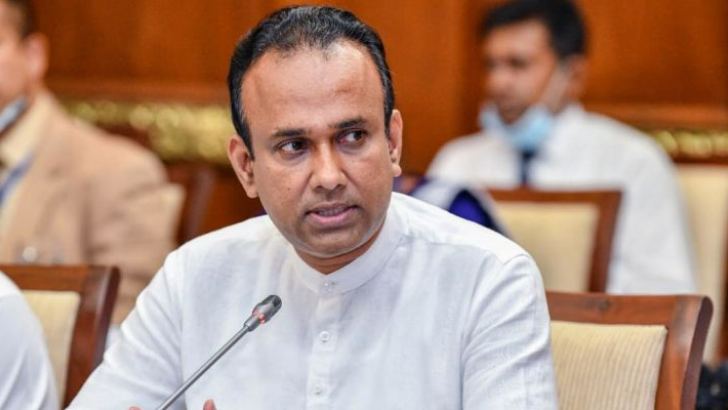
The budget for the year 2023 had set aside an amount of 2 billion to fund and support the SME sector, said Minister of Industries and Chairman of the Ministerial Consultative Committee on industries Ramesh Pathirana said, acknowledging the concern raised by Leader of the Opposition Sajith Premadasa, over the Small and Medium Enterprises (SMEs) under the present context at the Committee meeting held.
The Committee was also of the view that a proper mechanism needs to be set out to asses SMEs to which assistance is to be granted in a methodically executed manner.
Furthermore, 19 Annual Reports which has been pending for a long period of time was presented before the Committee for its consideration and was approved.
The said reports were considered and approved at the first meeting of the Ministerial Consultative Committee on industries for the third session of the ninth Parliament held recently (16), chaired by Pathirana.
Furthermore, members also raised concerns over the Dolomite industry. It was stated that the lack of explosives and allowing imports affect the industry and small-scale entrepreneurs.
The Chair stated that the concern pertaining to explosives are being looked into and that the Ministry will look into the concern raised regarding allowing imports.
Many concerns on various industries from matters that arise challenging the development of the batik industry and the availability of raw material required for the industry, concerns pertaining to the national gem and Jewelry industry were also brought to attention by Members of Parliament at the Committee meeting held.
State Minister Prasanna Ranaweera, Janaka Wakkumbura, Chamara Sampath Dassanayake, MPs Rishad Bathiudeen, Buddhika Pathirana, Madhura Withanage, Nalaka Bandara Kottegoda, Sumith Udukumbura, Mohamad Muzammil, Sahan Pradeep Withana were present at the Committee meeting.
Adverse weather conditions may occur against coastal zone in island

The low-pressure area in the southeast Bay of Bengal and neighborhood moved west-northwestwards to Central parts of south Bay of Bengal and It is very likely to move West-northwestwards and gradually intensify into a depression during next 12 hours in Southwest Bay of Bengal and move west- northwestwards towards the coastal areas of Tamilnadu-Puducherry, said the Department of Meteorology in a statement today (20).
Strong winds about (40-50) kmph can be expected at times over the Northern, North-Central and Eastern provinces.
A few showers will occur in Northern, North-Central and Eastern provinces.
Mainly fair weather will prevail elsewhere over the country.
Marine Weather:
| The low-pressure area in the southeast Bay of Bengal and neighborhood moved west-northwestwards to Central parts of south Bay of Bengal. It is very likely to move West-northwestwards and gradually intensify into a depression during next 12 hours in Southwest Bay of Bengal and move west- northwestwards towards the coastal areas of Tamilnadu-Puducherry. Therefore, Naval and fishing communities are advised not to venture into the deep and shallow sea areas off the coast extending from Kankasanturai to Batticaloa via Trincomalee and Southwest Bay of Bengal sea area for next 24 hours. |
| Condition of Rain: |
| Showers or thundershowers will occur at several places in the deep-sea areas off the coast extending from Kankasanturai to Batticaloa via Trincomalee. |
| Winds: |
| Winds will be northerly and speed will be (25-35) kmph. Wind speed may increase up to (50-60) kmph at times in the sea areas off the coast extending from Kankasanturai to Pottuvil via Trincomalee and Batticaloa. Wind speed may increase up to 45 kmph at times in the other sea areas around the island. |
| State of Sea: |
| The sea areas off the coast extending from Kankasanturai to Pottuvil via Trincomalee and Batticaloa will be rough at times. The other sea areas around the island will be fairly rough at times. There is a possibility that near shore sea areas off the coast extending from Kankasanturai to Pottuvil via Trincomalee and Batticaloa may experience surges due to the effect of swell waves, having (2.0-3.0) m height. |
MIAP
Sri Lanka Original Narrative Summary: 20/11

- Sri Lanka Embassy in Beijing targets 1 mn Chinese tourists to visit Sri Lanka after the China travel restrictions are relaxed.
- IMF expresses concerns over Governments move to explore “debt-for-nature” swap of around USD 1 bn: fears it could lead to a possible deviation from on-going debt restructuring: in early April ’22, the Govt & CB had finalised plans to issue “Green Bonds” of USD 2 bn, but abandoned such plan after the “default” announcement by CB Governor Weerasinghe and Treasury Secretary Siriwardene.
- Pivithiru Hela Urumaya Leader and MP Udaya Gammanpila says CB Governor Weerasinghe is “addicted” to printing money and is on course to set a new record: proposes the Governor be sent for “rehabilitation”.
- Despite ongoing shortage, milk powder importers complain that inconsistent Govt policies relating to imports and failure to honour international agreements have led to almost 400 MT of milk powder being stuck at the Colombo Port.
- SJB MP Champika Ranawaka warns of Govt attempts to cover up a Budget deficit through the Budget 2023: says Govt has neglected the fact that the country is in a state of sovereign default.
- State Finance Minister Ranjith Siyambalapitiya says the CESS Tax proposed in the Budget 2023 will not be applicable to school text books & implements.
- Chinese Embassy in Colombo says a new consignment of 1,000 MT (100,000 packs) of rice donated by China to Sri Lankan island-wide schools has arrived at Colombo Port, and will be distributed soon.
- Opposition MP Ven. Athuraliye Rathana Thera says people will soon have to wait in queues for food due to shortages as they had previously waited for fuel and gas: also says Budget 2023 is an “inflated” budget, and won’t solve the current economic crisis.
- Ports Minister Nimal Siripala de Silva says Norwegian passenger liner “Vikingmas” with 700 tourists and 450 crew members which has just berthed at Colombo Port, is the first passenger ship to berth after the Covid pandemic.
- Deputy Secretary to the Treasury R M P Ratnayake says the Govt currently has no plans to introduce a “wealth tax”: asserts he is unaware whether Govt would pursue it in the future.