Lionel Bopage
Voices for democracy are reverberating in many countries, where people’s rights and freedoms are being usurped by fundamentalist and autocratic regimes around the world. They are openly and covertly resorting to desperate attempts at repressing and destroying democratic movements. In some countries people have succeeded in thwarting them. In others the autocrats have prospered. In a few instances, people themselves have brought autocrats to power. Some recent examples were in the United States and Brazil. Sri Lanka and Iran are currently engaged in increasingly repressive measures against the democratic wishes of their respective populaces in order to prop up their increasingly untenable regimes.
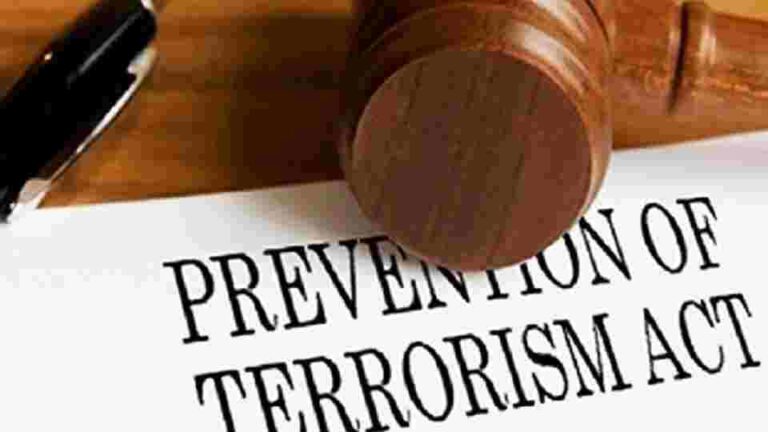
Repressing dissent is not new in the history of Sri Lanka. The repressive dragnet has not only entrapped innocent peaceful protestors on the flimsiest of judicial excuses, but also those who have nothing to do with protests. Currently, protest leaders like the convenor of the Inter University Students’ Federation, Comrade Wasantha Mudalige; the convenor of the Inter University Bhikkhus’ Federation, Venerable Galwewa Siridhamma Thero are still being held under the all-encompassing undemocratic and opaque Prevention of Terrorism Act (PTA). They have been held for close to three months so far.
Human Rights Organizations both local and overseas, Trade Unions and Civil Society Organisations have been asking for their release, but so far to no avail. Already many in the international community including the United Nations have condemned such attacks. When the European Union raised concerns about the regime’s use of the PTA, Sri Lanka assured them that only in extremely necessary cases that the PTA had been evoked, though many cases have shown that it is not true. In Australia, the Victorian Trades Hall Council has expressed its solidarity with the victims of repression. Even the Human Rights Commission of Sri Lanka has said so. The arrest, detention and continued incarceration of both the convenors from August 18 onwards under the PTA is described by the Commissioners as: “unreasonable and without justification.”
The draconian PTA in its embryonic stage came into the scene in 1972[1] under the coalition regime led by Prime Minister Sirima Bandaranaike, with the enactment of the Criminal Justice Commissions Act, which reversed the important tenets of the principles of natural justice – the presumption of innocence until proven guilty. With it commenced the degradation of the country’s criminal justice system. Following this, the UNP regime led by President J R Jayawardene first adopted the PTA in 1979 as a ‘temporary’ measure and included various provisions that contravened international legal standards.
It was made a permanent legal tool in 1982 and was used in 1988/89 period against the JVP and the LTTE, in 2019 following the 2019 Easter Sunday bombings and now against the “Aragalaya” protest movement. This enabled arbitrary detention and torture repeatedly targeting political opponents of the regime, personal opponents of some of their leaders. and specifically, against the many in the non-majoritarian communities.
Due mainly to the international pressure, amending or repealing the PTA has been in political agenda for several years. In March 2022 it was amended via the Prevention of Terrorism Act (PTA) Amendment Bill, but without touching the provisions that led to its arbitrary use of psychological and physical torture. The regime declared a de facto moratorium of using the PTA in March. This moratorium came to a griding stop in August this year with President Ranil Wickremesinghe using it to detain three student leaders of the protest movement.
People are demanding the government acts with transparency, accountability, and respects their rights. They also demand opportunities to define their identities, set precedents for inclusive political processes, and create a constitution that represent their aspirations. After Mr Wickremesinghe was selected and installed as President by a discredited parliamentary majority, the regime launched an all-out terror campaign to root out the protest movement. The sites that were used for peacefully assemble, express and protest were destroyed using political thugs and special forces. Almost every protest was attacked with tear gas, batons and clubs. In doing so, the regime also used the PTA and the Police Ordinance to hold those who have not committed any violence.
The recent protest wave, unlike earlier ones, was able to force the resignations of the Prime Minister, several Ministers and ultimately the President. The protestors like much of the country were demanding the government of Sri Lanka address the issues that gave rise to the current economic and political crisis, a crisis created by the political and business elite. This elite does not want to change their corrupt and incompetent behaviour and institutions; hence they need to find scapegoats to hide their lack of accountability and transparency. While holding protest leaders behind bars unjustifiably and under inhumane conditions, the ruling elite carries on with their authoritarian and corrupt practices. They are trying to force the burden of alleviating the debt (without reform) on those who can least afford to carry the burden, the people. This needs to be vigorously exposed and resisted.
Mr Wickremasinghe has wantonly and wilfully used the dictatorial powers vested in the executive presidency, buttressed by the emergency powers and the PTA, to supress dissent and arrest peaceful protestors in an attempt to root out their leaderships. In doing so, he is erroneously and cynically branding them, terrorists. These tactics have been used many times in the past, so as to direct people’s attention away from their incompetence and misdeeds. The regime is now trying to employ new tools of repression such as the Rehabilitation Bill, which can be arbitrarily used to arrest and hold any individual who has the potential to become a political adversary.
Individuals are imprisoned without judicial orders, under the ruthless PTA. They have been held sometimes for years. many without any legal basis to do so. So far, the regime has arrested and detained about 4000 people. Most of them were released on bail, but there are no justifiable reasons for their arrests in the first place as they have not violated any law of the country. Under the current unaccountable system that is in place, they are unable to challenge the use the PTA to prevent legitimate opposition to current discredited government’s arbitrary and corrupt rule. They have done so, for the last 44 years and will continue to do so, unless these repressive legislative mechanisms and institutions are repealed and abolished.
The universally accepted basis for anti-terror legislation is to prevent terrorism. Terrorism is said to be about using threat, force and/or violence targeting civilians or a community of people for the purpose of spreading fear in pursuing political, ideological or religious causes. An apt description of what the current regime and the regimes in the past have done to their critics and some sections of the population. Like repressive regimes the world over they have illustrated that when the legitimacy of a regime is questioned on their unlawful, corrupt and unaccountable behaviour, they resort to scapegoating and repressive actions to prop up their increasingly illegal regimes. Sadly, Sri Lanka is not an exception.
Those held under such legislation like the current protestors, undergo huge losses in terms of family and resources for obtaining assistance including legal advice and advocacy. The PTA legalises torture, and judicial recognition of admissions made under torture. Any protections said to be available do not prevent torture or violation of an individual’s right for due processes.
Contrary to the expectations of the rulers and the bureaucracy such incarcerations could make some prisoners more popular. If these cruel and unaccountable processes and conditions help create a Sri Lankan Nelson Mandela, people will come to know that the regime who tried to demean, degrade and denigrate are genuine individuals who are fighting on behalf of the people; that they are trying to protect the fundamental right to express their views on how they are governed and hold their rulers accountable for their actions.
How can the actions, that led to pardoning individuals like those who abducted school children in Trincomalee for ransom and murder, particularly, doing so after being charged in a court of law? If there is no evidence to charge them in a court of law, the only assumption one could make is that they are been held as ransom for legitimising and maintaining or extending duration of the regime and power of the ruling elite.
Use of such legislation has misguided and brutalised society. It has not helped to heal divisions, ensuring dignity of and respect for people, or restoring a humane society. Some of those recently “pardoned” prisoners had been behind bars longer than the sentences they had been convicted for. For example, two prisoners sentenced to five years by the courts had served 14 years, and they were given “presidential pardons”! Rather they should have been set free, at the end of their periods of conviction.
How can the regime justify its so-called pardoning, after holding them illegally for a period more than they had been convicted for? This is nothing but abuse of power and a violation of human rights. A government that can appoint committees and commissions whenever and whatever happens in the country, has so far done nothing to look into what happened or why this happened. Are there any more to be given the so-called presidential pardon?
For example, A graduate engineer Sivalingam Arooran was pursuing his postgraduate studies at University of Peradeniya, when he was kidnapped in 2008. After subjecting to beatings, he was indicted five years later. He was recently bestowed the award for best Tamil literary novel “Athura-salai” (Hospital) and has been held for 16 years under the PTA. How he has been detained should be an open and wide discussion in society, as no human being deserves such treatment. How can any regime justify such illegal and undemocratic behaviour? About 120 Tamils are still being held in detention under the PTA. After the 2019 serial bombings, more than 200 Muslims were detained. What has happened to them?
We cannot say that pardoning and releasing those who have been held under the ignominious PTA will help Reconciliation. Such measures have caused irreversible harm to society. Releasing those who are being held under the PTA without any evidence or being charged in a court of law, is essential. It should not be done in a piecemeal and unaccountable way like Presidential pardons or amnesties, but with apologies and compensation. If they were held for questioning the legitimacy of a system, that has bought the country to economic ruin as amply evident today. It is ruling elites who should be brought under the ambit of scrutiny for their actions in causing this social and economic collapse.
In reality, the president and government are presiding over a powder keg of economic deprivation and sense of injustice experienced by the masses. Those in the protest movement are well aware that many of their fellow protestors have been arrested and are in prison. Their sense of injustice rankles when they see government-affiliated hoodlums who instigated and took part in attacks against peaceful protestors continue to enjoy their freedom and engage in their corrupt practices. The double standards being practiced continues to erode the credibility of the government and its leadership and can act as a lightning rod to mobilise future protests.
It is high time that the government take urgent measures to release all those held under the PTA, against whom there are no evidence found and no charges laid. Also, not to use the unaccountable power of the presidency and an increasing suite of repressive measures and legalisation to further their increasingly illegitimate, corrupt and incompetent rule. All those held in detention under the PTA without being charged at a court of law should be released unconditionally, at least now!
[1] This was drafted using the South African Apartheid legislation and the British anti- Irish laws at the time, and repealed under the Criminal Justice Commissions (Repeal) Law, No. 12 of 1977.