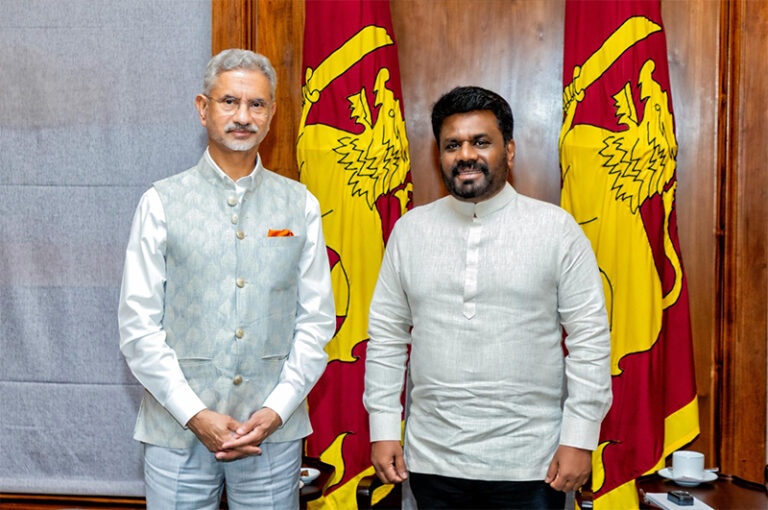
December 23, Colombo (LNW): India’s Minister of External Affairs, Dr S. Jaishankar, who arrived in Sri Lanka last night (22), is due to hold discussions with President Anura Kumara Dissanayake this morning as part of a short but high-profile official visit.
During his stay, Dr Jaishankar is also expected to meet Prime Minister Dr Harini Amarasooriya as well as Minister of Foreign Affairs, Overseas Employment and Tourism Vijitha Herath, with talks likely to focus on bilateral cooperation and regional priorities.
The Indian Foreign Minister arrived on the evening of December 22 aboard a special Indian Air Force aircraft, travelling as a Special Envoy of Indian Prime Minister Narendra Modi. Sri Lankan officials noted that the visit reflects India’s continued emphasis on its Neighbourhood First policy.
The timing of the visit is also linked to Operation Sagar Bandhu, India’s regional initiative aimed at assisting countries affected by Cyclone Ditwah, which caused widespread damage across parts of the region. Discussions are expected to include ongoing support and coordination related to disaster response and recovery.
According to the Ministry of External Affairs, Dr Jaishankar is scheduled to conclude his engagements and depart Sri Lanka later today.
Indian Foreign Minister Holds High-Level Talks During Brief Sri Lanka Visit
Veteran Screen Actor Sathischandra Edirisinghe Passes Away at 84
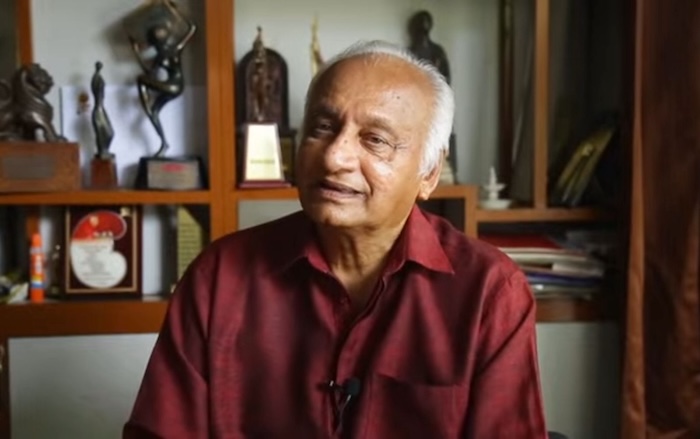
December 23, Colombo (LNW): Well-known Sri Lankan actor Sathischandra Edirisinghe passed away earlier today (23) at the age of 84, marking the end of a long and respected career in film and television.
Edirisinghe, who was the elder brother of renowned vocalist Sunil Edirisinghe, earned widespread recognition for his distinctive performances that resonated with audiences across generations.
With a screen presence that blended restraint and depth, he became a familiar and trusted face in both cinema and television.
His film work included notable appearances in productions such as Sadol Kandulu and Kristhu Charitjaya, while television viewers particularly remember him for roles in popular teledramas of the 1980s, including Palingu Menike, Tharadevi, Susima, Rathu Rosa and Sudu Paraviyo. These performances helped shape the golden era of local television drama.
Uncertainty Grows for CEB Staff Awaiting Voluntary Retirement After Restructuring
December 23, Colombo (LNW): A section of employees at the Ceylon Electricity Board has appealed to the Minister of Energy, raising concerns over prolonged delays affecting their retirement following the organisation’s restructuring.
In a letter sent to the ministry, the employees said they had applied for the Voluntary Retirement Scheme after failing to secure placement in the new entities created under the restructuring framework outlined in the Extraordinary Gazette issued on 26 August 2024.
They explained that their applications were submitted in good faith, with the expectation that the process would be completed within a reasonable timeframe.
According to the group, nearly 2,200 workers who opted for the scheme remain in limbo, as no official retirement date has yet been communicated. They claim the process has stalled due to administrative inefficiencies and what they describe as deliberate obstructions, resulting in repeated postponements.
The absence of clarity, they say, has made it difficult to make informed decisions about their finances, careers and family commitments. The employees have therefore called on the Minister to step in, announce a definitive retirement date for those who have applied under the scheme, and ensure that the process is finalised without further setbacks.
Colombo Municipal Council Defeats Maiden NPP Budget in Narrow Vote
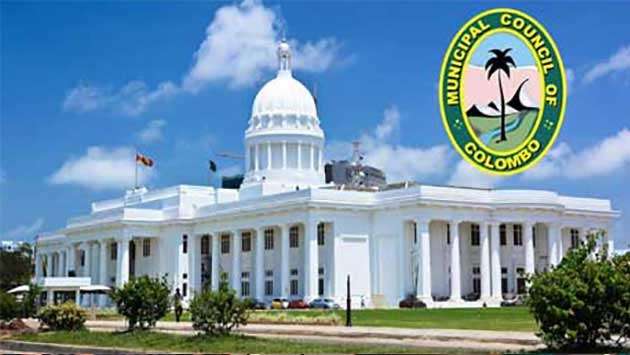
December 23, Colombo (LNW): The Colombo Municipal Council has voted down its proposed 2026 budget in a closely contested decision, dealing a setback to the ruling National People’s Power (NPP) administration at City Hall.
During the council session, 57 members backed the budget, while 60 councillors voted against it, resulting in the proposal being defeated by a slim margin of three votes.
The outcome hinged on the votes of two representatives from the Sarvajana Balaya group, whose opposition proved decisive.
This marked the first budget presented by the NPP-led council since it took control of the CMC. The result has drawn attention given the party’s recent political gains in the capital.
At the most recent local government elections, the NPP secured control of the Colombo Municipal Council, and its mayoral nominee, Vraie Cally Balthazar, was elected Mayor of Colombo with the support of 61 councillors. The narrow rejection of the budget now raises questions about consensus-building within the council ahead of future policy decisions.
Afternoon showers, thundershowers expected in several districts: Fair weather to prevail elsewhere (Dec 23)

December 23, Colombo (LNW): A few showers may occur in Uva and Eastern provinces and in Matale, Nuwara-Eliya, Polonnaruwa and Hambantota districts, the Department of Meteorology said in its daily weather forecast today (23).
Showers or thundershowers may occur at a few places in Ratnapura, Galle, Matara and Kalutara districts after 2.00 p.m.
Mainly fair weather will prevail in the other areas of the island.
Misty conditions can be expected at some places in Sabaragamuwa and Central provinces and in Colombo, Kaluthara, Badulla, Galle and Matara districts during the early hours of the morning.
Marine Weather:
Condition of Rain:
Light showers may occur in the sea areas off the coast extending from Trincomalee to Pottuvil via Batticaloa. Showers or thundershowers may occur at a few places in the sea areas extending from Balapitiya to Matara via Galle during the evening or night.
Winds:
Winds will be north-easterly to northerly in direction. Wind speed will be (25-35) kmph. Wind speed can increase up to 50 kmph at times in the sea areas off the coast extending from Balapitiya to Mannar via Colombo and Puttalam, and from Matara to Pottuvil via Hambantota.
State of Sea:
The sea areas off the coast extending from Balapitiya to Mannar via Colombo, and Puttalam, and from Matara to Pottuvil via Hambantota will be rough at times. The other sea areas around the island will be moderate.
Temporarily strong gusty winds and very rough seas can be expected during thundershowers.
MSMEs Urge Action on Lending Rates amid Weak Policy Transmission

By:Staff Writer
December 22, Colombo (LNW): Sri Lanka’s Micro, Small and Medium Enterprise (MSME) sector has raised concerns over what it describes as excessive lending rates charged by licenced commercial and specialised banks, arguing that reductions in policy interest rates were not passed on proportionately to borrowers.
In a detailed submission to financial authorities, the Ceylon Federation of MSMEs said the interest-rate transmission mechanism had remained distorted well after the peak of the 2022 economic crisis, placing a sustained cost burden on businesses already weakened by the downturn.
The Federation pointed to the sharp tightening of monetary policy in 2022, when the Central Bank of Sri Lanka (CBSL) raised its Standing Deposit Facility Rate (SDFR) and Standing Lending Facility Rate (SLFR) to historic highs as part of crisis stabilisation measures. While acknowledging the necessity of those actions at the time, it said subsequent policy easing had not been reflected adequately in retail lending rates
Even when the Average Weighted Prime Lending Rate (AWPLR) had peaked at 29.67% in September 2022, the policy rate was 15.50%. While policy rates have since decreased, market rates continue to trail much higher. According to the submission, by 5 December, the Overnight Policy Rate (OPR) stood at 7.75%, while the AWPLR remained significantly higher at 8.74%, indicating a persistent gap between policy intent and market outcomes.
The Federation argued that this divergence disproportionately affected MSMEs, which rely heavily on bank credit and have limited pricing power to absorb higher financing costs. It said elevated borrowing rates constrained recovery, investment, and employment at a time when economic normalisation was expected to support growth
To underline its case, the submission included profit-after-tax figures of several licenced commercial banks for the 2022-2024 period, showing a marked improvement in earnings during the same years when MSMEs faced elevated interest expenses.
The Federation called on regulators to make fuller use of existing legal and supervisory powers to ensure fair transmission of monetary policy and prevent what it described as unjustified widening of lending spreads. It warned that failure to address the issue could undermine broader economic recovery and weaken confidence among small and medium-scale entrepreneurs. It called on the CBSL to ensure that the banking system paid back the excess interest charged on MSME borrowers.
ADB Irrigation Grant Signals Strategic Push for Sri Lanka Agricultural Resilience
By:Staff Writer
December 22, Colombo (LNW): The Asian Development Bank’s latest grant-backed irrigation initiative in Sri Lanka underscores a growing shift among development partners toward climate adaptation as an economic necessity rather than an environmental luxury.
Signed between the Government of Sri Lanka and ADB, the Transforming Irrigation Systems for Improved Food Security Project aims to introduce climate-resilient irrigation models in selected Dry Zone areas. Funded primarily by a $3 million grant from Japan, with additional Government contributions, the project reflects confidence in targeted, technology-driven interventions to stabilise agricultural output.
ADB’s involvement comes at a time when Sri Lanka’s agriculture sector faces overlapping challenges—declining water availability, unpredictable rainfall, rising production costs and weakening farmer profitability. Traditional irrigation systems, though historically effective, are increasingly ill-suited to these evolving conditions. By piloting closed pipe irrigation networks, ADB seeks to demonstrate how efficiency gains can directly support economic resilience.
From ADB’s perspective, the project offers multiple returns. Improved irrigation efficiency can enhance food security, reduce rural poverty and support macroeconomic stability by easing pressure on food imports. In addition, successful implementation strengthens Sri Lanka’s credibility as a reform-oriented development partner, potentially unlocking future concessional financing.
The choice of pilot locations spanning reservoir-fed systems and small tank cascades—also reflects ADB’s intent to test adaptability across diverse agro-ecological settings. If successful, the model could be replicated regionally, positioning Sri Lanka as a demonstration case for climate-smart irrigation in South Asia.
Nevertheless, development economists caution that aid effectiveness depends heavily on domestic capacity. Execution responsibilities rest with the Agriculture, Livestock, Lands and Irrigation Ministry and the Irrigation Department, institutions that have faced resource and coordination challenges in the past. Delays, cost overruns or weak monitoring could dilute anticipated benefits.
There is also the broader issue of farmer inclusion. Technological upgrades alone may not guarantee productivity gains unless accompanied by behavioural change, training and equitable water governance. Without these, infrastructure improvements risk becoming underutilised assets.
Still, the project aligns with ADB’s broader strategy of linking climate resilience with economic performance. For Sri Lanka, navigating post-crisis recovery and climate vulnerability simultaneously, such partnerships could prove pivotal—provided pilot successes translate into sustained policy commitment and scaled investment.
Recovery Spending After Ditwah Balances Stability and Risk
By:Staff Writer
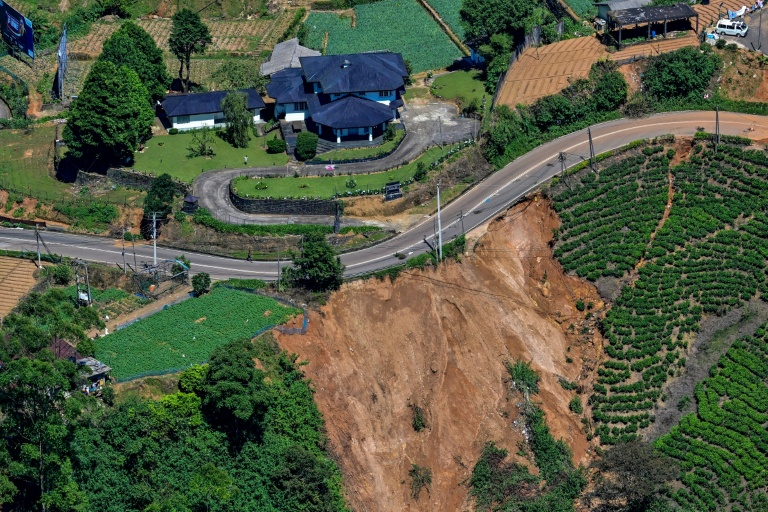
December 22, Colombo (LNW): Sri Lanka’s plan to inject Rs. 500 billion into the economy for post-Cyclone Ditwah recovery has reignited debate over whether the country can sustain large-scale emergency spending while preserving hard-won macroeconomic stability.
President and Finance Minister Anura Kumara Dissanayake has argued that the fiscal conditions today are fundamentally different from the past, citing record revenue performance, a strong primary surplus, and the elimination of Treasury overdrafts. These improvements, he says, provide sufficient space to finance recovery efforts without triggering a debt or balance-of-payments crisis.
However, the scale of the proposed intervention presents clear economic risks that the Government itself has acknowledged. A significant portion of recovery-related spending—particularly on construction and infrastructure has a high import content. According to the President, road construction alone carries a foreign exchange component of around 18%, raising concerns about increased demand for dollars once funds are released into the domestic economy.
To mitigate these pressures, the Government plans to phase spending carefully and channel a portion of the funds into productivity-enhancing activities through a special commission. External financing will also play a critical role.
Sri Lanka has already requested $200 million from the IMF under the Rapid Financing Instrument and expects further support from the World Bank and the Asian Development Bank. Officials estimate that up to $500 million in additional foreign financing may be required in 2026 to prevent balance-of-payments stress.
Beyond macroeconomic considerations, the effectiveness of the recovery effort will depend heavily on implementation. The President has acknowledged that delivering relief at the ground level could face delays and administrative complexity, as local authorities and Grama Niladharis will be responsible for identifying beneficiaries based on multiple criteria.
The Government has announced a range of relief measures aimed at reviving business activity in cyclone-affected areas. These include refinancing bank loans for large and small businesses, working capital support, and grants for damaged premises. Poultry farmers, who suffered heavy losses, will receive compensation based on the number of birds lost, along with special assistance for backyard farmers.
While these measures are designed to restore livelihoods quickly, economists caution that weak targeting, slow disbursement, or leakages could dilute their impact and undermine public confidence.
At the same time, the Government is pinning part of its optimism on stronger external earnings. Foreign direct investment inflows are expected to reach record levels, tourism revenue is projected to surpass its 2018 peak, and merchandise exports are forecast to approach $18 billion.
As Sri Lanka awaits the World Bank’s rapid damage assessment on Ditwah, the challenge will be to strike a delicate balance supporting recovery without reigniting the vulnerabilities that led to the debt crisis in the first place.
India’s Swift Aid to Sri Lanka: Compassion, Strategy, or Both?

By:Staff Writer
December 22, Colombo (LNW): India’s External Affairs Minister S. Jaishankar’s upcoming visit to Sri Lanka comes at a moment of profound humanitarian need and heightened regional sensitivity. The visit follows New Delhi’s rapid and extensive response to Cyclone Ditwah, one of the deadliest natural disasters Sri Lanka has faced in decades, raising both appreciation and questions about the broader implications of India’s unprecedented assistance.
Cyclone Ditwah, which struck on 27 November 2025, unleashed catastrophic floods and landslides across large parts of the island, claiming more than 500 lives and displacing millions. India responded within hours, launching Operation Sagar Bandhu and becoming the first country to deploy specialised disaster-response teams. Naval vessels already present in Colombo, including the aircraft carrier INS Vikrant, were immediately repurposed for relief operations, enabling rapid delivery of essential supplies.
Over subsequent days, India airlifted large quantities of relief material—tents, medicines, hygiene kits, trauma-care modules and food supplies while deploying elite National Disaster Response Force teams to the worst-affected districts. Indian helicopters and naval assets conducted continuous rescue missions, while an army field hospital treated thousands. Infrastructure support, including temporary bridges, helped restore access to cut-off regions.
For Sri Lanka, grappling with economic fragility and limited disaster-response capacity, the scale and speed of India’s intervention were crucial. Sri Lankan leaders publicly acknowledged the assistance, describing the cyclone as the most severe disaster in recent memory. Against this backdrop, Jaishankar’s visit is expected to focus on reconstruction support, disaster resilience and maritime cooperation.
However, the sheer magnitude of India’s response has prompted debate over whether humanitarian assistance is also serving longer-term strategic interests. Sri Lanka occupies a central position in the Indian Ocean, a region of growing geopolitical competition. India’s “Neighbourhood First” policy and its emphasis on being the first responder in South Asia align closely with its desire to maintain influence and stability in its immediate periphery.
This does not necessarily diminish the humanitarian value of India’s actions. Disaster diplomacy has become an accepted instrument of foreign policy globally, and rapid assistance can both save lives and strengthen bilateral trust. For Sri Lanka, diversified partnerships and reliable regional support remain essential, particularly during crises when speed matters more than pledges.
The key question is not whether India’s assistance carries strategic intent—it almost certainly doe but whether that intent undermines Sri Lanka’s sovereignty or recovery priorities. So far, the aid has been delivered without overt conditionality, focusing on urgent needs rather than long-term leverage.
In this sense, India’s actions reflect a convergence of compassion and strategy. For Sri Lanka, the challenge lies in leveraging such support to rebuild resilience while maintaining balanced regional relations
IMF Cautions Sri Lanka’s Debt Outlook Remains Fragile Despite Recovery Efforts

December 22, Colombo (LNW): Sri Lanka is still considered capable of meeting its repayment commitments, but the margin for error remains narrow, according to the International Monetary Fund’s latest evaluation, which highlights ongoing vulnerabilities beneath recent economic progress.
The IMF stressed that this outlook is heavily dependent on the authorities’ ability to fully and consistently implement the Extended Fund Facility (EFF), which remains central to the country’s recovery path. Any delays or policy reversals, the Fund warned, could quickly undermine gains made so far.
Despite improvements in macroeconomic management, Sri Lanka’s high public debt burden and substantial financing requirements continue to pose serious risks to long-term debt sustainability. The IMF noted that indicators measuring the country’s capacity to repay have weakened slightly since the Fourth Review, reflecting continued pressure on public finances.
Under the combined Rapid Financing Instrument and EFF arrangements, outstanding IMF credit is expected to peak at around 3.1 per cent of GDP in 2027, a projection that remains unchanged from earlier assessments. While this level is considered manageable, it leaves little room for external shocks or policy slippage.
The report emphasised the need for stronger institutions, sustained fiscal discipline and credible policy frameworks to stabilise the economy over the long term. Building resilience against global volatility, the IMF concluded, will be critical to ensuring that Sri Lanka’s recovery translates into durable financial stability rather than temporary relief.