December 22, Colombo (LNW): Rahul Sharma, a 24-year-old exercise physiologist now based in Melbourne and a former Hong Kong under-19 cricketer, is preparing to take on an ambitious endurance challenge by running from one end of Sri Lanka to the other in just seven days to support childhood cancer research.
Sharma is scheduled to begin his journey on December 24 from Point Pedro, the island’s northernmost town, and reach Dondra Head at the southern tip by December 30.
The route stretches roughly 574 kilometres, meaning he will need to average close to 100 kilometres a day in what is expected to be a physically demanding test of stamina and resilience.
Having travelled to Sri Lanka from Mumbai on December 18, Sharma said the run is aimed at raising a minimum of A$20,000 for the Children’s Cancer Institute in Sydney, which is dedicated to improving treatment outcomes and finding cures for childhood cancers.
Born in India and raised in Hong Kong, Sharma took up cricket at the age of ten and later represented Hong Kong at under-19 level between 2018 and 2019. He believes the challenge, which his team says has not previously been attempted in this format, brings together his background in sport and his professional focus on human performance, while supporting a cause close to his heart.
Adding to the fundraising effort, Hong Kong-based charity Erase Poverty has announced it will contribute HK$10,000 if Sharma successfully completes the run as planned.
Former Hong Kong Cricketer to Run Length of Sri Lanka for Childhood Cancer Cause

Rail Services Gradually Restored After Cyclone as Repairs Continue
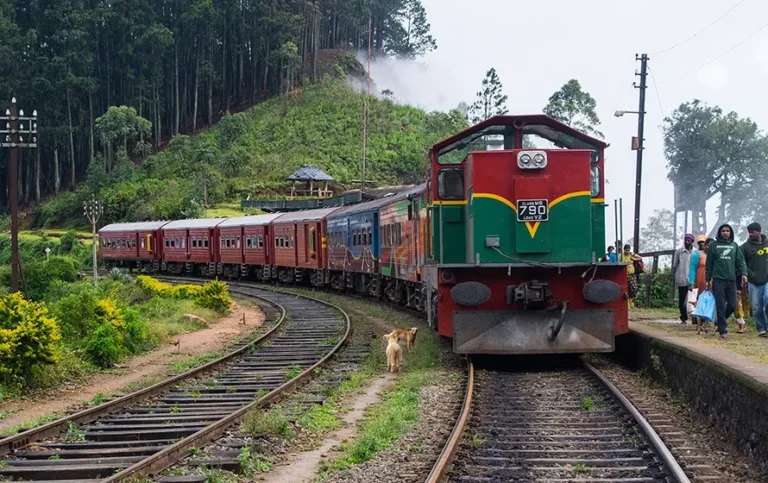
December 22, Colombo (LNW): Train operations across Sri Lanka are steadily returning to normal in the aftermath of Cyclonic Storm Ditwah, with authorities confirming that close to 70 per cent of the rail network is now functioning again.
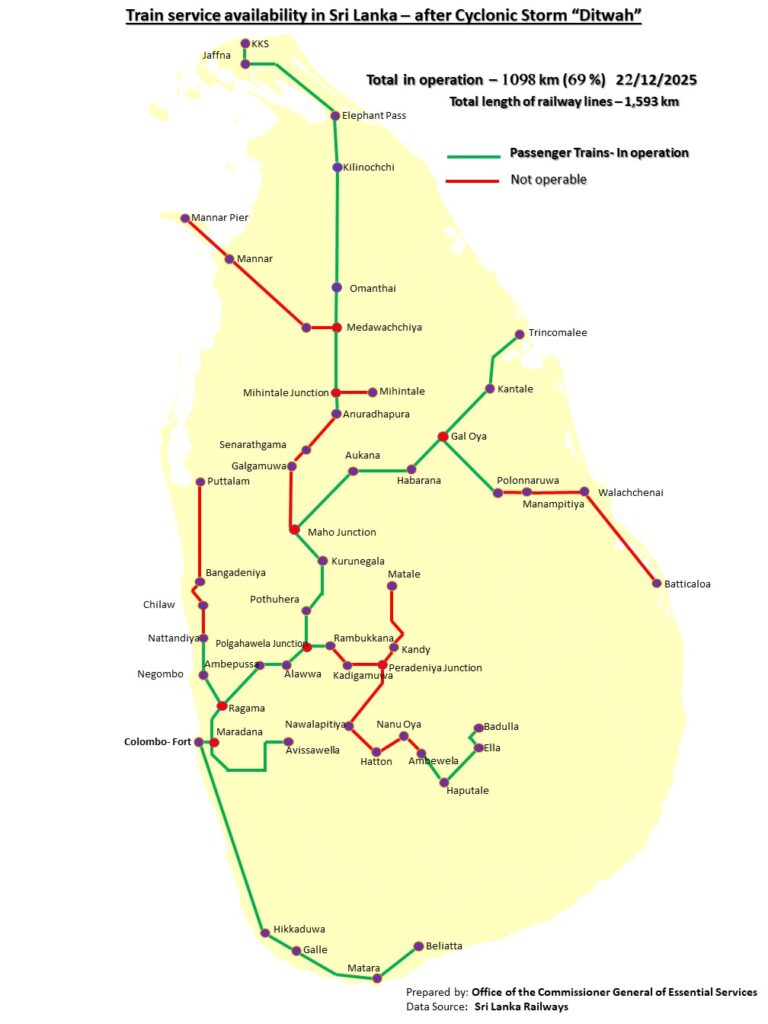
Figures issued by the Office of the Commissioner General of Essential Services show that passenger trains are currently running on approximately 1,098 kilometres of track as of December 22.
This represents around 69 per cent of the country’s total railway system, which spans 1,593 kilometres.
Several major routes have already been brought back into service, including large sections of the Northern Line extending to Kankesanthurai, the Southern Line linking Colombo with Matara and Beliatta, as well as selected routes in the Eastern and North Central regions. Officials said priority was given to lines serving high passenger demand and key economic centres.
Despite this progress, a number of rail sections remain closed due to damage caused by the storm. Services are yet to resume on routes connecting areas such as Mannar, Puttalam, Batticaloa and Kandy, along with parts of the hill country line. Repair teams are continuing restoration work, and authorities have indicated that further sections will be reopened in stages as safety checks and repairs are completed.
Justice Minister Opens Terrorism Bill to Public Review Ahead of Revisions
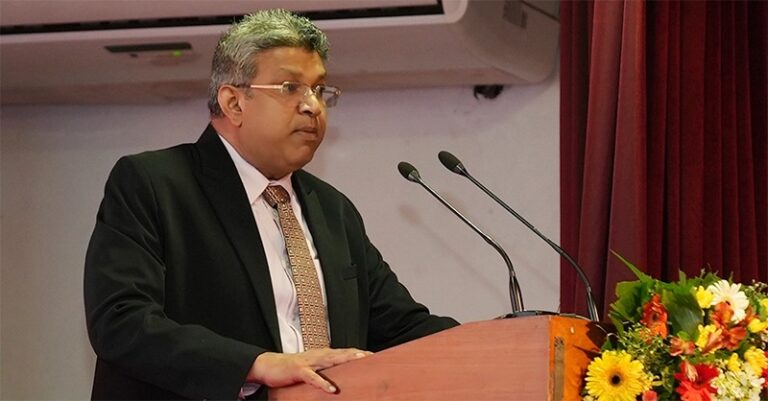
December 22, Colombo (LNW): Justice Minister Harshana Nanayakkara has emphasised that the proposed Prevention of Terrorism legislation remains a working draft and will be revised following public consultation before it is presented to the Cabinet or tabled in Parliament.
Speaking today, the Minister said the draft law, prepared by a committee chaired by President’s Counsel Rienzie Arsecularatne, has been made available on the Ministry of Justice website in Sinhala, Tamil and English. Members of the public have been given until February 28, 2026 to study the document and submit their views, concerns and recommendations.
He explained that all feedback received during this consultation period will be forwarded to the original drafting committee, which will be tasked with reviewing the submissions and introducing amendments where appropriate.
The aim, he noted, is to refine the legislation in a way that balances national security needs with the protection of fundamental rights.
Minister Nanayakkara urged individuals, civil society groups and organisations to actively participate in the process, stressing that broad public engagement is essential to shaping a more balanced and socially responsive law.
Inland Revenue Records Historic High as 2025 Target Reached Ahead of Schedule
December 22, Colombo (LNW): Sri Lanka’s Inland Revenue Department has surpassed a major fiscal milestone after meeting the Government’s full-year revenue target for 2025 several days before the end of the year.
Commissioner General Rukdevi P. H. Fernando confirmed that the department had collected Rs. 2,203 billion by 19 December, achieving the figure set for the entire year.
She described the accomplishment as the largest revenue intake ever recorded by the Inland Revenue Department, reflecting improved compliance and strengthened collection mechanisms.
In a statement, the Commissioner General noted that efforts are continuing to further increase revenue during the remaining days of the year, signalling that the final figures may exceed expectations.
She attributed the achievement to a combination of effective administration and the cooperation of taxpayers across the country.
Fernando also conveyed her appreciation to individuals and businesses for fulfilling their tax obligations, both directly and through indirect taxation. In addition, she acknowledged the commitment of Inland Revenue staff and the support extended by officers in other public and private sector institutions, saying their collective contribution was instrumental in reaching the record-breaking total.
Export Earnings Climb as Sri Lanka Records Solid Growth in 2025
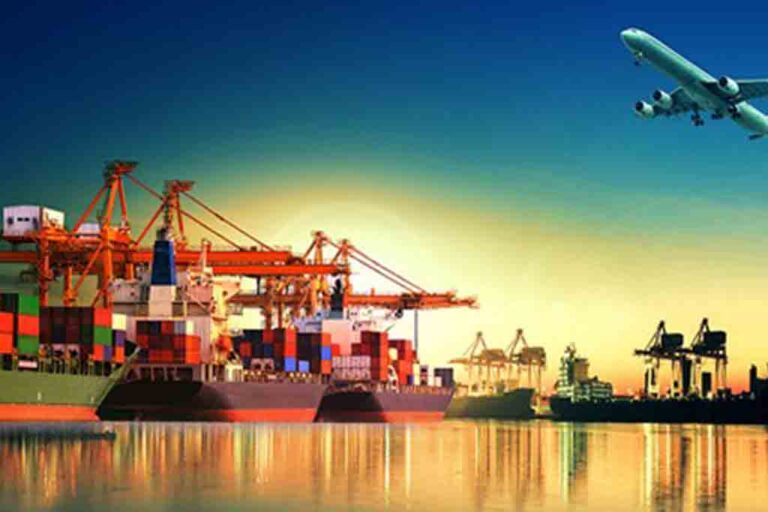
December 22, Colombo (LNW): Sri Lanka’s export performance continued to strengthen in 2025, with total earnings reaching US$15.78 billion during the first eleven months of the year, according to the latest figures released by Sri Lanka Customs.
The Export Development Board (EDB) reported that exports maintained a steady upward momentum from January to November, posting a year-on-year increase of 5.8 per cent. Officials attributed the growth to improved market diversification, stronger demand in key destinations and ongoing efforts to enhance competitiveness.
Exports in November alone, covering both goods and services, amounted to US$1.36 billion, marking a 5.56 per cent rise compared to the same month in 2024. Merchandise exports were a major contributor, expanding by nearly 6 per cent year-on-year to reach US$1.05 billion, based on provisional Customs data that include estimated earnings from gems and jewellery as well as petroleum products.
Cumulatively, merchandise exports from January to November 2025 stood at US$12.42 billion, reflecting a 6.41 per cent increase over the corresponding period last year. Meanwhile, services exports also showed positive growth, with earnings in November estimated at US$311.3 million, up 4.27 per cent from a year earlier. For the first eleven months of the year, services exports are estimated to have generated US$3.36 billion, representing a 3.63 per cent increase.
The EDB noted that the continued expansion of services exports underscores the growing role of Sri Lanka’s knowledge-driven sectors, which are playing an increasingly important part in boosting overall export revenue and supporting economic resilience.
Inflation Eases Further as Consumer Prices Continue to Cool
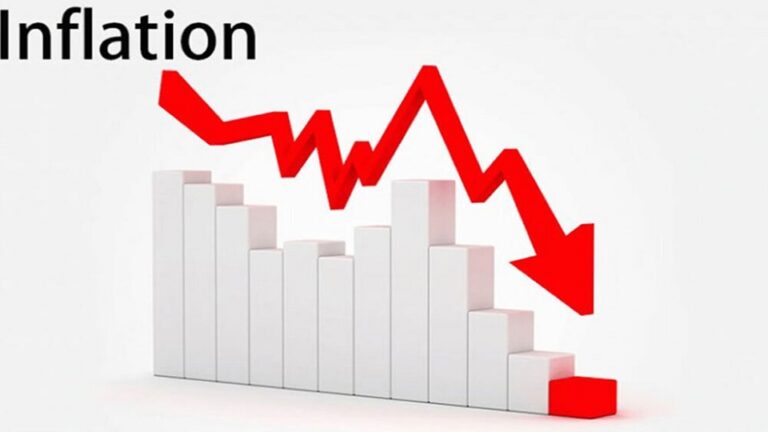
December 22, Colombo (LNW): Sri Lanka’s inflation rate showed further signs of moderation in November 2025, with the National Consumer Price Index (NCPI) indicating a drop to 2.4 per cent, down from 2.7 per cent recorded the previous month, according to newly released official statistics.
Data from the Department of Census and Statistics show that food prices were a key driver of the decline. Food inflation fell to 3.6 per cent in November, compared with 4.1 per cent in October, reflecting softer price pressures on essential items.
In contrast, year-on-year inflation for non-food goods and services remained steady at 1.5 per cent, suggesting relative stability outside the food sector.
On an annual basis, food items accounted for a 1.57 per cent contribution to overall inflation in November 2025 when compared with the same month last year, underlining their continued influence on household spending.
The department also reported that the NCPI for all items stood at 207.2 points in November, marking a slight decline of 0.3 index points from October. Economists say the latest figures point to a gradual easing of cost-of-living pressures, although prices remain sensitive to changes in supply conditions and global trends.
Teacher Unions Set Deadline Over Proposed Extension of School Hours

December 22, Colombo (LNW): Teachers’ trade unions have warned that they will resort to industrial action if the government fails to deliver a clear response on the proposed extension of school hours by January 05, 2026.
Union representatives met Prime Minister Dr Harini Amarasuriya earlier today at the Ministry of Education, where discussions centred on wider education reforms and the controversial plan to lengthen the school day.
The meeting followed growing unease among educators, who argue that any changes must be preceded by proper consultation and clear safeguards for teachers and students alike.
Union officials said they had previously prepared to launch protest action on December 12 but decided to postpone it in the hope that dialogue with the authorities would lead to a resolution.
They noted that during today’s talks, the Prime Minister listened to their concerns and indicated that the issues raised would be reviewed before a final decision is taken.
Despite this assurance, the unions stressed that patience is wearing thin and that meaningful engagement and a firm position from the government are essential to avoid disruption to schools in the coming months.
UN Praises Sri Lanka’s Disaster Response: Govt Reaffirms Commitment to Recovery
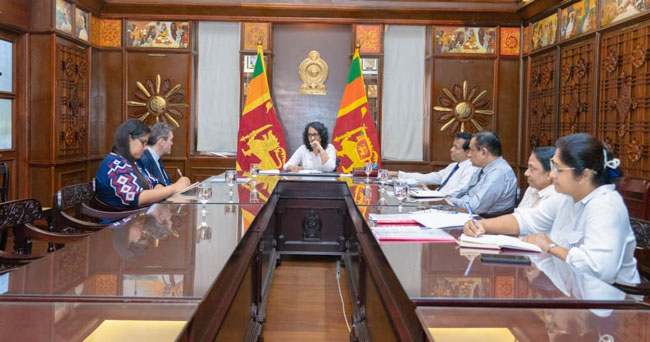
December 22, Colombo (LNW): Prime Minister Dr Harini Amarasuriya met with the United Nations Resident Coordinator in Sri Lanka, Marc-André Franche, at the Prime Minister’s Office on 20 December 2025 to review the country’s response to the recent natural disasters and the progress of relief efforts.
According to an official statement, Mr Franche expressed strong appreciation for the speed and coordination shown by the Government in reaching affected communities and delivering emergency assistance. Drawing on comparisons with crisis responses in other parts of the world, he observed that Sri Lanka has received an unusually high level of international backing, reflecting confidence in the country’s response mechanisms.
He also assured the Prime Minister that he would fully apply both his official role and personal dedication to mobilise continued international support, ensuring that Sri Lanka receives the help required during the recovery phase.
Prime Minister Amarasuriya, in turn, thanked the United Nations for its sustained cooperation and support. She noted that the combined efforts of political leadership and public officials, from district-level administrators to frontline personnel, had played a decisive role in managing the situation effectively.
She further reaffirmed the Government’s commitment to ensuring transparency and efficiency in the use of international assistance, while prioritising the swift restoration of normal life for families and communities impacted by the disaster.
The discussion was also attended by Secretary to the Prime Minister Pradeep Saputhanthri and Secretary to the Ministry of Education Nalaka Kaluwewa.
Prime Minister Pledges People-Centred Economic Reforms and Expanded Public Service Recruitment
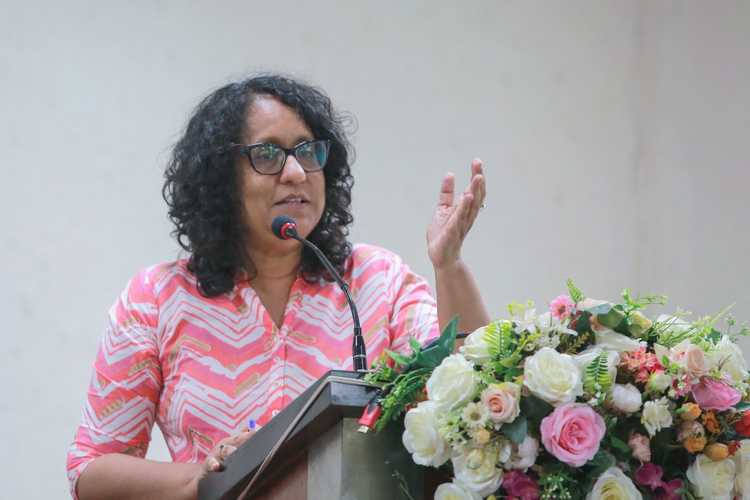
December 22, Colombo (LNW): Prime Minister Dr Harini Amarasuriya has said the government is committed to steering the economy in a way that improves everyday life for citizens, rather than promoting privilege for a select few.
Speaking at a scholarship award ceremony in Kilinochchi, she explained that the administration’s new policy framework is designed to produce practical results for communities across the country. She stressed that the success of these plans depends heavily on close cooperation between central ministries and provincial administrations.
The Prime Minister also revealed that preparations are under way to tackle long-standing staff shortages in the public sector, including a significant number of unfilled teaching posts, with recruitment measures expected to be implemented in 2026.
Dr Amarasuriya was addressing an event held at the Nelum Piyasa Hall within the Iranamadu Army Camp, organised to honour high-achieving students from the Northern Province. Students who recorded exceptional results at the 2024 G.C.E. Advanced Level Examination were recognised, with scholarships awarded through the Presidential Fund to support their future studies.
Sri Lanka Among Countries Hit as Washington Plans Broad Diplomatic Reset
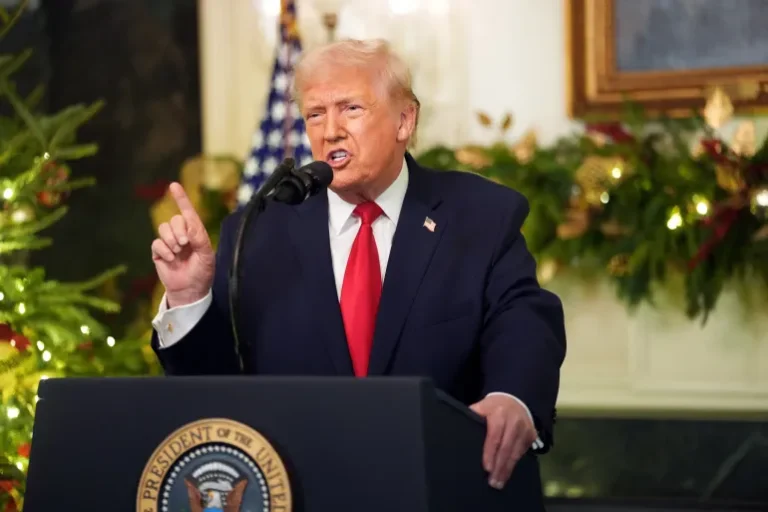
December 22, Colombo (LNW): Sri Lanka has been included in a sweeping diplomatic shake-up by the Trump administration, which is preparing to rotate out nearly 30 senior American envoys as part of a wider effort to realign the United States’ overseas presence with President Donald Trump’s “America First” agenda.
According to officials familiar with the matter, the US Ambassador in Colombo is among a group of career diplomats who were recently told that their assignments would conclude early next year. Similar notifications were issued to chiefs of mission across close to 30 countries, with most of the affected diplomats having assumed their roles during the previous administration.
While many of these envoys had initially weathered the early months of Trump’s second term—when political appointees were the primary focus of removals—the latest round marks a broader recalibration. Messages from Washington began reaching embassies midweek, signalling that a more comprehensive personnel review was under way.
US ambassadors formally serve at the president’s discretion, though they commonly remain in post for several years. Those being recalled are not being dismissed from the foreign service; instead, they are expected to return to Washington and may be reassigned to other roles if they choose.
The State Department has avoided confirming exact figures or naming specific countries, but has played down the significance of the changes. Officials described the move as routine for any new administration, emphasising that ambassadors act as the president’s personal representatives abroad and are expected to reflect his policy priorities.
Africa appears to be the region most heavily affected, with more than a dozen ambassadorial posts earmarked for change, spanning countries from West, East and Southern Africa. Asia follows, where several Pacific and South-East Asian missions are set to see new leadership. A smaller number of posts in Europe, the Middle East, South and Central Asia—including Sri Lanka—and the Americas are also involved.
Diplomatic observers say the reshuffle underlines the administration’s determination to ensure closer political alignment at senior levels overseas, even as continuity is maintained within the professional foreign service.