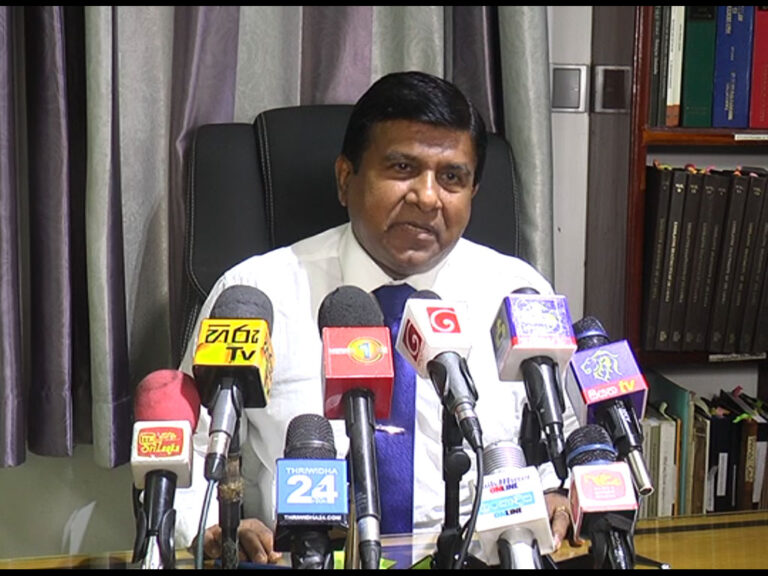
The World Bank on Tuesday said it is not planning to provide any new financing to cash-strapped Sri Lanka until an adequate economic policy framework has been put in place.
In a statement, the multilateral development bank said it was repurposing resources from previously approved projects to help the Sri Lankan government pay for some essential medicines, temporary cash transfers for poor and vulnerable households, and other support.
It said recent media reports had inaccurately stated that the World Bank planned to provide Sri Lanka with a new bridge loan or other loan commitments.
“Recent media reports have inaccurately stated that the World Bank is planning support for Sri Lanka in the form of a bridge loan or new loan commitments, among other incorrect assertions.
WB is concerned for the people of Sri Lanka and are working in coordination with the IMF and other development partners in advising on appropriate policies to restore economic stability and broad-based growth.
Until an adequate macroeconomic policy framework is in place, the World Bank does not plan to offer new financing to Sri Lanka.
The World Bank is currently repurposing resources from previously approved projects to help the government with some essential medicines, temporary cash transfers for poor and vulnerable households, school meals for children of vulnerable families, and support for farmers and small businesses.”
Sri Lanka needs a long-term sustainable fiscal management mechanism to overcome the present socio –ecnomic crisis Prime Minister Ranil Wickremsinghe told the cabinet of ministers.
The Prime Minister called on the multi-party Cabinet of Ministers to keep aside their political differences and to collectively deliver the responsibilities in this crucial juncture wher the country has no money for daily needs.
“Last year, the daily State revenue was only Rs. 4 billion, while the expenditure was Rs. 9.6 billion. Thus, creating a daily cash shortfall of Rs. 5.6 billion.
To manage this fiscal gap, successive Governments obtained loans and serviced them. Eventually, this vicious cycle which spanned over decades led to the worst economic crisis,” he explained.
He also said in 2014, the daily income of the Government was Rs. 3.2 billion, while the expenses were Rs. 4.9 billion creating a cash shortfall of Rs. 1.7 billion.
In 2019, the revenue increased to Rs. 5 billion, but expenses also escalated to Rs. 9.1 billion, thus creating a daily shortfall of Rs. 4.1 billion.
“Sri Lanka also had an economic module where our daily lifestyles were based on imported goodies. The annual exports were around $ 12 billion, while the import bill was $ 22 billion – resulting in a major gap in the current account,” he added.
“The lost revenue of around $ 10 billion from the tourism industry over the past two years, drastic drop in workers’ remittances led to faster depletion of foreign reserves – recording an overall gross domestic product (GDP) of -3.6% in 2021 or a peril.
With known net debt service payments of US$ 6.6 bn this year and current fully usable official reserves of less than US$ 1 bn (2-3 weeks of imports), Sri Lanka is confronted with both a cash flow problem and a debt problem.
The liquidity problem is compounded by the fact that the only known additional external financing, at this point, are lines of credit from India (USD 1.5bn) and Pakistan (USD 200 mn).
These will certainly contain the depletion of reserves. They will not have a very material impact on the existing external financing gap, which is likely to be at least USD 7 bn this year, even with very optimistic assumptions about receipts from tourism, asset sales, remittances and FDI.
The people are undergoing unprecedented hardships at the current time. There is a disjuncture between what government leaders have been saying and what is materializing. Assurances are being made that shiploads of fuel have been unloaded. However, many service stations remain closed and those open have lines stretching for kilometers even overnight. The small 15-member interim government drawn from all parties that was promised by President Gotabaya Rajapaksa to resolve the present crisis was not appointed. Now the government appears to be heading towards a large sized one dominated by the ruling party with a full complement of ministers and state ministers.
It seems to be the case that the present composition of parliament will not permit good governance. This is plainly the belief of those who continue to peacefully protest against the government in person at various protest sites. This is also the feeling of the many citizens who protest in their hearts and minds wherever they live and work. It is distressing that 19 of 27 hours of parliament time was spent to discuss the burned houses of the politicians. If this continues no one will be able to prevent this country from going to a situation of severe anarchy which will lead to further political upheavals and injury to people not only by violence but by hunger as well.
The National Peace Council is dismayed at the appointment of 23 new secretaries to ministries by the president, all of whom belong to the ethnic majority community. This insensitive action will not be conducive to promote a sense of belonging to the ethnic and religious minorities who constitute nearly one third of the population of the country. We are also dismayed that public minded citizens who volunteered to give evidence regarding the violence used against peaceful protestors in front of the prime minister’s official residence and the presidential secretariat have had their passports impounded. This makes it seem as if the victim has become the accused.
The National Peace Council notes that the appointment of four cabinet spokespersons will not assure the people or the international community that a cohesive and stable government is in place. In this context we are concerned that the World Bank has issued a statement that they will not be in a position to financially assist the country until an adequate macroeconomic policy framework is in place for which political stability and unity is a prerequisite. The National Peace Council calls for elections to be held as soon as possible to enable the people to give a fresh mandate to those who will bring about change. We believe a government with a new mandate can win the confidence of the Sri Lankan people and the international community to get the country out of the quagmire it is in.
The United Nations General Assembly adopted on 23 May 2022, a Sri Lanka sponsored Resolution A/76/L.56, declaring 1 March as World Seagrass Day. The resolution was adopted by consensus, and co-sponsored by 24 countries.
Ambassador Mohan Pieris, Permanent Representative of Sri Lanka to the UN, introduced the resolution under Agenda Item 15: Integrated and coordinated implementation of and follow-up to the outcomes of the major United Nations conferences and summits in the economic, social and related fields.
In his introduction, Ambassador Pieris highlighted Sri Lanka’s interest as a littoral state in bringing attention and awareness on a small but significant aspect of universal importance in combatting climate change. He highlighted the importance of seagrass as a carbon sink, in protection against coastal erosion, in stabilizing the sea bottom, increasing the resilience of the most vulnerable ecosystems, and increasing food stability for a number of marine creatures, and the pivotal role it plays in curtailing the effects of climate change.
The World Seagrass Association closely supported the Government of Sri Lanka in this endeavor.
Seagrasses are one of the most valuable marine ecosystems on earth covering around 300,000 square kilometers in 159 countries and six continents. They provide a range of critical environmental, economic and social benefits. The most significant benefit being the enormous carbon sequestration potential of seagrass, storing up to 18 percent of the world’s oceanic carbon, which is greater than that of rainforests which makes protection and restoration of seagrass a vital tool in efforts to adapt and mitigate the adverse effects of climate change. The vital functions of seagrasses also include its role in stabilizing the sea bottom and providing ecosystem support via food and shelter for a number of marine creatures, including commercial and recreational fish species, as well as endangered and charismatic species such as turtles, dugongs and manatees. However, seagrass ecosystems are being destroyed as a result of human activity. The United Nations Environmental Programme Publication ‘Out of the Blue: the value of seagrasses to the environment and to people’ states that “7 per cent of seagrass marine habitat is being lost worldwide per year, which is equivalent to a football field of seagrass lost every 30 minutes”.
The initiative was a collective effort of studying sea grass ecosystems and examining restoration and conservation through Nature-based Solutions by an NGO and academics and paving the way to highlight the importance of scientific-evidence based approaches at the policy level.
The Biodiversity Secretariat of the Ministry of Environment, Department of Aquaculture & Fisheries at the Wayamba University and the Blue Resource Trust worked together with the Ocean Affairs, Environment and Climate Change of the Ministry of Foreign Affairs and contributed to the process and coordinated with the Permanent Representative of Sri Lanka to the UN in New York in this regard.
The Federation of University Teachers Association (FUTA) wishes to raise serious concerns about various repressive measures the government has initiated against social activists involved in the ongoing peoples struggle. Instead of respecting the public demand urging the President to step down, it is regrettable to notice how the government has launched a vicious campaign to intimidate social activists and people who raise their voices against the government.
The recent court order obtained from the Colombo Fort Magistrate court by the Criminal Investigation Department (CID) ordering several activists involved in Galleface protests to surrender their passports denotes the most recent incident of suppression. These are the same activists who previously submitted a complaint to the CID requesting an impartial investigation on the violent assault pro-government supporters carried on against the peaceful protesters at the Galleface green protest site on 9th of May. The CID has ordered them to surrender their passports, on the ground that such a measure is required to continue investigations. Imposing travel restrictions on activists who have complained to the police on behalf of the victims of the May 09 pro-government assault appears to be a highly problematic measure.
This particular order of the CID should be viewed as a part of a larger repressive tendency that is unfolding since May 09 incidents. The police has so far arrested approximately 600 individuals on the suspicion of participating in various violent activities that erupted throughout the country aftermath the assault on the Galleface protest site. The FUTA is concerned about the highly politicized nature of these so-called investigations and arrests. It has been drawn to our attention that local politicians attached to the ruling Sri Lanka Podujana Peramuna (SLPP) party are preparing lists of their political opponents accusing them of participating in violence.
Although we are not against initiating legal action against any individual that has shown criminal behavior, we thoroughly emphasize the need of investigations to be transparent and impartial. The involvement of local politicians in directing the arrests, and how the ruling party attempts to frame social activists who were active in peaceful protests in various local areas as offenders seriously undermines the foundations of rule of law and democracy. In addition to the brutal police attack that was unleashed against the peaceful protest march organized by the Inter University Student’s Federation (IUSF) on 19th of May, intimidation of activists and making politically motivated arrests signifies the rise of a new wave of authoritarianism.
Sri Lanka is facing the most severe economic, political and social crisis it has faced since independence. While the general public; especially the economically disempowered sections of the society are enduring immense suffering due to economic pressures such as rising cost of living, fuel, medicine and gas shortages and frequent power cuts; the current regime including the President continues to govern with impunity without being held accountable for the serious mismanagement of the economy that has brought an unprecedented burden on the people. The political establishment remains in power disrespecting the demand of the people who urge for the removal of the President. Social unrest that we witness today throughout the country; from people blocking roads due to gas and fuel shortages and spontaneous protests of masses indicates the need of changing the existing state of affairs. The FUTA firmly believes that such change cannot be anticipated unless and until the current President who is largely responsible for the deteriorating conditions in the country becomes accountable to the public and renders his resignation respecting the people’s will.
Unfortunately, without following that obvious path to reaffirm public confidence on the political order, the government seems to be drifting more and more towards repression and consolidation of authoritarian policies. We thoroughly condemn the alarming emergence of repressive practices that have taken place since May 09 incidents. The right to dissent is non-negotiable in a democratic society. While calling for an immediate end to the intimidation of social activists and political opponents, the FUTA urges the government to respect people’s demand and act responsibly without aggravating further social turmoil.
146 Authorized Products May Have Surveilled Children and Harvested Personal Data
(Tokyo, May 25, 2022) – Governments of 49 of the world’s most populous countries harmed children’s rights by endorsing online learning products during Covid-19 school closures without adequately protecting children’s privacy, Human Rights Watch said in a report released today. The report was released simultaneously with publications by media organizations around the world that had early access to the Human Rights Watch findings and engaged in an independent collaborative investigation.
“Children should be safe in school, whether that’s in person or online,” said Hye Jung Han, children’s rights and technology researcher and advocate at Human Rights Watch. “By failing to ensure that their recommended online learning products protected children and their data, governments flung open the door for companies to surveil children online, outside school hours, and deep into their private lives.”
Of the 164 EdTech products reviewed, 146 (89 percent) appeared to engage in data practices that risked or infringed on children’s rights. These products monitored or had the capacity to monitor children, in most cases secretly and without the consent of children or their parents, in many cases harvesting personal data such as who they are, where they are, what they do in the classroom, who their family and friends are, and what kind of device their families could afford for them to use.
Most online learning platforms examined installed tracking technologies that trailed children outside of their virtual classrooms and across the internet, over time. Some invisibly tagged and fingerprinted children in ways that were impossible to avoid or erase – even if children, their parents, and teachers had been aware and had the desire to do so – without destroying the device.
Most online learning platforms sent or granted access to children’s data to advertising technology (AdTech) companies. In doing so, some EdTech products targeted children with behavioral advertising. By using children’s data – extracted from educational settings – to target them with personalized content and advertisements that follow them across the internet, these companies not only distorted children’s online experiences, but also risked influencing their opinions and beliefs at a time in their lives when they are at high risk of manipulative interference. Many more EdTech products sent children’s data to AdTech companies that specialize in behavioral advertising or whose algorithms determine what children see online.
With the exception of Morocco, all governments reviewed in this report endorsed at least one EdTech product that risked or undermined children’s rights. Most EdTech products were offered to governments at no direct financial cost. By endorsing and enabling the wide adoption of EdTech products, governments offloaded the true costs of providing online education onto children, who were unknowingly forced to pay for their learning with their rights to privacy and access to information, and potentially their freedom of thought.
Few governments checked whether the EdTech they rapidly endorsed or procured for schools were safe for children to use. As a result, children whose families could afford to access the internet, or who made hard sacrifices to do so, were exposed to the privacy practices of the EdTech products they were told or required to use during Covid-19 school closures.
Many governments put at risk or violated children’s rights directly. Of the 42 governments that provided online education to children by building and offering their own EdTech products for use during the pandemic, 39 governments made products that handled children’s personal data in ways that risked or infringed on their rights. Some governments made it compulsory for students and teachers to use their EdTech product, subjecting them to the risks of misuse or exploitation of their data, and making it impossible for children to protect themselves by opting for alternatives to access their education.
Children, parents, and teachers were largely kept in the dark about these data surveillance practices. Human Rights Watch found that the data surveillance took place in virtual classrooms and educational settings where children could not reasonably object to such surveillance. Most EdTech companies did not allow students to decline to be tracked; most of this monitoring happened secretly, without the child’s knowledge or consent. In most instances, it was impossible for children to opt out of such surveillance and data collection without opting out of compulsory education and giving up on formal learning during the pandemic.
Human Rights Watch conducted its technical analysis of the products between March and August 2021, and subsequently verified its findings as detailed in the report. Each analysis essentially took a snapshot of the prevalence and frequency of tracking technologies embedded in each product on a given date in that window. That prevalence and frequency may fluctuate over time based on multiple factors, meaning that an analysis conducted on later dates might observe variations in the behavior of the products.
It is not possible for Human Rights Watch to reach definitive conclusions as to the companies’ motivations in engaging in these actions, beyond reporting on what it observed in the data and the companies’ and governments’ own statements. Human Rights Watch shared its findings with the 95 EdTech companies, 196 AdTech companies, and 49 governments covered in this report, giving them the opportunity to respond and provide comments and clarifications. In all, 48 EdTech companies, 78 AdTech companies, and 10 governments responded as of May 24, 12 p.m. EDT. Several EdTech companies denied collecting children’s data. Some companies denied that their products were intended for children’s use. AdTech companies denied knowledge that the data was being sent to them, indicating that in any case it was their clients’ responsibility not to send them children’s data. These and other comments are reflected and addressed in the report, as relevant.
As more children spend increasing amounts of their childhood online, their reliance on the connected world and digital services that enable their education will likely continue long after the end of the pandemic. Governments should pass and enforce modern child data protection laws that provide safeguards around the collection, processing, and use of children’s data. Companies should immediately stop collecting, processing, and sharing children’s data in ways that risk or infringe on their rights.
Human Rights Watch has launched a global campaign, #StudentsNotProducts, which brings together parents, teachers, children, and allies to support this call and demand protections for children online.
“Children shouldn’t be compelled to give up their privacy and other rights in order to learn,” Han said. “Governments should urgently adopt and enforce modern child data protection laws to stop the surveillance of children by actors who don’t have children’s best interests at heart.”
“‘How Dare They Peep into My Private Life?’: Children’s Rights Violations by Governments that Endorsed Online Learning during the Covid-19 Pandemic” is available at: https://www.hrw.org/node/382003
For more information, please contact: In San Francisco, Hye Jung Han (English): +1-646-740-1335 (mobile); or [email protected].Twitter: @techchildrights In Washington, DC, Maria McFarland Sánchez-Moreno (Spanish): +1-917-535-2816 (mobile); or [email protected]. Twitter: @MMcFarlandSM HRW Press: [email protected].
International Media Consortium
EdTech Exposed is an independent collaborative investigation that had early access to Human Rights Watch’s report, data, and technical evidence on apparent violations of children’s rights by governments that endorsed education technologies during the Covid-19 pandemic. The consortium provided weeks of independent reporting by more than 25 investigative journalists from 13 media organizations in 16 countries. It was coordinated by The Signals Network, an international nonprofit organization that supports whistleblowers and helps coordinate international media investigations that speak out against corporate misconduct and human rights abuses. Human Rights Watch provided financial support to Signals to establish the consortium, but the consortium is independent from and operates independently from Human Rights Watch.
The media organizations involved include ABC (Australia), Chosun Ilbo (Republic of Korea), El Mundo (Spain), Folha de São Paulo (Brazil), The Globe and Mail (Canada), Kyodo News (Japan), McClatchy/Miami Herald/Sacramento Bee/Fort Worth Star-Telegram (USA), Mediapart (France), Narasi TV (Indonesia), OCCRP (Cameroon, Kenya, Nigeria, South Africa, and Zambia), The Daily Telegraph (UK), The Wire (India), and The Washington Post (USA).
In the coming weeks, Human Rights Watch will release its data and technical evidence, to invite experts, journalists, policymakers, and readers to recreate, test, and engage with its findings and research methods.
A new leak of Chinese government records reveals thousands of never-before seen mug shots of Uyghurs and other photos from inside the notorious internment camps, as well as new details of the national mass detention program.
Ten detainees wearing blue and yellow prison smocks sit in a basement cell, staring up at a TV that shows a speech by a local Xinjiang government official. Blue-clad guards, one holding a club about as big as a baseball bat, stand nearby.
Beneath Chinese flags, several officials stroll along a brightly lit detention center corridor, like visitors at a zoo, peering down through grates into basement cells whose inhabitants are out of view.
A third photograph shows what appears to be an interrogation. A young man, hands and feet shackled to what Chinese police call a “tiger chair,” faces an officer at a desk equipped with a computer, a camera and a microphone. A framed poster displaying the Chinese Communist Party’s hammer and sickle emblem leans against a wall, and a helmeted officer in full riot gear, visor down, holds a riot shield.
These photos are part of the Xinjiang Police Files, an unprecedented leak of thousands of images and documents from the public security bureaus of China’s Konasheher and Tekes counties. The two counties are in Xinjiang, the majority-Muslim region in northwestern China where the national government has held hundreds of thousands of Uyghurs and other ethnic minorities in mass-internment camps.
The leak contains the first photographs taken inside the camps and obtained by news organizations without official authorization. The photos serve as irrefutable evidence of the highly militarized nature of the camps and present a stark contrast with those, previously published, that were taken on government-organized press tours.
Also included are the mug shots of more than 2,800 detainees, dazed men, women and teenagers staring blankly into a camera. Xinjiang residents’ faces also occupy one column of a spreadsheet amid thousands of rows of personal data — age, profession, hometown and other personal information — in Chinese characters.
Detainees inside Tekes detention center in Xinjiang watch a televised speech by a local politician as guards watch them in 2017. Image: Xinjiang Police Files
In addition to photos, the leak provides confidential government documents, including speeches by high-ranking Chinese officials outlining their plans to repress, “educate” and punish members of ethnic minority groups in Xinjiang. Among the files, too, are internal police presentations, some for training purposes, on how to search and arrest suspects, and how to use handcuffs and other equipment. One document marked “confidential” outlines surveillance measures to be put in place by Yili prefecture officers during a visit to Xinjiang by a group of European diplomats in the summer of 2018.
Taken together, the photographs and documents refute the Chinese government’s claims that the camps are merely “educational centers.”
The leaked records, most dating to 2017 or 2018, represent a major advance in public access to knowledge of China’s mass-detention policy and the implementation of that policy at the local level, in this case, the western prefectures of Kashgar and Yili.
It’s [one] thing to know it, and another thing to see it. — researcher Adrian Zenz
The Xinjiang Police Files were obtained by researcher Adrian Zenz, who shared the documents with a group of 14 news organizations, including the International Consortium of Investigative Journalists.
Zenz, a senior fellow at the Victims of Communism Memorial Foundation, a Washington-based think tank, wrote a peer-reviewed academic paper based on the documents that analyzes the leaked data and compares it with publicly available information. He found, for instance, that about 23,000 people in Konasheher county, in Xinjiang’s southwestern Kashgar prefecture, or more than 12% of the adults there, were in some form of internment in 2018. The paper was published in the Journal of the European Association for Chinese Studies.
“The image material is stunning,” Zenz told ICIJ. “It’s really fortunate that this material can come out because it would blow away Chinese propaganda attempts” to whitewash what’s happening in Xinjiang.
“It’s very touching,” he added. “It’s one thing to know it, and another thing to see it.”
A young man is shackled in a “tiger chair” during what appears to be an interrogation at Tekes County Detention Centre in 2018. Image: Xinjiang Police Files
The leak comes as the U.N. high commissioner for human rights, Michelle Bachelet, prepares to make a long-delayed visit to Xinjiang this week.
A growing body of evidence documents the campaign of mass detention and forced assimilation in Xinjiang, begun under President Xi Jingping and his subordinates in 2017. The Chinese government has called the camps “vocational skills education and training centers,” but the Xinjiang Police Files and previous exposés by journalists, researchers and activists point to another conclusion. They reinforce allegations that the camps are part of a nationwide policy to promote conformity to Communist Party doctrine and majority Han cultural norms and crack down on expressions of cultural, political and religious diversity.
As many as 1 million Uyghurs and members of other Turkic minorities were held in the camps in 2018, according to estimates by U.N. and U.S. officials. There is no precise estimate of the number of detainees since 2017.
The Chinese government dismisses accusations of human rights violations as “fabricated lies and disinformation,” asserting that the so-called training centers are intended to improve labor skills and to alleviate poverty. The government also says that some of the measures deployed in Xinjiang are part of a campaign to combat what it calls acts of terrorism by Uyghur extremists.
“Xinjiang has taken a host of decisive, robust and effective deradicalization measures,” Liu Pengyu, a spokesperson with the Chinese embassy in Washington D.C., told ICIJ and its media partners in an email.
“The region now enjoys social stability and harmony, as well as economic development and prosperity. The local people are living a safe, happy and fulfilling life,” Liu said.
“These facts,” he added, “speak volumes about the effectiveness of China’s Xinjiang policy” and “are the most powerful response to all sorts of lies and disinformation on Xinjiang.”
Liu did not respond to the reporters’ specific questions about the Xinjiang Police Files.
Chinese officials tour a detention center in Tekes county, Xinjiang, where inhabitants occupy basement cells. Image: Xinjiang Police Files
The camps’ punitive function stands out in photographs and other information in the leak.
“The people in them are being treated very much as criminalized elements,” said Michael Clarke, an adjunct professor at the Australia-China Relations Institute in Sydney, who reviewed Zenz’s report and underlying documents.
In an interview with USA Today, an ICIJ media partner, Clarke said that “dribs and drabs” of visual evidence of the camps’ prison-like conditions had emerged previously. “But nothing like this,” he said.
The camps’ existence and an extrajudicial program for the mass detention of minorities in Xinjiang first emerged in satellite photos and sporadic firsthand accounts of Uyghur refugees and former detainees. Witnesses also told of widespread torture, rape and forced sterilization. In 2019, the China Cables investigation by ICIJ and 17 media partners, based on classified Chinese government documents, exposed the operations manual for Xinjiang detention camps and the region’s system of mass surveillance.
The revelations have prompted the United States, members of the European Union, and other Western nations to sanction Chinese officials and companies deemed to have enabled human rights violations in Xinjiang.
The U.S. and other governments now officially refer to Beijing’s targeting of Uyghurs and other Muslim minorities as a form of “genocide.” In 2021, the U.S. enacted a law to stop the import of goods suspected of being made using Uyghurs’ forced labor.
Beijing, in turn, has levied sanctions against Zenz and others who, the government claims, “severely harm China’s sovereignty and interests and maliciously spread lies and disinformation.”
The Xinjiang Police Files
The leaked documents were created or collected when the Chinese government’s mass-detention program was at the height of its intensity.
The data set’s 5,074 mug shots appear to be of area residents photographed by law enforcement authorities from January to July 2018, possibly as part of an effort to collect biometric data, according to Zenz’s review of timestamps accompanying the images.
About 2,900 of those in the mug shots had been detained before their pictures were taken, and their ages ranged from 15 to 73, according to Zenz’s analysis of text files. The detainees included 15 minors.
Some photos show detainees being photographed under close watch, women by female staffers in civilian clothes, men by male guards in full tactical gear.
Others are just mug shots. In one, an older man, unshaved and wearing a stained sweater, looks shyly at the camera. In another, a female staffer in glasses towers over an older woman who sits in front of a light gray background and stares blankly at the camera.
The Xinjiang Police Files contains more than 5,000 photos of individuals taken in 2018 at police stations or detention centers in Konasheher County, in Xinjiang, and identifying information on most of them. The data indicates that more than half of the individuals were interned or imprisoned in 2017-2018, including those pictured in the top row. The second row displays mugshots of family members of a man sentenced to more than 10 years imprisonment for “illegal study of the scriptures.” Image: Xinjiang Police Files
Other images in the cache show an interior space that may have been used for so-called re-education purposes in Xinjiang’s Tekes county, Zenz’s report says.
The pictures of detainees watching the televised speech by the politician and of the young man in restraints are from this batch.
Some photos present chilling images of training programs. In one, three guards in full combat gear point assault rifles at a prisoner held to the ground by eight guards taking part in an anti-escape drill.
In another, at least six guards in riot gear — helmets, visors, and clubs, and one with a shield — surround two prisoners who are shackled hands-to-feet and forced to squat with their hooded heads bent toward the floor. An officer bends over one prisoner and speaks into a walkie-talkie; another holds a camera beneath his flipped-up visor and takes a photograph.
Chinese guards at a detention center in Tekes county in Xinjiang take part in an anti-escape drill in 2018. Image: Xinjiang Police Files
There are photos in which small groups of male and female detainees in prison uniforms stand in a row, either singing or reciting something, as guards watch.
Support independent journalism
Do you believe journalism can make a difference? For just $15/month you can help expose the truth and hold the powerful to account.
Ominous speeches
The leaked records contain new insights into the thinking of top security officials. Two documents, from June 2018, are transcripts of speeches given to a gathering of regional cadres by Zhao Kezhi, the head of China’s Ministry of Public Security, and Chen Quanguo, a member of the Politburo who is considered one of the architects of the security crackdowns in Xinjiang and Tibet.
Leaked transcripts include a classified speech given by the head of China’s Ministry of Public Security, Zhao Kezhi, to a gathering of regional cadres on June 15, 2018, in Urumqi, Xinjiang, in which he outlines the government’s five-year strategy for the region. Image: Konasheher County PSB
According to the leaked transcripts, described as “classified,” Zhao and Chen outlined the government’s five-year strategy to eradicate “extremism” and bring “long-term peace” to Xinjiang.
In his remarks, Zhao indicated that in the first year, 2017, the goal was to “stabilize” the region; in the second, to “consolidate” gains and achieve “basic normalization.” The ultimate objective was “comprehensive stability” by the end of the fifth year.
Chen’s speech, echoing Zhao’s, urged officials to be on the alert, continue the fight against separatists and strengthen the security of camps and prisons. He encouraged them to shoot anyone trying to attack a detention center, an aggressive approach consistent with his advice in a previous speech that guards must fire on escapees.
“These separatist forces and two-faced people must be broken into pieces,” Chen told the cadres. “They do not know the power of our party.”
According to Zenz, “two-faced people” refers to officials who show leniency and may not always follow the government’s orders.
In 2021, Beijing removed Chen from the post of Communist Party secretary of Xinjiang and replaced him with Ma Xingrui, an aerospace scientist-turned-politician who pledged to maintain the government’s hard-line policies.
Early this year, Beijing’s five-year program to eradicate “extremist forces” in Xinjiang came to an official end, according to the government. China’s foreign minister, Wang Yi, announced that the goal of bringing “stability” to the region had been achieved. The terrorism scare “is now a thing of the past,” an expert on the region told Global Times, a party newspaper.
However, experts interviewed by ICIJ and its media partners said there is little evidence that the camps have been closed.
Darren Byler, author of “Terror Capitalism”, a book about China’s mass detention of Uyghurs, said many people are still missing in Xinjiang. If they are not in the camps, Byler said, they may have been shifted to high-security detention facilities or prisons, or to factories where they are required to report for unpaid, forced labor.
“The ‘war on terror’ is ongoing,” said Byler, an anthropologist at Simon Fraser University’s campus in Vancouver, British Columbia. “And with the shift to the prisons, there’s a kind of warehousing of the people that they think are most dangerous and cannot be released.”
Mechanics of mass detention
Among the most striking documents in the leak are spreadsheets containing information on about 8,000 detainees and their internment at two vocational skills education and training centers in Konasheher county. Zenz estimates that the figure would represent nearly all those held at the two camps.
At least one of the camps, near Konasheher’s industrial zone, had cells for holding detainees in solitary confinement, a document indicates.
Another document details security procedures that officers are told to follow when transferring detainees from a camp to a “party school training center.”
Both male and female detainees are guarded by police as they stand in line, apparently to sing or recite at a detention center in Tekes County in Xinjiang, China. Image: Xinjiang Police Files
According to the Student Transfer Security Plan, “students” were to be shackled and hooded, and at least two security officers were to guard each detainee. The bus convoy transporting them would be escorted to its destination by armed police.
Details from the leaked photographs and documents match accounts of former Uyghur detainees interviewed by ICIJ and other news organizations and aid groups, as well as information from public records.
In a document describing intake guidelines, for instance, authorities in Konasheher county divided detainees into 21 categories. Among them were people who allegedly posed a danger to China’s national security; those suspected of “religious extremism;” those returning from abroad or having some connection to a foreign country; and “husbands of women who are currently pregnant” in violation of China’s family-planning policy.
The Xinjiang Police Files indicate that at least 10,000 people in Konasheher county were recommended for detention or closer examination by police using a sophisticated mass-surveillance and so-called predictive-policing program known as the Integrated Joint Operations Platform, or IJOP.
A 2019 Human Rights Watch report declared that IJOP aggregates data about individuals — often without their knowledge — and flags those deemed potentially threatening or otherwise “suspicious.” According to the report, the Chinese government uses the platform to compile a massive database of intimate personal information from a range of sources. Human Rights Watch calls IJOP “China’s algorithms of repression.”
One of the leaked documents indicates that among the reasons cited for detaining people from Konasheher in 2017 and 2018 was the use of a mobile file-sharing application called Zapya, or “Kuaiya” in Chinese. The document says some Zapya users were sent to a conversion-through-education program or put in prison. Other users were placed “under review,” the document says.
The Xinjiang Police Files confirm the importance of IJOP to Beijing’s strategy to control the Uyghur population. In his 2018 speech, Chen told the cadres that top party officials and government ministries “continue to support Xinjiang in upgrading the national integrated platform [IJOP] for anti-terrorism and stability maintenance to a world-class level.”
Surveilling EU diplomats
Included in the Xinjiang Police Files is a four-page confidential Chinese government document, from July 2018, outlining strict security measures to be followed during a visit by a small group of European diplomats to Xinjiang.
Issued by the Yili prefecture’s public security bureau, the document orders security officers to “strictly” monitor the visitors, their contacts and “conduct at work” and to report any problems in a timely manner.
ICIJ media partner Der Spiegel, a German weekly news magazine, obtained a confidential report filed by the EU delegation to China. The undated report describes the diplomats’ “unofficial visit” to the cities of Korla, Kashgar and Hotan, which took place over five days in late June and early July 2018.
The purpose of the visit, the report says, was to understand “the human rights situation in Xinjiang” at a time when China was trying to control the narrative about the camps and the country’s broader counter-terrrorism policy.
Police officers patrolling in Kashgar, in China’s western Xinjiang region. Image: GREG BAKER/AFP/Getty Images
The report criticized what it called the “heightened degree of surveillance and intrusive checks by local authorities.” It also said one of the diplomats had been stopped by police during a morning jog, taken to an army barracks and ordered to delete a photo of what the report described as “a nondescript building.”
Despite the surveillance, the report said, the diplomats were able to confirm human rights violations, including instances of racial discrimination against the Uyghur population and restrictions on its freedom of religion and thought. The report also said the diplomats were “struck” by an overwhelming presence of police, cameras and Chinese flags and the absence of Uyghur-language merchandise and public announcements.
Their report said that what China describes as its “counter-terrorism policy … will continue to be extremely problematic,” adding that “the manner in which detainees are treated will and should continue to be a preoccupation.”
U.N. human rights chief Bachelet, who is expected to visit two prefectures in Xinjiang this week, is preparing a much-anticipated report on the treatment of Muslim minorities in the region.
Clarke, the Australian scholar, said it’s very difficult to be optimistic about any easing of China’s repression of Uyghurs.
“This architecture of repression is going to be bedded down in Xinjiang for the foreseeable future,” Clarke said.
A protest was held in front of the Fort Magistrate Court today (26) demanding justice for the brutal assault on peaceful protesters in GalleFace and near Temple Trees on May 09.
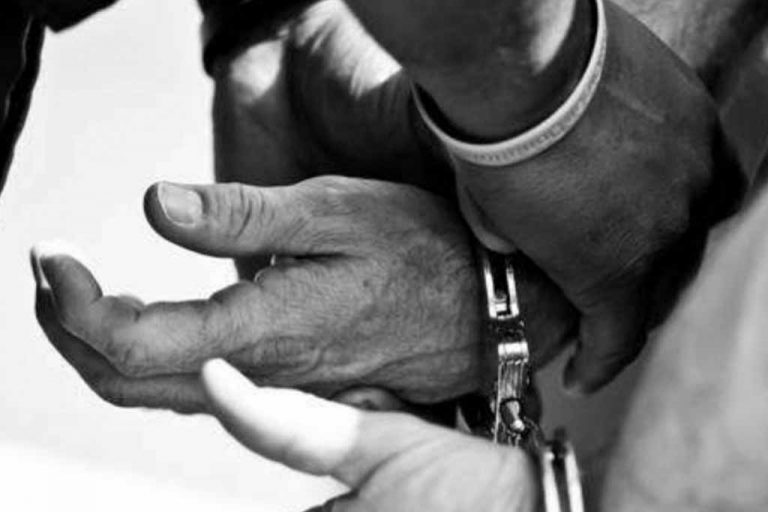
Six persons arrested in connection with the assault including SLPP MPs Sanath Nishantha and Milan Jayathilake and self-crowned social sctivist Dan Priyasad were remanded till May 27 as per the order of the Magistrate Court today.
Meanwhile, the Magistrate Court also ordered the Inspector General of Police (IGP) to appear before the Court to inquire into why Senior Deputy Inspector General of Police in charge of the Western Province Deshabandu Thennakoon was not transferred as instructed by the Attorney General.
Fawzia Amini advocates for rights of Afghan women and girls from London hotel room she’s been stuck in for nine months
One of Afghanistan’s top female judges has been honoured with an international human rights award while she continues her work to advocate for her country’s women and girls from a London hotel.
Fawzia Amini, 48, fled Afghanistan last summer after the Taliban takeover of the country. She had been one of Afghanistan’s leading female judges, former head of the legal department at the Ministry of Women, senior judge in the supreme court, and head of the violence against women court.https://41eca668776c702b37082f32d898cd1c.safeframe.googlesyndication.com/safeframe/1-0-38/html/container.html?n=0
Amini is one of three Afghan women who have received this year’s Lantos Prize, a prestigious international human rights award from the Lantos Foundation for Human Rights and Justice. Previous recipients include the Dalai Lama and the Hong Kong human rights activist Joshua Wong.
The other two recipients of the prize, awarded to the women on 18 May in Washington DC, are the country’s first female tech CEO, Roya Mahboob, and Khalida Popal, co-founder and captain of Afghanistan’s first women’s soccer team. All three live abroad.
Amini, her husband and the couple’s four daughters, have been stuck in a London hotel for almost nine months along with thousands of other Afghans the UK government pledged to resettle here. Government sources have admitted there are still 12,000 Afghans in hotels, a number that has changed little since the end of November 2021, although government sources told the Guardian that officials have been working as fast as possible to move Afghan families into homes of their own. The sources described hotels as a “first step” and a “stopgap”.
The sources added that more than 6,000 people had moved – or were in the process of being moved – into permanent accommodation since the first rescue flights in June 2021.
Afghanistan’s Taliban rulers have begun enforcing an order requiring all female TV news presenters in the country to cover their faces while on air, as part of a hardline shift that has drawn condemnation from rights activists. Most female presenters have been seen with their faces covered after the Taliban’s Ministry for the Propagation of Virtue and the Prevention of Vice began enforcing the decree.
Amini remains focused on trying to rescue 93 female judges and their families who are at risk in Afghanistan, a figure that has not reduced in recent months.
She also continues to advocate for the rights of women and girls in Afghanistan, participating in secret Zoom sessions to educate girls and women about their basic rights. These rights appear to be increasingly disregarded by the Taliban who have reneged on their promise to allow girls to attend secondary schools, and have issued new restrictions on freedom of movement for women outside the home saying that they must cover themselves from head to toe if they venture out.
Amini told the Guardian that while she was delighted to have received the prestigious human rights prize she was increasingly fearful about the safety of women judges and the lack of rights for women and girls.
She said that while she and her family were very grateful to the UK government for rescuing them and very appreciative of the kindness shown to them and other Afghans by the British people, they, and around 100 other Afghans in the same hotel, had no idea when they would be moved to their own homes.
“Our children are attending school and my husband and I are attending college to improve our English. This hotel has become our community and our house.”
Australia’s cricketers have raised ethical concerns about touring Sri Lanka but will support a decision from officials to proceed with next month’s tour. Australia are due to fly out to Sri Lanka next week, with the island country in the midst of an economical crisis and political unrest.
Sri Lanka was placed under a curfew early this month after protests turned deadly, and while those have been lifted rising inflation and shortages of key resources remain problematic.
Cricket Australia officials received further assurances last week that the tour was safe to go ahead, after a reconnaissance of the country by their own head of security in April also gave the go ahead.
Players are also buoyed by the fact Australia’s first tour to Pakistan in 24 years went off without any security dramas, despite instances of bloodshed in the country. But it is believed some players have stated unease about the morals around touring Sri Lanka in the current circumstances.
The three-match Twenty20 series will be played under lights in the capital of Colombo, in a nation where there are rolling power cuts. It is believed there was some recent consideration those matches could be changed to day games, but that has not yet been confirmed.
The team will also be moving across the nation for ODIs to be played in Pallekele before the Tests in Galle, at a time of significant fuel shortages. The Australian Cricketers Association are aware of the concerns of some players, but CEO Todd Greenberg said there was no suggestion its members would not tour.
“The players are very aware of the situation in Sri Lanka and it’s fair to say there is a level of discomfort around touring in conditions that contrast those faced by the people of Sri Lanka, such as rising food prices, power cuts and fuel rationing,” Greenberg told AAP.
“Ultimately our players want to continue to play cricket and will take direction, guidance and advice from CA about tour arrangements and planning.”
There is however also a belief that the tour going ahead can help Sri Lanka’s economy, with official figures showing inflation at a record of 33.8% year-on-year in April. Australia have not toured the country since 2016, and would be expected to drive big crowds in the matches in Colombo, Pallekele and Galle.
Led by Pat Cummins, Australia’s cricketers also drove a fundraising campaign with the United Nations during last year’s Indian Premier League at a time of a horror Covid-19 wave impacting the country. The charitable option is not as easy in Sri Lanka given the situation is not a humanitarian crisis, but players are open to the idea of offering support if possible.
“Our players are very fortunate to be able to ply their trade across the world, and as part of this, they form an affinity with the people from these countries,” Greenberg said.
“We saw an example of that last year when the players left the IPL in India during the Covid crisis and were genuinely shaken by they saw. Almost immediately, they coalesced their support behind a UNHCR campaign to raise funds and provide hospitals with much-needed oxygen.”