By: Nalinda Indatissa, PC.
Sri Lanka’s Anti-Corruption Act, No. 9 of 2023 was enacted to prevent corruption, detect it early, and punish offenders effectively. However, laws alone are not enough. They must be supported by systems that make corruption difficult.
One such system is a fully digitised payment system for all transactions—governmental and private.
1. Purpose of the Anti-Corruption Act
(Section 2 – Objects of the Act)
The Act aims to:
Prevent corruption
Promote transparency
Ensure accountability
Strengthen public confidence
A digitised payment system directly supports these goals by making money movements visible and traceable.
In simple terms:
The law wants transparency; digitisation delivers transparency.
2. Bribery and Corruption Depend on Cash
Most bribes are paid in cash because:
Cash leaves no record
Cash is hard to trace
When payments are digitised:
Bribes become harder to give and receive
Illegal payments leave electronic evidence
Digitisation makes bribery risky and detectable, which discourages corruption.
3. Unexplained Wealth Becomes Easier to Prove
The Act allows prosecution where a person:
Has wealth beyond known income
Cannot reasonably explain the source
Digitised payments help by clearly showing:
Lawful income
Actual spending
Hidden or suspicious transactions
This strengthens one of the most powerful provisions of the Act.
4. Electronic Records as Legal Evidence
The Act gives investigators wide powers to:
Obtain bank records
Trace financial transactions
Use documents and electronic data as evidence
Digitised payments:
Automatically generate reliable records
Reduce dependence on witnesses
Strengthen cases in court
Courts decide cases on facts, not rumours.
5. Protection of Public Funds
Many corruption offences involve:
Government payments
Procurement
Licences and approvals
When all government payments are digitised:
Money goes directly to the State
Officers cannot demand “extra payments”
Leakages are reduced
This protects public money, which belongs to the people.
6. Duty to Declare Assets
Public officers must declare:
Income
Assets
Liabilities
Digitised transactions help verify:
Whether declarations are true
Whether income matches lifestyle
False declarations become easier to detect.
7. Prevention Is Better Than Punishment
The new law focuses not only on punishment, but also on prevention.
Digitised payments:
Reduce human discretion
Remove middlemen
Create automatic accountability
Corruption is stopped before it starts.
Conclusion
The Anti-Corruption Act, No. 9 of 2023 provides the legal strength.
A digitised payment system provides the practical strength.
Together, they:
Reduce corruption
Improve enforcement
Protect honest officers
Restore public trust
Cash hides corruption. Digitisation exposes it.
If Sri Lanka is serious about enforcing its anti-corruption law, digitised payments must be treated as a legal necessity, not a luxury.
Digitised Payments and the Anti-Corruption Law of Sri Lanka
A few showers expected in several districts: Mainly fair weather to prevail elsewhere (Dec 22)

December 22, Colombo (LNW): A few showers may occur in Uva province and in Ampara, Batticaloa, Matale, Nuwara-Eliya and Hambantota districts, the Department of Meteorology said in its daily weather forecast today (22).
Mainly fair weather will prevail in the other areas of the island.
Fairly strong winds of about 40 kmph can be expected at times over Eastern slopes of the central hills and North-western province and in Ampara, Hambantota and Monaragala districts.
Misty conditions can be expected at some places in Western, Sabaragamuwa and Central provinces and in Galle and Matara districts during the early hours of the morning.
Marine Weather:
Condition of Rain:
Showers may occur at several places in the sea areas off the coast extending from Batticaloa to Galle via Hambantota.
Winds:
Winds will be north-easterly. Wind speed will be (30-40) kmph. Wind speed can increase up to (50-55) kmph at times in the sea areas off the coast extending from Balapitiya to Mannar via Colombo, Puttalam and from Matara to Pottuvil via Hambantota.
State of Sea:
The sea areas off the coast extending from Balapitiya to Mannar via Colombo, Puttalam and from Matara to Batticaloa via Hambantota will be rough at times. The other sea areas around the island will be moderate.
A Trillion-Rupee Hangover: Sri Lanka’s Ditwah Recovery Tests Fiscal Reality
By: Faraz Shauketaly
We’re looking at a number so large it’s enough to make even the most seasoned accountant reach for the smelling salts.
One trillion rupees. Yes, you read that correctly. Twelve zeros.
It seems the “Ditwah” relief and recovery effort is set to cost us roughly 3.5 billion US dollars over the next three years.
Now, in a country that’s still nursing the bruises of a sovereign default, that is quite a bit of “change” to find under the sofa cushions.
The December Dash
Our Deputy Treasury Secretary, Mr. A. K. Seneviratne, recently graced the Committee on Public Finance with some rather eye-watering details. For this month alone—December 2025—we’re looking at a 75 billion rupee bill.
Parliament has already scrambled to re-allocate 50 billion of that.
One can’t help but wonder if the legislative process is starting to feel more like a game of musical chairs, where the chairs are made of taxpayer money and the music never seems to stop.
The Road Ahead (Literally)
Looking into 2026, the spending spree continues. Parliament has given the nod to an extra 500 billion rupees. A cool 115 billion of that is earmarked for “strengthening slopes” on our key roads.
Given the state of some of our highways, one hopes we’re actually strengthening the hillsides and not just the bank accounts of the contractors.
Meanwhile, our friend at the Road Development Authority, Mr. Wimal Kandamby, tells us that rebuilding bridges could take 18 months or longer.
In Sri Lankan time, that’s practically an eternity—long enough for a bridge to be planned, opened, and probably have its first pothole before the ribbon is even cut.
Breaking the Law?
Now, here’s where it gets really interesting. We have something called “public finance law”—a quaint little set of rules designed to stop the government from spending us into oblivion. It sets a cap on primary spending at 13% of GDP.
But, in what can only be described as a masterpiece of fiscal gymnastics, Mr. Seneviratne has admitted we’ll blow past that limit by about 1.4% in 2025.
He assures us, with a straight face, that we’ll be back within the rules by 2027.
It’s a bit like a man promising to start his diet on Monday while currently sitting in the middle of an all-you-can-eat buffet.
Taxing Our Way Out
And how are we paying for all this? Well, through “recent tax reforms,” of course. These are expected to claw back an extra 0.3% of GDP from your pockets. It seems that whenever the government has a “Ditwah” problem, the taxpayer gets the “Ditwah” bill.
The Treasury officials were given a bit of a roasting at the Committee on Public Finance. They’re trying to maintain “fiscal discipline” while simultaneously re-allocating billions like they’re dealing cards at a casino.
Final Thoughts
One has to ask: is this a genuine recovery effort, or is it another case of the state doubling down on “unproductive” capital spending while the anti-austerity crowd cheers from the sidelines?
We’ve seen grand projects before that ended up as nothing more than expensive monuments to ego. Let’s hope this one trillion rupee “investment” actually results in bridges that stay up and slopes that stay put.
Sri Lanka’s 2026 Shock Test: Fiscal Space Meets Disaster Economics
By: Staff Writer
December 21, Colombo (LNW): Sri Lanka is entering 2026 facing a rare combination of opportunity and risk. The Government’s decision to deploy a Rs. 500 billion supplementary estimate for post-Cyclone Ditwah recovery, alongside a request for $200 million under the IMF’s Rapid Financing Facility (RFF), has ignited debate over whether the economy can withstand another major shock so soon after emerging from a sovereign debt crisis.
President and Finance Minister Anura Kumara Dissanayake has dismissed warnings of an impending economic collapse as alarmist, arguing that the country’s strongest fiscal performance on record has created sufficient space to absorb disaster-related spending without destabilising macroeconomic fundamentals. According to the Government, the supplementary allocation will be financed without increasing borrowing limits or adding to public debt—a claim that marks a sharp departure from Sri Lanka’s historical reliance on overdrafts and deficit financing.
The fiscal turnaround is undeniable. Government revenue in 2025 reached 15.9% of GDP, the highest since 2007, while the budget deficit narrowed to 4.5%—the lowest since 1977. For the first time in post-Independence history, revenue collections exceeded annual targets, crossing Rs. 5.12 trillion by early December. Most strikingly, the Treasury moved from chronic overdrafts to a surplus of Rs. 1.2 trillion by November 2025, reversing years of fiscal fragility.
These gains have allowed the Government to mobilise nearly Rs. 700 billion for recovery—combining the supplementary estimate, redirected capital expenditure, and Treasury surpluses—without breaching parliamentary borrowing ceilings. Sri Lanka also recorded a primary surplus of 3.8% of GDP in 2025, the highest ever, a milestone rarely achieved even during periods of economic stability.
Yet the real test lies ahead. Cyclone Ditwah struck at a moment when the economy was stabilising but not fully resilient. The President himself acknowledged that while Sri Lanka can now manage shocks better than before, it still lacks the depth to absorb large-scale disruptions without consequences. Injecting Rs. 500 billion into the domestic economy risks reigniting inflationary pressures and widening the balance-of-payments gap, particularly given the import intensity of construction and reconstruction activities.
Officials estimate that road construction alone carries an 18% foreign exchange component. As recovery spending accelerates, demand for dollars will inevitably rise, placing pressure on reserves unless matched by external inflows. This explains the urgency behind the IMF RFF request and anticipated support from the World Bank and Asian Development Bank. The Government estimates that an additional $500 million in external financing will be needed in 2026 to prevent balance-of-payments stress.
The administration is attempting to mitigate these risks through phased spending, tighter project sequencing, and the appointment of a special commission to channel funds into productivity-enhancing investments rather than pure consumption. The forthcoming World Bank damage assessment on Ditwah is expected to play a critical role in prioritising reconstruction needs and avoiding wasteful expenditure.
Encouragingly, external sector indicators remain supportive. Foreign direct investment inflows are projected to reach record highs, tourism earnings are expected to surpass the 2018 peak of $3.8 billion, and merchandise exports are forecast to approach $18 billion. These inflows could provide a crucial buffer as recovery spending gathers pace.
However, fiscal discipline alone will not guarantee success. Implementation risks loom large. Disbursement delays, weak local-level coordination, and governance challenges could blunt the effectiveness of relief programmes. As Sri Lanka heads into 2026, the economy’s resilience will depend not only on how much money is spent, but how efficiently, transparently, and strategically it is deployed
Cyclone Shock Puts Sri Lanka’s Vegetable Farming at Risk

By: Staff Writer
December 21, Colombo (LNW): Sri Lanka’s vegetable cultivation sector is facing a precarious future following the widespread devastation caused by the recent cyclone, which has damaged nearly 175,000 hectares of agricultural land about 7.6 percent of the country’s total cultivable area. While paddy losses dominate the headlines, the destruction of vegetable-growing areas threatens a more immediate impact on household food security, market prices, and rural livelihoods.
Official assessments compiled by the Department of Agriculture in collaboration with the Food and Agriculture Organization (FAO) reveal that between 7,000 and 8,000 hectares of vegetable cultivation have been wiped out. Nuwara Eliya, the country’s main upcountry vegetable hub, has recorded losses exceeding 1,000 hectares, followed by Badulla with nearly 930 hectares. Significant damage has also been reported in Anuradhapura, Kurunegala, Trincomalee, Batticaloa, and Puttalamregions that collectively supply a large share of low-country vegetables.
The immediate consequence is a sharp contraction in supply. Vegetables, unlike paddy, have shorter cultivation cycles and are highly sensitive to waterlogging. Flooded soils, damaged seedbeds, and destroyed irrigation channels mean that even farmers willing to replant face delays of several weeks. This gap is already translating into price volatility in urban markets, disproportionately affecting low-income consumers.
Beyond prices, the cyclone has exposed deeper structural vulnerabilities. Satellite data shows flood inundation levels of 13–16 percent in districts such as Mannar, Mullaitivu, Batticaloa, and Trincomalee, suggesting that climate-driven shocks are becoming more frequent and geographically widespread. Without adaptive measures, vegetable cultivation in these regions could become increasingly unviable.
The government’s short-term response must therefore focus on rapid recovery rather than long-term rhetoric. Immediate provision of quality seeds, fertilizer, and short-duration vegetable varieties is critical to enable re-cultivation within weeks. Emergency rehabilitation of minor irrigation systems and drainage channels would allow farmers to resume planting before the next seasonal window closes.
Equally important is financial relief. With 38 percent of rural households already burdened by debt, according to UNDP data, many vegetable farmers borrowed heavily assuming a successful Maha harvest. Temporary debt moratoriums, low-interest recovery loans, and targeted cash grants could prevent farmers from abandoning cultivation altogether.
If swift action is taken, vegetable farming can recover faster than other crops. But delays risk turning a climate shock into a prolonged food supply crisis, undermining both farmer incomes and national food security.
World Bank Bets on Sri Lanka’s Fragile Digital Leap

By: Staff Writer
December 21, Colombo (LNW): The World Bank’s approval of a US$50 million Digital Transformation Project for Sri Lanka signals renewed international confidence in the country’s post-crisis reform agenda.
But the success of this ambitious digitisation push will hinge less on technology itself and more on governance discipline, execution capacity, and political will areas where Sri Lanka’s new National People’s Power (NPP) government faces early credibility challenges.
The project aims to modernise public service delivery through an integrated citizen services portal, secure inter-agency data-sharing systems, a digital document locker, and a scalable government cloud platform.
In economic terms, these investments promise efficiency gains, reduced transaction costs, and enhanced transparency critical levers for a country struggling with fiscal stress, low productivity, and eroded investor confidence.
If implemented effectively, digitisation could yield measurable economic returns. Reduced bureaucratic delays can improve the ease of doing business, while digital public infrastructure can curb leakages, improve tax compliance, and streamline welfare delivery.
The World Bank also expects spillover benefits for Sri Lanka’s technology ecosystem, with targeted support for start-ups and mid-sized IT firms projected to attract around US$10 million in private investment, boost exports, and create skilled employment.
However, risks loom large. Sri Lanka’s track record with large-scale public sector IT projects is mixed, often marred by cost overruns, vendor dependency, and underutilisation. Weak inter-ministerial coordination, limited digital literacy within the public service, and resistance to institutional change could dilute the project’s impact.
Moreover, data privacy, cybersecurity vulnerabilities, and the absence of a strong regulatory framework pose systemic risks if not proactively addressed.
Political communication is another weak link. The NPP government has campaigned on reformist rhetoric but has yet to convincingly “walk the talk.” Inconsistent messaging, limited stakeholder engagement, and a lack of clear accountability mechanisms risk undermining public trust in digitisation initiatives especially those involving sensitive personal data.
In this context, the World Bank’s monitoring role becomes critical. Robust checks and balances clear milestones, transparent procurement, independent audits, and outcome-based disbursements are essential to ensure value for money and safeguard public interest.
Continuous capacity-building for civil servants and citizens must move beyond token training programmes to sustained institutional reform.
The project’s emergency-response component, designed to improve disaster preparedness amid rising climate risks, further underscores the stakes. Digital systems can save lives during crises—but only if they function reliably under pressure.
Ultimately, the World Bank’s investment offers Sri Lanka an opportunity to leapfrog administratively and economically. Whether this becomes a transformative success or another underwhelming reform experiment will depend on disciplined implementation, credible leadership, and vigilant external oversight.
US Safety Manufacturer Plants Long-Term Industrial Bet in Sri Lanka
By: Staff Writer
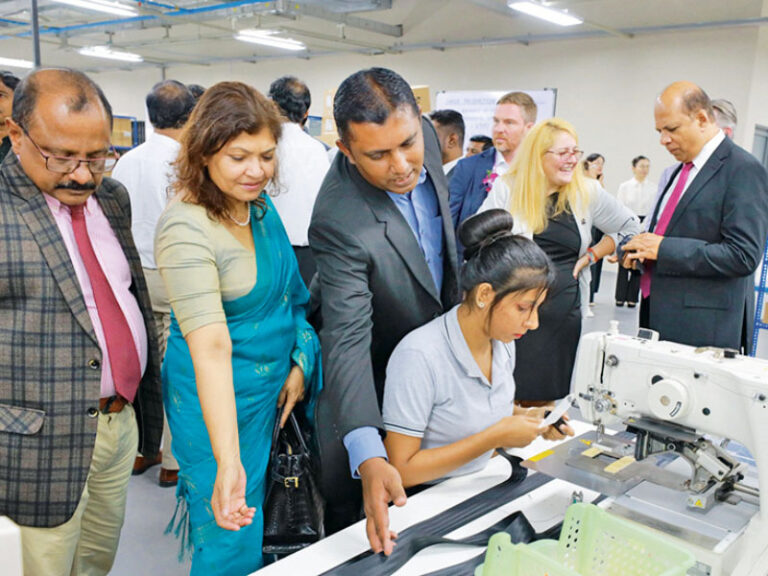
December 21, Colombo (LNW): Shield Restraint Systems Ltd. has formally commenced operations at its newly built advanced manufacturing facility at the Export Processing Zone (EPZ) in Wathupitiwala, Nittambuwa, marking a notable step forward in Sri Lanka’s push to attract high-value foreign direct investment into export-oriented manufacturing.
The inauguration was attended by senior executives from the United States, including TransDigm Inc. Executive Vice President Kevin McHenry and Shield Restraint Systems President Dennis Pursel, underlining the strategic importance of the Sri Lankan facility within the company’s global supply chain. Sri Lankan officials led by Board of Investment (BOI) Chairman Arjuna Herath and Director General Renuka Weerakone were also present, alongside representatives from the US Department of Commerce and the US Embassy, highlighting growing bilateral economic cooperation.
Shield’s Sri Lankan operation will manufacture specialised safety restraint products used in child safety seats, commercial vehicles, heavy machinery, agricultural equipment, and amusement park ride products that demand high precision and strict compliance with international safety standards. The investment introduces a relatively new manufacturing segment to Sri Lanka, moving beyond traditional apparel and rubber-based exports into safety-critical industrial components.
The project represents an initial investment of USD 8.5 million and includes a modern 100,000 square-foot facility. Although operations are currently running at around 10% capacity, full-scale production is expected to generate approximately 500 direct jobs and annual export revenues of nearly USD 50 million. Beyond employment, the facility is expected to contribute meaningfully to tax revenues and foreign exchange inflows at a time when Sri Lanka remains focused on export-led recovery.
Company officials cited Sri Lanka’s strategic location, access to global shipping routes, and a skilled, adaptable workforce as decisive factors in selecting the country. The presence of sister company AmSafe Bridport Ltd. in Sri Lanka also provided confidence regarding local manufacturing capabilities and operational resilience.
However, the project also highlights systemic challenges. Senior management stressed the need for improved administrative efficiency, transparent regulatory processes, and faster approvals to sustain investor confidence. Delays in policy reforms and the absence of a fully functional “one-stop” investment facilitation mechanism remain concerns for new entrants.
Despite these constraints, Shield has signalled long-term intent, with discussions underway for additional investments exceeding USD 17 million. If supported by consistent policy execution, the project could position Sri Lanka as a competitive South Asian hub for specialised industrial manufacturing rather than low-margin assembly work.
Double Standards by AKD Government

By Adolf
Aruna Shantha visited Canada in October 2025 to attend a BERN Union meeting. He obtained Ministry approval for a five-day visit. However, he drew subsistence allowances from the Corporation for nine days and remained overseas for a total of twelve days, accompanied by his wife.
From the date of his appointment in November 2024, he has been drawing a full salary and associated perks from the Corporation while simultaneously continuing to receive a salary from Sabaragamuwa University, where he was employed as a Professor. Technically a government servant is legally prohibited from drawing two salaries concurrently. This constitutes a serious violation of public service regulations.
These matters have already attracted audit queries from the Government Auditor as well as from the line Ministry (PED). Despite this, the queries remain inadequately addressed, and the individual continues in office without corrective action.
Further, he reinstated a JVP member who had been interdicted in connection with a fraud involving the Hayleys Group. This was done without a formal inquiry and despite an ongoing forensic audit and a pending CID investigation. What is most troubling is the inconsistency in AKDs standards. Similar allegations are being levelled against a former Head of State where restrictions hardly exists, while comparable conduct appears to have been committed by an appointee under the present administration, with Anura Kumara Dissanayake (AKD) now serving as President. Accountability and the rule of law cannot be applied selectively in this administration . The continuation of defeats in the corporative councils is a clear case for action .
Reference
https://youtu.be/StDvRk4-Y_I?si=BM8V02PC7drKl_GA
Health Minister Studies India’s PPP Models During WHO Summit Visit
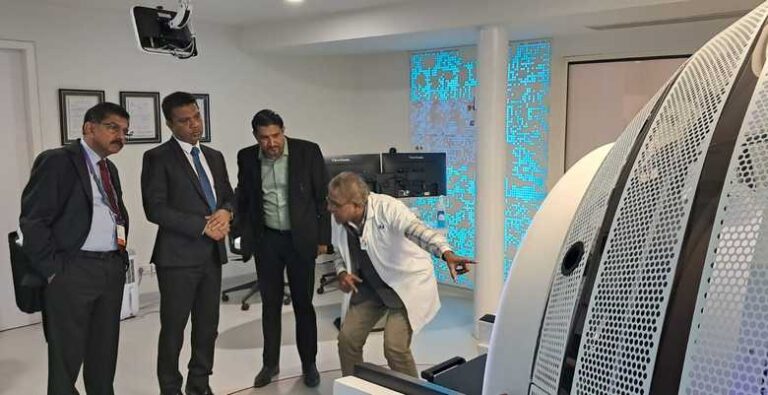
December 21, Colombo (LNW): Sri Lanka’s Minister of Health and Mass Media, Nalinda Jayatissa, led an official delegation to New Delhi from December 17 to 19 to take part in the 2nd WHO Traditional Medicine Global Summit, the Indian High Commission in Colombo confirmed.
The summit, held at Bharat Mandapam under the theme “Restoring Balance: The Science and Practice of Health and Well-Being”, was jointly organised by the World Health Organisation and India’s Ministry of Ayush.
Minister Jayatissa took part in a ministerial roundtable, where he highlighted Sri Lanka’s extensive heritage in Ayurveda and traditional healing systems, sharing the country’s experiences in integrating these practices into modern healthcare.
During his visit, the minister held bilateral meetings with India’s Minister of State for Health and Family Welfare, Anupriya Patel, and Prataprao Ganpatrao Jadhav, Minister of State overseeing the Ministry of Ayush. Discussions focused on enhancing collaboration in healthcare, including regulatory alignment, joint research initiatives, and programmes for professional training and capacity building in traditional medicine.
In addition, Minister Jayatissa visited Apollo Hospitals to examine successful public-private partnership models and explore innovative practices in healthcare delivery, aiming to draw lessons applicable to Sri Lanka’s own health system. The trip reinforced ongoing efforts to strengthen ties between the two countries in both modern and traditional healthcare sectors.
PM Holds Talks with UNICEF on Rebuilding Disaster-Affected Schools
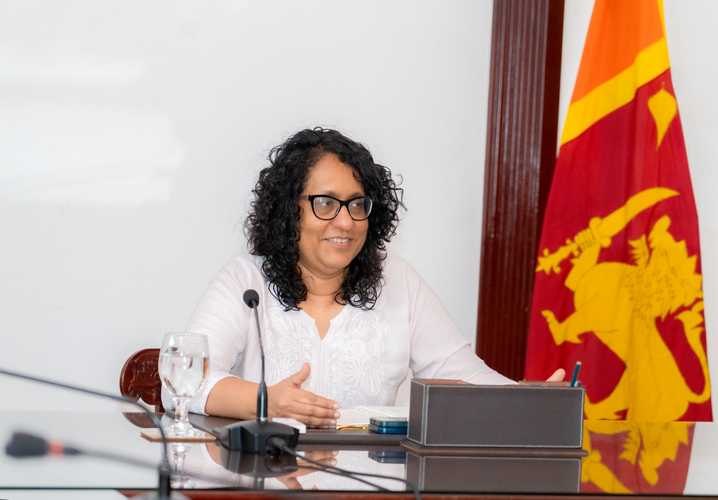
December 21, Colombo (LNW): Prime Minister Harini Amarasuriya met with a UNICEF delegation at the Prime Minister’s Office yesterday (20) to discuss efforts to restore schools damaged by the recent natural disaster.
During the discussions, the Prime Minister outlined government measures aimed at safeguarding students and rehabilitating the school system, while acknowledging the difficulties faced in the recovery process. She emphasised that reopening schools in landslide-prone areas could endanger students, and authorities are identifying such schools for relocation to safer sites based on scientific assessments.
The Prime Minister also noted that financial support has been provided to affected students, enabling parents to send their children back to school without added economic pressure. She highlighted the vital role schools play in promoting children’s mental health and well-being in the aftermath of disasters.
Key areas of focus include relocating vulnerable schools, repairing and upgrading infrastructure, merging certain schools for joint operations, integrating digital learning solutions, and providing specialised transport facilities. Long-term strategies are being developed to ensure these measures are sustainable and effective.
UNICEF officials praised the government’s commitment to education recovery and reaffirmed their support for ongoing and future initiatives. The meeting also explored opportunities for closer collaboration on educational programmes in disaster-affected regions.
The delegation included UNICEF representatives Emma Brigham, Lakshmi Sureshkumar, Nishantha Subash, and Yashinka Jayasinghe. From the Ministry of Education, Secretary Nalaka Kaluwewa, Director Dakshina Kasturiarachchi, and Deputy Directors Kasun Gunarathne and Udara Dikkumbura attended the session.