By: Staff Writer
December 18, Colombo (LNW): As global competition for technology talent intensifies, Sri Lanka’s IT and BPM industry is undergoing a strategic rethink of how it attracts, retains, and motivates skilled professionals, according to SLASSCOM’s 2025 Compensation and Benefits Survey.
The high response rate 72% of companies returning from last year’s survey signals a strong level of industry trust in the findings, while also providing a reliable snapshot of how organisations are responding to post-crisis realities. Rather than continuing aggressive salary-driven strategies, companies are now pursuing more balanced and targeted approaches.
A key shift identified in the survey is the movement away from blanket salary increases. Following extraordinary pay adjustments during the economic crisis, organisations are now focusing on differentiated rewards. IT firms, in particular, are planning to reward high performers more aggressively from 2026, while BPM firms expect relatively higher overall increments as competition for operational talent grows.
This evolution reflects a broader trend toward performance-based and skill-driven reward systems. Companies are increasingly aligning compensation with scarce and high-impact capabilities, signalling a departure from traditional, role-based structures. This change is also influencing workforce planning, with reskilling becoming essential as demand for certain legacy roles declines.
The survey highlights rising demand for specialised IT roles aligned with global technology trends, while traditional design and publishing functions are losing relevance unless supported by strong digital skill sets. This underscores the urgency for continuous learning and adaptability within the workforce.
Although organisations are introducing flexible work arrangements and personalised benefits, cash compensation remains the dominant priority for employees. Still, companies are investing more heavily in holistic employee experiences, including career growth pathways, learning opportunities, and well-being initiatives, recognising that long-term retention depends on more than pay alone.
Another notable development is the relative easing of employee migration pressures. While talent mobility remains visible especially among professionals seeking overseas education—it is no longer the industry’s most immediate concern. This suggests improved local opportunities and stabilising economic conditions are beginning to influence workforce decisions.
From an international standpoint, the report highlights growing competition among Global Business Services destinations. The emergence of two new outsourcing-friendly countries in 2025 has intensified the race to attract GCC investments. For Sri Lanka, this means maintaining a careful balance between cost efficiency and high-quality talent delivery.
The expanding presence of Global Capability Centres offers a strong foundation. With more than half of survey participants operating as GCCs, the sector continues to play a vital role in foreign exchange earnings and employment generation. SLASSCOM emphasised that strategic, data-driven reward decisions will be critical in ensuring Sri Lanka remains a compelling destination in an increasingly crowded global market.
Global Competition Pushes Sri Lanka Tech Sector to Rethink Rewards

High Court Rules Against Former Magistrate in Appeal Over “Gota Go Gama” Attack

December 18, Colombo (LNW): The Colombo High Court has overturned the earlier decision by the former Chief Magistrate of Colombo, finding that the rejection of a private complaint against ex-Senior DIG Deshabandu Tennakoon was legally unsound.
The case concerns the violent incident at the “Gota Go Gama” protest site in Galle Face, Colombo, on 9 May 2022, during which Tennakoon was serving as Senior Deputy Inspector General of Police overseeing the Western Province.
Judge Manjula Tilakaratne delivered the High Court’s ruling after hearing an appeal lodged by a civil activist, who had challenged the original dismissal of the complaint. The judgement emphasises adherence to legal procedures in reviewing allegations of misconduct involving senior law enforcement officials.
ADB Announces $40 Million Emergency Trade Facility to Aid Sri Lanka Post-Cyclone Ditwah
December 18, Colombo (LNW): The Asian Development Bank (ADB) has unveiled a $40 million emergency funding facility under its Trade and Supply Chain Finance Program (TSCFP) to assist Sri Lanka in the aftermath of Cyclone Ditwah, which caused widespread flooding and damage to homes, infrastructure, and livelihoods.
The facility is designed to facilitate the import of essential goods such as food, medicines, and relief supplies, ensuring that affected communities receive immediate support while the country undertakes reconstruction efforts.
This allocation supplements the existing $200 million in TSCFP resources already available to Sri Lanka. To accelerate delivery, ADB has collaborated with long-standing risk partners, Munich Re and Swiss Re, to provide additional guarantees. Funds will be disbursed through TSCFP’s network of six local partner banks, allowing for rapid mobilisation of resources to meet urgent needs.
“Cyclone Ditwah has severely disrupted the supply of critical goods, compounding existing challenges,” said Takafumi Kadono, ADB Country Director for Sri Lanka. “By leveraging partnerships with insurers and local banks, we are helping to keep supply chains open for essential imports. This initiative is vital for both immediate relief and longer-term recovery.”
The recent cyclone brought heavy rains and extensive flooding, causing significant damage to housing, roads, and agricultural areas. The new facility is expected to strengthen the flow of emergency supplies, medical aid, and reconstruction materials to the hardest-hit regions.
ADB emphasised that this initiative builds on its previous crisis support efforts, including emergency trade finance during Sri Lanka’s economic challenges and assistance for vaccine imports during the COVID-19 pandemic. Backed by its AAA credit rating, TSCFP delivers loans and guarantees through over 200 partner banks, supporting trade diversification and sustainable growth across Asia and the Pacific.
Since its inception in 2009, the programme has facilitated more than $74 billion in trade, focusing on sectors that promote regional integration and long-term development. ADB, founded in 1966 and owned by 69 members, continues to support inclusive, resilient, and sustainable growth in the region through innovative financing and strategic partnerships.
Investigation Launched into Ondansetron After Reports of Adverse Reactions

December 18, Colombo (LNW): The National Medicines Regulatory Authority (NMRA) has initiated a formal inquiry into the quality and safety of the anti-nausea drug Ondansetron, following reports of complications among patients.
Dr Ananda Wijewickrama, NMRA Chairman, confirmed that samples are undergoing analysis at both the Medical Research Institute in Borella and the NMRA’s own laboratories. The pharmaceutical company responsible for importing the drug has also requested that additional testing be carried out at an accredited overseas facility.
In the meantime, the Ministry of Health has suspended the use of all injectable products produced by the Indian manufacturer linked to the affected batch. Dr Asela Gunawardena, Director General of Health Services, emphasised that investigations are ongoing and it has not yet been confirmed whether recent patient deaths are directly related to the injections.
The issue came to light after several patients at Kandy National Hospital experienced complications following administration of Ondansetron on December 12. Laboratory tests on patient blood samples revealed the presence of microorganisms, prompting an immediate halt to the use of the implicated batch.
Authorities have also launched a separate inquiry to examine a potential connection between the injections and the deaths of two patients at the National Institute of Infectious Diseases, both of whom had received the drug. Health officials stressed that patient safety remains the top priority as investigations continue.
Canada Pledges Over CAD $2 Million for Cyclone Ditwah Relief in Sri Lanka

December 18, Colombo (LNW): Following the devastating impact of Cyclone Ditwah, which triggered widespread flooding and landslides across Sri Lanka, Canada has announced substantial humanitarian support to assist affected communities.
On December 16, Randeep Sarai, Canada’s Secretary of State for International Development, confirmed an emergency funding package exceeding CAD $2 million to aid relief operations for thousands of families displaced or affected by the disaster.
The allocation of funds includes CAD $1.4 million to the World Food Programme to ensure immediate access to food supplies, and CAD $350,000 to World Vision Canada, enabling the provision of emergency shelters, essential relief items, and water, sanitation, and hygiene support.
A further CAD $215,000 will bolster the Sri Lanka Red Cross’s relief operations via the Emergency Disaster Assistance Fund, while nearly CAD $70,000 will be distributed through the Canada Fund for Local Initiatives to address urgent needs at the community level.
Canada also confirmed the activation of pooled humanitarian funds, including the UN Central Emergency Response Fund, the Red Cross Disaster Response Emergency Fund, and the WFP Immediate Response Account, to reinforce Sri Lanka’s overall disaster response.
Highlighting its ongoing partnership with Sri Lanka, Canada reiterated that in the 2024–2025 fiscal year it provided CAD $8.1 million in bilateral development assistance, underlining its long-term commitment to supporting recovery and resilience initiatives in the country.
Speaker Certifies Three Key Legislative Amendments in Parliament
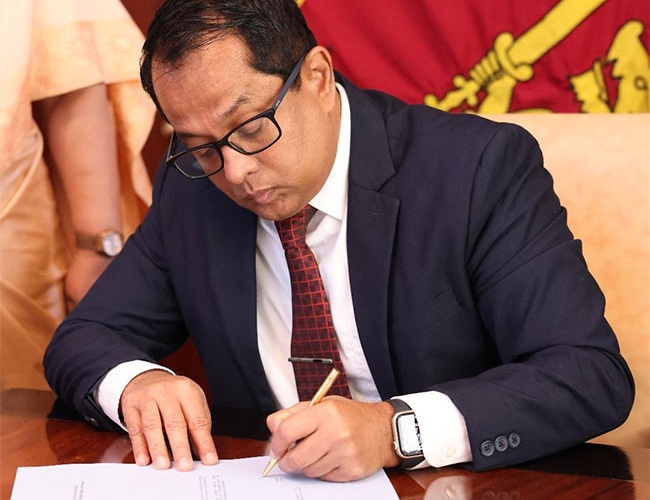
December 18, Colombo (LNW): Parliamentary Speaker Dr Jagath Wickramaratne announced today that he formally endorsed the certificates for three Bills yesterday, signalling the final stage before they come into effect.
The legislation includes amendments to the Social Security Contribution Levy, the Betting and Gaming Levy, and the Strategic Development Projects framework.
The Social Security Contribution Levy (Amendment) Bill, originally presented to Parliament on October 09, 2025 and passed on December 05, seeks to revise provisions in the Social Security Contribution Levy Act, No. 25 of 2022, strengthening the framework for social security contributions.
Meanwhile, the Betting and Gaming Levy (Amendment) Bill, also passed on December 05, introduces changes to Section 2 of the principal law. Notably, the amendments adjust the levy on gross collections from bookmakers and gambling businesses to 18 per cent from October 01, 2025, limit a previously applied 10 per cent gross collection levy to the period between April 2023 and October 2025, and increase the entrance levy for Sri Lankan casino visitors to USD 100.
The Strategic Development Projects (Amendment) Bill, which entered Parliament on November 14, 2025 and was approved on December 05, introduces significant reforms to the Strategic Development Projects Act, No. 14 of 2008. Among the changes are a reduction of the maximum tax holiday from 25 years to 10 years, a new process for project approval requiring ex-ante cost-benefit analysis by the Ministry of Finance, strengthened ex-post monitoring by the Board of Investment with powers to impose penalties or revoke concessions, mandatory tax return submissions, and an annual report on tax expenditures related to these projects.
Following the Speaker’s certification, the Bills will officially become the Social Security Contribution Levy (Amendment) Act, No. 24 of 2025; the Betting and Gaming Levy (Amendment) Act, No. 25 of 2025; and the Strategic Development Projects (Amendment) Act, No. 26 of 2025.
December Tourist Arrivals Push Sri Lanka Close to 2.2 Million Visitors for the Year

December 18, Colombo (LNW): Sri Lanka has seen a strong influx of overseas visitors in early December, with more than 93,000 tourists entering the country during the first half of the month, according to figures released by the Sri Lanka Tourism Development Authority.
The Authority said that 93,031 travellers arrived between December 01 and 14, 2025, reflecting sustained momentum in the tourism sector as the year draws to a close. India remained the leading source market during this period, accounting for over 21,000 arrivals.
Tourist flows were also bolstered by steady numbers from several key long-haul and regional markets, including Russia, the United Kingdom, Germany and China, highlighting the country’s broadening international appeal.
With these latest arrivals added to earlier figures, total visitor numbers from the beginning of January to mid-December 2025 have reached approximately 2.2 million, reinforcing tourism’s continued recovery and its growing contribution to the national economy.
High Court Fixes New Date in Krrish Deal Case Involving Namal Rajapaksa

December 18, Colombo (LNW): The Colombo High Court has scheduled the next hearing in the case concerning Sri Lanka Podujana Peramuna (SLPP) MP Namal Rajapaksa and the disputed Krrish development project for February 16, 2026.
The matter was taken up today before High Court Judge Nadee Aparna Suwadugoda, during which progress was reported on the exchange of case material.
Representatives of the Attorney General’s Department formally handed over a fresh set of documents to the defence as part of ongoing proceedings.
After reviewing the submissions and noting the stage of the case, the court directed that the matter be listed again on the newly fixed date next year, allowing time for further examination of the material placed before court.
US Firms Step Up Support for Sri Lanka After Cyclone Ditwah

December 18, Colombo (LNW): United States Ambassador to Sri Lanka Julie Chung has drawn attention to the role being played by American companies and institutions in supporting the country’s recovery following the devastation caused by Cyclone Ditwah.
In a message shared on social media, the Ambassador said a number of US-based organisations have mobilised resources to assist relief and rebuilding efforts. She noted that technology providers such as Starlink and Microsoft, together with the Massachusetts Institute of Technology, are contributing practical support on the ground.
Starlink has extended complimentary connectivity to both new and existing users until the end of December 2025 and has also supplied 145 satellite units to help strengthen communications during emergency operations.
At the same time, Microsoft is working in partnership with MIT on a new initiative designed to gather reliable information on businesses and properties damaged by the cyclone, a move intended to improve planning and aid distribution.
Ambassador Chung said these actions demonstrate the spirit of innovation, partnership and generosity that characterises American engagement, adding that US organisations remain committed to standing with Sri Lanka as it works towards recovery and resilience.
Cyclone Threatens Nine-Arch Bridge Area as Tourism Project Faces Delays

December 18, Colombo (LNW): The Central Cultural Fund has raised concerns over an increased risk of landslides in the vicinity of the iconic Nine-Arch Railway Bridge in Modara, following severe weather conditions brought on by Cyclone Ditwa. The area is a major draw for both domestic and international visitors.
According to the Fund, several nearby structures have suffered damage, disrupting ongoing work on a planned tourism development around the bridge. The initiative, which includes electrification works on the historic railway structure and the creation of visitor facilities, represents an investment of about Rs. 300 million and was originally expected to be completed this year.
Director General of the Central Cultural Fund, Dr Nilan Cooray, said the extreme weather had inevitably slowed progress but stressed that the project remains a priority for the Government. He noted that safety assessments are being carried out alongside restoration work, and that authorities are aiming to fast-track construction once conditions stabilise.
Despite the setbacks, Dr Cooray expressed confidence that the upgraded site could be opened to the public next year, offering a safer and more organised experience for tourists while preserving the heritage value of the landmark.