December 18, Colombo (LNW): Sri Lanka is failing to fully capitalise on its mineral resources, with exports reaching only about half of their estimated potential, according to new research highlighted by the Pathfinder Foundation. Using figures from the ITC Export Potential Map, the study estimates that the country could earn around US$778 million annually from mineral exports, yet current earnings stand at roughly US$389 million.
The findings suggest that with greater investment in value-added processing and downstream industries, export revenues could rise far more sharply, potentially approaching US$2 billion a year. Analysts argue that such growth would require targeted policy reforms, modern technology and stronger investor confidence.
The observations were shared at the launch of two reports examining Sri Lanka’s mining prospects and its transition towards clean energy and net-zero goals. Speaking at the event, Australian High Commissioner Matthew Duckworth said Australia’s own experience showed how strategic investment in minerals and renewable energy can reshape an economy.
He noted that mining plays a central role in Australia, contributing around a tenth of national output and generating well over half of export income. In his view, Sri Lanka holds comparable promise, particularly as global demand for critical minerals continues to rise.
Mr Duckworth pointed to Sri Lanka’s high-quality graphite deposits, which are increasingly sought after for advanced technologies, as well as mineral sand reserves in the northern and eastern regions. He described these resources as an opportunity for the country to diversify away from traditional industries and build new export strengths.
Drawing parallels between the two nations, he added that Australia is keen to see Sri Lanka benefit from similar developments in both mining and renewable energy, noting that the two countries share common interests in promoting sustainable growth and cleaner energy pathways.
Untapped Mineral Wealth Could Transform Sri Lanka’s Export Landscape: Pathfinder Report
Police Probe Finds Lapses in Handling of Crash Involving Former Speaker Ranwala
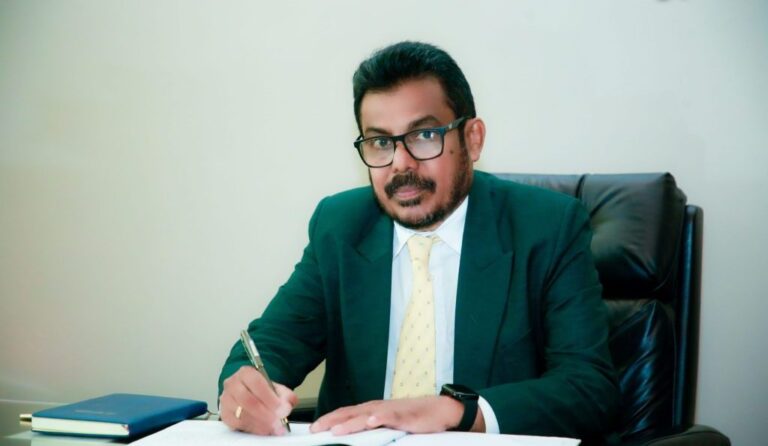
December 18, Colombo (LNW): An internal police inquiry has found that several officers attached to the Sapugaskanda Police Station, including senior officials, failed to follow established procedures in connection with a road traffic accident involving former Speaker and Member of Parliament Ashoka Ranwala.
The collision took place on December 11, 2025 near the Denimulla Junction in Sapugaskanda, when a jeep driven by Ranwala was involved in a crash with a motorcycle and a car. The incident drew public attention and prompted questions over how the matter was handled at the local police level.
On the instructions of the Inspector General of Police, the Deputy Inspector General overseeing the Traffic Division carried out a review to assess whether the response and subsequent investigation by station officers met required standards.
The findings pointed to serious shortcomings, indicating that the Officer-in-Charge of the station, the Traffic OIC who handled the case, as well as senior supervisory officers, had neglected key responsibilities and failed to act in line with due process.
In light of these conclusions, the Inspector General of Police has directed the Police Special Investigation Unit to launch a preliminary inquiry into the conduct of the officers concerned, with disciplinary measures to follow if the allegations are substantiated.
Government Moves Ahead with Fresh Global Image for Sri Lanka Tourism

December 18, Colombo (LNW): The Government has begun the process of repositioning Sri Lanka on the global tourism map, with tenders already invited to develop a new national brand, Minister of Tourism and External Affairs Vijitha Hearth informed Parliament.
Addressing the House this (18) morning, the Minister said discussions are underway with industry representatives, creative agencies and other key stakeholders to shape a modern and compelling identity for the country.
He noted that while the rebranding initiative would require a significant financial commitment, the authorities are determined to proceed, viewing it as a long-term investment in reviving and strengthening the tourism sector.
The Minister added that the proposed branding effort aims to better reflect Sri Lanka’s diversity, resilience and appeal to emerging travel markets, as the country seeks to compete more effectively on the international stage.
Sri Lanka and China Reaffirm Partnership as Recovery Efforts Gather Pace
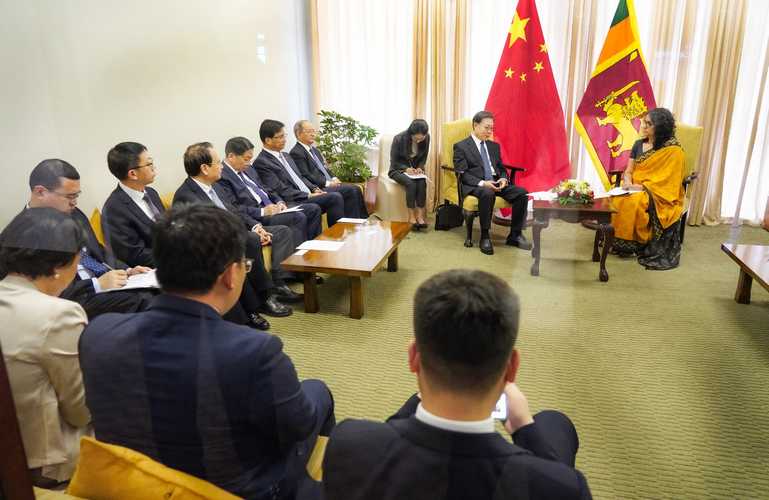
December 18, Colombo (LNW): Prime Minister Dr Harini Amarasuriya has conveyed Sri Lanka’s gratitude to the Government of China for its swift and practical support during the country’s recent disaster response, underscoring the value of long-standing ties between the two nations.
Her remarks were made during a meeting at the Parliamentary complex with Wang Dongming, Vice Chairman of the Standing Committee of China’s National People’s Congress. Discussions focused on the depth of bilateral relations and explored avenues to broaden cooperation in the period ahead, according to the Prime Minister’s Office.
The Prime Minister noted that Sri Lanka has now moved beyond immediate rescue operations and entered a phase centred on recovery and rebuilding. She also acknowledged the contribution of local volunteers and the assistance extended by international partners during the emergency response.
Vice Chairman Wang expressed sympathy for those affected by the disaster and reaffirmed China’s intention to remain engaged beyond the initial relief stage. He stated that Beijing stands ready to support Sri Lanka’s reconstruction efforts and reiterated China’s broader commitment to assisting the country’s social and economic progress, while working closely together in regional and global forums.
The talks also revisited key outcomes of the Prime Minister’s recent visit to China, including cooperation on school uniform supplies, fertiliser support, digital education initiatives, road development projects, and ongoing collaboration in education, healthcare and cultural exchange.
Both parties concluded the meeting by reaffirming their shared commitment to deepening bilateral relations, highlighting mutual trust, understanding and a friendship built over many years.
Parliament to Table Rs. 500 Billion Emergency Funding Plan After Weather Crisis
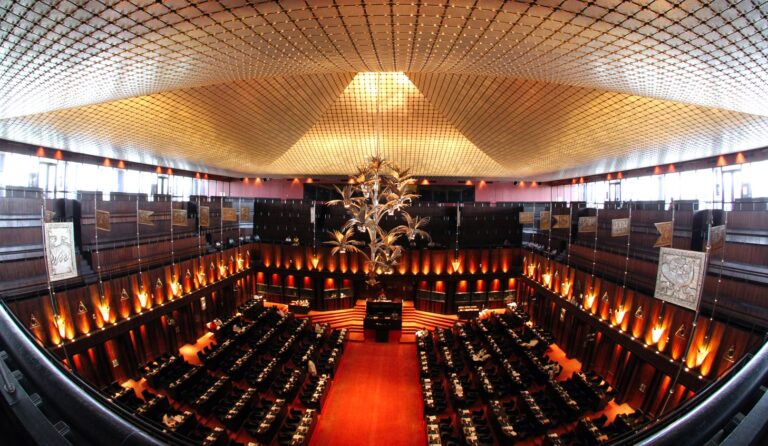
December 18, Colombo (LNW): Parliament is set to meet today (18) to consider a substantial supplementary allocation of Rs. 500 billion, intended to support communities whose livelihoods have been disrupted by a sudden and severe disaster situation.
The special sittings have been convened at the request of Prime Minister Dr. Harini Amarasuriya, in line with parliamentary procedure, according to the Secretary-General of Parliament, Kushani Rohanadeera. The House will sit over two days, today and tomorrow, to address the matter.
The decision to summon Parliament was reached during a meeting of the Committee on Parliamentary Business held yesterday, chaired by Speaker Dr. Jagath Wickramaratne. The Parliamentary Communications Department confirmed that the urgency of the prevailing situation prompted the move.
Proceedings are scheduled to begin at 9.30 a.m. today, when the proposed supplementary estimate for 2026 will be formally presented and referred to the Committee on Public Finance for review. The allocation is aimed at funding relief measures and economic recovery for those affected by recent extreme weather events.
Following the presentation, Parliament will take up an adjournment debate initiated by the Government, focusing on the broader national impact of the disaster and the response measures in place. The debate is expected to continue until the evening.
Parliament will reconvene tomorrow for a full-day sitting, during which the supplementary funding proposal will be debated and put to a vote.
The Speaker had earlier announced the extraordinary sitting through a gazette notification issued last week, confirming that the House would be summoned today after the Prime Minister formally requested an emergency session.
Three Held After Brutal Attack on Wild Elephant Shocks Mihinthale
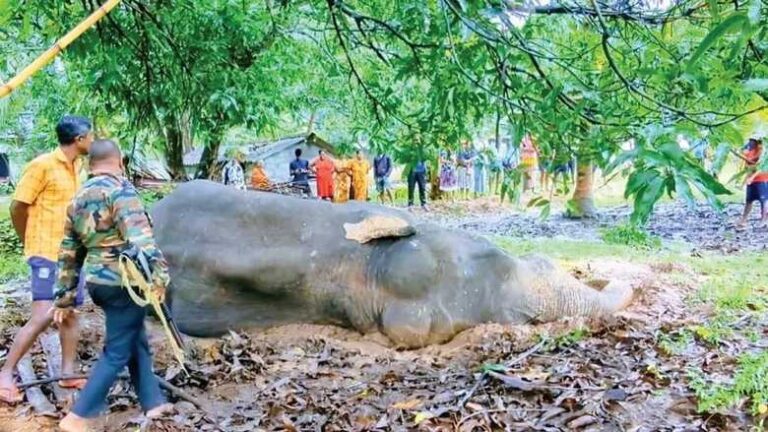
December 18, Colombo (LNW): Mihinthale Police have taken three men into custody over the alleged abuse of a wild elephant that was reportedly doused in flames in the Seeppukulama area, an incident that has sparked widespread outrage.
The arrests followed a detailed police inquiry launched after disturbing footage circulated widely on social media, appearing to show the animal being deliberately set on fire. The video prompted swift public condemnation and calls for accountability.
Authorities later discovered the elephant dead within the Mihinthale Police Division. Veterinary findings from a post-mortem examination indicated that the animal had been suffering from serious kidney and liver complications, with investigators noting that the trauma and severe stress caused by burn injuries significantly worsened its condition.
Those detained are residents of Seeppukulama, aged between their early forties and fifties. Police say they were arrested on suspicion of animal cruelty in connection with the incident.
The suspects are due to be produced before the Anuradhapura Magistrate’s Court, as investigations continue into the circumstances surrounding the elephant’s death.
Prevailing showery conditions expected to continue: Fairly heavy falls above 75 mm expected (Dec 18)

December 18, Colombo (LNW): The prevailing showery conditions are expected to continue over the Northern and Eastern parts of the island due to the influence of the Easterly wave, the Department of Meteorology said today (18).
Showers will occur at times in North-Central, Eastern, Uva and Central provinces. Fairly heavy falls above 75 mm are likely at some places in Eastern, Uva and Central provinces and in Polonnaruwa district.
Several spells of showers may occur at Northern and North-western provinces.
Showers or thundershowers may occur at several places in the other areas of the island after 1.00 p.m. Fairly heavy falls above 50 mm are likely at some places in these areas.
Strong winds of about (40-50) kmph can be expected at times over Eastern slopes of the central hills, Northern, North-central and North-western provinces and in Trincomalee, Hambantota and Monaragala districts.
Misty conditions can be expected at some places in Sabaragamuwa, Western and Central provinces and in Galle and Matara districts during the early hours of the morning.
The general public is kindly requested to take adequate precautions to minimise damages caused by temporary localised strong winds and lightning during thundershowers.
Marine Weather:
Condition of Rain:
Showers will occur at several places in the sea areas off the coast extending from Mannar to Hambantota via Kankasanthurai, Trincomalee and Pottuvil. Showers or thundershowers may occur at several places in the other sea areas around the island during the evening or night.
Winds:
Winds will be north-easterly. Wind speed will be (30-40) kmph. Wind speed can increase up to (50-55) kmph at times in the sea areas off the coast extending from Colombo to Galle via Puttalam, Kankasanthurai, Trincomalee, Pottuvil and Hambantota.
State of Sea:
The sea areas off the coast extending from Colombo to Galle via Puttalam, Kankasanthurai, Trincomalee, Pottuvil and Hambantota will be rough at times. The other sea areas around the island will be moderate.
Temporarily strong gusty winds and very rough seas can be expected during thundershowers.
Are the Jury and the Executioner the Same in Seeppukulama, Mihintale? Outrage as Elephant Killed in Brutal Attack
By: Isuru Parakrama
December 17, Colombo (LNW): Graphic footage circulating online since yesterday (16) has sparked widespread anger after showing a badly injured elephant being deliberately set alight in a residential garden in the Seeppukulama area of Mihintale.
Wildlife and forest officials confirmed that the animal died following the incident, which took place on Tuesday. The video depicts the elephant lying helpless with a severe injury to its front leg, believed to have been caused by a gunshot, before being subjected to further cruelty when it was set on fire.
Emergency veterinary teams were dispatched as soon as authorities were alerted, but the elephant had already suffered fatal burn injuries by the time they reached the location. Officials said a post-mortem examination will be conducted to formally determine the precise cause of death.
Residents in the area reportedly witnessed the incident and recorded the footage, which was later shared online, prompting immediate complaints to relevant authorities.
Investigations have now been launched, and law enforcement agencies have assured that those responsible for the act will be traced and arrested without delay.
Jury and Executioner the same?
What happened in Seeppukulama, Mihintale, is not merely a crime against wildlife, it is a chilling indictment of a society that allowed cruelty to masquerade as justice. A wild elephant—already helpless from a gunshot wound to its forelimb—was not shown mercy, restraint, or even basic humanity. Instead, it was set on fire with burning torches, in what can only be described as a barbaric public execution.
This was not an act of fear or self-defense. The animal lay immobilised in a home garden, wounded and vulnerable. Wildlife veterinary surgeons arrived and attempted to save its life, but the burns inflicted by human hands were too severe. The elephant did not die by accident, for it was killed deliberately, painfully, and with apparent indifference to suffering.
The most disturbing question is this: who decided that this animal deserved such a fate?
In Seeppukulama, did the perpetrators appoint themselves as judge, jury, and executioner? Since when did mob cruelty replace the rule of law? Sri Lanka has laws to protect wildlife, institutions mandated to respond to conflict, and officers trained to handle such situations. Yet some chose fire over reason, violence over restraint, and spectacle over compassion.
The circulation of the video on social media adds another layer of shame. This was not only an act of extreme cruelty but one committed without fear of consequence, as if the perpetrators believed they would never be held accountable. That confidence is itself a damning reflection of how weakly justice is sometimes enforced.
This elephant’s death must not be reduced to another statistic or forgotten after a brief wave of outrage. Those responsible for shooting the animal, and those who later set it on fire, committed a heinous crime that demands swift identification, arrest, and punishment under the full force of the law. Anything less would signal that brutality is tolerated, and that the powerless—human or animal—can be destroyed without consequence.
Government’s Policy Reforms Risk Delaying Cyclone Recovery
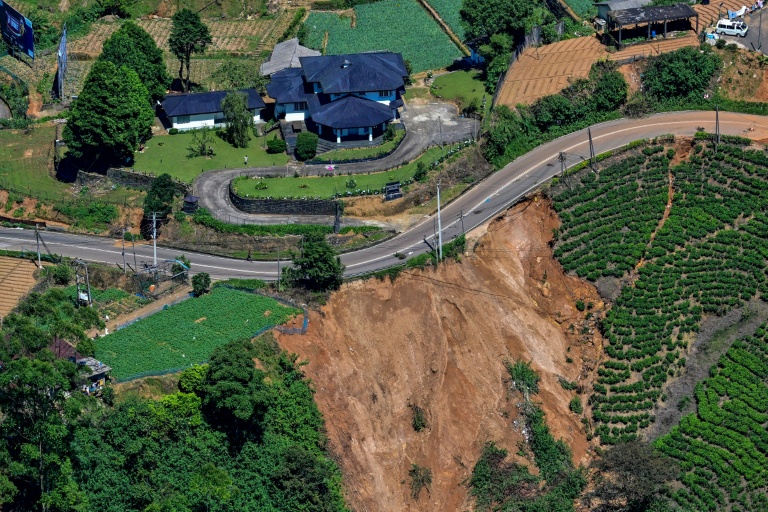
Sri Lanka’s post-cyclone recovery effort stands at a crossroads as the Government rolls out sweeping disaster management reforms amid one of the largest humanitarian crises in recent years.
The latest meeting of the National Council for Disaster Management, convened under President Anura Kumara Dissanayake, reflects renewed political attention after years of institutional dormancy. Yet the growing gap between strategic planning and on-the-ground recovery is becoming increasingly visible.
The Council approved steps toward establishing a National Integrated Disaster Management Mechanism and amending the Disaster Management Act, signalling a shift toward centralised coordination and data-driven decision-making. While these reforms aim to correct long-standing weaknesses, their immediate impact on rebuilding homes, restoring livelihoods, and resettling displaced families remains uncertain.
Cyclone Ditwah has affected an estimated 2.2 million people, damaging over 118,000 houses and forcing tens of thousands into temporary shelters. For many, daily survival now depends less on long-term planning frameworks and more on rapid relief delivery, simplified compensation processes, and swift reconstruction approvals.
A key concern emerging from the Council discussions is procedural overload. New proposals such as the Central Fragile Area Management Plan, digital data platforms, and certification systems for landslide mitigation require inter-agency coordination that Sri Lanka has historically struggled to execute efficiently. Delays in data validation and updates have already slowed beneficiary identification, a problem acknowledged by both the President and the Opposition Leader.
The President’s pledge to relocate families from high-risk zones and build 8,000 houses by 2026 offers hope but also raises questions about timelines and interim solutions. Previous resettlement programmes have often stalled due to land acquisition disputes, funding gaps, and administrative inertia. Without emergency fast-track mechanisms, affected families may remain in limbo for years.
Even routine relief measures have encountered obstacles.The Rs. 25,000 flood-cleaning allowance, designed as immediate assistance, has faced implementation issues serious enough to require direct presidential orders for resolution. Such delays expose weaknesses in local-level coordination, despite central policy clarity.
The establishment of a Foreign Aid Coordination Committee is intended to ensure transparency and accountability. However, humanitarian agencies caution that excessive clearance procedures during emergencies can undermine responsiveness and discourage rapid donor engagement a risk Sri Lanka can ill afford amid declining external assistance.
Lessons from past disasters further complicate policy choices. The Government’s disclosure of heavy financial losses under the 2016 flood insurance scheme highlights fiscal risks, but postponing reforms until ideal models are designed could leave disaster victims without adequate protection.Sri Lanka’s challenge now is balance: reforming institutions without paralysing recovery. Unless policy decisions are accelerated, legal bottlenecks eased, and emergency authority devolved, disaster governance reform may inadvertently deepen human suffering instead of alleviating it
Rs.150 Million e-Court Push Tests Government’s Reform Credibility

The government’s decision to allocate Rs. 150 million for the e-Court Project has reignited debate over whether digital reforms can realistically rescue Sri Lanka’s overstretched judicial system or whether they risk becoming another well-intentioned but under-executed initiative.
Approved by the Cabinet and funded through the Clean Sri Lanka Project, the allocation is intended to support the Judicial Service Commission in rolling out digital court services nationwide. The government has framed judicial digitalisation as a cornerstone of its reform agenda, closely tied to IMF-backed structural reforms scheduled under the 2026–2030 Public Investment Programme.
At the heart of the initiative is the expansion of systems already introduced at the Supreme Court, including a dedicated website and an electronic Case Management System? These tools are expected to be extended to lower courts, the Court of Appeal, and judicial training institutions, ultimately forming a unified national judicial data network.
Officials argue that such a network could address long-standing weaknesses in case tracking, data accessibility, and procedural transparency. Chronic delays have contributed to declining public trust and, in extreme cases, citizens resorting to extrajudicial measures due to frustration with prolonged legal battles.
The proposed e-Court model goes beyond basic digital filing. It envisions paperless processes, remote participation in hearings, and secure online access points known as Points of Presence (PoPs). These PoPs could be established at post offices, police stations, district secretariats, or other public institutions, allowing litigants and lawyers to participate in proceedings without physically attending distant courts.
Justice Ministry officials emphasise that this approach could significantly reduce travel costs, time wastage, and safety risks associated with long commutes. They note that a large proportion of court attendees currently appear only to receive administrative updates rather than participate in substantive hearings.
From a governance perspective, experts describe e-Court services as comparable to tele-working and business process outsourcing models, relying on computer-aided systems to capture, store, retrieve and analyse judicial data. If effectively implemented, these systems could improve performance monitoring and policy planning within the justice sector.
But scepticism remains. The Attorney General’s Department estimates that approximately 800,000 cases are pending across the system, including 95,000 unresolved matters and more than 100 high-profile cases. While special courts have been introduced to fast-track proceedings, critics warn that technology alone cannot overcome institutional inertia, capacity gaps, or resistance to change.
Without sustained funding, legal reforms, judicial training, and safeguards for data security and inclusivity, analysts caution that the Rs. 150 million investment may deliver only incremental gains. The success of the e-Court Project, they argue, will ultimately be measured not by websites launched or systems installed, but by whether ordinary citizens experience faster, fairer, and more accessible justice.