Home Blog Page 2132

Sri lankan’s ambassador urges ADB and WB to take bigger role in debt restructure

0

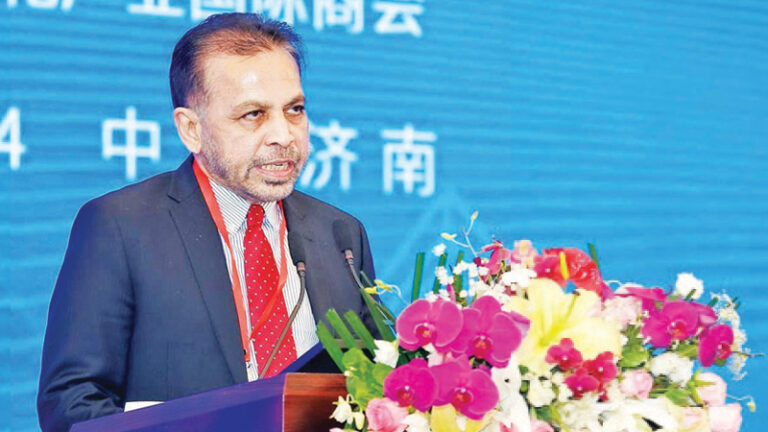
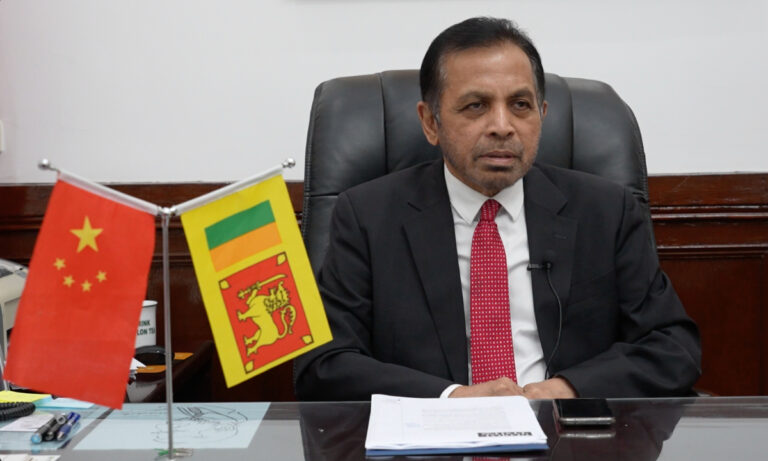
Sri Lanka has not reached any initial agreement with the IMF on debt relief, and its largest creditors -the Asian Development Bank (ADB) and the World Bank – are urged to come up with a package that would speed up its debt restructuring process, Sri Lanka’s Ambassador to China Palitha Kohona told the Global Times in an exclusive interview on Friday, while also calling for more assistance from partners after the debt-ridden country claimed bankruptcy and imposed a state of emergency amid escalating protests and persisting shortage of daily necessities.

“The IMF visited Sri Lanka at the end of last month, and judging by report we received the official discussions were very satisfactory. We have appointed a team of legal advisors in London, and team of experts who understand debt restructuring from the West,” Kohona said. But he noted that discussions with the IMF are only at a preliminary stage, and once the new government is installed, there will be new arrangement for the next meeting with the IMF.

Kohona said it is hoped that terms and conditions attached to the IMF package will not be “onerous.”

“It’s inevitable whenever the IMF comes along we will have to tighten our belt, but in some cases it’s difficult because the belt is already on the last notch. We’re worried that the IMF may insist that we curtail our state-fund health care system. The education system which is free from grade one to university level might be another area the IMF recommends to cut. These may add to the unrest,” Kohona explained.

Sri Lanka’s largest creditors are international financial organizations like the World Bank and the ADB, and a substantial amount is also owed to other institutional investors from the West, for example the Wall Street. While calling on those organizations to take a bigger role, Kohona also hopes more bilateral partners will provide more assistance to help the country overcome its difficulties.

China and Japan each held about 10 percent of Sri Lankan debt. Kohona disclosed that about $1 billion, out of Sri Lanka’s $7 billion foreign debt obligations for this year, is due to China.

China’s Foreign Ministry spokesperson Wang Wenbin said at a press briefing on Friday that Chinese financial institutions have actively approached and negotiated with Sri Lanka after the country stopped debt repayment, expressing willingness to properly settle matured debts owed to China and help it overcome difficulties.

“China is ready to work with relevant countries and international financial institutions to continue to play a positive role in supporting Sri Lanka’s response to current difficulties and efforts to ease debt burden and realize sustainable development,” Wang said, adding that as a friend and neighbor, China has been providing assistance for its socioeconomic development to the best of our capacity.

Recently, China has announced a total of 500 million yuan ($74 million) emergency humanitarian aid to Sri Lanka. On Thursday, the second batch of emergency humanitarian grain aid – 1,000 tons of rice – from China was handed over to Sri Lanka.

There have been large-scale protests about the government because of the severe material and energy shortages that Sri Lanka is facing, Kohona noted. Sri Lanka faces a gap in cooking oilfertilizer, medicine, and even food stocks, which poses a huge challenge to Sri Lankans’ basic household cooking, transportation, medical needs, and preparation for the upcoming cultivation season.

On Thursday, President Gotabaya Rajapaksa officially resigned after landing in Singapore, and Prime Minister Ranil Wickremesinghe was appointed as acting president. Wickremesinghe declared a state of emergency across the country, BBC reported.

Kohona noted there are still protests in Sri Lanka against Wickremesinghe, and he is not clear whether the acting president will continue to hold this office for much longer. “This is very unsatisfactory, because the leadership of the country suddenly comes into question. So we are hoping that the constitutional provisions will be followed, and elections have to be held within a specified period to elect a new president,” he said.

Sri Lanka’s parliament will vote on a new president on July 20, according to the speaker of the Sri Lankan Parliament.

Kohona said he is confident that “whatever government in power will maintain excellent relations with China.”

“China is the major trading partner and investor of Sri Lanka, we have a strategic partnership between the two countries, whoever takes over the government after an election will maintain the confidence of the Chinese government as well as the goodwill of the Chinese people,” he noted.

In recent years, Chinese-invested projects under the Belt and Road Initiative (BRI) such as the Hambantota Port have largely improved local people’s livelihood and propelled the country’s growth.

On Thursday, the Chinese Embassy in Sri Lanka held a video conference with Chinese firms in Sri Lanka, guiding them on how to strengthen security work and cope with demonstration and safety events. Kohona said there has been no threat to Chinese projects or Chinese personnel in Sri Lanka.

“BRI investments are critical in Sri Lankan economy after the situation stabilizes. It not only brought foreign exchange, but also generated employments,” he said, adding that the embassy is encouraging a number of Chinese renewable energy companies to establish projects in Sri Lanka.

Global times
Sri Lanka faces hyperinflation as inflation surges

0

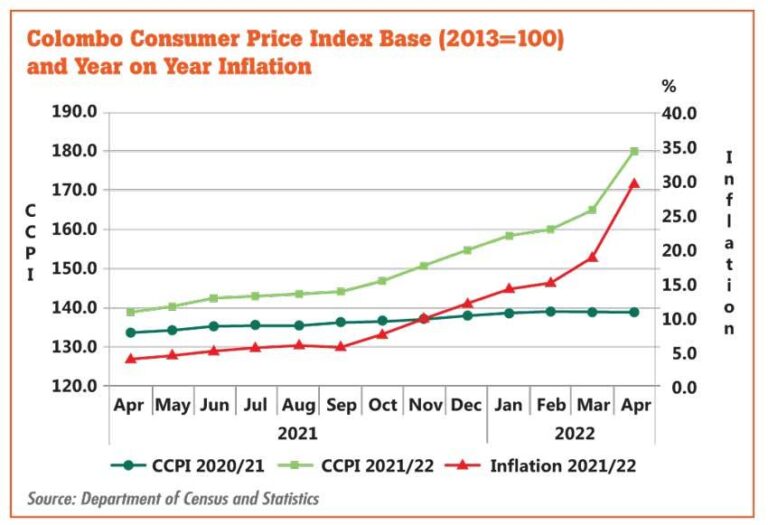
Sri Lanka is now facing a hyperinflationary situation with the country’s inflation hitting a new high of 54.6 per cent in June, several leading economists said referring to the Central Bank’s latest announcement of the official economic indicator data.

The Sri Lankan rupee depreciated more than 50 per cent against the dollar this year compelling the Monetary Authority to stabilize its inflation-ravaged rupee and it is opting to withdraw certain currency notes of low value from circulation.

The Business Times in its article on economic disaster published on March 27 predicted that soaring inflation will lead to hyperinflation in the country exerting pressure on the people already struggling with shortages and suffering in the economic chaos.

This critical situation has now emerged as the prices of goods and services rise uncontrollably almost daily, University of Colombo Prof. in Economics Sirimal Abeyratne said.

He added that in general, the term hyperinflation is used when the rate of inflation increases at more than 50 per cent a month. Typically, hyperinflation is triggered by a very quick growth in the money supply.

This could be caused by government printing money to pay for its spending or what is known as demand-pull inflation. The latter happens when the increase in demand exceeds supply, making prices higher due to a shortage in goods and services, he explained.

The Central Bank was managing the situation when they were resorting to inflation targeting and money supply controlling during 2018-2019 period on the directions of the International Monetary Fund.

But the inflation targeting has gone haywire following the Monetary Authority’s inclination towards Modern Monetary Theory in 2020 where the Central Bank printed historic volumes of money exerting severe pressure on the rupee triggering the worst import and exchange controls since the 1970s.

He pointed out that when more money is pumped into circulation, the real value of the country’s currency can plunge.

Therefore, when measured in terms of the impact on people’s lives, hyperinflation can be devastating with prices of essential goods can rise on a daily basis.

The Monetary Authority will have to focus on core issues in a comprehensive plan to address the causes of the hyperinflationary situation to tackle runaway inflation, which has considerably weakened the local currency, he suggested.

The country will have to correct inconsistent and wrong economic policies while controlling the money printing only to match the value of overall money transactions in the economy, he emphasised.

A shortage in essential commodities in the market and ever increasing prices should be tackled while addressing the supply chain disruptions; he said adding that the depreciation of the rupee and domestic policy issues will have to be settled within a short period.

Under this set up the value of acceptance of the Sri Lanka rupee could be diminished soon and this was clearly indicated with the drop in value of the Rs. 5000 note as people cannot even buy a cup of tea with Rs. 20 or even Rs 50, Senior Professor of the Business Studies Faculty of the North Western University Aminda Methesila Perera said.

Rs. 10, 20, 50 notes will be out of circulation soon compelling the Central Bank to print new high value currency notes following the ever-increasing amount of rupees to be paid for the dollar, he claimed.

It was the first time that the increase in the Colombo Consumer Price Index (CCPI) crossed the psychologically important 50 per cent mark, according to the Department of Census and Statistics.

As a result, prices of essential items are increasing sky high daily with the Petrol price hike to Rs.470 per litre from Rs.420 and short distance bus fare increase to Rs 40 from Rs 12

The people’s buying power has come down drastically as they now buy five kg of samba rice at the price they bought 10 kg of the similar variety of rice one year ago.

“Under such a situation, a large amount of money is needed to buy goods and services and meet other payment obligations,” he said.

Sri Lanka will be compelled to stop money printing and introduce new currency or to tie up with a basket of currencies in the long run, he said adding that this is in the pipeline.

Govt to tackle fuel crisis with the arrival of 8 fuel ships and fuel pass issuance

0

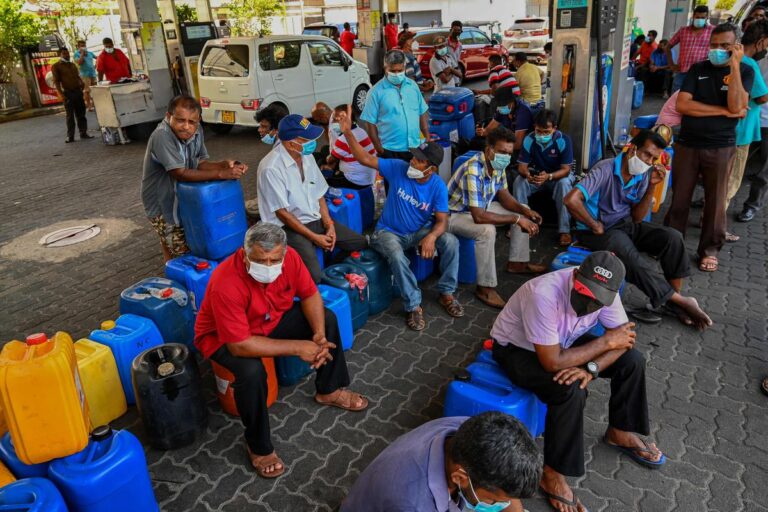
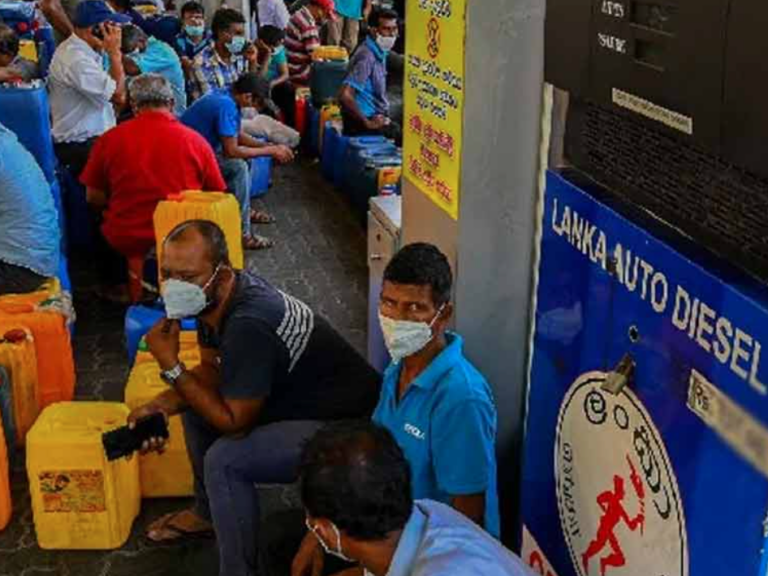
Sri Lanka’s fuel crisis now turned bad to worse is to be tackled to certain extent with the arrival of eight ships carrying petroleum will arrive in the island next week and the introduction of a special pass to ration petrol and diesel usage

The Ceylon Petroleum Corporation (CPC) says that three ships each carrying between 30,000 and 40,000 metric tons of diesel will arrive in Sri Lanka on the 17th and 23rd of July.

Another two ships carrying petrol are also scheduled to arrive in the island next week. The CPCdisclosed adding that payment for all the shipments has already been made.

Lanka IOC, the Sri Lankan subsidiary of Indian Oil Corporation said that another three ships carrying fuel are also scheduled to arrive in Sri Lanka on those dates.

The agencies say that after the distribution of the fuel stocks, the current situation near the fuel stations will return to normal.

Even now, around one hundred tankers have been deployed for fuel distribution activities.

The Ceylon Petroleum Private Tanker Owners’ Association said with the receipt of the fuel stock, it is expected to distribute fuel 24 hours a day in collaboration with the Ceylon Petroleum Corporation.

Minister of Power and Energy Kanchana Wijesekera said steps have been taken to introduce a fuel dispensing program using a QR code as a solution to the fuel crisis and providing fuel to the public in an orderly manner.

National Fuel Pass was developed with the assistance of leading Tech companies in Sri Lanka and the Institute of Communication and Information Technology (ICTA) without any cost to Ceylon Petroleum Corporation (CPC) or the government, the Minister of Power and Energy Kanchana Wijesekera revealed.

The public can register on the website fuelpass.gov.lk to get the ‘National Fuel Pass’ but it has crashed after the launching but it is now under readustmenbts , ministry official said.

The program was launched with the technical support of the Sri Lanka Institute of Communication and Information Technology (ICTA) with the aim of easing fuel queues.

Accordingly, a person may register one vehicle under his National Identity Card Number, Passport Number or Business Registration Number. In addition, some other information such as name, address, phone number, used vehicle etc. should also be submitted.

The QR code obtained after registration must be presented to get fuel. The QR code can be saved as a screenshot on one’s mobile phone. Those without a smartphone can keep a printout of the QR code with them.

The minister emphasized that this is the only permit given by the government to the people to buy fuel not only from Ceylon Petroleum Corporation petrol stations but also from Lanka IOC petrol station

Ex- President in exile Gotabya Rajapaksa pledges to continue to serve Sri Lanka

0

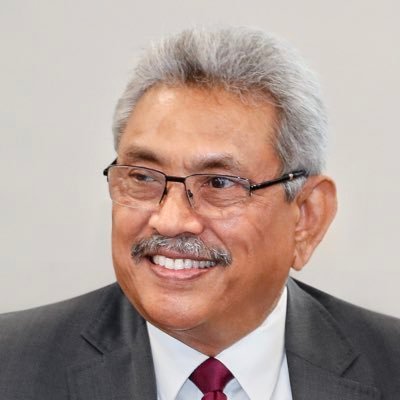
Former President Gotabya Rajapaksa in exile says he will continue to serve Sri Lanka following his resignation as President.

He made this pledge in his resignation letter which was read out in Parliament yesterday.

Sri Lanka’s ousted president, who fled overseas this week to escape a popular uprising against his government, has said he took “all possible steps” to avert the economic crisis that has engulfed the island nation.

The President said that he was satisfied with efforts taken to protect Sri Lanka from the pandemic at that time.

He further said that by enforcing lockdowns in 2020 and 2021, the country lost foreign exchange and the economy, which was already suffering, took a hit.

Rajapaksa said that he had invited all the political parties to help form an all-party Government to address the crisis and took all the required steps in this regard.

Gotabaya Rajapaksa said that following a request made by political part leaders and the public, he had decided to step down from his post with effect from 14th July 2022.

The former President also said that he will continue to serve the country of his birth as he has done in the past.

Gotabaya Rajapaksa’s resignation was accepted by parliament on Friday. He flew to the Maldives and then Singapore after hundreds of thousands of anti-government protesters came out onto the streets of Colombo a week ago and occupied his official residence and offices.

Sri Lanka’s parliament met on Saturday to begin the process of electing a new president, and a shipment of fuel arrived to provide some relief to the crisis-hit nation.

Dhammika Dasanayake, the secretary general of Sri Lanka’s parliament, formally read out Rajapaksa’s resignation letter, the contents of which had not previously been made public.

In the letter, Rajapaksa said Sri Lanka’s financial crisis was rooted in years of economic mismanagement that pre-dated his presidency and in the COVID-19 pandemic that drastically reduced Sri Lanka’s tourist arrivals and remittances from foreign workers.

“It is my personal belief that I took all possible steps to address this crisis, including inviting parliamentarians to form an all-party or unity government,” the letter said.

Parliament will next meet on Tuesday to accept nominations for the post of the president. A vote to decide the country’s leader is set to take place on Wednesday.

Prime minister Ranil Wickremesinghe, an ally of Rajapaksa who is the sole representative of his party in parliament, has been sworn in as acting president until then.

Wickremesinghe is one of the top contenders to take on the role full-time but protesters also want him gone, leading to the prospect of further unrest should he be elected.

The opposition’s presidential nominee is Sajith Premadasa. The potential dark horse is senior ruling party lawmaker Dullas Alahapperuma.

SL billionaire Raj Rajaratnam now out of Jail eyes for next big trade

0

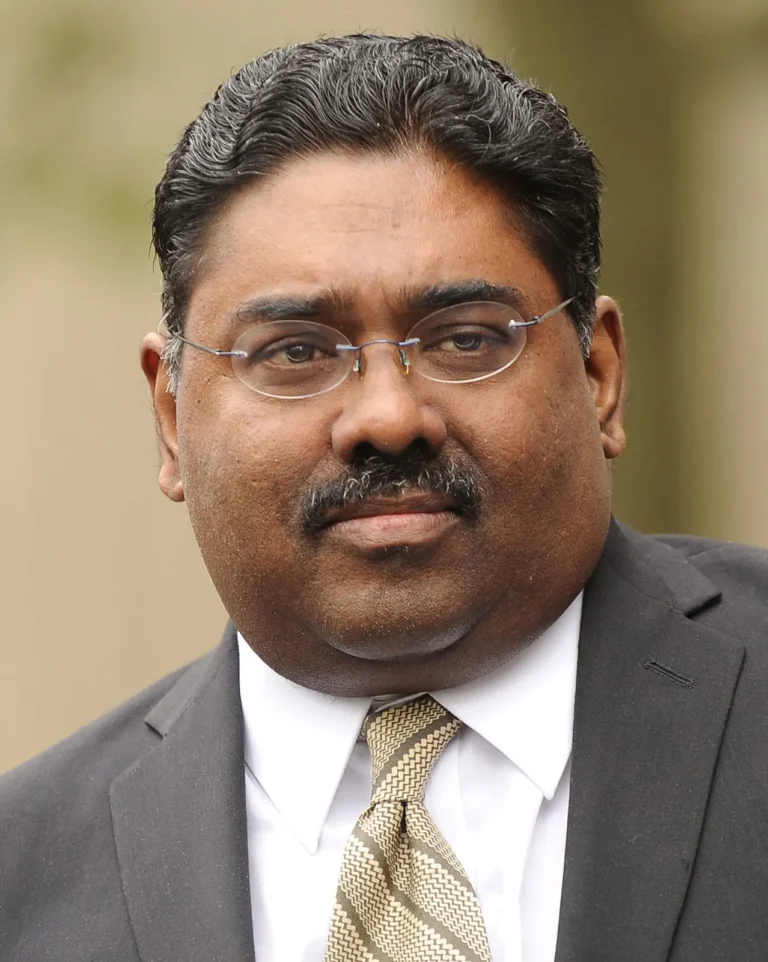
Sri lankan billionaire businessman Raj Rajaratnam who served a jail term of 11 years in the US for insider trading is ready to embark on his next big trade after resuming his business inside the townhouse in Manhattan’s East 50s.

With about 18 people working or consulting for his family-office firm — the name “Synamon” echoes the spice most associated with his native Sri Lanka — he’s trading stocks, investing in real estate, whatever catches his eye. .

Whether Rajaratnam can pick himself up after such a spectacular fall is anyone’s guess. But he still has the money to try. The year was arrested, Forbes estimated he was worth $1.3 billion. He says legal fees and fines cost him $200 million. As for what he’s worth today? “Subtract that from whatever number you think I had,” he says with a laugh.

It’s been three years since the former hedge-fund magnate was freed from FMC Devens, the medical prison west of Boston where he did time with Ponzi schemer Nicholas Cosmo, AKA, the “mini-Madoff”, among others.

In his heyday at his multibillion-dollar Galleon Group LLC, computer screens crowded his huge, curved desk, monitoring markets around the globe. Here at Synamon Global LLC, Rajaratnam works at a utilitarian glass-topped table that looks as if it might’ve come from Ikea

His company specialized in technology and healthcare, waters Rajaratnam is still plying today. Synamon’s investments include companies in medical technology, cloud computing, cybersecurity and clean energy, including electric vehicles.

Its real estate investment business is buying residential properties in New York and in 10 states across the South, he says. His employees include recent college students who are working for him as analysts. The US staff is spread among New York, Pittsburgh and San Francisco. A team in Sri Lanka covers e-commerce.

Government authorities called Rajaratnam “a billion-dollar force of deception and corruption on Wall Street.” Tapping a network of informants across swaths of corporate America, he illegally used inside information to trade stocks such as Goldman Sachs Group Inc., Google, Intel Corp. and Hilton Worldwide Holdings, prosecutors said. His trading generated profits or avoided losses of $72 million, not quite $10 million for each year he served in prison.

The explosive case exposed the trafficking in illicit information at the highest echelons of American finance. Roughly a hundred other people were eventually ensnared by insider trading cases. Most pleaded guilty or, like Rajaratnam, were convicted by a jury.

Among those who went to prison were Rajat Gupta, former global head of McKinsey & Co. and former board member for Goldman Sachs, who blamed Rajaratnam for his downfall.

Sri Lanka’s merchandise exports in May surpass US$.1 billion

0

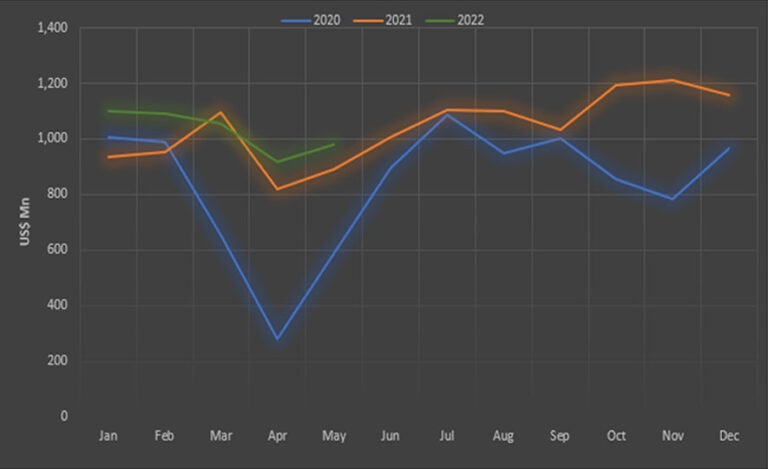
Earnings from merchandise exports in May 2022 increased substantially by 17.5% over the corresponding month in 2021, recording at $ 1,047 million, Central Bank announced.

An increase in earnings was observed in industrial exports, while a decline was recorded in agricultural exports and mineral exports.

The cumulative export earnings during January-May 2022 increased by 12.2% over the same period in the last year, amounting to $ 5,266 million.

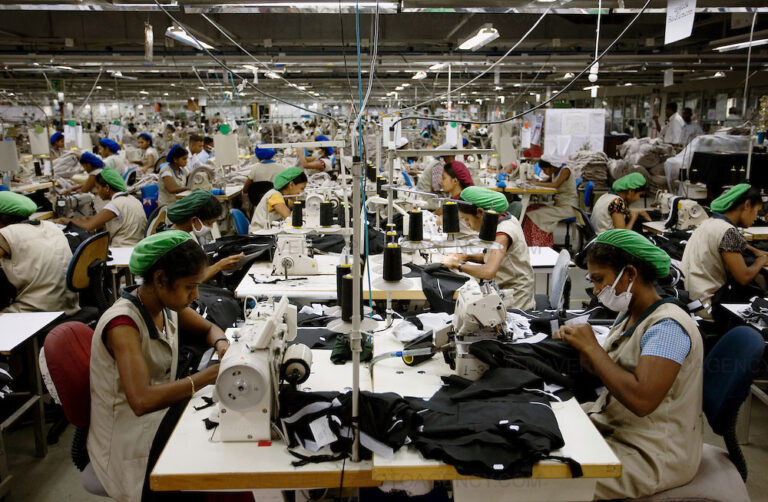
Earnings from the export of industrial goods increased in May 2022 by 24.2%, compared to May 2021. A broad-based increase in earnings among industrial goods has been recorded, with the greatest share for the overall increase mainly being contributed by garments.

Export of garments to all major markets (such as the United States, the European Union and the United Kingdom) improved.

Further, gems, diamonds and jewellery and petroleum products also contributed to this increase in exports. Earnings from the export of petroleum products improved due to the increase in both average export prices and volumes of bunker fuel exports.

Meanwhile, continuing the lower demand for rubber gloves as a personal protective item due to declining spread of COVID-19 worldwide, a decline in earnings was reported in rubber products. Export earnings from animal fodder and plastics and articles also declined during the month.

Total earnings from the exports of agricultural goods in May 2022 declined by 4.2%, compared to May 2021.

This decline was mainly attributed to exports of tea, spices, unmanufactured tobacco and vegetables. Export earnings from tea in May 2022 declined by 14.2% (year-on-year), due to the decline in volume of tea exported.

Earning from spices declined by 16.2% in May 2022 due to lower export volumes of spices, except cinnamon. However, the export of subcategories of minor agricultural products (primarily, arecanuts), coconut related products (primarily, fibres and coconut oil), seafood and natural rubber recorded an increase in May 2022, compared to the previous year.

Earnings from mineral exports in May 2022 declined by 58.4%, compared to May 2021, mainly due to a decline in export earnings from titanium ores categorised under ores, slag and ash.


The export volume index and unit value index increased by 13.7% and 3.3%, respectively, (year-on-year), in May 2022, indicating that the increase in export earnings can be mainly attributed to the higher export volumes.

Sri Lanka’s merchandise exports in May surpass US$.1 billion

Earnings from merchandise exports in May 2022 increased substantially by 17.5% over the corresponding month in 2021, recording at $ 1,047 million, Central Bank announced.

An increase in earnings was observed in industrial exports, while a decline was recorded in agricultural exports and mineral exports.

The cumulative export earnings during January-May 2022 increased by 12.2% over the same period in the last year, amounting to $ 5,266 million.

Earnings from the export of industrial goods increased in May 2022 by 24.2%, compared to May 2021. A broad-based increase in earnings among industrial goods has been recorded, with the greatest share for the overall increase mainly being contributed by garments.

Export of garments to all major markets (such as the United States, the European Union and the United Kingdom) improved.

Further, gems, diamonds and jewellery and petroleum products also contributed to this increase in exports. Earnings from the export of petroleum products improved due to the increase in both average export prices and volumes of bunker fuel exports.

Meanwhile, continuing the lower demand for rubber gloves as a personal protective item due to declining spread of COVID-19 worldwide, a decline in earnings was reported in rubber products. Export earnings from animal fodder and plastics and articles also declined during the month.

Total earnings from the exports of agricultural goods in May 2022 declined by 4.2%, compared to May 2021.

This decline was mainly attributed to exports of tea, spices, unmanufactured tobacco and vegetables. Export earnings from tea in May 2022 declined by 14.2% (year-on-year), due to the decline in volume of tea exported.

Earning from spices declined by 16.2% in May 2022 due to lower export volumes of spices, except cinnamon. However, the export of subcategories of minor agricultural products (primarily, arecanuts), coconut related products (primarily, fibres and coconut oil), seafood and natural rubber recorded an increase in May 2022, compared to the previous year.

Earnings from mineral exports in May 2022 declined by 58.4%, compared to May 2021, mainly due to a decline in export earnings from titanium ores categorised under ores, slag and ash.

The export volume index and unit value index increased by 13.7% and 3.3%, respectively, (year-on-year), in May 2022, indicating that the increase in export earnings can be mainly attributed to the higher export volumes.

Why can’t we solve the fuel problem the way Greece solved it?

0

The fuel crisis has had an extremely serious impact on people’s lives by now. Government employees are restricted from being summoned to offices. Schools are not held. Vegetable farmers have not been able to send their crops to economic centers. The tea industry is in a serious problem as it is not possible to send the tea leaves to the tea factories every day. Even the shelves of shops in distant areas away from Colombo are slowly becoming empty because the transportation of goods from Colombo is limited.

If we have to continue in this way, there is a possibility that many industries such as agriculture and businesses in the country will completely collapse. Hospitals may not even be able to transport the necessary medicines. The number of hours of daily power cut has increased so much that it is impossible to come to a point where the entire country will stop. Depending on the way things are developing, the day is not far when a pregnant mother who is about to give birth cannot find a vehicle to go to a hospital, and the patient cannot be taken to a hospital in case of an emergency snake bite.

It is true that several fuel ships are due to arrive in Sri Lanka this week. But it is also true that in the long term, there is no sign of a solution to this fuel crisis.

It is a well-known fact that this fuel crisis is caused by the lack of foreign exchange that we are facing as a country. Most of the country’s monthly import expenditure is allocated to the import of fuel.

What Greece did…

Greece, just like us, is a country that has faced a foreign exchange crisis before us. There they wanted to reduce their fuel demand by 50%. What they did was, they increased fuel prices by 50%. Accordingly, the price of a liter of petrol in Greece is 2.35 US dollars (857 rupees). A liter of diesel costs US$ 2.02 (Rs 737).

With the extra money received by the government through this price increase, they arranged to provide diesel at subsidized rates for public transport. Through that, they were able to reduce public transport fares by 10% compared to the amount before the arrival of the Covid epidemic situation.

Now there are no fuel queues in Greece. Relief has also been provided to the public due to the reduction in public transport fares. Also, foreign tourists are coming to Greece and foreign exchange inflows are also increasing.

It is stated that through the above program they have been able to reduce fuel demand by 43%.

Why can’t SL do that?

Considering the situation in Sri Lanka, according to the current monthly income, we have enough money to bring fuel for about 15 days. Accordingly, we also have to reduce fuel demand by 50%. We will also be able to reverse this situation when the country starts receiving foreign exchange income through the tourism industry.

But the question is why the authorities do not directly announce this situation to the people and go to a solution like Greece.

China to provide US $4 billion aid for Sri Lanka “at some point”: envoy Kohona

0

Sri Lanka is continuing negotiations with China for as much as US$4 billion in aid and is confident Beijing will agree “at some point,” according to a top envoy.

Colombo is asking China for a loan of $1 billion to repay an equivalent amount of Chinese debt coming due this year, Palitha Kohona, Sri Lanka’s ambassador to China, said in an interview to Bloomberg Television Friday. It is also seeking a $1.5 billion credit line to pay for Chinese imports and activation of a $1.5 billion swap, he added.

“We are confident that at some point the Chinese system will agree to our requests because these are not unreasonable requests,” Kohona said. “We have made similar requests to other creditors. Sri Lanka needs the funding to bring stability to our financial system and we are confident that the Chinese will come to the party sooner than later.”

The bankrupt South Asian country has received about $3.8 billion in aid from neighbor India, and is negotiating for more. The cash is needed to pay for food and fuel purchases, with severe shortages seen stoking inflation to 70%, triggering violent public protests and forcing President Gotabaya Rajapaksa to flee the nation and resign.

Sri Lanka’s federal government has about $12.6 billion in outstanding bonds owed to global funds; all repayments are frozen and defaults have been recorded. It owes roughly an equivalent amount to bilateral creditors and multilateral lenders.

Some 10% of Sri Lanka’s external debt is owed to China, Kohona said. Acting President Ranil Wickremesinghe had told Bloomberg News earlier that Japan is owed roughly an equal share but the interest rates on Chinese loans are higher. Wickremesinghe is seeking a bailout from the International Monetary Fund.

India has urged the IMF to treat all of Sri Lanka’s creditors on par. China is concerned about potential delays in repayments if the agreed $1.5 billion swap is included in IMF talks, Sri Lankan authorities have said. Kohona declined to say if China will permit Sri Lanka to tap the swap but said this line won’t be included in IMF talks.

Kohona on Friday said Sri Lanka’s relationship with “close, vital neighbor” India isn’t dependent on the island’s “warm, proximate” relationship with China. He added that China-Sri Lanka relations will survive the departure of Rajapaksa, who was seen as close to Beijing.

“The president has gone, but in the coming weeks we will decide on a successor,” Kohona said. “What we went through was a popular uprising, a popular expression of disenchantment. The people have expressed themselves.”

IMF calls for political stability in Sri Lanka to resume talks

0

The International Monetary Fund (IMF) is calling for political stability in Sri Lanka in order to resume key talks on bail out loan to rescue the island nation from the balance of payment crisis.


The IMF is still in contact with officials at technical levels within the Sri Lankan government and hopes to be able to resume discussions with higher-level officials, an IMF spokesman said on Thursday, after Sri Lanka’s president announced his resignation.

“We hope for a resolution of the current situation that would allow for our resumption of a dialogue on an IMF-supported program,” IMF spokesman Gerry Rice said in a scheduled press briefing.

Sri Lankan President Gotabaya Rajapaksa sent a resignation letter on Thursday after fleeing to Singapore. He had first fled to the Maldives on Wednesday to escape a popular uprising over his family’s role in a crippling economic crisis.

Rice said the IMF still has technical counterparties in Sri Lanka’s Central Bank and the Ministry of Finance and hopes to be able to have high-level discussions with the authorities to begin discussions on a program “as soon as possible.”

He said any new loan program for Sri Lanka would require adequate assurances on debt sustainability.

Clifford Lau, a money manager at William Blair, a holder of Sri Lankan bonds, said it was difficult to say when a deal could be reached with the IMF because the country needs to rebuild its government.

“I still believe that an IMF deal will eventually happen as there is the consensus amongst the political elites that it is the most credible way forward to restore confidence from within and outside,” Lau said. “What needs to stop now is the political infighting, and elect an all-parties leader to resume bailout talks as soon as possible.”

IMF Spokesperson Gerry Rice noted that the crisis in Sri Lanka has interrupted the ongoing talks with the IMF.

“So, like everyone else we are, of course, deeply concerned about the ongoing crisis, it’s impact on the Sri Lankan people, and particularly the poor and the vulnerable groups in Sri Lanka and closely monitoring the political and the social developments there,” Rice told reporters.

He said the IMF hopes for a resolution of the current situation that would allow for the resumption of a dialogue on an IMF supported program.

“He added that that in June, less than a month ago, things are moving so fast, but less than a month ago there was an IMF staff team in Colombo.

And we did have discussions, actually, constructive discussions with the authorities on a set of economic policies and reforms that could be supported by, potentially by an IMF program. We don’t have a program with Sri Lanka right now. But we were discussing what could be a program,” he said.

Rice also said that Sri Lanka’s public debt is assessed as unsustainable and as is the case with every IMF program, not just the case of Sri Lanka, a program would require adequate assurances on debt sustainability.

SL manufacturing and service sectors suffer set back in political turmoil

0

Sri Lanka’s manufacturing and service sectors have been greatly affected by the current political turmoil which has brought the country’s day today activities to a standstill further aggravating the economic crisis

Manufacturing sector has been paralyzed due to power cuts , fuel shortage and mass uprising and its functions declined in June 2022, indicating a setback in manufacturing activities on a month-on-month basis.

This was driven by the decrease in all the sub sectors except Suppliers’ Delivery Time. New Orders declined particularly in the manufacturing of food & beverage sector partly due to the deterioration of purchasing power amidst the high inflationary environment.

Many export-oriented manufacturing firms also witnessed lower than anticipated orders as foreign buyers are worrying over the fragile political and economic condition prevailing in the county and possible disturbances to order fulfillment.

The decline in Production levels in June 2022 over the previous month was mainly because of the shortage of materials and ongoing energy shortage.

Scarcity of fuel affected the Production directly, as well as indirectly through difficulties in transportation. Moreover, the Employment sub-index recorded a decline on a month on-month basis, particularly in the manufacture of food & beverage sector.

The Stock of Purchases declined mainly due to the unavailability of required quantities in the domestic market and difficulties in opening letters of credit for importing materials.

The Suppliers’ Delivery Time further lengthened during the month at a higher pace, mainly on account of delays in clearance of imported goods, COVID-related lockdowns in China, vessel delays, and diesel shortage that affected domestic transportation.

For the next three months, the overall expectations for manufacturing activities continued to deteriorate compared to the previous month due to the prevailing uncertain economic environment in the country, supply-side constraints and possible weakening of external demand.

Service sector came to a standstill further indicating a contraction in services activities for the third consecutive month.

This was due to the declines in New Businesses, Business Activities, Employment and Expectations for Activity sub-indices.

New Businesses declined further in June 2022 compared to May 2022, particularly with the decreases observed in transportation, accommodation, food and beverage and education sub-sectors.

Continued supply-side constraints including acute fuel shortages led Business Activities in the services sector to decline further in June.

Moreover, many respondents highlighted that the subdued consumer spending amid the high inflationary pressures, rising interest rates, transportation related issues and pessimism on economic outlook further weakened the demand, particularly related to discretionary items.

In the light of these circumstances, other personal activities, transportation, wholesale and retail trade, accommodation, food and beverage and education sub-sectors recorded sharp declines during the month.