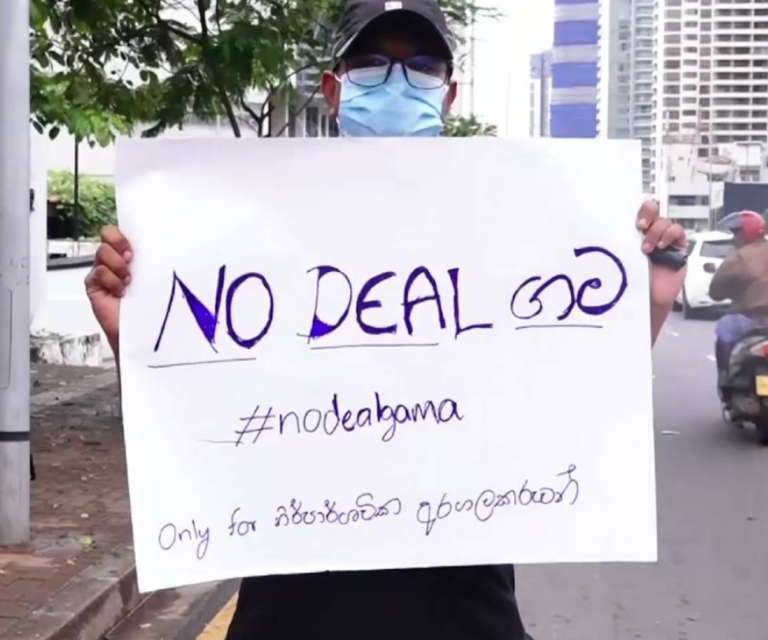
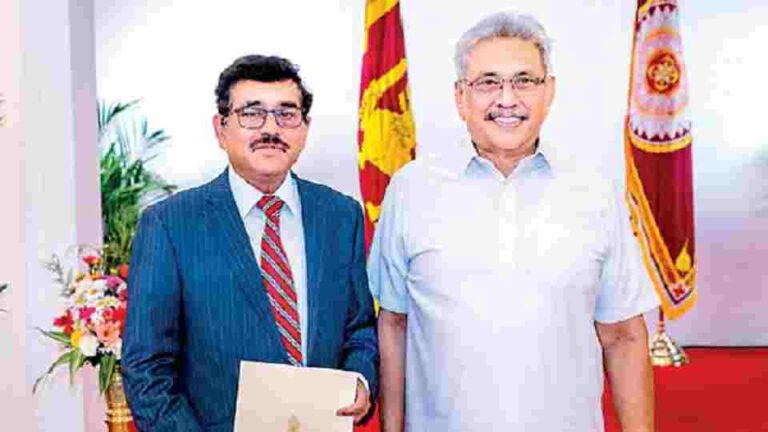
Here below is the letter sent by FEDERATION OF UNIVERSITY TEACHERS’ ASSOCIATIONS to Ranil Wickramasinghe, requesting him to resign.
Mr. Ranil Wickramasinghe Acting President of the Democratic Socialist Republic of Sri Lanka
Dear Mr. Wickramasinghe
15.07.2022
FEDERATION OF UNIVERSITY TEACHERS’ ASSOCIATIONS Reg. No. 8151
Sri Lanka is facing a severe economic and political crisis. Although people are suffering, the political leadership of the country has miserably failed to steer the country towards any kind of stability during this time. The ill-thought-out and arbitrary policies of the Rajapakse regime and the corruption and violence that characterized that regime are the main causes of this failure. On May 9th of this year, when the then Prime Minister, Mahinda Rajapakse resigned under tremendous public pressure, you stepped in to replace him and gave a new lease of life to a discredited regime. You lost your candidacy for a seat in parliament at the last general elections and became an MP using the provisions of the national list. The people of this country including those loyal to your own party have roundly rejected you. Though you had no legitimacy to become the prime minister at that critical moment, you accepted this position against the people’s will. Despite your illegitimacy, which you rationalized on the basis that you had the technical and governance skill to channel international aid to Sri Lanka, the people of this country gave you an opportunity to prove yourself. But you failed to deliver on any of your promises.
At this point in time, we need a legitimate government and collective and participatory governance. The country is not in need of single-person saviors. The events of July 9th have clearly demonstrated that the present government has lost all legitimacy. The office of Acting President is bestowed upon you by a discredited President, who has fled the country under cover of darkness, in disrepute. Under these circumstances, the only ethical and responsible option for you is to step down from this office and avoid contributing to a disastrous constitutional and political impasse that will further destabilize this country.
To this end, we demand that: • You consult with the speaker and the parliament and take the appropriate steps to resign from office immediately.
• Pledge to the people of this country that you will not offer yourself as a candidate when the parliament meets to appoint a new President on the 20th of this month
• Desist from using the arbitrary powers of the office of the executive president to direct violence and suppression at the people at any juncture.
• Desist from acting in such a manner that gives legitimacy to an illegitimate government.
We sincerely hope that you will listen to the voices of reason and the people’s will and step down from your office honorably. As you are well aware, failure to do so could lead to a state of tremendous uncertainty and instability in the country.
Operations at the Hambantota International Port (HIP) from port services, marine services, energy hub, Port Industrial Park and integrated logistics are running uninterrupted, despite the current fuel crisis in the country.
As an essential service, HIP has ensured continuous fuel supply to enable the port to function 24/7 with no disruptions in shipping, logistics operations and services.
Recently, the multipurpose vessel MV Bahri HOFUF called to pick up transshipped vehicles from India, which are enroute to Mexico, Vera Cruz Port.
The specialty of multipurpose vessels is that they are designed with facilities to carry a wide range of cargo including containers, break bulk, and RORO. Earlier this year, HIP handled M.V. Glovis Champion, the largest RORO shipment to call at the port to date.
The first half of 2022 has been very productive for the port which reached almost 1.14 million tonnage in handled volumes. HIP’s strategic partnerships with Lanwa Sanstha Cement Corporation Ltd. and INSEE Cement, has enabled cement manufacturers operating in the Southern part of the country to increase their supply chain efficiency.
The Hambantota International Port is being developed as a multipurpose port and is currently engaged in transshipment of vehicles on the east-west sea route while being the port of call for bunkering, bulk and break bulk, energy services and marine services. Container handling will be the next step for HIP and necessary infrastructure is being put in place.
The Hambantota International Port which is in its fifth year of operations has kicked off projects both on the short and medium-term.
It is also a port of call for bunkering, energy services and raw materials used in cement manufacturing.
Container handling will be next in line for HIP, which is being positioned as a gateway port for light and heavy industry manufacturing in the Hambantota district and adjacent areas.
. HIPG is focused on promoting the country’s strategic location along with the port’s state of the art facilities and high-quality service offering.
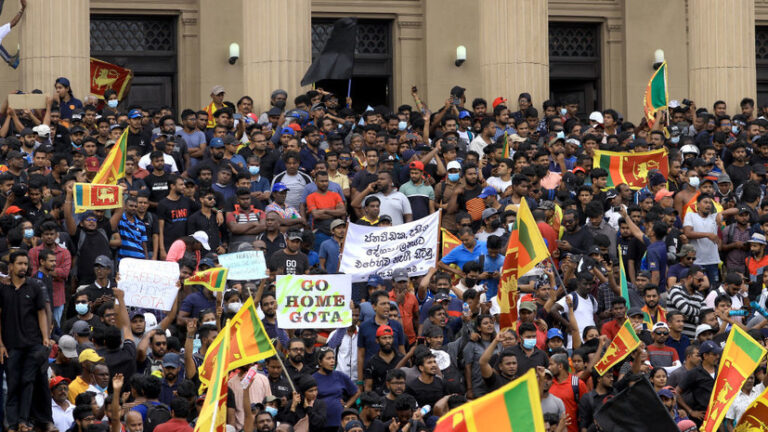
Sri Lanka now encounters an unprecedented political and economic crisis in its 74 year democratic administration history since independence without a functioning government after the president fled the country from mass protests this week.
Foreign exchange reserves have been depleted to US$ 1.92 billion and the country is embroiled in a messy public debt default.
Sri Lanka’s turmoil is mainly balance of payments crisis, several eminent economic experts said adding that the pandemic crippled its tourism-dependent economy due to a slump in international travel, weighing on a key source of external revenues.
Meanwhile, rising imports and large debt servicing costs – a consequence of loose fiscal policy and heavy foreign exchange borrowing – caused a rapid decline in international reserves.
This precarious situation was compounded by this year’s surge in oil prices – a key commodity import – and rising US interest rates.
The Central Bank simply did not have the firepower to defend the Sri Lankan rupee against these global pressures and the currency has collapsed by more than 40 percent against the dollar so far this year.
Meanwhile Fitch Ratings has placed Sri Lanka’s local currency rating ‘Under Criteria Observation’ (UCO) following shift in policy to apply + and – modifiers to the agency’s CCC ratings.
Sri Lanka’s long term foreign currency rating has been downgraded to RD but its long term rupee rating is at ‘CCC’.
“The UCO assignment indicates that ratings may change as a direct result of the final criteria,” Fitch said.
“It does not indicate a change in the underlying credit profile, nor does it affect existing Outlooks.
“We will resolve the UCO status within six months officials aid. The outcomes will depend on Fitch’s assessment of the appropriate notching based on the new criteria.”
Introduction of Modifiers at ‘CCC’: The recently published Sovereign Rating Criteria introduces +/- modifiers in the ‘CCC’ category. Sovereigns rated ‘CCC’ could experience a one-notch rating change, potentially migrating from ‘CCC’ to ‘CCC-‘ or ‘CCC+’.
The Secretary General of the British Commonwealth Patricia Scotland has called for a peaceful transition of power in Sri Lanka after public protests forced President Gotabaya Rajapaksa to flee the country.
“The Commonwealth is a community that is underpinned by our shared values,” Scotland said in a statement.
“As one of the oldest democracies in Asia and a founding member of the modern Commonwealth, Sri Lanka has always shown its strong commitment to these tenets, which are cherished and trusted by its people.
She called on all those in positions of leadership to safeguard democratic principles, the rule of law and human rights.”
Sri Lanka is in severe monetary crisis after seven years of money printing and stimulus under flexible inflation targeting/output gap targeting triggered three currency crises in a row.
“It is important that the concerns of the people of Sri Lanka on governance and other issues are addressed and she urged continued dialogue to this end and call on the international community to continue to assist Sri Lanka in this hour of economic need,” Scotland said.
She expressed the hopel that these challenges will be met according to the letter and spirit of the Constitution of Sri Lanka and the values enshrined in the Commonwealth Charter.
The Commonwealth Secretary-General, Patricia Scotland QC, has called on political leaders in Sri Lanka to safeguard democratic governance, the rule of law and human rights, in adherence with the values and principles of the Commonwealth Charter.
The Secretary-General also reiterated the Commonwealth Secretariat’s commitment to support Sri Lanka in protecting and strengthening its institutions and constitutional governance and facilitating economic stability.
She called on all in Sri Lanka to exercise restraint with a view to a peaceful transition of power.
As one of the oldest democracies in Asia and a founding member of the modern Commonwealth, Sri Lanka has always shown its strong commitment to these tenets, which are cherished and trusted by its people.
The Secretary-General has been in contact with Acting President Ranil Wickremesinghe and other leaders of Sri Lanka.
“It is important that the concerns of the people of Sri Lanka on governance and other issues are addressed and she urged continued dialogue to this end and call on the international community to continue to assist Sri Lanka in this hour of economic need.
The Commonwealth Secretariat stands ready to assist Sri Lanka in ensuring constitutional principles, and the values of the Commonwealth Charter, are upheld
The Supreme Court has ordered the Attorney General to submit a proper fuel distribution mechanism for the essential services.
The court issued this order today (14) when two fundamental rights petitions filed by the Sri Lanka Bar Association (BASL) seeking an order urging the government to prepare a long-term and short-term program for the continuous supply of essential services including fuel, food, electricity, and medicine.
These petitions were summoned today before the three-member Supreme Court bench of Justices Vijith Malalgoda, Mahinda Samayawardena and Arjuna Obeysekera.
The Attorney General submitted an affidavit of the Secretary to the Ministry of Power and Energy, explaining the purchase and distribution of fuel.
Details about the volumes of fuel to be purchased by the government, the payments made and the measures taken for the proper distribution were presented to the Court through the affidavit.
However, the President’s Counsel Uditha Igalahewa, who appeared on behalf of the Sri Lanka Bar Association, pointed out that the arrangements made on the matter are unsatisfactory.
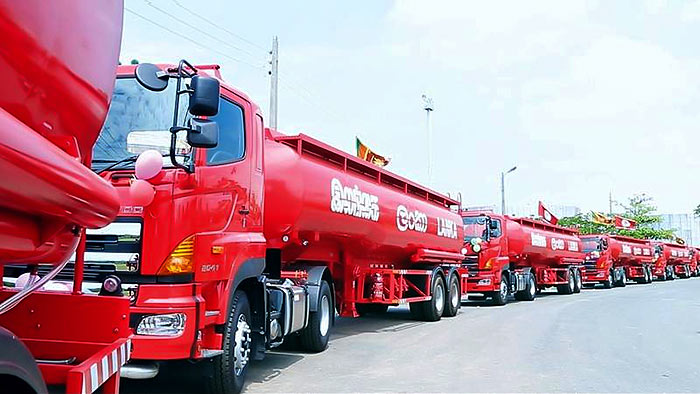
Sri Lanka is suffering the worst economic crisis in its history, with fuel shortages bringing the country to a standstill. Many are now convinced leaving is their only option.
Fuel crisis is expected to be come more critical following the postponement of the cabinet meeting scheduled on Monday 11 as result of the peoples struggle forcing the President , Prime Minister and the ministers to resign.
Cabinet paper seeking the approval to obtain US $ 128 million from the Capital market to pay for fuel shipments scheduled to arrive at the Colombo Port with in the next few days is still pending as there was no cabinet meetings, Finance Ministry sources claimed.
However fuel shipments are scheduled to begin arriving in Sri Lanka from Friday, 15th July, Energy Minister Kanchana Wijesekera said .
He said that last Friday full payments were made with the assistance of the Central Bank of Sri Lanka and the Ministry of Finance to Indian Oil for a diesel cargo to arrive between 15-17 July and a petrol cargo for 22-24 July.
The Minister said that advance payments were made last week for a diesel cargo to arrive between 15-17 July and petrol between 17-19 July. He said that the balance payment will be made today for the diesel.
Wijesekera also said that the balance payment for the petrol to arrive from 17-19th July has not been paid on Tuesday the 12th.
Three further shipments will arrive in Colombo between 12-15th (diesel), 14-16th (heavy fuel oil and 15-17th (crude oil), for which the funds has to be paid on arrival in Colombo
The International Monetary Fund (IMF) is calling for Social and political stability in Sri Lanka in order to resume key talks.
IMF Spokesperson Gerry Rice said that the crisis in Sri Lanka has interrupted the ongoing talks with the IMF.
“So, like everyone else we are, of course, deeply concerned about the ongoing crisis, it’s impact on the Sri Lankan people, and particularly the poor and the vulnerable groups in Sri Lanka and they are closely monitoring the political and the social developments there,” Rice told reporters.
He said the IMF hopes for a resolution of the current situation that would allow for the resumption of a dialogue on an IMF supported program.
“He added that that in June, less than a month ago, things are moving so fast, but less than a month ago there was an IMF staff team in Colombo.
And we did have discussions, actually, constructive discussions with the authorities on a set of economic policies and reforms that could be supported by, potentially by an IMF program. We don’t have a program with Sri Lanka right now. But we were discussing what could be a program,” he said.
Rice also said that Sri Lanka’s public debt is assessed as unsustainable and as is the case with every IMF program, not just the case of Sri Lanka, a program would require adequate assurances on debt sustainability.
Sri Lanka’s prime minister Ranil Wickremesinghe has been sworn in as acting president as the country reels from an economic crisis and unrest.
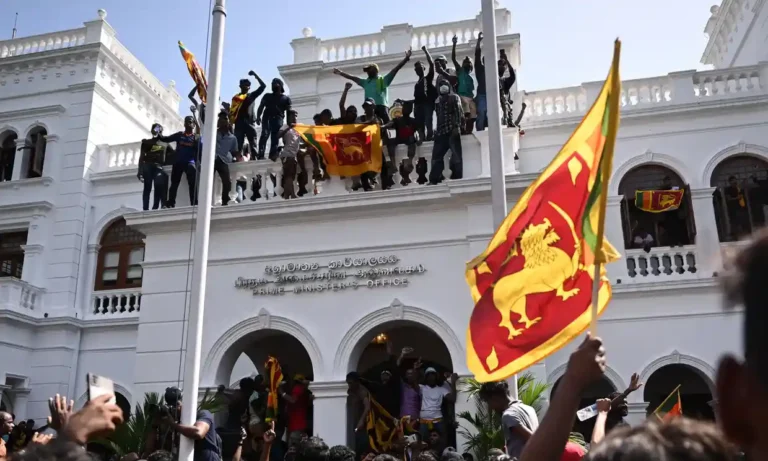
He replaces Gotabaya Rajapaksa who fled to Singapore after unprecedented mass protests which saw demonstrators overrun the presidential palace.
Protesters defied a curfew to celebrate his resignation during the night.
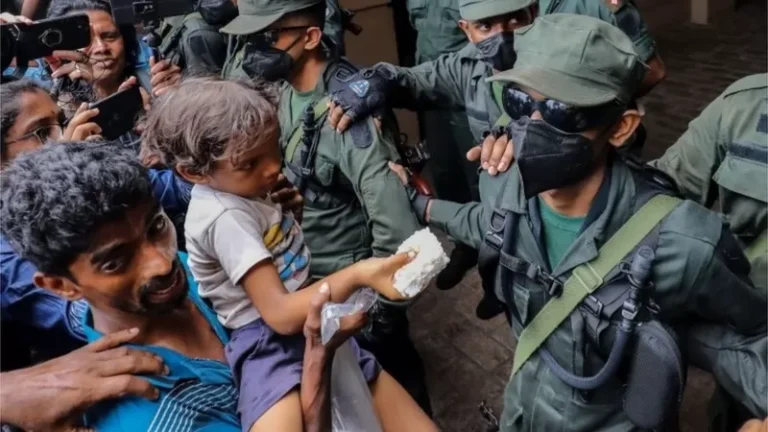
Sri Lanka is experiencing economic chaos as it faces an acute shortage of food, fuel and other basic supplies.
The process of parliament electing a new president will begin on Saturday, with MPs likely to take a vote in a week’s time.
Given the governing party has a majority, MPs are thought likely to back Mr Wickremesinghe, who has close links with the Rajapaksa family.
But whether Sri Lanka’s public would accept this is another matter, because Mr Wickremesinghe’s resignation as PM was a key demand of protestors.
Earlier this week, crowds stormed the former prime minister’s compound, clashing with security forces.
A demonstrator. Manuri Pabasari, told the BBC at the time that a protest rally against Ranil Wickremesinghe was expected in the coming days.
“He has no people’s mandate [and] is a well known Rajapaksa supporter,” she added. “I mean the new president and the new prime minister should be not a Rajapaksa supporter.”
There was a “lot of uncertainty” over whether enough foreign exchange can be found to pay for essential petroleum, he told the BBC’s Newsnight programme, and progress on getting an international bailout package depended on having a stable administration.
Meanwhile, Singapore says the ousted president Gotabaya Rajapaksa did not ask for political asylum when he arrived there.
The former president, who arrived with his wife and two bodyguards, no longer has legal immunity as a head of state and his position is now more precarious as he tries to find a safe country to shelter in.
He is expected to stay in Singapore for some time before possibly moving to the United Arab Emirates, Sri Lankan security sources told AFP news agency.
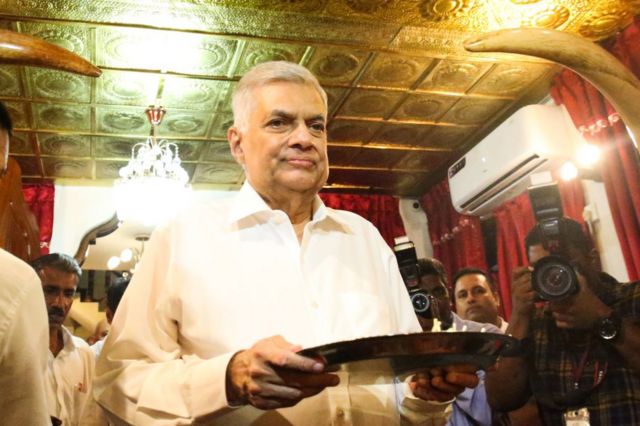
Image caption, Ranil Wickramasinghe (file image)
Sri Lanka: The basics
Sri Lanka is an island nation off southern India: It won independence from British rule in 1948. Three ethnic groups – Sinhalese, Tamil and Muslim – make up 99% of the country’s 22 million population.
One family of brothers has dominated for years: Mahinda Rajapaksa became a hero among the majority Sinhalese in 2009 when his government defeated Tamil separatist rebels after years of bitter and bloody civil war. His brother Gotabaya, who was defence secretary at the time and later became president, fled the country after mass unrest.
Presidential powers: The president is the head of state, government and the military in Sri Lanka, but does share a lot of executive responsibilities with the prime minister, who heads up the ruling party in parliament.
Now an economic crisis has led to fury on the streets: Soaring inflation has meant some foods, medication and fuel are in short supply, there are rolling blackouts and ordinary people have taken to the streets in anger, with many blaming the Rajapaksa family and their government for the situation.
While much attention has been lavished on the chaos of the British government, a more serious defenestration was under way in Sri Lanka this week. The country entered a state of emergency, and its president, Gotabaya Rajapaksa, fled the country after civilians stormed his palace. The videos of people jumping into his pool and petting his pedigree dogs are astonishing.
Sri Lanka’s escalating political and economic crisis has made life on the small island almost impossible. It’s a country on the brink, with no clear sense of what comes next. On one hand this could lay the foundations for radical positive change; on the other it could be the start of a long, bloody conflict between the government and the people.
To get to grips with how Sri Lanka came to this point, I spoke to Hannah Ellis-Petersen, the Guardian’s south Asia correspondent, who is on the ground in Colombo. First though, the headlines.
In depth: A crisis years in the making
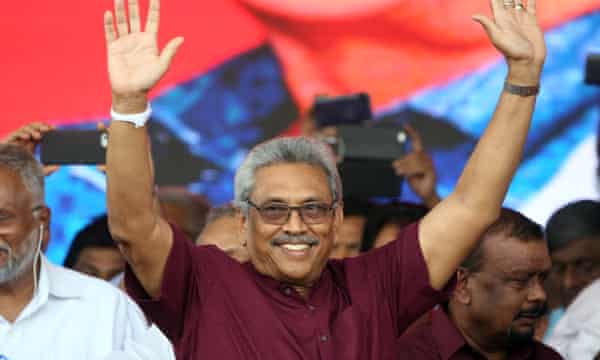
Gotabaya Rajapaksa at a presidential election rally in October 2019. Photograph: MA Pushpa Kumara/EPA
The political upheaval we are witnessing in Sri Lanka did not happen overnight. “This is a historic problem that leaders have turned a blind eye to for decades,” says Hannah Ellis-Petersen.
The country was thought to be one of south Asia’s great success stories: the streets are clean, the infrastructure is impressive, and healthcare and education are free. “The problem is all of this costs money,” Hannah explains, and the government was relying on foreign loans to keep the country running. We are now witnessing the fallout from this, in a crisis that has been years in the making. Here’s a guide to what brought Sri Lanka to this point – and where it goes from here.
***
1 An unstable government
Since achieving independence from British colonial governance in 1948, Sri Lanka’s government has been structured with both a prime minister and a president. The prime minister is the head of government and the most senior member of parliament. But the real power lies with the president.
The problems in Sri Lanka are systemic, says Hannah, and longstanding. “Through a series of terrible financial decisions and mismanagement of the economy, the government has spent all of the money the Sri Lankan government had, and in particular spent all of the dollars,” Hannah says. This is a problem for Sri Lanka as it relies heavily on imports. With no cash left, importing basic necessities like food, fuel and medicines has become difficult – “there are some products that have gone up five times in price”, Hannah adds.
After defaulting on its foreign debt for the first time since achieving independence, the Sri Lankan government halted the sale of fuel for non-essential vehicles for two weeks. It is the first time a country has restricted fuel sales since the 1970s. Citizens have also been faced with daily power outages, schools have closed and people are forced to work from home in an attempt to conserve energy.
“It’s important that we understand that it’s not just Covid-19 or the war in Ukraine, or global inflation,” Hannah says, explaining that while these external factors have exacerbated the problems in the country, Sri Lanka’s difficulties are largely the consequence of reckless spending and endemic corruption.
***
3 A doomed dynasty
At the heart of it all is the Rajapaksa family. Gotabaya Rajapaksa, the president, was a popular figure when elected in 2019. At that stage “it was genuinely unfathomable to think that the Rajapaksas would ever fall; they seemed untouchable”, says Hannah. Before a few resignations in April, Gotabaya and his brothers, Mahinda and Basil, were running the country with an iron fist. They appointed sons and other family members into government positions, and this nepotism created the perfect conditions for corruption to fester.
Basil, until recently the country’s finance minister, has been accused of lining his own pockets through huge infrastructure projects which are said to be completely useless; and in 2016 Gotabaya was charged in a corruption case. (The charges were eventually dropped on the grounds of immunity after he was elected president.) In only three years, the Rajapaksas have shifted greater political power to the president, further limiting his accountability for political or economic decisions.
But these protests have created a “political awakening”, Hannah says. “People don’t just want Rajapaksa to go or even for his family to go – they want the whole political system to be overhauled.”
*** 4 What next?
The people of Sri Lanka aren’t just complaining about their conditions – they have clear demands too. A resignation and a unity government that includes all political parties to help solve the economic crisis – and then eventually a general election.
The protesters will not fade away – when resignation looked unlikely, protesters set the prime minister’s residence on fire. This mounting pressure and constant threat of escalation have led to Gotabaya Rajapaksa’s official resignation.
This is a positive sign, however the country is not out of the woods yet. The now acting president, Ranil Wickremesinghe – also the current prime minister, who has been involved in government for more than two decades himself – has given the military free rein to “restore order and peace”. Such a directive would be concerning anywhere, but under a government that already stands accused of human rights abuses and war crimes, it felt ominous.
Yet Hannah remains optimistic: “My hope is that this upheaval could really positively change the island. After the end of the civil war, there were no efforts of reconciliation, accountability or unity. And this finally, 13 years later, might be the thing that does that,” she says. “But it relies on politicians being admirable and doing the right thing.”
In May 2022, Sri Lanka defaulted on its debt for the first time in history when the country was negotiating a swap facility from a bilateral country. The lender was livid that Sri Lanka defaulted without informing the lender. Despite Sri Lanka was given a 30-day grace period to pay $78 million in unpaid interest, the Central Bank ultimately failed to pay. The Governor informed ex President Gotabaya Rajapakse that it was only a “soft default”.
LNW is still to find a good definition for what a soft default really means in the banking world . Because for the writer a default is a default however big or small . This unplanned and unauthorized default not only did it impact Sri Lanka’s economic future for a long time, but it also raises an important question; what else is risk of default? His decision to default without parliamentary approval is only one of the list of the blunders that has caused serious harm to the economy.
The default has virtually put Sri Lanka out of world capital markets for ever. The ongoing economic crisis, the worst Sri Lanka has ever seen in its post-independence history, would next test the country’s largest banks’ resilience, as Fitch Ratings on Monday said their asset quality, earnings, capitalisation and liquidity could come under tremendous pressure, when the operating conditions deteriorate further due to the ongoing crisis..
Fitch rating agency said the sovereign credit default in April and rapid deterioration in the broader macro-economic environment, where the soaring interest rates, red-hot inflation and currency depreciation have narrowed the banks’ operational flexibility, which in turn would mute growth, trigger loan defaults and hike operating costs, putting enormous pressure on the earnings. Therefore for this foolish decision ably supported by the opposition who were running scared of a “super default” ( meaning unknown)
Nandalalweerasinge in my view should like #Gota go home to Australia . We can no longer experiment with academics and inexperienced pundits who try to impress using big words. To unwind some of the decisions he has taken for example hiking interest rates by 100% when inflation is driven by a shortage of foreign exchange and CBSLs inability to stabilize the foreign exchange by sticking to text book interventions, he has caused unrepairable damage to the livelihoods of the people of Sri Lanka.
There must certainly be better and practical and less cocky people in the Central Bank who can fill his shoes.