Sri Lanka Tourism Ministry is planning to restructure debt of tourism sector stakeholders running up to Rs. 5000 billion at present, Sri Lanka Tourism Development Authority (SLTDA) Chairman Priantha Fernando said.
The Sri Lanka tourism authorities, led by Tourism Minister Harin Fernando, are actively contemplating on setting up what is called a ‘bad bank’ to restructure the debt of the crisis-hit tourism sector,he said.
“It (bad bank) is an option that we are very much looking into. While we have not confirmed the setting of a bad bank, we have not written it off either” he added.
Active discussions are taking place; we will finalise a way forward for the tourism sector to tackle their loans,” Mr Fernando divulged.
The idea of establishing a bad bank was spawned mid-last year when the tourism sector stakeholders were negotiating the extension of the moratorium extended to the
industry loans.
Bad banks are typically government-sponsored asset reconstruction companies (ARCs) set up with the primary objective of cleaning up bank balance sheets.
He said “Unlike private ARCs, bad banks are established as a one-time measure, with the primary objective of reducing the build-up of non-performing assets, post a financial or economic crisis”.
Fernando shared that by end-August a decision would be reached on the way forward, after which a proposal would be presented to the Tourism Minister, which then will be tabled in Parliament.
According to the SLTDA chief, the industry stakeholders are “very much” on board with the idea of setting up of a bad bank, as it is viewed as a workable way forward to assist with the settlement of their loans. Fernando assured that the decision would be finalised only after a consultative process with the stakeholders is followed.
The tourism industry debt is estimated to be over Rs.500 billion, including the accumulated debt. The industry found itself in a rather tight situation in early June when the moratorium extended to it expired.
SL Tourism Ministry to restructure Rs 500 billion tourism sector debt
Police all eyes on ‘Aragalaya’ second wave. Intelligence Units called in!
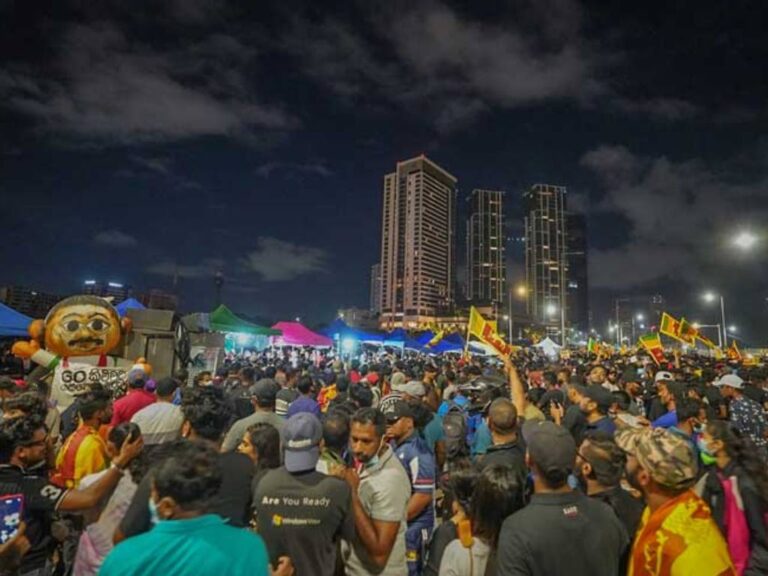
The Police have launched a special investigation into what they warn as a potential second wave of the anti-government protests, following the establishment of the ‘Aragala National Centre’ (Aragala Jaathika Madhyasthanaya) by the groups associated with the Galleface protests.
The new movement’s debut event titled ‘Rata Dinawana Aragalaye Deweni Rella’ (The Second Wave of the Struggle that makes the Country win) was held on Vauxhall Street, Colombo yesterday (24). Accordingly, the Police’s probe into the second wave will subsequently focus on the new movement as well.
Senior Deputy Inspector General of Police (SDIG) in Charge of the Western Province, Deshabandu Thennakoon has sent a letter to the higher officials of the Colombo Central Division, requesting them to pay special attention to the aforementioned activists and the movement, and urging that a special probe be launched through intelligence units.
The movement was established under the knowledge and navigation of a powerful political figure in Sri Lanka and its media coordination officer is known to be one of his close associates, Thennakoon’s letter claimed.
It added that front-line activists of the People’s Struggle including the Janatha Vimukthi Peramuna (JVP), the Frontline Socialist Party (FSP) and other multi-people and civil movements are also endorsing the Aragala National Centre and that Social Media is used as medium to spread membership.
MIAP
Sri Lanka President urges China to change stance on debt restructure
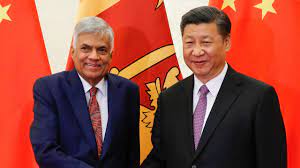
Sri Lanka is urging China to dramatically change its stance on debt relief, President Ranil Wickremesinghe told Nikkei Asia in an exclusive interview, conceding that reaching a deal will be no simple task.
The appeal to China, the bankrupt Indian Ocean nation’s largest bilateral lender, has emerged as a formidable challenge to Wickremesinghe, who is leading the country’s financial team as it attempts to rebuild an economy starved of foreign reserves and mired in misery.
The effort is likely to feature prominently in a fresh round of discussions between Colombo and International Monetary Fund representatives arriving Wednesday.
“We have informed the Chinese government [of] the need to restructure [the debt] and the need for all the creditors to sing from the same hymn sheet,” Wickremesinghe told Nikkei.
But the six-time prime minister, who won a parliamentary vote for the presidency and began his term on July 21, sees a complex path to spurring a change of heart in Beijing, hinging partly on Sri Lanka’s other lenders.
“China, of course, has adopted a different approach, so it is a question of what is the agreement that the [other creditor] parties can reach with China,” he said during a 40-minute conversation in his wooden-paneled office at the Presidential Secretariat, a colonial-era building that faces Colombo’s seafront.
Wickremesinghe was responding to a question about China’s preferred route of refinancing its loans or deferring the repayment dates for countries in debt to Chinese banks — rather than restructuring the loans and settling for a loss-making “haircut.”
An IMF statement on the eve of its visit highlighted, albeit obliquely, that the China factor is set to shape Sri Lanka’s economic fortunes.
On the prospects for giving Sri Lanka a multibillion-dollar bailout, the fund said: “Because Sri Lanka’s public debt is assessed as unsustainable, approval by the IMF Executive Board of the [Extended Fund Facility] program would require adequate assurances by Sri Lanka’s creditors that debt sustainability will be restored.”
The list of creditors in the US $81 billion economy ranges from Western sovereign bondholders, who together account for the largest $14 billion slice of debt, to bilateral players such as China, Japan and India. Then there are the multilateral lenders — the Asian Development Bank and the World Bank.
The country’s outstanding foreign debt is a staggering $51 billion, with some independent economists estimating that China’s lending to Sri Lanka from 2001 to 2021 amounted to nearly $9.95 billion.
Sri Lanka had a foreign debt bill of $6.9 billion that it had to service in 2022 but defaulted in April after it ran out of foreign reserves, a first in the South Asian nation’s history.
The country of 22 million currently has $300 million worth of usable foreign reserves, not enough to ensure a steady flow of food, fuel and pharmaceutical imports. The latest figures from the Department of Census and Statistics show that food inflation in July soared to 82.5% on the year.
Pleasing China will test Wickremesinghe, a foreign affairs veteran, as he courts Beijing over the debt. T
his was all too apparent earlier this month when Sri Lanka asked China to defer a port call by a military survey vessel due to protests by India.
The move prompted a furious response from Beijing and raised concerns that it could affect the debt restructuring talks.In the end, Sri Lanka agreed to let the ship dock.
“The geopolitical situation [in the Indian Ocean] is heating up, but so far we have been able to keep it out and look at our [debt problem] in a purely economic manner,” Wickremesinghe said.
“But there will be issues [with] how the debt is being treated and how the debt relief is to be treated. They will have some geopolitical implications, he added
Four accused of setting Rohitha Rajapaksa’s hotel on fire arrested

Four persons accused of setting a hotel said to be owned by former Prime Minister Mahinda Rajapaksa’s youngest son Rohitha Rajapaksa on fire and damaging its property were arrested by the Kolonna Police.
The suspects, aged 25 – 50 and residents of Kolonna, were arrested on August 22 and 23.
The hotel located in Gongalakanda, Kolonna was set on fire on May 10, following a series of escalations triggered by the brutal attack launched by pro-Rajapaska protesters against the anti-government protesters in Colombo a day earlier.
The Kolonna Police are conducting further investigations.
MIAP
Visiting IMF delegation holds talks with President Ranil Wickremasinghe
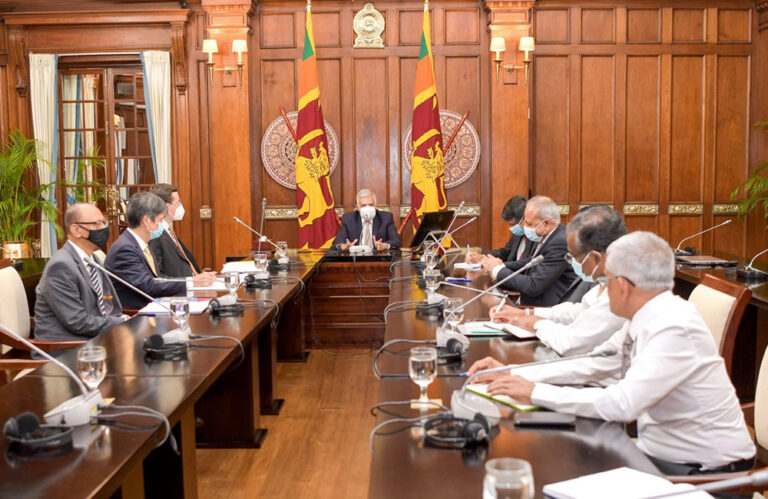
The visiting delegation of the International Monetary Fund (IMF) called on Sri Lanka President Ranil Wickremesinghe yesterday evening (Aug 24) and discussed the current situation of the economic crisis the nation is grappling with at present.
The meeting with the Head of State came after the delegates of the global lender kicked off discussions with Governor of Central Bank of Sri Lanka, Dr. Nandalal Weerasinghe this morning, to finalize a staff-level agreement for a possible US$ 3 billion bailout package, including restructuring debt of about $29 billion.
IMF’s Resident Representative for Sri Lanka, Tubagus Feridhanusetyawan and Finance Secretary Mahinda Siriwardana also participated in the talks at the Central Bank premises.
The IM delegation will be in Colombo from August 24 to 31. Another round of discussion is scheduled to take place on August 26.
During the meeting with President Wickremesinghe, the IMF delegates decided to hold further discussions with the Central Bank officials on technical issues, the President’s Media Division (PMD) said.
Chief of the Debt Capital Markets Division of IMF’s Monetary and Capital Market Department Mr. Peter Breuer, Secretary to President Saman Ekanayake, President’s Chief of Staff Sagala Ratnayake and Central Bank Governor Dr. Nanadalal Weerasinghealso joined the discussion.
The team will also hold talks with the central bank governor and other officials, including representatives of Sri Lanka’s financial and legal advisers Lazard’s and Clifford Chance.
The main sticking point of the talks is how to find a sustainable track for Sri Lanka’s unwieldy debt, which stood at 114% of GDP at the end of last year, so as to clinch a staff-level agreement in September.
Sri Lanka has $9.6 billion in bilateral debt and its private credit, which includes international sovereign bonds, stands at $19.8 billion, finance ministry data show.
Japan and China are the largest holders of bilateral debt, with the latter accounting for about $3.5 billion. Overall, when commercial debt is added, China holds about a fifth of Sri Lanka’s debt portfolio.
“The issue will be how Chinese and domestic debt will be included in the talks,” said Timothy Ash, senior emerging markets sovereign strategist at BlueBay Asset Management.
“Other bilateral creditors won’t be willing to allow China to get away with not having comparable President Ranil Wickremesinghe, who is also the finance minister, plans to ask Japan to lead talks on bilateral debt restructuring after Sri Lanka secures IMF support.
The government is “negotiating on many fronts, and it has to make progress at least with the big creditors” for debt talks to move forward, said Sergi Lanau, deputy chief economist at the Institute of International Finance
treatment this time. China is part of the problem, and needs to be part of the solution this time.”
SLID and TISL jointly launch ‘Business Against Corruption’ initiative
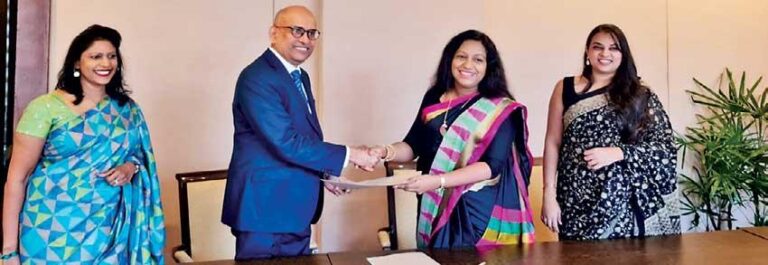
Sri Lanka business sector is to be directed towards the elimination of corruption to overcome the challenges faced by companies in doing business.
Corruption and waste have become a stumbling block for the progress of companies making it difficult for them to carry out best practices in business such as transparency, accountability, integrity, fair market competition and fair pricing, several business leaders claimed.
The Sri Lanka Institute of Directors (SLID) recently entered into a strategic collaboration with Transparency International Sri Lanka (TISL) to launch an initiative under the theme ‘Business Against Corruption’.
Under this theme, the two institutions will work together to facilitate and enable businesses to mitigate the risk of corruption.
The roadmap planned over a three-year time horizon includes a series of programs and activities to create awareness on the issue, key stakeholder engagements, training programs incorporating international best practices in business .
The aim is to instill ethical practices among business sector creating awreness on sound values of transparency, accountability, integrity, fair market competition, fair pricing, credible leadership and building a strong inner resilience framework.
SLID Chairman Faizal Salieh said: “We are mindful of the current state of affairs, the ground realities, and the challenges faced by companies in doing business.
He added that therefore, our approach on this journey is pragmatic and practical and will enable businesses to proactively and progressively mitigate the corruption risk using preventive measures, checks and balances on a voluntary, ‘best efforts’ basis.”
TISL Executive Director Nadishani Perera said: “Businesses play a critical role in any nation’s efforts against corruption.
At this unique and transformative moment in Sri Lanka’s history, as the citizens have risen against corruption, it is of utmost importance that the business community also commits to do its part towards this mission.
Both SLID and TISL are committed to working closely with the business community to raise the integrity of our nation and make it a better investment destination.
SLID said corruption has been identified as a root cause of the current political and economic crisis in Sri Lanka by several analysts.
It exists at the business, public, and Government levels and needs to be addressed in the national search for solutions to the present crisis with a view to ensuring the country’s economic recovery and long-term sustainability.
Corruption endangers and discourages investment, leads to the misallocation of resources, creates uncertainty, and results in high social costs. Mitigating corruption will make way for Sri Lanka to become an attractive destination for good, long-term investments.
Corruption has plagued Sri Lanka for many years and still continues to do so. Sri Lanka is ranked 102nd in Transparency International’s most recent Corruption Perception Index (2021), which ranks 180 countries and territories by their perceived levels of public sector corruption.
India puts into motion ferry service from Puducherry to Jaffna
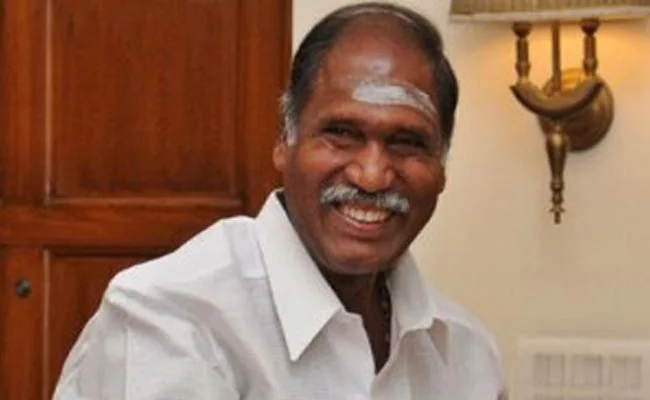
The proposed ferry service between India and Sri Lanka is expected to be launched this year, Puducherry Chief Minister N. Rangasamy said.
He told the Assembly the Indian Government hopes to launch the ferry service between the Karaikal Port and Kankesanthurai Port this year.
Presenting the Budget for 2022-23, Rangasamy also said that under the Sagarmala scheme, it was proposed to commence commercial cargo handling operation at the Puducherry Port, in association with Chennai Port Trust this year.
“It is proposed to invite Expression of Interest (EoI) from firms for operating passenger and cargo ship and promoting other allied activities in the Puducherry Port,” he said.
In recent times, India’s Union Ministers and State politicians are calling for further people-to-people connectivity between Sri Lanka and India for tourism purposes as most of the tourists who visit Sri Lanka during the pre-pandemic period were from India.
As part of this, plans are underway from the Indian side to revive the India-Sri Lanka ferry service between Karaikal in the Union Territory of Puducherry and Jaffna covering a distance of 56 nautical miles.
The project is going to be a Public-Private Partnership arrangement with a shipping services entity. Ferry services between Colombo-Tuticorin and Thalaimannar-Rameswaram are also under consideration.
If implemented, the ferry service would facilitate Buddhist and Hindu pilgrims to visit religious and cultural destinations in respective countries.
Sri Lanka’s High Commissioner to India Milinda Moragoda also stressed the need to revive this service in his conceptual note before taking up the job, hopefully next week.
Responding to a query raised by Batticaloa MP R. Chanakkiyan, Foreign Ministry said there had been no final decision taken from the Sri Lankan side on reviving the ferry service even though the Indian side expressed interests.
The ministry said the Indian proposal was pending approval from Sri Lankan Defence and law enforcement authorities.
It would take around three hours for one-way trip and would cost about Indian Rs 6,5000-Rs 7,000 for a round trip.
In order to promote tourism, the Puducherry ministry for shipping has mooted a proposal to start ferry service between Karaikal in the Union Territory of Puducherry and Jaffna in Sri Lanka covering a distance of 56 nautical miles (103.7 kilometres).
Hundreds of Tamil-speaking people from Sri Lanka come to India on pilgrimage. Besides, many Sri Lankans also visit India to see Buddhist sites.
The ferry service will facilitate their visit. It will not only give boost to tourism, but will also improve bilateral cooperation between the two countries, he said.
A ferry service between India and Sri Lanka was operated between Dhanushkodi in Tamil Nadu and Thalaimannar in Sri Lanka, over a distance of 30 nautical miles.
After the 1964 cyclone destroyed infrastructure at Dhanushkodi, the service was operated from Rameswaram.
In 1984, the Union government suspended the service due to the rise of ethnic conflict in the island nation. In more recent years, the TN government has been looking at a fresh site at Rameswaram to resume operations.
Protect the rights of the LGBTIQ community: Premnath C. Dolawatte
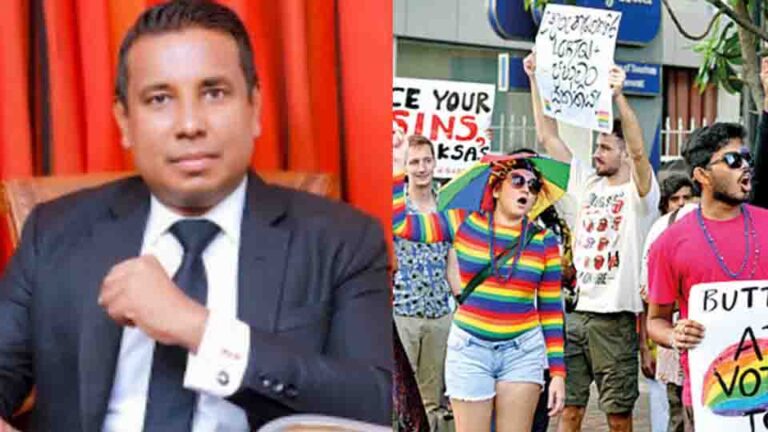
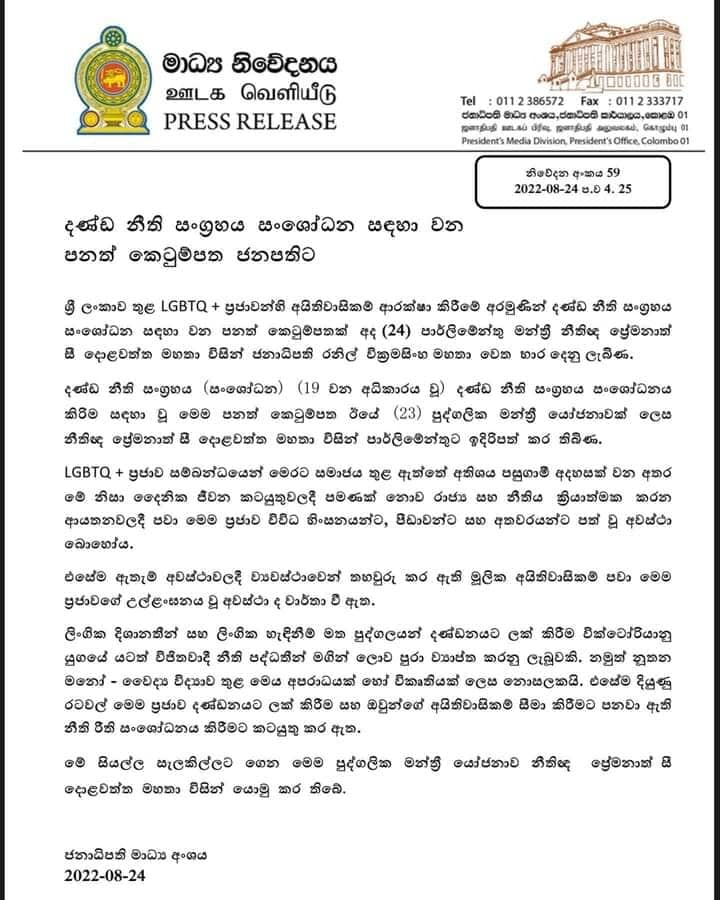
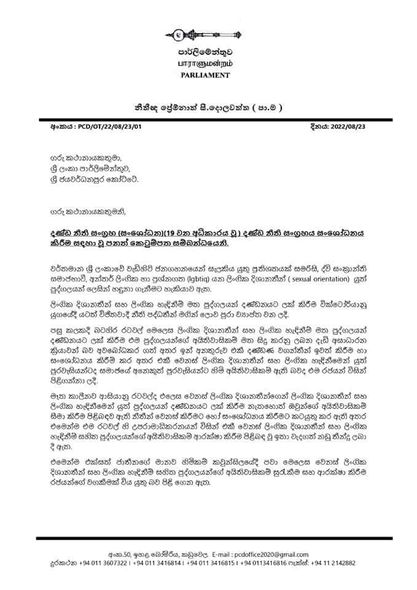
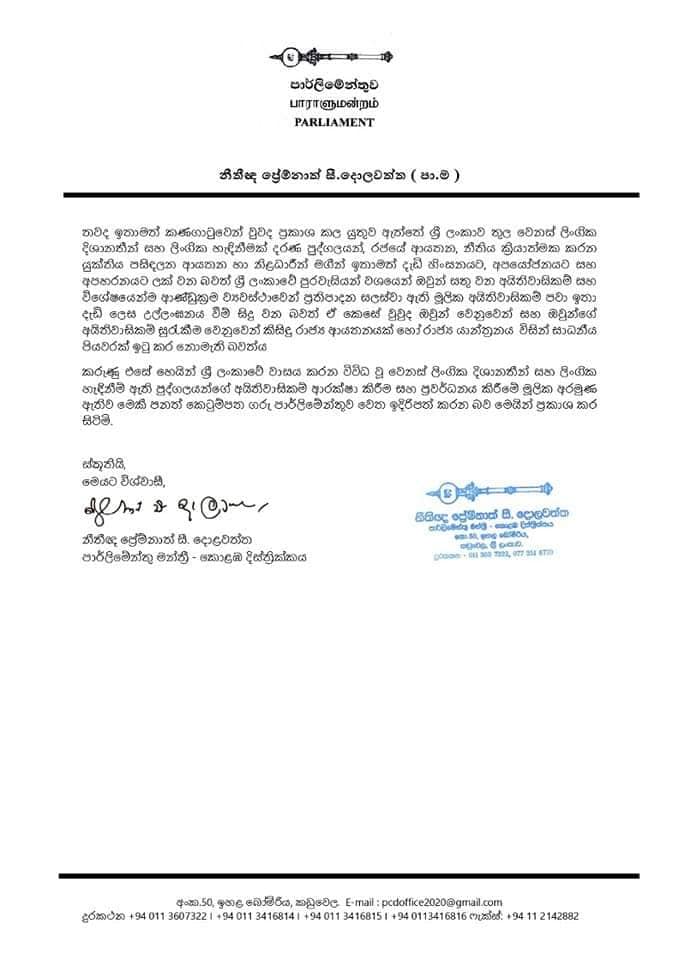
Sri Lanka Podujana Peramuna (SLPP) MP Premnath C. Dolawatta says that the laws provided by the Penal Code affecting the people of diverse sexual orientations, gender identities, expressions and sex characteristics including the LGBTIQ Community in Sri lanka must be repealed.
The private motion that has been granted to the President Ranil Wickramasinghe today (24), was tabled in Parliament the day before(23) and through that, the MP suggests that the transgression in civil-liberties of the LGBTIQ community enforced via the Penal Code (Amended) (19th Authority) should be ceased.
OV
Japan grants JPY 500 million to improve SL’ Non-Communicable Disease Treatment Facilities
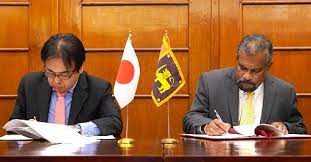
Japan will be providing JPY 500 million(approximately Rs. 1,265 million) under the Japanese Government Non- Project Grant Aid Programme to Improve Non-Communicable Disease Treatment Facilities at the Sri Jayawardenepura Government Hospital (SJGH).
“Ensure healthy lives and promote well-being for all at all ages” is a Sustainable Development Goal and its Target: “By 2030, reduce by one third premature mortality from non-communicable diseases through prevention and treatment and promote mental health and well-being”.
Accordingly, Government of Japan provides medical equipment and technical assistance to improve Non-Communicable Disease Treatment Facilities at the Sri Jayawardenepura Government Hospital (SJGH) under Japanese Government Non- Project Grant Aid Programme.
Under this grant assistance, Angio- CT machine, Other Radiology equipment, Ophthalmic instruments, Surgical instrument set (stainless steel with satin finish), Fifteen (15) Dental Units with accessories, Liver transplant Instrument set, Cardiac Catheterization Laboratory will be provided.
This improvement at the hospital will facilitate for enhancing the quality of the care provided specially to the patients with non-communicable diseases while enabling to provide high quality medical professional training to medical undergraduates and postgraduates from National School of Nursing in Sri Jayawardenepura and Faculty of Medical Sciences of University of Sri Jayawardenepura.
Accordingly, this project will eventually assist the development of human resources of health sector in Sri Lanka.
Based on the request of the Government of Sri Lanka, the Government of Japan has agreed to provide Japanese Yen 500 million (approximately Rs. 1,265 million) grant under the Japanese non-project grant aid scheme for provision of equipment to improve the facilities at the Sri Jayawardenepura Government Hospital (SJGH).
The Exchange of Notes pertaining to the above grant were signed by K.M Mahinda Siriwardana, Secretary, Ministry of Finance, Economic Stabilization and National Policies on behalf of the GOSL and. MIZUKOSHI Hideaki, Ambassador of Government of Japan on August 18, 2022 at the Ministry of Finance, Economic Stabilization and National Policies.
UN and SL enter into UNSDCF agreement to ensure rapid economic recovery
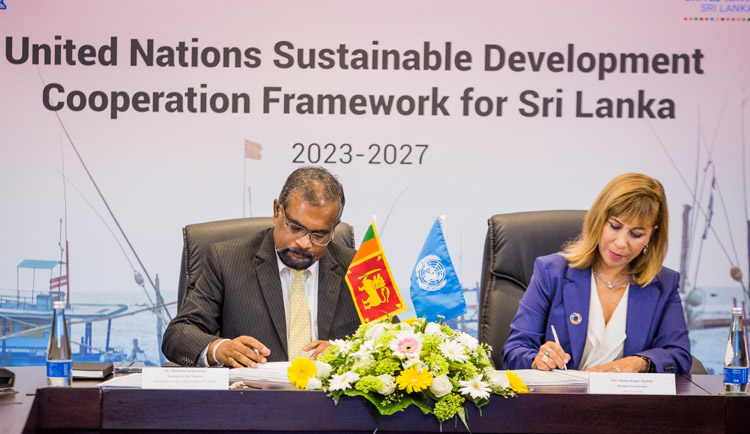
UN Sri Lanka and Government sign Sustainable Development Cooperation Framework for Sri Lanka The Cooperation Framework will guide the work of UN Agencies, Funds and Programmes for the next five years (2023 – 2027)
The United Nations Sustainable Development Cooperation Framework (UNSDCF) 2023-2027 was launched today by the Government of Sri Lanka and the United Nations in Sri Lanka.
The UNSDCF is the Framework that guides the work of all the UN Agencies in Sri Lanka and articulates the collective vision and contribution of the United Nations to support Sri Lanka to accelerate actions towards the achievement of the 2030 Agenda for Sustainable Development.
The Cooperation Framework gives primacy to accelerating actions to ensure a rapid recovery from the economic crisis along with the impact of COVID-19, prioritising support to revitalise the economy and economic activities, social services, decent employment, social cohesion, and health and wellbeing for all people in Sri Lanka.
The UNSDCF was co-signed by the Secretary to the Treasury Mahinda Siriwardana on behalf of the Government of Sri Lanka and UN Resident Coordinator in Sri Lanka. Hanaa Singer-Hamdy on behalf of the United Nations. Heads of UN Agencies, Funds and Programmes in Sri Lanka also signed the Cooperation Framework.
The signing ceremony hosted at the Ministry of Finance was also attended by Secretary to the Ministry of Foreign Affairs Mrs. Aruni Wijewardane and the Regional Director for Asia and the Pacific of the UN Development Coordination Office, David McLachlanKarr.
Speaking at the event, Secretary to the Treasury Mahinda Siriwardana noted that “the current global challenges demonstrate the continued importance for multilateral solutions that bring together the international community around shared priorities.
This Cooperation Framework with the United Nations in Sri Lanka will be key as we pursue sustainable and inclusive development for the people of Sri Lanka,” he said.
Elaborating further the UN Resident Coordinator in Sri Lanka H.E. Hanaa Singer-Hamdy said, “this Cooperation Framework is mutually owned and anchored in national development priorities, the 2030 Agenda and the principles of the UN Charter.
The UNSDCF is structured around four interrelated and mutually reinforcing Strategic Priorities where the UN system will concentrate its expertise to support Sri Lanka to make transformational and accelerated progress.
These Strategic Priorities cover Inclusive and Equitable Human Development and Well-being; Resilient and Green Recovery and Growth for Shared Prosperity and Environmental Sustainability; Social Cohesion and Inclusive Governance & Justice; and 2022 – 08 – 17 Gender Equality.
UN’s work will be underpinned by a crosscutting commitment to support rapid recovery from the economic crisis and the impact of COVID-19”. She further noted that programmes by the UN System will be anchored in the principles of human rights and nondiscrimination and ensuring that “no one is left behind”.
“The 2023-2027 Development Cooperation Framework reflects Sri Lanka’s national development priorities while working towards the 2030 Agenda for Sustainable Development. It was concluded at a very significant moment for the country, when transformational changes are being operationalized in the economic, political and social fronts.
It is supportive of the Government’s efforts to “leave no one behind” in progressing towards the SDGs in partnership with the UN Development System in “Delivering as One”, Secretary to the Ministry of Foreign Affairs Mrs. Aruni Wijewardane said.
The UNSDCF will be funded through core budget allocations of an estimated USD 60 Million, in addition to approx. USD 325 Million through other resources – spread across the five-year period of implementation.