
A new IMF-supported programme to extend the extended fund facility to Sri Lanka is being developed to restore macroeconomic stability and debt sustainability, while protecting the poor and vulnerable, safeguarding financial stability, and stepping up structural reforms to address corruption vulnerabilities and unlock the country’s growth potential.
An International Monetary Fund (IMF) mission team led by Messrs. Peter Breuer and Masahiro Nozaki visited Colombo from June 20 to 30, 2022 to discuss IMF support for Sri Lanka and the authorities’ comprehensive economic reform program. Ms. Anne-Marie Gulde-Wolf, Deputy Director of the IMF’s Asia and Pacific Department, participated in policy discussions.
The IMF team had constructive and productive discussions with the authorities on economic policies and reforms to be supported by an IMF Extended Fund Facility (EFF) arrangement.
Significant progress was made, and discussions will continue virtually towards reaching a staff-level agreement on the EFF arrangement in the near term.
Latest talks with Sri Lanka has made significant progress towards developing a policy package to stabilize the country the International Monetary Fund said, but the country also has to move forward on debt restructuring to finalize a bailout.
“The staff team and the authorities made significant progress on defining a macroeconomic and structural policy package,” an IMF statement said.
“Because public debt is assessed as unsustainable, Executive Board approval would require adequate financing assurances from Sri Lanka’s creditors that debt sustainability will be restored.”
Sri Lanka has appointed financial and legal advisors to negotiate with creditors.
At least one sovereign bond holder with over 250 million dollars has gone to court seeking full payment.
The team had constructive and productive discussions with the Sri Lankan authorities on economic policies and reforms to be supported by an IMF Extended Fund Facility (EFF) arrangement.
The staff team and the authorities made significant progress on defining a macroeconomic and structural policy package.
The discussions will continue virtually with a view to reaching a staff-level agreement on the EFF arrangement in the near term. Because public debt is assessed as unsustainable, Executive Board approval would require adequate financing assurances from Sri Lanka’s creditors that debt sustainability will be restored.
“In this context, discussions focused on designing a comprehensive economic program to correct the macroeconomic imbalances, restore public debt sustainability, and realize Sri Lanka’s growth potential. Discussions advanced substantially during the mission, including on the need to reduce the elevated fiscal deficit while ensuring adequate protection for the poor and vulnerable.
Given the low level of revenues, far-reaching tax reforms are urgently needed to achieve these objectives. Other challenges that need addressing include containing rising levels of inflation, addressing the severe balance of payments pressures, reducing corruption vulnerabilities and embarking on growth-enhancing reforms.
IMF bailout package preparation for Sri Lanka gains significant progress
Japan says that they cannot give aid as the rulers cannot be trusted
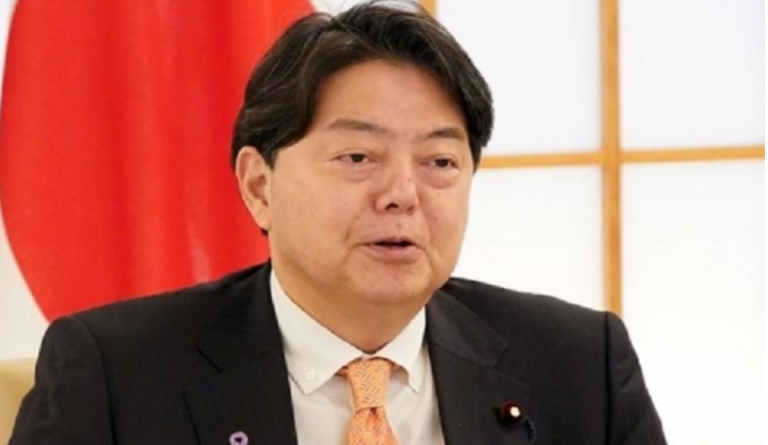
Sri Lanka is facing a huge crisis, but the Japanese ambassador to Sri Lanka has said that there is no possibility of considering giving aid at this time.
A group of members of the Tamil National Alliance met the Japanese Ambassador to Sri Lanka Misukoshi Hideki yesterday (30) and discussed the crisis situation facing the country.
The ambassador has said that if aid is given, it cannot be expected that it will be properly managed and that the aid will have to be delayed until trust is built in the rulers of this country.
However, the ambassador has further emphasized that assistance can be considered later.
Crisis-hit Sri Lanka lifts ban on Qatar Charity to secure fuel from Doha
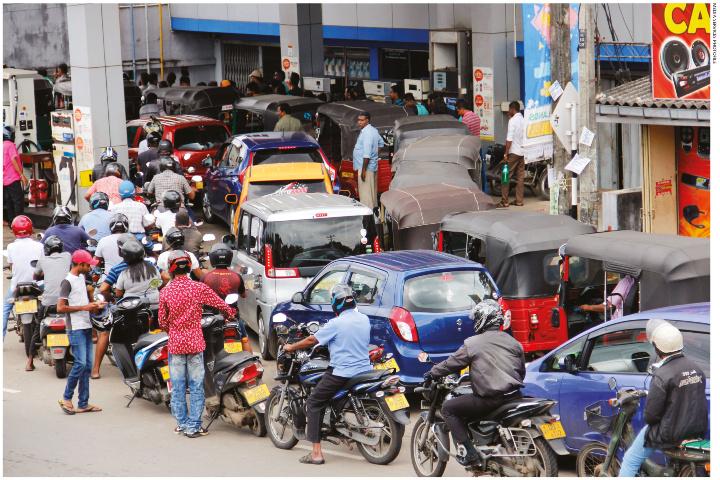
In a desperate move to woo fuel supply from Doha Sri Lanka has lifted a ban on Qatar Charity, months after the government froze the charity’s accounts accusing it of funding Islamic terrorism together with a prominent lawyer.
This assurance was given by Power and Energy Minister Kanchana Wijesekera who led a delegation to discuss possibilities of securing a fuel credit line to Sri Lanka when he met Qatar Charity officials in Doha on June 29.
“Met the Officials of the Qatar Charity yesterday. Conveyed the message that the Defense Ministry has informed the Attorney General its decision to lift the ban on the fund which was imposed in 2019,” Wijesekera tweeted.He also discussed the Charity’s work in Sri Lanka and globally.
However no pocitive response has been received from Qatari authorities on Sri Lnka ‘S request for oil credilne and other assistance for the ialsnad nation to over comen the fuel crisisas the Sri Lanakn delegation failed to convince them . informed sources in Qatar said.
Sri Lankan diplomats in the Middle East have noted that the governments there do not give as much priority to Sri Lankan issues as they did before the island nation’s political leaders’ action soured diplomatic relations.
A former police minister and a close ally of President Gotabaya Rajapaksa Sarath Weerasekara told parliament on January 07 2021 that the ringleader of the Easter Sunday suicide bombers Zaharan Hashim had conducted lectures in an organisation maintained by Sri Lankan lawyer Hejaz Hisbullah.
The organisation, named ‘Pearl of Unity’, and its local branc was funded by Qatar Charity which Weerasekara claimed was banned by the United Nations.
The Criminal Investigation Department (CID) subsequently froze the accounts of Qatar Charity in Sri Lanka.
The move, along with President Rajapaksa’s flat refusal to honour Qatar’s request through the Organisation of Islamic Countries (OIC) to stop cremating Sri Lanka’s minority Muslims who died of COVID-19, soured the Middle Eastern nation’s relations with Sri Lanka.
Wijesekera’s statement on lifting the ban comes at a time Sri Lanka is gradually coming to a standstill as it does not have any fuel imports until mid next month. Wijesekera on Sunday June 26 before leaving to Qatar told reporters that he was exploring possibilities of importing fuel from the oil-rich country.
During his visit, Wijesekera met Saad Sherida Al-Kaabi, the Qatar Minister of State for Energy Affairs and the President and CEO of Qatar Energy, and discussed the supply of petroleum products, liquid petroleum (LP) gas and liquefied natural gas (LNG) to Sri Lanka to overcome the energy crisis with the assistance of Qatar Energy and the Qatar Development Fund.
The minister also met Deputy Director General of the Qatar Fund for Development and said that he “discussed a possible credit line facility for petroleum and gas supply” and was “informed that funds has been allocated for medical supplies and will consider the request for a credit facility [and] support the IMF program”.
Despite many leaders of the ruling Sri Lanka Podujana Peremuna (SLPP) approaching Middle Eastern countries for fuel, President Rajapaksa administration has hardly got a positive response, government officials told EconomyNext.
The legal case involved with Qatar Charity saw the arrest of Hejaz Hisbullah Hisbullah by the CID on April 14, 2020, who was placed under a detention order by President Rajapaksa, under the Prevention of Terrorism Act (PTA) for allegedly “aiding and abetting” the Easter Sunday bombers and for engaging in activities deemed “detrimental to religious harmony among communities.”
He was detained for a long time without being charged. However, amid mounting international pressure, the government charged him before a court released him on bail early this year.
Qatar is one of the top foreign employment providers for Sri Lanka along with the United Arab Emirates.
Sri Lanka inflation hits 54.6% in June 2022
Surface inflation rose to 54.6% in June 2022 based on the Colombo Consumer Price Index, according to the Department of Census and Statistics.
Inflation in the food category was recorded at 80.1% while in the transport category it was recorded at 128%.
Sri Lanka Tourism introduces ‘Emergency Unit’ to facilitate visitors
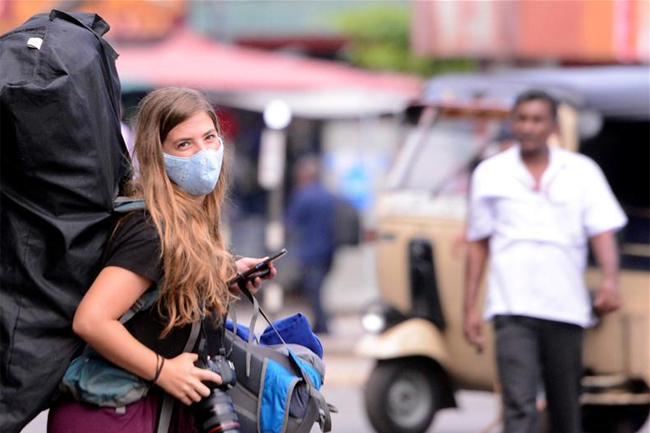
Sri Lanka Tourism Development Authority (SLTDA) has set up a special ‘Emergency Unit’ to facilitate uninterrupted services provided by the industry amidst the economic crisis, Chairman of SLTDA disclosed.
The new unit has been established under the direction of Tourism Minister Harin Fernando and Ministry Secretary Chulananda Perera, while the special Emergency Unit will be headed by SLTDA Director – Domestic Tourism and Community Relations Upali Rathnayake.
The unit will be facilitated for emergency requirements of the service providers including destination management companies (DMCs) and accommodation entities that handle the tourists currently in the country and new visitors expected till 10 July.
On 28 June, the Government declared that the remaining fuel stocks will only be distributed among essential services till 10 July. Subsequently, Minister Fernando taking to Twitter announced that tourism has been declared an essential service, and the new unit was set up to ensure transport for all tourists.
The Minister also noted that the unit can be reached via hotline 1912 or 112 437759 for assistance.
All registered DMCs are requested to provide the information of the tourists currently handled by them and expected visitors till 10 July. The tourism industry stakeholders could contact the Emergency Unit for the assistance required during this period, particularly for fuel requirements.
The unit will make necessary arrangements to ensure the supply of fuel required for tourist vehicles on the move on receipt of the requests, supported by authentic information.
It will be open 24-hours till today and thereafter operated from 8.00 a.m. to 8.00 p.m.
A total of 18,305 tourists arrived during the first 19 days of the month, whilst pushing the cumulative figure to 396,826 so far.
Meanwhiele Sri Lanka’s tourism industry stakeholders yesterday warned that the industry is likely to further crumble if relevant authorities continue to delay in extending the necessary intervention.
The Hotels Association of Sri Lanka (THASL), Sri Lanka Association of Inbound Tour Operators (SLAITO), and the Association of Small and Medium Enterprises (ASMET) reiterated the need for the Central Bank to act on the Cabinet decision on providing breathing space for the industry’s loan repayments.
The representatives asserted the longer the Central Bank takes to facilitate the extension of the loan moratorium, the more the sector will bleed.
“The next six months is crucial for us. To revive we need to sustain and for that it is imperative to have the moratorium extended. The sector players are struggling to pay salaries and suppliers to stay afloat due to the drop in tourist arrivals. The delay in providing the relief is hitting us hard,” said THASL Past President Hiran Cooray addressing a joint press conference yesterday.
He cautioned that hotels have already downsized operations and the increasing difficulties will compel a significant proportion of the formal tourism sector to close operations in the near future.
Halting operations in the tourism sector would mean loss of foreign currency earnings which the economy is in dire need to come out of the current crisis situation.
Earlier this month (June 8), the Cabinet gave the nod to extend the moratorium given to the crisis-hit tourism industry until December 31 of this year. The approval was made after industry stakeholders repeatedly asserted the need for more time for loan paybacks.
However, it has been 20 days since the decision was made, but the Central Bank is yet to take the necessary steps to provide the relief.
The moratorium granted by private sector banks on loans taken by the tourism industry expired on March 31, and the moratorium granted by State banks on tourism industry loans will expire on June 30.
The industry’s estimated debt including the accumulated interest is estimated to be over Rs. 500 billion
If the Tea Auction is done in USD instead of LKR, SL can pay for fuel from that income?
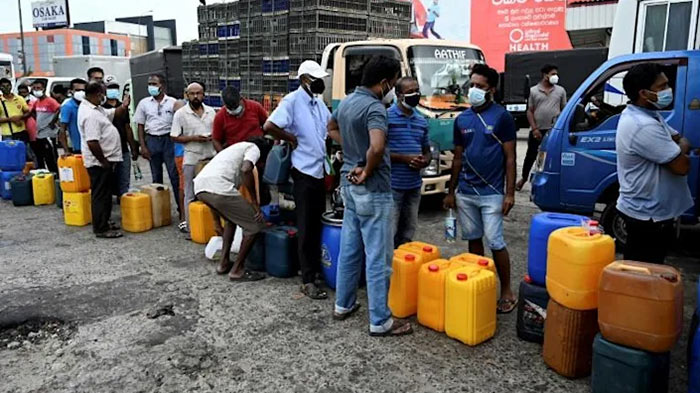
Fuel shortages and fuel queues are becoming a normal part of daily life for the people of Sri Lanka. The tragedy here is that due to the shortage of fuel, the daily income of a large number of people in the country is blocked and they are falling into utter destitution.
People queuing for fuel are also debating what the solution is to the fuel shortage and why the government is not implementing it.
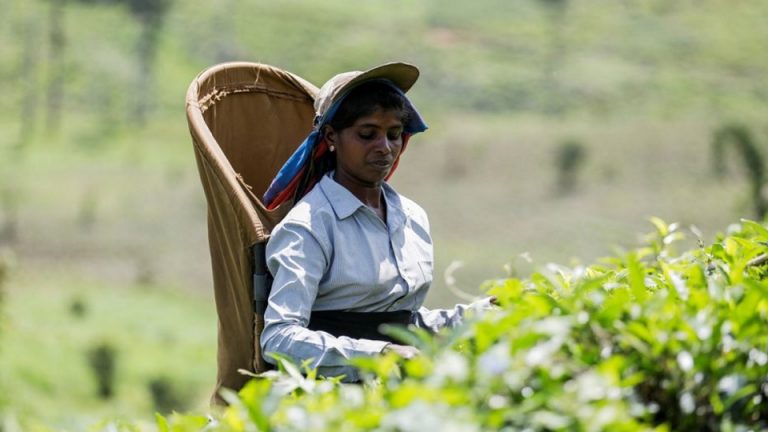
The world-renowned Ceylon Tea brand earns a large export income. But the Colombo tea auction is still held in rupees. If the tea auction was held in US dollars, the country would be able to earn that revenue directly in dollars, which would also enable the country to import the required amount of petrol, say three-wheeler drivers waiting in fuel queues. They question whether the government is not taking such a step because it does not have that much understanding.
In this regard, we also investigated the facts and found that Kenya has decided to hold its Mombasa tea auction in US dollars in this way and has achieved successful results. A research report prepared on that can be read in the following link.
In fact, if the government decides to hold the Colombo Tea Auction in dollars, that money could be used entirely to import fuel or chemical fertilizers needed for the country’s agriculture. This would raise US $ 900 million annually. Needless to say, this is a huge amount of money.
The possibility of holding the Colombo Tea Auction in dollars was discussed in Parliament last month but no decision has been taken yet.
SJB and JVP should be gathered for the “Waga Sangramaya” program – PM
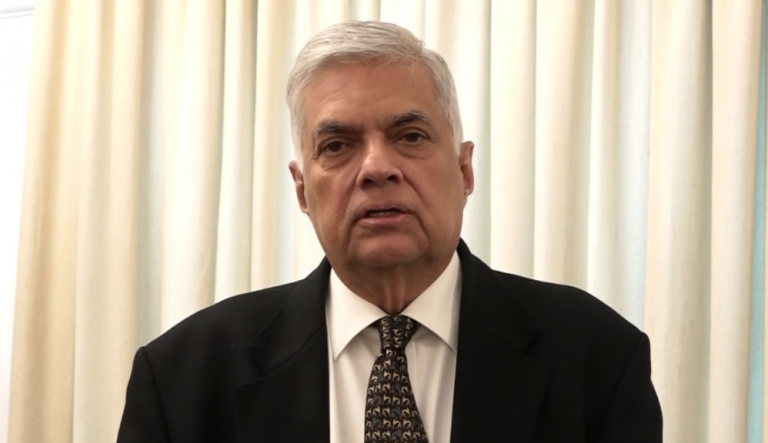
Prime Minister Ranil Wickramasinghe says that Samagi Jana Balawegaya and Janata Vimukthi Peramuna should be gathered to the “Waga Sangramaya” program implemented by the government in order to face the upcoming food crisis.
He had stated this when the Committee on Food Safety met yesterday (30).
Minister Dinesh Gunawardena, Mahinda Amaraweera and other ministers and officials attended this committee meeting.
Rajasthan on edge after Prophet Muhammad row beheading
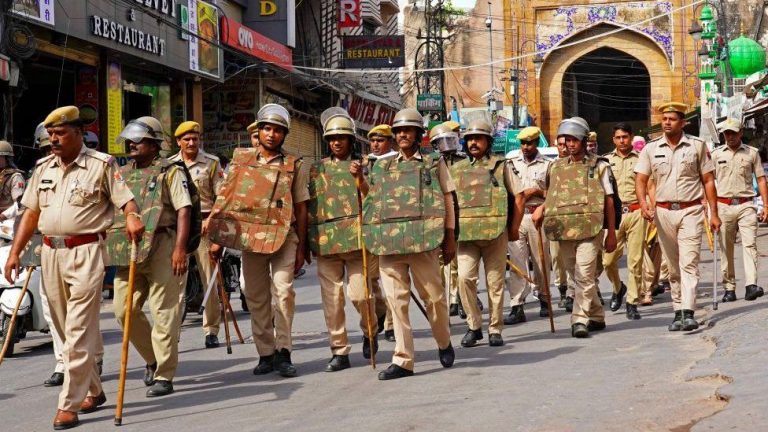
India’s Rajasthan state continues to be on alert following the beheading of a Hindu man by two Muslim men.
Chief Minister Ashok Gehlot has appealed for calm and promised to take strict action against the attackers.
The victim, a tailor named Kanhaiya Lal, was killed in Udaipur district in north India on Tuesday by the men, who filmed the act and posted it online.
They said the act was in response to his support for a politician’s dividing remarks about the Prophet Muhammad.
The National Investigative Agency – India’s top anti-terrorism agency – is carrying out a probe. A senior police officer told reporters that the police had found early evidence that one of the accused men had links with a group in Pakistan.
Islamabad, however, has denied such reports, calling them “mischievous”.
The BBC’s NItin Srivastava, who’s in Udaipur, said the streets were empty and communities were living in fear of religious violence.
He added that there was heavy deployment of police forces across the city and senior officers were constantly appealing for peace.
Most people were unprepared for a curfew, with many now struggling to get hold of even basic rations.
“Daily wagers are worst affected,” said Mukesh Gardiya, a local man. “All that’s happened is a big shock.”
The government has suspended internet services and banned large gatherings. Police have arrested the two men, who had identified themselves in the video.
In another video, the accused boasted about the murder and also issued threats to Prime Minister Narendra Modi while brandishing cleavers. A top Rajasthan police official asked media outlets not to broadcast the video of the murder as it was “too grisly to watch”.
- India in deeper crisis over Prophet Muhammad row
- The Indian woman who started Prophet Muhammad row
- How Islamophobia is hurting India’s foreign policy
The men posed as customers to enter Kanhaiya Lal’s shop, and attacked him while he was taking their measurements.
The victim had allegedly put up a social media post supporting former Bharatiya Janata Party (BJP) spokesperson Nupur Sharma, who made controversial comments about the Prophet Muhammad last month.
RM
New Govt plan for fuel supply on the cards amidst no petrol at CPC and LIOC
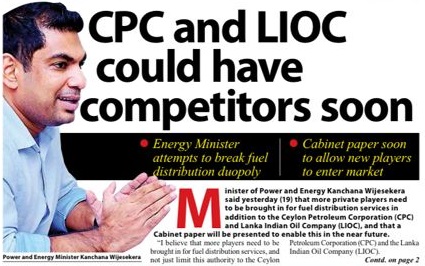
The Government has devised a plan to supply fuel for the country without any shortage at fuel filling stations countrywide after July 10 this year. .
A secret cabinet paper was presented to the Cabinet of Ministers on Monday 27 specially mentioning it as confidential, informed sources revealed.
A confirmed petrol shipment is due on 22nd July, Sagala Ratnayaka, Chief of Staff of Prime Minister Ranil Wickremesinghe said today.
He said the Government was also attempting to secure fuel shipments at an early date.
Ratnayake explained to the media the current status of the fuel situation in the country. He stated that a confirmed petrol shipment was due on the 22nd of July.
The Government was also attempting to secure fuel shipments at an early date, however, he explained until those were confirmed the details would not be released.
Sri Lanka has sought to purchase four shipments of fuel – 40,000 tonnes each- from India on cash payment terms,
India is a bulk purchaser of fuel from the global market with attractive discounts. Sri Lankan envoy to New Delhi Milinda Moragoda has presented a proposal in the road map to tie up with India to buy fuel from the world market together, to benefit from the same discounted rates.
Sri Lanka has already received US $ 700 million Indian credit lines to import fuel and the government is seeking another credit line of US $ 500 million.
The Ceylon Petroleum Corporation’s (CPC) Kolonnawa Storage Terminal temporarily halted the distribution of fuel from yesterday morning (28).
A senior CPC official confirmed that stocks of fuel would be issued from the Muthurajawela Terminal only for essential services.
As per a decision reached during last evening’s Cabinet meeting, all sheds operated by CPC will provide fuel only to essential service vehicles till 10 July, effective from midnight on Monday
Meanwhile the Lanka Indian Oil Corporation (LIOC) had decided to restrict their fuel sales for vehicles at filling stations from today.
The company announced that petrol will only be issued for Rs.1,500 for Motorcycles, Rs. 2,500 for three-wheelers and Rs.7,000 for Cars, Vans, Jeeps
Govt to bolster ties with the Middle East seeking fuel aid
Sri Lanka is now making every effort to cement diplomatic ties with The Middle East tainted since 2014 and thereafter in 2021 anti muslim violence in 2014 with the aim of obtaining assistance to avert critical fuel crisis in the country.
Under this setup Sri Lanka has sought a credit line from Qatar for fuel and gas when Energy Minister Kanchana Wijesekera and the Sri Lankan delegation met with the Deputy Director General of the Qatar Fund for Development.
The discussions ended ina deadlock without any fruitful out come as the Qatari authorities are not in favour to grant credit lenes for the purchase of fuel as the island nation has defaulted the US$ 700 million granted from the Qatar Fund for Development during the previous Yahapalana regime, informed sources in Qatar divulged.
So the Energy Minister Kanchana Wijesekera has to return to the island clean suit empty pocket following the pledge given by the Deputy Director General of the Qatar Fund for Development to provide some aid for the purchasing of medicines for local hospitals.
President Goatabaya Rajapaksa is expected to visit UAE soon to further strengthen friendly relations between the two countries and to lobby for the importation of fuel directly from oil producing countries in the Gulf specially UAE and Qatar.
This was announced by former Minister Mahindananda Aluthgamage when he appeared at a media conference for the first time after the May 9 attack on Gota Go Gama protesters at Galle Face green in Colombo.
The Sri Lankan President’s visit is yet to be confirmed by the presidential secretariat as there was no official communiqué issued by the media division.
Under this set up Sri Lanka has sought a credit line from Qatar for fuel and gas when Energy Minister Kanchana Wijesekera met with the Deputy Director General of the Qatar Fund for Development yesterday
.He tweeted that he discussed a possible credit line facility for petroleum and gas and DDG has informed that funds has been allocated for medical supplies and will consider the request for a credit facility and support the IMF program.
The confirmation of the Credit line facilty should come from Saad Sherida Al-Kaabi, the Minister of State for Energy Affairs and the President and CEO of Qatar Energy.
The Qatar Development Fund is the sole authority in granting such finacial facilities for foreign countries.
It has granted US$ 300 million to a local fund for the welfare of children of poor families in the East. This money had been confiscated by the authorities following Easter attack investigations creating displeasure among Qatari authorities local media reported at that time.