Home Blog Page 2159

Japan pays attention to SL’s difficult economic situation, ready to assist

0

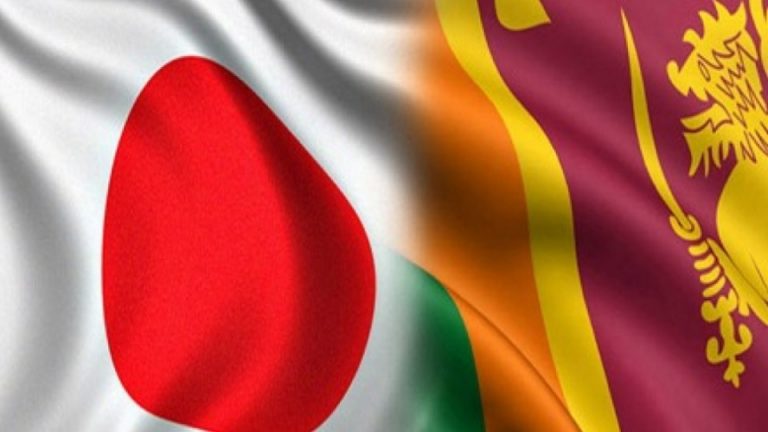
Japanese Ambassador to Sri Lanka Mizukoshi Hideaki said that Japan is ready to provide continuous support to Sri Lanka while strengthening relations between the two countries, for Sri Lanka’s economic program with the International Monetary Fund (IMF) and for the development activities of the country.

In a statement, the President’s Media Division said that during discussions between President Gotabaya Rajapaksa and the Japanese Ambassador at the President’s House in Colombo, today, Ambassador Mizukoshi Hideaki said that continuous efforts will be made to further strengthen the economic, social and cultural relations with Sri Lanka.

President Rajapaksa had during the discussions expressed his deep appreciation to Japan for their support to Sri Lanka.

Meanwhile, the Japanese Embassy in a statement on their FaceBook page said that Japan is closely paying attention to the current difficult economic situation in Sri Lanka and the severe humanitarian situation accompanied.

“Considering such a situation, the Government of Japan has decided to provide Emergency Grant Aid of USD three (3) million through UNICEF and WFP in order to provide medicine and food in a manner that would directly benefit the Sri Lankan people.

Japan sincerely hopes that this assistance will be of help to overcome the hardship faced by the people of Sri Lanka, Japan’s long-standing friends,” the Embassy said.

The statement added that the government of Japan would like to consider its further contribution to Sri Lanka in consultation with the Government of Sri Lanka and other developing partners, while giving attention to the situation of Sri Lanka and the negotiation progress between Sri Lanka and IMF.

The Embassy of Japan in Colombo today categorically denied a media report which stated that Japan would not support Sri Lanka at the moment due to mismanagement of funds.

“Japan is closely paying attention to the current difficult economic situation in Sri Lanka and severe humanitarian situation accompanied,” the statement noted.

The embassy also said: “Considering such situation, the Government of Japan has decided to provide Emergency Grant Aid of USD 3 million through UNICEF and WFP in order to provide medicine and food in a manner that would directly benefit the Sri Lankan people.

Japan sincerely hopes that this assistance will be of help to overcoming the hardship faced by the people of Sri Lanka, Japan’s long-standing friends.

“The Government of Japan would like to consider its further contribution to Sri Lanka in consultation with the Government of Sri Lanka and other developing partners, while giving attention to the situation of Sri Lanka and the negotiation progress between Sri Lanka and IMF.

“Japan, a time-tested partner in Sri Lanka’s socio-economic development, has been supporting Sri Lanka and will continue to do its part in combining its efforts with the people and Government of Sri Lanka.”
US increases support for Sri Lanka economic growth hit by the crisis

0

The United States remains a friend and partner for Sri Lanka’s prosperity, and it  looks forward to a shared future and success in overcoming the present-day challenges.

This was stated  by United States Ambassador to Sri Lanka Julie Chung  when she addressed 183rd Annual General Meeting of the  Ceylon Chamber of Commerce as the Chief Guest on Thursday 30.  

 She stressed the need of taking a step further not only to survive but to thrive, to become stronger and better through this economic crisis. 

Now is the time to redouble our joint efforts to get Sri Lanka back on the path to economic stability.  Now more than ever the private sector can make a difference in creating a more inclusive and sustainable economy, she claimed.  

The United States remains Sri Lanka’s largest single country export market, so Americans contributions to Sri Lankan prosperity are, in this regard, unparalleled.  

US- Sri Lanka bilateral trade relationship amounts to about three percent of Sri Lanka’s GDP.   Sri Lankan exporters to the United States provide direct employment for at least 180,000 people here.  

This is the type of economic partnership we should all be looking to expand.  Investment in the United States is another opportunity for the Sri Lankan private sector she said adding that .  Businesses investing in the United States, regardless of industry, gain competitive advantages from one of the most open markets on the planet. 

The United States offers the largest consumer market on earth with a GDP of $20 trillion and 325 million people.  Companies of all sizes help make innovation in the United States a global enterprise, benefiting from – and contributing to – a flourishing ecosystem for invention and inspiration.

. The United States continues to stand by Sri Lanka during these challenging times. Over the last few weeks, we have announced $120 million in financing for Sri Lankan small and medium-sized businesses, $27 million for the Sri Lankan dairy industry, and over $30 million in new humanitarian, technical and food security assistance to benefit Sri Lanka’s most vulnerable communities.  

She disclosed that the US  looks forward to building on that assistance in the months to come.  The United States remains a friend and partner for Sri Lanka’s prosperity,

In 2020, U.S. foreign direct investment in Sri Lanka was $13 million, bringing total active U.S. investment in the country at the time to $274 million.  If you compare this to the $17 million invested five years earlier in 2015.

The US Ambassador noted that concerns about consistency and transparency in government decision-making, and above all, a lack of predictability, are the primary reasons FDI hasn’t grown faster.  

What US  companies want is a level playing field.  A good regulatory framework.  Trust that their arbitration and their contracts will be honored.  

US delegation concludes SL visit calling the Govt to finalise IMF talks  

0

A high-level delegation representing the U.S. Department of the Treasury and the U.S. Department of State just concluded an important visit.  

Deputy Assistant Secretaries Robert Kaproth of Treasury and Ambassador Kelly Keiderling of State met with a wide range of political representatives, economists, and international organizations.  

The purpose of their meetings was to explore the most effective ways for the United States to support Sri Lankans in need, Sri Lankans working to resolve the current economic crisis, and Sri Lankans planning for a sustainable and inclusive economy for the future.  

The delegation also pressed upon the government the need to negotiate urgently with its creditors and the IMF to finalize an assistance package, in order to ease the suffering of the Sri Lankan people and get the economy back on track as quickly as possible.

This visit underscores ongoing commitment of the US  to the security and prosperity of the Sri Lankan people.  Its efforts to support economic growth and strengthen democratic institutions have never been more critical.

They  welcome the steps Sri Lanka has taken to go to the IMF, to hire debt and legal advisors, and begin debt restructuring talks.  Those are positive moves.  But there is much more that needs to be done to get Sri Lankan back on the path to sustainable economic growth.  

The reform measures Sri Lanka adopts need to address the root causes of this crisis so that the country finally makes lasting and decisive structural reforms that enshrine international standards of good governance and transparency for the benefit of all Sri Lankans.  There is no more room for stop-gap measures.

As Sri Lanka engages in debt restructuring and financial reforms, it is absolutely critical that all creditors are treated equitably and comparably.  That is one of the very important components that many countries who undergo an IMF program have to address

They said that Sri Lanka should seize this moment to shift to green technology and renewable energy sources 

  If there is anything the fuel crisis has taught us is that the time to switch to renewables is now!  This is an area where Sri Lanka stands to benefit from the cutting-edge technology that 

American companies have to offer, as well as access to U.S.-based project finance.  Clean power is also a priority focus of the Build Back Better World partnership that President Biden announced with our G7 partners last year

Investment Promotion Minister focuses attention on Chinese projects

0

China held talks with Investment Promotion Minister Dhammika Perera today on promoting Chinese projects in Sri Lanka.

Ambassador Qi Zhenhong met with Perera and exchanged views on enhancing economic and trade cooperation, promoting Chinese invested projects in Sri Lanka as well as other topics of mutual interests, the Chinese Embassy in Colombo said.

A gazette notice was issued this week bringing a number of institutions, including some Chinese funded projects under Investment Promotion Minister Dhammika Perera.

The gazette notice issued by President Gotabaya Rajapaksa brought the Board of Investment of Sri Lanka, Colombo Port City Economic Commission, Projects related to Colombo Port City, Department of Immigration and Emigration, Colombo Lotus Tower Management Company (Pvt.) Limited, Techno Park Development Company (Pvt.) Limited and Information Technology Parks under the Minister of Investment Promotion Dhammika Perera.

The new Minister has been tasked with promoting foreign direct investment and private sector investments in Sri Lanka.

Other duties entrusted to the new Minister includes formulation of policies, strategies, programmes and projects to enhance regional trade and investment cooperation, promotion, regulation and monitoring of economic development zones.

He has also been given the task to develop the Colombo Port City Special Economic Zone as an international business and services hub with specialized infrastructure and other facilities aimed at national interest and economic advancement.

Dhammika Perera also has the responsibility of establishing the Colombo Lotus Tower as a business model and promoting it as a tourist centre.

The business tycoon took oaths recently as a Member of Parliament replacing Basil Rajapaksa as a National List MP

The Board of Investment (BOI) yesterday launched the five-year residence visa program dedicated to investors, stakeholders and BOI enterprises.

Issuing long-term visas for investors has been the practice as per the international standards. On par with matching the international benchmark in respect of ease of doing business, the BOI has decided to launch this program to attract more investors to the country.

The long-term visa program, a long-felt need, primarily aims to facilitate the investors who wish to embark on a journey with the BOI.

The BOI annually issues 7500-8000 visa recommendations for investors, employees and dependents.

The BOI has granted visas for foreign nationals from 109 countries such as India, the United Kingdom, Japan, Korea, Malaysia and Pakistan which represent the most applicants based on last year’s statistics.

Addressing the gathering, Investment Promotion Minister Dhammika Perera said “The happiness on the faces of those investors present at the occasion, implies that the newly launched visa residence scheme is a success,”

People will remember, ‘they didn’t have to, they had nothing to gain, but they did anyway.’

0

By Krishantha Prasad Cooray

For as long as the human race has organized itself into sovereign nations, no country has had a story of limitless success. Nations and empires alike have risen and fallen, over thousands of years. Every language has phrases like “it takes a village” to remind us of the limitations of individual people and the need to work together. Similarly, no nation will ever thrive in isolation. The fate of every country is dependent on its relationships with other countries, with allies who share their values and who support each other in times of need.

History is littered with examples of countries that have been beset by natural disasters, militarily crippled, ridden with diseases, targeted by terrorism or economically ruined. What separates those who overcome these challenges from those that don’t is the willingness of other countries to come to their aid.

After World War II, for example, when the Axis powers were roundly defeated, it was the countries that vanquished them who stepped in to rebuild them. Indeed, without the aid of the Allies, neither Germany nor Japan would have grown into the economic powerhouses they are today.

The Marshal Plan, an American initiative, enabled West Germany and other West European nations to rise from the ashes of war and gain rapid economic development.

Japan, on the other hand, had far fewer friends. As European victims of German aggression feared the prospect of a united Germany, Asian victims of Japanese aggression feared a remilitarised Japan. Cold War politics too played a role, with the Soviet Union accusing the United States of planning to turn Japan into a military camp against itself and China. It was only at the San Francisco Peace Conference in 1951 that a peace treaty was finally signed, ending the occupation of Japan, restoring Japanese independence, and putting the country on a path to prosperity.

At that conference, it was then Sri Lankan Finance Minister Junius Richard Jayawardena, who spoke most persuasively about the case for making peace with Japan as an independent non-occupied nation. Jayawardena reminded the audience that prior to the barbarity of World War II, Japan had long been a staunch ally of other Asian nations. “It is because of our age-long connections with her, and because of the high regard the subject peoples of Asia have for Japan when she alone, among the Asian nations, was strong and free and we looked up to her as a guardian and friend,” he reminded the assembled world leaders.

Japan has never forgotten, and even today, memorial statues and plaques across Japan mark the country’s gratitude to J.R. Jayawardena. Sri Lanka, at the time, had nothing to gain from the vanquished Japanese. But we came to the aid of a nation in need and did the correct thing. A quarter century later, when J.R. Jayawardena became President of Sri Lanka, our relationship with Japan became one of the cornerstones of Sri Lanka’s subsequent prosperity.

Today, Sri Lanka finds itself crippled by an unprecedented crisis. Our people are in abject financial peril. Over a quarter of the country is starving and malnourished. The economy is paralyzed and many children are unable to reach schools due to fuel shortages. Electricity has become a luxury, and essential medicines have become scarce.

This is not the doing of the people but the result of mismanagement by corrupt, incompetent and short-sighted politicians holding the reins of power for their own gain. These politicians benefited. The people suffered. They suffer as I write and will suffer for a long time more to come.

It is tragic to see a country as resilient as Sri Lanka, with a proud history, being reduced to such a state. One day, I have no doubt that my country will rise again. But we will only do so with the support of friends, who will speak in solidarity and act in support.

Sri Lanka is but the first country to see its economy collapse at the mercy of corruption and rising global food and oil prices. It won’t be the last. Before long, other poorly managed countries will also begin to waver. Each stumbling nation can be rescued one at a time, but if several countries all collapse together, the chain reaction could paralyze the economies of not just the region, but the entire world. Sri Lanka, in particular, is ripe for rescue.

The people are clamouring for serious institutional and constitutional reform. If these reforms are coupled to both humanitarian aid and commercial investments, the payoff will be not just a monetary one, but one of deep gratitude.

At this time, if people, institutions and nations alike come to the aid of the Sri Lankan people, that aid is needed like never before. Doing so will help avert or minimize a humanitarian crisis like Sri Lanka has never known. Any country can make a contribution to help feed the starving, heal the sick, employ the unemployed, light up a classroom, and take other steps to help Sri Lanka to jumpstart its economy.

It was such words of support, and deeds of solidarity that helped Japan in 1951, and for which Japan has remained grateful so many decades later. Likewise, such a word, such a deed, will be remembered by Sri Lanka and Sri Lankans, those who are suffering right now, those who survive, and their children. It is a brand of gratitude that is special because it is altruistic. People will remember, ‘they didn’t have to, they had nothing to gain, but they did anyway.’ We will remember, and we will be grateful.

I was a part of the struggle during ’87-’89. We should get together to build this country – Dhammika

0

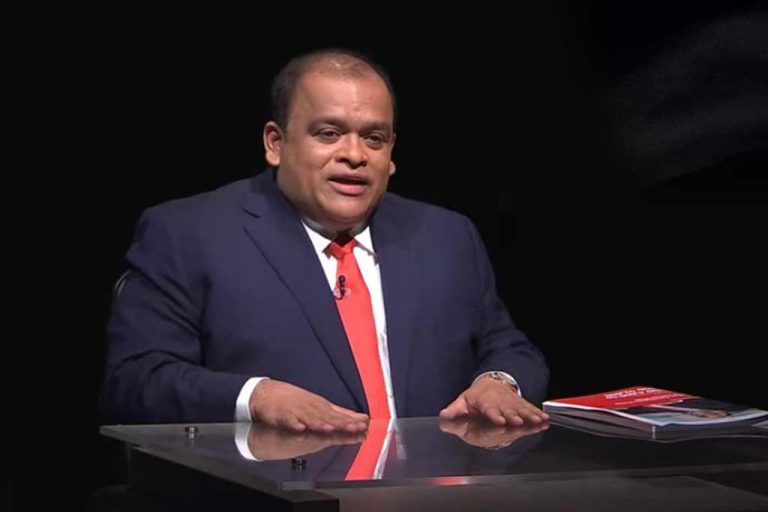
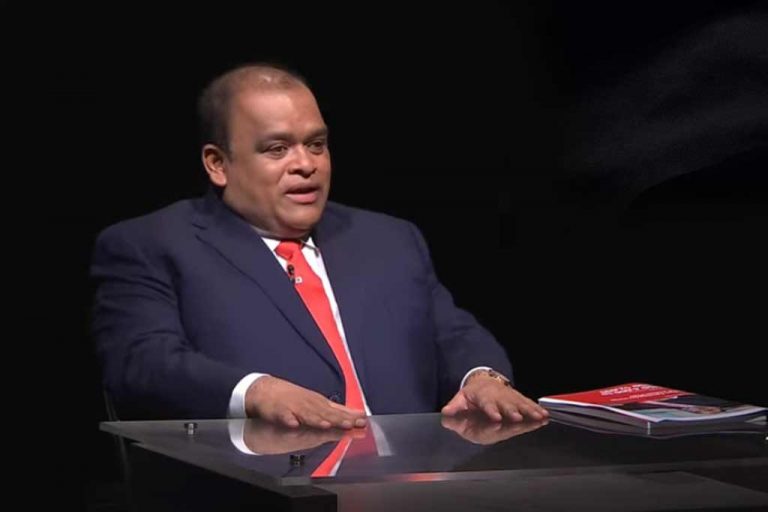
Investment Promotion Minister Mr. Dhammika Perera emphasises that it is essential for all parties to leave their party differences and work together in order to recover the country from the current economic crisis.

Minister Dhammika Perera made this statement addressing a function held today (01) to extend the one-year visa period for owners, directors, and foreigners working in top management companies operating under the Board of Investment of Sri Lanka to five years.

The Minister said that until now, these foreigners who came to invest in Sri Lanka had to undergo medical examinations once a year to get these visas. He said that by removing the obstacles from today, an environment will be created where they can invest delightfully in Sri Lanka and also consider investments in Sri Lanka more positively.

He stressed the importance of this positive attitude in attracting investments to Sri Lanka and he said that two investors had submitted proposals to him regarding new projects and that he had informed them to come to discuss the same today.

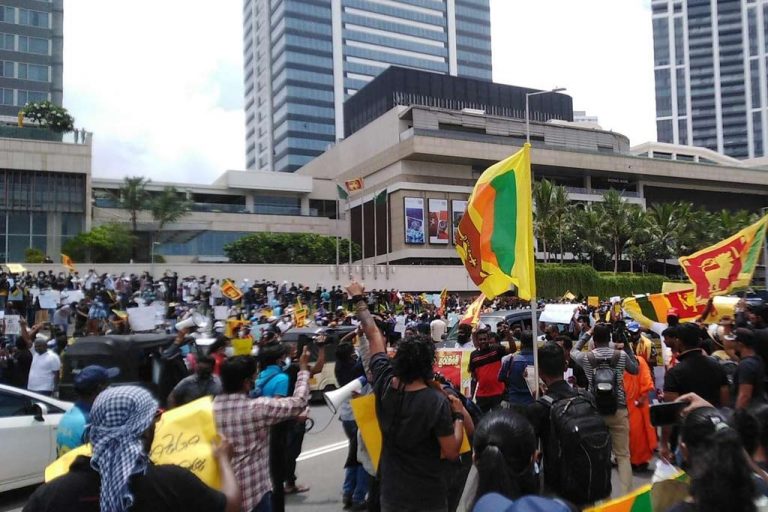
Q. When you were getting prepared to come to Parliament, a group of protesters came and staged a protest in front of your house. And protest was held when you took over the ministry post. There were strong protests all over the country. Will a day come when these protesters will applaud you?

“I was one of those who waged the same struggle from 1987 to ’89. So for me this makes no difference. So as people who have been there, I think of these people like my children. If it happened in my past, I would have done the same thing.”

Q: During those protests it was said that this path would be a failure. Is it possible to change that opinion?

“At the age of 22-23 we too were in such a pressure. We used to look at photos in those days to see what is happening in the country, but today those youngsters can see that in videos. But they are still children. I have children of the same age. So because of that I know how they think. They think that is a system change. But the adults need to know what is system change. Even now, if those under the investment board had a one-year visa in the traditional way, this kind of program would not be done. I haven’t officially taken over yet. But when I do, I try to solve the problems of all the people and make everyone happy. Because if we don’t make someone happy, no one will make us happy.”

“Even when you are in the petrol queue, you can see that some people telling others not to send money here from foreign countries. You may have heard such telephone calls when you were in the queue. But that would make these queues even longer. This country should unite to bring foreign remittance. But if we hold our money in other countries and end the brand of our country without letting tourists come, we will have to face the disadvantage of it ourselves. We have to get out of this dire situation together.”

Railway workers on strike!

0

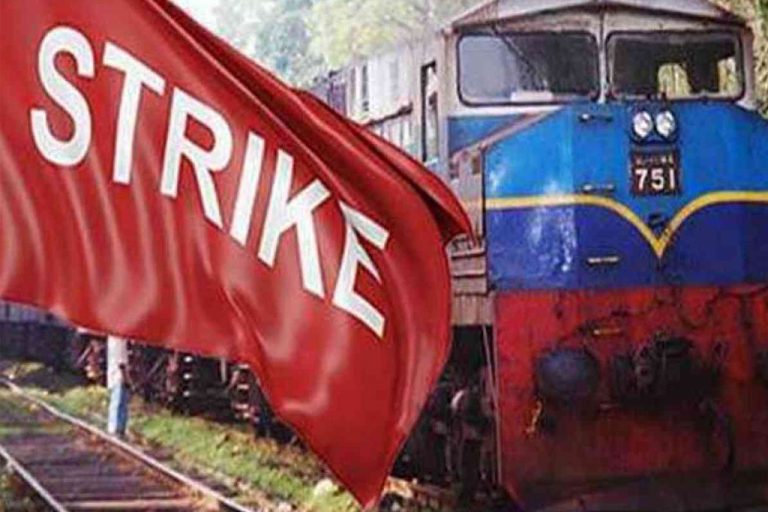
The railway workers have started a strike with immediate effect. It is reported that the employees belonging to several sectors including locomotive drivers and train controllers are joining the strike.

Railway employees say that although the railway service is running as an essential service, they are not provided with fuel to report for duty. This strike has started in protest.

Due to the lack of fuel, a significant number of railway workers did not report to work today and because of this, it was decided to suspend more than 20 train rides.

Meanwhile, a heated situation arose at the Colombo Fort Railway Station today due to non-operation of trains. A large number of passengers arrived at the station but due to the lack of trains for them to travel, the people behaved in a provocative manner and protested to the railway authorities.

Japanese Embassy denies reports on unwillingness to support SL

0

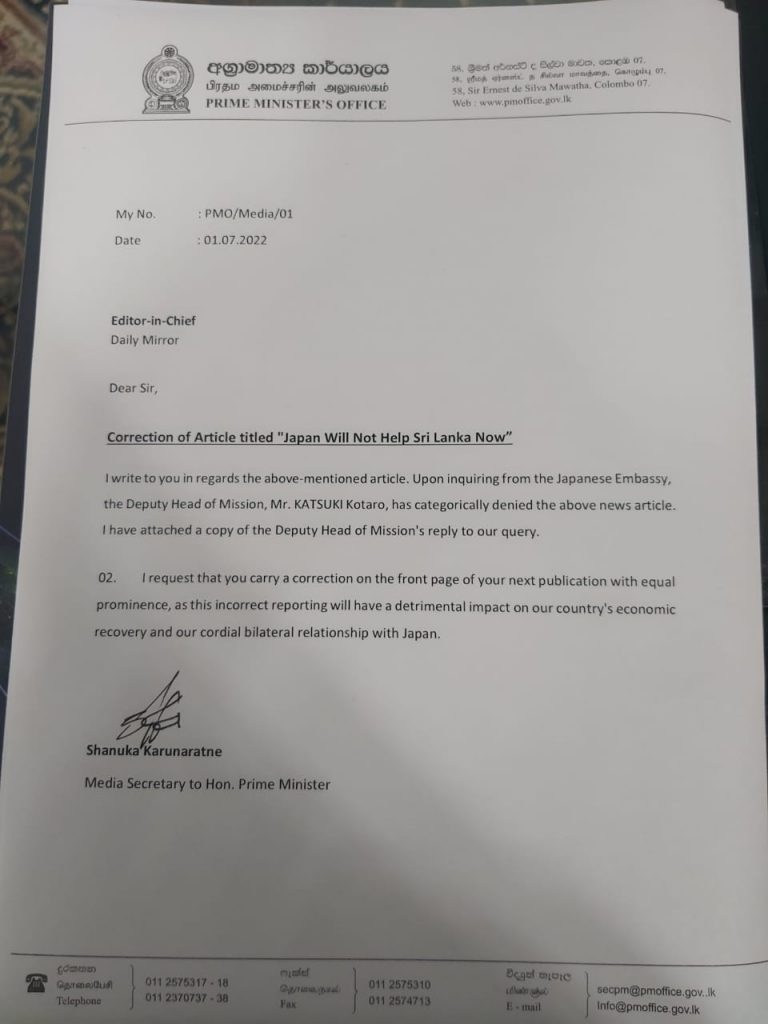
The Japanese Embassy in Sri Lanka has categorically denied media reports on the Japanese government’s unwillingness to support Sri Lanka amidst the economic crisis befallen the isand nation, a statement by the Prime Minister’s office emphasised.

Earlier a Daily Mirror headline, saying “Japan will not help Sri Lanka now” raised controversy leading to the spawning of a potential diplomatic rift between the two countries, following which KATSUKI Kotaro, the Deputy Head of the Japanese Mission in Sri Lanka responded saying that the claim is false.

The announcement by the PM’s office in this regard urges all media to correct the report with equal prominence, as this inadequate reporting could have a detrimental impact on the country’s economic recovery and the cordial relationship between the two states.

MIAP

Dhammika Perera takes steps to expand the one-day passport service

0

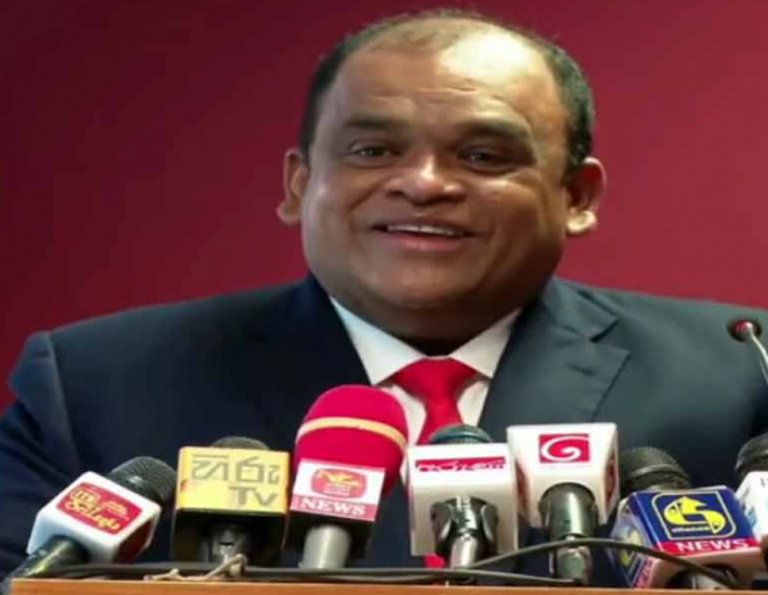
Investment Promotion Minister Dhammika Perera has taken steps to expand the one-day service of obtaining passports to the regional offices, which was limited to the head office of the Immigration and Emigration Department in Colombo so far. He mentioned this at the press conference held in Colombo today.

Accordingly, from next Monday, the immigration department’s regional offices in Matara, Vavuniya, Kandy will have the opportunity to obtain passports under the one-day service.

In view of the current crisis, a large number of Sri Lankans are coming to get their passports in the hope of going abroad and due to this, large queues are seen near the Battaramulla head office as well as near the regional offices. Sometimes people have to wait in line for days to get your passports.

UK Parliament lauds Sri Lanka’s social protection systems

0

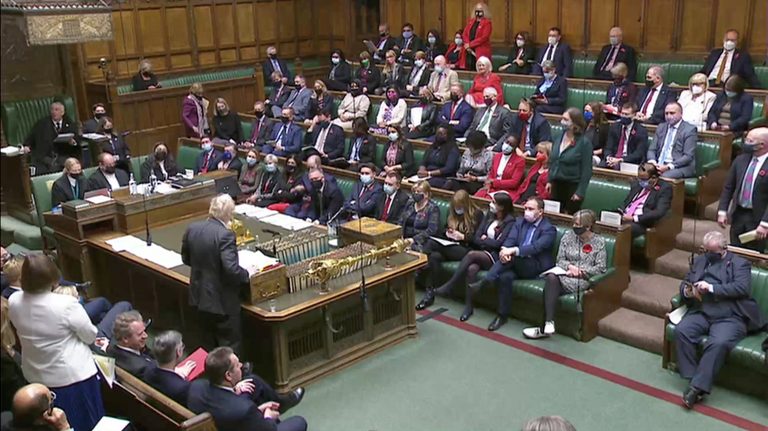
Britain on Tuesday said that the existing social protection systems, including the Samurdhi programme, provide essential support to the most vulnerable communities in Sri Lanka and will be crucial at this difficult time.

In response to a question by Conservative MP that what recent assessment that the State for Foreign, Commonwealth and Development Affairs has made of the effectiveness of the Samurdhi programme in Sri Lanka, Parliamentary Under-Secretary (Foreign, Commonwealth and Development Office) Vicky Ford said that “The Sri Lankan authorities have taken a number of measures to help support the public, including an economic relief package of Rs. 200bn ($1bn) announced in January 2022.”

“The UK recognises the economic challenges that Sri Lanka is facing. We continue to monitor the economic situation in Sri Lanka closely, including the impact economic issues are having on food security and livelihoods,” she said in a written answer to UK Parliament

She also stated“This package includes a Rs. 5000 ($25) monthly allowance for public sector employees, pensioners and disabled soldiers. Under the scheme, Rs. 1000 ($5) has been allocated to the beneficiaries of the government’s largest welfare programme ‘Samurdhi’, and a number of taxes and levies have been removed from essential foods and medicines. The Government of Sri Lanka agreed on May 2 to provide a special three-month cash allowance from May to July worth Rs. 13.36 billion to 3.34 million families affected by the current economic crisis, with funding from the World Bank of which the UK is a major donor.

“We regularly discuss economic policy with the Sri Lankan Government and encourage efforts to improve economic growth and protect vital economic interests such as key industries, commodities, employment and livelihoods,” she added.

In response to a question that the human development and social economic indicators of Sri Lanka in comparison to other South East Asian countries, Ms Ford “We continue to encourage a peaceful, democratic, and inclusive approach to resolving the current political and economic challenges.”

She said that the most recent available data (2020) for Sri Lanka indicates that it performs well against South Asia neighbours on high-level human development and social economic indicators, particularly infant mortality rates.

“However, the available data does not capture the severity of the current economic crisis and impact of recent economic shocks such as Covid-19, the Russia-Ukraine crisis, the floating of the Sri Lankan Rupee (LKR) and Sri Lanka’s debt default in May 2022. We have not made a recent assessment comparing Sri Lankan indicators to those in South East Asian countries,” she added