Colombo Port City Special Economic Zone has been promoted among commonwealth countries attracting potential investors by creating awareness on facilities and incentives of this special zone located in a strategic position in the Indian ocean.
It was communicated that priority sectors and Businesses of Strategic Importance will be granted a tax holiday of up to 40 years which is to be established through regulations.
A key take away was that it is imperative that an attractive package of fiscal incentives is offered to entice investors with returns that commensurate with country risk.
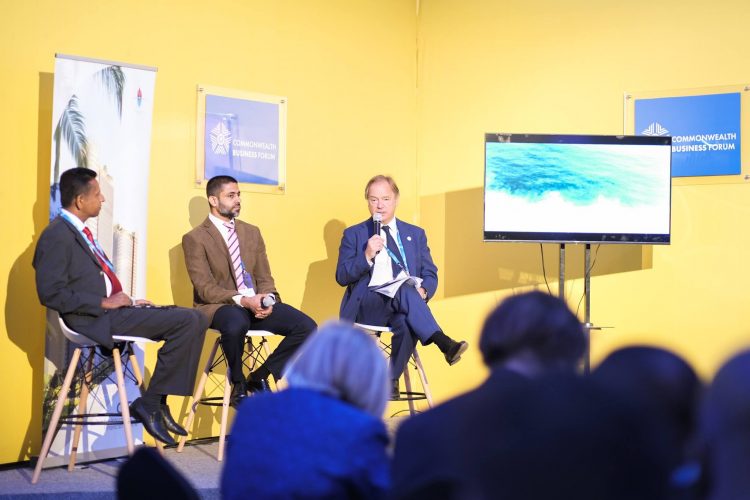
CHEC Port City Colombo in collaboration with the Colombo Port City Economic Commission successfully introduced the Special Economic Zone to 50 plus potential investors and members at a specially curated Breakfast meeting held at the Business Forum Event.
The event was a global platform for Sri Lanka’s first service-oriented Special Economic Zone (SEZ) to be showcased in the Business Forum, which was held in Kigali, Rwanda from the 21st to the 23rd of June 2022.
The opening comments were given by the Deputy Chairman of the Commonwealth Enterprise and Investment Council (CWEIC), Sir Hugo Swire followed by a key note address by Mr. Thulci Aluwihare, the Deputy Managing Director of CHEC Port City Colombo.
Sir Hugo, in his opening address stated, “It’s a very exciting development, despite the current economic situation prevailing in the country, the Port City SEZ is ring fenced from that.”
The panel also consisted of the Director General of the Colombo Port City Economic Commission who provided insights on the Commission’s role in the project and further also addressed some of the key misconceptions pertaining to the project.
The event was well received by the audience and generated positive feedback on the overall unique features and positioning of the Port City SEZ which will be a game changer in the region.
It was clearly highlighted that the investor confidence was primarily driven by the Port City Economic Commission engaging with global consultants for providing best practices for ease of doing business, banking and ring fencing regulations which will ensure independent functioning of business activities within the zone.
A common topic discussed with most investors was the current thinking on economically ring fencing the SEZ with robust regulations to ensure impact of current macroeconomic shocks of the country is minimized and the risks can be managed suitably within the zone.
As per the Colombo Port City Economic Commission Act, 100 percent of development capital and business capital required to be raised overseas which allows for such supportive ring fencing regulations.
In addition to voicing concerns on the current macro-economic outlook and potential policy reforms as next steps to be engaged as a result of an IMF Program, Investors were keen to obtain clarity on the fiscal and non-fiscal incentives that would be offered for businesses setting up or relocating to Port City Colombo, SEZ.
Colombo Port City SEZ attracts attention of Commonwealth investors
UNFPA appeals for over US$10 million to meet urgent needs in Sri Lanka
UNFPA, the United Nations sexual and reproductive health agency, has launched an appeal for US$10.7 million to deliver lifesaving healthcare to more than 2 million women and girls in Sri Lanka in the next six months.
Sri Lanka is experiencing its worst socio-economic crisis since independence. The country’s once robust healthcare system is teetering on the edge of collapse amid debilitating power shortages and a lack of critical supplies, equipment and medicine.
This is severely impacting the delivery of sexual and reproductive health services, including maternal health care and access to contraception. Existing protection mechanisms for women and girls in need, including survivors of gender-based violence, have also been severely compromised.
A UN survey in May 2022 indicates women and girls’ vulnerability to violence is increasing at the same time as services, including health, police, shelter, and hotlines, are declining due to a lack of financial resources.
“The current economic crisis in Sri Lanka has far-reaching consequences for women and girls’ health, rights and dignity,” said Dr. Natalia Kanem, UNFPA Executive Director. “Right now, UNFPA’s priority is to respond to their unique needs and safeguard their access to lifesaving healthcare and protection services.”
Years of effort have brought steady gains for Sri Lankan women and girls. Some 99 percent of women give birth at health facilities, assisted by medical personnel, but this achievement is now under threat.
An estimated 215,000 women are currently pregnant, including 11,000 adolescent girls, and around 145,000 women will deliver in the next six months. Approximately 60,000 women may require access to surgical interventions.
UNFPA is providing cash and voucher assistance to pregnant women to support access to health facilities – and continues to build the capacity and skills of the extensive midwifery force across the country – but with infrastructure and transportation challenges, childbirth could be a life-threatening, if not fatal, experience for pregnant women unable to access skilled care.
“UNFPA is committed to meeting the critical health and protection needs of women and girls,” said Kunle Adeniyi, UNFPA representative in Sri Lanka. “Our focus is to strengthen sexual and reproductive health and gender-based violence response services to reduce the long-term repercussions of the current crisis.”
Sri Lanka: New President Should Chart Path Upholding Rights

Ranil Wickremesinghe Needs to End Crackdown, Address Economic Crisis
(New York) – Sri Lanka’s new president, Ranil Wickremesinghe, should ensure that his administration adopts measures to protect the basic rights of all Sri Lankans, Human Rights Watch said in a letter published today outlining key human rights concerns. Wickremesinghe was sworn in as president on July 21, 2022, after then-President Gotabaya Rajapaksa stepped down after months of widespread protests against economic mismanagement and corruption.
Sri Lanka is in the midst of a political, economic, and human rights crisis following years of misgovernance and rights violations. The government should prioritize protecting the public from further hardship by putting in place appropriate social protection policies and addressing endemic corruption, while respecting fundamental rights, including freedoms of expression and association, and ending abuses by the security forces.
“President Wickremesinghe faces immense challenges, but imposing draconian emergency regulations, politically motivated arrests of protest leaders, and heightened surveillance of activist groups will not solve Sri Lanka’s dire problems,” said Meenakshi Ganguly, South Asia director at Human Rights Watch. “Sri Lanka’s partners have been clear that international economic assistance will only be effective if the government adheres to human rights and the rule of law and addresses the root causes of the crisis.”
On July 18, Wickremesinghe imposed a state of emergency that gives the security forces sweeping powers, suspends numerous basic rights, and imposes harsh penalties for minor or vaguely defined offenses. A day after his inauguration, Wickremesinghe sent the police and military to disperse protesters from a site they had occupied for months in central Colombo. Over 50 people, including lawyers and journalists, were beaten and injured. During the ongoing crackdown on dissent, the authorities have detained at least 30 protest organizers, in many cases without a warrant or using officers in civilian clothes who carry out arrests without due process.
In May, Sri Lanka defaulted on its foreign loans, and the government is currently attempting to negotiate debt restructuring and an International Monetary Fund (IMF) bailout. The economic crisis has resulted in severe shortages of imported goods, including fuel, and rampant inflation, pushing millions of people into poverty.
Among Human Rights Watch recommendations to President Wickremesinghe are:
- Ensure that people are able to freely and peacefully express their views without fear of reprisal or arrest;
- Withdraw emergency regulation provisions that are are vague, overly broad, and disproportionate or that violate fundamental rights;
- Announce a formal moratorium on the use of the Prevention of Terrorism Act (PTA) until rights-respecting counterterrorism legislation is enacted, and release prisoners arbitrarily detained under the PTA;
- Establish a new social protection system that is both adequate to protect everyone’s rights from the effects of the economic crisis and designed to prevent mismanagement and corruption;
- Resume Sri Lanka’s participation in the Stolen Asset Recovery (StAR) initiative, a World Bank and United Nations partnership to support international efforts to end safe havens for corrupt funds, and commit to doing so as part of an agreement with the IMF; and
- Conduct independent and impartial investigations into allegations of serious human rights abuses and high-level corruption, and appropriately prosecute those responsible.
“In recent months many Sri Lankans have bravely taken to the streets to call for reform, accountability for corruption, and the protection of fundamental rights,” Ganguly said. “Instead of trying to silence the protesters, President Wickremesinghe should listen to them.”
Trial on Amarakeethi Athukorala murder to meet a full bench!
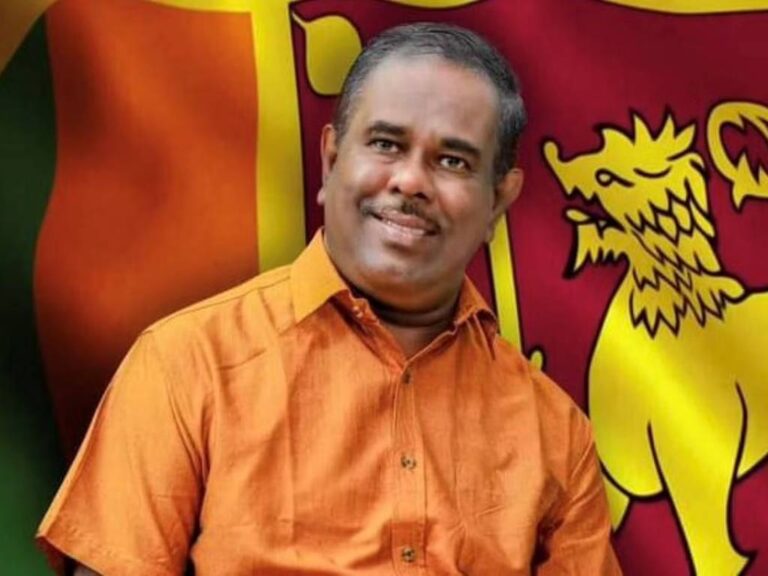
The trial on the murder of Ruling Party MP Amarakeerthi Athukorala will meet a full bench, President Ranil Wickremesinghe informed the Ruling Party MPs at the meeting held yesterday (08).
A group of Ruling Party MPs appealed to the President that the murder of Athukorala be heard before a full bench.
MIAP
JVP boycotts talks with President
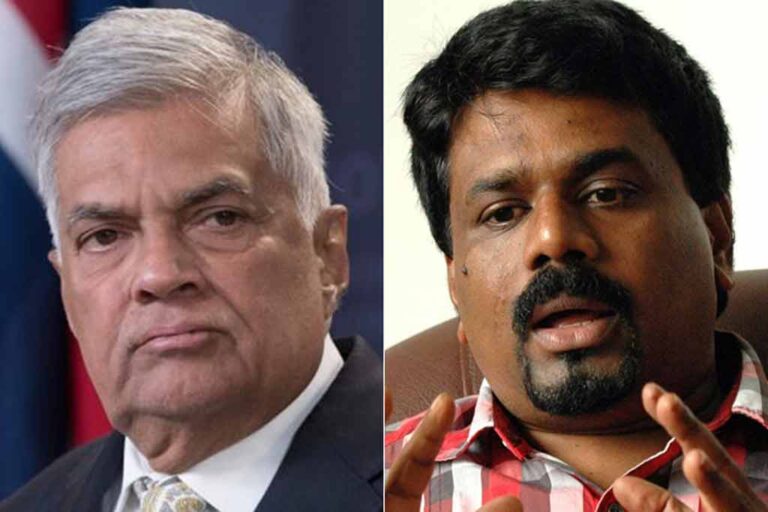
The Janatha Vimukthi Peramuna (JVP) has reportedly decided not to join the discussion with President Ranil Wickremesinghe scheduled for today (09) despite early claims on joining the meeting.
The leftist party has made this decision yesterday evening, according to reports.
The JVP, nevertheless, has prepared a proposal regarding the formation of an all-party programme to be handed over to the President.
Meanwhile, the President has informed the Ruling Party MPs that he has decided to delay taking a final decision regarding an all-party government until the negotiations with the JVP are concluded.
MIAP
Japanese PM expresses confidence on SLs transformation to a service centre
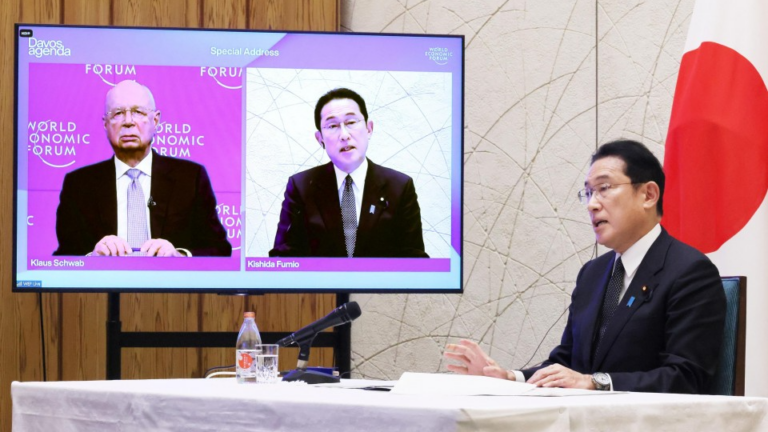
Japanese Prime Minister Fumio Kishida expressed confidence that through economic stability and administrative reforms, the crises faced by the Government of Sri Lanka will end very soon and as a service centre in the Indian Ocean, Sri Lanka can be made into a state with great development.
Recalling that the two countries are celebrating 70 years of diplomatic relations, the Prime Minister has also informed that he is eager to work with President Ranil Wickremesinghe for the development of Japan-Sri Lanka cooperation as well as a free and open Indo-Pacific region.
Japanese Prime Minister Fumio Kishida has extended his heartiest congratulations to newly elected President Ranil Wickremesinghe.
Ambassador of Japan to Sri Lanka Hideaki Mizukoshi, who called on the President last Friday, delivered the letter of congratulation from Prime Minister Kishida.
In the congratulatory message, the Japanese Prime Minister extending the best wishes of the Japanese people and the Government said he is happy to see that Ranil Wickremesinghe, who has been dedicated to the economic and social development of Sri Lanka for a long time, become the President.
Expressing confidence in the leadership of President Ranil Wickremesinghe to create political stability in the country, the Japanese Prime Minister hoped that the negotiations with the International Monetary Fund and the debt restructuring process will proceed successfully.
At the meeting with the President, Ambassador Mizukoshi expressed appreciation for highlighting the friendship between Sri Lanka and Japan during his speech delivered at the Parliament on 3 August, and also for the respect paid for the demise of former Prime Minister Shinzo Abe.
President Wickremesinghe and Ambassador Mizukoshi exchanged views on a wide range of topics and discussed the ways to strengthen the long-standing friendship between Sri Lanka and Japan.
The discussions covered a series of upcoming events, which will highlight the 70th anniversary of the establishment of diplomatic relations between Sri Lanka and Japan.
Ambassador Mizukoshi also emphasized Japan’s continuous cooperation in various fields, such as people-to-people exchange and foreign investment for renewable energy, which will be a help for the people of Sri Lanka to overcome this economic crisis and grow further.
China asks India to ‘stop exerting pressure on SL citing security reasons
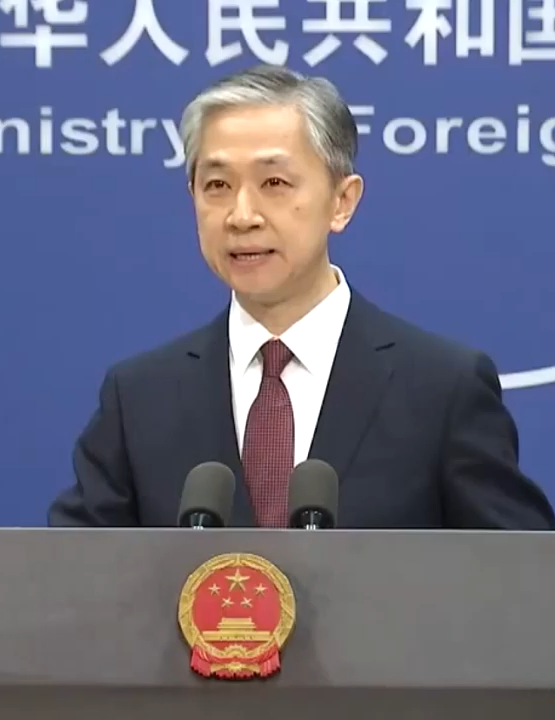
In the wake of Sri Lanka’s request to defer the planned docking of a high-tech Chinese research vessel at the strategic Hambantota Port, China on Monday took a dig at India, saying it was “senseless to pressure” Colombo by citing the issue of security concerns.
According to reports from Colombo, Sri Lanka has asked Beijing to defer the arrival of the Chinese space and satellite tracking research vessel ‘Yuan Wang 5’ which was scheduled to dock at the Hambantota Port from August 11 to 17 due to security concerns expressed by India.
Responding to the reports, Chinese Foreign Ministry spokesman Wang Wenbin told a media briefing in Beijing that China has taken note of the reports and asserted that “the cooperation between China and Sri Lanka is independently chosen by the two countries and meets common interests. It does not target any third party”.
It is “senseless to pressure Sri Lanka” by citing the issue of security concerns, he said, in reference to the reports that Sri Lanka’s move was attributed to concerns expressed by India.
“Sri Lanka is a sovereign state. It can develop relations with other countries in the light of its own development interests,” he said.
“China urges relevant parties to see China’s scientific explorations in a reasonable and sensible way and stop disturbing the normal exchange between China and Sri Lanka,” Mr Wang said.
Sri Lanka is a transport hub in the Indian Ocean. Many scientific exploration ships including those from China have stopped at the port of Sri Lanka for resupplies, he said. “China has always exercised the freedom of navigation in the high seas and fully respects the jurisdiction of coastal states for the scientific exploration activities within their waters,” he said.
According to media reports, India informed Sri Lanka that the docking of the high-tech Chinese research vessel could pose a threat to its national security.
Sri Lanka received strong messages of protests from India as the ship was said to have the capability to track satellites and intercontinental ballistic missiles, the reports said.
India has said it carefully monitors any development having a bearing on its security and economic interests.
“We are aware of reports of a proposed visit by this vessel to Hambantota in August,” India’s External Affairs Ministry Spokesperson Arindam Bagchi said in New Delhi when asked about the reports of a proposed visit by the Chinese vessel.
“The government carefully monitors any development having a bearing on India’s security and economic interests and takes all necessary measures to safeguard them,” he said last month.
Reports from Colombo on Sunday said China’s embassy in the country sought an urgent meeting with senior Sri Lankan authorities after Colombo sought deferment in the planned docking of the research vessel.
Some Sri Lankan news portals also reported that the country’s President Ranil Wickremesinghe held a closed-door meeting with China’s Ambassador Qi Zhenhong after Colombo sought the deferment of the planned docking.
On July 12, amidst the political turmoil in Sri Lanka, the previous government approved the Chinese vessel’s docking at the Hambantota port.
The Chinese vessel was expected to dock at the Sri Lankan port for “refuelling and replenishment” and to conduct satellite control and research tracking in the northwestern part of the Indian Ocean region through August and September.
Prime Minister Dinesh Gunawardena recently said Sri Lanka was looking forward to settling the issue of the vessel’s visit with an “approach of friendship”
NITF’s reinsurance issue inflicts financial risks on SL General insurance

Sri Lanka general insurance companies are likely to face financial risks when settling claims for the insurance cover for various sectors as the foreign reinsurance contract of local company – reinsurer the National Insurance Trust Fund’s (NITF) has been terminated.
This was a result of non-payment of premium by a local broker due to scarcity of dollars despite the settling of all dues in rupees by the NITF, Chairman of the Fund M.M. Mawahib Mawjood said.The NITF reinsures with an overseas company through a local agent in Colombo.
The NITF is Sri Lanka’s sole reinsurer, and all domestic general insurers must deposit 30 per cent of their reinsurance cover with the fund; the remainder of 70 per cent has to be distributed to overseas companies by these local insurers.
Mr. Mawjood noted that the payment of premiums to the foreign reinsurer is the responsibility of the local broker and the cancellation of the contract was not a fault of the NITF as it has fulfilled all of its financial obligations.
According to the agreement premium payments to the foreign reinsurer should be made by the local broker after recovering the due amount in rupees from the NITF, he clarified.
Valuable public and private assets and property are insured by leading insurers and 30 per cent of their insurance cover has been reinsured with the NITF, insurance industry sources said.
A critical situation in the re-insurance programme has arisen following the cancellation contract of the NITF by the foreign insurer, official fiscal records revealed.
With the intervention of relevant state authorities and chambers and the NITF, the broker has been able to settle some arrears by obtaining dollars from several local banks but later it had no option other than the defaulting of the premium payments of international reinsurer.
Mr. Mawjood added that with the intervention of the Finance Ministry and the Central Bank measures will be taken to arrive at some sort of a settlement in renewing international reinsurance arrangements. However he noted that NITF provides Strike, Riot, Civil Commotion and Terrorism (SRCCT) cover on the island which is re-sold by all insurers.
This reinsurance cover has not been affected as there was no issue with its foreign reinsurer as the relevant local broker is meeting financial obligations in dollars without any delays, he disclosed.
The foreign currency liquidity crisis in local banks has restricted local insurers’ ability to meet foreign currency obligations, a head of local general insurance company said adding that premium payments to foreign reinsurers and other costs that are typically sourced from overseas have become an issue at present.
High Commissioner Milinda Moragoda meets Tamil Nadu Parliamentarian Kanimozhi Karunanidhi
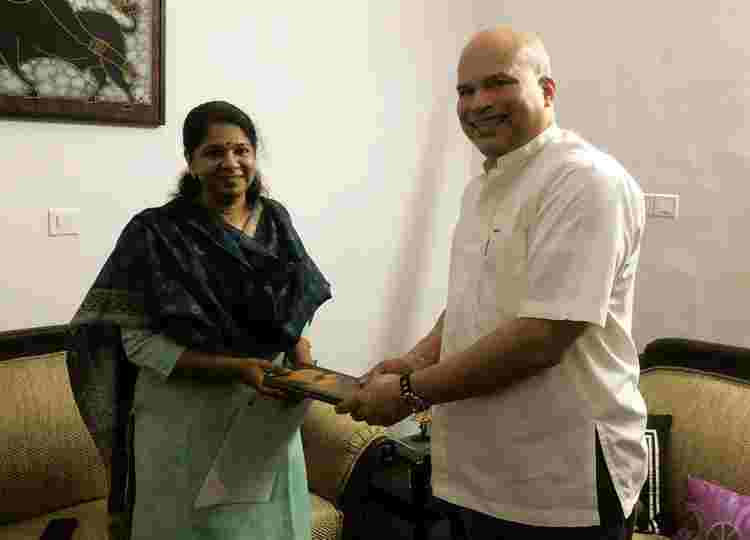
Further strengthening the engagement with the State of Tamil Nadu and as a follow-up to the meeting with its Chief Minister in early June, Sri Lanka’s High Commissioner to India Milinda Moragoda met with Lok Sabha MP for Thoothukkudi constituency, Kanimozhi Karunanidhi on 4 August 2022 in New Delhi.
Parliamentarian Kanimozhi Karunanidhi, who was in New Delhi to attend the monsoon session of Parliament, is the daughter of the former Chief Minister of Tamil Nadu M. Karunanidhi and sister of the present Chief Minister M.K. Stalin.
The Lok Sabha MP extended a warm welcome to High Commissioner Moragoda. During the very cordial discussion that followed, the High Commissioner thanked the people of Tamil Nadu for the humanitarian assistance that they have been extending to Sri Lanka to help manage the current economic situation.
The High Commissioner and the Parliamentarian exchanged views on the very close ethnic, religious and cultural affinities between the State of Tamil Nadu and Sri Lanka and discussed ways and means to further strengthen them.
High Commissioner Moragoda also presented a copy of the Tamil translation of the book containing his parliamentary speeches to MP Kanimozhi. The High Commissioner recalled how he had presented a copy of the same book to her father, the late M. Karunanidhi, former Chief Minister of Tamil Nadu, in 2006.
A senior member of the Dravida Munnetra Kazhagam (DMK) and a poet, Kanimozhi Karunanidhi functions as the chief of the party’s wing for art, literature and rationalism. She had worked as a journalist before entering politics.
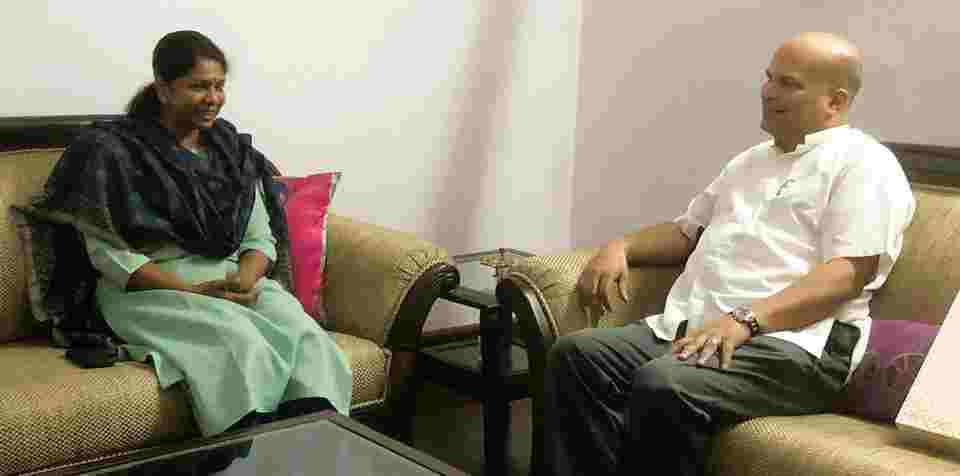
High Commissioner Moragoda was accompanied by Deputy High Commissioner Niluka Kadurugamuwa and Minister Counsellor of the High Commission of Sri Lanka in New Delhi Gamini Sarath Godakanda.
High Commission of Sri Lanka
New Delhi
08 August, 2022
SRI LANKA: Illegal arrests and illegal detentions damage the legal system
By Basil Fernando
Illegal arrests and illegal detentions do not only harm individuals, they also cause irreparable damage to the legal system as a whole. The recent wave of arrests of those who have participated in peaceful demonstrations has not only caused serious damage to the life and liberty of these individuals but they have caused even much greater damage to the entire legal system of Sri Lanka. This damage will continue to make its impact felt on the system long after these particular incidents have passed and even been forgotten. Collectively, the legal system of Sri Lanka has become much weaker due to the abuse of power involved in violating some of the fundamental principles on which the entire legal system rests. Disrespect for the individual and the protection of persons from illegal arrest and illegal detention goes to attack the very heart of the system. It is only a foolish ruler or an administrator that resorts to abuse the people’s liberties in the manner it has been done within the last few weeks. Such abuse of a legal process manifests the utter actions of the understanding of the fundamental rules that underline the social stability and the function of the law in maintaining the confidence of the people in the institutions that are created by the State in order to provide protection to the people. Once the population begins to comprehend that the rulers themselves do not respect the law, it would hardly be a surprise if the people adopt the same attitude. A ruler that manifests disdain for the law also creates conditions for the people to have disdain for the same laws. Therefore, in the recent weeks, wrongs have been done against the legal system of Sri Lanka by the acts authorized by the new President Ranil Wickremesinghe.
The speeches about running the country according to the law and regulations have been repeated by the new President under these circumstances. Laws and regulations, if they are to be respected by the people, require not a mere use of force to enforce such laws and regulations but also a moral authority to go with it. When the law is divorced from a moral authority, such laws and regulations become a mockery. It is not only the people who begin to disdain such laws and regulations but also many enforcers of such laws such as the Police and other security personnel also begin to treat such laws and regulations as mere instruments of suppression. Suppression merely means the authorization of violence by the State itself. When the law enforcement officers begin to see that they are no longer protectors of the people and the rule of law framework of the country but are mere protectors of some politicians who are using them in order to protect themselves from their electors, then the very psychological conditions that are necessary for proper suppliance with the law disappears. Thus, the law enforcement officers get themselves transformed into obedient servants of politicians and cease to be servants of the law. Such transformations have a serious impact on destabilizing the entire society.
In this regard, some make distinctions between what is legal and what is legitimate. Even these distinctions do not stand to be valid when closely examined. Within a system of the rule of law, nothing can be legal if it is not legitimate. If the decisions are made outside the rule of law framework, then, of course anything could be given the appearance of legality. For example, in Sri Lankan authorization, the burial of dead bodies by the suspension of the normal laws relating to suspicious deaths where the authorization of a magistrate is necessary before such burials, resulted in allowing large scale enforced disappearances,. Some may argue that since the emergency regulations allowed such a suspension of rules relating to burials that it is legal though it may not be legitimate. In fact, the emergency regulations did not make the criminal act of killing and burial legal. Despite the emergency regulations, such acts remain criminal.
The same can be said about orders or interpretations made on the basis of a Constitution that itself violates the fundamental principles of the rule of law. The 1978 Constitution fundamentally violates the basic principle of the rule of law that is that everyone is equally bound by the same laws. Therefore, the 1978 Constitution is a piece of legislation which is fundamentally flawed and therefore illegal. A law that fundamentally undermines the foundational principle of the rule of law cannot have legality or legitimacy. If such a Constitution provides processes which are themselves contrary to the wider purposes of democracy and the rule of law, then such processes cannot be treated as legal or legitimate.
Therefore, Sri Lanka is trapped in an entanglement that has become ever so complicated due to the very fact that the Constitution on which the whole political system itself is based is neither legal nor legitimate.
It is not possible to undo these entanglements without addressing the fundamental problem of what one has to do with the 1978 Constitution. This has to be done one time or the other before Sri Lanka can return to the state that is rooted in the rule of law and which can blame legitimacy for its actions.
All of these are not abstractions. All these entanglements that were created about the very nature of the legal system created insoluble problems for the political system and the political system in turn created the situation of bankruptcy that Sri Lanka is faced with at the moment in terms of this economy. The aspects of illegality, the illegitimacy of political processes and the bankruptcy faced by the economy are all bound together.
Instead of trying to face these very complicated problems, allowing of the arrest and detentions and other forms of abuse of the right to protection of the individuals and society will only go to complicate things more and more and will not bring about any kind of solution to the problems of acute poverty that is spreading due to a failed economic, political and legal system.