
Ruling Party MP Dhammika Perera is due to be sworn in as a Minister of the Cabinet tomorrow (24).
Accordingly, the ex business mogul will be sworn in as the Minister of Technology and Investment Promotion.
MIAP
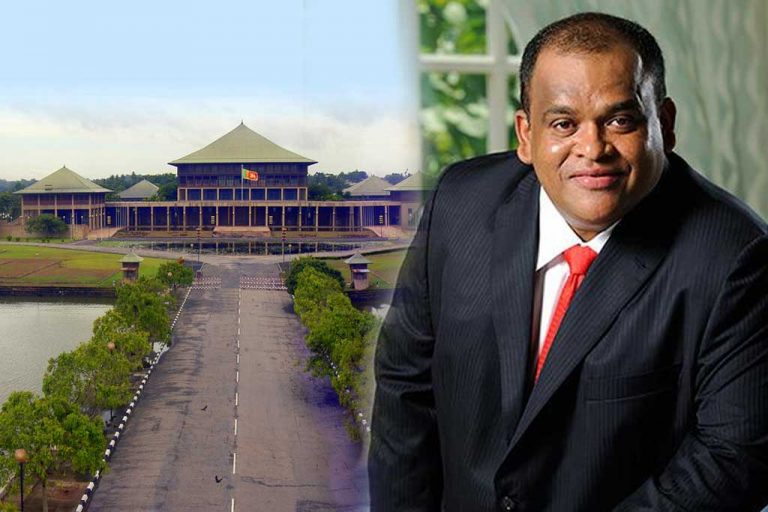
Ruling Party MP Dhammika Perera is due to be sworn in as a Minister of the Cabinet tomorrow (24).
Accordingly, the ex business mogul will be sworn in as the Minister of Technology and Investment Promotion.
MIAP
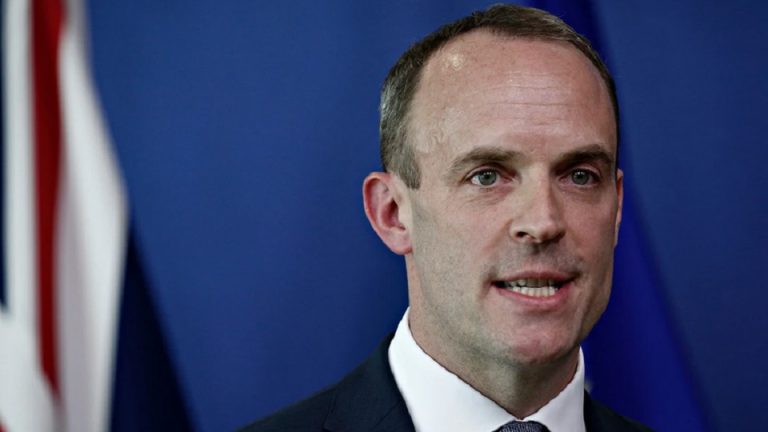
Today, the UK government introduced plans for a British Bill of Rights to replace the Human Rights Act. The Bill, which government claims will “strengthen freedom of speech and curb bogus human rights claims” will have a far reaching and deeply concerning impact on criminal justice rights in the country, in fact removing more rights than it will introduce.
“It’s perverse for the government to claim that it’s defending our freedoms and preserving the UK’s commitment to the European Convention on Human Rights, when all it’s doing is removing human rights as a cornerstone of our constitution and our legal system” says Bruno Min, Fair Trials Legal Director.
“Contrary to what the government suggests, human rights obligations are not optional, nor should they be trumped by political whims. The Bill of Rights threatens the rights and freedoms of everyone, and it must be stopped at all costs.”
Based on a press release from the Ministry of Justice, the Bill will:
Min added “It’s deeply worrying that the government’s primary justification for undermining the UK’s commitment to the ECHR is its apparent disdain for criminal suspects, convicted people, and foreign nationals – people who are amongst the most vulnerable to political scapegoating and most in need of human rights protections. Human rights are for everyone, and it’s no business of the government to pick and choose who gets to benefit from them.”
On Tuesday, Fair Trials joined with Liberty and 150 other organisations to urge Justice Secretary Dominic Raab to ensure there is sufficient pre-legislative scrutiny of the Bill.
By P.K.Balachandran
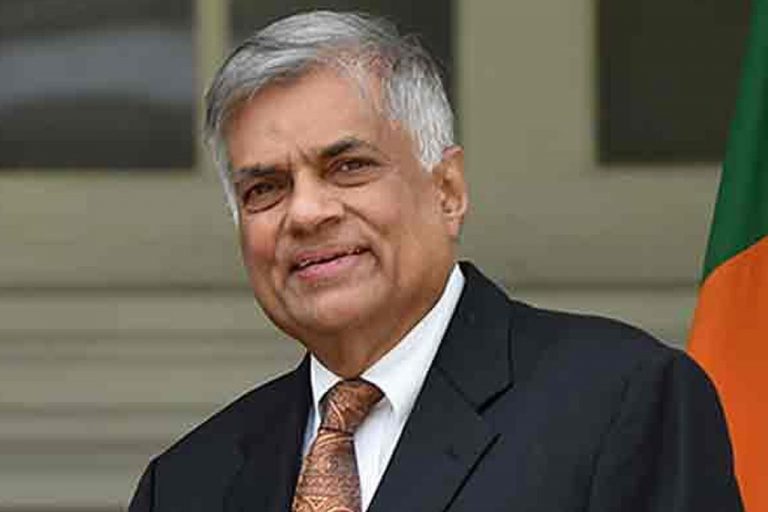
Colombo, June 21 (Counterpoint): The Sri Lankan Prime Minister Ranil Wickremesinghe is to visit India shortly to meet his Indian counterpart Narendra Modi and other key Indian ministers, reliable sources said on Tuesday. The exact dates of the visit are being worked out, the sources added.
Both Wickremesinghe and Modi have been keen on meeting each other ever since Wickremesinghe assumed office in May. But the Sri Lankan leader had been busy trying to manage the unprecedented economic crisis his country has been undergoing. In addition, he had to manage a fractious parliament in which he had nil support to begin with. Adding to his challenges, was the controversy over his appointment as Prime Minister bypassing others with more support in parliament. Further, agitators on the streets were wanting both President Gotabaya Rajapaksa and Wickremesinghe to go home making way for a more legitimate all-party government.
Therefore, Wickremesinghe’s primary task, upon taking over, was to establish his legitimacy by proving majority support in parliament even if it was to be only a temporary patchwork of disparate elements. Eventually, and to his credit, fairly quickly, he did stitch together an informal, but working coalition with the help of the Rajapaksas’ political party, the Sri Lanka Podujana Peramuna (SLPP).
While the irate citizens of Sri Lanka were wondering if their rulers would ever take time off from mindless politicking and attend to their crying needs, India was steadily sending aid in the form of food, fuel, fertilizer and medicine which has now reached US$ 3.5 billion in value.
But many wonder if India will be able to continue with such inputs on such a massive scale, for long. India has to factor in the fact that no other country has come in with help in any substantial way. While China has had geostrategic issues troubling it, the Western powers are waiting for the IMF’s investigations and recommendations and the Sri Lankan government’s response to those recommendations.
Against this background, a desperate Sri Lanka has asked India for an additional US$ 500 million to buy fuel. A request to push through this deal expeditiously is expected to be high on Wickremesinghe’s agenda for his talks with Prime Minister Modi, Finance Minister Nirmala Sitharaman and Foreign Minister S.Jaishankar.
On their part, the Indians, comprising Prime Minister Modi, his ministerial colleagues and the Indian Security Establishment, will be keen on getting firm commitments from Wickremesinghe on implementing or speeding up a number of projects for which MOUs had been signed, some way back in 2017.
New Delhi will also be worried about the controversy whipped up by certain circles in Sri Lanka over the US$ 500 million renewable energy projects in North Sri Lanka given to Gautam Adani. The project had been given in an unconventional way circumventing the normal tender procedure. There is controversy over the pricing of power also. Modi and his ministers will be keen to know if Adani’s project will go through smoothly and unhindered.
The power situation in Sri Lanka is worrying not only Sri Lankans but also India. India, which imports most of its oil, cannot go on sending oil consignments to Sri Lanka. It is learnt that Adani might get a major coal-powered energy project also in Sri Lanka.
To rebuild the shattered Sri Lankan economy, IMF’s help is a must. And for its part, the Lankan government must implement the IMF’s recommendations without being influenced by lobbies with a vested interest in the old, rotten system. Western aid givers and lenders have made it clear that they will go by the results of the IMF’s mission and course Sri Lanka’s follow-up actions. An IMF team is currently in Sri Lanka on a 10-day visit.
Although queues in front of fuel and cooking gas outlets are still miles long, and shortages and high prices are hitting the lower middle class and the poor below the belt, sources close to the government see a silver lining. They point out that remittances from expatriate workers and earnings from exports have increased and are expected to further increase giving rise to the hope that with greater Western support following the IMF’s intervention, the economy will be on the road to recovery towards the end of the year.
NewsIn Asia
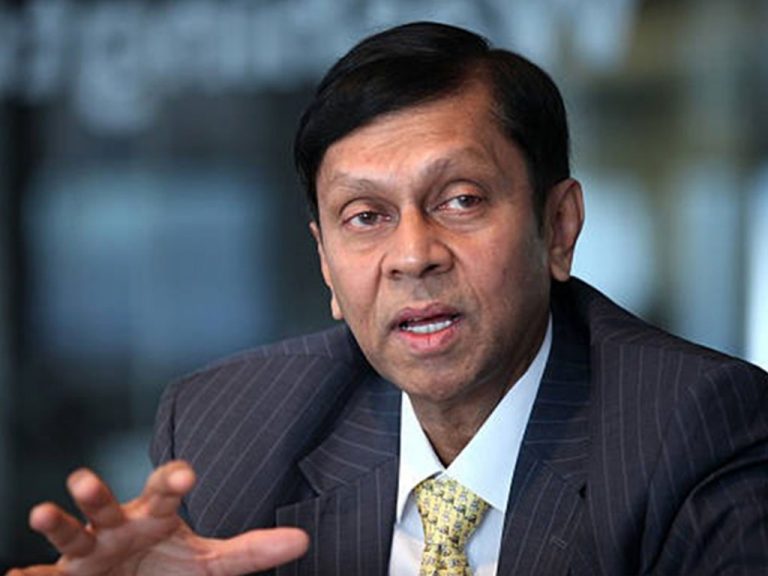
Statement by Ajith Nivard Cabraal on 21st June 2022 re. the decision to allow “flexibility” of the LKR
The decision to allow the Sri Lankan Rupee (LKR) to be “flexible” from 7th March 2022 onwards is sometimes described by certain persons as being an “unilateral” decision of then Governor Ajith Nivard Cabraal. Therefore, this statement is to provide the factual position so as to set the record straight.
The decision to allow flexibility in the exchange rate was taken by the Monetary Board of the Central Bank of Sri Lanka based on a Monetary Board Paper dated 7th March 2022 submitted by all three Deputy Governors (Mr Mahinda Siriwardene, Mr Dammika Nanayakkara & Mrs Yvette Fernando), Director – Economic Research Department and Director – International Operations Department. The Board Paper stressed the need for changing the exchange rate policy immediately in order that the exchange rate acts as a “shock absorber” in the face of adverse developments in the global front on Sri Lanka’s already fragile Balance of Payments, including the increase of the crude oil price to nearly USD 140 per barrel and the worsening Russia-Ukraine war.
Based on that Board Paper and the discussion at the meeting, the Monetary Board decided to “allow the market to have a greater flexibility in the exchange rate with immediate effect and communicate that the Central Bank is of the view that forex transactions would take place at levels which are not more than Rs. 230 per US dollar”. From the above it will be clear that, while the Monetary Board had expressed its “view” as to the level at which forex transactions would take place as a market guidance, a clear decision had been taken to allow for the flexibility of the LKR in the forex market. On the same day, a statement was issued to the media in line with the above decision.
Further, within about a week of floating the LKR, the President made a formal announcement that the government had initiated discussions with the International Monetary Fund (IMF) for a programme.
Subsequently, Governor Cabraal resigned on 4th April 2022, on which day, the LKR was trading at Rs. 289.73/299.99 per USD in accordance with the new “flexible” exchange rate policy as announced by the Monetary Board. After Governor Cabraal’s exit, the Monetary Board chaired by the new Governor Dr. Weerasinghe continued with the “flexible” exchange rate policy, whist the Government and CBSL also took a series of far reaching decisions which included the decisions to: sharply increase policy interest rates by 700 bps from 8th April 2022 onwards, and to discontinue repayments of forex loans and interest from 12th April 2022 onwards. In the meantime, the LKR continued to depreciate to a range of Rs. 364.23/377.50 against the USD by 12th May 2022, at which point, the Monetary Board had apparently once again decided to “fix” the exchange rate at a new range between Rs.355.00/Rs.365.00 per USD. Such move to “fix” the exchange rate seems quite similar to the policy adopted by the Monetary Board chaired by Governor Professor W D Lakshman which “fixed” the LKR exchange rate at a range of Rs.199.00/203.00 per USD from 6th September 2021 onwards.
It must of course be understood that there will always be conflicting opinions among stakeholders as to the value, timing and methodology to be followed in “fixing”, or “floating” or “pegging” a country’s currency. It is also quite possible that after decisions are taken to “float” or “fix” or “peg” the currency, others could, claim that the decision was right or wrong or implemented differently. However, it must be appreciated that the decision-making authority has to take its decision based on the prevailing circumstances, expert advice, practical ground conditions, judgement of future expectations and outcomes, etc. when viewed holistically. That is obviously why the Monetary Law Act provides the authority to the Monetary Board to change financial and monetary sector policies (including the exchange rate policy, interest rates, statutory reserve ratios, etc) when it deems appropriate to do so, from time to time.
It must also be appreciated that the implementation of policy measures is carried out by the professional and technical staff, of the Central Bank and they would naturally ensure that the policy measures being implemented are based on legal and binding decisions of the Monetary Board, which is the decision making authority, and not based on “unilateral” decisions of a single person.
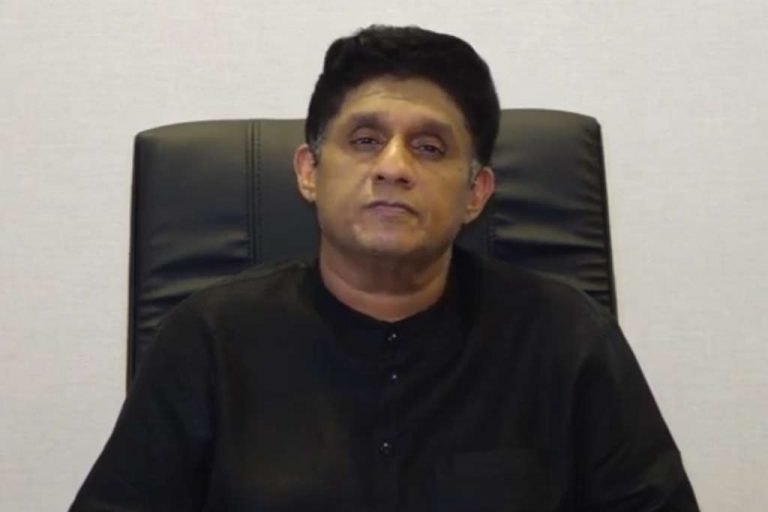
A US Bank that had invested in a sovereign bond issued by Sri Lanka filing a lawsuit in a district court in Manhattan seeking settlement and interest would be a very unfortunate situation, said Leader of the Opposition Sajith Premadasa, addressing a meeting with a delegation of renewable energy at the Opposition Leader’s Office.
Accordingly, even foreign nations have made Sri Lanka a defendant before international courts, he pointed out, adding that the true nature of those so called economic super men has now been revealed.
The entire country has turned into one refugee camp, Premadasa went on, adding that the government that is numbed before the struggles of the people has turned Parliament invalid.
He reminded that the Prime Minister who questions the Samagi Jana Balawegaya’s move of boycotting Parliament today had sheltered the Rajapaksas by keeping his sole parliamentary seat vacant for an entire year.
MIAP
Russia’s President Vladimir Putin has immediately responded to the letter sent by former Sri Lankan President Maithripala Sirisena on June 05 regarding the dispute on the Russian flight Aeroflot stalled in Sri Lanka via a Court order, stating that Aeroflot was looking forward to resuming flights with Sri Lanka.
The response letter by Putin was handed over to Sirisena by Russian Ambassador to Sri Lanka Yuri Materi.
The Russian President urged Sirisena to intervene in the ongoing talks between the two countries.
The Russian Ambassador commented that the Russian government is willing to provide assistance including fuel and fertiliser to overcome the crisis befallen Sri Lanka.
However, the Sri Lankan government has not yet responded favourably, he went on, adding that Russia would make a more active contribution should the Sri Lankan authorities be more enthusiastic and committed.
The Russian Ambassador also urged the former President to intervene in the matter.
MIAP
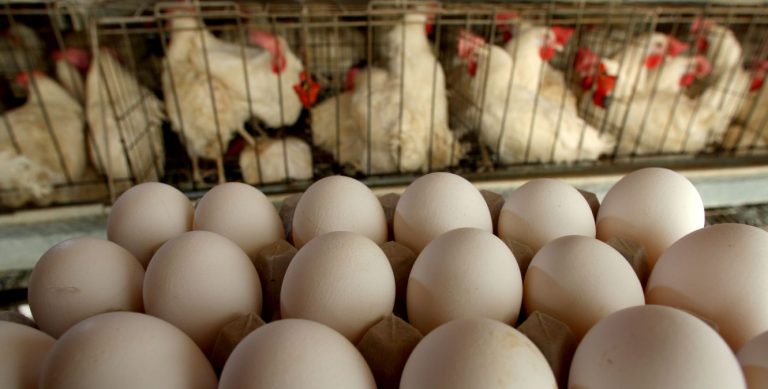
The Sri Lankan poultry industry is on the verge of collapse due to 30 percent drop in production this year as high feed costs hit farms.
Local Consultant Athula Mahagamage noted that the layer industry is feeling the most impact, with many farms shutting. “Feed costs are up 300-400 percent year-on-year making it difficult to maintain chicken farms countrywide,” he added.
Sri Lanka’s chicken meat production has collapsed 30 percent and egg output 40 percent as a currency collapse pushed up costs and feed imports were blocked by foreign exchange shortages, an industry official said.
The country is now going through the worst currency crises triggered by the island’s Latin America style intermediate regime central bank set up by a US money doctor in 1950.
“Small and medium farmers are leaving the business due to feed shortages and because big poultry companies are stopping buy back schemes,” Ajith Gunasekera, President of the All Island Poultry Association said.
Broiler meat output has fallen 30 percent to 12,000 metric tonnes a month from 18,000 metric and prices have shot up, he said.
A kilo of chicken is around 1,200 rupees from 460 rupee levels before economists started to print money to target an output gap by mis-targeting interest rates, and official inflation rose 39 percent in the year to May 2022.
The Central Bank printed money for over two years to mis-target interest rates and collapsed the currency to Rs. 360 to the US dollar from Rs200, in a failed attempt to float the currency with a surrender requirement (forced sale of dollars to the central bank).
The current economic problems come from applying floating rate monetary policy (liquidity injections or printing money from open market operations for stimulus) to a reserve collecting peg (flexible exchange rate).
Inflation and currency depreciation created by the central bank have put protein in particular out of reach of the less affluent pushing up malnutrition as had happened when the country’s economists who favour collapsing soft-pegs printed money in earlier occasions.
Eggs which were around 18 to 25 rupees before the latest money printing bout have now shot up to 43 to 50 rupees.Egg production has collapsed 40 percent, amid feed shortages.
Gunasekera said daily egg production which was around 700,000 to 800,000 and now fallen to around 400,000.
“Chicken are also laying fewer legs due to nutrition problems,” Gunasekera said “A chicken will usually lay about one egg a day but without proper feed they will lay fewer eggs.”
Egg prices are up partly due to high transport costs from Kuliyapititya where most of the large egg farms are located to Colombo, he said. About 73 percent of the cost of raising broilers was feed.
Maize which was 40 to 45rupees a kilogram has now gone up to 80 to 90 rupees a kilogram but there was no supply with the domestic Maha season harvest having failed due to a fertilizer ban.
Due to reduced paddy milling, rice polish is also not available.Forex shortages from the non-credible peg has made it difficult to import maize or soya meal.The industry is hoping to get some inputs from the Indian credit line.
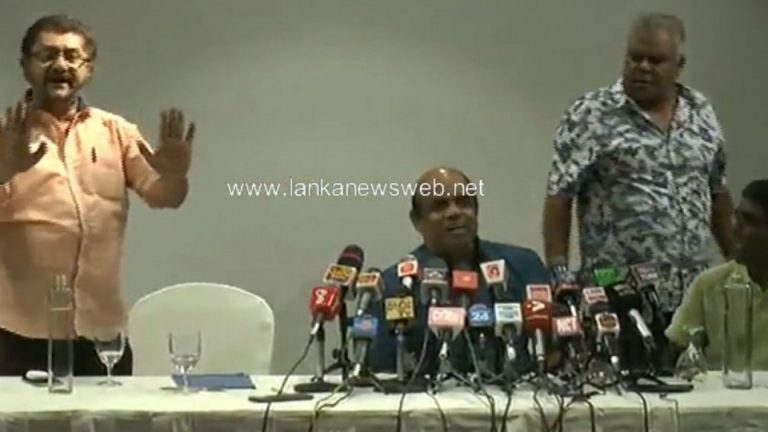
A heated exchange has occurred between Dudley Sirisena and Owner of the New Ratna Sahal Rice Company Mithrapala during a briefing held on the rice control price yesterday (22).
The heated exchange has occurred due to the comment made by the New Ratna Sahal Owner saying that Nadu rice cannot be sold for the control price declared by the government and that its price should be soared.
Sirisena, who is one of the key players of rice monopoly in Sri Lanka, went on emphasising that rice should be sold at the control price declared by the government and that further soaring of rice prices shall not be accepted.
Temper grown, Sirisena added that the point in which the ‘rice mafia’ existed up to this point can now be identified.
Despite the disagreements between the two rice tycoons on control price, it was well-evident during the briefing that the people are the ultimate victim of the games played between politicians and businessmen.
MIAP
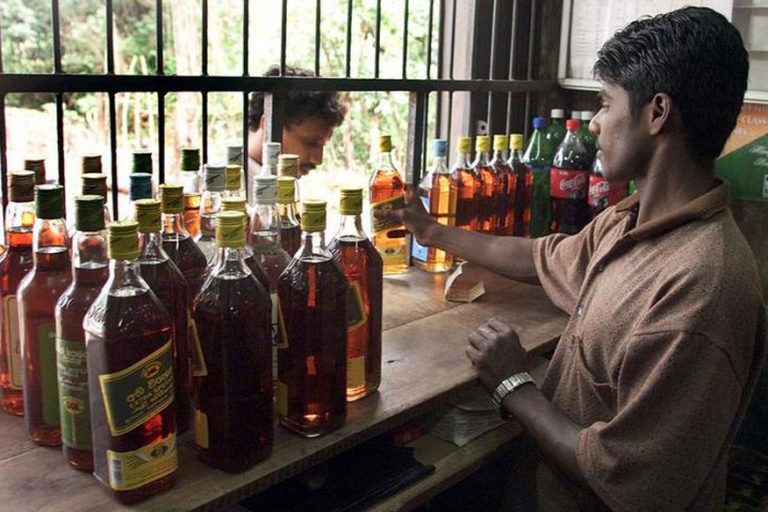
Sri Lankans demand for liquor has decreased by about 30percent due to the recent increase in the price of liquor and the decrease in the income of the people of the country,. the Committee on Public Finance (COPF) revealed.
This was transpired at a recent meeting of the Committee on Public Finance chaired by Member of Parliament ighted Anura Priyadarshana Yapa.
Officials representing several institutions were contacted online to discuss plans to increase government revenue and their current status.
Accordingly, officials representing the Ministry of Finance, Economic Stabilization and National Policies, the Inland Revenue Department, the Sri Lanka Excise Department and the Sri Lanka Customs were contacted online.
The officials said that there were several problems in the Sri Lanka Excise Department reaching the target revenue due to the limited quantity of ethanol available for the production of liquor, limited number of diesel and fuel and distribution problems.
They also pointed out that the demand for alcohol has decreased by about 30percent due to the increase in the price of alcohol and the economic hardships faced by the people.
It was also stated that due to the sudden price hike there is a tendency to increase the production of illicit liquor.
Sri Lanka’s Excise Department is in the process of enhancing revenue collection and strengthening tax administration with the aim of contributing much needed cash for state coffers in the severe economic crisis, top official of the department said.
It has collected Rs. 80 billion up now this year from the set target of Rs.180 billion even during the period of economic difficulty tiding over the present crisis, Commissioner General of Excise M.J. Gunasiri disclosed.
The Department has been able to increase its revenue to Rs.140 billion in 2021 from Rs.121 billion in 2020; he said adding that the tax administration has been strengthened.
The Excise Department chief stated that the increase in excise duty which was proposed in the 2022 budget is effective from today November 13 2021.
The government has decided to withdraw the special Goods and Services Tax (GST) aimed at simplifying the existing tax structure and consolidating several taxes as a single tax following the Supreme Court’s decision of requiring a two-third majority and referendum to enact it as a law, Finance Ministry sources said.
The Court observed that several clauses of the bill are inconsistent with some of the articles of the country’s constitution.
The Special GST consolidates several taxes on liquor, cigarettes, telecommunications, betting and gaming and vehicles. The Attorney General had cleared the draft law.
This legal issue has prompted the Finance Ministry find an option to re-introduce the SGST and one of the options is to withdraw the tax and allow the previous taxation system with some revisions to relevant taxes to continue,a senior official said
.
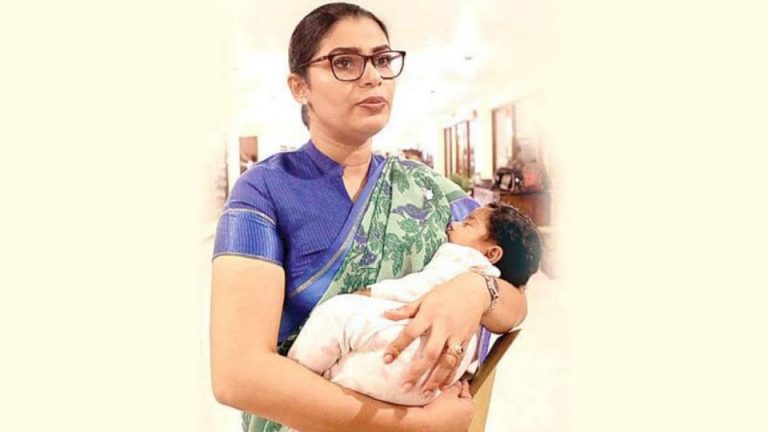
Former MP Hirunika Premachandra responded to Social Media trolling on her breasts being exposed as she was picketing in front of Prime Minister Ranil Wickremesinghe’s residence yesterday (22) in a Facebook statement, saying that while trolls were busy making her breasts the centre of attention, another man has died at a queue.
“I am proud of my breasts! I breastfed three beautiful kids. I nurtured them, comforted them and dedicated my whole body for them,” the former SJB MP wrote.
She added: “I am sure people who make fund of my exposed breasts (due to the clash with the police) also sucked their mothers nipples until its raw when they were infants.
Anyway when you are done talking, making memes and laughing about my breasts, there was ANOTHER civilian died in a cue… Just so you know!“
MIAP