Home Blog Page 218

Premadasa Calls for India–Sri Lanka Cooperation on Fishermen Issue Under International Law

0

Calling the fishermen issue between India and Sri Lanka a “very important” and long-standing concern, Sri Lankan Opposition Leader Sajith Premadasa has urged both countries to collaborate in establishing a practical framework based on international law to resolve the matter.

“The fishing issue is very important. The two countries must cooperate and establish a proper, workable framework — one that is based on fact and substance,” Premadasa said, responding to a question by ANI at an event titled “India–Sri Lanka Bilateral Relations.”

He emphasized that both nations must respect international maritime regulations, particularly those under the United Nations Convention on the Law of the Sea (UNCLOS), which govern the continental shelf and high seas. “It is important to ensure that illegal, unregulated, and unreported fishing is addressed in line with these legal prescriptions,” he noted.

While acknowledging the livelihood concerns of fishermen, Premadasa stressed the importance of lawful practices. “We understand that this involves the livelihood of households, but it is equally important to ensure that all such income-generation methods are lawful. Rather than operating without a clear and permanent framework, both sides should work together toward a lasting solution,” he said.

His remarks come amid ongoing tensions between India and Sri Lanka over Tamil Nadu fishermen entering Sri Lankan waters near Katchatheevu, often leading to arrests and disputes over maritime boundaries.

Last month, Sri Lankan Prime Minister Harini Amarasuriya, following her meeting with Indian Prime Minister Narendra Modi, described the issue as “sensitive” and said both nations would continue discussions to reach a “practical solution.”

“We need to protect the livelihoods of our fishermen as well, but we understand that it’s a sensitive issue, and we will continue to talk about it,” Amarasuriya stated.

The Palk Strait, a narrow body of water separating Tamil Nadu from Sri Lanka, remains a rich yet contested fishing ground — and a persistent flashpoint in bilateral relations.

Islandwide Tsunami Mock Drill to Mark World Tsunami Awareness Day Today

0

A comprehensive tsunami mock drill encompassing the entire island is scheduled to take place today (November 5) in line with World Tsunami Awareness Day.

The exercise is organized by a regional body comprising 28 member countries under the Indian Tsunami Early Warning Centre (ITEWC) framework.

According to the Disaster Management Centre (DMC), the simulation will be conducted in five Grama Niladhari Divisions across the coastal districts of Batticaloa, Kalutara, Galle, and Jaffna.

The main national-level event will be held in the Kalutara District, commencing at 8:30 a.m.

Multiple government agencies and institutions — including the DMC, Department of Meteorology, Ministry of Education, Ministry of Health, District and Divisional Secretariats, Tri-Forces, Police, National Disaster Relief Services Centre, local authorities, schools, hotels, and other relevant stakeholders — will take part in this large-scale preparedness exercise aimed at strengthening Sri Lanka’s disaster response and early warning systems.

WEATHER FORECAST FOR 05 NOVEMBER 2025

0

Showers or thundershowers may occur at a few places in Northern and Uva provinces and in Trincomalee district after 2.00 p.m.

A few showers are likely in Western, Sabaragamuwa and Central provinces.

The general public is kindly requested to take adequate precautions to minimize damages caused by temporary localized strong winds and lightning during thundershowers.

EDB Empowers Women Exporters through Data-Driven Trade Training

0

By: Staff Writer

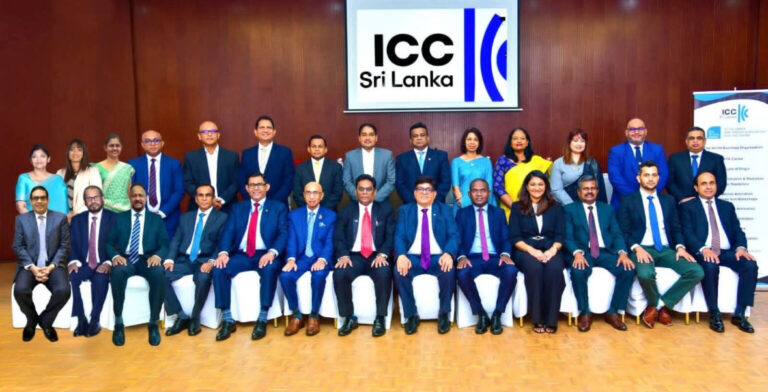
November 04, Colombo (LNW): In a strong move to boost women’s participation in international trade, the Sri Lanka Export Development Board (EDB), in collaboration with Verité Research, successfully conducted a capacity-building program titled “Leveraging Trade Data for Export Success” on 21 October at the EDB Training Arena in Colombo.

The program, part of EDB’s ongoing Women Entrepreneurship Development initiative, brought together 35 women-led exporters representing multiple sectors of the economy. It aimed to equip participants with the analytical tools and technical skills needed to interpret trade data, assess global market trends, and make informed decisions that drive export growth.

Through interactive workshops and case-based learning, participants explored the use of trade data to identify market opportunities, assess competitiveness, and develop export strategies aligned with global demand patterns. The sessions also encouraged peer learning and collaboration, fostering a network of data-savvy women entrepreneurs committed to strengthening Sri Lanka’s export performance.

The training was conducted by Verité Research’s International Economics Programme, a team widely recognised for its expertise in trade and economic policy analysis. Lead Economist Mathisha Arangala delivered practical insights into analysing trade statistics and leveraging them for export diversification. He was joined by Research Director Subhashini Abeysinghe, Economics Program Lead Malinda Meegoda, and Research Analyst Bulani Weerawadane, who guided participants through data interpretation and strategy formulation.

The workshop underscored how evidence-based decision-making can help exporters identify emerging markets, manage risks, and adapt to changing trade dynamics critical skills for women entrepreneurs navigating the competitive global marketplace.

Highlighting the significance of the initiative, EDB officials said the program reflects the institution’s commitment to empowering women entrepreneurs by providing access to professional knowledge, market intelligence, and mentorship. By developing their capacity to use trade data effectively, the EDB aims to strengthen the contribution of women-led businesses to Sri Lanka’s export economy and sustainable development goals.

The collaboration between EDB and Verité Research also demonstrated the impact of partnerships between research organisations and trade promotion agencies. It showcased how combining policy insight with practical business training can create transformative opportunities for women in export industries.

As global trade becomes increasingly data-driven, the EDB’s training initiative marks a vital step in ensuring Sri Lanka’s women exporters are equipped not only with ambition but also with the analytical capability to thrive in international markets.

East India Holdings Leads Northern Revival with Japanese Support

0

By: Staff Writer

November 04, Colombo (LNW): In a strong display of corporate commitment to balanced national growth, East India Holdings, parent company of International Distillers Ltd. (IDL), has joined hands with The Management Club to back the upcoming Northern Economic Summit 2026 in Jaffna marking a pivotal moment in the private sector’s engagement with regional development.

Speaking at a media briefing in Colombo, IDL Chief Executive Officer Janek Jayasekara said the initiative goes beyond conventional corporate sponsorship. It reflects a deeper belief that Sri Lanka’s prosperity depends on empowering all regions equally, particularly the historically underdeveloped Northern Province.

Chairman and Managing Director Ravimohan Tissanayagam’s personal connection to the region further strengthens this vision. Descended from the historic Tissanayagam–Barr Kumarakulasinghe family of Jaffna, Tissanayagam’s heritage reinforces his long-held conviction that national progress must be inclusive.

His late wife, Rukmini Tissanayagam a great-granddaughter of national icons Sir Ponnambalam Arunachalam and Sir Ponnambalam Ramanathan inspired the creation of the Rukmini Tissanayagam Trust, which today promotes education, empowerment, and community welfare across Sri Lanka.

Jayasekara described the Northern Province as standing at a “turning point of opportunity” — a region of resilience, talent, and promise. With infrastructure upgrades such as the Kankesanthurai Port, Palaly Airport, and the Yarl IT Hub, the North is positioned to become a vibrant hub for trade, technology, and innovation. East India Holdings envisions partnerships that create jobs, nurture women-led enterprises, and encourage environmentally sustainable, culturally rooted growth.

He described the Northern Economic Summit as more than a business forum — “a call to action” to connect vision with responsibility, linking local talent to global opportunities. “The private sector must lead not only with investment and innovation, but with empathy and genuine engagement,” Jayasekara said.

Meanwhile, Japan has deepened its commitment to post-conflict recovery in the North. The Government of Japan has granted $477,185 (approximately Rs. 144 million) to the humanitarian demining agency SHARP to clear over 180,000 square metres of land, enabling around 600 people to resettle and 1,500 others to restart livelihoods.

Japanese Ambassador Akio Isomata reaffirmed Tokyo’s long-standing partnership in reconciliation and regional development, highlighting the initiative as key to socio-economic healing in conflict-affected areas.

As Sri Lanka prepares for the Northern Economic Summit 2026, collaboration between the private sector, development partners, and local communities signals renewed hope. East India Holdings’ vision uniting heritage with progress, and enterprise with empathy may well define a new model for inclusive national growth rooted in reconciliation and shared prosperity.

Profit Slide Exposes Deep Fault Lines in Sri Lanka’s State Enterprises

0

By: Staff Writer

November 04, Colombo (LNW): Sri Lanka’s State-Owned Enterprises (SOEs) recorded a sharp downturn in overall profitability during the first half of 2025, with total profits falling to Rs. 227.8 billion, down from Rs. 280.7 billion in the same period last year, according to the Finance Ministry’s Mid-Year Fiscal Position Report released on October 31.

The slump was primarily driven by the Ceylon Electricity Board (CEB), which reversed from a historic profit to a net loss following tariff reductions earlier this year. The CEB’s revenue from electricity sales plunged nearly 39% to Rs. 192.6 billion, despite higher demand, while the average revenue per kilowatt-hour fell from Rs. 41.97 to Rs. 24.64. As a result, the utility posted a net loss of Rs. 13.2 billion, compared to a profit of Rs. 119.2 billion in 2024.

Although favourable weather helped lower thermal generation costs by nearly 9%, the reduced tariff structure and delayed cost-reflective pricing eroded margins. The Government has since implemented structural reforms through the Sri Lanka Electricity (Amendment) Act, No. 14 of 2025, establishing four new SOEs for generation, transmission, distribution, and system operation in a bid to restore efficiency and transparency.

The CEB’s reversal overshadowed robust performances by other major SOEs particularly the three State banks, which collectively posted strong growth in profitability. Bank of Ceylon’s pre-tax profit surged to Rs. 61.1 billion, from Rs. 22.4 billion a year earlier, supported by a 78% rise in net interest income.

People’s Bank reported its highest-ever half-year profit before tax at Rs. 28 billion, while the National Savings Bank saw a 55% profit increase to Rs. 31 billion, reflecting lower impairment costs and stronger balance sheets.

Meanwhile, the Ceylon Petroleum Corporation (CPC) reported a 17.9% decline in profits to Rs. 17 billion, driven by reduced global oil prices and a stronger rupee. The CPC also made partial repayments under its “tea-for-oil” barter deal with Iran, lowering dues to the National Iranian Oil Company from $191 million to $131 million.

Other utilities fared better. The National Water Supply and Drainage Board posted a net profit of Rs. 17.7 billion, up 28%, aided by lower electricity costs and expanded coverage, while the Sri Lanka Ports Authority achieved a Rs. 29.2 billion pre-tax profit as container throughput and revenue climbed sharply. Airport and Aviation Services Ltd. recorded a 31% increase in revenue, though foreign exchange losses reduced overall profits.

However, SriLankan Airlines continued to weigh on the public sector balance sheet, reporting a Rs. 10.7 billion loss despite higher passenger volumes. The airline’s accumulated losses exceeded Rs. 628 billion, with negative equity of Rs. 415 billion prompting a new five-year restructuring plan focused on cost-cutting and fleet rationalisation.

The Finance Ministry cautioned that while the SOE sector remains marginally profitable, its fiscal contribution declined to Rs. 11.7 billion, from Rs. 14.9 billion last year. To address mounting financial and governance issues, the Government is advancing a Public Commercial Enterprises Management Bill, which aims to professionalise management, improve accountability, and align SOEs with commercial discipline.

With 2025 shaping into a critical reform year, the performance of Sri Lanka’s State enterprises will test the Government’s commitment to fiscal prudence and structural transformation amid fragile public finances.

Ambalangoda Shooting: Businessman Dies in Hospital Following Attack

0

November 04, Colombo (LNW): A local businessman who was wounded in a shooting in Ambalangoda earlier today (04) has died while undergoing treatment at Balapitiya Hospital, police confirmed.

The victim was shot near the Ambalangoda Urban Council premises at approximately 10:30 a.m., according to Assistant Superintendent of Police F.U. Wootler, spokesperson for the Police Media Division.

Initial inquiries suggest the attack was carried out by a group travelling in a white vehicle, who fled the scene immediately afterwards. Reports indicate that the deceased was related to a known criminal affiliated with a gang identified as ‘Karandeniya Sudda.’

Police have already deployed four investigative teams to probe the incident and gather further evidence.

CSE’s ASPI Surpasses 23,000 as Market Momentum Strengthens

0

November 04, Colombo (LNW): The Colombo Stock Exchange (CSE) maintained its upward trajectory as the All Share Price Index (ASPI) climbed past the 23,000 mark, signalling renewed investor confidence and a buoyant market sentiment.

Strong buying interest across major sectors has propelled the market, attracting both retail and institutional investors eager to capitalise on current opportunities.

The exchange currently trades at a price-to-earnings (P/E) ratio of 10.13 and a price-to-book value (P/BV) of 1.51, indicating that attractive valuations remain prevalent.

Year-to-date returns have reached 44.29 per cent, underscoring the impressive performance of the Sri Lankan equity market in 2025.

Market turnover has been substantial, with cumulative trading for the year reaching LKR 1.06 trillion and total market capitalisation expanding from LKR 5.84 trillion to LKR 8.17 trillion, reflecting significant value creation. Average daily turnover continues to remain strong at roughly LKR 5.36 billion, demonstrating sustained investor participation.

Over 1,200 Arrested in Nationwide Anti-Drug Campaign

0

November 04, Colombo (LNW): A major nationwide operation targeting illegal narcotics, conducted under the banner “Nation United – National Drive,” resulted in the arrest of more than 1,200 people yesterday (03), the Police Media Division reported.

Authorities carried out 1,273 raids across the country, leading to the detention of 1,264 suspects. Investigations into illicitly acquired assets have been launched against one individual, while 32 others remain under further inquiry as part of ongoing detention orders.

The operation also identified eight individuals struggling with drug addiction, who have been referred to rehabilitation programmes.

In addition to arrests, police confiscated substantial quantities of narcotics, including 1 kilogramme and 227 grams of crystal methamphetamine (‘Ice’) and 909 grammes and 82 milligrammes of heroin, alongside other controlled substances.

Government Making Steady Progress in Cutting Budget Deficit

0

November 04, Colombo (LNW): Professor Priyanga Dunusinghe of the University of Colombo’s Department of Economics has stated that the current administration has achieved a consistent reduction in the national budget deficit through a more disciplined fiscal approach.

Speaking at a press conference in Colombo, Professor Dunusinghe rejected claims that the government had taken on a significant volume of new debt over the past year, describing such assertions as misleading. He explained that, owing to limited access to international credit markets and bilateral financing, most recent borrowing had been sourced domestically.

“Even major multilateral lenders are now offering fewer concessional loans than before,” he said. “While a deficit persists, the government’s reliance on domestic borrowing has not been excessive. In fact, data shows a clear downward trend in the budget deficit.”

He further noted that projections for 2026 point to a continued decline in government borrowing, reinforcing the view that fiscal management under the present administration remains cautious and controlled.

Meanwhile, Minister of Health and Mass Media, Dr Nalinda Jayatissa, remarked that the government had inherited an economy under considerable strain and was therefore compelled to align its spending with the country’s actual financial capacity.

The Minister emphasised that boosting state revenue had been a central objective of the administration, with several government institutions already surpassing their revenue targets. He added that greater attention was now being paid to ensuring that tax income — estimated between Rs. 3,000 and 4,000 billion annually — is directed towards planned and purposeful public expenditure, aimed at maximising benefits for the wider population.