Home Blog Page 217

Cyclone Ditwah tests Sri Lanka’s IMF-bound Economic Recovery

0

Sri Lanka’s economic recovery strategy following Cyclone Ditwah has exposed the fragile balance between urgent humanitarian reconstruction and the strict fiscal discipline required under the International Monetary Fund’s Extended Fund Facility (EFF).

According to the Disaster Management Centre (DMC), the cyclone has claimed 638 lives, with 175 people still missing as of December 28. Nearly 500,000 people from 149,460 families remain affected nationwide. The worst-hit district is Kandy, which recorded 241 deaths, followed by Badulla with 89 deaths and Nuwara Eliya with 80. More than 6,100 houses have been completely destroyed, while 114,314 have suffered partial damage, underscoring the scale of reconstruction needs.

In response, the IMF approved approximately US$200 million under its Rapid Financing Instrument (RFI), a one-off emergency facility designed to provide swift balance-of-payments support after external shocks. While the RFI carries minimal conditionality, the IMF stressed that the funds must be used transparently, strictly for disaster-related purposes, and without undermining macroeconomic stability.

Despite this emergency support, the IMF warned that Sri Lanka’s debt sustainability risks remain high. In a staff paper released last week, the Fund said there is no room for policy slippage, even amid reconstruction pressures. Sustained fiscal discipline remains central to restoring debt sustainability.

Before the cyclone, Sri Lanka had shown progress under the 48-month EFF programme launched in 2023, with improvements in revenue mobilisation, inflation control, and external stability. However, the disaster altered fiscal and growth projections, prompting the IMF to defer the Fifth Review, which could have unlocked US$347 million. An IMF mission is now expected in early 2026 to reassess macroeconomic conditions and revise programme targets under exogenous shock provisions.

The government has also announced plans to hold an international donor conference in early 2026 to mobilise grants and concessional financing. The IMF considers donor support critical, warning that reconstruction funded through domestic borrowing would further weaken debt sustainability.

Parliament has approved a Rs. 500 billion supplementary estimate for post-cyclone recovery. Following this, the 2026 Budget deficit was revised upward to 6.5% of GDP from an earlier estimate of 5.1%. The primary surplus forecast for 2026 has been cut to 1% of GDP, down from 2.5% and well below the 3.8% surplus recorded in 2025.

 President and Finance Minister Anura Kumara Dissanayake said disaster-related financing would be met using nearly Rs. 2 trillion in existing government cash buffers, while maintaining the Rs. 3.74 trillion borrowing limit. The IMF is expected to closely scrutinise the financing, transparency, and time-bound nature of emergency spending before releasing further EFF disbursements

Tourism Boom Fuels Sri Lanka’s 2026 Economic Prospects, Challenges Remain

0

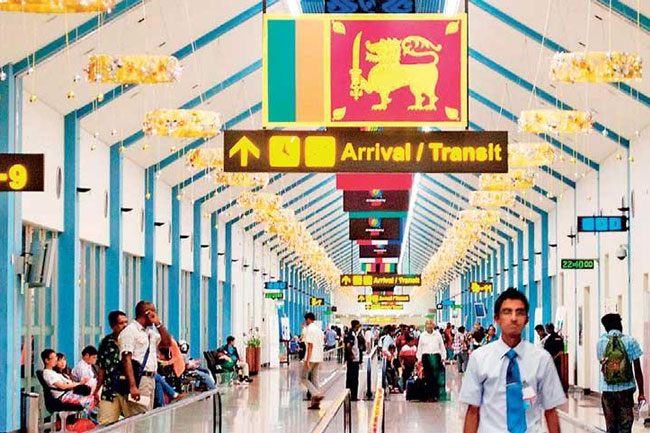
 Sri Lanka’s tourism recovery, highlighted by crossing the 2.3 million arrivals milestone in 2025, is poised to have significant implications for the country’s 2026 economic performance. Analysts suggest that continued growth in tourism could provide a critical boost to foreign exchange earnings, domestic consumption, and employment in the hospitality and transport sectors.

 Tourism earnings for 2025 are projected at around $3.4 billion, and with forecasts for 2026 suggesting arrivals of 3 million visitors and revenue of $4.3 billion, the sector is positioned as a key driver of economic recovery. Stronger tourist inflows could help reduce the trade deficit, support the rupee, and stimulate investment in infrastructure, from airports to hotels and transport networks.

 However, experts caution that the country’s economic resilience depends on more than just visitor numbers. Concentration risk remains a concern: India, the UK, Russia, Germany, and China together account for over half of arrivals, leaving Sri Lanka vulnerable to geopolitical shifts, visa restrictions, or global travel slowdowns. Diversifying source markets will be essential to prevent overreliance on a few countries.

 Capacity constraints also pose challenges. Limited airline connectivity and infrastructure bottlenecks during peak seasons may cap revenue potential, even if visitor numbers rise. Similarly, high-end tourism segments, which contribute disproportionately to foreign exchange earnings, require targeted marketing and improved services.

 Constructive criticism emphasizes policy alignment. Authorities are urged to fast-track the free-visa initiative, invest in nation branding, and expand multi-season promotions to stabilize arrivals throughout the year. Improving data collection and adopting dynamic pricing strategies could also enhance profitability for hotels, transport providers, and attractions.

Tourism is poised to remain a key economic engine for Sri Lanka in 2026. But maximizing its contribution will require structural reforms, diversification of source markets, and investment in infrastructure to ensure sustainable growth beyond headline visitor numbers.

App-Based Taxi Drivers Lodge Complaint with HRCSL Over Alleged Harassment

0

Taxi drivers operating through ride-hailing applications lodged a complaint with the Human Rights Commission of Sri Lanka (HRCSL) yesterday (29), citing alleged injustices and harassment faced while carrying out their services.

The complaint follows a recent incident in Ella, where an app-based taxi driver was allegedly threatened by three-wheeler drivers operating in the area. In recent weeks, several similar incidents have been reported involving taxi drivers, despite the three-wheeler industry providing employment to thousands across the country.

According to the complainants, some three-wheeler drivers have allegedly engaged in illegal activities, including threats, intimidation and assaults against drivers attached to app-based transport services. There have also been instances where foreign tourists were inconvenienced by such actions.

At present, three-wheeler drivers in several parts of the island are staging protests against app-based passenger transport services, claiming that the lower fares offered by these platforms are affecting their livelihoods. Protests have been reported in areas including Ella, Weligama and Sigiriya.

Against this backdrop, a group of app-based passenger transport service drivers submitted a formal complaint to the HRCSL, seeking intervention and protection of their rights.

Proposed Education Reforms Could Trigger Major Crisis – Venerable Dhammaratana Thero

0

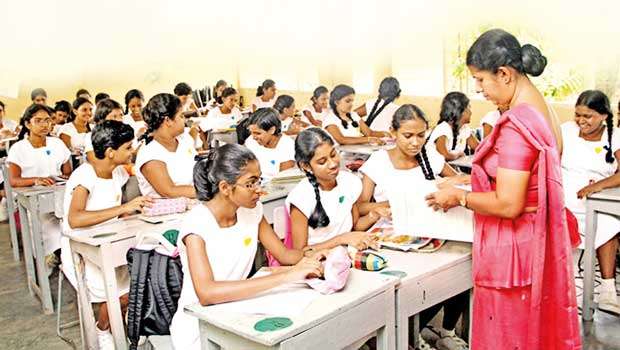
Venerable Professor Induragare Dhammaratana Thero warned that the proposed new education reforms could severely damage the country’s future generations and even lead to the downfall of the current government if implemented in their present form.

He made these remarks while attending a Sangha Council meeting held in Colombo today. The meeting, organised to clarify the objectives of the proposed education reforms, took place this afternoon (29) at the Colombo Foundation Institute.

Addressing the gathering, Venerable Dhammaratana Thero stressed the importance of prolonged discussion, broad consultation with subject experts, and careful consideration of the experience of senior administrators before introducing such fundamental changes to the education system.

He cautioned that the proposed curriculum reforms could evolve into the most serious crisis facing the country at present. The Thero said that pushing through the reforms without adequate preparation and consensus would be harmful to future generations and could destabilise the government itself.

Describing the approach as misguided, he said implementing the reforms in their current form was comparable to trying to force a round peg into a square hole.

Former Bangladesh Prime Minister Khaleda Zia Passes Away at 80

0

Bangladesh’s first female Prime Minister and opposition leader Khaleda Zia has died following a prolonged illness, the Bangladesh Nationalist Party (BNP) announced on Tuesday.

She was 80 years old. According to her doctors, Khaleda Zia had been suffering from advanced liver cirrhosis, arthritis, diabetes, as well as chest and heart-related complications.

Special Traffic and Security Plan in Colombo for New Year 2026 Celebrations

0

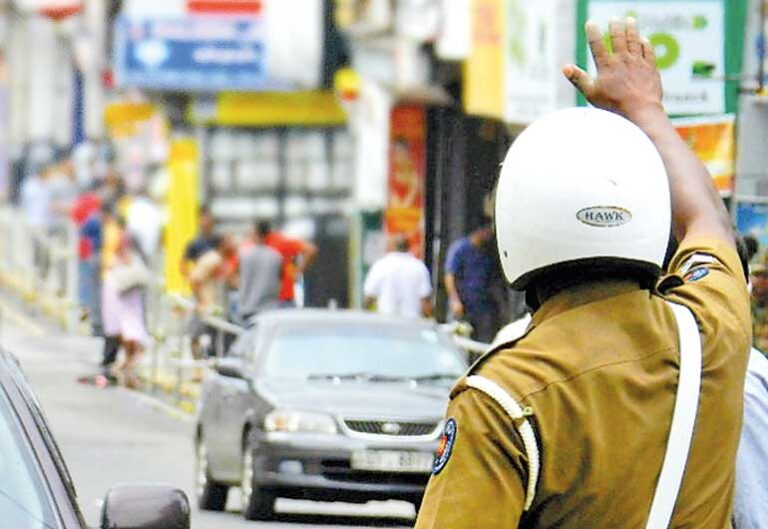
Sri Lanka Police say a large influx of people and vehicles is expected to arrive in Colombo from outlying areas to celebrate the New Year 2026 tomorrow (31), particularly around the Galle Face Green area. Accordingly, a special traffic and security plan will be implemented to minimise congestion and ensure public safety.

Heavy traffic congestion is anticipated within Colombo city limits, especially in the Fort, Pettah, Slave Island, Maradana, Kollupitiya (Colpetty), Bambalapitiya, and Cinnamon Gardens police divisions. Traffic will operate as usual in these areas tomorrow; however, in the event of severe congestion, special traffic arrangements will be enforced.

Under the proposed plan, vehicles exiting Colombo via Galle Middle Road will proceed through the NSA Roundabout, along Galle Face Road, turn left at the Baladaksha Mawatha (MOD Junction), pass the Aliya Nana Roundabout, continue via Mackan Marker Road, and proceed through the Galle Face Roundabout towards Colpetty. Vehicles entering Colombo from Galle Face Road via the Galle Face Roundabout may travel up to the Baladaksha Mawatha junction and continue onward.

Travel will not be permitted from the Galle Face Roundabout to the Aliya Nana Roundabout via Mackan Marker Road, or from the Aliya Nana Roundabout to Galle Face Road via Baladaksha Mawatha. Vehicles entering Galle Face Road from by-roads are required to turn right and proceed towards the NSA Roundabout, while vehicles from by-roads of Baladaksha Mawatha may turn right and exit Colombo via the Aliya Nana Roundabout.

When these traffic measures are in force, parking on sidewalks or in a manner that obstructs main roads within Colombo city limits will be strictly prohibited. Legal action will be taken against motorists who violate traffic regulations.

Approximately 1,200 police officers will be deployed for traffic control and security duties. Parking facilities have been arranged for about 5,900 vehicles across designated locations in the city.

Free parking areas (subject to traffic flow not being obstructed):

  • Baladaksha Mawatha, Fort Police Division, MOD Car Park (towards Beira Lake)
  • Marine Drive areas in Colpetty, Bambalapitiya, and Wellawatte
  • D.R. Wijewardena Mawatha in Fort and Maradana Police Divisions
  • Parsons Road exit lane in the Company Street Police Division only
  • Designated parking bays along Galle Road from Savoy Cinema, Wellawatte to Bagatale Road junction
  • Ananda Coomaraswamy Mawatha (left lane) from Nelum Pokuna Roundabout to Library Roundabout – Cinnamon Gardens
  • F.R. Senanayake Mawatha – Cinnamon Gardens
  • Reid Avenue (right side) from Reid Duty Junction to Thurstan Junction – Cinnamon Gardens
  • Independence Avenue (right side) from Independence Roundabout to Independence Square – Cinnamon Gardens
  • Maitland Crescent – Cinnamon Gardens
  • Foundation Road – Cinnamon Gardens

Paid parking facilities:

  • Old Manning Market parking area, Bastion Mawatha – Pettah
  • Parking area near Vimaladharmasuriya Clock Tower – Fort
  • Hemas Parking Area, R.A. De Mel Mawatha – Fort
  • Lake House parking area, D.R. Wijewardena Mawatha
  • Bastion Road – Fort
  • Bristol Street – Fort
  • Duke Street – Fort
  • Access Tower parking area, Union Place–Dawson Street junction – Kollupitiya
  • Gamini Roundabout (St. Clement’s) – Maradana

Police said four maps illustrating traffic movements under this plan have been released to assist the public.

WEATHER FORECAST FOR 30 DECEMBER 2025

0

Showers will occur at times in Northern, Eastern and Uva provinces and in Matale, Nuwara-Eliya and Polonnaruwa districts. Fairly heavy falls above 50 mm are likely at some places in these areas.

Several spells of showers will occur in Kandy and Anuradhapura districts.

Showers or thundershowers may occur at a few places in Sabaragamuwa and Southern provinces and in Kaluthara district after 2.00 p.m.

Fairly strong winds of about 40 kmph can be expected at times over Eastern slopes of the central hills, and in Hambantota, Monaragala and Ampara districts.

Misty conditions can be expected at some places in Sabaragamuwa and Central provinces and in Galle and Matara districts during the early hours of the morning.

The general public is kindly requested to take adequate precautions to minimize damages caused by temporary localized strong winds and lightning during thundershowers.

Prophet Jerome Collecting Dozens from the Catholic Church

0

By Adolf

The Catholic Church in Sri Lanka is witnessing a quiet but significant shift, one that raises serious questions about its current leadership and its approach to spiritual guidance. At the center of this unfolding narrative is Prophet Jerome, whose increasing influence among the faithful appears to be growing in parallel to the dissatisfaction with the formal Church hierarchy. But why is this happening, and what does it reveal about the state of the Church today?  

A large part of the answer lies in the conduct of the Church leadership itself. Under the guidance of Cardinal Malcolm Ranjith, the hierarchy seems to have lost sight of its fundamental purpose: to be spiritual shepherds of the people. Instead, the Church appears preoccupied with internal politics, changing regimes, and involvement in disputes that have little to do with faith. This preoccupation has left ordinary Catholics feeling neglected, spiritually disconnected, and increasingly drawn toward alternative figures like Prophet Jerome, who promise guidance and attention.  

Failure of Cardinal Ranjith

The image of Cardinal Ranjith—always accompanied by armed bodyguards and a backup vehicle—signals authority, but also distance. To many clergy and followers alike, he is seen as unapproachable. There are complaints that he favors certain priests while marginalizing others, creating a cohort around him that insulates him from the wider community of followers. Such conduct stands in stark contrast to the lives of saintly predecessors like Archbishop Nicholas Marcus Fernando and Cardinal Corray, whose leadership was defined by humility, accessibility, and genuine care for the people. Their example reminds the faithful that spiritual authority is earned through service, not ceremony or security.  

Prophet Jerome, in this context, has emerged as a figure the faithful can relate to. He represents attention, connection, and a form of spiritual service that the formal hierarchy currently seems unable to provide. Yet, it is not merely the personality of Jerome that attracts people—it is the gap left by a Church that, while administratively powerful, appears spiritually distant. In attempting to consolidate authority through fear or exclusivity, the hierarchy risks alienating those it is meant to shepherd, creating space for alternative leaders to step in.  

The Church, however, does not lack clever minds. Jerome may be perceived as astute or strategic, but cleverness alone is not sufficient for true spiritual leadership. The Church requires leaders who embody the principles of service, humility, and guidance. Late Pope Francis repeatedly emphasized the need for pastoral care that places the faithful at the center, leading by example and fostering accessibility and compassion. Sri Lanka’s Church leadership today seems far from this ideal, leaving the faithful searching for spiritual fulfillment elsewhere.  

Expectation of the Church 

If the Church is to reclaim its moral and spiritual authority, it needs a fresh approach—one that re-centers the followers, values transparency, and fosters genuine engagement with clergy and laity alike. Without such reform, the rise of figures like Prophet Jerome may not just continue but accelerate, as the faithful naturally gravitate toward leadership that reflects their spiritual needs. There is a real risk that, should the Church remain complacent, Jerome could become the de facto “Cardinal” in the eyes of the people, regardless of formal ecclesiastical titles.  

Ultimately, the Catholic Church in Sri Lanka is at a crossroads. It must decide whether it will continue a model of leadership characterized by hierarchy, exclusivity, and political maneuvering, or whether it will embrace a renewed vision of spiritual service, humility, and accessibility that truly mirrors the teachings of Christ and the standards set by Late Pope Francis and his prodigy Pope Leo. The time for reflection and reform is now—before the faithful turn decisively to leaders like Jerome who embody what the Church itself has neglected to nurture.

 Taxi Mafia threatens Sri Lanka tourism amidst shaky law enforcement

0

Sri Lanka’s fragile tourism revival is facing an uncomfortable reality in several high-profile destinations: an emerging pattern of alleged intimidation and violence linked to informal transport groups, and a policing response critics say has been uneven at best.

Digital Mobility Solutions Lanka PLC (PickMe) has formally alerted the Inspector General of Police to what it describes as escalating harassment of independent drivers operating through digital platforms, particularly in tourist hubs such as Ella. According to the company, multiple incidents some recorded on video and circulated online show drivers being verbally threatened, physically assaulted, and unlawfully blocked from accessing public roads.

While the dispute is often portrayed as a competition between traditional taxi operators and app-based services, PickMe argues the issue has now moved beyond commercial rivalry into a broader public order concern. “No individual or informal group has the authority to declare exclusive control over public roads or national tourist sites,” CEO Jiffry Zulfer stated, pointing to constitutional guarantees of lawful employment and freedom of movement.

Tourism stakeholders warn that the visibility of such confrontations is particularly damaging. Visitors arriving in search of tranquility are instead witnessing public disputes, roadblocks, and allegations of coercion. Industry analysts note that reputational damage spreads faster than official assurances, especially when incidents circulate widely on social media platforms viewed by potential travelers.

Beyond safety concerns, PickMe claims the enforcement of so-called “exclusive zones” enables price fixing and limits consumer choice. Tourists and locals alike may be compelled to accept inflated fares without transparency, undermining market competition and eroding trust. Economists point out that such practices, if left unchecked, distort local economies and penalize both consumers and compliant service providers.

Perhaps most concerning are allegations regarding local-level law enforcement. PickMe says some drivers have reported being advised to withdraw from contested areas rather than receiving protection. While police authorities have not publicly responded to these specific claims, legal experts emphasize that selective enforcement—or the perception of it can be as damaging as inaction.

The company notes that more than 100,000 Sri Lankan families depend on digital mobility platforms for income, making the issue a national livelihood concern rather than a niche industry dispute. As the government advances its National Digitisation Strategy 2025, platforms like PickMe are increasingly part of essential economic infrastructure.In its letter to the IGP, the company has requested written directives to police stations reaffirming the right of lawful transport providers to operate freely, alongside a zero-tolerance approach to organized intimidation. Whether authorities respond decisively may signal how seriously Sri Lanka intends to protect rule of law in its most visible tourist destinations

Shadow Imports Reshape Sri Lanka’s Software and Hardware Markets

0

 Sri Lanka’s software and computer hardware market is facing growing disruption from the rapid expansion of shadow import goods entering the country outside official regulatory and tax frameworks. According to warnings from the Federation of Information Technology Industry Sri Lanka (FITIS), illegally imported, counterfeit, and used computing devices are now exerting significant pressure on the formal IT ecosystem, with long-term consequences for businesses, consumers, and national digital security.

Industry discussions hosted by FITIS reveal that in some product segments, nearly half of all laptops, desktops, monitors, and accessories sold locally originate from informal channels. These products often enter Sri Lanka with under-declared values, unpaid duties, or through passenger luggage in commercial quantities, effectively bypassing customs oversight. As a result, they are sold at prices 25–30 percent lower than those offered by authorised dealers, creating an uneven playing field.

From a consumer perspective, the lower prices represent a clear short-term advantage. In a cost-sensitive market, especially amid economic pressures, affordable access to technology can support education, remote work, and small enterprises. Shadow imports also increase product availability at times when official supply chains face delays or foreign exchange constraints.

However, FITIS cautions that these apparent benefits mask serious drawbacks. Many devices sold through informal channels do not include genuine operating systems and instead rely on pirated software installed locally. This exposes users to cybersecurity threats, unstable system performance, and potential legal issues related to software licensing. In addition, consumers frequently discover that these products lack valid manufacturer warranties or authorised after-sales support, leaving them vulnerable when faults arise.

The repercussions for legitimate businesses are increasingly severe. Authorised importers and retailers comply with tax obligations, quality standards, and service investments, yet struggle to compete with untaxed competitors. This imbalance is already leading to reduced capital investment, shrinking margins, and the risk of job losses within the formal IT sector. Over time, it may also erode service quality and weaken Sri Lanka’s reputation as a reliable technology market.

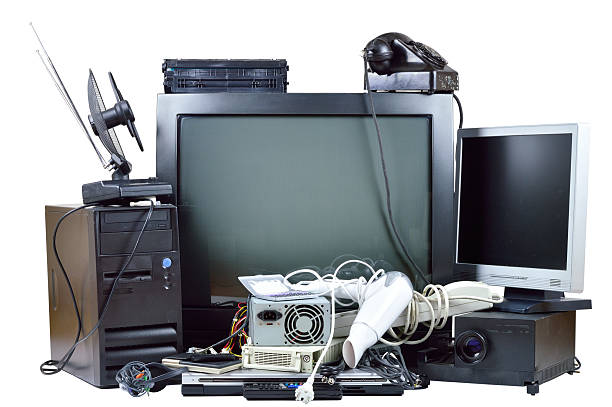
 Environmental risks add another layer of concern. A significant portion of shadow imports consists of used or near end-of-life equipment. Without a comprehensive national e-waste management system, these devices are often discarded prematurely, contributing to Sri Lanka’s mounting electronic waste problem.

FITIS has highlighted gaps in import monitoring, including the absence of a clear mechanism to identify authorised brand importers. In response, the organisation is collaborating with global technology brands, distributors, and retailers to assess the scale of the issue and push for coordinated regulatory, enforcement, and consumer-awareness solutions.