Home Blog Page 2187

SRI LANKA: Malnutrition and Starvation- Next Stage of the Crisis

0

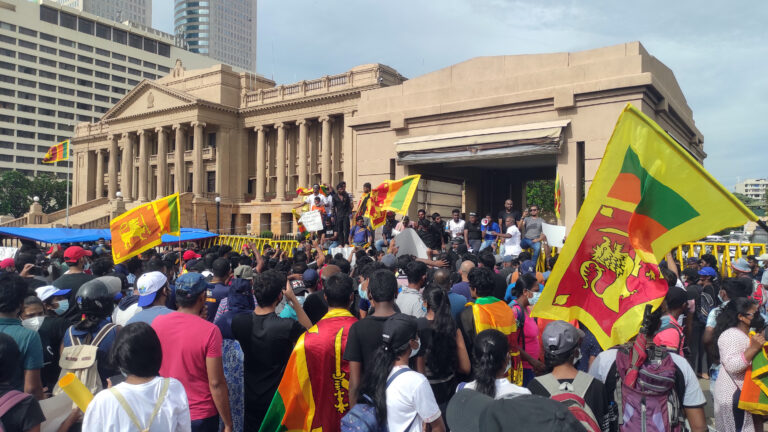
As people began to learn about the terrible consequences of the dollar crisis, there also emerged a political slogan that seemed to suit the occasion. “Gota Go Home” became the slogan and in no time it became the rallying cry from almost everyone throughout the country. There appeared at the time there is a unity of purpose and a unity of perspective among all those who were participating in adopting that slogan.

The actual reason that pushed forward this massive movement varied. For majority of people, one of the most compelling reasons which dragged them to the streets was the threat of an imminent food crisis. From around the country, many people began to complain that they are unable to have their meals as they used to have in the past. Many complained of having one or two meals a day and there were others who even complained of going without food for several days. The gravity of this problem got manifested when it was found even by international organizations such as UNICEF that 1.7% of Sri Lankan children before the age of 5 are malnourished. The report also said that out of these malnourished children, 17% are suffering from acute forms of malnourishment which will leave permanent consequences on their bodies. A compelling reason therefore for the massive people’s anger that arose was primarily economic in the most basic sense in terms of threat to the availability of food.

Following that problem were also revelations of inadequate supply of medical facilities which have threatened the life of patients suffering from serious illnesses. Added to this were the problems of the inability to deal with the problems of children by getting them into schools and providing the facilities for their education.

Aggravating all this was the problem of the difficulties created for travel. The severe shortages of petrol, diesel and even kerosene oil was symbolic of the problems that people began to face in terms of carrying on with their lives and that aggravated the threat to food, medicine, education and the like because without being able to carry on with their livelihoods, there was no way for them to have the basic purchasing power of the essential needs. These economic problem were severely aggravated by massive levels of inflation. In short, everybody of the mid and lower income groups were affected by unprecedented levels of basic economic hardships.

When people suffering from such acute economic problems responded to call for the resignation of the president, what they would have expected is some quick solution to these economic hardships. The head of the state was seen as the major cause which created their problems and therefore his quick demise they would naturally have thought would bring about some relief for these acute problems.

However, among those who supported and promoted “Gota Go Home” were others who had other ideas and other prospects. It is quite natural that people who are looking for political opportunities or political change also seize in the unrest of people an opportunity to achieve political changes that they desire. Naturally, such sections play more vocal roles during the times of peoples protests and during the times of serious unrest. At last they would have believed that the sleeping giant that is the people has awoken and that the long-standing dreams of people who wanted more changes either for the benefit of the society or for themselves could utilize this situation for their benefit.

So long as the president remained in his seat, these people who have been moved due to different impulses could work together and it would even be possible to make it appear that everyone is engaged in pursuit of fame, ambitions and working towards same/similar changes. However, the departure of the president which was a cause to celebrate has brought to surface more serious problems underlining the extent of mutual understanding and common purpose that exist or that does not exist among those who joined in protests. Now, these differences are surfacing in a severe manner.

Some speak of having some secret plans for achieving changes if the political tendency that they support would be given the political power. Naturally, none of them come forward to explain what these plans or perspectives are. Perhaps, there is no such plan. If one were to go by past experiences, the political changes come about for various reasons but once in power those who are in power do not have any workout ideas to resolve any of the major problems that are facing the country.

However, the present moment is very unlike such moments in the past. When people in the street were moved and that is not something that could be wished away with fine rhetoric’s or by various kinds of excuses as to why that cannot be done urgently. Food or no food is a life and death question. Naturally, those who engage in this struggle with the view to find solutions to such problems are not going to be satisfied by merely supporting this or that political tendency who wants to utilize this situation for them to come to power.
Those who are irritated by the people’s insistence on immediate solutions to their problems may even think of pushing their way through other means such as by use of methods commotion. This kind of thing has happened in history over and over again and the result has always been to make the situation of the people who are already suffering from acute problems even worse.

On the other hand, any open discussions about perspectives that may bring about changes which will answer the greater problems faced by people can itself lead to much conflicts. Those who wish to raise these questions may even be treated as those who raise unnecessary questions at a time when people have come together for the first time for pursuing some common goals.

The issue really is that what the common goals is no longer clear. That is the very reason why more discussions among those who share the same ultimate aims are needed. Democracy among those who are seeking to establish democratic way of life in the country has become a dire need. Every attempt to prevent such discussions are in fact going against the very essence of the very forced that propelled the people to street in search of solutions which they require on an urgent basis.

It is suggested that the very clear position needed to develop among those who are struggling for a change above all to find a solution to the food crisis. International organizations have already pointed out that the food crisis may lead to situations of starvation. In conceived economic policies have often led to massive forms of starvation which has killed large numbers of people in different countries. One glaring example is that of Cambodia where due to an attempt to achieve a rapid agricultural revolution brought about one of the worst crises known in history. Within a short period of over 3 year, 1/7 of the population died mostly due to starvation.

Thus, development of conditions of acute food crisis including the possibility of starvation is a real threat. It is this real threat that should concern everyone who is engaged in trying to resolve the kind of problems have arisen with the departure of the president Gotabaya. Gotabaya’s departure is merely a step in the direction of removing an obstacle. However, there are many other obstacles to be overcome if the peoples’ demand for food and basic needs are to be met on an urgent basis.

An Article by the Asian Human Rights Commission

The Tamil diaspora has offered to play a constructive role in Sri Lanka to ensure long-lasting changes in the country.

0

The Global Tamil Forum (GTF) says “The economic crisis that engulfed the country has led to the formation of this progressive political force which has achieved revolutionary outcomes relatively peacefully. Indeed, it feels as though this is a rebirth moment for the country after its independence,” the influential UK based group said in a statement.

GTF said that the departure from the country and resignation as President by Gotabaya Rajapaksa is a hugely important first step – an outcome no one would have imagined even six months ago.

“GTF said that it is important that such a momentous transition continues peacefully and constitutionally until stable, democratic, accountable, and pluralistic governance is achieved.

They said that it should be first through the formation of an all-party, representative government respecting the aspirations of the people expressed through Aragalaya, followed by general elections at a suitable time to form a government that truly reflects the will of the people.

“Any new Government will have to face huge challenges – hard negotiations with countries and financial institutions to restructure existing loans; seek new and urgent funding to secure essential food, fuel, and medicine; and implement difficult economic measures without imposing further distress on many people who already suffer unsurmountable hardships,” GTF added.

GTF strongly hopes such a Government will not only include all the parties represented in the Parliament but also consist of legitimate and authentic representatives of all communities.

The Global Tamil Forum said it wholeheartedly supports the remarkable and hopeful developments taking place in Sri Lanka at this historic moment and would be delighted to play a constructive role in ensuring that the present momentum leads to meaningful and long-lasting changes in the country through non-violent and democratic means

Central Bank grants concessions to affected Borrowers of Licensed banks

0

With the outbreak of the COVID-19 pandemic, the Central Bank of Sri Lanka (CBSL) has introduced several concessionary schemes since March 2020, to assist affected borrowers.

Such concessions include concessionary debt moratoriums, loan restructuring/rescheduling, suspension of recovery actions, low-cost working capital loans and waivers of fees and charges for certain banking transactions.

These concessions were provided to individuals including private sector employees and small and medium enterprises (SMEs) and other businesses engaged in tourism, transportation,manufacturing, services, agriculture, construction, apparel, IT, and related logistic services.

Accordingly, the last phase of the moratorium granted to COVID-19 affected borrowers ended on 31.12.2021, while the last phase of the moratorium granted to the tourism sector ended on 30.06.2022.

In the meantime, CBSL has required the licensed banks to set up post COVID-19 revival units in licensed banks in order to identify and assist under-performing and non-performing borrowers affected

by the pandemic for the purpose of reviving viable businesses with the potential of contributing to the national economic growth, thus facilitating the unwinding of moratorium in a sustainable manner.

Considering the current macroeconomic challenges and the requests made by several stakeholders including Government Institutions, CBSL has requested the licensed banks to provide appropriate concessions, for a period of six months, to borrowers..

These concessions are provided on a case-by-case basis depending on the future repayment capacity of the individuals and the viability of businesses/ projects.

a.: Borrowers can avail appropriate concessions (i.e., grace periods for capital or interest or both capital and interest or part of the capital or interest, restructuring of credit facilities, or any other concession) for a period of six months.

b. Borrowers can request for rescheduling of existing non-performing credit facilities over a longer period. Further,licensed banks are requested to suspend recovery actions against credit facilities classifieds non-performing after 01.01.2020. SME paddy millers are given further concessions

c. However, these concessions are not available for wilful defaulters, defaults due to diversion of funds, misuse of funds, mismanagement and/ or frauds and unviable projects.

d. Repayment plans: In the case of regular installment loans, the new installment amount should not exceed the contracted installment value of the existing loan. In the case of other credit facilities, the licensed bank and the borrowers should mutually agree on an appropriate repayment plan.

e.: In the case of Rupee credit facilities, the interest rate to be charged on the amount for the period of concessions, should not exceed the latest contracted rate of interest or the current Standing Lending Facility Rate (i.e., 15.5%), whichever is higher.

f. Requests have been made by borrowers to settle their credit facilities early, without paying any additional fee. In the case of lease facilities,recovery of future interest will also be waived off. Borrowers who intend to avail the early settlement options should make such a request to the bank on or before 30.09.2022.

Veteran broadcaster Pradeep Amirthanayagam appointed again to People’s Leasing Board

0

Pradeep Amirthanayagam has been appointed as an Independent Non-Executive Director of the Board of the People’s Leasing and Finance PLC with effect from 15 July.

He previously served as the Chairman of People’s Leasing and Finance.

Amirthanayagam is a reputed advertising and media personality in Sri Lanka who counts over 35 years of experience in the advertising industry. He is currently the Chairman and Managing Director of the leading advertising agency Holmes Pollard & Stott, which he was instrumental in setting up over 30 years ago.

He is a Fellow Member of the Chartered Institute of Marketing (UK) and an Associate Member of Trinity College of Music, UK in speech and drama.

Amirthanayagam is also a media icon. He was a news presenter for media networks Rupavahini, ITN and SLBC, and was also an interviewer and cricket commentator. He has the distinction of having trained at Bush House – the headquarters of the BBC in London.

He was the 50th President of the Rotary Club of Colombo West and was awarded the Rotarian of the year in 2012. He is the Vice President of Society for the Uplift and Rehabilitation of Leprosy Affected Persons (SUROL) and a Director of the Anura Bandaranaike Foundation.

Amirthanayagam was the former Director of Lankan Alliance Finance Ltd., Bangladesh and People’s Merchant Bank PLC.

With the latest appointment the Board of People’s Leasing and Finance PLC comprises of Chairman Sujeewa Rajapakse, R. Pathirage, K.C.J.C. Fonseka, A.A. Ahamat, C.J. Wijetillake, U.L.A.W. Bandara, M.C. Pietersz, R. Kodituwakku and M. Pradeep Amirthanayagam.

Present administration to resurrect the collapsed economy soon

0

The present administration has taken every possible step to resurrect the collapsed economy amidst social unrest and unprecedented challenges to bring back the day to day activities to normalcy easing fuel and food crisis to a certain extent , official source said.

The government is about to turn it around the unprecedented economic crisis and the situation becoming slightly better as a result of multiple achievements during the past 68 day rule of the present regime, economic analysts and political activists claimed.

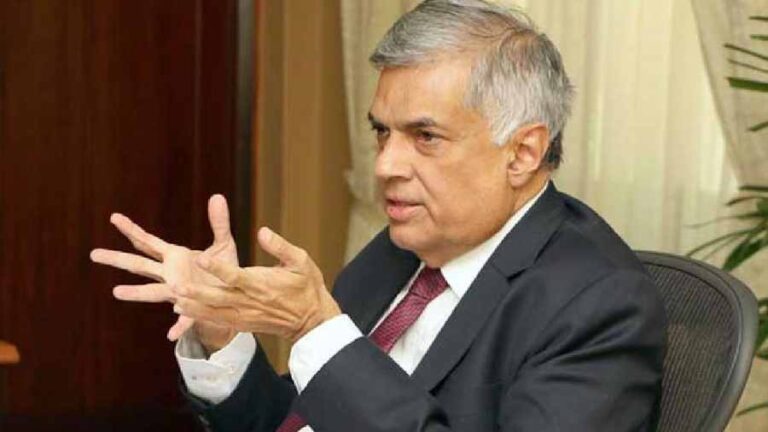
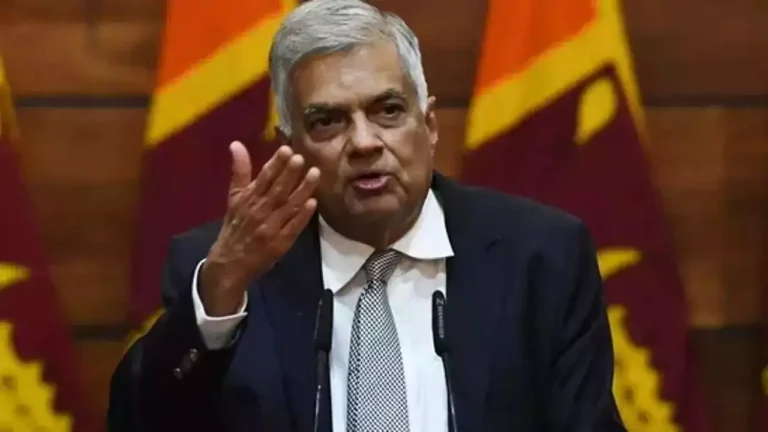
In a special statement, newly elected President Ranil Wickremesinghe explained that when he took over as Prime Minister on 13 May the economy had collapsed, with power cuts lasting five hours a day.

In the two months since then, power cuts had been reduced to three hours a day, fertilizer has been provided to the farmers and the gas shortage in the country has been solved, he pointed out.

Even though July would be a difficult period for the supply of fuel. diesel stocks have been secured and are being distributed while from 21 July petrol will also be distributed, he claimed.

He also explained that relief was being provided to the citizens of the country who are struggling with the economic crisis.

President Ranil Wickremasinghe stated that the loans taken by paddy farmers who have planted fields less than two acres have been written off . While due to the drop in the world oil prices, the fuel prices in the country have also been reduced.

While highlighting the steps taken so far, the Acting President further explained that negotiations with the International Monetary Fund (IMF) were nearing conclusion and discussions for assistance with foreign countries was also progressing.

He also said that due to the incomplete nature of the Easter Sunday attack he is requesting the assistance of the UK Government and their intelligence services.

He went on to explain that the current political crisis in the country is due to the Executive Presidency and stated that the 19th Amendment would be re-introduced which would address many of the concerns of the public.

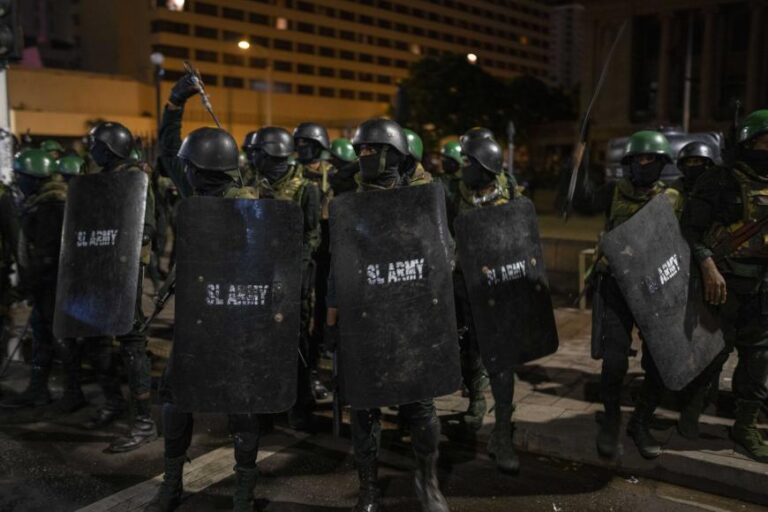
President Wickremasinghe went on to explain that there were elements within society who were attempting to disrupt the peace in the country.

He claimed that these elements would be prohibited from disrupting the country’s progress. Wickremesinghe further stated that the peaceful protesters who had legitimate concerns would be engaged with by the Government and solutions would be found for them.

President Ranil Wickremesinghe called upon the political parties in the country to put aside their differences and not allow the country to suffer over differences over an individual.

He urged them to come together and form an All-Party Government which would allow the country to recover from the economic crisis.

IMF hopes to complete Sri Lanka aid talks ‘as quickly as possible’

0

The International Monetary Fund hopes to complete rescue talks with Sri Lanka “as quickly as possible,” Managing Director Kristalina Georgieva said on Wednesday, hours before the crisis-hit South Asian nation elected a new president.

Speaking with Nikkei Asia in Tokyo, Georgieva said the fund was “very deeply concerned about the well-being of the people in Sri Lanka,” which has been gripped by severe shortages of fuel, food and other essentials after its foreign reserves dried up.

Frustrated citizens have turned their anger on the government, clouding the outlook for debt restructuring and driving once-powerful President Gotabaya Rajapaksa to go into exile and resign last week. On Wednesday, the Sri Lankan parliament elected Ranil Wickremesinghe as his replacement.

Georgieva vowed that “the moment there is a government that we can continue our discussions with, our team will be there.” She added that she was “very hopeful that based on the good technical work we have already done, and the fact that this technical team of Sri Lanka is there, we can complete program negotiations as quickly as possible.”

Wickremesinghe is no stranger to the IMF, as a finance minister and six-time prime minister who has had a hand in negotiations. But he is deeply unpopular with the public.

Georgieva said that the IMF would work with any Sri Lankan administration “as long as the next leader enjoys support and has the longevity to lead the country.”

Sri Lanka is not the only South Asian country facing serious economic pressure. Others include Pakistan, with which the IMF recently reached a staff-level agreement to extend about $1.2 billion in aid, and the Maldives, whose debt-to-gross domestic product ratio stood 123.4% last year according to the IMF’s estimate.

The managing director, who was stopping in the Japanese capital after attending the Group of 20 finance ministers meeting in Indonesia last week, went on to say: “Countries that are faced with severe problems of bad management need to understand that, in this context, markets are jittery. Sentiment is such that there is more anxiety.

In the case of Sri Lanka, which “pre-emptively” defaulted on its foreign debt for the first time earlier this year after COVID-19 devastated its core tourism sector, the government was due to submit a debt restructuring plan to the IMF by next month.

“What we would need for the program is financial assurances that will be sustainable, not immediately, but that we have a credible plan to get to that point,” Georgieva said. She added that the incoming government has “a very important role to play, reaching out to both bilateral creditors and private-sector creditors.”

Sri Lanka’s large creditors include Japan, China and India. Georgieva said that she has discussed the situation with the countries during her Asia trip, and was encouraged because “there is an understanding that protracted negotiations are simply not viable, that there has to be decisive action as early as the weeks after a [new] government is in place.”

More broadly, on the global economy, Georgieva said that the IMF will further lower its projection for global GDP growth when it releases its latest World Economic Outlook on July 26.

This will mark the third downgrade this year alone. In April, the IMF lowered the outlook for 2022 to 3.6% from 4.4% in January.

How Basil got Ranil 134 votes…

0

Many sources said that Ranil Wickramasinghe will win the election for the presidency, but no one thought that he would win with such a large number of votes. By last night, there were rumors that he would get 120 votes. But he finally managed to record an excellent victory by getting 134 votes.

We have received a record of how those 134 votes were received.

Accordingly,
Sri Lanka Podujana Peramuna – 101
Sri Lanka Freedom Party MPs – 7
Samagi Jana Balavegaya – 8
EPDP – 2
Ceylon Labor Congress – 2
People’s United Front – 3
Muslim MPs – 3
Members of Vasudeva Nanayakkara’s party – 1
Pillaiyan – 1
Arvind Kumar – 1
C. V. Wigneswaran – 1
Tamil National Alliance – 2
A.L.M. Ataullah – 1
National Freedom Front – 1

have expressed their support to Ranil Wickramasinghe.

As soon as it was announced that Dallas Alahapperuma and Sajith Premadasa would contest together, many people thought that in that situation, the votes of the Sri Lanka Podujana Peramuna would be divided into two and an advantageous situation would arise for Dallas Alahapperuma.

But the operation to get high support of up to 134 MPs while preserving Pohottu votes was mainly carried out under the initiative of Basil Rajapaksa, National Organizer of Sri Lanka Podujana Peramuna. It can be considered as an example of his organizational ability. Also, it can be said that in the new government, people representing 14 different parties have joined the new government and it shows the characteristics of an all-party government.

Sri Lanka crisis: Is India gaining over China in island nation?

0

During the ongoing anti-government protests in Sri Lanka, protesters shouted slogans targeting former president Gotabaya Rajapaksa and his family. But they also raised chants against India.

Slogans like – “Don’t sell the country to India and the US”; “India: Sri Lanka is not another state”; and “India don’t exploit Sri Lanka’s situation” – could be widely heard during the demonstrations.

But while anti-Indian sentiments like these still persist, how Sri Lankans view India might be changing as the country grapples with political and economic chaos.

Sri Lanka is in the midst of a deep and unprecedented economic crisis that has sparked massive protests, and forced its president to quit after fleeing the country.

Over the years, Sri Lanka has built up a huge amount of debt – to the point that it is now struggling to buy essentials such as food, fuel and medicine.

Protesters blame Mr Rajapaksa and his family, who fled to Singapore last week, for the situation. The parliament has begun the process of electing a new president and MPs are expected to vote on Wednesday.

Some sections of the Sri Lankan polity have always viewed with suspicion the presence of its bigger and powerful neighbour, India. I have seen several anti-India protests in Sri Lanka over the years by majority Sinhala nationalists and Left-wing parties.

But when Sri Lanka suddenly found itself in a deep economic mess a few months back, it turned to India and the Bharatiya Janata Party (BJP) government in Delhi responded with financial help.

The hard choices Sri Lankans must make now
‘I’ve spent 10 days in Sri Lanka petrol queue’
This was not the first time though – in fact, no other country or institution has helped Sri Lanka as much as India in the past year.

Experts say that Sri Lanka’s desperate financial need, in a way, has helped Delhi regain its influence in the island-nation of 22 million people after China made inroads by offering loans and other forms of financial aid for infrastructure projects in the past 15 years.

“India has played a very crucial role, especially at this critical juncture. We have gone through an immense crisis as a country, and India has come forward and supported us,” Sajith Premadasa, Sri Lanka’s main opposition leader, told the BBC.

India and Sri Lanka share close cultural, religious and economic ties in a relationship that goes back centuries.

Delhi has been a major trade partner for Colombo, which imports lots of products, especially food items, from India. The island nation’s minority Tamil population shares close cultural and ethnic links with people in the south Indian state of Tamil Nadu.

Colombo moved away from the Indian sphere of influence starting 2005, after Mahinda Rajapaksa was elected president. The gradual shift was consolidated during his second term, which saw several agreements with China on infrastructure projects, such as a port in the southern town of Hambantota.

Figures show that China has loaned more than $5bn to Sri Lanka so far, about 10% of Sri Lanka’s total external debt.

But despite Sri Lanka seeking additional loans to tackle its current problems – a crippling shortage of fuel and soaring food prices – Beijing is yet to commit on any new loans.

India, on the other hand, has provided around $3.5bn as credit and currency swap. As part of the credit line, it has dispatched several shipments of much-needed fuel, food and fertilisers to Sri Lanka in recent months.

In addition to the loans by Delhi, the government of Tamil Nadu, led by Chief Minister MK Stalin of the DMK party, has also sent shipments of food and medicine to Sri Lanka. Political parties in Tamil Nadu on Tuesday had asked Delhi to convene a meeting to discuss the evolving situation in the neighbouring country.

Experts say that India’s multi-billion-dollar financial assistance has led to a shift in public perception among Sri Lankans.

“India has provided timely help by sending us fuel and food. Without Indian assistance it would have been difficult for Sri Lanka,” Tyronne Sebastian, a private sector employee says.

Melanie Gunathilake, a social activist, says she is grateful to the people of India for “the amazing show of solidarity and support”.

But experts say that India’s decision to offer assistance to Sri Lanka also has strategic significance – one that gives Delhi leverage over its neighbour.

After the initial credit line by India was announced, both countries in January agreed to jointly operate 61 giant oil tanks built during World War II in the north-eastern Trincomalee harbour. For over 30 years, India has been trying to access the British-era facility which will enable it to store strategic oil reserves.

Similarly, in September, the Indian conglomerate Adani group was given a majority stake in a contract to build and operate the Western Container Terminal at the strategic Colombo port.

“I don’t think any country will help us without wanting something in return for themselves. India will, of course, be looking after their interest,” Harini Amarasuriya, an MP from the Left-wing National People’s Power Alliance, told the BBC.

Ms Amarasuriya says that just like India, Sri Lanka too needs to make decisions that are in its best interests, and that it remains to be seen whether the country would have to give up control of its economic and strategic locations.

Experts say that the question of Sri Lanka’s Tamil minorities and their demand for rights would also continue to impact diplomatic negotiations with India.

Bilateral relations soured after many Sri Lankan Tamil rebel groups took refuge in India in the 1980s. Colombo accused Delhi of providing arms and training to the militants, who were fighting for a separate homeland for the Tamils in Sri Lanka.

The civil war ended with the defeat of the rebels in May 2009, and India stood with the Sri Lankan government during the war.

Sri Lanka is, however, yet to fully implement the 1987 India-Sri Lanka Peace Accord which promised new laws to devolve powers to all provinces, including where the Tamils were in a majority.

“In the past there was always a worry that there was a direct intervention by India in political terms,” Ms Amarasuriya says.

The current economic crisis, however, is expected to override political concerns between the two nations for now.

Already, several Sri Lankans, particularly from the Tamil-dominated north, have sought refuge in Tamil Nadu due to the economic crisis and their numbers could increase if the economic situation worsens in the island nation.

Sri Lanka’s minority Tamil and Muslim communities have always looked up to India as and when they faced problems and wanted equal rights.

Despite the past irritants, many from the majority Sinhalese community also appreciate India’s help in recent months.

“The Lanka-Indian Oil Corporation is still providing some supply that keeps us going,” says IT professional Mohammed Suffiyan.

“If not for India, our fuel stations across the country would have shut down completely.”

BBC News

Like India, China has also vied for favourable diplomatic relations with Sri Lanka because of its strategic location in the Indian ocean
India and Sri Lanka share close cultural, religious and economic ties in a relationship that goes back centuries.
Sri Lanka became the first country in Asia-Pacific in 20 years to default on foreign debt

India expresses concern over Sri Lanka crisis spillovers: FM Jaishankar

0

The Indian government told an all-party meeting on Tuesday that India is naturally worried over the Sri Lankan crisis and there are “very strong” lessons of fiscal prudence, responsible governance and not having “a culture of freebies” to be drawn from it.

At the meeting attended by the representatives of 28 Indian political parties, including those from the Congress, the Left parties and the DMK, External Affairs Minister of India S. Jaishankar, however, dismissed suggestions about such a situation arising in India.

“The ball is in the court of Sri Lanka and the International Monetary Fund (IMF), and they are holding discussions. They need an agreement, then we (India) will see what supportive role we can play,” Jaishankar said after the meeting.

He also said Sri Lanka is still in a “very delicate and fragile condition”.Two presentations were made at the meeting — one by Foreign Secretary Vinay Mohan Kwatra on the Sri Lankan crisis and its political implications and another by Economic Affairs Secretary Ajay Seth on the fiscal health of all the Indian states.

“We do not think that a Sri Lanka-like situation can arise in India. But there was a logic to what we were trying to do, we were trying to highlight the importance of fiscal prudence. So it was not that we highlighted one or two states, we had almost every state. There was no political intent in this,” Jaishankar said about the presentation on the states’ fiscal health.

“It was a data-based presentation of a comparative situation in India so that every political party and leader leaves with a good and clear message,” he said.

Jaishankar concluded the meeting emphasising on the lessons that need to be drawn from the Sri Lankan crisis and said the big lessons to be learnt from it are fiscal prudence and good governance.

“Fortunately, in the leadership of Prime Minister Narendra Modi, we have both in ample amounts,” he said.

When reporters asked him about the lessons that are to be learnt from the neighboring country, Jaishankar said, “Lessons of Sri Lanka are very very strong. They are of fiscal prudence, responsible governance and that there should not be a culture of freebies.”

“The reason we took the initiative to request you all to join an all-party meeting was…this is a very serious crisis and what we are seeing in Sri Lanka is in many ways an unprecedented situation,” Jaishankar said in his initial remarks at the meeting.

“It is a matter which pertains to a very close neighbour and given the near proximity, we naturally worry about the consequences, the spillover it has for us,” he added.

Later, talking to reporters, Jaishankar said longstanding issues such as those related to fishermen also came up during the meeting.

He said the leaders were also informed that the support that India has extended to Sri Lanka since January amounts to USD 3.8 billion.

“No country has given this level of support to Sri Lanka and the initiative that we are taking to help them facilitate their engagement with others such as the IMF,” he said.

From the government’s side, eight ministers attended the meeting, including Parliamentary Affairs Minister Pralhad Joshi and Minister of Fisheries Parshottam Rupala.

Jaishankar also said there have been some “misinformed comparisons” in the context of Sri Lanka, wherein some people have asked whether “such a situation can happen in India”.

“So what we have done is we have asked the finance ministry to make a presentation and brought out a state-wise revenue-to-expenses comparison…unpaid dues of discoms,” he said.

The external affairs minister asserted that it was a very open discussion with the leaders of all political parties speaking their mind.

In the presentation on the situation in Sri Lanka, the government talked about the origin of the crisis, including political turbulence, the economic scenario, unsustainable debt and a decline in foreign reserves.

It also cited data to say that India’s lending to Sri Lanka was USD 859.3 million, amounting to 2 per cent of the island nation’s debt stock as on April 2021. China accounted for 10 per cent at nearly USD 3.4 billion.

Sri Lanka is facing its worst economic crisis in seven decades, with a severe foreign exchange shortage hampering the import of essentials, including food, fuel and medicines.

The economic downturn has also sparked a political crisis in the island nation after a popular uprising against the government. Acting president Ranil Wickremesinghe has declared a state of emergency in the country.

CPC to dispense fuel limitedly from July 21 till QR Code Enforce

0

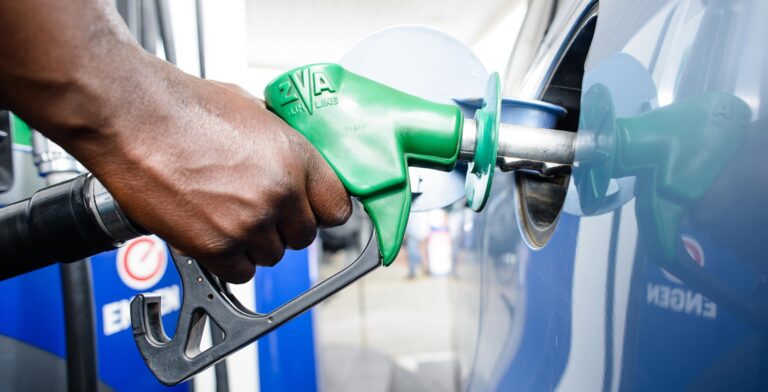
Until the national fuel pass is implemented, the Ceylon Petroleum Corporation has decided to dispense limited volumes of fuel from Ceypetco filling stations to vehicles starting from July 21, based on the last digit of the vehicle number plate.

According to the Ministry of Energy, Ceypetco filling stations will only pump fuel worth Rs. 1,500 for motorcycles at a single time.

For three-wheelers, the limit has been set at Rs. 2,000 worth of fuel.

The maximum amount of fuel allowed to be dispensed to other vehicles stands at Rs. 7,000.

The decision was taken at a meeting, chaired by Power & Energy Minister Kanchana Wijesekara, held earlier today to discuss the resumption of fuel distribution from July 21.

Fuel pumping at 1236 Ceylon Petroleum Corporation fuel filling stations countrywide will begin on Thursday 21 using the new app with QR code and the last number on the vehicle number plates, a high ranking CPC official said.

Over 1 million motorists have already registered with the new system which will take several days for the proper operation of the system in a streamlined manner , he revealed.

The pump attendants at the CPC filling stations countrywide are being provided training to operate this QR code from the CPC officials. Measures will be taken to provide smart phones to filling stations,he said that the present problem is the shortage in the market.

The secretary of fuel distributors association Shelton Fernando said that at present smart phones are banned at petrol sheds and threads danger in searching QR codes by pump attendants near the fuel pumps.

The implementation of this system hurriedly will create problems for pump attendants he pointed out.

Fuel Station Owners’ Association (FSOA) Chairman Kumara Rajapaksa urged the public not to wait in queues as arrangements have been made supply fuel in accordance with the newly introduced ration system.

Under the QR code system, fuel will be issued for motorists sufficient for two days and the Cpc will make arrangements to supply adequate fuel quantity fuel filling stations.They can pump fuel any petrol shed presenting the QR code he added. .

The pump operators at the CPC filling stations across the country are currently undergoing training to operate this QR code from the CPC officials., he said.

It was decided that the dates for fuel distribution based on the last digit of the vehicle number plate will be as follows:

Number plates ending with 0, 1, 2 – Tuesday & Saturday
Number plates ending with 3, 4, 5 – Thursday & Sunday
Number plates ending with 6, 7, 8, 9 – Monday, Wednesday & Friday

Further, the officials also agreed to test the National Fuel Pass system as a three-day pilot project at selected filling stations in Colombo District from the 21st July to dispense a weekly quota of fuel according to the last digit of the number plate using QR codes.

This program will be implemented island-wide from Monday (July 25).

Thereby, technological assistance pertaining to the National Fuel Pass system will be provided to filling station employees and the general public, through the members of security forces, the National Youth Corps and the National Youth Services Council.

Meanwhile, it was decided to dispense fuel to vehicles according to the number plate’s last digit and remove the other vehicles parked in queues.