Home Blog Page 2199

Government reversed to 2019 tax policy to raise Rs.125 billion 

0

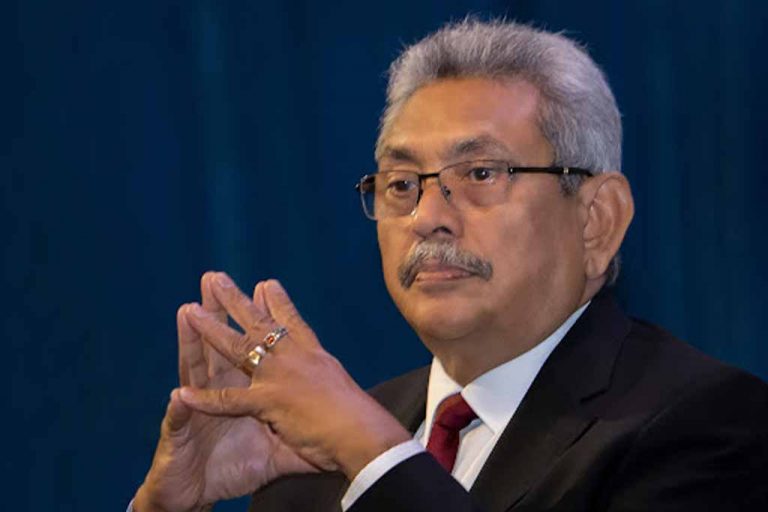
Taking a swipe at Prime Minister Ranil Wickremesinghe’s repeated comments to the effect of the government having to rely on printed money to pay for essential government bills such as payment of salaries and pensions in the ensuing months.

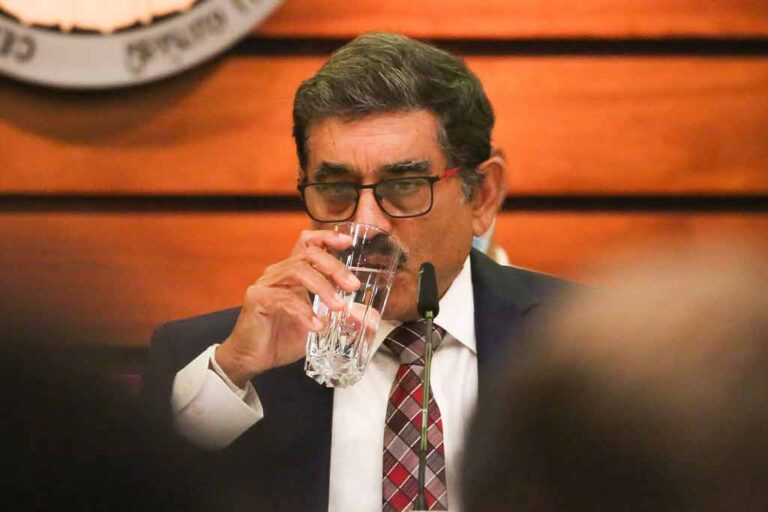
This was stated by  former Central Bank Deputy Governor, Dr. W.A. Wijewardena likened  it to giving sugar to a diabetes patient, to reflect the severity of the move in aggravating the current problems in the economy.

In a shock move, the Central Bank in April raised its key policy rates by 700 basis points, the most in its entire history, to arrest inflation by killing demand and thereby reducing imports, which is putting pressure on the balance of payments. 


The move was intended at throwing a wrench on private borrowings so that people’s savings that can be drawn into banks could be used to bridge the budget gap without resorting to the Central Bank printing money, which was partly responsible for the current bout of red hot inflation. 


But the Premier’s recent statement to the effect of the government having to print at least another trillion rupees of money could scuttle the efforts thus far taken by the Central Bank to stabilise the economy, Dr. Wijewardena said. 


“It is like giving a high dose of sugar to a diabetic patient,” he said at a virtual discussion organised by the Central Bank last week comprised of ex-Central Bankers deliberating on the way out of the crisis at present. 


He also pointed out that it would be affront to the Central Bank’s independence entrusted and protected in the Monetary Law Act. 


The Central Bank has bought nearly Rs.2.0 trillion worth government securities in the two years of the pandemic to provide support to the pandemic-hit economy and also to make up for the loss of revenues from the massive tax cuts enacted in late 2019. 


However, the government last week restored the pre-2020 era tax policy with the hope of raking in Rs.125 billion in the remainder of the year and Rs.292 billion in 2023. 
This was one fourth of what the experts claimed to have lost by the government due to the 2019 tax cuts in a year as they repeatedly said the State coffers lost Rs.600 billion in tax revenues each in 2020 and 2021. 


The weaker estimates even at the pre-2020 tax framework reflect that a wobbling economy cannot generate tax revenues at whatever the rates. 

 And this was precisely why only a handful of economic analysts repeatedly called the government to abandon self-destructive lockdowns in 2020 and 2021, which killed thousands of jobs, livelihoods and small businesses, which otherwise could have brought in the revenues even at lower rates. 

Dr. Wijewardena, although welcoming the tax reforms, which is expected to rekindle some confidence in the private sector, echoed that the revenue estimated from the reforms aren’t sufficient.

State Pharmaceutical Corporation steps into resolve the drug shortage

0

The State Pharmaceutical Corporation is set to take action to resolve the drug shortage in the country as soon as possible by using funds from the Indian credit line assistance and other credit facilities, COPE Chairman Charitha Herath said. 

Officials from the SPC appeared before the Committee on Tuesday to discuss the shortage of drugs in government hospitals as of 13 May and the measures taken to address the shortage.

The COPE Chairman said that despite receiving $ 200 million in financial assistance under the Indian credit line facility, by 22 April, the Ministry’s Drug Sub-committee had only recommended a stockpile of medical supplies worth $ 55.5 million which is only 28% of that grant. 

By 18 May, only $ 92.9 million had been recommended for invoices,” he informed the Committee.

Committee members said that as there is a shortage of essential medicines in the country, action should be taken to obtain the required medicines using this money immediately.

SPC officials said that necessary steps are being taken to obtain essential medicines from this money and said the process was delayed due to the appointment of several ministers during this period.

The Committee was told that in addition to the Indian credit line, the World Bank Loan Assistance Scheme (WB), World Health Organisation (WHO), Asian Development Bank (ABD) and other donor assistance were received for purchase of medicine and the assistance so far exceeded $ 330 million and has not yet been disbursed.

Committee members said if the necessary administrative decisions and necessary approvals are taken as soon as possible and medicines are purchased with this money, there will be no shortage of drugs until the middle of 2023.

COPE Chairman noted that the money received to prevent the shortage of drugs had not been properly managed and used effectively. He said it was not the lack of foreign exchange but the inefficiency in management of such funds that has led to the medicine shortage.

The officials who were present also pointed out that there was a shortage of rupees in purchasing medicines. Accordingly, the Secretary to the Ministry of Finance who also joined the meeting online, stated that the necessary steps were taken to resolve it as soon as possible.

COPE also observed that the computer system used for the management of medical supplies had not been properly updated. 

It was revealed that a company had been given Rs. 645 million to set up the system and Rs. 5 million a month for its maintenance, but the system was not functioning properly. 

Due to this, work has already commenced to prepare a new computer system at a lower cost and about 80% of the work has already been completed, officials stated.

The Chairman of the COPE Committee also focused on the methodology for calculating the drug requirement in the country and pointed out the importance of maintaining such a system more accurately. 

WB and S&P ranks Colombo Port as the No. 1 Port in South Asia

0

The World Bank Group and S&P Global Market Intelligence have ranked the Port of Colombo as the No. 1 Port in South Asia and Indian Subcontinent, for efficiency, in the Container Port Performance Index 2021. 

Contributing towards 44% of container volumes moving through the Port of Colombo in 2021, Colombo International Container Terminals Ltd. (CICT), which manages the South Terminal of the Port of Colombo, has worked hard to support the Port of Colombo to achieve this global recognition. 

In addition to being ranked No. 1 in South Asia, the Port of Colombo has also been ranked No. 3 among ports in the Indian Ocean Rim and No. 22 among 370 seaports worldwide. 

Managed by the China Merchants Port Group (CMPort), CICT is the first deep water container terminal in Sri Lanka and is also the only terminal in the South Asian region capable of handling 22,000+ TEU vessels. 

Commenting on the achievement, CICT Chief Executive Officer Jack Huang said: “From our inception, we have been dedicated to realising optimum efficiency and achieving our KPIs. We have done this through extensive investments into infrastructure, process automation, crew training and standardisation.

“As the largest contributor to container volumes at the Port of Colombo, we take this opportunity to express our congratulations to the Port of Colombo and renew our resolve to achieve new heights in terms of efficiency, volumes, and overall productivity. 

We look forward to continuing to support the Port of Colombo to retain its No. 1 status regionally, and rise even further in the global rankings.”

CICT has invested in state-of-the-art equipment and infrastructure to support the operations of the Port of Colombo. Presently, CICT operates 14 quay cranes (two of which are capable of handling 22,000+ TEU vessels), 46 rubber-tyred gantry (RTG) cranes and 105 trucks during its normal operations. 

CICT’s dedication to efficiency and service excellence is reflected in CICT achieving a GCR of 30.34 which is much higher than the global average. The Organisation has also consistently won a number of awards presented by the AFLAS Logistics and Cargo Awards, the premier awarding body for the global shipping and logistics industry. 

CICT, which mainly handles larger vessels at the Port of Colombo, has also been instrumental in helping the Port of Colombo secure the No. 13 position amongst ports capable of handling volumes larger than 13,500 TEUs, worldwide with a GCR of 29 moves per hour whilst the global GCR is only 23.8 moves per hour.

Colombo International Container Terminals (CICT), which is managed by China Merchants Port Group (CMPort), is responsible for the management of the South Terminal of the Port of Colombo, the first deep water terminal in South Asia, equipped with all facilities to handle the largest vessels afloat. 

Central Bank defends the current  exchange  arrangement

0

The Central Bank defends the current exchange arrangement claiming that it has already made positive impact in extremely challenging economic circumstances at present facing worst balance of payments crisis in history

Following the excessive depreciation, inflation accelerated significantly through imported prices, while second-round effects of such excessive depreciation on other goods and services were also observed subsequently. 

The implementation of this arrangement has brought in a greater stability in the exchange rate determination in both formal market and grey market thus far, while also minimizing excessive margins prevailed in both markets, and the effects of the same are expected to reflect in the exchange rates used for customer transactions. 

According to the feedback received from the stakeholders, there exists broader consensus on the current arrangement of the exchange rate, which is market driven with less volatility and more predictability, compared to the earlier arrangement, which experienced excessively volatile of the exchange rate driven more by speculation rather than market forces and economic fundamentals

Moreover, due to the acute shortage of foreign exchange in the domestic foreign exchange market, along with continuous depreciation of exchange rate the conversions of foreign exchange by the foreign exchange holders delayed.

This was  due to expectation of further depreciation and high premium offered in the grey market, thus adding further pressures on the currency,

Meanwhile, the demand for foreign exchange in the grey market thrived to part finance rising import demand outside the banking system, causing further pressures on the currency as well as heightening stresses in the banking system. 

This significant volatility of the exchange rates drove up the interbank exchange rates as well as customer buying and selling rates in an abrupt nature, causing undue speculation on the currency.

Restrictions imposed on open accounts and consignment payments terms have helped curtail activity in the grey market, thereby narrowing the gap between the official exchange rate and the grey market rate. 

Accordingly, the current exchange rate arrangement is viewed as a more credible mechanism, vis-a-vis an arrangement where grey market activity could operate freely. 

Consequently, inflows on account of workers’ remittances to the banking system have gathered pace since the introduction of the new exchange rate arrangement.

This improved momentum in the domestic foreign exchange market is expected to consolidate with the progress being made towards reaching the staff level agreement with the International Monetary Fund (IMF) on a funding arrangement, along with the negotiations for bridging finance from other multilateral and bilateral partners. 

The Central Bank reiterated that the current arrangement of exchange rate would be reviewed from time to time, and further flexibility would be allowed if need be, once market confidence is restored, supported by envisaged foreign exchange inflows to the country.

Eminent Economist Dr. Indrajit Coomaraswamy says CB takes right policy measures   

0

Highly respected economist and former  Central Bank Governor Dr. Indrajit Coomaraswamy yesterday expressed confidence in the policy measures taken by the Central Bank, whilst highlighting critical issues that need to be addressed for a long-term stable economy.

“The incumbent Central Bank Governor and the Monetary Board sent the right signals to the market with the firm policy directions and there are positive responses, he claimed 

 The monetary policy is going in the right direction to ensure stability,” he said at a webinar titled ‘Surviving the current economic crisis: Ex-Central Bankers in Dialogue’ organised by CBSL yesterday.

Noting that many criticised the policy direction for its impact on MSMEs, Dr. Coomaraswamy pointed out that it would otherwise cause hyperinflation which would affect every sector and have devastating consequences on the overall economy.

Dr. Coomaraswamy was of the view that Sri Lanka could reach a staff-level agreement within the next four to five weeks with the IMF, adding that a drawdown of funds needed progress on debt restructuring.

“A staff-level agreement could increase confidence to bring in foreign investment into capital markets, encourage more exporter conversions and remittances into official channels,” he said.

He also pointed out that these steps will ease the supply side pressure on the exchange rate at present and bring in stability in a gradual manner. 

Dr. Coomaraswamy said bridge financing was a key element that Sri Lanka should work on, as multilateral agencies cannot repurpose till the IMF is finalised.

As per him, Sri Lanka could get as much as $ 6 billion from India through the previously agreed $ 4.5 billion credit line and another facility of $ 1.5 billion where the negotiations are still underway. 

“There were some indications that Japan may provide some money. India has also sounded out Japan over funding for Sri Lanka during a meeting of Quad nations recently,” Dr. Coomarswamy said.

Former Central Bank Governor also highlighted that Sri Lanka needed to start negotiations with creditors to win adequate assurances that debt sustainability will be restored.

He said the Government will have to work on a social safety net to protect the vulnerable and poor with a ramped-up cash transfer. 

Pointing out that Sri Lanka had always missed the opportunities to make structural changes, Dr. Coomaraswamy insisted on authorities making those painful, yet critical reforms to avoid severe recession in the future.

European Union promotes ‘Art for Peace’ among children in Sri Lanka and the Maldives

0

03rd June 2022

PRESS ARTICLE

European Union promotes ‘Art for Peace’ among children in Sri Lanka and the Maldives

Photo Caption: 

  1. Seen here are the three winners with EU Ambassador to Sri Lanka and the Maldives Denis Chaibi

The Delegation of the European Union (EU) to Sri Lanka and the Maldives recently concluded an online children’s art competition titled ‘Art for Peace’ as part of the celebrations of the Europe Day. An award ceremony was held on 2 June at the EU Delegation premises to acknowledge and recognize the young winning artists. This interactive activity was aimed at engaging with as many children as possible and to let them showcase their talent, while at the same time raising awareness about the EU and show how art can bring people together around the theme of peace. 

EU Ambassador to Sri Lanka and the Maldives, Denis Chaibi, said “Europe Day, held on 9 May every year, is a celebration of peace and unity. This year, it had a special significance. With war at the doorstep of Europe and with a deep economic crisis in Sri Lanka, peace and prosperity are at stake. In that context, we invited children from Sri Lanka and the Maldives to express themselves and show us how they see peace through art.”

The competition was held online for children in three age categories: 6-8 years; 9-11 years; 12-15 years. Contestants were given the opportunity to submit one entry of original, unassisted, hand-drawn artwork, created without using digital tools. The contest generated a lot of interest and over 750 entries of inspiring artworks were received during the month of April from children across Sri Lanka and the Maldives. 

The winners of the Art for Peace competition are Sithula Nimtharu Delpa Godage from Athurugiriya (8 years), Sarasija Nimhari Thenuwara from Maharagama (9 years) and R. A. Ranumi Limansa from Battaramulla (15 years).  

Three winners were selected from the list of 30 participants who were shortlisted from each of the three age categories. The exhibition of all shortlisted artworks is planned for later this year. 

Press contacts:

Political, Press and Information Section

Delegation of the European Union to Sri Lanka and the Maldives

Tel: + 94 11 2674413-4

www.eeas.europa.eu/delegations/sri-lanka_en 

Bandaranaike International Airport expansion taints with irregularities  

0

The much hyped US$ 500 million  Bandaranaike International Airport (BIA) expansion projects has been tainted with malpractices and irregularity, a senior government minister alleged.  

The large-scale irregularities in the selection process of subcontractors have partially impeded the progress of the construction of the Japan International Cooperation Agency (JICA)-funded Rs.113 billion-worth Bandaranaike International Airport (BIA) expansion project, Ports Shipping and Aviation Minister Nimal Siripala de Silva said.  

In a recent inspection tour of the project, the minister shared that a number of unqualified subcontractors had been selected for the project, with large-scale irregularities in the selection process. 

Therefore, he ordered the board of directors of Airport and Aviation Services to launch an investigation into such unqualified subcontractors. 

However, the minister stressed that the main contractor Taisei Corporation, which was hand-picked by the JICA, had also failed to show any interest in the timely completion of the project. 

The government is preparing to make a formal complaint to the Japanese government on the sluggish pace of construction of the project, as the ultimate responsibility of the project falls with Taisei Corporation.

 
The minister highlighted that the construction of the project has fallen behind the scheduled timeframe and has failed to reach the final stage. 


Further, the minister said he was alarmed by the reports on the moves to construct the security system of the new terminal below the globally-accepted International Civil Aviation Organisation (ICAO) standards, which is against the project plan. 


The construction of the project began in 2019-2020, as the JICA and government firmed the deal on procurements after years of disagreements. 

According to the JICA, the construction of the new passenger terminal building is expected to be opened in 2024. The terminal building would be developed based on the concept of Eco-Airport, with Japanese advanced technology and know-how.  


The concept includes rainwater harvesting for the landscaping works and recycled water from the sewerage treatment plant for flushing toilets, photovoltaic power generation, solar energy harvesting, LED lighting, energy-efficient glazing, etc.  


After the completion of the terminal, BIA is expected to handle 15 million passengers per annum. In November last year, a new apron and taxiways were unveiled under the BIA Expansion project. 

The JICA’s total financing for the expansion of BIA is JPY 74,397 million or around Rs.113 billion, which has been provided under Special Terms for Economic Partnership, with 0.1 percent p.a. interest and a 40-year repayment period to promote technology transfer, build quality infrastructure and economic cooperation between Sri Lanka and Japan.

Sri Lanka lures Bollywood film makers to revive the country’s tourism

0

Plagued by politically made socio-economic crisis and the recent diplomatic dispute with Russia over Aeroflot issue  Sri Lanka’s tourism Ministry had just started looking up at damage control by opening the island for Indian film industry to attract more tourists from the closest neighbour.

New plan will be implemented to promote Sri Lanka as destination with beautiful scenery , availability of sophisticated infrastructure facilities and concessions  for shooting international films specially Indian films.

Newly appointed Tourism Minister Harin Fernando has reached out to Bollywood to help boost tourism in Sri Lanka.

The Minister tweeted saying he met with Bollywood actors Chitrangda Singh and Dino Morea in Colombo on Sunday 05 and discussed ways and means of promoting Sri Lankan tourism in India.

He also discussed promoting Sri Lanka as a location to shoot Indian movies.Expressing his views, Dino Morea said that Sri Lanka is one of the most beautiful countries he has visited.

He said that even today nothing has changed and Sri Lanka continues to be a beautiful country and the people continue to be friendly.

The actor said that what is portrayed outside about Sri Lanka today is not the bigger picture and so people should visit the country.

Chitrangda Singh said that Sri Lanka is a naturally beautiful country.She also noted that Sri Lanka is safe to visit and that some information is blown out of proportion.

Sri Lanka tourism arrivals dipped 40 percent in April resulting in the lowest number of arrivals in the last three months of 2022, official data showed.

According to data shared by the Sri Lanka Tourism Development Authority (SLTDA,) only 62,980 tourists had arrived in April compared to 106,500 the previous month.

The top source market for tourists in April was the UK, India, and Germany. Countries such as the UK, New Zealand and Canada have also issued travel advisories to their citizens over Sri Lanka’s crisis.

Although the Sri Lankan  tourism sector is now struggling due to  socio economic crisis and the recent  misunderstanding with with Russia, the tourism ministry is taking every possible step  to to revive the industry by introducing innovative promotional campaigns.

These promotional campaigns will be implemented under the  Sri Lanka Tourism Development Authority Chairmanship of Priyantha Fernando at the Tourism Promotion Bureau. 

In a desperate attempt to mend fences with Russia, Sri Lanka’s Prime Minister Ranil Wickremesinghe has informed Russia through the Foreign Ministry that the issue over the Aeroflot passenger aircraft is not between the two countries but is a private legal issue. 

The Premier further assures that Sri Lanka’s Minister of Justice has been informed to expedite the process of the court case.

He has reportedly directed the Foreign Secretary to speak to the Russian Foreign Ministry and explain the matter, and to further clarify that the enjoining order had nothing to do with the Sri Lankan government. 

Sri Lanka’s Ministry of Foreign Affairs had issued a statement on Saturday with reference to the detention of Aeroflot passenger aircraft flight SU-289, which has somewhat escalated into a diplomatic row now.

On 2 June 2022, the Commercial High Court of the Western Province issued an Enjoining Order on the Aeroflot flight restraining it from taking off from Bandaranaike International Airport, the tourism ministry said. 

World’s First Global Forum on Period Poverty to Launch in Australia

0

The first global forum on period poverty — a situation characterised by a lack of access to menstrual products, hygiene facilities, waste management and education to appropriately manage menstruation — is coming to Australia this October. 

The Global Period Poverty Forum will see the world’s top leaders in the field unite over three days in Brisbane. 

Over 500 million people are thought to face period poverty across the world.

Stigma, shame, miseducation and sexism around menstruation, as well as general rates of global extreme poverty, are all sources of period poverty. Unsurprisingly, the issue disproportionately impacts low-income communities, those living in conflict-affected areas and people in the aftermath of natural disasters. 

ochelle Courtnay, the founder and managing director of Share the Dignity, the Australian organisation behind the forum, said coming together will cut years off the period poverty eradication timeline.

“Period poverty is something that we can completely eradicate if we unite and bring everybody on the journey; governments, brands, corporates and philanthropy,” Courtnay told Global Citizen. “The people who are attending will decide what the goal for the next two years will be; it may be a large body of research, a global advocacy campaign on removing the stigma or ensuring all advocates have the tool to remove the tax on sanitary items in their countries.”

Founder of Freedom4Girls UK Tina Leslie said the forum would be “groundbreaking.”

“The forum is fantastic news to all of us who fight for the menstrual equity of the people we support,” Leslie said in a statement. “I truly believe we all need to keep the issue of period poverty on the worldwide agenda for governments and policy decision-makers, and I believe this forum will be a force to be reckoned with.Share the Dignity is perhaps best known for spearheading the successful movement to scrap Australia’s 10% tampon tax, which previously saw the critical sanitary product taxed as a luxury item. The charity’s 2018 petition, which recorded over 100,000 signatures, is now widely considered the final push in a fiery, two-decade-long campaign effort. 

A 2021 survey by Share the Dignity revealed 1 in 5 Australians are forced to use unsuitable alternatives because they could not afford pads, tampons or menstrual cups. Almost half of all 125,000 survey participants said they missed at least one day of school because of their period.

Over 3 million Australians live below the relative poverty line, more than half of whom are women and young girls.

The organisation has donated 3 million packets of pads and tampons to Australians in need since its inception in 2015. 

The Global Period Poverty Forum in 2024 will take place in Singapore.

Global Citizen

Sri Lanka court suspends the enjoining order issued against the Russian aircraft

0

The Colombo Commercial High Court has ordered the suspension of an enjoining order preventing a Russian aircraft from leaving Sri Lanka.

That is considering a request made by the Attorney General.

The Sri Lankan court had issued the enjoining order on a complaint filed by Celestial Aviation Trading Ltd. in Ireland until the 16th of this month. However, due to the crisis situation that has arisen between the two states through the relevant enjoining order, the Attorney General had submitted a motion to the court today.