Home Blog Page 2222

The faces of China’s detention camps in Xinjiang

0

A new leak of Chinese government records reveals thousands of never-before seen mug shots of Uyghurs and other photos from inside the notorious internment camps, as well as new details of the national mass detention program.

By Scilla Alecci

Ten detainees wearing blue and yellow prison smocks sit in a basement cell, staring up at a TV   that shows a speech by a local Xinjiang government official. Blue-clad guards, one holding a club about as big as a baseball bat, stand nearby.

Beneath Chinese flags, several officials stroll along a brightly lit detention center corridor, like visitors at a zoo, peering down through grates into basement cells whose inhabitants are out of view.

A third photograph shows what appears to be an interrogation. A young man, hands and feet shackled to what Chinese police call a “tiger chair,” faces an officer at a desk equipped with a computer, a camera and a microphone. A framed poster displaying the Chinese Communist Party’s hammer and sickle emblem leans against a wall, and a helmeted officer in full riot gear, visor down, holds a riot shield.

These photos are part of the Xinjiang Police Files, an unprecedented leak of thousands of images and documents from the public security bureaus of China’s Konasheher and Tekes counties. The two counties are in Xinjiang, the majority-Muslim region in northwestern China where the national government has held hundreds of thousands of Uyghurs and other ethnic minorities in mass-internment camps.

The leak contains the first photographs taken inside the camps and obtained by news organizations without official authorization. The photos serve as irrefutable evidence of the highly militarized nature of the camps and present a stark contrast with those, previously published, that were taken on government-organized press tours.

Also included are the mug shots of more than 2,800 detainees, dazed men, women and teenagers staring blankly into a camera. Xinjiang residents’ faces also occupy one column of a spreadsheet amid thousands of rows of personal data —  age, profession, hometown and other personal information — in Chinese characters.

Photo of detainees watching TV while guards stand over them
Detainees inside Tekes detention center in Xinjiang watch a televised speech by a local politician as guards watch them in 2017. Image: Xinjiang Police Files

In addition to photos, the leak provides confidential government documents, including speeches by high-ranking Chinese officials outlining their plans to repress, “educate” and punish members of ethnic minority groups in Xinjiang. Among the files, too, are internal police presentations, some for training purposes, on how to search and arrest suspects, and how to use handcuffs and other equipment. One document marked “confidential” outlines surveillance measures to be put in place by Yili prefecture officers during a visit to Xinjiang by a group of European diplomats in the summer of 2018.

Taken together, the photographs and documents refute the Chinese government’s claims that the camps are merely “educational centers.”

The leaked records, most dating to 2017 or 2018, represent a major advance in public access to knowledge of China’s mass-detention policy and the implementation of that policy at the local level, in this case, the western prefectures of Kashgar and Yili.

It’s [one] thing to know it, and another thing to see it. — researcher Adrian Zenz

The Xinjiang Police Files were obtained by researcher Adrian Zenz, who shared the documents with a group of 14 news organizations, including the International Consortium of Investigative Journalists.

Zenz, a senior fellow at the Victims of Communism Memorial Foundation, a Washington-based think tank, wrote a peer-reviewed academic paper based on the documents that analyzes the leaked data and compares it with publicly available information. He found, for instance, that about 23,000 people in Konasheher county, in Xinjiang’s southwestern Kashgar prefecture, or more than 12% of the adults there, were in some form of internment in 2018. The paper was published in the Journal of the European Association for Chinese Studies.

“The image material is stunning,” Zenz told ICIJ. “It’s really fortunate that this material can come out because it would blow away Chinese propaganda attempts” to whitewash what’s happening in Xinjiang.

“It’s very touching,” he added. “It’s one thing to know it, and another thing to see it.”

Photo showing man chained to chair surrounded by guards
A young man is shackled in a “tiger chair” during what appears to be an interrogation at Tekes County Detention Centre in 2018. Image: Xinjiang Police Files

The leak comes as the U.N. high commissioner for human rights, Michelle Bachelet, prepares to make a long-delayed visit to Xinjiang this week.

A growing body of evidence documents the campaign of mass detention and forced assimilation in Xinjiang, begun under President Xi Jingping and his subordinates in 2017. The Chinese government has called the camps “vocational skills education and training centers,” but the Xinjiang Police Files and previous exposés by journalists, researchers and activists point to another conclusion. They reinforce allegations that the camps are part of a nationwide policy to promote conformity to Communist Party doctrine and majority Han cultural norms and crack down on expressions of cultural, political and religious diversity.

As many as 1 million Uyghurs and members of other Turkic minorities were held in the camps in 2018, according to estimates by U.N. and U.S. officials. There is no precise estimate of the number of detainees since 2017.

The Chinese government dismisses accusations of human rights violations as “fabricated lies and disinformation,” asserting that the so-called training centers are intended to improve labor skills and to alleviate poverty. The government also says that some of the measures deployed in Xinjiang are part of a campaign to combat what it calls acts of terrorism by Uyghur extremists.

“Xinjiang has taken a host of decisive, robust and effective deradicalization measures,” Liu Pengyu, a spokesperson with the Chinese embassy in Washington D.C., told ICIJ and its media partners in an email.

“The region now enjoys social stability and harmony, as well as economic development and prosperity. The local people are living a safe, happy and fulfilling life,” Liu said.

“These facts,” he added, “speak volumes about the effectiveness of China’s Xinjiang policy” and “are the most powerful response to all sorts of lies and disinformation on Xinjiang.”

Liu did not respond to the reporters’ specific questions about the Xinjiang Police Files.

Photo of officials peering down into cells
Chinese officials tour a detention center in Tekes county, Xinjiang, where inhabitants occupy basement cells. Image: Xinjiang Police Files

The camps’ punitive function stands out in photographs and other information in the leak.

“The people in them are being treated very much as criminalized elements,” said Michael Clarke, an adjunct professor at the Australia-China Relations Institute in Sydney, who reviewed Zenz’s report and underlying documents.

In an interview with USA Today, an ICIJ media partner, Clarke said that “dribs and drabs” of visual evidence of the camps’ prison-like conditions had emerged previously. “But nothing like this,” he said.

The camps’ existence and an extrajudicial program for the mass detention of minorities in Xinjiang first emerged in satellite photos and sporadic firsthand accounts of Uyghur refugees and former detainees. Witnesses also told of widespread torture, rape and forced sterilization. In 2019, the China Cables investigation by ICIJ and 17 media partners, based on classified Chinese government documents, exposed the operations manual for Xinjiang detention camps and the region’s system of mass surveillance.

The revelations have prompted the United States, members of the European Union, and other Western nations to sanction Chinese officials and companies deemed to have enabled human rights violations in Xinjiang.

The U.S. and other governments now officially refer to Beijing’s targeting of Uyghurs and other Muslim minorities as a form of “genocide.” In 2021, the U.S. enacted a law to stop the import of goods suspected of being made using Uyghurs’ forced labor.

Beijing, in turn, has levied sanctions against Zenz and others who, the government claims, “severely harm China’s sovereignty and interests and maliciously spread lies and disinformation.”

The Xinjiang Police Files

The leaked documents were created or collected when the Chinese government’s mass-detention program was at the height of its intensity.

The data set’s 5,074 mug shots appear to be of area residents photographed by law enforcement authorities from January to July 2018, possibly as part of an effort to collect biometric data, according to Zenz’s review of timestamps accompanying the images.

About 2,900 of those in the mug shots had been detained before their pictures were taken, and their ages ranged from 15 to 73, according to Zenz’s analysis of text files. The detainees included 15 minors.

Some photos show detainees being photographed under close watch, women by female staffers in civilian clothes, men by male guards in full tactical gear.

Others are just mug shots. In one, an older man, unshaved and wearing a stained sweater, looks shyly at the camera. In another, a female staffer in glasses towers over an older woman who sits in front of a light gray background and stares blankly at the camera.

Compilation of mug shots of Uyghurs from leaked Xinjiang files
The Xinjiang Police Files contains more than 5,000 photos of individuals taken in 2018 at police stations or detention centers in Konasheher County, in Xinjiang, and identifying information on most of them. The data indicates that more than half of the individuals were interned or imprisoned in 2017-2018, including those pictured in the top row. The second row displays mugshots of family members of a man sentenced to more than 10 years imprisonment for “illegal study of the scriptures.” Image: Xinjiang Police Files

Other images in the cache show an interior space that may have been used for so-called re-education purposes in Xinjiang’s Tekes county, Zenz’s report says.

The pictures of detainees watching the televised speech by the politician and of the young man in restraints are from this batch.

Some photos present chilling images of training programs. In one, three guards in full combat gear point assault rifles at a prisoner held to the ground by eight guards taking part in an anti-escape drill.

In another, at least six guards in riot gear — helmets, visors, and clubs, and one with a shield — surround two prisoners who are shackled hands-to-feet and forced to squat with their hooded heads bent toward the floor. An officer bends over one prisoner and speaks into a walkie-talkie;  another holds a camera beneath his flipped-up visor and takes a photograph.

Photo showing guards in riot gear with weapons standing over crouching detainees
Chinese guards at a detention center in Tekes county in Xinjiang take part in an anti-escape drill in 2018. Image: Xinjiang Police Files

There are photos in which small groups of male and female detainees in prison uniforms stand in a row, either singing or reciting something, as guards watch.

Support independent journalism

Do you believe journalism can make a difference? For just $15/month you can help expose the truth and hold the powerful to account.

Ominous speeches

The leaked records contain new insights into the thinking of top security officials. Two documents, from June 2018, are transcripts of speeches given to a gathering of regional cadres by Zhao Kezhi, the head of China’s Ministry of Public Security, and Chen Quanguo, a member of the Politburo who is considered one of the architects of the security crackdowns in Xinjiang and Tibet.

Leaked transcripts include a classified speech given by the head of China’s Ministry of Public Security, Zhao Kezhi, to a gathering of regional cadres on June 15, 2018, in Urumqi, Xinjiang, in which he outlines the government’s five-year strategy for the region. Image: Konasheher County PSB

According to the leaked transcripts, described as “classified,” Zhao and Chen outlined the government’s five-year strategy to eradicate “extremism” and bring “long-term peace” to Xinjiang.

In his remarks, Zhao indicated that in the first year, 2017, the goal was to “stabilize” the region; in the second, to “consolidate” gains and achieve “basic normalization.” The ultimate objective was “comprehensive stability” by the end of the fifth year.

Chen’s speech, echoing Zhao’s, urged officials to be on the alert, continue the fight against separatists and strengthen the security of camps and prisons. He encouraged them to shoot anyone trying to attack a detention center, an aggressive approach consistent with his advice in a previous speech that guards must fire on escapees.

“These separatist forces and two-faced people must be broken into pieces,” Chen told the cadres. “They do not know the power of our party.”

According to Zenz, “two-faced people” refers to officials who show leniency and may not always follow the government’s orders.

In 2020, the U.S. sanctioned Chen for his connection to “serious human rights abuse.”

In 2021, Beijing removed Chen from the post of Communist Party secretary of Xinjiang and replaced him with Ma Xingrui, an aerospace scientist-turned-politician who pledged to maintain the government’s hard-line policies.

Early this year, Beijing’s five-year program to eradicate “extremist forces” in Xinjiang came to an official end, according to the government. China’s foreign minister, Wang Yi, announced that the goal of bringing “stability” to the region had been achieved. The terrorism scare “is now a thing of the past,” an expert on the region told Global Times, a party newspaper.

However, experts interviewed by ICIJ and its media partners said there is little evidence that the camps have been closed.

Darren Byler, author of “Terror Capitalism”, a book about China’s mass detention of Uyghurs,  said many people are still missing in Xinjiang. If they are not in the camps, Byler said, they may have been shifted to high-security detention facilities or prisons, or to factories where they are required to report for unpaid, forced labor.

“The ‘war on terror’ is ongoing,” said Byler, an anthropologist at Simon Fraser University’s campus in Vancouver, British Columbia. “And with the shift to the prisons, there’s a kind of warehousing of the people that they think are most dangerous and cannot be released.”

Mechanics of mass detention

Among the most striking documents in the leak are spreadsheets containing information on about 8,000 detainees and their internment at two vocational skills education and training centers in Konasheher county. Zenz estimates that the figure would represent nearly all those held at the two camps.

At least one of the camps, near Konasheher’s industrial zone, had cells for holding detainees in solitary confinement, a document indicates.

Another document details security procedures that officers are told to follow when transferring detainees from a camp to a “party school training center.”

Photo of guards, on left, watching over line of detainees holding papers
Both male and female detainees are guarded by police as they stand in line, apparently to sing or recite at a detention center in Tekes County in Xinjiang, China. Image: Xinjiang Police Files

According to the Student Transfer Security Plan, “students” were to be shackled and hooded, and at least two security officers were to guard each detainee. The bus convoy transporting them would be escorted to its destination by armed police.

Details from the leaked photographs and documents match accounts of former Uyghur detainees interviewed by ICIJ and other news organizations and aid groups, as well as information from public records.

In a document describing intake guidelines, for instance, authorities in Konasheher county divided detainees into 21 categories. Among them were people who allegedly posed a danger to China’s national security; those suspected of “religious extremism;” those returning from abroad or having some connection to a foreign country; and “husbands of women who are currently pregnant” in violation of China’s family-planning policy.

The Xinjiang Police Files indicate that at least 10,000 people in Konasheher county were recommended for detention or closer examination by police using a sophisticated mass-surveillance and so-called predictive-policing program known as the Integrated Joint Operations Platform, or IJOP.

A 2019 Human Rights Watch report declared that IJOP aggregates data about individuals — often without their knowledge — and flags those deemed potentially threatening or otherwise “suspicious.” According to the report, the Chinese government uses the platform to compile a massive database of intimate personal information from a range of sources. Human Rights Watch calls IJOP “China’s algorithms of repression.

One of the leaked documents indicates that among the reasons cited for detaining people from Konasheher in 2017 and 2018 was the use of a mobile file-sharing application called Zapya, or “Kuaiya” in Chinese. The document says some Zapya users were sent to a conversion-through-education program or put in prison. Other users were placed “under review,” the document says.

ICIJ’s China Cables probe revealed that, since at least July 2016, officials closely monitored the use of the Zapya app on the phones of some Uyghurs and flagged them for further investigation. Officials suspected the app was used to exchange content of a religious or “extremist” nature.

The Xinjiang Police Files confirm the importance of IJOP to Beijing’s strategy to control the Uyghur population. In his 2018 speech, Chen told the cadres that top party officials and government ministries “continue to support Xinjiang in upgrading the national integrated platform [IJOP] for anti-terrorism and stability maintenance to a world-class level.”

Surveilling EU diplomats

Included in the Xinjiang Police Files is a four-page confidential Chinese government document, from July 2018, outlining strict security measures to be followed during a visit by a small group of European diplomats to Xinjiang.

Issued by the Yili prefecture’s public security bureau, the document orders security officers to “strictly” monitor the visitors, their contacts and “conduct at work” and to report any problems in a timely manner.

ICIJ media partner Der Spiegel, a German weekly news magazine, obtained a confidential report filed by the EU delegation to China. The undated report describes the diplomats’ “unofficial visit” to the cities of Korla, Kashgar and Hotan, which took place over five days in late June and early July 2018.

The purpose of the visit, the report says, was to understand “the human rights situation in Xinjiang” at a time when China was trying to control the narrative about the camps and the country’s broader counter-terrrorism policy.

Police patrol in Xinjiang
Police officers patrolling in Kashgar, in China’s western Xinjiang region. Image: GREG BAKER/AFP/Getty Images

The report criticized what it called the “heightened degree of surveillance and intrusive checks by local authorities.” It also said one of the diplomats had been stopped by police during a morning jog, taken to an army barracks and ordered to delete a photo of what the report described as “a nondescript building.”

Despite the surveillance, the report said, the diplomats were able to confirm human rights violations, including instances of racial discrimination against the Uyghur population and restrictions on its freedom of religion and thought. The report also said the diplomats were “struck” by an overwhelming presence of police, cameras and Chinese flags and the absence of Uyghur-language merchandise and public announcements.

Their report said that what China describes as its “counter-terrorism policy … will continue to be extremely problematic,” adding that “the manner in which detainees are treated will and should continue to be a preoccupation.”

U.N. human rights chief Bachelet, who is expected to visit two prefectures in Xinjiang this week, is preparing a much-anticipated report on the treatment of Muslim minorities in the region.

Clarke, the Australian scholar, said it’s very difficult to be optimistic about any easing of China’s repression of Uyghurs.

“This architecture of repression is going to be bedded down in Xinjiang for the foreseeable future,” Clarke said.

ICIJ

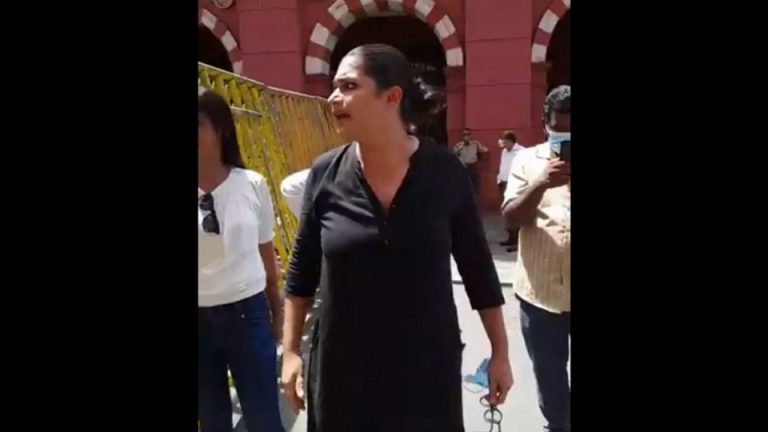
Protest in front of Court demanding justice for May 09 Assault (PHOTOS)

0

A protest was held in front of the Fort Magistrate Court today (26) demanding justice for the brutal assault on peaceful protesters in GalleFace and near Temple Trees on May 09.

Six persons arrested in connection with the assault including SLPP MPs Sanath Nishantha and Milan Jayathilake and self-crowned social sctivist Dan Priyasad were remanded till May 27 as per the order of the Magistrate Court today.

Meanwhile, the Magistrate Court also ordered the Inspector General of Police (IGP) to appear before the Court to inquire into why Senior Deputy Inspector General of Police in charge of the Western Province Deshabandu Thennakoon was not transferred as instructed by the Attorney General.

MIAP

Click Here to view full photos.

Afghan female judge awarded prestigious human rights prize

0

Fawzia Amini advocates for rights of Afghan women and girls from London hotel room she’s been stuck in for nine months

One of Afghanistan’s top female judges has been honoured with an international human rights award while she continues her work to advocate for her country’s women and girls from a London hotel.

Fawzia Amini, 48, fled Afghanistan last summer after the Taliban takeover of the country. She had been one of Afghanistan’s leading female judges, former head of the legal department at the Ministry of Women, senior judge in the supreme court, and head of the violence against women court.https://41eca668776c702b37082f32d898cd1c.safeframe.googlesyndication.com/safeframe/1-0-38/html/container.html?n=0

Amini is one of three Afghan women who have received this year’s Lantos Prize, a prestigious international human rights award from the Lantos Foundation for Human Rights and Justice. Previous recipients include the Dalai Lama and the Hong Kong human rights activist Joshua Wong.

The other two recipients of the prize, awarded to the women on 18 May in Washington DC, are the country’s first female tech CEO, Roya Mahboob, and Khalida Popal, co-founder and captain of Afghanistan’s first women’s soccer team. All three live abroad.

Amini, her husband and the couple’s four daughters, have been stuck in a London hotel for almost nine months along with thousands of other Afghans the UK government pledged to resettle here. Government sources have admitted there are still 12,000 Afghans in hotels, a number that has changed little since the end of November 2021, although government sources told the Guardian that officials have been working as fast as possible to move Afghan families into homes of their own. The sources described hotels as a “first step” and a “stopgap”.

The sources added that more than 6,000 people had moved – or were in the process of being moved – into permanent accommodation since the first rescue flights in June 2021.

Afghanistan’s Taliban rulers have begun enforcing an order requiring all female TV news presenters in the country to cover their faces while on air, as part of a hardline shift that has drawn condemnation from rights activists. Most female presenters have been seen with their faces covered after the Taliban’s Ministry for the Propagation of Virtue and the Prevention of Vice began enforcing the decree.

Amini remains focused on trying to rescue 93 female judges and their families who are at risk in Afghanistan, a figure that has not reduced in recent months.

She also continues to advocate for the rights of women and girls in Afghanistan, participating in secret Zoom sessions to educate girls and women about their basic rights. These rights appear to be increasingly disregarded by the Taliban who have reneged on their promise to allow girls to attend secondary schools, and have issued new restrictions on freedom of movement for women outside the home saying that they must cover themselves from head to toe if they venture out.

Amini told the Guardian that while she was delighted to have received the prestigious human rights prize she was increasingly fearful about the safety of women judges and the lack of rights for women and girls.

“I am so worried that so many girls are losing their opportunities. They have no hope, no jobs and no food.”

She said that while she and her family were very grateful to the UK government for rescuing them and very appreciative of the kindness shown to them and other Afghans by the British people, they, and around 100 other Afghans in the same hotel, had no idea when they would be moved to their own homes.

“Our children are attending school and my husband and I are attending college to improve our English. This hotel has become our community and our house.”

Australia players raise ethical concerns over cricket tour to Sri Lanka

Australia’s cricketers have raised ethical concerns about touring Sri Lanka but will support a decision from officials to proceed with next month’s tour. Australia are due to fly out to Sri Lanka next week, with the island country in the midst of an economical crisis and political unrest.

Sri Lanka was placed under a curfew early this month after protests turned deadly, and while those have been lifted rising inflation and shortages of key resources remain problematic.

Cricket Australia officials received further assurances last week that the tour was safe to go ahead, after a reconnaissance of the country by their own head of security in April also gave the go ahead.

Players are also buoyed by the fact Australia’s first tour to Pakistan in 24 years went off without any security dramas, despite instances of bloodshed in the country. But it is believed some players have stated unease about the morals around touring Sri Lanka in the current circumstances.

The three-match Twenty20 series will be played under lights in the capital of Colombo, in a nation where there are rolling power cuts. It is believed there was some recent consideration those matches could be changed to day games, but that has not yet been confirmed.

The team will also be moving across the nation for ODIs to be played in Pallekele before the Tests in Galle, at a time of significant fuel shortages. The Australian Cricketers Association are aware of the concerns of some players, but CEO Todd Greenberg said there was no suggestion its members would not tour.

“The players are very aware of the situation in Sri Lanka and it’s fair to say there is a level of discomfort around touring in conditions that contrast those faced by the people of Sri Lanka, such as rising food prices, power cuts and fuel rationing,” Greenberg told AAP.

“Ultimately our players want to continue to play cricket and will take direction, guidance and advice from CA about tour arrangements and planning.”

There is however also a belief that the tour going ahead can help Sri Lanka’s economy, with official figures showing inflation at a record of 33.8% year-on-year in April. Australia have not toured the country since 2016, and would be expected to drive big crowds in the matches in Colombo, Pallekele and Galle.

Led by Pat Cummins, Australia’s cricketers also drove a fundraising campaign with the United Nations during last year’s Indian Premier League at a time of a horror Covid-19 wave impacting the country. The charitable option is not as easy in Sri Lanka given the situation is not a humanitarian crisis, but players are open to the idea of offering support if possible.

“Our players are very fortunate to be able to ply their trade across the world, and as part of this, they form an affinity with the people from these countries,” Greenberg said.

“We saw an example of that last year when the players left the IPL in India during the Covid crisis and were genuinely shaken by they saw. Almost immediately, they coalesced their support behind a UNHCR campaign to raise funds and provide hospitals with much-needed oxygen.”

Police uncover hidden fuel stocks – 27,000 litres of petrol and 22,000 litres of diesel among them

0

Police have uncovered hidden fuel stocks and among them were 27,000 litres of petrol and 22,000 litres of diesel, revealed Police Spokesman, Senior Superintendent of Police Nihal Thalduwa.

These hidden stocks were uncovered during 429 raid carried out islandwide.

Meanwhile, 137 suspects accused of hiding fuel were arrested, he added.

MIAP

Sorry Mr. Governor, adjust the sail or quit the ship!

0

When you came to the office in early April, we had very high hopes of you. Yes, you yourself said you can’t do magic but we thought you will think out of the box and out of your theory books to fight the fire at home! But we were wrong sir! Instead of fighting fire with fire or any extinguishers, you started to guard the house! Sir, we don’t need a guard for a house under fire; we need a good fire fighter! The way you’re guarding the house will end up giving us only ashes and nothing else. Look at your decisions over the last five weeks! Very theoretical, non-practical due to ground situation, and subject to lots of assumptions! These are not the decisions that will take us anywhere but complete shut down and collapse of the economy.

You said you are against the printing of cash . Very theoretical and popular statement! Sir, no government wants to print cash if things are perfect . We run with a huge budget deficit and we are a subsidized economy. Everything in this country is subsidized! And our taxes are low. Instead of making popular statements against money printing, you should’ve said that we need to increase taxes drastically, both direct and indirect, and that we should get rid of most of our subsidies! Sir, you must fight the cause, not the symptoms. You know very well that money printing, and the inflation that results, are the best form of taxation across the board, but you selected the popular root! Yes, we can stop printing, but we must get rid of all the popular subsidies and all the wastages in the government sector and we must increase taxes. We must increase the productivity of every single working individual. That’s the long term solution to this crisis, but did you take (or at least suggest to the government) a single policy measure towards that? No.

Sir, all steps and policy decisions you have taken so far are directed towards starving the economy. It seems you try to discharge the patient by killing him and not by curing him! Yes, thats a one way of discharging the patient, but not the way we expected or want! Look at all your popular but theoretical policy decisions over the last one and half months.

No printing of cash, increasing the interest rate by almost 100%, directing exporters to not ask for dollars from banks, directing banks to follow the central bank indicative rates when quoting for dollars and then quoting artificial low indicative rates, declaring the holding of dollar notes illegal, no imports on open accounts, no LC without 100% cash margin, etc etc are all decisions directed towards starving the economy and its growth. These are all text book measures, but will not help increase the productivity, reduce inflation, or increase dollar inflows and government revenue. These are all typical measures of a watch dog or guard, but not of the dynamic fighter we wanted!

Please note that we are a crisis hit country. These text book measures are not resolving our issues. Our issue is the scarcity of dollars and the low government revenue. Our issue is not inflation or the depreciation of rupees. Inflation and rupee depreciation are only symptoms (AKA natural reactions) of those issues. You try to focus on reactions, but treating the reactions instead of the cause will end with the patient dying! Did any of your measures so far result in attracting one additional dollar to the country? One additional rupee to the government revenue? Did any of those measures help to reactivate the economy or its productivity? No.

You increased the policy interest rate by 100%. You expected this will control the inflation? Yes. Only in theories sir! Our inflation is not a result of consumers consuming more, as you appear think, but because of the scarcity of goods, or the increase of import cost . Import costs went up because of world issues and rupee depreciation. Rupee depreciated happened because we ran out of dollars! By increasing interest to such high levels , you will kill all local industries and investments. You know very well that no producer or business in Sri Lanka can make 25/30% return risk free , specially after paying a proposed 40% income tax. So, what do you want? Everyone to stop doing production or business but instead invest that money in government treasury bills at 25% and sleep? Is that your method of increasing the productivity of the country and reducing inflation?

You asked exporters to refrain from asking dollars from the bank. If they can’t ask from banks to where they are remitting the dollars, from where do you want them to ask dollars? From the black market or from your grandma? If exporters can’t import using there export proceeds, whatever the inputs they need, how do they continue export businesses? If exporters can’t use their dollars, why do they continue exports ?

You declared that you are going to illegalize holding dollar notes! You think just because you declare that, people will come in queues and deposit their dollar notes in the banks? You will not get a penny, sir! People hold dollar notes because they don’t believe in rupees, and they know that the rupee will get depreciated much further, even though you artificially hold it lower. Are you going to send CID or the police to every household to find hidden dollars? Sir, you need to learn something very important. Never give false indications to the public that you are in control of something when you are not! By doing so, you take upon yourself the responsibility of something which is out of your control, and the public will loose confidence in the institution and the system itself . Your predecessor made that mistake in style! That’s why you are here, so don’t get yourself thrown into the same dustbin!

You declared that you are banning the open account imports to control or curb the Undial/Havala system! Very good, if you can do it, but make sure the imports are available to the public. If you cannot make the foreign currency available for those importers to import goods through your theory book policy measures, there’s no point in you curbing the informal market. When the tap water runs dry, people will dig wells whether it is authorized or unauthorized! Your responsibility is to ensure the smooth flow of tap water, and when you have failed in your responsibility, there’s no point in barking at well water! People will dig for their survival regardless!

Finally sir, please remember, economic theories in text books wont work in a collapsed, bankrupt, destroyed economy. You were witnessing the systematic distraction for 35 years but never raised your voice, when you were inside that system. You are now trying to rescue a sunken ship of which you yourself was a member of crew for 35 years! Now, what matters are not your theories but the ground reality! That reality will run the system beyond all your theories! Look at it from Far East to the west. Look at it from East Asian countries to Asian countries to middle eastern countries to the African continent to the South American continent! Every country which went through these kinds of economic calamities and disturbances went through a particular cycle of recovery. We are not an exception. We will have high inflation, high depreciation of currency, higher printing of money, higher circulation of dollars among the public, higher taxes, higher incomes, higher expenses, higher prices for everything, and virtually, over a short to medium term, everything will get repriced, and that repricing will compel our labour force, our entrepreneurs, and our country to increase productivity for survival and then for growth. Once our productivity as a nation goes up, we will start to sail again !

That’s where the wind is blowing. It’s best you adjust your sail, or quit the ship ! What matters for us is the journey, the passengers, and the ship, not the captain!
Forwarded as received.

Rs. 30,000 cut off from medical officers’ salary – GMOA to take stern action

0

The authorities are preparing to slash public servants’ salaries in a move to solve the economic crisis befallen the government, alleged the Government Medical Officers’ Association (GMOA).

Speaking to media, Union Central Committee member Dr. Prasad Colombage said the authorities have decided to slash the allowances in excess of their salaries and as a result more than Rs. 30,000 has already been deducted from the salaries of the medical officers.

In the backdrop, many doctors are disillusioned and are expecting to leave the country, he divulged.

The Union Central Committee member also warned that the GMOA may take stern actions should the government fail to rectify this unjust decision.

MIAP

SJB prepared for an election!

0

The Samagi Jana Balawegaya (SJB) no longer has any MPs to join the government for anyone willing to should have already gone with those who had left the Party, said Party Secretary General MP Ranjith Madduma Bandara.

Accordingly, the memberships of those who had collected ministries in the present government have been suspended and they have been informed to defend themselves, the SJB Secretary General told media.

Bandara also added that based on the responses, further actions can be taken and that the Party’s Working Committee has concluded that the SJB will be prepared for the holding of an election.

Meanwhile, sources claimed that 40 more state ministers are about to be sworn in today, and among them are also SJB MPs.

MIAP

Easter Sunday Massacre: Two more suspects granted bail!

0

Two more major suspects arrested and remanded in connection with the Easter Sunday Massacre have been released on bail as per the order of the Fort Magistrate Court today (25).

Accordingly, the father and a brother of suicide bombers Mohammed Ilham and Mohammed Insaaf have been released on a Rs. 200,000 cash bail and three sureties of Rs. 01 million each.

The two suspects’ foreign travels will be banned and they are expected to appear before the Criminal Investigation Department (CID) on the first and last Sundays of each month, the Court ordered.

The Court, however, denied bail to the Suspect No 03 to the case.

MIAP

WB’s Special Statement on SL

0

World Bank Statement on Sri Lanka

WASHINGTON, May 24, 2022—The World Bank today issued the following statement on Sri Lanka:

“Recent media reports have inaccurately stated that the World Bank is planning support for Sri Lanka in the form of a bridge loan or new loan commitments, among other incorrect assertions.

We are concerned for the people of Sri Lanka and are working in coordination with the IMF and other development partners in advising on appropriate policies to restore economic stability and broad-based growth. Until an adequate macroeconomic policy framework is in place, the World Bank does not plan to offer new financing to Sri Lanka.

We are currently repurposing resources from previously approved projects to help the government with some essential medicines, temporary cash transfers for poor and vulnerable households, school meals for children of vulnerable families, and support for farmers and small businesses.”