December 23, Colombo (LNW): Police across the country arrested more than 1,000 individuals yesterday (22) as part of the “Nation United – National Drive” campaign, a major initiative targeting illegal drug activity.
During the coordinated operations, authorities secured detention orders for 22 people, while 20 others were referred to rehabilitation centres.
The campaign aims to tackle the country’s drug problem through a comprehensive approach, combining law enforcement with prevention and rehabilitation efforts.
Authorities plan to disrupt drug supply chains, reduce demand, expand enforcement actions, and empower communities to resist the influence of narcotics.
The Police Media Division reported that officers recovered significant quantities of illicit substances, including 354 grams of heroin, 529 grams of crystal methamphetamine (commonly known as ‘Ice’), 124.282 kilograms of cannabis, 115,176 cannabis plants, 14 grams of kush, 284 grams of hashish, 791 grams of narcotics tablets, 42.7 grams of ‘Madana Modaka’, and 1.598 kilograms of ‘Maava’.
Another 1,000 Arrested in Nationwide Anti-Drug Sweep

X-Press Pearl Disaster: Law, Risk and the Limits of Accountability
By: Staff Writer
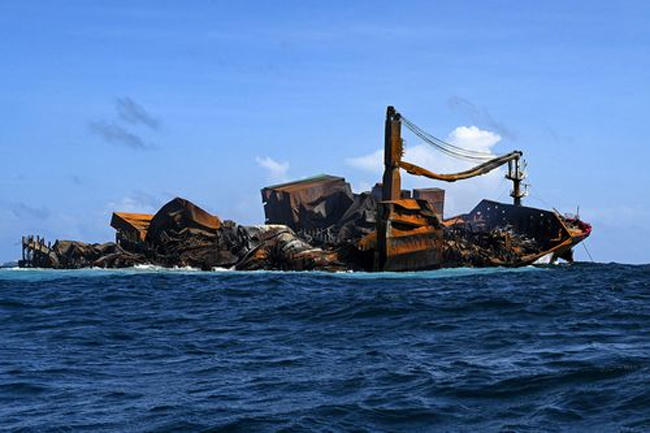
December 23, Colombo (LNW): The sinking of the MV X-Press Pearl off Sri Lanka’s western coast in June 2021 marked a defining moment for the country’s maritime history. What began as a shipboard fire escalated into an environmental catastrophe, releasing toxic substances, oil residue and billions of plastic pellets into the sea. Coastal ecosystems were damaged, fishing communities were disrupted and the long-term environmental consequences remain only partially understood.
In the years since, Sri Lanka’s legal system has sought accountability through domestic judicial processes, culminating in a Supreme Court ruling that ordered compensation in relation to the disaster. Yet responses from Singaporean public relations agencies—acting on behalf of maritime stakeholders—have made clear that Singapore does not accept an obligation to pay compensation under that ruling. Their position, however, is not framed as defiance, but as a reflection of how Singapore interprets international law, commercial risk and its role within global shipping.
A Legal Divide Between National Justice and International Enforcement
At the core of Singapore’s position is a clear distinction between judicial authority and enforceability. While the Sri Lankan court’s ruling is acknowledged as valid within Sri Lanka, Singapore’s response stresses that such decisions do not automatically carry weight beyond national borders. From this perspective, enforcement is not a matter of sympathy or morality, but of legal process.
Singapore’s agencies argue that international shipping operates within a framework where liability must be determined through globally recognised mechanisms—such as arbitration, international conventions or treaty-based cooperation. Accepting a domestic court ruling as enforceable abroad, they contend, would blur the lines between national sovereignty and international jurisdiction, introducing uncertainty into a system that depends on legal clarity.
Fear of Unintended Consequences in a High-Stakes Industry
More than legal theory is at stake. Shipping is an industry governed by risk calculation, insurance modelling and long-term confidence. Singapore’s communications reveal a strong concern that accepting unilateral compensation demands could alter how risk is priced across global maritime trade.
If operators believe they may be exposed to large, foreign-imposed liabilities without predictable legal pathways, the consequences could extend beyond a single case. Insurance premiums could rise, vessel routing decisions could change, and registration under certain flags could become less attractive. Singapore, positioning itself as a stable maritime hub, is acutely sensitive to any development that might weaken that perception.
Responsibility Beyond a Single Shoreline
Singapore’s narrative also reframes the X-Press Pearl disaster as a cumulative failure rather than a singular event confined to Sri Lankan waters. By highlighting earlier missed opportunities to intervene when the vessel was already experiencing hazardous cargo issues elsewhere, the response places the disaster within a broader regional context.
This framing does not deny the damage suffered by Sri Lanka, but it questions whether accountability can reasonably be assigned without examining decisions made across multiple ports and jurisdictions. In Singapore’s telling, the tragedy exposes a systemic weakness in how the global maritime system handles vessels in distress—particularly the absence of binding obligations on ports to provide assistance when risks are identified early.
Reputation, Confidence and the Indian Ocean Shipping Corridor
The Singaporean response also touches on reputational risk—not just for Singapore, but for the wider region. Prolonged uncertainty surrounding the X-Press Pearl dispute, they suggest, reinforces perceptions of instability in the Indian Ocean shipping corridor. This matters at a time when ports across South Asia are competing for transshipment traffic, investment and strategic relevance.
From this viewpoint, unresolved legal battles do not merely seek justice for past harm; they actively shape future commercial decisions. Singapore’s position implies that without internationally aligned solutions, compensation disputes risk becoming signals of unpredictability rather than instruments of reform.
Retrospective Penalties or a Call for Structural Solutions?
Rather than focusing solely on compensation, Singapore’s communications emphasise prevention and systemic reform. The disaster, in their assessment, highlights the absence of enforceable global standards governing port responsibility, emergency refuge and early intervention. Without these, similar incidents are likely to recur—regardless of how compensation disputes are resolved after the fact.
This emphasis shifts the conversation away from individual blame towards institutional failure. Singapore’s refusal to pay, as framed by its PR agencies, is thus presented not as rejection of accountability, but as resistance to addressing global problems through fragmented national actions.
Conclusion
Singapore’s stance on the X-Press Pearl compensation reflects a broader philosophy about how international shipping should be governed. It prioritises legal consistency, risk predictability and systemic reform over case-by-case enforcement of domestic rulings beyond national borders. While Sri Lanka continues to seek redress for one of its worst maritime disasters, Singapore’s response underscores the limitations of existing global frameworks—and the unresolved tension between national justice and international commerce. The tragedy of the X-Press Pearl, in this sense, has become as much a test of global maritime governance as it is a question of compensation.
Colombo Council Budget Defeat Won’t Topple Administration, Experts Say
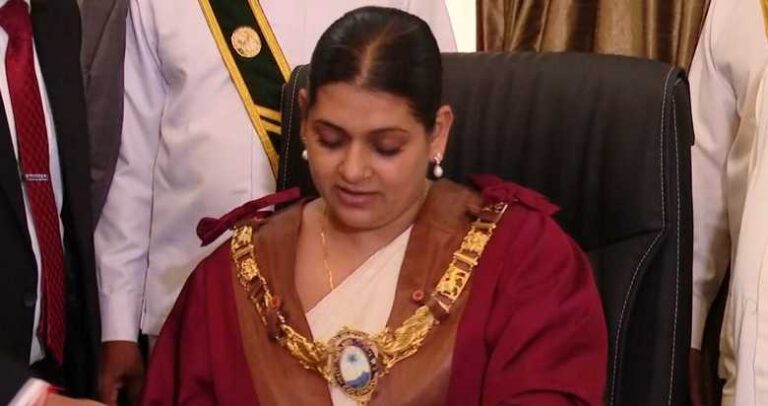
Gajanayake, executive director of the Institute for Democratic Reforms and Electoral Studies, explained that local government leaders in Sri Lanka enjoy legal protection against removal within the first two years of their term, even if their budget proposals are rejected.
“There is simply no provision that allows a municipal council or its mayor to be ousted within this period solely because of a budget defeat,” he stated, emphasising that the rules governing local authorities differ from those of Parliament.
The National People’s Power (NPP) administration saw its budget for the Colombo Municipal Council turned down on 22 December, following a coordinated vote against the estimates by opposition councillors.
Under the Local Authorities (Special Provisions) Act No. 21 of 2012, councils whose budgets fail can resubmit revised proposals within a fortnight. Should these be rejected again, the mayor is authorised to implement the original budget using executive powers.
“This framework ensures uninterrupted governance for a full two years, shielding councils from sudden political shifts,” Gajanayake noted. “Even repeated budget losses do not jeopardise the administration during this protected window.”
He added that a mayor or chairperson can only be removed through resignation, death, disciplinary action by their political party, or formal misconduct proceedings initiated via the governor — not through votes on budgets during the initial two years.
While the rejection of the budget carries no immediate legal consequences, Gajanayake warned it could have political ramifications, potentially limiting the ruling party’s capacity to pass measures and manage council affairs smoothly.
“The impact is primarily political rather than institutional,” he concluded, highlighting the difference between administrative stability and political pressure.
Sri Lanka Launches Major Funding Initiative to Turn Research into Market-Ready Innovations
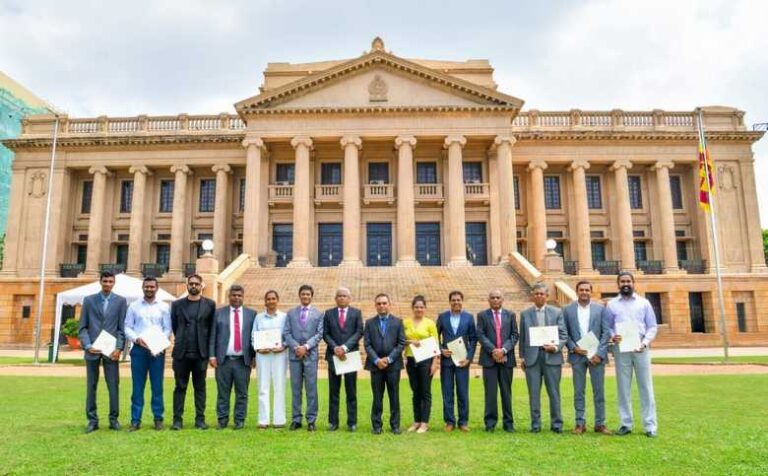
December 23, Colombo (LNW): Yesterday (22), the Presidential Secretariat hosted a ceremony marking the presentation of certificates and the signing of Memoranda of Understanding (MoUs) for nine innovative projects selected under the National Initiative for the Commercialisation of Research and Development (NIRDC).
The projects were chosen from proposals submitted during the first quarter of this year.
Collectively, the projects will receive over LKR 227 million in funding, with certificates handed out by Secretary to the President, Dr. Nandika Sanath Kumanayake, and the President’s Senior Advisor on Science and Technology, Professor Gomika Udugamasooriya.
Financial backing for the initiative will be provided by the Bank of Ceylon, with the funding agreement signed between Dr. Kumanayake and the Bank’s CEO, Mr. Y.A. Jayathilaka. Funds will be released in stages, contingent on the progress of each project as measured against agreed Key Performance Indicators (KPIs).
The nine projects recognised at the event include:
1. Vx Safenet – A child-friendly digital wellbeing platform leveraging telecommunication networks; represented by Mr. Theekshana Kumara of Visuamatix (Pvt) Ltd.
2. Volfpack Energy Supercapacitor Project – Employing advanced materials like Fractal Graphene and Activated Carbon Supercapacitors, led by Mr. Sanjeewa Karunaratne.
3. Cold Brewed Cinnamon Extraction – Producing nutrient-rich cinnamon extracts free of chemicals and additives, by Mr. Muditha Jayathilaka of Pure Cinnamon Exports (Pvt) Ltd.
4. Rapid Coconut Oil Purity Testing Device – A portable, high-tech device developed at the University of Colombo’s Aloka Laboratory, represented by Professor G.K.D.S. Jayaneththi.
5. Samanala Farm Project – Highlighting innovative Sri Lankan tea cultivation, with Mrs. Pabasara Manthunga receiving the certificate.
6. Sinhala AI Chatbot – A voice-enabled AI system designed to enhance government services and accessibility for visually impaired users, led by Dr. Randil Pushpananda.
7. Planet’s Pick Holdings – Creating naturally healthy Kitul-based beverages and fat-free milk alternatives, represented by Mr. Kapila Wijesekera.
8. TDR Knitting Project – Empowering women in rural regions through export-focused knitting technology, led by Mrs. Lakmali Wanasinghe.
9. “Magic-grow” Soil Microbial Activator – Boosting agricultural yields using locally sourced microorganisms, with Mr. Wasala Siriwardana as the project lead.
Dr. Kumanayake emphasised that bringing research from the lab to the marketplace will add a fresh dimension to Sri Lanka’s economy, offering both economic and developmental benefits. Minister of Science and Technology, Krishantha Abeysinghe, noted that fourteen institutions under his Ministry are ready to support research commercialisation, with universities, agricultural, irrigation, and health institutions prioritised in this effort.
Highlighting the country’s evolving approach to innovation, Minister of Health and Mass Media, Dr. Nalinda Jayatissa, stated that research must focus on practical solutions to pressing societal challenges, including non-communicable diseases. He stressed that the government’s vision, articulated in the “A Thriving Nation – A Beautiful Life” initiative, requires coordinated and evidence-based research efforts across all sectors.
Professor Udugamasooriya added that the government’s production-driven economic strategy relies heavily on value-added goods and services, which in turn depend on effective research and development. NIRDC is designed to bridge the gap between completed research and market-ready products, addressing challenges such as funding shortfalls and operational obstacles, and connecting researchers with potential investors—an approach unprecedented in Sri Lanka.
During this first funding round, NIRDC received proposals totalling approximately LKR 2.2 billion. A rigorous, multi-stage evaluation process, involving technical, administrative, financial, and commercial viability assessments by around 200 independent experts, was used to select the nine successful projects.
The vote of thanks was delivered by Mr. Muditha D. Senarath Yapa, Director General of NIRDC.
The event was attended by a distinguished gathering, including government ministers, the Central Bank Governor, senior advisors to the President, heads of research institutions, university vice-chancellors, banking executives, and scholars.
Sri Lanka to Expand Sanitary Napkin Programme for Schoolgirls Nationwide
December 23, Colombo (LNW): From 2026, the government will extend its national initiative providing sanitary napkins to schoolgirls across Sri Lanka, reaching more than one million students from Grade 6 upwards, Prime Minister and Minister of Education Dr Harini Amarasuriya announced.
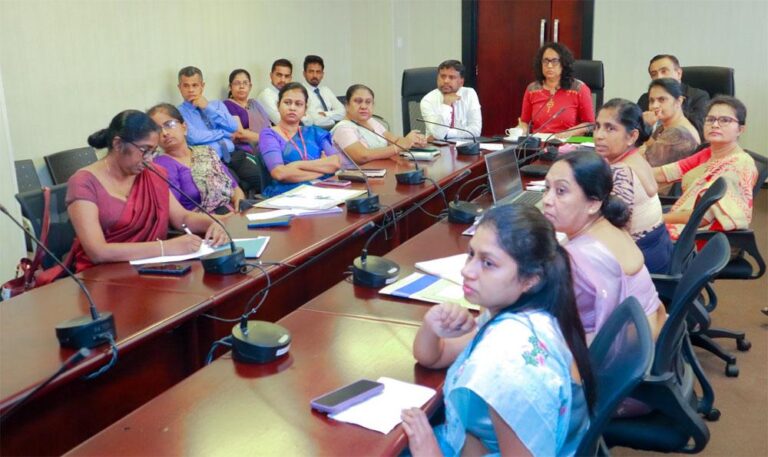
The decision was revealed during a consultation on school hygiene held at the Education Ministry yesterday (22), with Deputy Minister Dr Madura Seneviratne also attending.
Originally launched in 2024 to assist girls in rural, estate, and economically disadvantaged areas, the programme will now be implemented in all schools nationwide. The government has allocated Rs. 1.44 billion for the scheme, which will provide each eligible student with an annual voucher valued at Rs. 1,440 to purchase sanitary napkins. Vouchers will be distributed to schools via the Provincial Education Offices.
To ensure safety and hygiene, only products supplied by institutions certified by the Sri Lanka Standards Institution (SLSI) will be approved under the programme.
During the discussion, Dr Amarasuriya emphasised the importance of allowing students to select sanitary products that meet their individual needs. Officials were instructed to develop voucher and distribution systems that consider regional differences and encourage environmentally responsible disposal practices in schools.
Education Ministry Secretary Nalaka Kaluwewa and other senior officials were present at the event.
High-Level Chinese Delegation Arrives in Sri Lanka to Strengthen Bilateral Ties
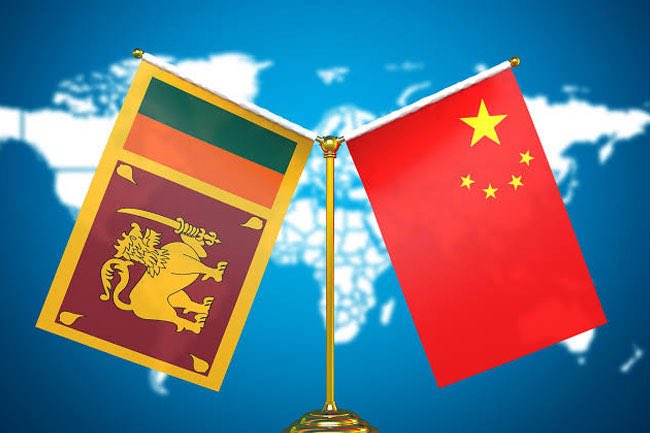
December 23, Colombo (LNW): A senior Chinese delegation, led by Wang Junzheng, a member of the 20th Central Committee of the Communist Party of China and Secretary of the CPC Committee of the Xizang Autonomous Region, arrived in Sri Lanka earlier today (23).
The group, consisting of 11 officials, touched down at approximately 9.45 a.m. on a SriLankan Airlines flight, according to local reporters. The delegation was formally welcomed at the airport by the Chinese Ambassador to Sri Lanka and Minister of Ports and Civil Aviation Anura Karunathilaka.
In an official post on X (formerly Twitter), the Chinese Embassy in Colombo highlighted that the visit is intended to strengthen friendship between China and Sri Lanka, foster mutual understanding, and expand areas of practical cooperation, including trade, infrastructure, and cultural exchanges.
🇨🇳🇱🇰To promote China-Sri Lanka friendship, deepen mutual understanding and enhance practical cooperation, Hon. Mr. Wang Junzheng, Member of the 20th Central Committee of the Communist Party of China(CPC) and Secretary of the CPC Committee of Xizang Autonomous Region, will lead a… pic.twitter.com/DUNrzGC57s
— Chinese Embassy in Sri Lanka (@ChinaEmbSL) December 21, 2025
India Unveils $450 Million Support Package for Sri Lanka’s Reconstruction Efforts
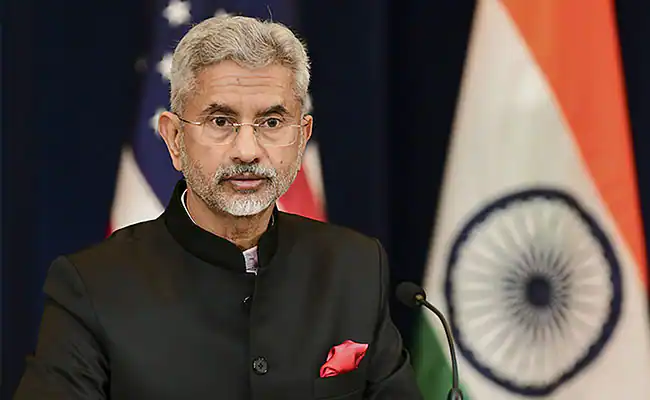
December 23, Colombo (LNW): India’s External Affairs Minister S. Jaishankar has announced a substantial financial assistance package worth US$ 450 million to support Sri Lanka’s ongoing reconstruction and recovery initiatives.
The package includes US$ 350 million in concessionary credit, aimed at funding development post-Ditwah catastrophe, along with a US$ 100 million grant to provide direct support for urgent needs.
Indian officials indicated that the assistance is designed to help strengthen infrastructure, restore essential services and ease economic pressures as Sri Lanka continues its recovery process.
My remarks alongside FM @HMVijithaHerath of Sri Lanka in Colombo. #NeighbourhoodFirst #VisionMAHASAGAR
— Dr. S. Jaishankar (@DrSJaishankar) December 23, 2025
🇮🇳 🇱🇰 https://t.co/pj1ORYEqXn
Sooriyakanda Constable Granted Bail in Dispute Involving NPP MP
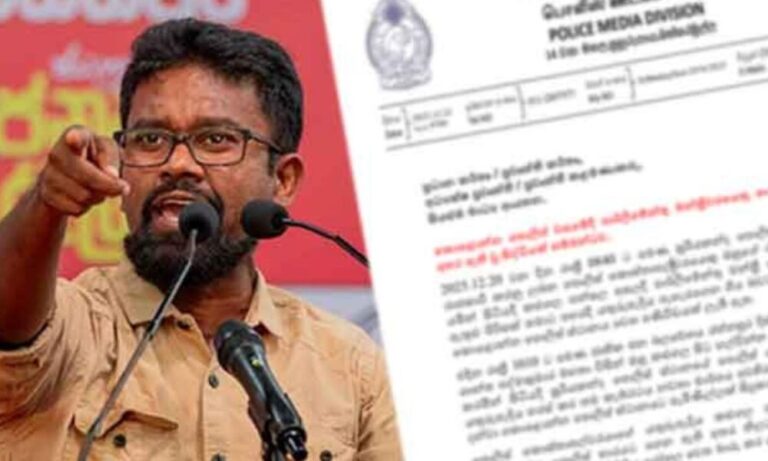
December 23, Colombo (LNW): A police constable attached to the Sooriyakanda Police Station, who was taken into custody following a reported altercation involving National People’s Power (NPP) parliamentarian Shantha Pathma Kumara, has been released on bail, police confirmed.
The officer was produced before the Embilipitiya Magistrate’s Court yesterday and released on two sureties of Rs. 200,000 each. The matter has been scheduled to be taken up again on January 26, 2026.
Police said the incident stems from complaints filed by both parties on the night of 20 December. The constable initially reported that he had been assaulted near the Kalugala Temple by the MP and several others, and claimed that his motorcycle had been forcibly removed during the confrontation.
Later that night, MP Shantha Pathma Kumara submitted a separate complaint, alleging that the officer had blocked the road by positioning a motorcycle in front of his cab and had attempted to attack him.
Following the incident, the constable was admitted to hospital for treatment. Medical notes recorded the presence of alcohol on his breath, according to police. While urine tests reportedly showed no evidence of narcotic substances, blood samples have been sent to the Government Analyst’s Department to determine whether alcohol was consumed.
Subsequently, the constable was arrested in connection with the incident on multiple charges, including wrongful obstruction, as investigations into the conflicting accounts continue.
Majority of Disaster Relief Payments Released as Authorities Move to Complete Balance
December 23, Colombo (LNW): The National Disaster Relief Services Centre has confirmed that a significant portion of the Rs. 25,000 assistance package allocated to families affected by recent disasters has already been distributed.
Assistant Secretary Jayathissa Munasinghe said that around 77 per cent of the approved payments have been made so far, with the remaining balance expected to be settled within the coming days. He noted that the disbursement process is now in its final phase.
According to official figures, relief funds have been released to 342,952 eligible households, while payments to a further 113,294 homes are still pending. To date, a total of Rs. 8,573 million has been paid out under the programme.
Munasinghe has urged Divisional and District Secretaries to give priority to completing the outstanding transfers and ensure that all eligible recipients receive their allowance by the end of the week, allowing affected families to move forward with recovery efforts without further delay.
Examinations Department Issues Special Notice to A-Level Candidates Affected by Disasters
December 23, Colombo (LNW): The Department of Examinations has called on candidates sitting for postponed subjects of this year’s G.C.E. Advanced Level examination to promptly report any changes to their place of residence resulting from recent disasters.
Commissioner General of Examinations, Indika Kumari, said students are required to inform either their school principal or the Department of Examinations if they have relocated. She added that the department has made dedicated contact lines available to facilitate this process and ensure affected candidates are properly assisted.
She explained that students who are unable to attend the examination centre originally allocated to them due to relocation must notify the authorities in advance. Based on the information provided, alternative arrangements will be made to assign an examination centre closer to their current location or within their new district, particularly for those displaced by adverse conditions. The same arrangements will apply to private candidates.
The Commissioner General also advised students to immediately seek guidance if essential documents, such as admission cards or National Identity Cards, have been lost or damaged. In such situations, candidates will be permitted to sit the examination by submitting two certified photographs. For school candidates, the photographs must be endorsed by both the relevant Zonal Education Officer and the school principal to confirm their identity.