Home Blog Page 2278

Govt. has not only removed the control prices of goods but also has completely neglected them – Dayasiri

0

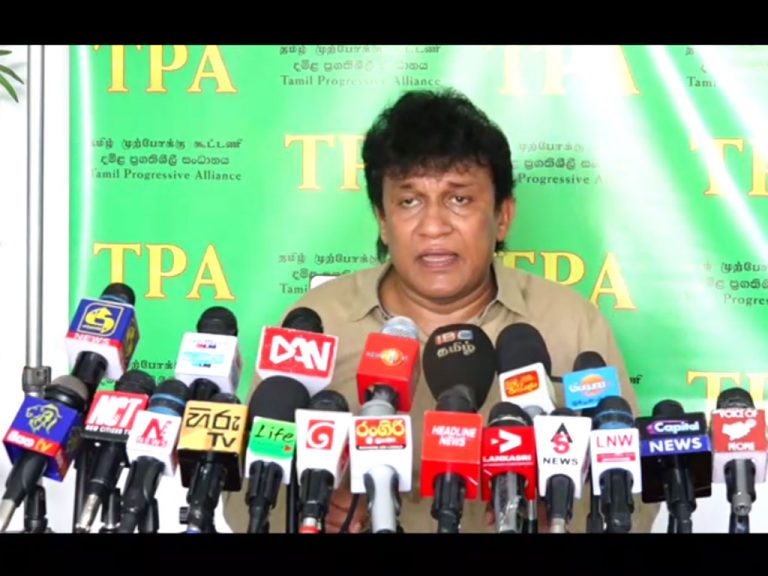
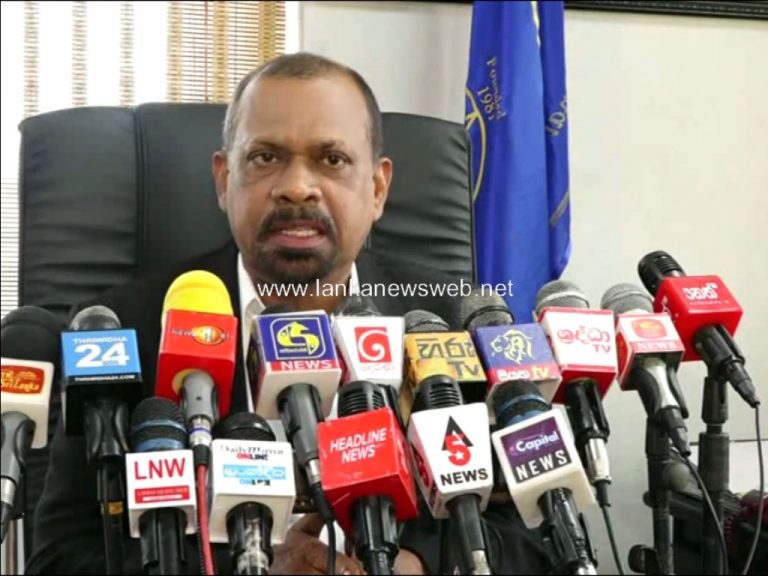
Dayasiri Jayasekara, Secretary-General of the Sri Lanka Freedom Party and Minister of State says that the government has not only removed the control prices of goods but also completely neglected the price controls, and now it is a serious problem that traders set prices as they see fit.

Dayasiri Jayasekara stated this addressing a media briefing held yesterday (18).

However, the Minister in charge of Consumer Affairs is Lasantha Alagiyawanna of the Sri Lanka Freedom Party, of which Dayasiri Jayasekara is the General Secretary.

Akila Ellawala infected with the Covid-19

0

SLPP Ratnapura District Parliamentarian Akila Ellawala has also been infected with the Covid-19.

He says that this has been confirmed by a PCR test conducted yesterday (18).

Over the past month, more than 15 MPs have been infected with Covid-19.

Sri Lanka records highest BOP deficit of US$ 3,961 million

0

Sri Lanka has recorded a balance of payments deficit of 3,961 million US dollars, the highest in the central bank’s history, data showed, as record money printing boosted domestic consumption and investment and reserves were lost for debt and imports.

By the end of 2021 Sri Lanka has seen three years of balance of payments deficits without a correction in monetary policy.

After three years of money printing, inflation has surged to 14.2 percent by January 2022.

Sri Lanka’s gross foreign reserves dropped 24 percent to 2,361 million US dollars in January 2022 from 3,137 million US dollars in December 2021 data showed, amid debt repayments and possible interventions.

The country received a 400 million US dollar swap from India in January and repaid a 500 million US dollar sovereign bond. It’s expecting another US$ 1 billion from India to tide over the storm.

Tourism earnings have increased but foreign remittances continue its downward trend forcing the government to borrow more dollars from foreign donors and if it runs out of potential lenders, it surely runs into problems.several eminent economists warned.

Earnings from tourism have increased to $ 268.3 million in December 2021 compared 4 5.5 million in the same month in 2020 while foreign remittance fell to $325.2 million in December 2021 from $812.7 in the same month in 2020, Central Bank data showed.

The reserve money decreased compared to the previous week mainly due to the decrease in deposits held by the commercial banks with the Central Bank.

The total outstanding market liquidity was a deficit of Rs. 693.539 bn by end of this week, compared to a deficit of Rs. 617.991 bn by the end of last week Broad money (M2b ) expanded by 13.2 per cent, on a Y-o-Y basis, in December 2021.

Net Credit to the Government from the banking system increased by Rs. 212.5 billion in December 2021. Outstanding credit to public corporations increased by Rs. 3.4 bn in December 2021.

Outstanding credit extended to the private sector increased by Rs. 61.3 bn in December 2021 During the period from January to November 2021, government revenue increased to Rs. 1,322.0 bn compared to Rs. 1,259.1 bn recorded in the corresponding period of 2020, Central BANK’

During the period from January to November 2021, total expenditure increased to Rs.3,033.4 bn compared to Rs. 2,838.5 bn recorded in the corresponding period of 2020.

During the period from January to November 2021, overall budget deficit increased to Rs. 1,709.3 bn compared to Rs. 1,576.4 bn recorded in the corresponding period of the previous year.

During the period from January to November 2021, domestic financing decreased to Rs. 1,812.3 bn compared to Rs. 1,822.8 bn in the corresponding period of 2020.

Foreign financing recorded a net repayment of Rs. 103.1 bn during the period from January to November 2021 compared to a net repayment of Rs. 246.2 bn recorded in the corresponding period of 2020.

During the year up to 18th February 2022, the Sri Lankan rupee depreciated against the US dollar by 0.8 per cent.

Outstanding central government debt increased to Rs. 17,413.7 bn by end November 2021 from Rs. 15,117.2 bn as at end 2020.

Since end 2020, total outstanding domestic debt increased by 20.4 per cent to Rs. 10,914.9 bn, and the rupee value of total outstanding foreign debt increased by 7.4 per cent to Rs. 6,498.8 bn by end November 2021.

Sri Lanka’s gross foreign reserves dropped 24 percent to 2,361 million US dollars in January 2022 from 3,137 million US dollars in December 2021 data showed, amid debt repayments and possible interventions.

Sri Lanka got a 400 million US dollar swap from India in January and repaid a 500 million US dollar sovereign bond.

Sri Lanka also had to pay some dollar denominated local law bonds after most of them failed to be rolled over.

SLT Group records over Rs 100 billion turnover; profit up 54%

0

Sri Lanka Telecom PLC (SLT) Group has concluded the financial year 2021 on a high note, recording a turnover of Rs. 102.3 billion for the year ended 31 December 2021 marking a top line growth of 12.3% year-on-year.

The Group’s sustained growth resulted in a Profit after Tax (PAT) of Rs. 12.2 billion, a growth of 54.3% as compared to the previous year.

Group profits were propelled forward by robust performances by multiple business segments.

The EBITDA of the Group grew at 16.6% during the period on the backdrop of Operating Profit growth of 19.0%.SLT’s sustained investment on expanding fibre connectivity (FTTH) and significant expansions and upgrades in the 4G/LTE network resulted in the surge in Broadband revenue during the year. 

Further, SLT experienced a revenue growth in PEO TV in a market receptive to quality education and entertainment options online, expanding to hitherto untapped markets during the year under review.

Xyntac, the Global unit of SLT-Mobitel adds strength to the overall business, with the investment in the new SEA-ME-WE 6 cable, set to elevate Sri Lanka’s global connectivity capacity to the next level.

The state-of-the-art data centre that bolsters the digital capabilities of SLT-Mobitel, and the Akaza multi-cloud platform too continue to add value to the company.

SLT Group Chairman Rohan Fernando said: “Looking back on 2021, I can proudly say that we have achieved way beyond what we expected and closed the year with an all-time best record in every aspect may it be financial, corporate governance or above all else national responsibility.

Group revenue for Q4 2021 grew by 7.5% compared to the same quarter of the previous year to Rs. 25.7 billion, with the EBITDA and Operating Profit growing by 21.3% and 34.8% respectively.The Group Profit After Tax (PAT) for the quarter climbed to Rs. 3.0 billion, a 162.9% year-on-year growth.

“The divesting of our non-core businesses has brought in good results and will now allow us single-minded focus on our core businesses, allowing us to propel SLT Group’s to the pinnacle of digital leadership.The Group is passionate to cement our leadership in the industry and meet the competition head on, and with a commitment to inclusive management, we will work as one team to achieve our business goals as SLT-Mobitel,” SLT Group CEO Lalith Seneviratne said.

The holding company of the Group, Sri Lanka Telecom PLC (SLT) recorded an impressive 16.0% increase in revenue over the last year reaching Rs. 59.8 billion. The PAT of the company went up to Rs. 5.9 billion, reflecting a 45.9% year-on-year growth. The company saw a heightened growth in revenues from Broadband, PEOTV and Carrier Domestic services during the year compared to the year before.

Mobitel Ltd., the mobile arm of the Group recorded its highest profits in its 28-year history with a PAT of Rs. 8 billion. marking a growth of 63.8% in PAT year-on-year. The growth was mainly driven by the Broadband segment. 

Despite the adverse macroeconomic conditions and other challenges, Mobitel recorded a revenue of Rs. 47.1 billion, a noteworthy 8.7% year-on-year growth compared to the previous year.

THE MESSAGE FROM H.E. MR. SERGEY LAVROV, MINISTER OF FOREIGN AFFAIRS OF THE RUSSIAN FEDERATION

0

H.E. PROF. GAMINI LAKSHMAN PEIRIS, FOREIGN MINISTER OF THE DEMOCRATIC SOCIALIST REPUBLIC OF SRI LANKA
Colombo

Dear Mr. Minister,
Please accept sincere congratulations on the occasion of 65th anniversary of the establishment of the diplomatic relations between the Russian Federation and the Democratic Socialist Republic of Sri Lanka.

Our countries have been linked by close bonds of friendship and mutual respect for more than half a century. We maintain a continuous political dialogue, successfully cooperate in the UN and other international organizations, strengthen bilateral business relations. Similar approaches to the present crucial issues create favorable conditions for strengthening cooperation in the practical spheres. We are confident that the further consistent development of the Russian-Sri Lankan relations fully meets the interests of peoples of both countries and contributes to peace and stability in Asia.

I would also like to take this opportunity to wish you, Mr. Peiris, as well as all colleagues in the Foreign Ministry every success and prosperity.

SERGEY LAVROV
Moscow, February 19, 2022

SRI LANKA: The Contempt of Court Law and Practice In Sri Lanka Violates the International Law and Sri Lankan Constitution

0

Asian Human Rights Commission (AHRC) , a Regional Human Rights Organization, having seriouslyobserved and studied the manner in which the Contempt of Court law and the way it is practiceLin Sri Lanka, wish to express its deep concern over the violations of International law and the Sri Lankan Constitution itself, by depriving protection of law to the persons accused of this offence.

AHRC is particularly concerned about the manner Article 105 (3) Of Sri Lanka’s Constitution has been interpreted in a manner that violates International Law and the Constitution of nSri Lanka, 
The reasons on which this concern is based are set out below.

The manner in which the power given to the Supreme Court under Article 105 (3) has been used in the recent past, requires a review, particularly regarding the case of Michael Emmanuel Fernando (No: 1189/2003 U.N. Doc. CCPR/C/83/D/2003 (2005)), the case of S.B Dissanayake (U.N. Doc. CCPR/93/D/1373/2005, Communication No. 1373/2005), and the case of Ranjan Ramanayake (SC Rule No. 1/2018).

Our concerns are as follows:

Disproportionate Punishment as illegal Detention

In all three of these cases, the sentences that have been meted out by way of imprisonment. In the case of Fernando, for one year rigorous imprisonment for allegedly talking loud in court; in the case of S. B Dissayanayake for speaking the word ‘‘shameful court’ in a public meeting outside courts, two years rigorous imprisonment; in the case of Ranjan Ramanayake referring to judicial corruption for which he was sentenced to rigorous imprisonment for four years plus the loss of participation in elections for seven years. In the first two cases, the United Nations Human Rights Committee, having considered the communications made to it by Fernando and Dissanayake, held that these sentences of imprisonments amount to disproportionate punishment and that under international law, disproportionate punishment amounts to illegal detention. Under Sri Lankan law, protection from illegal detention has been guaranteed by the constitution, which notes it is a violation of fundamental rights. Thus, this practice of disproportionate punishment itself is a violation of the international and the Sri Lankan law and the fact that no reasons have been given for such disproportionate and harsh punishments aggravates the situation. Thus, this use of disproportionate punishments, which is now getting established as a permanent practice, is a threat to the very idea of a fair trial and also the notion of the rule of law. It is likely to have a deadening effect on the entire system as lawyers, litigants and anyone else who is dealing with the system of administration of justice is likely to be seriously intimidated when they have to pursue their claims for justice under such circumstances.

Contempt of Court – An offence without a Definition

While Article 105 (3) of the constitution provides for the power to deal with contempt of court to the supreme court and the court of appeal and the discussion relating to punishment by way of imprisonment or fine or both, the offence of contempt of court has not been defined by any law in Sri Lanka. For all laws that carry criminal punishments in Sri Lanka, each offence is defined in terms of the element, which constitutes the offence and also the maximum punishment that the court is entitled to give in case the charge against the accused is proved beyond a reasonable doubt. Thus, the universal practice of defining an offence in Sri Lanka relating to all crimes including such serious crimes as terrorism, enforced disappearances, murder and rape and all such serious crimes, followed in the case of contempt of court offences.

Following is a Sample of How Crimes are Defined in Sari Sri Lanka, taken from the Penal Code;

Murder

Except in the cases hereinafter excepted, culpable homicide is murder

Firstly- if the act by which the death is caused is done with the intention of causing death; or

Secondly- If it is done with the intention of causing such bodily injury as the offender knows to be likely to cause the death of the person to whom the harm is caused ; or

Thirdly- If it is done with the intention of causing bodily injury to any person, and the bodily injury intended to be inflicted is sufficient in the ordinary course of nature to cause death; or

Fourthly- If the person committing the act knows that it is so imminently dangerous that it must in all probability cause death, or such bodily injury as is likely to cause death, and commits such act without any excuse for incurring the risk of causing death or such injury as aforesaid.

The title of an offence as different to its definition

As shown in the above paragraph the title of an offence is different to the definition of an offence. Contempt of Court is the title or the name of an offence. In Sri Lanka it has not yet been defined. What Article 105 (3) states is the title of the offence. To act under the said article, the offence needs to be defined.

Without a defined offence no trial can be conducted

This practice of conducting trials for undefined offences seriously undermines a fair trial because without an accused knowing exactly with what offence he is being charged, and the elements of that offence and the possible punishment all his rights when facing trial will become un-exercisable. Thus, a charge for contempt of court will be treated as a unique kind of charge unlike a person accused of any other crime. Among other things, this violates the basic fundamental rules of equality before the law which is also a fundamental right enshrined in the constitution of Sri Lanka and also one of the most basic human rights recognized under international law.

Previous case law in Chcchari Mudlier Vs, Mohomadu

Previously, Sri Lankan courts have defined that (See Chcchari Mudlier Vs, Mohomadu, (See 21 NLR 369) all the offences recognized in Sri Lanka are those which are being recognized under a statute. Thus, uniform practice of Sri Lankan courts is to recognize criminal offences only if they are defined in a statute, that is either in the penal code or by way of any other statute. This uniformly practiced legal provision is an entrenched part of the Sri Lankan legal system and a violation of it will have a serious impact on the whole idea of offences as understood in Sri Lanka within the framework of law.

A procedure for trial for Contempt of Court should be the same as other trials

There is also no procedure laid down for the conduct of a trial of contempt of court. Thus, it should be presumed that the same procedures as followed in the criminal procedure court regarding the conduct of a fair trial should also apply to cases of contempt of court. The basics that are laid down in the criminal procedure court is that investigations into a crime could begin only when basic evidence is placed before the investigating authority to the effect that a reasonable cause exists to undertake an investigation into a given offence. Thus, the existence of an offence in terms of law is essential to begin even an inquiry into an offence. Thereafter, it is investigated by procedures laid down in the criminal investigations division recognized under the law. After all the evidence have been collected, if there is adequate grounds to proceed to the filing of charges or indictment for a particular offence, then the charges would either so filed by the particular investigating authority if it is allowed by law, or all the evidence should be placed before the attorney general. The duty of the attorney general is to go through all the evidence and decide whether the elements that constitute an offence have been established through the available evidence and whether there is a likelihood of success of prosecution, which may be brought before the relevant court, which would hear the trial. No such investigations have been held in any of these three contempt of court cases. Thus, an examination of evidence by the attorney general was not possible as there was first of all no offence as defined by law and secondly no investigations were conducted, as required by the criminal procedure code.

The Accused in Contempt of Court cases has same rights as other accused

Once an indictment has been filed before the relevant court, the accused is entitled to receive all the evidence that would be used against him during the trial. Thus, the accused becomes aware of the accusation against him and he has time to prepare to answer to the details of evidence and thereby to make a reasonable defence. No such procedure was followed in any of these three cases. Therefore, these trials are regarded as some kind of special trials, but not as normal trials that are recognized under Sri Lankan law. Thus, once again the principle of equality and the principle of equality before the law has been violated. On the other hand, a fair trial is not possible without fulfilling the procedures set out above.

SC as a trial Court

The constitution only names the Supreme Court as a court that has the power to deal with contempt of court. In terms of the Sri Lankan law, this means that the supreme court has a power to hear trial before the supreme court itself or before the court of appeal on contempt of court cases. It only gives the power of hearing and determining a case. However, the manner in which the trial is conducted has to be in terms of the legal procedure in Sri Lanka, which applies to all offences. For example, the high courts of Sri Lanka have the power to hear and determine trials in very serious criminal offences. However, the manner in which the court hears and determines the case is determined by laws which require that a fair trial should take place. As far as the duty to follow procedures of a fair trial, there is no distinction between the power of high courts or a supreme court. The only difference in case of contempt of court is that the Supreme Court and the Appeal Court has the power to conduct the trial before that courts itself. Thus, apparently denial of fair trial procedures as mentioned above, can be excused in terms of Article 105 (3) of the constitution.

The Principle Against Unlimited Discretion

Under the same article 105 (3) the Supreme Court, or the Court of Appeal, there is discretion in giving sentences of imprisonment, or a fine, or both. The word “discretion” has no special meaning only for contempt of court cases. The word discretion of the courts has similar meaning as it is applied to any other court proceedings. In all court proceedings in Sri Lanka as well as within the common law, the basic principle is that the discretion must be exercised on the basis of laws that exist by way of statute. For example, in the normal criminal case, the statute will state that a sentence of not more than ten years could be given if the case is proved beyond a reasonable doubt. Within that context, the discussion of the court means that it could consider various mitigating factors or aggravating factors either to reduce the sentence or increase the sentence within the framework of the statutory limitations. However, since there is no statute laying down the maximum or minimum punishment in the case of the contempt of court, the court is not in a position to exercise discretion till such an offence is created and the sentence spectrum with limitations is laid down by statute. The laws and practices on the use of discretion has been well laid down in Sri Lankan case law as well as in Britain and other common law jurisdictions where the principles related to the exercise of discretion is well laid down.

The Right to appeal must be same as other criminal cases

In all criminal cases in Sri Lanka, there is a right to appeal. However, in the three contempt of court cases mentioned above, the right of appeal has been denied. In the case of Emmanuel Fernando, who applied for leave to appeal to the Supreme Court. The appeal was summarily dismissed. Now the rule that is followed is that there is no appeal against a judgment of the Supreme Court regarding contempt of court cases. This again is a fundamental violation of the right to a fair trial. In even the most heinous crimes such as terrorism, enforced disappearances, murder and the like there is a right of appeal. Only for this criminal offence of contempt of court, there is no such right of appeal. This again is a violation of equality before the law and also a violation of natural justice.

Problems relating to interpretation of Article 105 (3) of the Constitution

Therefore, there are very serious problems associated with the manner in which section 105 (3) of the constitution has been interpreted so far and this matter needs to be corrected to ensure the serious violation of the basic rights of citizens enshrined in the constitution by the highest courts in Sri Lanka itself.


The following definition of rule of law applies to Contempt of Court cases and trials as well,

“The core of the existing principle is… that all persons and authorities within the state, whether public or private, should be bound by and entitled to the benefit of law publicly made, taking effect (generally) in the future and publicly administered in the courts.”

Further to this, he articulated eight principles: (Lord Tom Bingham- Rule of Law)


1) The law must be accessible, intelligible, clear and predictable.
2) Questions of legal right and liability should ordinarily be resolved by the exercise of the law and not the exercise of discretion.
3) Laws should apply equally to all.
4) Ministers and public officials must exercise the powers conferred in good faith, fairly, for the purposes for which they were conferred – reasonably and without exceeding the limits of such powers.
5) The law must afford adequate protection of fundamental Human Rights.
6) The state must provide a way of resolving disputes which the parties cannot themselves resolve.
7) The adjudicative procedures provided by the state should be fair.
8) The rule of law requires compliance by the state with its obligations in international as well as national laws.”

The Loss of memory of basic notions of Criminal Justice

1. Loss of Memory of Basic Notions of Criminal Justice and Jurisprudence of Interpretation of the Constitution:

2. Perhaps due to the 43 years of practice of law under the 1978 constitution, basic notions of justice practiced under the Common Laws, including Rule of Law, is rapidly being lost in Sri Lanka. The result is the loss of the central concern for the protection of the individual. The accused in Contempt of Court cases are all entitled to protection under the law, All who act on behalf of the state, are bound by law and therefore should not exceed their power, Where this fails law can turn into tyranny,

CB Governor stresses the need of changing the mindset towards agri reforms

0

Sri Lanka should uproot the “poor and petty” mindset often referred to the agriculture sector and people engaged in the industry, to embed the entrepreneurial streak, Central Bank Governor Nivard Cabraal said.

Speaking at the ‘Knock Knock 2022: The Doorway to Success’ forum organised by the Daily FT and Colombo University MBA Alumni Association on Tuesday, he said Sri Lanka needs to have a structural change in the mindset of the agriculture industry.

“We often refer to fishermen or farmers, as poor fishermen and small farmers. When referring to the dairy farmers, it is always with a piteous mindset. 

“This is the attitude we have towards them. In case, one refers to the farmers or fishermen ‘rich’, we often ponder whether they are into some other business,” Cabraal explained. 

He also said that in developed countries a lot of wealthy people are engaged in the agriculture and fisheries industries. Accordingly, they own multi-day boats, farming machinery and equipment whilst engaging in the corporate world as entrepreneurs.

“By and large, we are comfortable in thinking that fishermen and farmers should be poor. But I think a fundamental transformation in the mindset is necessary to advance the industries,” Cabraal said. 

The Governor also said that agriculture has been a significant contributor to the Gross Domestic Product (GDP) and has been recognised as a thrust sector for development.

Acknowledging the timely topic, he called on the many experts gathered to find new ways to step up agriculture, dairy and fisheries exports.

“Despite being an island, we still import fisheries products. This is something to ponder and find new avenues to increase yield and exports with value additions,” he said.

In addition, the Central Bank Chief said the healthy dialogues of the forums could help to fashion policies to develop these sectors.

What China Said After India Banned 54 More Apps That Threaten Security

0

Beijing: China on Thursday expressed serious concerns regarding India’s ban of Chinese apps over security reasons, adding that it hopes India would treat all foreign investors, including Chinese firms, in a transparent, fair and non-discriminatory manner.

“We hope India can take concrete measures to maintain the sound development momentum of bilateral economic and trade cooperation,” Gao Feng, spokesman for the Ministry of Commerce, told a press conference.

India has blocked access to 54 mobile apps, mainly Chinese, government sources told Reuters.

NDTV

Aitken Spence becomes on of the top 100 Global Companies for Sustainability

0

Aitken Spence PLC has been recognised in the global ranking of Top 100 Companies in Sustainability 2022, in an independent assessment carried out by the ‘Sustainability’ magazine which is an established international publication.

Aitken Spence is the only Sri Lankan company to have been included in this ranking of global industry leaders such as Nissan, Lenovo, Novo Nordisk, Accenture, McKinsey & Company, Microsoft, PWC, Ernst & Young and KPMG to name a few with Schneider Electric taking the highest position in the ranking.

The DPD Group, who operates in Sri Lanka with Aitken Spence as its network partner, is also listed in this ranking, the local company said The ‘Sustainability’ magazine is a trusted, leading voice on sustainability with a global platform, with a targeted audience of global executives.

Commenting on this recognition, Dr. Parakrama Dissanayaka – Deputy Chairman & Managing Director of Aitken Spence PLC said: “At Aitken Spence, we manage the triple bottom line by controlling the fourth P – the processes we use to run our operations.

This recognition is an appreciation to every single Spensonian who has passionately embraced the group’s commitments to sustainability. It is their effort coupled with the unwavering support of the senior management of the company that has put our sustainability strategy on the global map.

He said “It is what kept us going as we worked through some of the toughest times, we have faced in the last couple of years without compromising on our commitments to sustainability.”

Aitken Spence took an integrated, systemic approach to sustainability more than a decade ago, well ahead of their peers. The company focused on institutionalising policies and procedures to ensure social and environmental governance and sustainability.

The company’s comprehensive policy framework was developed in-house by the group’s core sustainability team taking in the nature and scale of environmental and social impacts, stakeholder needs, lessons learnt, and experience gained across the group’s diversified operations in eight different countries.

 BOI enterprises entered into supplementary agreements worth US$ 165 million

0

The Board of Investment (BOI) enterprises recently entered into supplementary agreements collectively worth US$ 165 million to expand their existing operations, BOI officials said. .

BOI Chairman Raja Edirisuriya and Director General Renuka Weerakone signed the agreements on behalf of the BOI.

Aitken Spence (apparel), Asia Pacific Institute of Information Technology, Bodyline, Dialog Axiata, DPL Premier, DPL Universal Glove, Drivima Lanka, EPL Global Freeport, Everest Industrial Lanka ,Golden Star, Inoversal Labels, International Institute of Health Science, MAS Legato, Nature Export, Shiran Apparel, Trischel Fabric and Unichela entered into agreements to expand their current existing  projects.

These investments represented diversified sectors such as the apparel manufacturing and accessories, assembling of refrigerators and cooler accessories for commercial purposes, healthcare education training, business process outsourcing services, hub operation activities to facilitate entreport trading, telecommunication infrastructure, tertiary education in information technology (IT), accessories for the hospitality sector and industrial rubber gloves.

BOI Chairman Edirisuriya said, “Despite the slowdown of economic activities in the world due to COVID pandemic, we are delighted to welcome the existing investors, who have initiated re-investments under the purview of the BOI.

We are also overwhelmed by the confidence placed by the existing investors about the economic policies pursued by the government. This is a welcoming boost to the country’s stability of the economy, she added.

Foreign Direct Investment has been on a falling trend since its record high of 1.8 billion US dollars in 2018 thanks to the sale of Hambantota port to a Chinese firm.

The FDI in 2019 fell to 793 million US dollars and last year it recorded 548 million US dollars.

The policy consistency, difficulties in opening and doing business and exchange rate risks have been the key concerns of foreign investors.

The government interventions with sudden change in policies including expropriation have dented investor sentiment on Sri Lanka despite the end of long conflict in 2009. A

nalysts have said that ‘regime uncertainty’ which attenuates private sector profits including expropriation along with monetary instability from a Latin America style central bank and nationalism as key problems for both foreign investors and ordinary citizens to build a house or buy a car..

“Overall goal of the country is to get the policies right for this country to double the GDP in next 10 years.” They  said.“Covering investment climate and value propositions, ensuring and maintaining and retaining the value propositions, are absolutely necessary.”

So in terms of minimum inconsistencies I look forward to, in terms of policies.Many foreign investors who wanted to start businesses in the past have been compelled to choose some other peers because of long delays, alleged corruption, and bureaucratic bottlenecks which are yet to be addressed, they pointed out.