Home Blog Page 2279

Shortage of Suzuki car mirrors reflects Sri Lanka’s growing economic crisis

0

COLOMBO, Feb 18 (Reuters) – Car spare parts dealers in Sri Lanka’s main city of Colombo are receiving a steady stream of customers looking for what is fast becoming a prized commodity in the island nation – side mirrors for Suzuki’s compact Wagon R.

The scramble for the humble product highlights rising economic risks for the South Asian country as imports slump, foreign exchange reserves plummet and a potential sovereign default looms.

Suzuki’s boxy, five-seater vehicle is hugely popular in Sri Lanka, given its low running costs. With some 30,000 of the cars sold over the past four years in a nation that has relatively high road crash rates, replacement side mirrors are commonly sought in the spare parts shops scattered across the suburb of Nugegoda.

“Everyone is looking for Wagon R parts,” said Supun Deshak, a salesman at one store in the district where shop fronts are piled high with reconditioned spare parts.

The difficulty is that importers are struggling to source car parts because they are deemed non-essential imports under rules drawn up by the government to save dwindling foreign exchange reserves after the coronavirus pandemic hit.

Reserves have plummeted to $2.36 billion from $7.5 billion in January 2020. At the same time, the government faces a debt obligation of around $4 billion this year, and local banks are often unable to provide dollars that importers need.

“The biggest concern right now is the difficulty in importing spare parts for maintaining the existing fleet of vehicles,” said Yasendra Amerasinghe, chairman of the Ceylon Motor Traders Association (CMTA), which represents the country’s major vehicle importers.

The CMTA estimates imports of car spare parts will fall by around 30% in value terms this fiscal year, compared to pre-pandemic levels, primarily because of the foreign exchange shortages in the past few months.

Five auto dealers in Colombo told Reuters many spare parts were already in short supply, with only a trickle of new stock coming in from abroad, driving up local prices.

Exacerbating the problem are thieves looking to make a quick buck by stealing side mirrors of popular models like the Wagon R to sell in a thriving grey market, the dealers said.

The price of reconditioned Wagon R mirrors has surged by more than 35% from pre-pandemic levels to at least 30,000 Sri Lankan rupees ($148.5) per piece, the dealers said.

SECOND-HAND CAR PRICE SURGE

The economic crisis facing the country – its worst in a decade – has also triggered an escalation in second-hand vehicle prices.

Almost all car imports were banned in March 2020, followed by a stop on imports of other non-essential goods like airconditioners, refrigerators and video games consoles, as part of the government’s bid to deal with the financial strife.

That has pushed the cost of some second-hand vehicles up by more than 100%, the CMTA said. Sri Lanka does not mass produce any cars locally.

A used Wagon R currently costs around 5 million rupees ($24,752), well above the 2.8 million rupees a brand new vehicle cost in 2018, said CMTA Vice Chairman Virann De Zoysa.

That’s added further pressure on the spares market as many car owners look to cash in on the price jump but first try to spruce up their vehicle with replacement parts, said Musthaq Nazeer of Azka Auto Supply, a small shop packed with car mirrors and lights.

As global automotive supply chain disruptions add another layer to the problem, the CMTA said it has asked the government to classify car spare parts as an essential item, along with some food and medicine, to increase imports.

“Every distributor’s out of many, many key parts,” De Zoysa said. “We’re turning away customers on a daily basis.”

Register Reporting by Devjyot Ghoshal and Uditha Jayasinghe; editing by Jane Wardell

Port City and Cinnamon Life reveals investment insights

0

With Colombo Port City and Cinnamon Life emerging as Sri Lanka’s most attractive investment opportunities in the property and leisure sectors, a webinar hosted recently by the Sri Lanka Canada Business Council (SLCBC) of the Ceylon Chamber of Commerce offered potential investors a unique opportunity to gain investor insights into the two projects.

Senior executives representing the two projects presented unique features, strategic growth plans and early-bird investment insights to an international audience at the webinar, furthering the SLCBC’s efforts to promote bilateral trade, investment and technology transfer between Sri Lanka and Canada by highlighting Sri Lanka’s emergence as a globally attractive investment destination.

Ms. Nabiha Mohamed – Manager of Strategy and Business Development of Port City, Colombo appraised participants of the opportunities in hospitality and tourism, ICT/BPM, maritime and logistics and financial services as FDI drivers, as well as the benefits of the Port City Act which would enhance the ease of doing business and prioritise FDIs.

Mr. Dileep Mudadeniya – Head of Corporate Affairs at John Keells Holdings and Vice President, Marketing of Cinnamon Hotels elaborated on the country’s biggest private-sector mixed-development investment project – Cinnamon Life – comprising what will be Sri Lanka’s largest hotel, as well as office and residential spaces.

With a focal point on boosting city tourism, while contributing to the development of peripheral sectors, the project has already attracted high levels of global investor interest, he added.

The Colombo Port City, is an exclusive, mixed development project in South East Asia, aimed at building a greener and smarter city. The project marks the beginning of an era of development in keeping with the Vision of “Building a World-Class City for South Asia.”

It has received 31 out of the 74 land plots technically completed by the Project Company to the Commission while releasing 6 plots out of the 31 on a 99-year lease basis, generating USD 200 million in sales revenue with a collective investment commitment of USD 600 million.

The port city has Commenced construction of the region’s first Downtown Duty-Free (DF) mall, for operation by two of the world’s leading DF operators, positioning the Colombo Port City as a regional shopping destination.

Measures have been taken to Incorporate Special Port City designated shell companies for smooth investor transfers and establishd designated bank licensing terms (allowing secure, unrestricted foreign currency accounts for investment in the Port City.

It has expedited Approval, Investor Agreement and Licensing processes for Potential Investors and Authorized Persons while completing special Port City e-business and Virtual City concept and submitted same for peer review to the Government of Sri Lanka.

Port City has Identified all 74 primary development plots as Businesses of Strategic Importance, entitled to the maximum benefits permissible under Section 52 of the CPCEC Act.

It has Initiated Single Window Facilitation discussions with relevant Government Departments, and provided as a pilot project full service (Port Health, Immigration, Customs, and International Ship and Port Facility Security Code) to Port City’s first super-yacht “Kalizma” arrival at the international marina on-site.

*Port City commission has partnered with a leading global technology company to deploy a state-of-the-art digital platform for all-inclusive investor engagements.

The absence of restrictive exchange controls, a preferential tax system with zero tax on personal income, remuneration in foreign currency (FC), and flexible long-term visas for foreign workers and their families coupled with the Sri Lankan lifestyle has generated significantly in the project from international investors.

The establishment of the Colombo International Financial Centre in February 2022 and associated exchanges will soon stimulate the flow of FC through the Port City, creating employment and adding substantial value to the broader economy over time.

Our current focus is on identifying and creating compelling value propositions in physical infrastructure development, banking and financial services, knowledge export and other key sectors, targeting reputed anchor investors in each.

The Commission strives for transparent and efficient processes in setting up businesses, condominium ownership, gaming and leisure activities and city management that will be globally competitive, and welcomes all input towards achieving its objectives.

China-Pakistan Honeymoon is Over, Imran Khan’s ‘Historic’ Visit to Beijing Cannot Hide That

0

It is one of the unwritten rules of diplomacy that no foreign visit is ever labelled a failure, even when it is apparent that a visit was disastrous. Remember Agra Summit in 2001? The spin is always that it was a success (both the Vajpayee government and the Musharraf regime refused to acknowledge Agra as a disaster). Therefore, no surprise that the Pakistanis cannot stop crowing about the ‘historic’ visit of Prime Minister Imran Khan to Beijing. While the visit wasn’t a washout (and nothing embarrassing or unpleasant happened in Beijing), to call it ‘historic’ is a little over the top. Cut through the claptrap, and it is clear that there was very little either in substantive terms, or even in symbolic terms, that Imran Khan had to show for his three days in the Chinese capital.

The visit itself was really more about the leader of a vassal state standing in attendance while the Emperor inaugurates a grand spectacle. The main purpose behind Imran’s visit was that Pakistan was required to show solidarity with the Middle Kingdom which was hosting the Winter Olympics. With the West deciding to boycott the Games at the official level, China was forced to ask client states like Pakistan to attend the opening ceremony and ensure there was adequate international representation so that the Chinese emperor wouldn’t feel isolated or embarrassed. 

The Pakistanis wanted to use the opportunity to convert it into a state visit. The Chinese refused to entertain Pakistani requests. They also asked the Pakistanis to cut down Imran’s entourage to just about four ministers from the nearly dozen that the Pakistani Prime Minister was planning to take with him. Even the audience with the Emperor was granted after a lot of entreaties from the Pakistani side. There was some speculation in Pakistani media whether Xi would even meet Imran. In the end, however, both the Chinese premier and the president held ‘brief’ meetings with Imran. The Pakistanis had also sought a meeting with the Russian president who was also in Beijing at the same time. But the Russians did not make time for a bilateral between Putin and Imran.

On the eve of the visit, the Pakistani media had published stories about all the goodies that would be bestowed by Xi on Imran. There was talk of Russia and Kazakhstan giving a billion dollars each in addition to a $3-billion loan from China. The total money expected from China was around $11 billion – about $4 billion in rollover of earlier debt, about $4.5 billion in credit-swap arrangements (which is used less for funding trade with China – its original purpose – and more for funding balance of payments) and an additional $3 billion in other loans. But closer to the visit, the Pakistani officials debunked all these reports about the loans that were being expected. 

The Pakistanis wanted to use the opportunity to convert it into a state visit. The Chinese refused to entertain Pakistani requests. They also asked the Pakistanis to cut down Imran’s entourage to just about four ministers from the nearly dozen that the Pakistani Prime Minister was planning to take with him. Even the audience with the Emperor was granted after a lot of entreaties from the Pakistani side. There was some speculation in Pakistani media whether Xi would even meet Imran. In the end, however, both the Chinese premier and the president held ‘brief’ meetings with Imran. The Pakistanis had also sought a meeting with the Russian president who was also in Beijing at the same time. But the Russians did not make time for a bilateral between Putin and Imran.

On the eve of the visit, the Pakistani media had published stories about all the goodies that would be bestowed by Xi on Imran. There was talk of Russia and Kazakhstan giving a billion dollars each in addition to a $3-billion loan from China. The total money expected from China was around $11 billion – about $4 billion in rollover of earlier debt, about $4.5 billion in credit-swap arrangements (which is used less for funding trade with China – its original purpose – and more for funding balance of payments) and an additional $3 billion in other loans. But closer to the visit, the Pakistani officials debunked all these reports about the loans that were being expected.

It was clear that the goody bag Imran was expecting in return for paying obeisance in the court of Emperor Xi was going to be a lot lighter than what was being originally expected. From what is available in the public domain, the only real worthwhile thing to come from the visit was the ‘Framework Agreement on Industrial Cooperation under CPEC’ between China’s National Development and Reform Commission and Pakistan’s Board of Investment. This agreement is expected to provide the foundation for the second phase of the China-Pakistan Economic Corridor (CPEC). But bulk of the heavy lifting under this framework agreement has to be done by Pakistan. Given the past track record of the Pakistanis, this appears to be a very onerous task especially since none of the Special Economic Zones have so far delivered even the basic facilities to potential investors.

The Joint Statement was full of verbiage – the standard homilies being paid to the ‘all weather friendship’ between the two ‘Iron Brothers’, and the usual encomiums that Pakistanis heap on Xi’s visionary leadership, the various accomplishments of China and the Pakistani support to One China, and on Taiwan, Tibet, South China Sea, Xinjiang and Hong Kong, blah, blah blah. In return, the Chinese “reaffirmed their support for Pakistan in safeguarding its sovereignty, independence and security”. Nothing new here.

Similarly, despite the Pakistanis playing up the purported Chinese backing on Kashmir, the formulation in the Joint Statement was pretty standard, no different from what the Chinese have said so many times in the past: Kashmir issue was a dispute left from history, and should be properly and peacefully resolved based on the UN charter, relevant Security Council resolutions and bilateral agreements. China opposes any unilateral actions that complicate the situation. If anything, the ‘unilateral actions’ bit is something of a double-edged sword. While it cuts at India in the context of the constitutional reforms in Jammu and Kashmir on August 5, 2019, it also cuts at Pakistani plans to annex Pakistan-occupied Jammu and Kashmir (what they euphemistically call “Azad Jammu and Kashmir”) and the Pakistan-occupied Gilgit-Baltistan (PoGB) region.

Out of the six-page Joint Statement, around one page was about CPEC and how both sides were committed to the ambitious project that has been in a sort of go-slow mode ever since Imran Khan became Prime Minister in 2018. But notwithstanding all the hackneyed formulations on CPEC – “win-win enterprise”, “pivotal for regional prosperity” – and promises to re-energise it and “safeguard it from all threats and negative propaganda”, there are serious problems affecting the CPEC. The Pakistanis are already in default on some of the payments they owe the Chinese power plants set up under CPEC. Nearly seven years after they agreed to set up a revolving fund to ensure that there is no circular debt in Chinese power projects, this fund has still not been set up. There are also reports of Pakistan seeking renegotiations on the contracts they have signed with the Chinese. But the Chinese are not ready to cut any slack for their ‘sweeter than honey’ friends. In addition, one of the most crucial components of CPEC was the ML-1 rail line connecting Peshawar to Karachi. This project continues to hang in limbo because there is as yet no agreement on the financing. The Pakistanis have no money to pay their side of the $6-8 billion cost of this railway line.

As if this were not enough, there is the entire security question. The Pakistanis have raised a force of over 10,000 to guard the Chinese. But there have been regular attacks against the Chinese. While most of these attacks have so far been carried out by Baloch freedom fighters, there have also been instances of the Tehrik-e-Taliban Pakistan (TTP) militants targeting the Chinese. The attack on Chinese engineers and workers working on the Dasu Dam project has cost Pakistan heavy in terms of compensations demanded by the Chinese. The recent attacks in Noshki, Panjgur and Kech in Balochistan would have certainly set off alarm bells in China. The massive protests in Gwadar would also have spooked the Chinese. Add to this the unsettled conditions in Afghanistan, where the Taliban are showing no signs of curbing Islamist militants targeting both China and Pakistan. There are, therefore, serious doubts on how much private Chinese investment will come to Pakistan under the second phase of CPEC. If the second phase doesn’t take off, Pakistan will find it difficult, even impossible, to service the Chinese debt.

Clearly, the economic glue to the China-Pakistan relationship is coming unstuck. But it would be a mistake to reach the conclusion that China-Pakistan strategic relationship is getting fractured. There is absolutely no sign of that because neither side can afford a divorce, or even a separation. This is despite the fact that there are people in Pakistan who are now realising the perils and pitfalls of getting in too deep with the Chinese. But efforts to balance the relationship with China with the relationship with the West is easier said than done. For now, for Pakistan, China is the only game in town. The Chinese too are in no position to turn their back on Pakistan. Chances are they will use their leverages to extract whatever they can but they will not let things reach break point. Even so, the first signs of strains are starting to appear in the Chi-Pak relationship, and all the spin being put on Imran Khan’s visit to Beijing isn’t going to cover this up.

Sushant Sareen is Senior Fellow, Observer Research Foundation. The views expressed in this article are those of the author and do not represent the stand of this publication.

There is no legal impediment to doing the right thing – President instructs officials

0

President Gotabhaya Rajapaksa has said that the law exists to curb corruption and irregularities and that the law is not an obstacle to doing the right thing.

The President made this observation while inspecting the Sustainable Energy Authority of Sri Lanka at Ananda Coomaraswamy Mawatha, Colombo 07 today (18).

The President emphasized that some groups use various tactics to prevent the right thing to be done and that there should be no room for them.

He said that only the national interest should be taken into consideration in the implementation of targeted projects, adding that delays in projects planned for the future would cause the country a huge setback in the eyes of the world for many years to come.

The President visited the Application Management, Research, Strategy and Energy Management divisions of the Energy Authority and inquired about its functions and planning.

The purpose of the President’s visit is to meet with officials of the Sustainable Energy Authority of Sri Lanka to explore the potential of renewable sources such as water, solar, wind and biomass to generate electricity.

The President pointed out the need to remove barriers to foreign investment in the country’s energy sector.

Minister of State Duminda Dissanayake was instructed to expedite the project of installing solar panels on the roofs of 100,000 houses and extend its benefits to low income earners as well.

Minister of State Duminda Dissanayake stated that steps will be taken to rectify the shortcomings in the Renewable Energy Act and to prepare the necessary amendments to the CEB Act and submit it to Parliament.

Power Cuts from today

0

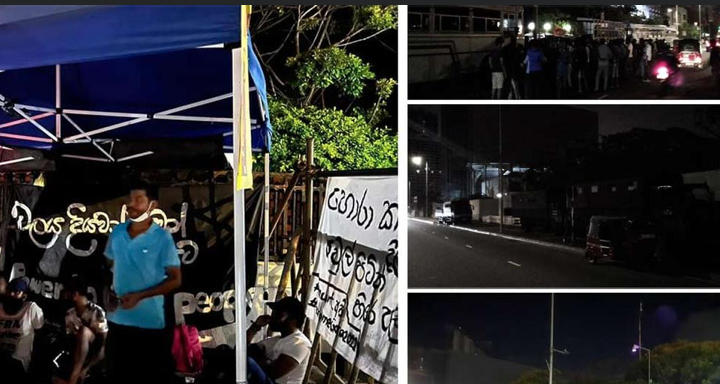
The Public Utilities Commission has given its approval for another power cut from today. 1 hour and 45 minutes of active power cuts in two stages.

The Chairman of the Public Utilities Commission Janaka Ratnayake stated that the power cut will last for an hour between 2.30 pm and 6.30 pm and will last for 45 minutes from 6.30 pm to 10 pm.

Due to the lack of fuel the national grid has lost about 500 megawatts of electricity.

However, a few days ago the Chairman of the Public Utilities Commission stated that there would be no power cuts within the next three months.

The former head of state intelligence is the one who has neglected the responsibility

0

Former Defense Secretary Hemasiri Fernando and former Inspector General of Police Pujith Jayasundara have been acquitted of all charges in connection with the Easter Sunday attack. It was ordered by a three-judge bench of the Colombo High Court today (18).

The attorney general had filed the case against the former defense secretary and former IGP on 855 charges, including intentionally aiding and abetting the attack and failure to take action to prevent a suicide attack when sufficient reliable information has been received that that a suicide attack could be carried out in the vicinity of Catholic churches and hotels in the city of Colombo by a group including Saharan Hashim – Leader of the National Tawheed Jamaat, between April 7 and 21, 2019.

However, the three-judge panel ordered the acquittal of the two former top government officials who were charged without summoning the accused.

A three-judge bench comprising Justices Namal Balalle, Aditya Patabendige, and Mohamed Irshadeen issued the order today.

Announcing the verdict in the case of the former Defense Secretary, the panel concluded that the prosecution had failed to prove beyond a reasonable doubt the allegations leveled against him.

Accordingly, it was stated that the former Defense Secretary had not committed any illegal default.

Announcing the verdict, Judge Mohamed Irshadeen said the Attorney General should have thought twice before filing the case.

The judge said that such a case could not be filed without clear evidence as the accused had been charged with criminal offenses and the court would not approve it.

Judge Aditya Patabendige stated that the former Defense Secretary did not have the ability to make independent decisions and that there was evidence that he was in a helpless position in terms of decision-making.

Accordingly, the judge said that it was problematic to order his arrest.

The court ruled that the former chief of state’s intelligence had failed to do so and that he had neglected his responsibilities and attempted to place it on the national intelligence chief.

The judges also pointed out that despite reports of such an attack, the Chief of State Intelligence did not discuss the matter with the Prime Minister and the Minister of Defense, as the Executive President was not in the country at the time.

Meanwhile, the High Court judges have stated in their verdict that the testimony of the former Chief of State Intelligence showed that he too did not have a definite understanding that an attack could take place.

It was stated in the verdict that there was no investigation in the country regarding the information received from abroad at the last moment that there was an attack and only that foreign information was available.

It was also stated that according to the testimony of the then Chief of Army Intelligence, the former Chief of State Intelligence had not properly exchanged information with the Army Intelligence.

Announcing the verdict in particular, the bench emphasized that the court does not approve of accusations against officials after an incident without allowing them to make independent decisions.

View all photos

PEOPLE’S INSURANCE APPOINTS NEW CEO

0

People’s Insurance PLC recently announced the appointment of Ms. Jeevani Kariyawasam as its Chief Executive Officer. Ms. Kariyawasam who previously held the position of Chief Operating Officer at People’s Insurance PLC has been with the organization since its inception in 2009. She counts more than 25 years of leadership experience in the Insurance industry, having been previously associated with several leading general insurance providers in Sri Lanka. 

Ms. Kariyawasam who holds a BSc. Hons. Degree in Bioscience from the University of Colombo is also an Associate Member of the Chartered Insurance Institute (CII) – in the UK and a Senior Associate CIP Member of Australia and New Zealand Institute of Insurance and Finance (ANZIIF). 

She has been an Office Bearer of the Association of Chartered Insurance Professionals (Sri Lanka) as the Membership Secretary from 2016 to 2019 and a Council Member of the Sri Lanka Insurance Institute from 2011 to 2014. 

Ms. Kariyawasam and her team will focus on transforming People’s Insurance PLC into a formidable general insurance provider in Sri Lanka with a customer-centric, value-based, and technology-driven business model.

Incorporated in 2009, People’s Insurance PLC is a member of the People’s Group, which includes People’s Bank and People’s Leasing. With over 125 service points across Sri Lanka, it offers a wide range of general insurance solutions including vehicle, property, liability, and marine insurance. The company is listed on the Colombo Stock Exchange with a market capitalization of LKR 9 billion and has an A+ Fitch rating. 

Pujith Jayasundara acquitted of the case against him in connection to failing to prevent the Easter attack

0

Former IGP Pujith Jayasundara has been acquitted of the case against him in connection to failing to prevent the Easter attack. The order was issued by a three-judge bench of the Colombo High Court today.

The case was filed against the former IGP and former Defense Secretary Hemasiri Fernando for failing to prevent a terrorist attack on Easter Sunday despite receiving intelligence.

Hemasiri Fernando was also acquitted and released this morning.

Our Power of People Party leader interrogated about the attack on Chamuditha’s house

0

Investigations are being carried out by three investigation teams into the attack on the house of journalist Chamuditha Samarawickrema. The vehicle used by the attackers is being identified and the areas where the vehicle was traveling have been identified through CCTV footage.

Meanwhile, Our Power of People Party leader Samantha Perera has been summoned to the Piliyandala Police today (18) to make a statement regarding the attack.

A few days before the attack, Chamuditha Samarawickrema had conducted an interview with the leader of our Our Power of People Party. Police are investigating whether he was involved in the attack.

Hemasiri acquitted of all charges against him in connection to the Easter Attack

0

Former Defense Secretary Hemasiri Fernando has been acquitted of all charges of failing to prevent an Easter Sunday terrorist attack.

The Colombo Special High Court today announced the verdict.