By: Staff Writer
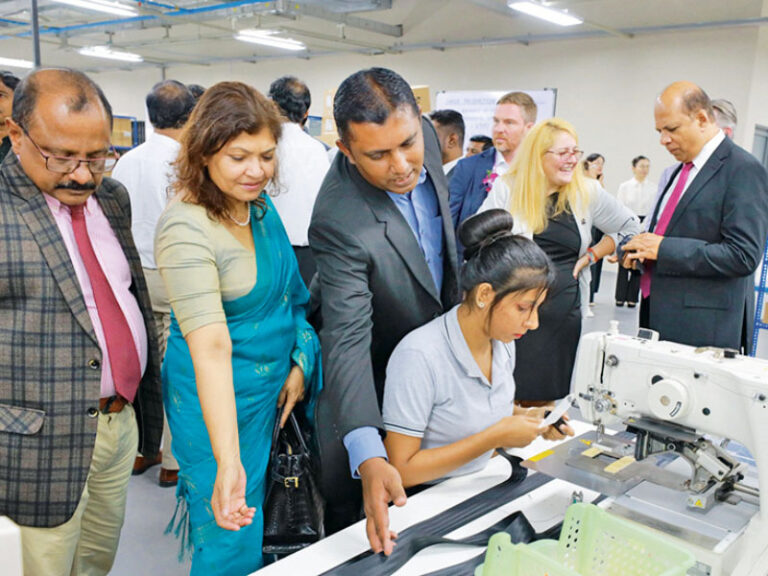
December 21, Colombo (LNW): Shield Restraint Systems Ltd. has formally commenced operations at its newly built advanced manufacturing facility at the Export Processing Zone (EPZ) in Wathupitiwala, Nittambuwa, marking a notable step forward in Sri Lanka’s push to attract high-value foreign direct investment into export-oriented manufacturing.
The inauguration was attended by senior executives from the United States, including TransDigm Inc. Executive Vice President Kevin McHenry and Shield Restraint Systems President Dennis Pursel, underlining the strategic importance of the Sri Lankan facility within the company’s global supply chain. Sri Lankan officials led by Board of Investment (BOI) Chairman Arjuna Herath and Director General Renuka Weerakone were also present, alongside representatives from the US Department of Commerce and the US Embassy, highlighting growing bilateral economic cooperation.
Shield’s Sri Lankan operation will manufacture specialised safety restraint products used in child safety seats, commercial vehicles, heavy machinery, agricultural equipment, and amusement park ride products that demand high precision and strict compliance with international safety standards. The investment introduces a relatively new manufacturing segment to Sri Lanka, moving beyond traditional apparel and rubber-based exports into safety-critical industrial components.
The project represents an initial investment of USD 8.5 million and includes a modern 100,000 square-foot facility. Although operations are currently running at around 10% capacity, full-scale production is expected to generate approximately 500 direct jobs and annual export revenues of nearly USD 50 million. Beyond employment, the facility is expected to contribute meaningfully to tax revenues and foreign exchange inflows at a time when Sri Lanka remains focused on export-led recovery.
Company officials cited Sri Lanka’s strategic location, access to global shipping routes, and a skilled, adaptable workforce as decisive factors in selecting the country. The presence of sister company AmSafe Bridport Ltd. in Sri Lanka also provided confidence regarding local manufacturing capabilities and operational resilience.
However, the project also highlights systemic challenges. Senior management stressed the need for improved administrative efficiency, transparent regulatory processes, and faster approvals to sustain investor confidence. Delays in policy reforms and the absence of a fully functional “one-stop” investment facilitation mechanism remain concerns for new entrants.
Despite these constraints, Shield has signalled long-term intent, with discussions underway for additional investments exceeding USD 17 million. If supported by consistent policy execution, the project could position Sri Lanka as a competitive South Asian hub for specialised industrial manufacturing rather than low-margin assembly work.
US Safety Manufacturer Plants Long-Term Industrial Bet in Sri Lanka
Double Standards by AKD Government
By Adolf
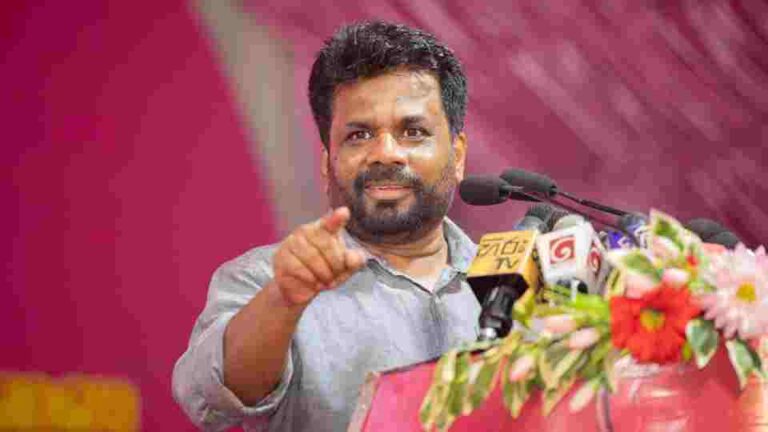
Aruna Shantha visited Canada in October 2025 to attend a BERN Union meeting. He obtained Ministry approval for a five-day visit. However, he drew subsistence allowances from the Corporation for nine days and remained overseas for a total of twelve days, accompanied by his wife.
From the date of his appointment in November 2024, he has been drawing a full salary and associated perks from the Corporation while simultaneously continuing to receive a salary from Sabaragamuwa University, where he was employed as a Professor. Technically a government servant is legally prohibited from drawing two salaries concurrently. This constitutes a serious violation of public service regulations.
These matters have already attracted audit queries from the Government Auditor as well as from the line Ministry (PED). Despite this, the queries remain inadequately addressed, and the individual continues in office without corrective action.
Further, he reinstated a JVP member who had been interdicted in connection with a fraud involving the Hayleys Group. This was done without a formal inquiry and despite an ongoing forensic audit and a pending CID investigation. What is most troubling is the inconsistency in AKDs standards. Similar allegations are being levelled against a former Head of State where restrictions hardly exists, while comparable conduct appears to have been committed by an appointee under the present administration, with Anura Kumara Dissanayake (AKD) now serving as President. Accountability and the rule of law cannot be applied selectively in this administration . The continuation of defeats in the corporative councils is a clear case for action .
Reference
https://youtu.be/StDvRk4-Y_I?si=BM8V02PC7drKl_GA
Health Minister Studies India’s PPP Models During WHO Summit Visit
December 21, Colombo (LNW): Sri Lanka’s Minister of Health and Mass Media, Nalinda Jayatissa, led an official delegation to New Delhi from December 17 to 19 to take part in the 2nd WHO Traditional Medicine Global Summit, the Indian High Commission in Colombo confirmed.
The summit, held at Bharat Mandapam under the theme “Restoring Balance: The Science and Practice of Health and Well-Being”, was jointly organised by the World Health Organisation and India’s Ministry of Ayush.
Minister Jayatissa took part in a ministerial roundtable, where he highlighted Sri Lanka’s extensive heritage in Ayurveda and traditional healing systems, sharing the country’s experiences in integrating these practices into modern healthcare.
During his visit, the minister held bilateral meetings with India’s Minister of State for Health and Family Welfare, Anupriya Patel, and Prataprao Ganpatrao Jadhav, Minister of State overseeing the Ministry of Ayush. Discussions focused on enhancing collaboration in healthcare, including regulatory alignment, joint research initiatives, and programmes for professional training and capacity building in traditional medicine.
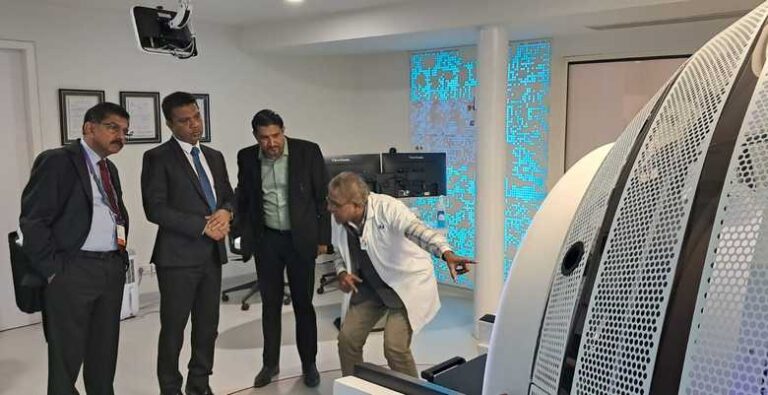
In addition, Minister Jayatissa visited Apollo Hospitals to examine successful public-private partnership models and explore innovative practices in healthcare delivery, aiming to draw lessons applicable to Sri Lanka’s own health system. The trip reinforced ongoing efforts to strengthen ties between the two countries in both modern and traditional healthcare sectors.
PM Holds Talks with UNICEF on Rebuilding Disaster-Affected Schools
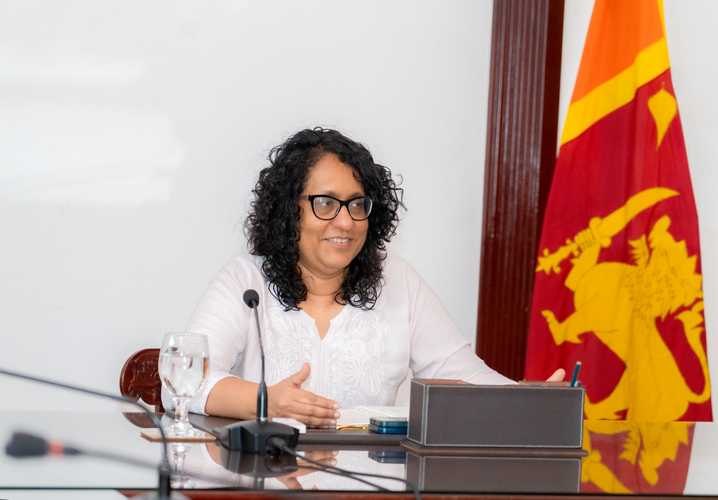
December 21, Colombo (LNW): Prime Minister Harini Amarasuriya met with a UNICEF delegation at the Prime Minister’s Office yesterday (20) to discuss efforts to restore schools damaged by the recent natural disaster.
During the discussions, the Prime Minister outlined government measures aimed at safeguarding students and rehabilitating the school system, while acknowledging the difficulties faced in the recovery process. She emphasised that reopening schools in landslide-prone areas could endanger students, and authorities are identifying such schools for relocation to safer sites based on scientific assessments.
The Prime Minister also noted that financial support has been provided to affected students, enabling parents to send their children back to school without added economic pressure. She highlighted the vital role schools play in promoting children’s mental health and well-being in the aftermath of disasters.
Key areas of focus include relocating vulnerable schools, repairing and upgrading infrastructure, merging certain schools for joint operations, integrating digital learning solutions, and providing specialised transport facilities. Long-term strategies are being developed to ensure these measures are sustainable and effective.
UNICEF officials praised the government’s commitment to education recovery and reaffirmed their support for ongoing and future initiatives. The meeting also explored opportunities for closer collaboration on educational programmes in disaster-affected regions.
The delegation included UNICEF representatives Emma Brigham, Lakshmi Sureshkumar, Nishantha Subash, and Yashinka Jayasinghe. From the Ministry of Education, Secretary Nalaka Kaluwewa, Director Dakshina Kasturiarachchi, and Deputy Directors Kasun Gunarathne and Udara Dikkumbura attended the session.
‘Beyond Recovery’ Initiative Launches to Support Mental Health in Cyclone-Affected Areas
December 21, Colombo (LNW): A new humanitarian programme, titled ‘Beyond Recovery’, has been launched under the Clean Sri Lanka initiative to provide mental health support to communities impacted by Cyclone Ditwah.
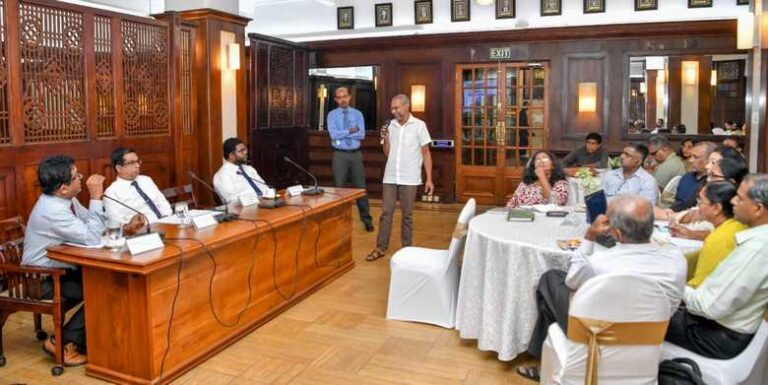
The first step in the programme involved a training workshop for government officials, held at the Presidential Secretariat on December 19 under the guidance of Presidential Secretary Dr. Nandika Sanath Kumanayake.
The workshop brought together officials from District and Divisional Secretariats in six heavily affected districts, focusing on participants with prior experience in mental well-being and psychosocial support.
Led by senior mental health professionals in Sri Lanka, the training covered the design of structured counselling programmes, the development of support frameworks, and strategies to provide effective psychosocial care within relief centres.
Participants also discussed ways to ensure these initiatives are scientifically informed and tailored to the specific needs of disaster-affected communities.
The Clean Sri Lanka programme, which aims to enhance social values, ethical standards, and environmental well-being, sees ‘Beyond Recovery’ as a practical step towards promoting holistic recovery, addressing both physical and psychological challenges faced by citizens in the aftermath of natural disasters.
Officials trained under the initiative will soon begin implementing support activities in relief centres, helping to improve the mental and emotional well-being of those affected.
The workshop was attended by Senior Additional Secretary to the President Russell Aponsu, Convener of the Clean Sri Lanka programme S. P. C. Sugeeshwara, Additional Secretary to the Clean Sri Lanka Secretariat, Member of Parliament and Coordinator Thanura Dissanayake, the Clean Sri Lanka District Coordinator for Kandy, and other invited officials.
India’s Foreign Minister to Visit Sri Lanka Following Cyclone Relief Efforts
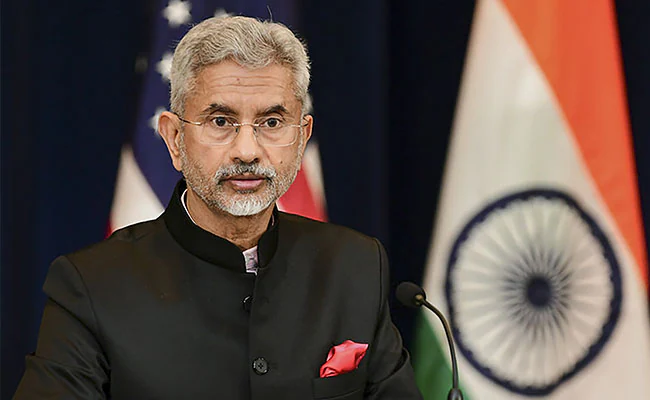
December 21, Colombo (LNW): India’s External Affairs Minister, S. Jaishankar, is scheduled to visit Sri Lanka next week, marking a continuation of India’s engagement with its neighbour in the wake of one of the country’s most severe natural disasters in recent decades.
The visit comes after India’s rapid humanitarian response to Cyclone Ditwah, which struck on November 27, 2025, causing widespread flooding and landslides that have claimed over 500 lives and displaced millions. Within hours of the cyclone making landfall, India launched Operation Sagar Bandhu, deploying specialised disaster response teams to affected areas. Indian naval ships already docked in Colombo, including the aircraft carrier INS Vikrant, delivered initial relief supplies, setting the pace for subsequent operations.
In the days that followed, Indian Air Force aircraft transported tonnes of essential aid—ranging from tents, blankets, hygiene kits, and medicines to modular trauma units called BHISHM Cubes. National Disaster Response Force teams, supported by search dogs, carried out rescues in severely affected regions such as Badulla and Gampaha, evacuating more than 450 people trapped by floods and landslides.
Helicopters from INS Vikrant and Mi-17s airlifted vulnerable populations and delivered emergency supplies to isolated locations, while an Indian Army field hospital in Badulla provided medical treatment to thousands. Engineers also airlifted Bailey bridges to reconnect damaged road networks, and naval vessels transported hundreds of tonnes of dry rations, including contributions from Tamil Nadu, to ports at Colombo and Trincomalee.
Sri Lankan officials have commended the speed and coordination of India’s relief efforts, with President Anura Kumara Dissanayake describing the cyclone as the most challenging disaster in recent history.
During his visit, EAM Jaishankar is expected to discuss ongoing reconstruction support and future collaboration, underscoring India’s “Neighbourhood First” policy and the shared maritime and strategic interests of both nations.India’s Foreign Minister to Visit Sri Lanka Following Cyclone Relief Efforts
India’s External Affairs Minister, S. Jaishankar, is scheduled to visit Sri Lanka next week, marking a continuation of India’s engagement with its neighbour in the wake of one of the country’s most severe natural disasters in recent decades.
The visit comes after India’s rapid humanitarian response to Cyclone Ditwah, which struck on 27 November 2025, causing widespread flooding and landslides that have claimed over 500 lives and displaced millions. Within hours of the cyclone making landfall, India launched Operation Sagar Bandhu, deploying specialised disaster response teams to affected areas. Indian naval ships already docked in Colombo, including the aircraft carrier INS Vikrant, delivered initial relief supplies, setting the pace for subsequent operations.
In the days that followed, Indian Air Force aircraft transported tonnes of essential aid—ranging from tents, blankets, hygiene kits, and medicines to modular trauma units called BHISHM Cubes. National Disaster Response Force teams, supported by search dogs, carried out rescues in severely affected regions such as Badulla and Gampaha, evacuating more than 450 people trapped by floods and landslides.
Helicopters from INS Vikrant and Mi-17s airlifted vulnerable populations and delivered emergency supplies to isolated locations, while an Indian Army field hospital in Badulla provided medical treatment to thousands. Engineers also airlifted Bailey bridges to reconnect damaged road networks, and naval vessels transported hundreds of tonnes of dry rations, including contributions from Tamil Nadu, to ports at Colombo and Trincomalee.
Sri Lankan officials have commended the speed and coordination of India’s relief efforts, with President Anura Kumara Dissanayake describing the cyclone as the most challenging disaster in recent history.
During his visit, EAM Jaishankar is expected to discuss ongoing reconstruction support and future collaboration, underscoring India’s “Neighbourhood First” policy and the shared maritime and strategic interests of both nations.
Legal Framework for Combating Online Child Abuse: Balancing Punishment, Prevention, and Provider Responsibility
By: Nalinda Indatissa, PC
Modern technology has made it possible for serious harm, especially harm to children, to occur through online platforms. Recognising this reality, the law creates a system that both punishes offenders, stops harmful content quickly, and fairly defines the responsibility of internet service providers and intermediaries. Sections 21, 24, and 27 together form this legal framework.
Section 21 creates the main criminal offences relating to online abuse of children. It applies to any person, whether inside or outside Sri Lanka, who uses an online account or an online location to commit, or to aid and abet, offences against a child that are already recognised under specified provisions of the Penal Code. The physical location of the offender is therefore irrelevant; what matters is the use of the internet or online platforms to commit the offence. Liability under this section extends not only to the person who directly commits the act, but also to those who assist, facilitate, encourage, or enable the offence through online means.
Section 21 also specifically criminalises the publication of photographs, audio, or video of an abusive or pornographic nature relating to a child. Publishing includes uploading, sharing, forwarding, or otherwise making such material available online. Each act of publication causes continuing harm to the child, and the law treats such conduct as a grave criminal offence punishable with imprisonment, a fine, or both. In addition to punishment, the court may order the offender to pay compensation to the affected child or group of children, recognising the need for protection and restoration.
Although Section 21 does not expressly mention the removal or takedown of online content, it is based on the concept of unlawful publication and communication. Where abusive or prohibited content continues to remain accessible online, the offence and the harm continue. Courts therefore have the authority, as part of enforcing this section, to direct the offender to remove, delete, or stop further communication of such content in order to prevent ongoing victimisation.
Section 24 complements Section 21 by providing a fast preventive procedure. It allows any person affected by the communication of a prohibited statement to apply to the Magistrate’s Court by way of a petition supported by an affidavit. The purpose of this procedure is not punishment, but the immediate stopping of harmful online content. This enables victims or affected persons to seek urgent relief without waiting for the conclusion of a full criminal investigation or trial.
Upon considering such an application, the Magistrate may issue a conditional order directing the person responsible for the communication, or the Internet Service Provider or internet intermediary on whose platform the content appears, to stop the circulation of the prohibited statement. A conditional order requires immediate compliance unless the recipient appears before court within the specified time to show cause as to why the order should not be made final. The law recognises electronic realities and allows such orders to be served by email, social media accounts, or directly on service providers and intermediaries, in addition to traditional modes of service.
A person against whom a conditional order is made must either comply with it or appear before the Magistrate within two weeks. If the person ignores the order and fails to appear, the order becomes absolute and the person commits an offence. If the person appears, the Magistrate conducts a prompt inquiry and may confirm, modify, or set aside the order. Failure to comply with a final order is itself a serious offence punishable with imprisonment or a fine. In addition, the Magistrate may order steps to be taken to block access to the online location in Sri Lanka or to remove the prohibited content from the platform.
Section 27 addresses an important and sensitive issue: the liability of Internet Service Providers and intermediaries. This section recognises that service providers often act as neutral conduits or platforms and should not be automatically blamed for unlawful content created by users. Accordingly, it provides that persons who provide services such as internet intermediary services, telecommunications services, public internet access, computing resources, email, messaging services, or one-to-one voice communication services generally have no liability for prohibited statements communicated through their platforms or networks by third parties.
This protection, however, is not absolute. Section 27 makes it clear that the immunity applies only where the service provider remains neutral. If the provider initiates the communication, selects the recipient, selects or modifies the content, or fails to comply with the provisions of the Act, regulations, rules, or the Code of Practice issued by the Commission, the exemption from liability is lost. In such cases, the service provider may be held responsible for its conduct.
Section 27 also recognises practical realities such as third-party interference, hacking, or misuse. Where prohibited material has been uploaded or interfered with by third parties, or where certain content has been removed within the specified period after the Act comes into operation, the owner of the online account or the service provider will not be held liable. At the same time, failure to adhere to the applicable Code of Practice, resulting in wrongful loss to another person, may give rise to civil liability in the form of compensation.
When read together, Sections 21, 24, and 27 create a balanced legal structure. Section 21 identifies and punishes serious online offences against children and those who assist in such offences. Section 24 empowers courts to act swiftly to stop harmful online content and prevent further damage. Section 27 protects neutral service providers from unfair liability while ensuring that protection is withdrawn where they actively participate in wrongdoing or disregard their legal responsibilities.
In simple terms, the law punishes offenders, stops harm quickly, and protects responsible service providers, while holding accountable those who misuse online platforms or knowingly allow serious harm to continue.
Police Probe Launched After Alleged Assault Involving Ratnapura Ruling Party MP
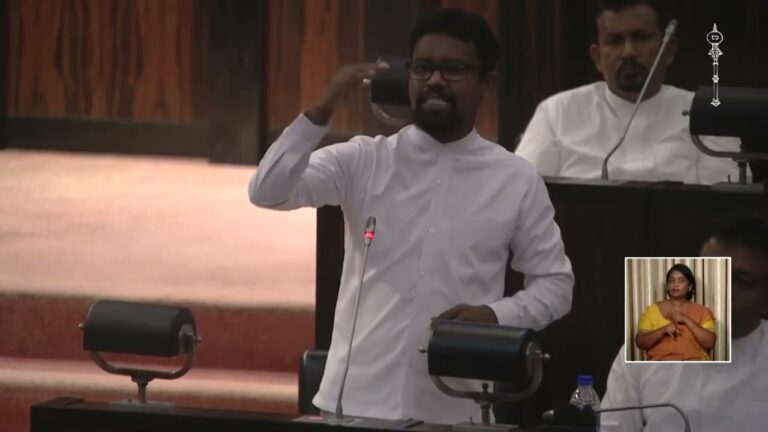
December 21, Colombo (LNW): An investigation has been launched following allegations that a police constable attached to the Sooriyakanda Police Station was assaulted by a group that reportedly included a Ratnapura District Member of Parliament from the National People’s Power (NPP).
According to police sources, the officer was attacked late on Tuesday night while returning home after completing his duties. He is currently undergoing treatment at the Embilipitiya Hospital for injuries said to have been sustained during the incident.
In his complaint, the officer claims the confrontation followed his involvement in a recent raid targeting an illegal cannabis cultivation. The operation had been carried out by Sooriyakanda Police on land reportedly linked to the family of the MP’s spouse.
The officer has alleged that MP Shantha Pathma Kumara Subasingha, accompanied by several others, arrived at the location in a vehicle, physically assaulted him and issued threats. Police confirmed that a counter-complaint has also been lodged by the Parliamentarian in connection with the same incident, and that statements from all parties are to be recorded.
The incident is believed to be connected to an earlier police operation on 16 December, when officers arrested a 24-year-old resident of Thalagahawatte for cultivating two cannabis plants hidden within a cassava and maize plot. The suspect was later produced before the Embilipitiya Additional Magistrate and fined Rs. 3,000.
Investigators say the land in question had allegedly been leased to the suspect for farming purposes and is believed to belong to the MP’s father-in-law. Police have stated that inquiries are continuing to establish the full circumstances surrounding both the cultivation case and the alleged assault.
GovPay Crosses Rs. 2 Billion Mark as Digital State Payments Gather Pace

December 21, Colombo (LNW): Sri Lanka’s national digital payment platform, GovPay, has recorded transactions worth more than Rs. 2 billion so far this year, signalling steady growth in the government’s push towards cashless public services.
Deputy Minister of Digital Economy Eranga Weeraratne said the platform is now linked to over 223 state institutions, covering more than 3,400 individual government services. Payments have been facilitated through more than 70 digital channels, allowing citizens to settle a wide range of fees and charges without visiting offices in person.
He noted that GovPay has been used extensively for traffic fine payments across six provinces, significantly reducing processing times and administrative delays. The platform also played a key role during Cyclone Ditwah, enabling the public to contribute over Rs. 14 million to the “Rebuilding Sri Lanka” relief fund through secure digital transactions.
According to the Deputy Minister, plans are underway to further broaden the reach of GovPay by onboarding additional institutions and services, while encouraging greater public adoption. With continued expansion, the government expects the platform to comfortably surpass the current transaction volume on an annual basis, reinforcing its role as a cornerstone of Sri Lanka’s digital economy drive.
Railway Ticket Refunds to Be Offered at More Stations from Christmas Day
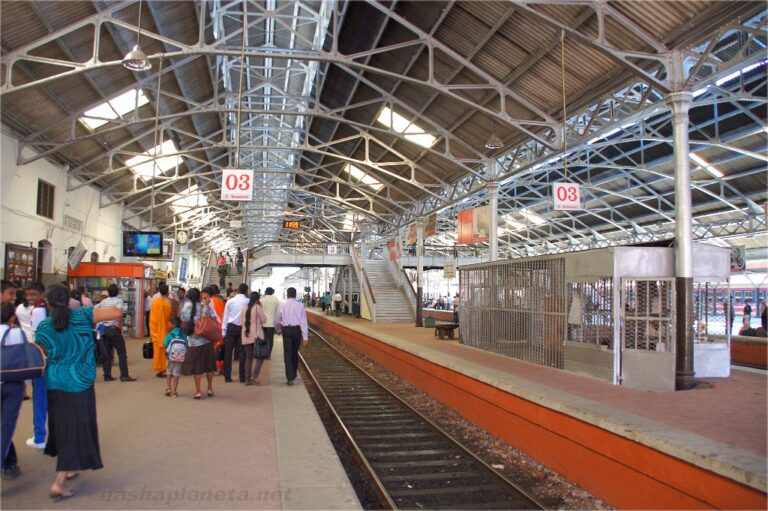
December 21, Colombo (LNW): Sri Lanka Railways is set to widen access to its ticket refund services, extending the facility beyond Colombo with effect from December 25, Transport Minister Bimal Ratnayake announced.
Until now, passengers seeking refunds were required to visit either Fort or Maradana railway stations. From Christmas Day, the service will be made available at several key stations in the up-country region, including Badulla, Ella, Bandarawela, Haputale, Nanu Oya and Hatton, easing the burden on travellers outside the capital.
In addition, the Ministry of Transport plans to roll out the refund facility on a trial basis at Anuradhapura, Jaffna and Batticaloa, with a view to assessing demand and operational feasibility in other parts of the island.
The Minister also confirmed that Kandy railway station is expected to be incorporated into the system in January, as part of a broader effort to improve passenger convenience and decentralise railway services.
Starting Dec 25,Sri Lanka Railways expands ticket refunds beyond Colombo!
— Bimal Rathnayake (@BimalRathnayake) December 20, 2025
For decades,refunds were only at Fort & Maradana.From Dec 25,
✅ Badulla,Ella,Bandarawela, Haputale
✅ Nanuoya,Hatton
✅ Anuradhapura,Jaffna,Batticaloa (Pilot)
Kandy joins d list in Jan! #SriLanka #Railway