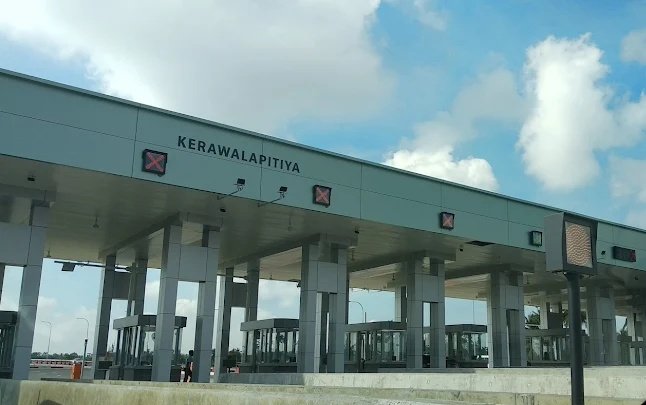
December 21, Colombo (LNW): The Road Development Authority has announced a revised toll ticketing arrangement at the Kerawalapitiya Interchange on the Outer Circular Highway, with the new system set to come into effect from noon on December 22, 2025.
Under the updated procedure, motorists accessing the Colombo–Katunayake Expressway via Seeduwa or Peliyagoda will no longer receive entry tickets at Kerawalapitiya. Instead, tickets will be issued directly at the Seeduwa and Peliyagoda interchanges when vehicles enter the expressway.
The RDA explained that vehicles travelling from the Outer Circular Highway onto the Colombo–Katunayake Expressway will also see a simplified process. Drivers will no longer need to collect an exit receipt and then obtain a fresh entry ticket at Kerawalapitiya. As before, exit receipts will only be issued to vehicles leaving the expressway at Kerawalapitiya Interchange, where the applicable toll will be charged.
Accordingly, all vehicles entering the Colombo–Katunayake Expressway must secure their entry tickets at Seeduwa or Peliyagoda. Vehicles arriving from the Outer Circular Highway will be permitted to merge onto the expressway without taking an entry ticket, while those exiting at Kerawalapitiya will settle toll payments at that point.
The authority further clarified that electronic toll payment options will remain available solely for travel on the Colombo–Katunayake Expressway. Motorists using e-toll facilities to access the Outer Circular Highway will still be required to use cash payment lanes.
Officials said the changes are intended to reduce congestion, improve traffic flow and enhance overall efficiency at one of the country’s busiest interchanges.
RDA Revises Toll Ticketing at Kerawalapitiya to Ease Expressway Traffic
Young Sri Lanka Look to the Future as India Series Gets Under Way

December 21, Colombo (LNW): Sri Lanka are set to give emerging talent an extended run when they face India in a five-match Women’s T20 international series beginning in Visakhapatnam, signalling a clear shift towards long-term planning ahead of the 2026 T20 World Cup.
With several experienced campaigners either stepping away or being given a break, the visitors will rely on a youthful core under the leadership of Chamari Athapaththu. The tour is expected to provide valuable exposure to new combinations, with changes likely behind the stumps as Kaushini Nuthyangana is tipped to take over wicketkeeping duties following Anushka Sanjeewni’s omission. Veteran left-arm spinner Inoka Ranaweera is expected to offer guidance to a relatively inexperienced bowling group, while uncapped players such as Nimasha Madushani are in line for opportunities.
India, meanwhile, will treat the series as an important tune-up as they build towards next year’s global tournament in England. The hosts have welcomed back pace bowler Renuka Singh after injury, and there is growing anticipation around the possible debut of young spinner Vaishnavi Sharma as selectors assess their depth.
The contest is expected to blend experience with experimentation on both sides, offering competitive cricket while allowing each team to refine plans for the challenges ahead.
Probable Sri Lanka XI: Chamari Athapaththu (captain), Vishmi Gunaratne, Harshitha Samarawickrama, Kavisha Dilhari, Nilakshika Silva, Kaushini Nuthyangana (wicketkeeper), Manudi Nanayakkara, Inoka Ranaweera or Nimasha Madushani, Inoshi Priyadharshani, Shashini Gimhani, Malki Madara.
Probable India XI: Shafali Verma, Smriti Mandhana, Jemimah Rodrigues, Harmanpreet Kaur (captain), Amanjot Kaur, Richa Ghosh (wicketkeeper), Deepti Sharma, Sneh Rana or Vaishnavi Sharma, Kranti Gaud or Arundhati Reddy, Renuka Singh, N Shree Charani.
Public Assistance Desk to Operate at Galle Face Amid Seasonal Crowds
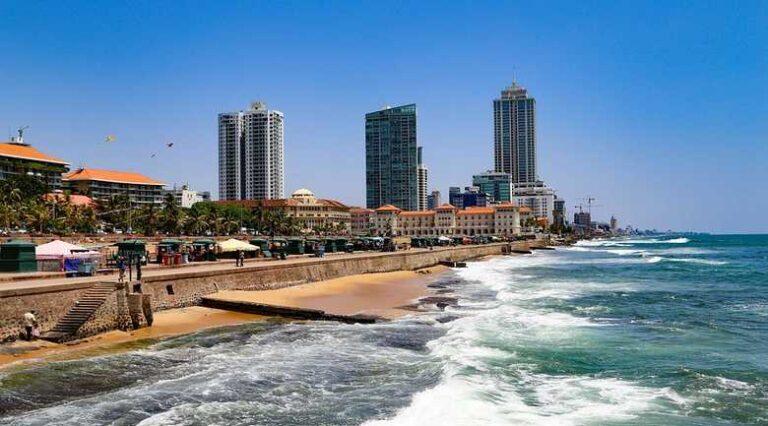
December 21, Colombo (LNW): A dedicated Public Assistance Helpdesk will begin operations at the Galle Face Green from December 21, 2025, following instructions issued by the Secretary of Defence.
The facility will be located opposite the Presidential Secretariat and is intended to support the growing number of visitors expected during the festive and holiday period.
The move comes in response to the sharp rise in public activity in the area at this time of year. The Helpdesk will be jointly managed by the Tri-Forces and the Sri Lanka Police, ensuring a coordinated and clearly visible presence to assist the public and respond swiftly to any developing situations.
Officials said the centre will serve as a single point of contact for visitors seeking assistance, information or emergency support. It is expected to improve overall safety, strengthen coordination among security agencies and enable faster action during unexpected incidents.
Medical support will also be available nearby, with ambulance services and basic healthcare facilities on standby to handle emergencies and provide first aid when needed. The Ministry of Defence stated that these measures reflect a broader commitment to public safety while allowing people to enjoy the Galle Face area in a calm and orderly environment.
Members of the public requiring urgent assistance have been advised to contact the Helpdesk via the dedicated hotline on 071 859 5880, which will link callers to emergency coordination, medical services and police support as necessary.
Over a Thousand Sacred and Heritage Sites Affected by Recent Disaster
December 21, Colombo (LNW): More than a thousand places of religious and archaeological significance across Sri Lanka have sustained damage as a result of the recent disaster, the Ministry of Buddhasasana, Religious and Cultural Affairs has revealed.
Deputy Minister Muneer Mulafer said assessments carried out so far indicate that 1,054 temples, shrines and heritage locations have been impacted, with 33 of them suffering complete destruction. He noted that the damage spans several regions, highlighting the scale of the impact on the country’s cultural landscape.
According to the Ministry, restoration and rehabilitation efforts have already begun, with priority being given to sites that have been most severely affected. Technical teams are currently evaluating structural damage to determine the scope of work required to return these locations as closely as possible to their original state.
Officials added that coordinated measures are being put in place to document losses, mobilise resources and safeguard what remains of the affected sites. The Ministry emphasised that protecting religious and cultural heritage remains a key focus of the recovery process, alongside broader relief and rebuilding efforts underway nationwide.
Central Bank Chief Urges Caution and Discipline in Using Disaster Relief Loans
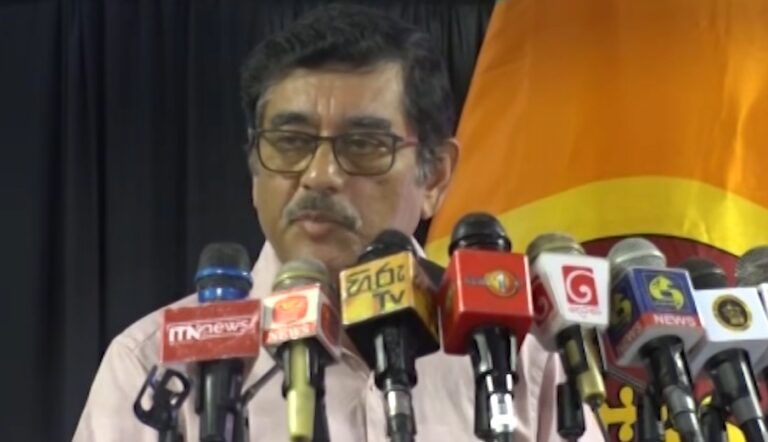
December 21, Colombo (LNW): Governor of the Central Bank of Sri Lanka (CBSL) Dr Nandalal Weerasinghe has called on the public to exercise prudence when accessing government-backed relief payments and concessional bank loans extended to those affected by recent disasters.
Addressing a public forum in Kandy yesterday (20), Dr Weerasinghe stressed that financial assistance, while essential in times of hardship, must be managed responsibly by recipients. He noted that the State has committed substantial resources to support recovery efforts and that these funds should be drawn only to the extent genuinely required.
He reminded citizens that relief schemes are designed to reach a wide range of people in need, and that careful and honest use of allocated funds would allow assistance to be channelled to others facing similar difficulties. Sound financial management, he said, is just as important after receiving support as it is in normal times.
Reflecting on lessons from the recent economic downturn, the Central Bank Governor referred to the period when the tourism sector was supported through low-interest loan facilities. He observed that in several cases, businesses—both directly affected and otherwise—borrowed beyond their actual needs, later struggling to service their debts.
Dr Weerasinghe cautioned that such practices could lead to unnecessary financial strain and emphasised that borrowing only what is essential helps avoid future credit difficulties. He concluded by urging individuals and businesses to use relief funds and loans as tools for sustainable recovery, ensuring that public resources contribute effectively to rebuilding livelihoods and strengthening the economy.
President Reviews District Recovery Drive, Sets Year-End Deadline for Relief Payments
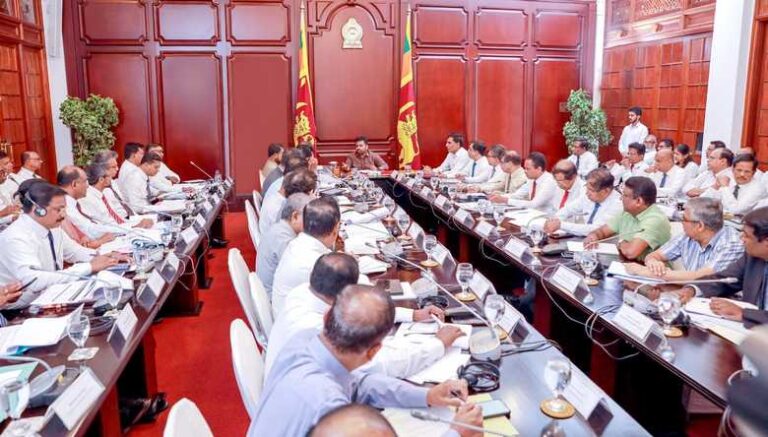
December 21, Colombo (LNW): President Anura Kumara Dissanayake chaired a high-level meeting at the Presidential Secretariat yesterday to assess progress on district-based recovery efforts under the ‘Rebuilding Sri Lanka’ initiative and to address obstacles slowing implementation.
The discussion brought together senior ministry secretaries overseeing key sectors such as defence, agriculture, irrigation, water supply, fisheries, transport, housing and construction, along with heads of state institutions and District Secretaries from across the country, according to the President’s Media Division.
During the meeting, the President directed officials to ensure that financial assistance earmarked for affected households is released without delay. He instructed that the Rs. 25,000 grant allocated for house cleaning and the Rs. 50,000 allowance intended for replacing essential household items must reach eligible recipients before 31 December.
Officials presented updates on compensation schemes for damaged homes and crops, the operation of safe centres, resettlement initiatives, livelihood restoration and infrastructure repairs. Particular focus was placed on difficulties encountered in disbursing compensation, with the President stressing the need for efficiency, accuracy and fairness so that no entitled family is overlooked.
The meeting also examined plans for relocating families from vulnerable locations, including the identification of suitable land and the development of district-specific housing projects. The President indicated that further consultations involving all relevant stakeholders would be organised to finalise and accelerate these plans.
Attention was also given to preparations for the Maha cultivation season, with reviews of irrigation rehabilitation, farmer assistance programmes and the supply of seeds and other inputs. In addition, officials discussed compensation for damaged livestock farms, measures to help small businesses resume operations, the revival of fisheries activities and the timely distribution of the Rs. 15,000 allowance for schoolchildren affected by the disaster.
The session concluded with a review of steps taken to streamline the reissuance of lost passports and national identity cards, underscoring the government’s intention to remove administrative hurdles faced by displaced and affected citizens.
Several Reservoirs Overflow: Authorities Assure Public There Is No Immediate Flood Threat
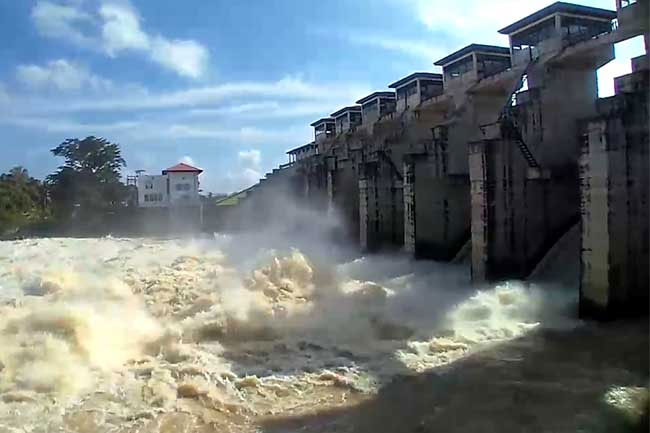
December 21, Colombo (LNW): A significant number of reservoirs managed by the Department of Irrigation have reached capacity and begun to overflow following recent rainfall, officials confirmed on Tuesday. Of the 73 major reservoirs overseen by the department, just under half are currently releasing excess water, alongside dozens of medium-scale tanks experiencing similar conditions.
Engineer L.S. Sooriyabandara, Director of Hydrology and Disaster Management at the department, said the situation remains under control and does not warrant public concern at this stage. He explained that the controlled spilling of reservoirs is a routine response to sustained rainfall and is not, by itself, an indicator of impending floods.
Nevertheless, he cautioned that river levels remain sensitive to further monsoon activity, noting that changes could occur if heavier rains arrive in the coming days. Continuous surveillance of river basins and reservoirs is therefore being maintained, with precautionary measures ready to be implemented if required.
According to departmental data, the most intense rainfall over the past 24 hours was recorded in regions linked to the Nilwala River basin. Several locations in the area experienced between 50 and 100 millimetres of rain, while much of the wet zone received around 25 millimetres. Comparable rainfall totals of roughly 50 millimetres were observed in parts of the Central Highlands and the Kelani River basin.
Elsewhere, sections of the Eastern Province saw rainfall ranging from 25 to 50 millimetres. Despite this widespread precipitation, officials report that river levels across most catchment areas have remained within safe limits.
Sooriyabandara noted a modest rise in the Nilwala River’s water level but stressed that it remains well below thresholds associated with flooding. He also said that water levels at Manampitiya along the Mahaweli River, though still elevated, are showing a gradual downward trend.
Overall, the department maintains that current conditions do not pose a flood risk, while reiterating the importance of vigilance as the monsoon season continues.
Showery conditions continue across Island: Strong winds expected ( Dec 21)

December 21, Colombo (LNW): Several spells of showers will occur in Eastern, Uva and Central provinces and in Polonnaruwa and Hambantota districts, the Department of Meteorology said today (21).
Showers or thundershowers may occur at a few places in Sabaragamuwa province and in Galle, Matara and Kalutara districts after 2.00 p.m.
Fairly strong winds of about 40 kmph can be expected at times over Eastern slopes of the central hills, Northern, Eastern, North-central and North-western provinces and in Hambantota and Monaragala districts.
Misty conditions can be expected at some places in Western, Sabaragamuwa and Central provinces and in Galle and Matara districts during the early hours of the morning.
The general public is kindly requested to take adequate precautions to minimise damages caused by temporary localised strong winds and lightning during thundershowers.
Marine Weather:
Condition of Rain:
Showers may occur at several places in the sea areas off the coast extending from Batticaloa to Colombo via Hambantota and Galle.
Winds:
Winds will be north-easterly. Wind speed will be (30-40) kmph. Wind speed can increase up to (50-55) kmph at times in the sea areas off the coast extending from Colombo to Mannar via Puttalam and from Matara to Batticaloa via Hambantota.
State of Sea:
The sea areas off the coast extending from Colombo to Mannar via Puttalam and from Matara to Batticaloa via Hambantota will be rough at times. The other sea areas around the island will be moderate.
From Megaphones to Motorcades: Can AKD Deliver the ‘New’ Sri Lanka?
By Faraz Shauketaly
This morning taking a long, hard look at the “AKD Era”—or as some in the corridors of power might call it, the “Great Marxist Makeover.”
Our President, Anura Kumara Dissanayake, has inherited a plate that isn’t just full; it’s positively overflowing with the leftovers of decades of mismanagement. It’s a bit like being handed the keys to a Ferrari, only to realize the engine has been sold for scrap, the wheels are square, and the previous owner left the bill for the petrol on the dashboard.
The IMF Tango
First, let’s talk about the economy. AKD is currently engaged in a high-stakes tango with the IMF. On the campaign trail, he promised the masses a “people-centric” economy—which sounds lovely over a cup of tea—but the IMF prefers a “math-centric” economy. He’s trying to lower taxes and increase wages while promising a group of stern-faced men in Washington that he’ll keep the purse strings tighter than a pair of trousers after a heavy Christmas dinner. One wonders: can you really have your cake, eat it, and then ask the baker for a discount on the next one?
The Bureaucratic Brake
Then there’s the “system change.” AKD swept into office on a broomstick, promising to clean out the stable. But he’s found that the bureaucracy is less like a stable and more like a giant bowl of spaghetti—tangled, slippery, and very difficult to straighten out. We’re hearing that decision-making has slowed to a glacial pace. It seems the bureaucrats are so terrified of making a mistake and ending up in the “naughty corner” of an anti-corruption inquiry that they’ve decided the safest thing to do is… absolutely nothing at all. If the wheels of government turn any slower, they’ll actually start moving backward.
The Crony Conundrum
And what of our “Captain-Industry” types? The President has vowed to end crony capitalism. Now, for some of our business elite, “competition” is a four-letter word. They’ve spent twenty years getting rich by being the only ones allowed to sell us anything. AKD wants to open the doors to the free market, but he’s discovering that the “hidden hands” of the past have very long fingers. Squeezing out excess profits is one thing, but making sure the baby isn’t thrown out with the bathwater—that’s the real trick.
A Bright Orange Future?
So, is the future looking bright, or is it just a very vivid shade of orange? The President has the mandate—a massive one, in fact. He’s managed to convince the world he’s not the fire-breathing Marxist some feared, but rather a center-right pragmatist in a red shirt.
The challenge now is to move from rhetoric to reality. Can he transform Sri Lanka from a “rent-seeking” paradise into a productive powerhouse without causing a riot at the supermarket? It’s a tall order, even for a man who’s spent his life shouting from the rooftops.
We have a President who has successfully transitioned from the ‘angry outsider’ to the ‘pragmatic insider.’ He’s managed to charm the IMF, soothe the markets, and keep the red flags flying—all at the same time. It’s a performance that would put a world-class circus acrobat to shame.
But let’s be brutally honest: the honeymoon isn’t just over; the bags are unpacked, and the utility bills have started arriving. Over the next six months, the ‘AKD Era’ will face its true litmus test. Can he move beyond the arrests and the investigations—the ‘low-hanging fruit’ of political popularity—and actually fix the plumbing of this nation?
If the bureaucracy remains paralyzed by fear, if the ‘hidden hands’ simply find new pockets to hide in, and if the cost of a loaf of bread remains a luxury for the many, then the mandate of 2024 will sour faster than unchilled milk in the March sun.
The President tells us he is a man of the people. Well, the people are patient, but they are not eternal. They want to see that the ‘System Change’ they were promised isn’t just a fresh coat of paint on a crumbling house. They want a home that’s safe, stable, and—most importantly—affordable.
We’ll be here, keeping a very close eye on the ledger. Because at the end of the day, it’s not about the color of the shirt; it’s about the content of the character—and the balance of the bank account.
I am still thinking of a Christmas Message but frankly its Challenging. The displaced, the shifting sand in them there hills, the elephant that was burnt alive till death overcame his agony, the cancelled tourists, the hundreds of millions of uninsured stock in Mom and Pop shops across this paradise isle, the dodgy medicine thats killing more of our population even if Keheliya has been charged and awaits the tick tock of his watch – except his Patek Phillipe makes no sound – as you can tell we have a connundrum situation!
Unified Brand, Rising Revenues, But Can Tourism Deliver?

Sri Lanka’s tourism sector is once again being presented as a pillar of economic recovery, supported by rising levy revenues, improving earnings, and ambitious plans for a unified national brand. Yet behind the optimistic figures and policy rhetoric lies a critical question: can the government realistically steer tourism growth through branding and community-centred narratives without addressing deeper structural weaknesses?
According to data presented to Parliament by Foreign Affairs, Foreign Employment and Tourism Minister Vijitha Herath, revenue from the Tourism Development Levy (TDL) reached Rs. 2.58 billion in 2024 and has already climbed to nearly Rs. 2.93 billion during the first nine months of 2025. These figures point to a sector recovering steadily from years of crisis, helped by improved arrivals and stronger foreign exchange inflows.
Tourism earnings reinforce this trend. Total revenue stood at around USD 3 billion in 2024, while earnings from January to October 2025 amounted to USD 2.66 billion. Average daily tourist spending was USD 181.15 in 2024, with wide variations depending on source markets, ranging from mid-USD 150 levels to over USD 200 for visitors from countries such as the UK, Germany, China, Russia, and India.
The government now wants to move beyond numbers and reposition Sri Lanka under a single, unified national brand. Minister Herath acknowledged that Sri Lanka is already known globally as a tourist destination, but branding has evolved in a fragmented and uncoordinated manner. Under the Sri Lanka Tourism Promotion Bureau, work has begun on a “nation branding” framework intended to be used across institutions linked to tourism.
However, critics argue that branding alone cannot resolve fundamental challenges. Room rates remain relatively low despite growing demand, partly due to a sharp expansion in capacity, with an estimated 90,000 rooms added over recent years. Even after shocks such as the Easter Sunday attacks, room rates were reportedly around 20 percent lower than comparable star-class hotels in competing destinations, raising concerns about value erosion rather than value creation.
The government has also pushed back against criticism of “low-cost tourists,” emphasising community-centred growth. Budget travellers, the Minister argued, spend directly in local economies through homestays, small restaurants, transport providers, and informal vendors, spreading benefits beyond large hotel chains. He also noted that today’s low-budget visitor could become tomorrow’s high-spending family tourist.
Yet this narrative raises questions about sustainability. While inclusive growth is desirable, Sri Lanka still lacks a clear strategy to upgrade tourism products, improve skills, and increase per-visitor value without pricing itself out of the market. High-end tourists, who often seek authentic experiences rather than luxury alone, do not automatically compensate for low accommodation yields.
Institutionally, the government has attempted to tighten coordination through a Presidential Task Force on tourism development, established in August 2025, which has already met three times. Combined portfolios and faster decision-making are presented as strengths, but the effectiveness of this approach will depend on implementation rather than intent.
As Sri Lanka pursues a unified brand and community-focused tourism model, the gap between policy ambition and on-the-ground realities remains wide. Without realistic pricing strategies, product diversification, and governance reforms, the promise of sustainable tourism growth may prove harder to deliver than official projections suggest.