SANASA International (PVT) Ltd recently established a partnership with the Asian Farmers Association for Sustainable Development (AFA), to assist the small holder farmers in 1000 villages and SMEs affiliated to 12 value chains to be more resilient and organize around cooperative enterprises in Sri Lanka. The project is supported by the experiences on sustainable food production in many different countries in South Asia and South East Asia, and it is powered by the generous contributions from the International Fund for Agriculture Development (IFAD). To implement this project for three years AFA has committed 380,000 US dollars, under Farmers for Asia project.
SANASA International (PVT) Ltd is a social enterprise affiliated to the largest people driven financial group of Sri Lanka. SANASA brand is nurtured by nearly 56,000 volunteers attached to approximately 8000 thrift and credit cooperative societies. Over the last 5 decades, SANASA has built a sustainable network to support low-income households to access finance at an affordable interest. The voluntary movement has been able to create wealth to build its own bank, two insurance companies and a higher education institute. SANASA International believes that the experience of SANASA movement in addressing the issue of lack of banking and access to credit is a clear example of the power of cooperative enterprise model. The project will use the same model to improve the local food production process by linking 200 cooperatives through 50 market affiliated businesses.
SANASA International will implement the project in partnership with SANASA federation and regional district unions, SANASA Insurance company, SANASA Development Bank, SANASA Campus, SANASA Uththamavi Company and The Movement for Land and Agriculture Reform.
SANASA International is looking forward to engage with those individuals and organizations who can support this initiative to create value addition to the household income of smallholder farmers and the quality and quantity improvement of local food production processes in Sri Lanka.
Sanasa International-Communication unit 21.05. 2022
Labor Groups Supporting Indian Garment Workers Call On More Global Brands to Join Landmark Dindigul Agreement to End GBVH
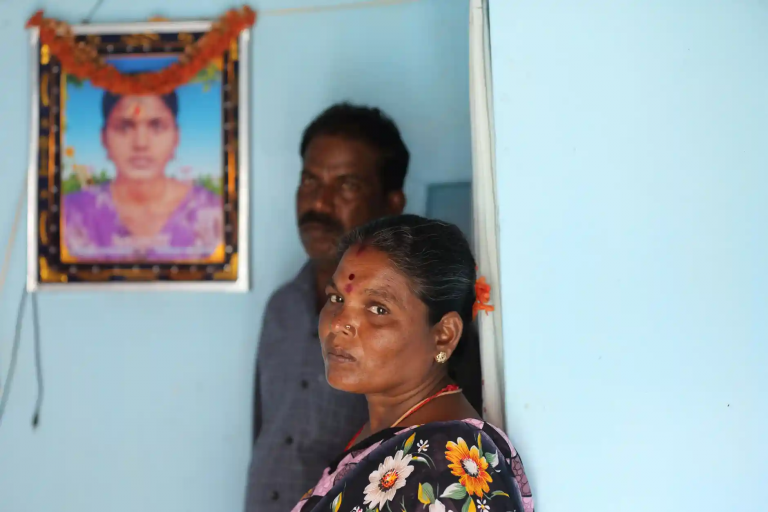
Muthulakshmi and Kathiravel with a portrait of their daughter, Jeyasre Kathiravel, after she was murdered in India in January 2021 [Credit: The Guardian]
Tirupur, India (May 22, 2022) – The Guardian Breaks Story on Gender-Based Violence and Harassment Endemic in Clothing Supply Chains
The Tamil Nadu Textile and Common Labour Union (TTCU), the Asia Floor Wage Alliance (AFWA), and the Global Labor Justice-International Labor Rights Forum (GLJ-ILRF) today called on more global brands to join H&M in signing the groundbreaking Dindigul Agreement to Eliminate Gender-Based Violence and Harassment (GBVH), which will empower 5,000 mostly female Dalit workers to protect themselves and their co-workers in spinning mills and garment cut and sew facilities.
“For the first time, workers have an agreement that empowers us to fight back collectively against violence and harassment at work. Garment workers have long felt that we have to accept harassment as part of our jobs– we get fired by our employers when we speak out against it and the big brands whose clothing we make, don’t take responsibility. Under this agreement, Eastman commits to zero tolerance for GBVH and to working with us to remediate any harassment that occurs. H&M commits to using business leverage to create support and accountability for that promise. More brands should follow their lead and sign on. Let it be a model for India and the globe so all garment workers are empowered and protected,” said Jeeva M, General Secretary, TTCU.
New reporting in the Guardian details how global fashion supply chains are built on widespread gender-based violence and harassment across Asia.
TTCU, AFWA, and GLJ-ILRF have a long history of organizing with and supporting the workers who are fighting back. We launched the Justice for Jeyasre campaign in 2021 when Jeyasre Kathiravel, a young garment worker and union member in TTCU was murdered after facing months of sexual harassment by her supervisor.
Thanks to the movement we built with workers in India and around the world, in April, factory owner Eastman Exports Global Clothing Private Limited, the TTCU, AFWA, and GLJ-ILRF, along with H&M Group (H&M), announced the Dindigul Agreement, a set of accords that jointly commit all parties to work together to eradicate GBVH and discrimination based on caste, or migration status; support women workers in collectively detecting, remediating and preventing GBVH on the shopfloor, to increase transparency; and to develop a culture of mutual respect in the garment factory and beyond.
In the Dindigul Agreement, H&M has agreed to a regular review mechanism in deciding its level of sourcing based on Eastman’s fulfillment of the provisions of the agreement, other brands, especially those who were sourcing from Eastman at the time of Jeyasre’s death should follow suit, meet with us and sign on.
“The Dindigul Agreement is transformative because it incentivizes suppliers to protect workers’ rights and eliminate GBVH. Now is the time for more global fashion companies to be part of the solution to violence and harassment by sourcing from factories that confront these issues head-on as Eastman has agreed to do. Suppliers and brands should support worker-led processes to address GBVH and recognize workers’ rights to organize in unions. Too often, when abuses are brought to light, brands will try to save their reputation by pulling out of the factory, victimizing workers a second time as they lose their jobs,” said Anannya Bhattacharjee, AFWA International Coordinator.
A joint statement from the original signing parties is available here.
Labor stakeholders are also in dialogue with other brands sourcing from Eastman Exports’ Natchi facilities in the past two years including Walmart, M&S, and Authentic Brands Group (which owns Lucky Brand Jeans, Brooks Brothers, Forever 21, Izod, and others) – along with BlackRock a major investor in Authentic- about joining the agreement consistent with responsible business practices under the UN Guiding Principles on business and human rights. Together with the labor stakeholders and Eastman, brands and investors who join the agreement would be contributing to a model for the industry.
“When reporting workplace problems leads brands to pull orders, working women are left to choose between sexual harassment or unemployment. All brands who say they want their supply chain free of gender-based violence and harassment now have a clear choice to source from units covered by the Dindigul agreement or to talk with us about its expansion,” said Jennifer (JJ) Rosenbaum, Executive Director of GLJ-ILRF.“For brand investors like BlackRock, this is also a concrete way to make their environmental, social, and governance commitments (ESG) commitments real.”
Australia’s new leader presents as more visceral than cerebral with deep reserves of emotional intelligence and decency
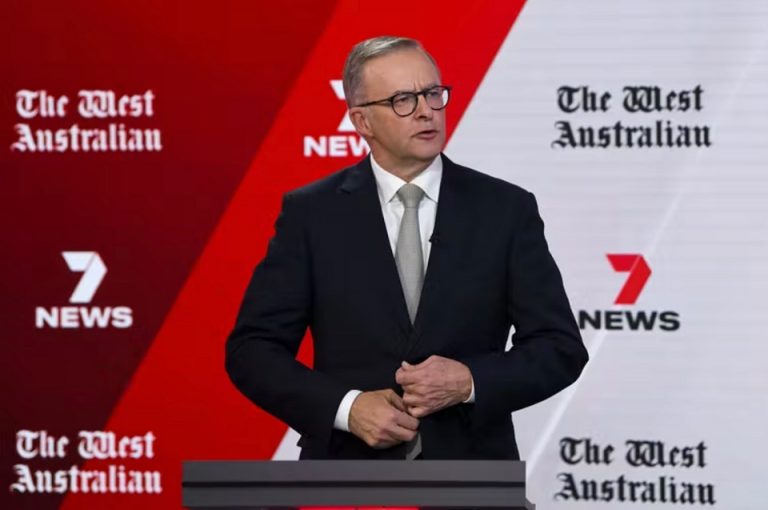
Karen Middleton’s 2016 biography of Anthony Albanese concludes with a speech he made that year, on the 20th anniversary of his election to parliament.
“I’m patient”, he told his clapping audience, “I’m patient — I’m a Souths fan”. The South Sydney Rabbitohs are the Rugby League club Albanese supports, which for the greater part of his adult life was notorious for its competitive under-performance.
The audience realized, of course, that in proclaiming his long-suffering dedication, Albanese was really alluding to his political vocation and his other underachieving “tribe” — the Labor Party.
Albanese’s journey in Labor politics has indeed been long and arduous. He was still a boy when he began accompanying his mother and grandparents to local branch meetings of the Labor Party; he remembers handing out for Gough Whitlam in 1972 when only nine. He formally joined the ALP as a teenager.
Up to his ears in student Labor politics as an undergraduate, upon leaving Sydney University he went to work for the elder statesman of the New South Wales left faction, Tom Uren. By his mid-20s he was assistant secretary of New South Wales Labor, and won the seat of Grayndler for the ALP in 1996 on his 33rd birthday.
Even his path to leadership has been unusually slow. One has to go back to the middle of last century for an opposition leader who was older (56) and who had served for longer in the parliament (23 years) when first elected to that position.
His wait for the chance to become prime minister has been of far longer duration than most of Australia’s recent national leaders. Kevin Rudd, Julia Gillard, Malcolm Turnbull and Scott Morrison averaged only around a decade between entering parliament and attaining office. For Albanese, it will be a quarter of a century if Labor wins Saturday’s election.
To continue the slow burn theme, if Albanese is to be believed, his ambition for leadership formed late. Those who reach leadership positions are typically consumed with an aspiration for the top job from early in their parliamentary careers — if not before. They are fuelled by a sense of their own prime-ministerial destiny.
Albanese is different. On his telling, it was only in 2013, on the defeat of Rudd’s second government, that he first entertained thoughts of becoming leader. Until then he had contented himself with the role of “counselor and kingmaker”.
And still, he had to wait. Despite winning a comfortable majority of the rank-and-file vote, he narrowly lost the leadership to Bill Shorten in 2013 because several of his left faction Caucus colleagues defected to support Shorten. Albanese then had to stay his hand in 2016 when Shorten’s better-than-expected performance at that year’s election insulated him from a leadership contest.
When Shorten seemed poised for victory in 2019, Albanese must have figured his chance to be party leader had passed. But then came “Morrison’s miracle” and Albanese emerged as the only candidate to succeed Shorten within a demoralized Labor caucus.
Playing the long game has also been the hallmark of Albanese’s leadership over the past three years. Beginning with “listening tours” of the regions where Labor badly faltered in 2019 — most notably in Queensland — it has been painstaking and unglamorous graft.
As journalist Katharine Murphy has observed, to his detractors his approach has been akin to a campaign of “attrition.” Those critics have harped on the theme of his leadership being a small target and his program prosaic.
This is not how Labor wins office, they have insisted. Drawing on a sample size of three — the number of times Labor has claimed government from opposition since the end of the second world war under the leaderships of Whitlam, Bob Hawke and Rudd — the critics have argued the template for Labor success is a bold, transformative reform program and a charismatic, popular leader. Under Albanese, they complain, Labor has neither.
Albanese became leader of a demoralised Labor Party after its unexpected 2019 election defeat. AAP/Dan Peled
One can quibble at the edges of the critics’ reading of history. Though Whitlam unquestionably heralded an expansive reform program in 1972, the Labor Party was sufficiently concerned about his image that it launched an unprecedented advertising blitz to humanize him in the eyes of the public.
When Hawke won in 1983, Labor’s program for government was all but subsumed by the leader’s messianic appeal as encapsulated in the slogan, “Bob Hawke Bringing Australia Together”.
Rudd’s victory in 2007 was on the back of a campaign in which Labor selectively staked out policy differences with the Coalition. The nerdy Rudd painted himself as more of a fiscal conservative than John Howard, and was reassuringly perceived as a kind of youthful version of the prime minister. In short, the idea of Labor relying on larger-than-life platforms and leaders to win government is exaggerated.
This is not to deny that under Albanese, Labor is running on a considerably less daring agenda than it did in 2019. Indeed, it is an irony — or confirmation that ideological tags count for nothing in the contemporary Labor Party — that the right faction’s Shorten campaigned on an aggressively redistributive program spiced by “class war” rhetoric about the “big end of town.” In contrast, the left faction’s Albanese has abandoned those redistributive measures and has been emollient in his language towards business.
The plan to curb franking credits was first to go under Albanese, followed by the dumping of plans for changes to negative gearing, capital gains and, most recently, family trusts. As well, Labor has announced that in government it will not repeal the third tranche of the Coalition’s tax cuts that benefit high-income earners. Simultaneously, Albanese has portrayed himself as a friend of aspiration. He believes, he says, in an Australia “where nobody is held back and nobody is left behind.”
To be fair to Albanese, it makes sense Labor changed tack from 2019. The party’s review of that defeat blamed it on “a cluttered policy agenda that looked risky and an unpopular leader.”
In a speech to the National Press Club on the release of that review, Albanese indicated he had got the message: “too many people were confused or even frightened by our policies”. Elsewhere, he has pointedly noted none of Labor’s past successful opposition leaders campaigned on increases in taxes.
It is little surprise Albanese has walked away from the crowded policy agenda that helped thwart Bill Shorten’s bid to be prime minister in 2019. Photo: AAP via The Conversation / Lukas Coch
If there is a playbook to Albanese walking away from the Shorten program, then it is from the other side of politics. In 1996, heeding the lesson of John Hewson losing the unlosable election three years earlier on a radical neoliberal manifesto headlined by a new tax (the GST), John Howard renounced the GST as well as other contentious policies from Hewson’s Fightback! program. Howard determinedly narrowed the points of difference with Prime Minister Paul Keating, driving the latter to distraction.
Albanese has been unabashed about his strategy of not rejoining the battles of 2019, declaring he has no intention to “relitigate the past”. To those who cavil that Labor has abandoned its ideals by dropping the redistributive policies he has been equally blunt: “One of my Labor principles is for Labor to win elections.”
This might not be as caustic as Whitlam’s famed put-down of the Labor hard left: “Only the impotent are pure”, but the point is fundamentally the same. To change the nation, Labor first has to win at the ballot box.
The abandonment of the Shorten-era revenue measures has curtailed Labor’s scope for campaign initiatives. According to the Coalition, Albanese is like a thief in the night, trying to steal his way into office on a meager policy program. This is largely unfair. Beginning at a leisurely pace, Albanese gradually accelerated the rollout of policies.
Another conclusion of Labor’s review of its 2019 election campaign was that there was an absence of a clear narrative binding together the party’s policies. Albanese too has struggled in that space. In the second half of 2021, he seemed to be feeling his way there by talking about the reconstructive role of government following the crisis of the pandemic.
This was potentially redolent of a great Labor reformist era (post-war reconstruction) and a sharp contrast to Morrison’s “can-do capitalism” mantra. Yet his prosecution of the case for the transformative power of government has remained inchoate.
Albanese’s predilection, as exposed on the hustings, for wandering into verbal marshes has not helped either in providing coherence of theme. But the lack of a compelling storyline also goes back to the abiding caution of his approach.
The party’s policy on a 2030 carbon emissions reduction target is an illustration. This is another area where Labor kept its powder dry, delaying the release of its target until after the Glasgow Climate Change Conference.
When Albanese finally announced a reduction target of 43%, it was almost as if the policy dare not speak its name. He declared it “a modest policy. We do not pretend it is a radical policy”. Hardly the inspirational stuff of “the great moral challenge of our time”.
Making amends for the disappointment of 2019 brings us squarely to the subject of leadership. If Shorten was a millstone on Labor’s vote, a perusal of opinion poll leadership ratings indicates Albanese, though not popular, has not been subject to anything like the antipathy that dogged his predecessor.
In the first half of this year, his leadership ratings edged into positive territory and, unusually for an opposition leader, he was nipping at the heels of the incumbent on the question of preferred prime minister. This was a good place to be.
While Albanese is not wildly popular, he’s also not as unpopular with voters as Bill Shorten was in 2019. Photo: AAP via The Conversation / Lukas Coch
Probably the most consistent take-out from the leadership polling over the past three years, however, is that Albanese has not made a major impression on the public. The relatively high number of respondents who have nominated “don’t know” when asked to rate his performance has been an indicator of this.
The pandemic is one reason Albanese remained indistinct in the electorate’s mind. For stretches of the past parliamentary term, and particularly during 2020, he struggled for oxygen.
Yet undoubtedly the tepid response towards Albanese is also a function of the fact he has bent over backwards to be a non-threatening rather than arresting figure. For someone once styled as a warrior of the left, there has been nothing remotely incendiary from him.
That Albanese has journeyed a long way from his pugilistic younger days is a sign of maturity. But the charisma he displayed as a firebrand student politician has also leached away.
He presents as a slightly rough-hewn, inoffensive type, workmanlike rather than exceptional. One senses he is more visceral than cerebral, with reserves of emotional intelligence. Colleagues testify that authenticity and decency are his defining attributes: a shorthand way of saying he is the antithesis of Morrison.
Altogether, Albanese’s is an unusually modest persona for an aspiring prime minister, which goes with his insistence he never had a sense of entitlement to leadership. At the same time, there is a core of resilience and self-belief.
His inner strength is rooted in his hardscrabble backstory to which he routinely harks back. This is the story of being brought up as the only child of a single mother and invalid pensioner in council housing. His mother’s struggles are the lodestar of his political vocation.
In another way, though, Albanese was blessed as a child. Like past Labor luminaries, Whitlam, Hawke and Keating, he was the recipient of maternal special investment: what he remembers is his mother’s “absolute unconditional love” for him.
While he might not have believed it was his destiny to be prime minister, his mother harbored that ambition for him. Middleton’s biography records that she “believed he could go far — as far as a person can go in the Australian political system”.
What sort of prime minister can we expect Albanese to be if he wins power on Saturday? He has referenced Hawke and, to the gall of Liberals, even invoked Howard as prime ministers he will take a leaf from. The gold standard of modern Labor prime ministers, it is hardly surprising that Albanese looks to Hawke as a role model. He says that, like Hawke, he will govern by consensus, bringing business, unions and civil society together.
The transactional business of forging networks of support is second nature to Albanese: a craft he mastered as a left faction operative in the hostile environment of the right-dominated New South Wales Labor Party.
There is evidence of his capacity for wrangling a middle ground. As leader of the House of Representatives during Gillard’s prime ministership, he was integral to the functioning of Labor’s minority government by closely liaising with the crossbenches. Gillard later remarked: “Albo is a very persuasive person. He’s good at talking people into things”.
Albanese has said he will govern like his role model, Bob Hawke. Photo: AAP via The Conversation / Mick Tsikas
While Albanese’s leadership style over the past three years has largely escaped analysis, it is notable he has mostly kept Labor united in common purpose. The walking away from the redistributive policies of the Shorten era required extensive consultation to work through the changes within the parliamentary party and beyond.
In the end, the result was achieved with surprisingly little rancor. Albanese’s collaborative abilities are also attested to by the strong leadership team he has assembled around him. In addition to his deputy, Richard Marles, and Labor’s talented shadow treasurer, Jim Chalmers, that leadership group includes Katy Gallagher, Mark Butler, Kristina Keneally, Penny Wong and Tony Burke.
Like all Labor leaders since Rudd, Albanese insists he has learnt the lessons of the dysfunction of that period of government. He will observe “proper” processes allowing genuine debate in Cabinet. Albanese’s team approach is a welcome contrast to the Coalition side, with Morrison giving the impression of running the show himself.
If elected, Albanese’s ability to orchestrate consensus will hold him in good stead for tackling thorny policy challenges of which there will be many ahead.
Still, questions linger about whether Albanese has the stuff to be a substantial prime minister. Although a gifted transactional politician, does he boast the erudition and imagination to meaningfully shape the nation? He has demonstrated a flinty pragmatism over the past three years, but less certain is whether he has the driving sense of purpose required to achieve hard-fought reform.
And, like the best leaders, has he the ability to modulate his approach? Can he switch to a more dynamic galvanizing mode of leadership or will the circumspection that has defined him in opposition shackle him in government? On the other hand, just maybe his unassuming leadership will provide for a dogged but conscientious form of government that suits Australia’s purposes.
With Labor enjoying a substantial lead in the opinion polls, Albanese’s patience looks set to be rewarded on Saturday. If the polls are right, on two-party preferred terms, the ALP is on track to achieve at least as handsome a victory as when the party won office in 1972, 1983 and 2007.
Albanese will have defied the critics and bent the template of how the ALP wins government from opposition. Non-heroic in leadership style, he will nonetheless be celebrated as a Labor hero.
But there remain gnawing fears in the Labor camp that a low primary vote, fickle preference flows and a patchy swing might yet deny them majority government. Should a hung parliament result from Saturday’s contest, Albanese’s persuasive capacities will be tested immediately in wooing the crossbenchers.
The probability is that in any negotiations he will have a stronger hand than Morrison because of an edge in numbers and the fact he is unencumbered by the same baggage as the prime minister.
It will be a final minor delay in Albanese’s protracted journey to the political summit.
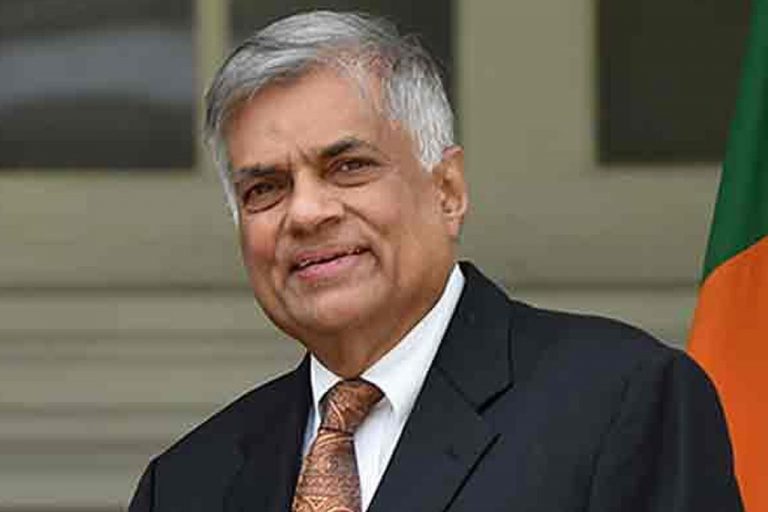
Prime Minister Ranil Wickremesinghe today (23) met with representatives from the Chambers of Commerce, the Treasury and Economic Advisers to discuss a new budget and future economic plans.
During the meeting at the Prime Minister’s Office, the Prime Minister pointed out that a new budget would be presented which would significantly reduce capital expenditure.
He said the money saved would be used for welfare programs. The Prime Minister further explained that with the war in Ukraine, the country is facing a food shortage due to mismanagement of the local market.
This food shortage will affect not only Sri Lanka but also the global market.
He explained that the government was trying to minimize the impact of the shortages.
Recommendations were made to the Prime Minister that the process of distributing relief to the people should be digitized. He agreed and stated that he would review the criteria for those eligible for welfare.
In addition, the Prime Minister stated that an economic policy framework that enshrines economic rights would be included in the Constitution.
He also proposed that the Treasury plan to undertake structural reforms based on a competitive social market economy that can achieve development goals.
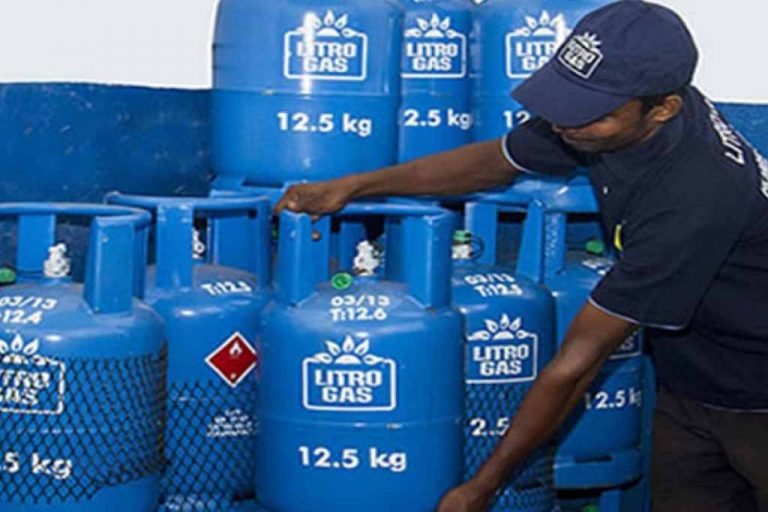
Payments have been settled for two ships carrying lp gas to Sri Lanka, revealed Chairman of the LITRO Gas Company Vijitha Herath.
Accordingly, US$ 6.5 million has been paid off for 7,500 metric tonnes of lp gas.
A ship carrying 3,500 metric tonnes of gas will arrive in the island on Thursday (26), the LITRO Chief went on, adding that arrangements will be made to immediately deliver the second vessel as well.
This will provide a relief to the consumers up to a certain extent, he added.
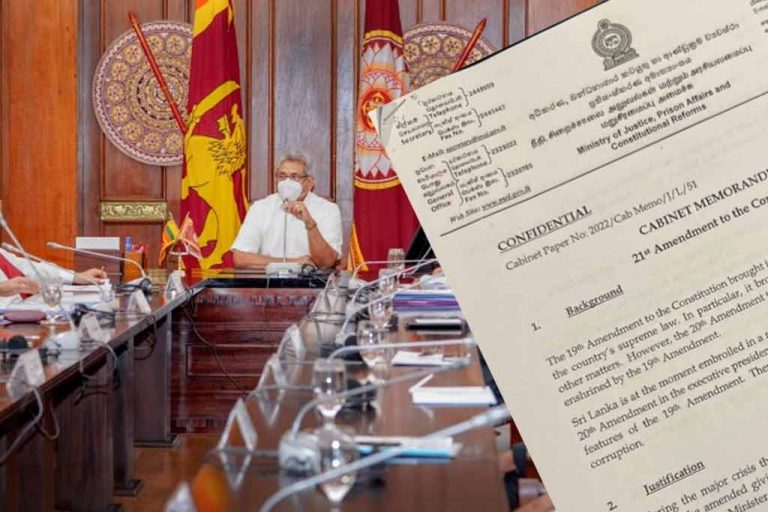
Minister of Tourism and Lands Harin Fernando speaking to reporters today (23) said he will resign from his ministry tonight itself if the 21st Amendment to the Constitution that has been drafted in abolishing the existing 20th Amendment to the Constitution is not presented to the Cabinet for approval within today.
Therefore, the 21A will be presented to the Cabinet within today for sure, the Minister noted, adding that no conspiracy against it would be successful.
Following the Cabinet’s approval, the 21A will be tabled in Parliament, Fernando went on, adding that he is confident that all MPs will be serving their duty to the people thereafter.
The 21A seeks to restore to Parliament a number of powers vested in the President via the existing 20A and to strengthen independent commissions.
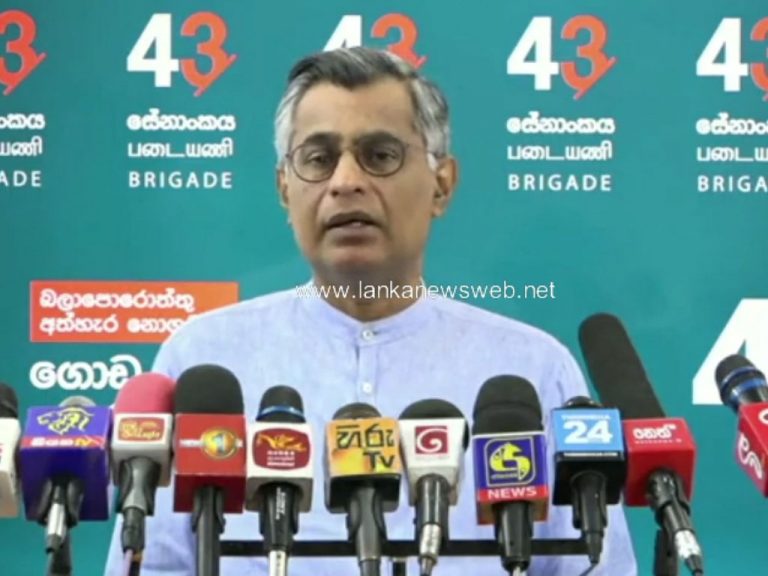
Leader of the 43 Senankaya (43 Brigade) MP Patali Champika Ranawaka calling in a briefing in Colombo today (23) said he would be ready to accept a position in a proper all-party interim government if the conditions tabled from his side are met.
According to the 43 Brigade Chief’s conditions, the government must;
Table the 21st Amendment to the Constitution to Parliament as a Cabinet decision at the commencement of Parliament in the first week of June, 2022;
Establish independent commissions including an Independent / Powered Election Commission; and
Not allow foreign nationals to hold positions in the government.
MP Ranawaka also stressed that in order to find a solution to the crisis befallen the country, political appointments should be abolished first.
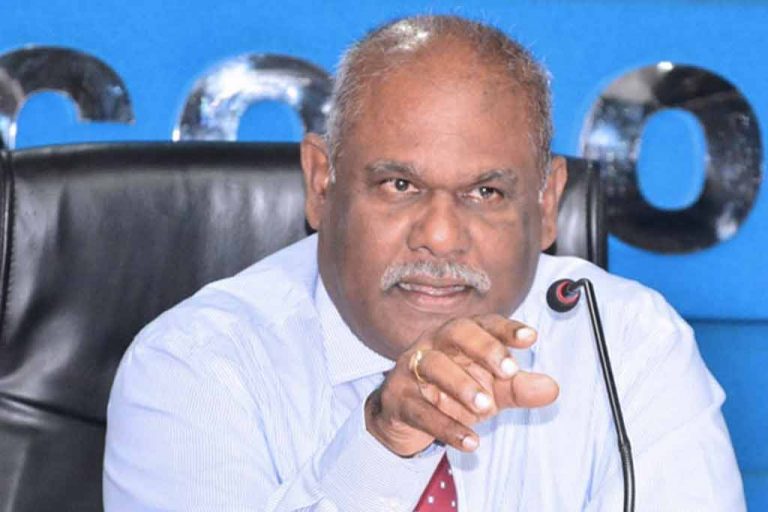
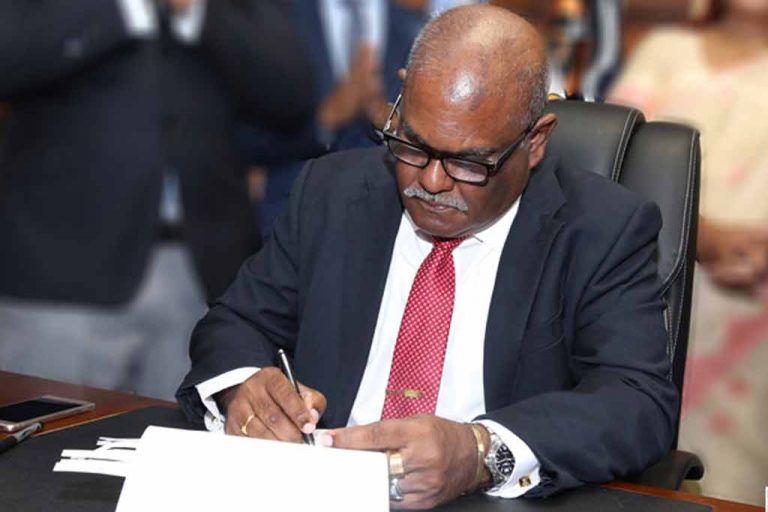
Secretary to the Ministry of Public Security Maj. Gen. (Retd.) Jagath Alwis has been informed to resign from his post. He has been informed to resign by new Minister Tiran Alles.
Accordingly, Silva has handed over his letter of resignation to the President, according to reports.
Secretary to the Ministry of Public Security, Maj. Gen. (Retd.) Jagath Alwis has produced a statement with the Criminal Investigation Department (CID), in connection with the violent events occurred on May 09.
Alwis is accused of ordering the Police not to disperse Mahinda Rajapaksa’s devotees who had come from Temple Trees to attack the peaceful protest in GalleFace and allowing them to incite violence.