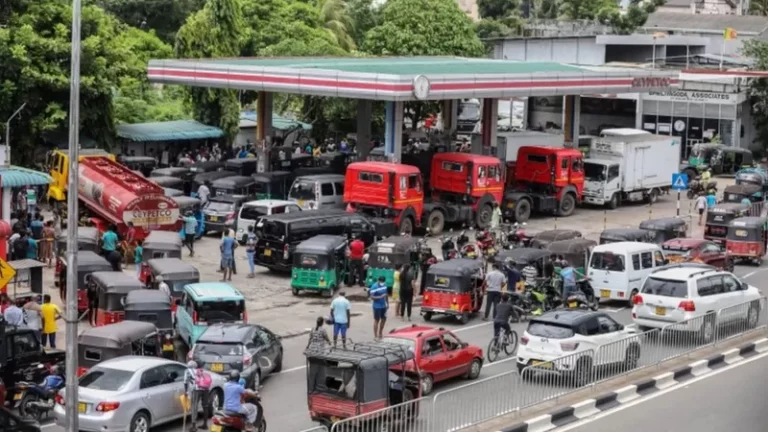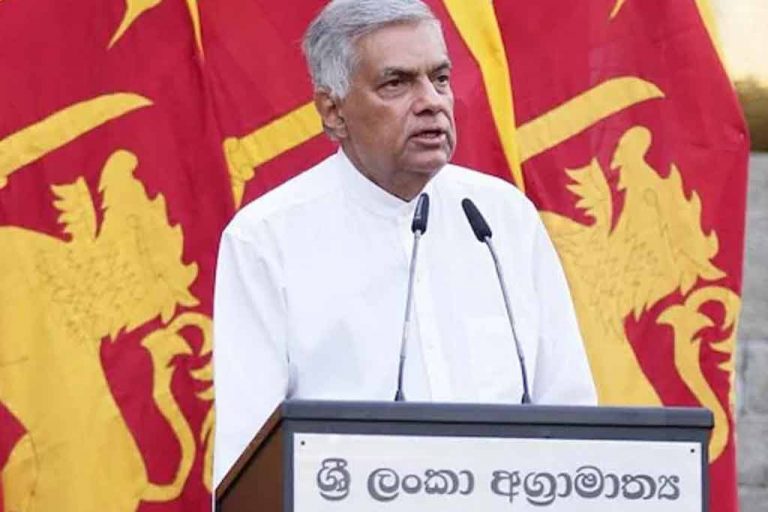
Chief Government Whip Johnston Fernando has stated in Parliament today (06) that the President will not resign.
He emphasized that the government would face the current situation in the country accordingly.
Chief Government Whip Johnston Fernando has stated in Parliament today (06) that the President will not resign.
He emphasized that the government would face the current situation in the country accordingly.
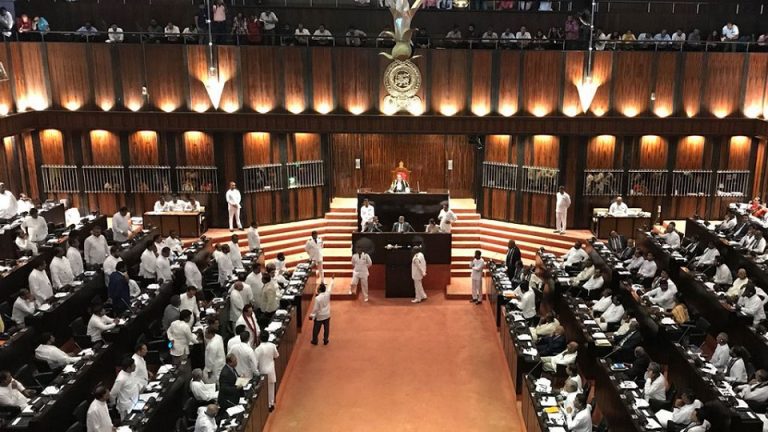
A special parliamentary debate has begun on the current situation in the country.
Leader of the Opposition Sajith Premadasa opened the debate with a number of questions.
Why was the state of emergency imposed? Why was the curfew imposed? Why was social media blocked? Premadasa asked that these questions should be answered before the commencement of the debate.
Meanwhile, Premadasa pointed out that at present there is no Minister of Finance or Secretary to the Treasury in the country.
The Leader of the Opposition said that the new Minister of Finance had submitted several reports to Parliament yesterday and resigned.
He also demanded an explanation as to who was behind the group that arrived on unregistered motorcycles in military uniforms with masks and weapons to the protest held near the entrance of the parliament yesterday.
The Leader of the Opposition also explained how the dollar problem in the country could be resolved immediately.
He said that as revealed through the Pandora Papers, action should be taken to bring back the stolen money from the country.
India faced a very similar situation in 1991, same as Sri Lanka today, they had only about $1.2billion of foreign exchange reserves left to run the whole country (barely enough to last for 3
weeks of essential imports and only weeks away from defaulting on external debt) To their benefit, they had an election an got a farsighted government.
Dr Manmohan Singh (an Economist) was appointed as the Finance Minister. He immediately sought an IMF bailout to prevent the country from bankruptcy and made Huge Economic Reforms.
The Huge Economic Reforms made by the farsighted economist Manmohan Singh brought India from $1.2 billion in 1991 to $600 billion as of now. Now India has the 6th Largest Economy in the world!
Sri Lanka too needs an Economist or a Financial Specialist to hold the position of the Finance Minister to overcome this extreme economic situation. And he should make Key Economic Reforms immediately while seeking an immediate IMF bailout. Unless we will never be able to overcome the economic situation and probably will default on our external debt. A caretaker government with competent people is what we need for six months to get out of this crisis. The caretaker government ideally should be led by veteran PM Ranil Wickramasinghe. The Finance Minister should be Eran Wickramarathne who was a state minister of finance. Harsha de Silva should be appointed the Investment promotion Minister and assigned the foreign ministry. This arrangement should only be for six months. If not Sri Lanka will never recover .
President Gotabhaya Rajapaksa has requested Ranjith Siyambalapitiya not to resign from the post of Deputy Speaker to protect parliamentary democracy.
With the decision of the 14 members of the Sri Lanka Freedom Party to become independent, Siyambalapitiya also took action to become independent from the post of Deputy Speaker.
However, the President has stated that he will reject the resignation on the grounds that it is an independent post and will continue to function in Parliament.
However, the SLFP is scheduled to raise awareness in this regard today.
Power interruptions of 6 hours and 30 minutes will continue today (06), as scheduled by the Public Utilities Commission of Sri Lanka (PUCSL).
On Monday (04), the PUCSL approved the Ceylon Electricity Board’s request for power cuts for four days (from 05 to 08), due to the limited supply of fuel for thermal power plants.
Accordingly, the power cuts have been scheduled as follows:
Areas ABCDEF
Four hours from 8.00 a.m. to 12.00 p.m.
Two hours and 30 minutes from 5.00 p.m. to 7.00 p.m.
Areas GHIJKL
Four hours from 1.00 p.m. to 5.00 p.m.
Two hours and 30 minutes from 7.30 p.m. to 10.00 p.m.
Areas PQRS
Four hours from 10.00 a.m. to 2.00 p.m.
Two hours and 30 minutes from 6.00 p.m. to 8.30 p.m.
Areas TUVW
Four hours from 2.00 p.m. to 6.00 p.m.
Two hours and 30 minutes from 8.30 p.m. to 11.00 p.m.
Area CC1
Three hours and 30 minutes from 6.00 a.m. to 9.30 a.m.


Korea doubles its employment quota for Sri Lankan migrant workers and increases Overseas Development Assistance amount to Sri Lanka- Minister for Government Policy Coordination of the Republic of Korea, Koo Yun-cheol
Minister for Government Policy Coordination of the Republic of Korea, Koo Yun-cheol, who is on an official visit to Sri Lanka, called on the Minister of Foreign Affairs, Prof. G.L. Peiris on 01 April, 2022. The meeting was followed by a luncheon where two sides discussed the entire gamut of bilateral relations and explored ways to further strengthen the close and friendly ties between Korea and Sri Lanka.
Extending Sri Lanka’s deep appreciation to the Korean Government for the enormous support extended thus far through loan assistance under the Economic Development Co-operation Fund (EDCF) and grant assistance via the Korea International Cooperation Agency (KOICA), the Minister of Foreign Affairs stated that the Government is looking forward to further expansion into many areas including pharmaceutical production, Small and Medium Enterprises (SME), waste disposal, energy, technology, vocational training and education.
Minister Peiris also explained the challenges Sri Lanka is currently experiencing with regard to its external budget and both sides agreed to work together to further enhance collaboration in mutually beneficial sectors. Approximately 22,000 migrant Sri Lankans are employed in Korea under the Employment Permit System (EPS). The Foreign Minister expressed appreciation of the Government of Sri Lanka for providing a pleasant working environment for Sri Lankans and looking after their welfare.
Minister Koo Yun-cheol stated that the Korean Government has already focused on providing more employment opportunities for Sri Lankans in South Korea. The Minister further highlighted that Sri Lanka has been listed as one of Korea’s priority countries for Overseas Development Assistance (ODA) allocations.
State Minister of Regional Cooperation Tharaka Balasuriya, Secretary to the Ministry of Foreign Affairs Admiral Prof. Jayanath Colombage and senior officials of the Ministry of Foreign Affairs participated in the discussion. Minister for Government Policy Coordination of the Republic of Korea was accompanied by the Deputy Minister for Political Affairs, Director General for Development Evaluation and Management, Secretary to the Prime Minister for Public Communications, the Korean Ambassador to Sri Lanka, senior officials of the Prime Minister’s office of the Republic of Korea and the Korean Embassy in Colombo.
The visiting Minister for Government Policy Coordination of the Republic of Korea also paid courtesy calls on President Gotabaya Rajapaksa, Prime Minister Mahinda Rajapaksa and met with several other Ministers including the Minister of Finance Basil Rajapaksa, Justice Minister Ali Sabry, State Minister of Skills Development, Vocational Education, Research and Innovation Seetha Arambepola, State Minister of Production, Supply and Regulation of Pharmaceuticals Channa Jayasumana and Korean businessmen in Sri Lanka.
Ministry of Foreign Affairs
Colombo
5 April, 2022
Following a recent decision by the Cabinet of Ministers, the Ministry of Foreign Affairs has initiated action to temporarily close down the Sri Lanka Embassy in Oslo, the Kingdom of Norway; the Sri Lanka Embassy in Baghdad, the Republic of Iraq; and the Sri Lanka Consulate General in Sydney, the Commonwealth of Australia; with effect from 30 April 2022. The decision with regard to the temporary closure of the two Missions and Post was taken by the Government of Sri Lanka following careful deliberation. It is part of a general restructuring of Sri Lanka’s diplomatic representation overseas, undertaken by the Foreign Ministry in the context of the current economic situation and foreign currency constraints faced by the country.
Following the closure of the two resident Missions, the Ambassador of Sri Lanka in Stockholm, Sweden will be concurrently accredited to Norway, and the Ambassador of Sri Lanka in Abu Dhabi, the United Arab Emirates will be concurrently accredited to Iraq. The consular jurisdiction of the Consulate General in Sydney will revert to the High Commission of Sri Lanka in Canberra, Australia.
The Foreign Ministry will undertake appropriate measures to address all consular-related matters of Sri Lankan citizens residing in Norway and Iraq, and within the consular jurisdiction of Sydney, through the new accreditation / arrangement as detailed above; as well as through the respective Honorary Consulates of Sri Lanka located in Norway, Oslo and Australia. The Foreign Ministry will carefully monitor the transition process.
The decision to close the resident Missions in Norway and Iraq, undertaken as a temporary measure in the current context, would not in any way impinge upon Sri Lanka’s bilateral relations with the two countries which are maintained at an optimum level of friendship and cordiality.
Ministry of Foreign Affairs
Colombo 05 April, 2022
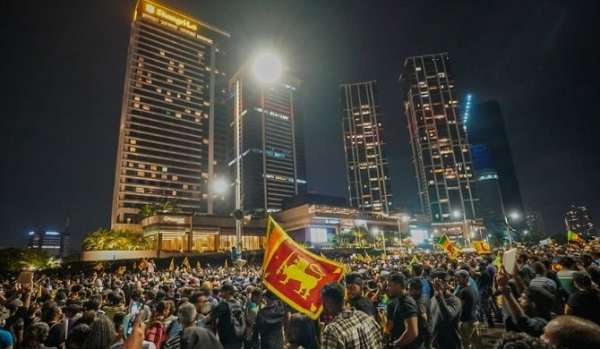
The slogan “Go, Gota Go!” which the people of Sri Lanka, the vast majority of whom constitute the youth and the politically unattached, have rallied around means much more than asking President Gotabhaya Rajapakse to resign. The people are fed up with the Rajapakse family and do not want any Rajapakse to be in any position of power. The people also do not want an authoritarian rule, whether under a Rajapakse or any other. They also want to get back to their lives, which had been denied due to utter mismanagement by the Rajapakses. The people also want freedom, the freedom to air their views and criticize those in positions of power. The people of Sri Lanka have spoken loudly and clearly.
While reiterating our support for the just demands of our fellow Sri Lankans, we as organisations representing the Sri Lankans living abroad make the following concrete proposals:
Signed:
Dr Lionel Bopage
On behalf of
Voice for Democracy in Sri Lanka International Collective (VDSL)
Voice for Justice in Sri Lanka Inc. (VJSL), Australia
Australian Advocacy for Good Governance in Sri Lanka Inc. (AAGGSL), Australia
Collective for Progressive Unity International Collective (CPU), and International Network for Sri Lanka’s Democracy e.V (INSD), Germany
Assistance Should Promote Strong Social Safety Net, Rule of Law
(Washington, DC, April 4, 2022) – Any future International Monetary Fund (IMF) program in Sri Lanka should protect the human rights of low-income people, and address corruption and entrenched obstacles to the rule of law, Human Rights Watch said in a letter to the IMF. The economic crisis in the country has caused acute shortages of essential goods including medicines, a crippling lack of fuel and electricity, spiralling inflation, and desperate hardship for millions of people.
On March 31, 2022, the IMF confirmed it will soon begin talks with Sri Lanka about a potential loan program. Major economic problems in the country have led in recent weeks to growing protests in Colombo, the capital, and across the country, highlighting the critical need for IMF support. President Gotabaya Rajapaksa declared a state of emergency on April 1, then imposed a 36-hour curfew and blocked social media in an attempt to curb protests, in which scores have been arrested. The government should respond to the protests in accordance with international human rights standards, which prohibit the use of unnecessary or excessive force.
“The protests roiling Sri Lanka are a clear message about many people’s economic situation,” said Sarah Saadoun, senior researcher focusing on poverty and inequality at Human Rights Watch. “The IMF and the Sri Lankan government should come to an agreement that supports people’s ability to afford life necessities and addresses the problems underlying the current crisis.”
In February, the IMF issued an Article IV report, which includes policy advice on how the Sri Lankan government should address the current crisis. The report laid out a plan for significant fiscal consolidation, achieved in part by increasing income and value-added tax rates, removing energy subsidies, and “rationalizing” the public wage bill. It recognized that these adjustments would have adverse impacts on low-income people and said that the government should mitigate the impact by strengthening social safety nets “by increasing spending [and] widening coverage.”
The IMF and the government should give priority to ensuring adequate investment in social protection programs before making any adjustments that would raise the cost of living, Human Rights Watch said. The World Bank estimates that 11.7 percent of people in Sri Lanka earn less than US$3.20 per day, the international poverty line for lower-middle income countries, up from 9.2 percent in 2019. The World Bank also assessed that “[l]ess than half of the poor were beneficiaries of Samurdhi,” Sri Lanka’s social safety net program, “and benefit amounts remain largely inadequate.”
While inflation reached over 18 percent in March, severely exacerbating economic hardship, the value of the Sri Lankan rupee has rapidly declined, making imported necessities, including medicines, sanitary products, food, and fuel, scarce or unaffordable for many people.
Recent government decisions raise concerns about whether adequate funds will be allocated for social investment. In the 2022 budget, the Defense Ministry received the highest allocation at 373.1 billion rupees (then US$1.86 billion), an increase from the previous year, amounting to 14.89 percent of total expenditure. The Health Ministry was allocated less than half that, 158 billion rupees (then US$790 million), a decrease from the previous year despite the Covid-19 pandemic. Some parts of the defense budget are excluded from civilian oversight, including intelligence services that have been implicated in serious abuses. These include surveillance and arbitrary arrests of families of rights victims and civil society activists.
In recent years, the IMF has given increasing importance to combatting corruption, recognizing that “[e]ntrenched corruption undermines sustainable and inclusive economic growth.” It is especially urgent for the IMF to include reforms to address corruption in Sri Lanka. The Rajapaksa administration, which took office in 2019, has repeatedly acted to block financial transparency and accountability by weakening independent institutions and by intervening to prevent investigations and prosecutions in high-profile cases.
The 20th amendment to the Sri Lankan Constitution, adopted in 2020, undermined the independence of the judiciary, as well as key institutions including the National Audit Office and the Commission to Investigate Allegations of Bribery or Corruption. Numerous prominent corruption cases have been withdrawn by the commission or the attorney general, or dismissed by the courts.
The Rajapaksa administration has aggressively sought to suppress civil society with intense surveillance of activists and nongovernmental organizations, reducing the public’s ability to hold the government to account.
Recommendations by Human Rights Watch to the IMF include:
“Sri Lanka needs economic help, but to be effective the IMF program needs to be robustly negotiated and properly carried out,” Saadoun said. “Reforms should ease people’s economic hardship, not exacerbate it.”
President Gotabaya Rajapaksa has issued a gazette declaration revoking the proclamation of the State of Emergency imposed four days ago.
Accordingly, the State of Emergency imposed islandwide will be lifted effective from midnight today (05).
MIAP