Home Blog Page 2335

Grenade Probe: Story on weapons recovery at doctor’s residence false – Oshala Herath (VIDEO)

0

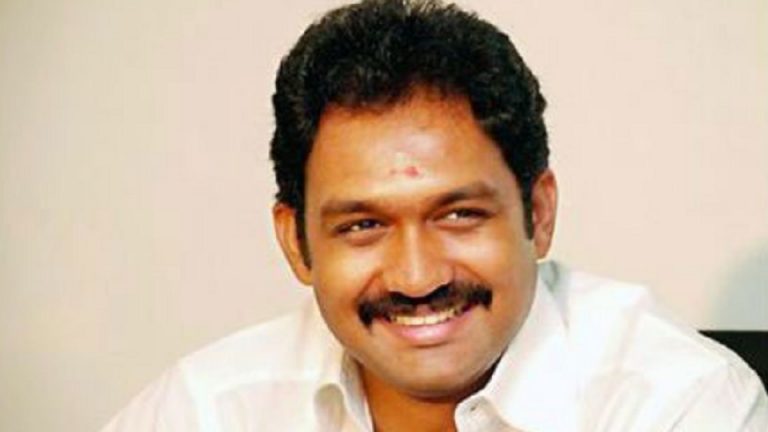
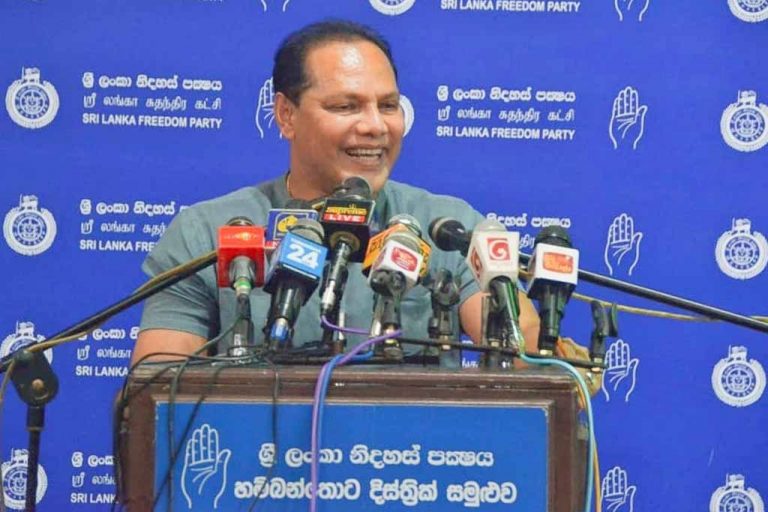
Some of the media reports on a ‘armory of weapons’ being recovered in the house of the retired medical officer who was arrested in alleged connection with the grenade recovery at the All Saints Church in Borella are completely untrue, said Social Activist Oshala Herath, son of the arrestee.

Social Activist Oshala Herath made this observation speaking to a briefing today (19).

The items believed to be ‘firearms’ were actually a palate gun belonged to his 11-year old son and several air rifles belonged to him, Herath revealed.

MIAP

JVP stages protest against handing over of Trincomalee Oil Tanks to India (PHOTOS)

0

The Janatha Vimukthi Peramuna (JVP) today (19) staged a protest from the Technical Junction, Maradana to the Colombo Fort Railway Station in objection to the handing over of the Trincomalee Oil Tanks to India.

The protest was launched at around 3.30 pm as a march, while the traffic congestion was high in the area.

As the protest marched passing the the Fort Bo tree, there was an egg attack, and the protesters went to the nearby shops and had a heated conversation.

Leader of the JVP MP Anura Dissanayake, Party Chief Secretary Tilvin Silva, former MPs Sunil Handunnetti and Wasantha Samarasinghe, MP Dr. Harini Amarasuriya, President of the Petroleum General Employees Union Ashoka Ranwala and other JVP frontline activists joined the march.

As the protest was marched to the Fort Railway Station, JVP Leader Dissanayake and Party Secretary Silva addressed the people.

Photos: Ajith Senevirathne

Click Here to view full photos.

Plot to oust MILCO Chairman? (VIDEO)

0

Lasantha Wickramasinghe speaking to a briefing held today (19) disclosed that he has been ousted from his position as the Chairman of MILCO by appointing Renuka Perera the Control Secretary of the Sri Lanka Podujana Peramuna (SLPP) in the position and this has not been communicated to him.

The former MILCO Chief stated that even he learned of the event via media.

Wickramasinghe also revealed that Agriculture Minister Mahindananda Aluthgamage had told him that the President was not aware of this reposition, adding that he, nevertheless, will continue to serve in his position until Mr. Perera assumes office.

“The company that went bankrupt in a matter of two years was turned into a for-profit company and last year it was turned into a company earning a profit of Rs. 400 million. A profit of Rs. 400 million was made in the year before as well. Also, the amount paid to dairy farmers for milk was last soared in 2015. But in the last two years we have increased the amount paid to dairy farmers by 30 per cent. Gratuities were paid to the workmen twice last year. We reserve 10 per cent of the profit for employee gratuities. We are happy with how we accepted the challenge and faced it together,” Wickramasinghe noted.

He added that steps have been taken to stop all the malpractices at MILCO in the recent past and that no one is capable of committing fraud.

The former MILCO Chief also stressed that he does not know whether some party lacks tolerance of this success.

MIAP

Verdict on former Defence Secretary over Easter Sunday Massacre on Feb 18

0

The hearing of the case filed against Hemasiri Fernando the former Defence Secretary on the allegation of failing to avert the Easter Sunday Massacre despite receiving intelligence was concluded today (19).

Accordingly, the verdict of the case will be declared on the 18th of next month, announcing whether Mr. Fernando will be acquitted from the charges or the defendant’s statement will be call in, said the Trial At Bar of the Colombo High Court.

This was when the case was taken up before the Bench comprising Justices Namal Balalle, Aditya Patabendige and Mohammed Irshadeen today.

Deputy Solicitor General Sudarshana De Silva appearing for the complainant stated that the hearing of evidence will be concluded.

MIAP

In Sri Lanka, a wild cat thrives in the unlikely urban jungle of Colombo

0
  • Sri Lanka’s largest city, Colombo, is home to the only known urban population of fishing cats throughout their global range.
  • Using tracking data, scientists are studying how these felines, about twice the size of a domestic cat, are navigating this built-up environment in one of the most densely populated cities on Earth.
  • They’ve found that the urban cats have a smaller range than their rural counterparts, and raid fish ponds and poultry pens for food.
  • The adaptability of Colombo’s fishing cats has given researchers optimism about the species’ survival in an increasingly urbanized world, but further studies will be needed to aid in their conservation.

COLOMBO — At his home in Thimbirigasyaya, a highly residential area in the heart of Sri Lanka’s commercial capital Colombo, Eshan Tudawe keeps expensive Japanese koi fish, a species of carp (Cyprinus rubrofuscus), in a pond.

But to his dismay, these fish started to disappear after nightfall. So he set up security cameras trained on the pond, and soon identified the thief: a young fishing cat, Prionailurus viverrinus.

Recognizing the opportunity to study the behavior of this wild cat in an urban setting, Anya Ratnayaka of the Urban Fishing Cat Conservation Project started stocking Tudawe’s pond with less expensive fish. A few weeks later, the same fishing cat got stuck in a nearby drainpipe and was rescued by a team from Sri Lanka’s Department of Wildlife Conservation (DWC).

Conservation officials fitted the cat with a radio collar before releasing it. Over the next six months, until the collar fell off, the tracker would provide valuable data about the cat’s movements. It showed, Ratnayaka found, that the cat made use of built-up areas and canal systems in this busy area to lie low. It also showed the cat sheltering by day in human structures, even in the attics of houses.

“The closest wetland to the location is about 4.5 kilometers [2.8 miles] away, so this fishing cat thrives entirely on this highly urban area,” Ratnayaka told Mongabay. “It is a sub-adult male, so could be pushed into marginal habitat by adults to find in this urban setting.”

Ratnayaka and a team from the DWC also collared four other fishing cats — two translocated cats and two residential cats that now live in the 24-hectare (59-acre) Diyasaru Park and 449-hectare (1,110-acre) Jayawardenapura Wetland Sanctuary in Colombo — to learn about how these felines, twice the size of a domestic cat, survive in one of the most densely populated cities on Earth.

“To our knowledge, this is the first fishing cat-focused GPS collar study in an urban landscape,” Ratnayaka said.

A wetlands-associated species, fishing cat feeds mainly on fish and a terrestrial apex predator found in Colombo. Image courtesy of Scott Kayser.

Resourceful fishing cats

Ratnayaka and her fellow researchers recently published the results of their 2013-2019 tracking efforts. Among the key findings: urban fishing cats have a smaller home range than rural ones, and females have the smallest ranges of all, possibly due to a preference for a safer known habitat closer to food sources to raise their young.

The fishing cat, as its name suggests, is a wetland-dependent species, but the study found that Colombo’s urban fishing cats spend more time in built-up areas than in wetlands. Here, too, the tendency is more pronounced among males of the species.

By day, they appear to favor wetland habitats, and by night venture into human-modified urban areas. Ratnayaka said the cats are extremely resourceful and have adapted to urban settings better than previously thought.

“We tend to think animals in natural areas have more food and shelter, but it is not always the case,” she said. “For example, a fishing cat in a typical Sri Lankan jungle would have to compete with the leopard and jackal for food and safety. The saltwater crocodile would be the only natural predator for mature fishing cats in Colombo, and they can find food by expending less energy by catching ornamental fish and birds.”

However, in their quest for food, fishing cats often raid poultry pens, triggering conflict with humans. People are also fearful of fishing cats when they come out at night. Ratnayaka said she takes a lot of time to educate the public about fishing cats through awareness programs to promote co-existence.

This fishing cat kitten was found in Colombo. Image courtesy of the Urban Fishing Cat Conservation Project.

Fatal road accidents  

The researchers had a heartbreaking moment when one of the translocated animals was run over on an expressway, about 6 km (4 mi) away from its release site, while trying to find its way back to its original home range. The fate of the other translocated cat is unknown after its collar stopped emitting signals six months after being fitted.

“The results also tell us the importance of trying to prevent translocations, and if it cannot be prevented, careful action should be taken such as keeping the fishing cat in a large enclosure where it is to be released, helping them to settle in the area,” Ratnayaka said.

Researchers and residents have long suspected that fishing cats frequent the urban jungle of Colombo. Past reports of “mystery cats” and the occasional accidental killing of fishing cats on the outskirts of the city pointed to that possibility.

Anya Ratnayaka, left, puts a radio collar on a fishing cat with the assistance of Department of Wildlife Conservation officials, led by Tharaka Prasad, at back in the middle. Image courtesy of the Urban Fishing Cat Conservation Project.

The first proper study of Sri Lanka’s fishing cats were conducted by Eric Wikramanayake in the 1990s. His camera traps captured many images of the elusive cats, but the research had to be halted due to security concerns due to the Sri Lankan civil war that only ended in 2009. The main study sites, such as the Sri Jayewardenapura marshes and the  Bellanwila-Attidiya wetlands, were located near the country’s parliament and a military airport, respectively, making them prime targets for possible attacks.

Determined to study Colombo’s fishing cats while taking actions to conserve the species, Ratnayaka in 2013 founded the Urban Fishing Cat Conservation Project in Colombo. To confirm the cats’ presence in the city, the team set remote camera traps in selected wetland habits around Colombo, snapping photos of the cats in many different locations.

Colombo was in 2018 accredited as a RAMSAR wetland city, despite losing more than 60% of its wetlands since the 1980s. Its current rate of wetland loss is around 1.2% per year. Ratnayaka said it’s important to protect these remaining wetlands to secure the future of Colombo’s urban fishing cats, though some could adapt to a fully urban setting.

While the species occurs throughout South and Southeast Asia, Colombo is home to the only known urban population of fishing cats.

“But based on our observations,” Ratnayaka said, “it is possible that other urban populations exist elsewhere without getting themselves noticed.”

Citation:

Ratnayaka, A. A. W, Serieys, L. E. K, Prasad, T., Leighton, G. R. M, Sanderson, J. G, & Leung L. K. P. (2021). Urban habitat use and home ranges of fishing cats in Colombo, Sri Lanka. Mammalian Biology. doi:10.1007/s42991-021-00198-z

Banner image of a fishing cat captured at the Royal Colombo Golf Club courtesy of the Urban Fishing Cat Conservation Project.

Monga Bay

CEB Electrical Engineers on work-to-rule!

0

The Electrical Engineers Association of the Ceylon Electricity Board (CEB) has launched a work-to-rule trade union action from 12 noon today (19), in objection to the appointment of the new General Manager of the CEB.

The Electrical Engineers Association yesterday staged a protest on sick leave in objection to the new General Manager and told media that it would be launching a work-to-rule trade action today if the demand was not met.

Accordingly, the engineers who will be on duty in the first phase will be on duty only during the designated period.

However, they added that they will be reporting for duty in emergencies and crisis situations across the island during the first phase.

They added that they will not be reporting for duty after 04.15 pm in the second phase and even may be going on strike of nature after 1996 in the third phase was the matter not resolved under this circumstance.

The electrical engineers will not be responsible for the inconvenience caused to the government and the people amid the action, for the Chairman of the CEB and the those who endorsed the ‘US Pact’ should be held accountable, they added.

MIAP

Special order from President summoning Armed Forces for public security!

0

President has issued a special order summoning the Armed Forces in a move to ensure public security.

This has been informed to Parliament by Speaker Mahinda Yapa Abeywardena.

The order has been made in compliance with the powers vested in the President by the 12th clause of the Public Security Act.

MIAP

China to supply free rice for five months

0

The Chinese government has decided to supply 10 metric tonnes of rice to Sri Lanka for free.

This has been informed by the Chinese Ambassador to Sri Lanka to Finance Minister Basil Rajapaksa and the matter has been briefed in the Cabinet Meeting yesterday (19).

China has decided to release this consignment of rice at the request of Trade Minister Bandula Gunawardena on the occasion of the 70th anniversary of the Sino-Sri Lankan Rubber-Rice Trade Compact.

The consignment is believed to be sufficient for five months of consumption.

MIAP

Divineguma Case: Verdict in February

0

The hearing of evidence in the High Court case on the alleged misappropriation of funds belonging to the “Divineguma” Fund has been concluded.

The case is filed against Minister Basil Rajapaksa and several others, running back to the previous Mahinda Rajapaksa government.

The case was taken up before Colombo Chief High Court Judge Damith Thotawatta today (19). Lawyers appearing for the defendants requested the Court to acquit their clients.

The High Court Judge declared that the hearing of evidence has been concluded and that the verdict will be declared on February 01, 2022.

MIAP

Three new appointments from government

0

The government today (19) has made three new appointments for the Prime Minister’s Office, the Ministry of Irrigation and the Sri Lanka Ports Authority (SLPA).

Anura Dissanayake, who served as the Secretary to the Ministry of Irrigation, has been appointed as the new Secretary to the Prime Minister.

K.W. Ivan De Silva has been appointed as the new Secretary to the Ministry of Irrigation.

Meanwhile, Dr. Prasantha Jayamanna, who served as the Vice-Chairman of the SLPA, has been appointed as the new Chairman of the Authority.