Home Blog Page 2346

Today marks the 1000th day of the Easter Sunday Bombings

0

Today (14) marks the 1000th day of the series of bombings that took place on Easter Sunday, April 21, 2019. The death toll from this brutal series of bombings was close to 270.

Today, the 1000th day of the attack, national service will be held under the patronage of Cardinal Malcolm Ranjith, Archbishop of Colombo. It will be held at Thewatta Basilica, Ragama at 10.00 am.

Special religious programs will also be held in all Catholic churches today, emphasizing that justice has not yet been done to the victims of this attack.

On April 21, 2019, St. Sebastian’s Church in Katuwapitiya, Negombo, St. Anthony’s Church in Kochchikade, Kotahena, Zion Church in Batticaloa, Kingsbury, Shangri-La, Cinnamon Grand and Dehiwala Tropical Inn Accommodation were bombed by suicide bombers. When police raided the house of one of the bombers in the Dematagoda area, another suicide bomber struck.

Sri Lanka is flirting with default

0

Gotabaya Rajapaksa’s government is reluctant to go to the IMF

Thanks, but no thanks

Almost three years since terrorists blew up hotels along Colombo’s lovely beaches and two years since covid-19 shut down international travel, tourists have begun returning to Sri Lanka, providing sorely needed foreign exchange. The country’s stockmarket has been bounding along, up by more than 80% in 2021, trailing only commodity-rich Mongolia among global bourses. Corporate profits have been strong, too. gdp growth last year was somewhere between 3.5% (by private estimates) and 5% (by the government’s). This suggests a thriving economy. Yet alarm bells are clanging.

Encouraging though the renewed tourist arrivals may be, they are still barely a fifth of the pre-pandemic peak. Exports grew strongly in the fourth quarter of 2021 but are still too meagre to prevent a looming financial crisis. Years of heavy foreign debt and current-account deficits have taken a toll. Foreign reserves have collapsed (see chart). Supplies of oil, cooking gas, milk, wheat and medicine are running short. A rapidly depreciating currency has helped the country’s exporters, including clothing manufacturers and tea growers. But it has made servicing foreign-denominated debt more costly and has stoked inflation, which jumped during 2021 to 12% and appears to be accelerating.

The numbers are sobering. Interest obligations on government debt in 2021 amounted to 72% of total revenues, while public-sector salaries and pensions came to 80%. Multiple downgrades have in effect locked it out of the international private-credit market. On January 12th s&p, a credit-rating agency, downgraded Sri Lanka’s debt further, citing “increasingly likely default scenarios without unforeseen significant positive developments”.

So Sri Lanka finds itself looking down the barrel of a gun. On January 18th $500m in foreign-currency-denominated debt will come due. Another $5.4bn in principal and interest will need to be paid by the end of the year. Similar payments are required for years to come. That has provoked a series of complex financial manoeuvres. In January the central bank disclosed that it had sold off half the country’s $382m of gold reserves. Rumours abound that the rest has been liquidated too. One obligation—an oil bill of $251m owed to Iran—was paid in tea. The government has also taken a series of heavy-handed actions to preserve foreign currency. It has banned the import of cars. It briefly tried to ban foreign chemical fertiliser in the name of going organic, until crashing agricultural yields forced it to change its mind.

Other measures include a currency swap with China, nominally expanding the central bank’s foreign-currency reserves from $1.6bn to $3.1bn. It is unclear whether the money can be used for anything except Chinese goods. A similarly complex deal has been announced with India, along with—perhaps not coincidentally—the resolution of a long-running dispute over India’s stake in a Sri Lankan oil-storage facility. State assets, including prime property, have been put up for sale. No one has so far been keen to buy them.

A bigger problem is that Sri Lanka’s increasingly desperate deals do not address the real reason for its current travails. After Gotabaya Rajapaksa was elected president in 2019, he abandoned the fiscal and monetary-policy conditions imposed by the imf three years earlier after another financial upheaval. Taxes were cut and interest rates pushed down. The approach was not without merit. It may have softened the harsh consequences of the post-covid global economy and reawakened the animal spirits of businesses that are now reflected by the soaring stockmarket. But it has proved to be unaffordable. Deficit financing on this scale is unfeasible.

Were the imf to arrange a restructuring of the country’s finances, interest rates and taxes would probably rise, government spending decline, and bondholders would have to take losses. In exchange there would be stability and new funds. But Mr Rajapaksa’s government has vocally opposed imf intervention, calling it an infringement of sovereignty. Still, some kind of restructuring seems inevitable, either under the oversight of a multilateral agency or with a more comprehensive government plan that has yet to be presented. The alternative is default—and the risk of higher inflation, fewer imported goods and an end to the current recovery. 

THE ECONOMIST

If 3000 metric tons of diesel is not delivered, there could be a power cut today as well! – CEB

0

The Ceylon Electricity Board says that if 3000 metric tons of diesel is not delivered today (14) as promised by the Ceylon Petroleum Corporation, there could be a power cut today as well.

Power outages occurred in several areas yesterday due to the failure of several generators at thermal power plants due to lack of fuel.

CEB General Manager and Media Spokesman Andrew Navamani stated that if the stock of diesel is provided, power outages can be minimized to some extent. The Ceylon Petroleum Corporation (CPC) has promised to supply 3,000 metric tons of diesel.

However, CEB sources said that the power crisis could escalate in the future due to the shortage of fuel.

Welikada Killings: Emil Ranjan who is sentenced to death accommodated at the Prison Hospital!

0

Former Superintendent of Prisons Emil Ranjan Lamahewa, who was sentenced to death for the shooting death of eight inmates at Welikada Prison, has been accommodated at the prison hospital, reports say.

When inquired about this, prison spokesman Chandana Ekanayake had stated that former prison superintendent Emil Ranjan had been sent to the prison hospital as he could have received threats from other inmates.

Accordingly, he has been given special protection and has been admitted to the prison hospital.

Welikada Prison Hospital is a very comfortable place compared to other units in the prison. That is why, especially when politicians, top government officials, and businessmen are imprisoned, they rush to the prison hospital for health reasons.

This time it seems that the Prisons Department is taking special care of its former colleague and taking steps to provide him with prison hospital treatment even though he is not ill.

Sri Lanka and Hungary agree for better utilization of GSP+ facility

0

Sri Lanka is to optimize utilization of the EU GSP+ facility in accessing the Hungarian market, as Sri Lanka’s key exports benefit from duty free access to the EU market.

Moreover, interest was also expressed in the early conclusion of the Double Taxation Agreement between the two countries, as well as cooperation, inter alia, in science and technology, Ayruveda and renewable energy.

Minister G.L Peiris  met the Hungarian Minister Péter Szijjártó on 12th January during his visit to Sri Lanka. 

Minister Peiris noted with appreciation Hungary’s empathetic approach towards Sri Lanka in addressing residual issues of reconciliation, and apprised the Hungarian Minister on progress in reconciliation and the credible domestic framework in process to promote and protect human rights, in keeping with the country’s international obligations.

Minister Peiris also noted that Hungary is a member of the European Union (EU), with which Sri Lanka maintains an important and abiding partnership.

The two Ministers highlighted the importance of broadening and deepening economic relations, including the promotion of trade, investment and tourism ties in the current global context. Towards this end, the two Ministers agreed to convene the second session of the Sri Lanka-Hungary Joint Commission on Economic Cooperation (JCEC) at an early date this year. 

During the visit, Minister Szijjártó, who was accompanied by a substantive business delegation from Hungary, launched the Sri Lanka-Hungary Business Forum in partnership with the Minister of Trade Bandula Gunawardena, under the aegis of the National Chamber of Commerce of Sri Lanka.

Noting that development cooperation comprises an important element of the bilateral partnership, Minister Peiris conveyed Sri Lanka’s appreciation to Hungary for providing infrastructure development assistance to Sri Lanka through a soft loan of Euro 52 million. 

The current projects include the construction of flyovers at Kohuwala and Gatambe. At the invitation of the Minister of Highways Johnston Fernando, Minister Szijjártó visited the construction site of the Kohuwela flyover where the two Ministers laid the foundation stone for the project.

Another fruitful outcome of Minister Szijjártó’s visit was the signing of the Memorandum of Understanding between Sri Lanka and Hungary on Cooperation within the Framework of the Stipendium Hungaricum Programme for the Years 2022-2024. 

Under the programme, Hungary offers 20 scholarships annually to qualified Sri Lankan students to undertake undergraduate and postgraduate studies in a wide array of academic fields including engineering, sciences, economics and water management. Sri Lanka is the 86th country to benefit from the scholarship programme.

In the sphere of bilateral cooperation, the two Ministers agreed on the need to convene regular political consultations between the two Foreign Ministries to discuss issues of mutual interest.

In addressing the shared challenges posed by Covid-19, Minister Peiris acknowledged the support rendered by countries in Europe through the EU and bilaterally, such as Hungary, to enable vaccine equity globally.

India confirms financial assistance to Sri Lanka

0

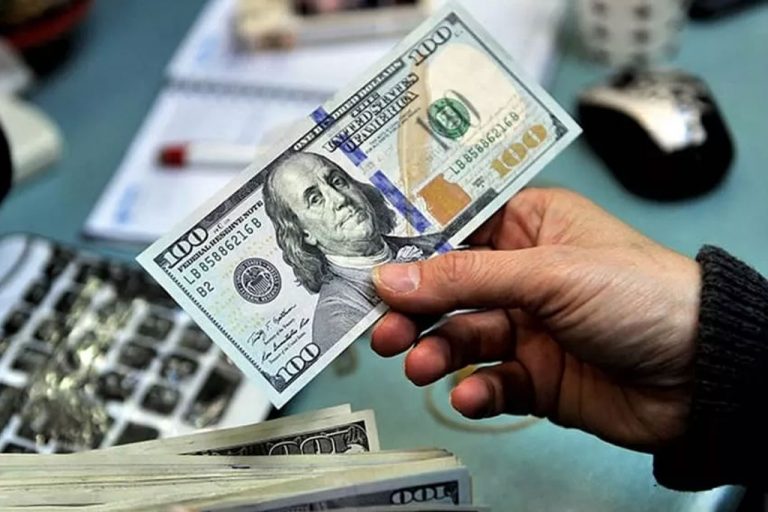
India today confirmed financial assistance to the tune of USD 900 million to Sri Lanka.

The Indian High Commissioner to Sri Lanka Gopal Baglay met Central Bank Governor Ajith Nivard Cabraal.

The High Commissioner expressed India’s strong support to Sri Lanka in the wake of the Reserve Bank of India extending over USD 900 mn facilities to Sri Lanka over the last week.

“These include deferment of Asian Clearing Union settlement of over USD 500 mn and currency swap of USD 400 mn,” the Indian High Commission in Sri Lanka tweeted.

The High Commissioner noted that these steps are in line with India’s strong commitment to stand with Sri Lanka for economic recovery and growth.

Earlier, China had assured Sri Lanka continued economic assistance, hours after Central Bank Governor Ajith Nivard Cabraal said that Sri Lanka is negotiating another loan from China.

The Governor had also said that Sri Lanka is negotiating a USD 1 billion facility with India to import goods from India.

Cabraal said that this will also help Sri Lanka in its debt repayment and promote more trade with the respective countries.

In April 2021, foreign debt amounted to US$ 35.1 billion. Out of the US$ 35.1 billion, 47% (US$ 16383.4 million) was accounted for by international market borrowings; 10% (US$ 3388.2 million) was owned to China; 13% (4415.7 million) to the Asian Development Bank; 9% (US% 3230.9 million) to the World Bank; 2% (US$ 859.3 million) to India, and the rest was owed to others.

Sri Lanka’s gross official foreign exchange reserves fell to US$ 2,267 million in October 2021, down 73% August 2019.

Meeting foreign-currency debt-servicing needs for 2022 will be government’s immediate concern, economic commentator Dinesh Weerakkody says. 

According to him, two big payments are due in 2022 – a US$ 500 million bond in January, followed by US$ 1 billion of debt maturing in July. It is estimated that a total of US$ 5 billion will be required to service debt obligations (principal plus interest) and other commitments in 2022.

In 2020, imports were reduced by approximately US$ 3.9 billion (a 20% reduction in comparison to 2019) resulting in a US$ 2 billion drop in the trade deficit. 

This gave the government temporary breathing room to manage foreign debt repayments in 2020, points out, an economist.

He warns that with the increase in oil prices in the global market and an expected post-COVID economic revival in Sri Lanka in 2022, fuel import bills will rise again, putting further pressure on foreign reserves. 

Referring to the government’s policy of barring imports to save foreign exchange, he argues that the strategy of managing foreign debt through curtailing imports is not a sustainable solution for a country like Sri Lanka, in which more than half of imports are intermediary and capital goods.

The continuous restriction of imports will curtail economic growth. which is not something that Sri Lanka can afford right now,” he avers.

Sri Lanka has resorted to issuing International Sovereign Bonds (ISB) and roll over of foreign loans. Successives have been swearing by ISBs. 

This is because, unlike the IMF and concessionary loans, the ISBs carry few or no conditions. But the terms are not favorable for poor countries with low foreign exchange reserves.

Prima KottuMee ‘Hot N Spicy Kricket’ Rewards Loyal Consumers

0

Colombo, 13 January 2021: The much-awaited Prima KottuMee “Hot N Spicy Kricket” 2021 promotion recently ended on a successful note, celebrating their most loyal customers from all corners of Sri Lanka.

Prima KottuMee rewarded lucky winners who entered the competition from across the country with a host of valuable gifts – including smart watches, mobile phones, and cash prizes – on a daily, weekly, and monthly basis.

Winners were selected upon sending an SMS with the unique code found inside each sachet packet of Prima KottuMee to 2343. Out of this, two lucky winners were rewarded with smart watches on a daily basis, while eight loyal consumers received cash prizes worth Rs. 50,000 and more were awarded mobile phones each week.

Dulaj Dananjaya from Ragama emerged as the Grand Prize Winner of the 2021 Prima KottuMee “Hot N Spicy Kricket” promotion, winning an amazing cash prize of Rs. 250,000.

Prima KottuMee prides itself on being closer to its loyal consumer and delivering on its brand promise of “Prima KottuMee Fun Thamai”, going into 2022.

Shopaholics demand MORE!

0

Colombo, 13th January 2021: Shoppers across the country have taken to the streets, demanding more than just a shopping experience. They want more – a more rewarding experience that transcends the boundaries of an average shopping experience, extending to shoppertainment and the rewards of an overall shopping adventure. More opportunities to watch, shop, play and explore are among the list of demands displayed by these shoppers.

As the leading e-commerce platform in Sri Lanka, Daraz has understood the need to provide an experience that surpasses the limitations of just shopping, in order to revolutionise the industry. Accordingly, Daraz is speculated to be entering a new phase of its journey as it sets the bar as more than just a shopping experience, introducing shoppers across the country to a new world of online retail – an immersive and inclusive experience.

Stay tuned for more information, as this unusual activity seems far from over.