His Eminence Malcolm Cardinal Ranjith, the Archbishop of Colombo, expressed his suspicions over the bomb discovered in a church in Borella, in what he described as a possible ‘plot to intimidate’ the Catholic Church, speaking to a briefing held in Colombo today (13).
Pointing out that the Police’s conduct towards the chain of events is also suspicious, the Cardinal added that the ‘unknown figure’ appeared in the Church in the morning of the incident as revealed in the CCTV footage must be disclosed.
Innocent people like the cleaning man and caretaker of the Church, who was arrested in connection with the bomb recovery, should not be hunted down in a situation like this and the truth should be uncovered, the Cardinal emphasised.
He went on saying that police officers shall be honest not bidding the will of politicians, confronting that they should be leaving their posts if they are unable to stand up for the truth.
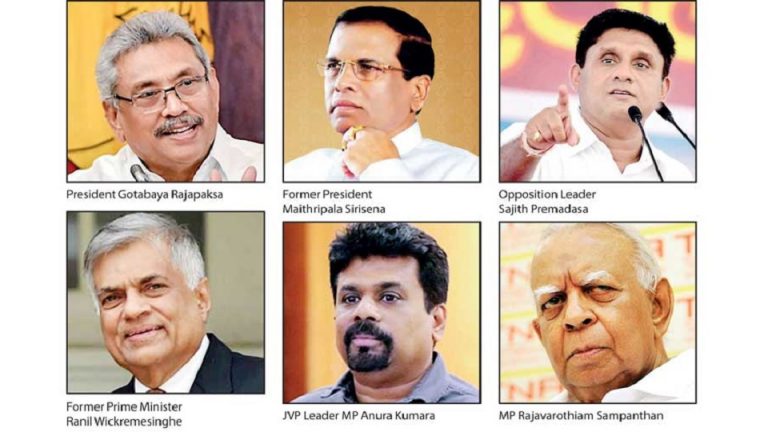
Leader of the Opposition Sajith Premadasa donated shoes for 500 school children in Chavakachcheri Madduvil School, in celebration of his birthday yesterday (12).
Addressing the occasion, Premadasa emphasised that education is the foundation of the future of the country and his foremost policy to build a strong and developed nation is to provide all necessary facilities for education.
MP Maithripala Sirisena should stop criticising the government and make a clear decision, said State Minister of Women and Child Development, Preschools & Primary Education, School Infrastructure & Education Services Piyal Nishantha De Silva, speaking to media today (13).
These questions will be answered very soon, the State Minister said, suggesting that Sirisena is a person whose fantasies are wondrous rather than actions.
‘Janadhipathi Thatta’ a book written by his daughter about him must be read to understand Sirisena, De Silva added.
Former Prime Minister and UNP leader Hon. Ranil Wickremesinghe says
that a programme with the International Monetary Fund (IMF) is necessary to minimize the impact of the growing debt repayment crisis, because homegrown solutions are not effective.
Furthermore unlike in the past, Sri Lanka’s debt problem has increased at a time when there is a global debt problem. This makes the situation even more challenging and complex. Sri Lanka is a highly import-dependent economy and that compounds the crisis further he noted. The former Prime Minister said that this crisis is largely self inflicted due to poor economic management. The reduction of tax was uncalled for and increased the budget deficit
exponentially. Further he noted that he is so surprised as to why the government did not go for an IMF program in early 2020 knowing very well the foreign income was going to plummet. He further noted that the IMF will not recommend solutions that will aggravate the current economic crisis . SLPP sources say it was PB Jayasundara, Prof Lakshman and SR Attygalle who led the economic strategy and they are responsible for this unprecedented economic crisis. The rating agency Moody has pointed out that funding the latest relief package with reallocations from the budget in part reflects this limited fiscal space, which will constrain the government’s ability to use fiscal policy to mitigate the impact of economic shocks.
A Chinese expert is set to arrive in Sri Lanka to inspect the faulty generator at the Norochcholai Coal Power Plant, revealed the Ceylon Electricity Board (CEB).
Upon troubleshooting the machine, it would be possible to restore the generator out of order, said Chairman of the CEB M.M.C. Ferdinando.
Accordingly, a continuous capacity of 300 MW will be added to the national grid and then a continuous supply of electricity can be provided, he added.
The occasional power outages evident in the recent were mainly due to the collapse of power generation at the Plant. Hydrocapacity has also dropped and meanwhile problems have arisen at the Kelanitissa Thermal Power Plant as well.
Ferdinando added that there is no crisis regarding the application of coal required for power generation, for the CEB has the required stocks of coal until next May. Steps are being taken to import coal for the rest of the year, he added.
Bhanuka Rajapaksa has decided to withdraw his decision to leave the international arena, by informing the SLC in a letter that his letter of retirement will be withdrawn.
Rajapaksa has also requested the SLC to reconsider his selection for the national team.
In a recent letter to the SLC, Rajapaksa has informed that he had decided to retire from international cricket, seeding endless speculations to be born in the field.
There were rumours that Rajapaksa was preparing to leave for the United States for citizenship due to being influenced by unseen fists. Rumours further went on speculation that Rajapaksa was preparing to retire from the sport due to his ill health, or on religious grounds.
Following his decision, a large number of former cricketers, politicians and fans demanded that Rajapaksa’s decision be changed. Sports Minister Namal Rajapaksa also urged Bhanuka not to say goodbye to Cricket and a meeting was held with the cricketer thereafter, which might have influenced Bhanuka to change his decision.
Bhanuka Rajapaksa’s decision to stay on the ground will be a source of great joy to the Sri Lankan cricket fans.
With a view to advancing the economy government owned Sri Lanka Mineral Sands Ltd. has begun rapid removal of Ilmenite from the coastal regions of Mullaitivu District’s Kokkulai, Kokkuthoduvai, Nayaru, Muhathuvaram, and Chemmalai. Ilmenite is of great importance in making solar cells, marble for flooring and paints. This natural resource, not having been used to establish factories of significance in Sri Lanka, is exported to Australia and China at great environmental cost.
New Plant: Devastation as Development
Trincomalee’s Ilmenite Factory
The factory Lanka Mineral Sands Corporation has been operating from the village of Pulmodai in Trincomalee District in the Eastern Province since 1972. There are signs that the factory will soon run short of the required sands, and for 18 years (from 2004) has been looking for other places as alternative mining sites and discovered the potential of the seashores of Mullaitivu District’s Kokkulai, Kokkuthoduvai, Nayaru , Muhaththuvaram and Chemmalai. In truth it has been noted by D.W. Herath in his 1980 book that there are 12 locations in Sri Lanka with Ilmenite. Of these only three are in the North-East. The remaining 9 sites are in the South.
However, it was in Mullaitivu District that the Mineral Sands Corporation began its mining activities in 2006. A total of 10 km long coastline – 6 km from Kokkulai to Kokkuthoduvai, and 4 km from Karunaatukerni to Nayaru – was identified for exploitation. A 25 m wide stretch from the shore is to be mined.
The people of the locality are wild with anger that when Sri Lanka has 12 potential sites for mining, it is the Tamil areas of the Northeast that are to be mined causing extensive devastation of the environment as pointed out by environmentalists. As a result of the restrictions on sand exploitation placed by the district administration, the quantum of sand removed was initially limited. As the district’s fisherfolk organizations and landowners made known their objections, in the years 2016 and 2017 sand removal was only at a slow pace. Moreover, as the exploited shoreline was government-owned, the District Secretary’s feasibility report which was called for, imposed some conditions. The most important of these was that the environment should not be affected.
District Secretary’s Proposals
The Mullaitivu District’s District Secretary’s proposal of 2017 had seven important elements. These emphasized that no damage be done to the natural resources and surrounding environment. In addition, when thousands of tons of sand are removed creating huge holes in the ground, these must be covered first before new holes are dug to remove sand. This is because fishermen pull-in nets of fish from the shoreline and the mining would adversely affect their livelihood. When this proposal was tabled, the corporation announced within six or seven months that sandmining would avoid seasons when such fishing activities are ongoing.
Craters Covered Up
District Secretary’s Conditions
Be that as it may, no one seemed to have answers to how the destruction of the environment as a result of sandmining might be avoided or at least ameliorated as the removal of sand stops the development of the shore area. When queried, Jaffna University’s former VC and Emeritus Professor P. Balasundarampillai responded, “When sand is washed ashore, the coastal belt grows. It is nature’s means of naturally preserving the environment. But when sand is removed in the name of developing natural resources, that growth is stunted. The nature of agricultural lands changes, and neighboring lands turn salty. Not only do succulent plants die but their regrowth is halted for a long time. As a result, people cannot settle down close to the mined beaches nor engage in agriculture.”
We note that as a result of 50 years of sandmining in Pulmoddai, 2000 acres of coastal land are seen defoliated.
At the same time, it is not just the 25 m width of land from the shore that is said to be limited to mining but a lot more – like 100 m with the excuse of water barrages and pathways for transport. When asked about this, Northern Province Engineer for Shoreline Protection, Mr. Thulasitharan stated, “In this District a 100 m wide land has been allocated for the protection of the coast in 2022. This has to be renewed annually because when plants and trees are destroyed, they need immediately to be annually replanted, and it was on this condition that permission is renewed annually considering the environmental drawbacks in the area, gathering the opinion of the people and the Environmental Department.
45 Acres: Acquired and Fenced Off
Right now, in Kokkilai East along the Kokkilai-Mullaitivu Main Road 45 acres of private land called Kambitharai have been nationalized for putting up a Mineral Sands factory. Without the permission or consent of the 18 owners of the land, the nationalization has been gazetted and a fence erected around the land. Of these 18 aggrieved owners, Jeyasankar Suhanthini, the proud owner of 6 acres stated, “No social impact assessment was done. We have relied on this land for our livelihood since the year 2012 when we were resettled after the war. Up to the 2019 Kaalapoham we planted on this field. But now my husband and I are forced into abject coolie work. Without a word from us, our land has been expropriated and our environment damaged. What was our paddy land until 2019 sustaining variegated kinds of animals, has been so badly exploited that even earthworms cannot live on it. This ilmenite mining and the factory for separating ilmenite from the sand has denuded the land and spoilt the water.”
When queried, Marine University Professor Soosaithasan averred, “When sand is mined it is necessary first to ensure that the place occupied by the vacated sand is not filled by water. When this is not done, the holes dug out naturally are filled with water. In addition, before the digging the environmental advantages in the region have to be destroyed irreversibly. That region experiences a rise in temperature and fishes normally migrating there go elsewhere. This vitiates the sea’s tendency to sustain diverse life forms. When barrages are erected, rainwater cannot run to the sea, and flood damage and agricultural destruction go hand in hand. In this environment this plan was begun without considering the dangers. Had we done so, we would see alternatives put forward. It is said that sand was dug out only to a depth of 4 feet in Pulmoddai. However, when inspected directly the holes were 6-7 feet in depth. These holes have not been filled for many years. After separating the ilmenite, the remnant sand could have been put back. That not having been done exposes the dangers of this profit-based corruption. Further processing steps could enhance this environmental impact.
According to Prof. Dushyanthi Hoole, lately of Michigan State University, in its 1979 Mineral Survey Report the Geological Survey Department proposed that the sands in Nayaru, Koduvakaattumalai, Thavilkaadu, Verugal, Vaakarai and Thirukoil and possibly Kalpiddy and Mannar too may be of suitable grade. She adds, “Some foreign company estimates say that about 475,000 – 700,000 of the titanium containing mineral rutile, 350000-500000 tons of zircon mineral and 2-4 trillion tons of ilmenite sands could be exploited there. In the south, Dondra, Dikwella, Gotavaya, Kirinda and Ambalantota also have ilmenite sands. The ilmenite sands are wet-magnetic separated with little environmental impact but use of much ground water. However, it was also proposed that to separate the iron and the titanium metals, electric smelting would be used. This leaves a titanium slag or tailing as remains. Titanium has high demand. In electro-smelting processes, a carbon source is used which would contain sulfur and phosphorous leading to acidic gases in the air, and besides leaving basic ash. High levels of the poisonous carbon monoxide are generated which is often burnt to the air as carbon dioxide, but some factories reroute it into the fuel gas. Carbon dioxide contributes to global warming. Therefore, strict international environmental regulations would apply. Radioactive material and heavy minerals present will be more concentrated in the waste and impact the air, water and land. The impacted vegetation, animal population, land quality can never be reproduced after the exploitation and the area would be made muddy in refilling. The promised restoration did not happen at Pulmoddai. A participatory approach was not used to avoid this.”
When we discuss the mining of sand, we neglect to consider in depth the factory processes by which ilmenite is separated from the sand. The cause of this may be our status as a growing Third World country and our tendency to establish these factories in the most backward regions of Sri Lanka.
The development of the country does require the establishment of factories and the sale of some of our resources. However, are we doing these in a fit and properly established scientific way? I believe that for politico-economic reasons the people’s livelihood is being exploited and even destroyed. The sustenance of the natural diversity of life is thrown to the winds. Why? There are no clearcut answers. Are we prepared to meet this problems head-on, especially as in demarcated parts of Mullaitivu sandmining has been permitted from February 2022?
Addressing these natural fears, Mr. Gnaneswaran, the Acting General Manager of the Pumoddai Ilmenite Factory who has been in service there for 30 years had this to say: “At present we obtain 40,000 tons of Ilmenite each year. This fetches Rs. $240 per ton on the international market. At present approximately 40,000 tons ilmenite, 25000 tons rutile and 1200 tons zircon are produced. In the international market they fetch $240, $1700 and $ 1900 per ton respectively.
We now have 565 workers in our factory. To keep them occupied we need 240,000 metric tons of sand to get these minerals. Even after meeting this output, we need to fill the holes with sand which we get from Pulmoddai to Kumburupitti.
Mullaitivu is set to get a private factory for sandmining soon. For that 300 youth from that area will be employed. Besides these, it is promised that people from here will be employed for loading and unloading and for operating the machinery for digging.
The owners have advanced Rs. 20 lakhs for the land they are buying for the new factory. The full sum will be handed over once the District Secretariate formalizes its commitments. These include not to mine sand beyond a certain depth, confining the mining to 6 to 12 inches. To this end, it is planned that only human labour, not machinery, will be deployed for the mining. Only seashore that is 4 feet wide is permitted.
Despite these commitments, those who have seen the work in action say that these commitments are confined to letters and do not reflect reality.
Research for this paper was supported by a generous grant from The Earth Journalism Network.
Novak Djokovic could face a fine or even prison in Serbia after his admission that he broke isolation while he had Covid last month, lawyers have said, as the Serbian prime minister warned his behaviour appeared to be “a clear breach” of the rules.
The 34-year-old Belgrade-born tennis player is chasing a record-breaking 21st grand slam victory at the Australian Open beginning on Monday, but could yet be deported by the government which is unhappy with his medical exemption from inoculation.
Djokovic on Wednesday acknowledged that he knew he had tested positive when he attended a newspaper interview and photoshoot in the Serbian capital on 18 December, saying in a statement on social media he had made an “error of judgment”.
The player also blamed “human error” by his support team for a mistake in his immigration paperwork, saying they had failed to declare that he had travelled outside Serbia – to Spain – in the two-week period before entering Australia.
Lawyers in Serbia told local reporters that breaking the country’s strict isolation rules was an offence under article 248 of the criminal code, and subject to a fine or prison sentence of up to three years – although community service was more likely.
Djokovic was freed from an immigration detention hotel in Melbourne on Monday after a judge ruled his treatment was unreasonable. The unvaccinated star is relying on a recent previous coronavirus infection for an exemption allowing him to play.
In an affidavit to the court, Djokovic said he was “tested and diagnosed” as having contracted Covid on 16 December. In his statement on Wednesday, however, he said was not notified of his positive status until the following day.
He said he was not aware he had tested positive until after a tennis event he attended in Belgrade on 17 December to present awards to children, but admitted he was aware of his status when he went to his tennis centre on 18 December for an interview and photoshoot for L’Equipe.
Lawyers in Serbia said that as a major public figure, Djokovic, who is a national hero in his home country, risked an exemplary sanction if found guilty, but suggested he should in principle be able to negotiate a community service order.
In the early stages of the pandemic, several Serbs who tested positive for Covid were handed jail sentences of up to three years up for not isolating for the obligatory 14 days, although more recent convictions have typically entailed fines of about 150,000 dinar (£1,060).
The Serbian prime minister, Ana Brnabić, said Djokovic should explain what she called a grey area. “If you’re positive you have to isolate,” Brnabić told the BBC, adding that if the player had broken the rules she would have to consult “relevant authorities”.
Brnabić said she did not know for sure “when he actually got the results”. She said while she disagreed with his stance on vaccination, Djokovic was “one of the great champions of Serbia” and she hoped he could play in the tournament.
Serbian authorities and media have largely remained fiercely supportive of the player despite the latest revelations. Earlier this week, Brnabić told a pro-government paper she was “sleeping with my mobile phone” in case she got a call about the case.
“It was really important for me to express concern over the issue. I have offered the service of the Serbian government if there is anything we can do. We have agreed to stay in communication with Australian representatives,” she said.
Mainly pro-government Serbian newspapers have not so far investigated Djokovic’s movements in Serbia while he had Covid, or questioned apparent anomalies in his test certificate. Of 18 different articles about the story on the website of the tabloid Informer on Wednesday, none questioned the player’s version of events.
In an op-ed article in the same paper, the deputy mayor of Belgrade, Goran Vesić, attacked the Australian immigration minister, Alex Hawke, who is still considering whether to exercise personal powers to again revoke the player’s visa.
“No one had heard of a certain immigration minister in Australia, Alex Hawke – but the whole world has heard of Novak Djokovic,” Vesic wrote. “Well, the world finally found out who Mr Hawke is.”
Hawke would be “anonymous had he not held his citizens in house arrest for almost two years, treating them like convicts,” Vesic continued. “The Serb opposition calls us, the ruling party, dictators – but trust me, neither the president or any one of us would ever annul a court decision.”
Reports on Renuka Perera being appointed as the new Chairman of LITRO Gas are false, sources said.
Sources closer to the Presidential Secretariat noted that the President has not taken any decision to dismiss Theshara Jayasinghe from his position as the Chairman of LITRO.
Remarks by Karu Jayasuriya, Chairman of the National Movement for Social Justice at a press briefing on 13.01.2022
It is the nature of citizens to expect the words and promises of a head of state in politics to be firm and consistent. Therefore the main focus of the press conference today is to remind His Excellency the President of two promises he made to the country in 2020 and the need to fulfil those promises.
We can recall that the President promised before an advisory committee consisting of the most revered Maha Sangha that he would take steps to introduce a new Constitution within two years of coming into power and to also impose limitations on dual citizens.
It is pivotal that Sri Lanka regains the respect and trust of the international community at a time where the country’s democracy has been completely destroyed by the 20th Amendment to the Constitution. Similarly, the country today also understands and accepts the need for an honourable and independent Constitution. Therefore, the government must take steps to make the public aware of the proposed constitutional principles of government on or before February 4, the day of Sri Lanka’s Independence. It is the responsibility of the government.
It is reported that the committee led by Romesh de Silva PC has already submitted the proposed recommendations to the President. However, the Constitution which evidently affects a country should be drafted by the Parliament and the people of that country. Therefore, it is with deep regret it must be said that the people have no faith in a Constitution made by the government. It is a betrayal of the mandate given by the people.
Instead of the 20th Amendment, which was presented quite unexpectedly and hands unlimited powers to one individual, a new Constitution should be enacted through Parliament to protect the sovereignty of the people. The government will not be allowed to ignore this demand of the people.
It must be noted there will be no national-religious co-existence in Sri Lanka until an environment is created in which brotherhood, mutual trust and respect between the Sinhalese, Tamil and Muslim communities are fostered. If the country is to move forward, we must have strong mutual trust so that we do not have unnecessary problems with the diaspora and do not pass those problems on to the next generation.
The only wish of educated and intelligent members of the diaspora is that we all live in unity in one country, regardless of race or religion. This could be the beginning of a new journey for Sri Lanka. If our political leaders understand this message correctly, we can once again truly transform into the pearl of the Indian Ocean.
The main purpose of human life is to live a comfortable life with basic amenities. However, today, this has become a mere dream. The daily lives of the people have become a great struggle. Many families are not able to have three square meals. What has become of our country? Today it is heading in a direction where there is no plan, no vision, no discipline and is instead facilitating the rise of a group that is plundering the country’s assets.
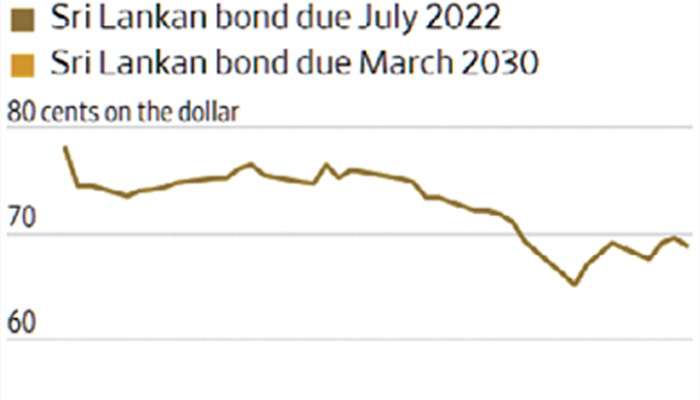
The country does not have adequate foreign exchange to import the essential foods, milk powder, sugar, cement, gas, medicine, etc. We should also be ashamed of the manner in which we are attempting to secure loans for the country. No top government or cabinet decision has yet been made on the repayment of foreign debt amounting to USD 500 million. Over the past few days, leading intellectuals in Sri Lanka have presented valuable ideas and suggestions on the matter. The President, the Prime Minister and the Governor of the Central Bank should take an immediate decision in the next few days. Failure to do so will only aggravate the issues faced by the common man.
As an active and patriotic civil society organisation keeping away from politics and considering the expert opinions of Sri Lankan intellectuals working around the world, we believe the most appropriate course of action for the country now is to initially settle only the interest owed with the full consent of the creditors and to initiate further negotiations on settling the debt.
If such a step is taken, instead of paying the entire loan amount of USD 500 million at once and leaving the people in hunger, a portion of the foreign exchange can be used to save the lives of the people by providing them with necessary food, milk powder, sugar, medicinal drugs, gas, cement, machinery and industrial raw materials.
We sincerely hope that the authorities will understand that such a move is not uncommon and unheard of in the world. The authorities should realise that when ideas and proposals that are favourable to the country are presented, instead of ridiculing them, they should be considered wisely to benefit the country and the people.