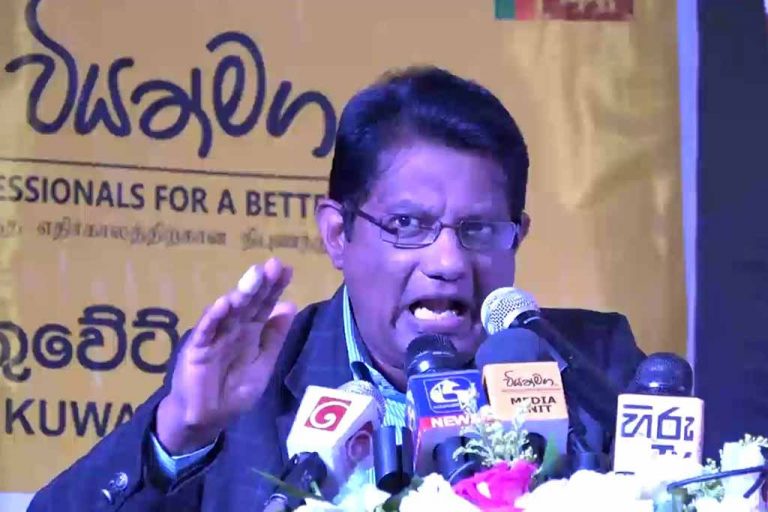
Sri Lanka is in the process of submitting itself to debt restructuring with the International Monetary Fund (IMF) but China disapproves of this move, said Cabinet Spokesman Nalaka Godahewa, speaking to the briefing held in announcing Cabinet decisions today (26).
“We have already informed our creditors that we are unable to repay the debts. When we talk about restructuring these debts, we are aware that there are several camps who are willing to lend to us. One is the West and the other are countries like China. So, although Western countries are more likely to support progressively towards the IMF’s approval, China’s position is that if it tries to restructure debt in one country, it will affect other countries as well. Instead, they suggest that instead of restructuring the debt they will be ready to provide another debt to settle the existing debts. Therefore, this is at the initial discussion level.”
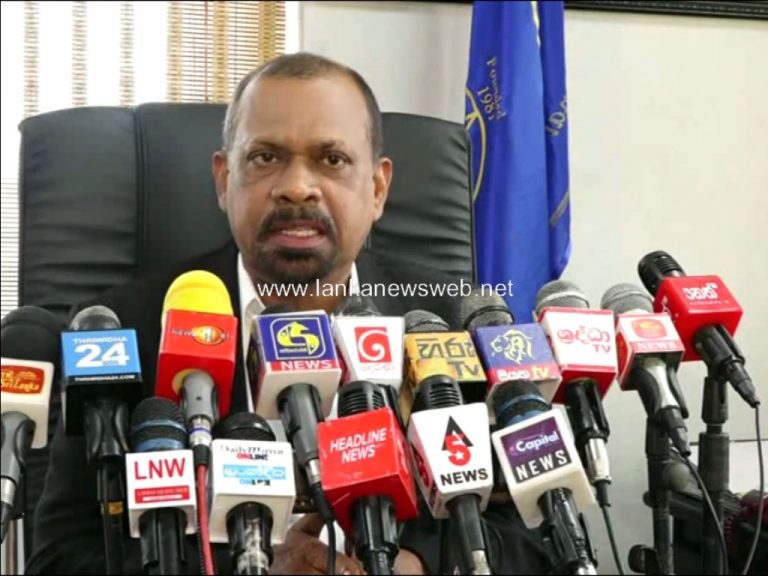
The constructions in Sri Lanka should be stopped for the next three months to prevent the soaring of cement price as it is being handled by a trade mafia run by importers, said Susantha Liyanarachchi, Chairman of the Sri Lanka National Construction Association, speaking to media today (26).
The construction industry has already collapsed due this trade mafia and as of now all government constructions carried out by them have been ceased, he revealed, adding that the cement price is soaring without any regulation.
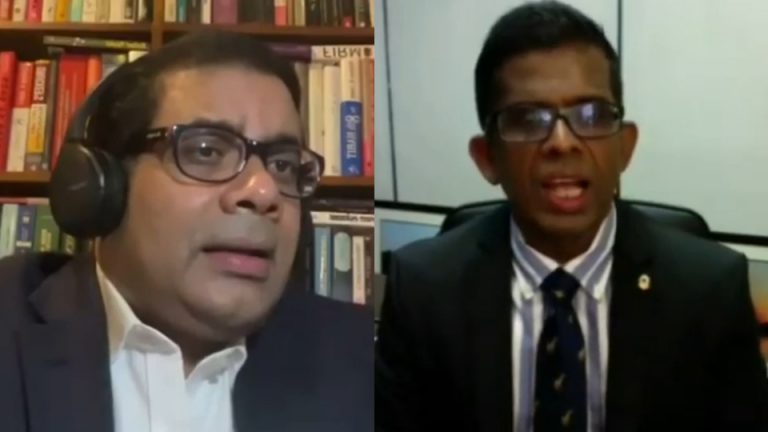
There is a soaring of cases related to heart diseases on a daily basis in Sri Lanka and these cases are evident in all social classes inclusive of younger people, said Dr. Gotabhaya Ranasinghe, joining a live discussion with Economist Dinesh Weerakkody on ‘Business Detective’ today (26).
As the cases are going up, heart diseases are found in a wider social group irrelevant of one’s employment or socio-economic group, but more importantly even outside the conventional risk factors such as smoking, stress, diabetes and pressure, he emphasised laying foundation to a previously unseen aspect of cardiac complications.
Accordingly, heart diseases can be found among individuals who carry neither of the aforementioned ‘conventional risk factors’, probably due to chronic stress, genetic variations or food habits they carry being overlooked, he pointed out. In the present context of Sri Lanka, there is also a sudden jump of heart diseases among people, Dr. Ranasinghe disclosed.
Shedding light on the challenges faced by the Hospital Sector amid the current economic crisis, Dr. Ranasinghe acknowledged that there are shortages of medicines in the Hospital Sector adding that there may have been a 5 – 10 per cent of essential medicines being run out. The matter, nevertheless, has been discussed with the authorities and the manufacturers in a bid to collect medicines back, he added.
Into which extent is the regaining process sustainable, however, is uncertain, he went on, revealing that some of the most essential medicines used in his area of specialisation, including Tenecteplase, a lifesaver for all cardiac patients, are slowly running out. Accordingly, the temporary application of solutions is worrisome in the context of sustainability, he pointed out.
Dr. Gotabhaya Ranasinghe is the Senior Consultant Cardiologist at the National Hospital of Sri Lanka and also Honorary Consultant Cardiologist to the Sri Lanka Navy holding the rank of Surgeon Rear admiral. A leading general and interventional Cardiologist in the country, he completed a Fellowship in Clinical and Interventional Cardiology at John Radcliff Hospital in Oxford, United Kingdom, has performed about 9,000 procedures including approximately 4,000 Percutaneous Coronary Interventions (PCI) in his career. In addition he has written two short books, has several peer reviewed publications and made more than 40 presentations in Cardiology conferences. He was the President of Sri Lanka Heart Association (SLHA) in 2014. Dr. Ranasinghe also co-founded ‘STEMI Sri Lanka Forum’ to optimize STEMI care in Sri Lanka. Dr Ranasinghe is a commentator and writes frequently to newspapers and journals.
NEW YORK, April 25 (Reuters) – Elon Musk clinched a deal to buy Twitter Inc (TWTR.N) for $44 billion cash on Monday in a transaction that will shift control of the social media platform populated by millions of users and global leaders to the world’s richest person.
It is a seminal moment for the 16-year-old company, which emerged as one of the world’s most influential public squares and now faces a string of challenges.
Musk, who calls himself a free speech absolutist, has criticized Twitter’s moderation. He wants Twitter’s algorithm for prioritizing tweets to be public and objects to giving too much power on the service to corporations that advertise.
Political activists expect that a Musk regime will mean less moderation and reinstatement of banned individuals including former President Donald Trump. read more Conservatives cheered the prospect of fewer controls while some human rights activists voiced fears of a rise in hate speech. read more
Musk has also advocated user-friendly tweaks to the service, such as an edit button and defeating “spam bots” that send overwhelming amounts of unwanted tweets.
Discussions over the deal, which last week appeared uncertain, accelerated over the weekend after Musk wooed Twitter shareholders with financing details of his offer.
Under pressure, Twitter started negotiating with Musk to buy the company at his proposed $54.20 per share price. read more
“Free speech is the bedrock of a functioning democracy, and Twitter is the digital town square where matters vital to the future of humanity are debated,” Musk said in a statement.
Former Twitter CEO Jack Dorsey weighed in on the deal late on Monday with a series of tweets that thanked both Musk and current Twitter CEO Parag Agrawal for “getting the company out of an impossible situation.”
“Twitter as a company has always been my sole issue and my biggest regret. It has been owned by Wall Street and the ad model. Taking it back from Wall Street is the correct first step,” he said.
Twitter shares rose 5.7% on Monday to finish at $51.70. The deal represents a near 40% premium to the closing price the day before Musk disclosed he had bought a more than 9% stake.
Twitter’s stock market value has lagged rivals
Even so, the offer is well below the $70 range where Twitter was trading last year.
“I think if the company were given enough time to transform, we would have made substantially more than what Musk is currently offering,” said Jonathan Boyar, managing director at Boyar Value Group, which holds a stake in Twitter.
However, he added, “If the public markets do not properly value a company, an acquirer eventually will.”
Musk’s move continues a tradition of billionaires’ buying control of influential media platforms, including Jeff Bezos’ 2013 acquisition of the Washington Post.
1/2
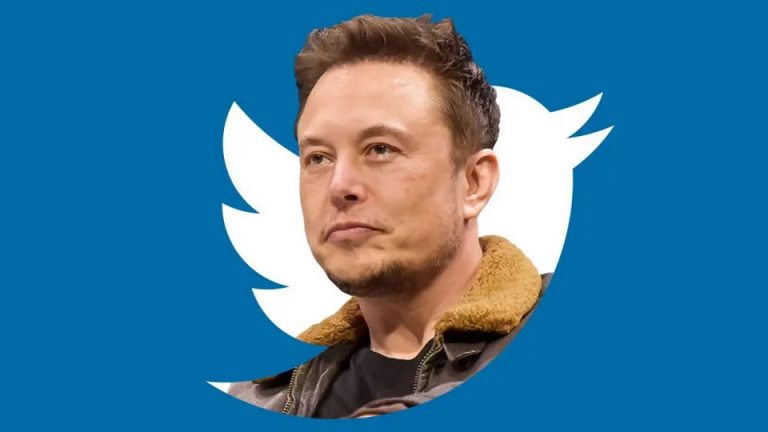
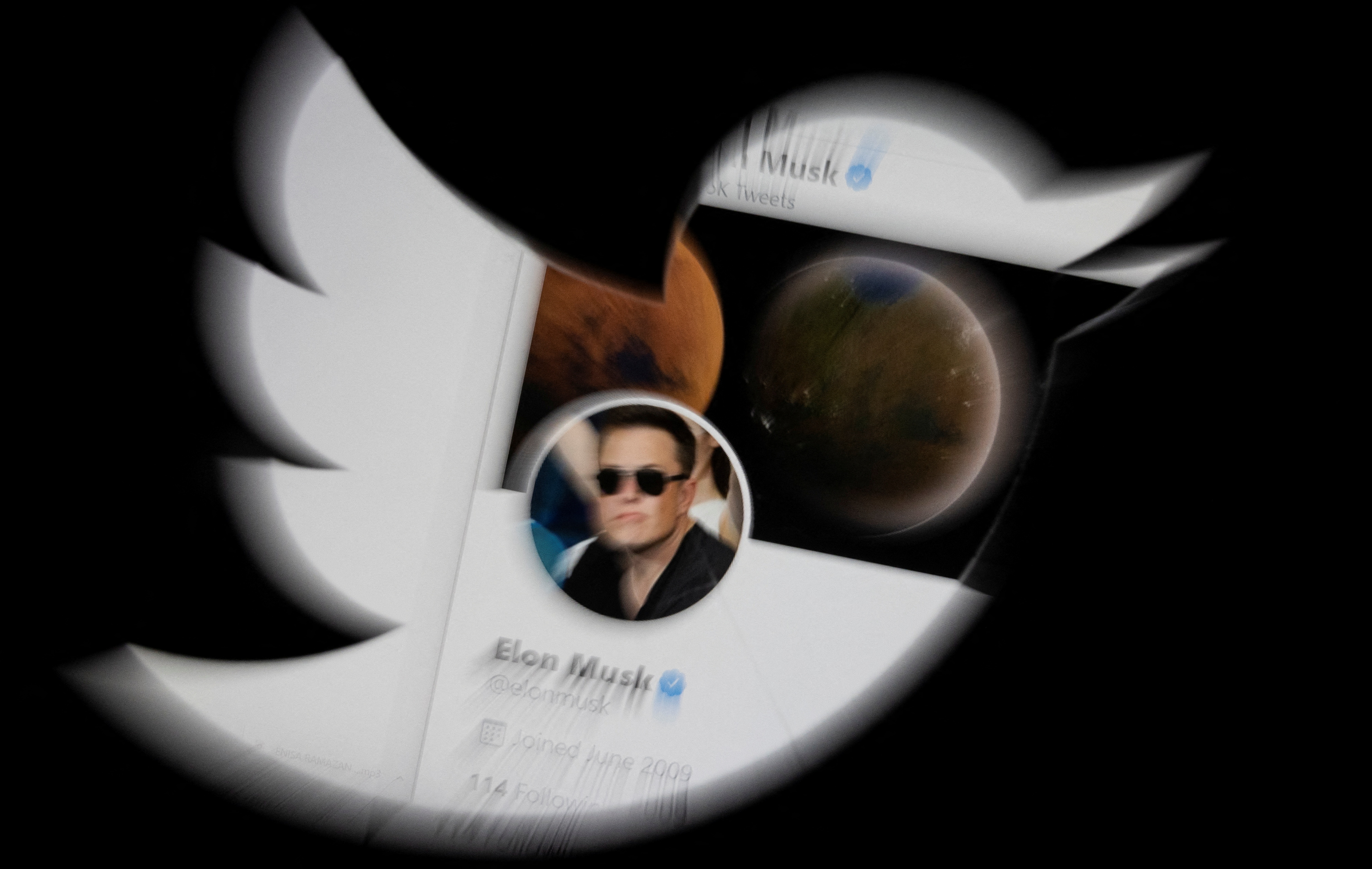
Elon Musk’s twitter account is seen through the Twitter logo in this illustration taken, April 25, 2022. REUTERS/Dado Ruvic/Illustration
Twitter said Musk secured $25.5 billion of debt and margin loan financing and is providing a $21 billion equity commitment.
Musk, who is worth $268 billion according to Forbes, has said he is not primarily concerned with the economics of Twitter.
“Having a public platform that is maximally trusted and broadly inclusive is extremely important to the future of civilization. I don’t care about the economics at all,” he said in a recent public talk.
Musk is chief executive of both electric car maker Tesla Inc (TSLA.O) and aerospace company SpaceX, and it is not clear how much time he will devote to Twitter or what he will do.
“Once the deal closes, we don’t know which direction the platform will go,” Agrawal told employees on Monday. read more
Edward Moya, an analyst at currency broker OANDA, said in an email to clients the deal was “great news for Twitter shareholders as it doesn’t seem like the company was going to get things right anytime soon.”
But he also said: “Tesla shareholders can’t be happy that Musk will have to divert even more attention away from winning the EV (electric vehicle) race.”
Still, Musk’s 84 million-strong Twitter account is seen as an important, free public relations and marketing tool for Tesla.
The Twitter transaction was approved by the company’s board and is now subject to a shareholder vote. No regulatory hurdles are expected, analysts said.
Daniel Ives, an analyst at Wedbush, said the company’s board of directors had its back “against the wall” once Musk detailed his financing package and no other bidders emerged.
Although it is only about a 10th of the size of far larger social media platforms like Meta Platforms Inc’s (FB.O) Facebook, Twitter has been credited with helping spawn the Arab Spring uprising and accused of playing a role in the Jan. 6, 2021, storming of the U.S. Capitol.
After Twitter banned Trump over concerns around incitement of violence following the U.S. Capitol attack by his supporters, Musk tweeted: “A lot of people are going to be super unhappy with West Coast high tech as the de facto arbiter of free speech.”
Trump, whose company is building a rival to Twitter called Truth Social, said in a Fox News interview on Monday that he will not return to Twitter.
The White House declined on Monday to comment on Musk’s deal, but said President Joe Biden has long been concerned about the power of social media platforms.
“Our concerns are not new,” said White House spokesperson Jen Psaki, adding that the platforms need to be held accountable. “The president has long talked about his concerns about the power of social media platforms, including Twitter and others, to spread misinformation.”
Reporting by Greg Roumeliotis in New York; Additional reporting by Krystal Hu, Lewis Krauskopf and Megan Davies in New York, Noel Randewich in San Francisco, Sheila Dang in Dallas, Andrea Shalal and Trevor Hunnicutt in Washington and Shivam Patel in Bengaluru; Writing by Peter Henderson; Editing by Anna Driver, Kenneth Li, Matthew Lewis and Edwina Gibbs
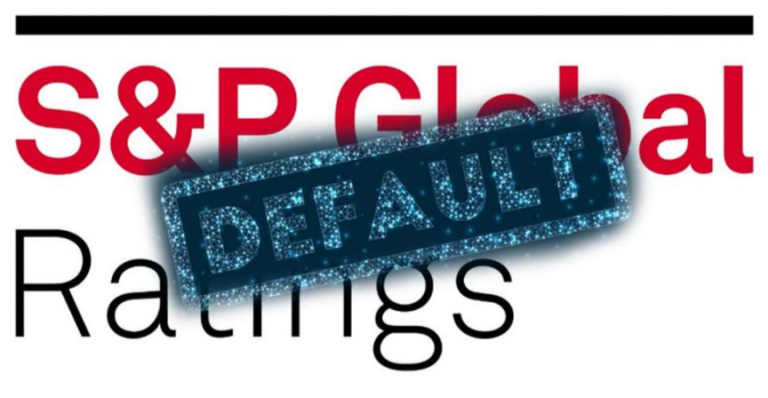
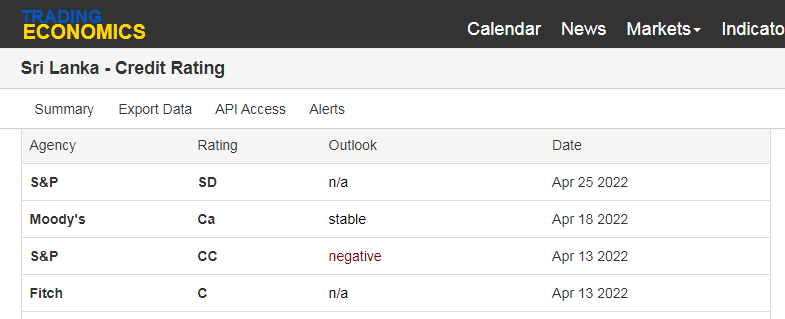
Standard & Poor’s, one of the world’s leading international credit rating agencies, has downgraded Sri Lanka’s sovereign credit rating to SD (Selective Default).
Energy Minister Kanchana Wijesekera says that the Ceylon Electricity Board has made a request to increase electricity bills with the approval of the Public Utilities Commission.
The Minister said that the CEB is currently incurring losses of around Rs. 500 million per day and that it is necessary to introduce a price formula that is commensurate with the cost of generation.
However, the Minister said that the price hike would be done in a proper manner and that it would be wrong for anyone to say that it would take place from tomorrow morning.
Energy Minister Kanchana Wijesekera has stated this while participating in a conversation held on Derana TV yesterday (25).
A massive march organized by the Samagi Jana Balawegaya to protest against the government and support the people’s protest is scheduled to begin in Kandy today (26).
The march is scheduled to reach Colombo in five days.
Former Minister Udaya Gammanpila says that a member of the SLPP is expected to be appointed as the Prime Minister of the interim government after Mahinda Rajapaksa was removed from the post of Prime Minister by a no-confidence motion.
Udaya Gammanpila stated this addressing a media briefing held yesterday (25).
Sri Lanka is still not able obtain assurance from the International Monetary Fund(IMF) for a Rapid Finance Facility(RFF) owing to lack of any firm agreement on the debt restructuring among key bilateral creditors specially China,a senior official closely connected to SLforeign debt servicing revealed.
China must be treated just like any other creditor once talks begin to restructure Sri Lanka’s debt, India’s Finance Minister Nirmala Sitharaman said in Washington recently adding that she told the International Monetary Fund and World Bank about it.
China is yet to finalise a US $2.5 billion credit line or enter into an agreement on restructuring of its overall debt, the official added.
About 22 percent of Sri Lanka’s debt is owed to bilateral creditors — China and Japan (10 percent each) as well as India (2 percent ).
The main reson for this attitude of China was their reluctance to favour Sri Lanka as it will set a bad precedent for other nations who have borrowed from them .
it will also connect China with failure because the Sri Lankan economic model was based on Chinese aid , he claimed.
However Chinese Prmier Li Keqiang in telephone conversation with Prime Minister Mahinda Rajapaksa has given a firm assurance for the stability of the island nation, Prime Minister’s office announced
China will continue to provide every assistence for Sri Lanka ‘s scio economic development stability ,it added. .
China has given this assurance at a time where Sri Lanka’s closest ally India has already stepped into assist Sri Lanka even by going out of the way , at the IMF spring meetings to persuade the donor agency to help the crisis ridden country.
According to Prime Minister’s office, Chinese Premier has paledged to provide assistance to solve finacial problems faced by the country with the aim of improving living standard of the suffering people of Sri Lanka.
Foreign Minister Proff. G.L Peiris recently requested Chinese assistence for debt restcuturing at meeting with the Chinese Ambassador in Colombo Qi Zhenhong but he has not responded to it , informed sources said
China has cautioned Sri Lanka on the negotiations with the International Monetary Fund (IMF) saying it could impact talks with China.
China’s Ambassador Qi Zhenhong was quoted as saying that Sri Lanka’s talks with the IMF will have an impact on Sri Lanka’s attempt to secure a US $ 2.5 billion loan from China.
Ambassador Qi Zhenhong was quoted as telling a group of journalists today that China was closely monitoring the negotiations to understand the terms and conditions of the deal with the IMF.
Qi Zhenhong has also said that China’s support to Sri Lanka will not be based on a particular party or Government. but the people of Sri Lanka.
The IMF has decided to support Sri Lanka’s efforts to overcome the current economic crisis by working closely with the authorities on their economic program.
Issuing a statement this week the IMF said that it will engage with all stakeholders in support of a timely resolution of the crisis.
The IMF team for Sri Lanka held initial technical discussions on an IMF-supported program with the delegation.
Masahiro Nozaki, mission chief for Sri Lanka said the IMF team will support Sri Lanka’s efforts to overcome the current economic crisis by working closely with the authorities on their economic program, and by engaging with all other stakeholders in support of a timely resolution of the crisis
The Central Bank has issued a new directive on interest rates on lending and deposit products following the increase of policy rates by 7% earlier this month.
CB said having considered the tight monetary policy measures adopted thus far it was revoking previous orders which stipulated maximum rates that could be charged on (i) Credit card advances, commencing from the next billing cycle;
All new pre-arranged temporary overdrafts and existing pre-arranged temporary overdrafts are renewed/extended and All new pawning advances and existing pawning advances are also renewed.
Hitherto the maximum interest rate on Credit Cards was 20%; the maximum interest rate on Pre-arranged Temporary Overdrafts was 18% and the maximum interest rate on Pawning Facilities was 12%, Central BANK announced.
Licensed banks can also adjust the deposit rates adequately, in line with the tight monetary policy measures adopted by CBSL, to attract deposits into the banking system.
Weekly Average Weighted Prime Lending Rate (AWPR) for the week ending 22 April 2022 increased by 314 basis points (bps) to 14.20% compared to the previous week, according to CBSL. A year ago it was 5.5%.
In contrast the Average Weighted Deposit Rate (AWDR) was almost static at 5.17% last week from 5.07% the previous week and 5.2% a year ago.
Sri Lanka’s Central Bank doubled its key interest rates on Friday, raising each by an unprecedented 700 basis points to tame inflation that has soared due to crippling shortages of basic goods driven by a devastating economic crisis.
The Central Bank monetary board raised its standing lending facility to 14.50% and its standing deposit facility to 13.50%.
It cited “inflationary pressures that could further intensify… driven by the build-up of aggregate demand, domestic supply disruptions, exchange rate depreciation and the elevated prices of commodities globally”. Inflation hit 18.7% in March.
Having maintained a low interest rate policy stance for a long time, the Central Bank had to double the policy interest rates more recently due to heavy pressures of Government borrowing requirements.
This was reflected in the substantial under-subscription at consecutive Treasury bill auctions despite the sharp increase in yield rates.
The rise in interest rates is inevitable at this juncture given the exorbitant money supply growth that has led to accelerated inflation to double-digit levels by now.
Thiswas stated by former Central Banker, is Emeritus Professor of Economics at the Open University of Sri Lanka Prof. Sirimevan Colombage,
However, the steep rise in market interest rates following the policy rate hike is likely to be an unbearable shock to the ailing economy which is already battered by rupee depreciation, high inflation, fuel crisis, power cuts, food shortages, low international reserves, and foreign debt default, he added.
Such a severe interest rate shock could have been avoided had the Central Bank followed a flexible interest rate policy allowing the market forces to determine the rates depending on demand and supply conditions, he pointed out.
The cost of Government borrowing has already risen following the interest rate hike. This is reflected in the rise of the yield rate of 364-day Treasury bills to 15.69% at last week’s auction from 12.28% at the previous auction.
As the Government is compelled to increasingly resort to domestic borrowings in the coming months given the limited potential to borrow from abroad due to the declaration of foreign debt default, there will be further demand pressures on the domestic debt market.
This will result in a further increase in interest rates overburdening the Government coffers, he claimed.
In the meantime, the rising interest rates will lead to escalating production costs stimulating cost-push inflation.
This will have a negative impact on GDP growth which is already hit by multiple factors including high inflation, social and political instability, power cuts, energy crisis, raw material shortages, etc.
The rising production costs will also have detrimental effects on the already weakened export competitiveness