Home Blog Page 2380

IMF recommends market-determined flexible exchange rate

0

The International Monetary Fund (IMF) has   recommended a gradual return to a market-determined and flexible exchange rate to facilitate external adjustment and rebuild international reserves. 

Making this urgent recommendation IMF Executive Directors called on the authorities to gradually unwind capital flow management measures as conditions permit

 They suggested these recommendations at the conclusion of 2021 Article IV Sri Lanka  urging the authorities to focus on monetary policy.  .

Despite the ongoing economic recovery, international Monetary Fund Executive Directors noted that the country faces mounting challenges, including public debt that has risen to unsustainable levels, low international reserves, and persistently large financing needs in the coming years. 

Against this backdrop, they stressed the urgency of implementing a credible and coherent strategy to restore macroeconomic stability and debt sustainability, while protecting vulnerable groups and reducing poverty through strengthened, well-targeted social safety nets.

Directors emphasised the need for an ambitious fiscal consolidation that is based on high-quality revenue measures. 

Noting Sri Lanka’s low tax-to-GDP ratio, they saw scope for raising income tax and VAT rates and minimising exemptions, complemented with revenue administration reform. 

Directors encouraged continued improvements to expenditure rationalisation, budget formulation and execution, and the fiscal rule. They also encouraged the authorities to reform state-owned enterprises and adopt cost-recovery energy pricing.

They agreed that a tighter monetary policy stance is needed to contain rising inflationary pressures, while phasing out the central bank’s direct financing of budget deficits.

The Directors also called on the authorities to gradually unwind capital flow management measures as conditions permit.

They commended the Sri Lankan authorities for the prompt policy response and successful vaccination drive, which have cushioned the impact of the pandemic.

Despite the ongoing economic recovery, Directors noted that the country faces mounting challenges, including public debt that has risen to unsustainable levels, low international reserves, and persistently large financing needs in the coming years.

Thereby, they stressed the urgency of implementing a credible and coherent strategy to restore macroeconomic stability and debt sustainability, while protecting vulnerable groups and reducing poverty through strengthened, well-targeted social safety nets.

Directors emphasised the need for an ambitious fiscal consolidation that is based on high-quality revenue measures. Noting Sri Lanka’s low tax-to-GDP ratio, they saw scope for raising income tax and VAT rates and minimising exemptions, complemented with revenue administration reform. 

They   encouraged continued improvements to expenditure rationalisation, budget formulation and execution, and the fiscal rule. They also encouraged the authorities to reform state-owned enterprises and adopt cost-recovery energy pricing.

IMF  agreed that a tighter monetary policy stance is needed to contain rising inflationary pressures, while phasing out the central bank’s direct financing of budget deficits.

They also recommended a gradual return to a market-determined and flexible exchange rate to facilitate external adjustment and rebuild international reserves. Directors called on the authorities to gradually unwind capital flow management measures as conditions permit.

. Noting financial stability risks from the public debt overhang and sovereign-bank nexus, they recommended close monitoring of underlying asset quality and identifying vulnerabilities through stress testing. Directors welcomed ongoing legislative reforms to strengthen the regulatory, supervisory, and resolution frameworks.

Directors called for renewed efforts on growth-enhancing structural reforms. They stressed the importance of increasing female labor force participation and reducing youth unemployment.

Cardinal Malcolm Ranjith and human rights…

0

In late 2018, Cardinal Malcolm Ranjith, the Archbishop of Colombo, publicly stated that there is no need to talk about human rights if one believes in religion.

“Human rights have become the new religion in the Western world. In the past, there was no such thing as human rights but people lived with love and respect and trust in God. This is like a wonderful new discovery they keep in mind and they always tell us that. Religion in European countries often referred to as human rights, is like wearing a coat. Somewhat which you can wear when you need it and throw it away when you don’t need it. Religion is practiced when an advantage is needed and religion is discarded when a sacrifice is needed. This is spreading in our country as well. Some of them are talking about a secular society. There is no secular society. People’s lives are not limited to food, clothing, and comfort. If we believe in religion, we do not need to talk about human rights. We can live beyond human rights. The religions we believe in have human rights. What else is needed? So dear brothers and sisters, we should not be deceived by this magic. We must act wisely here ”

The Cardinal made this public statement while addressing a service on September 23, 2018, at St. Matthew’s Church, Ekala.

More than three years later, the cardinal met with UN High Commissioner for Human Rights Michelle Bachelet on March 2, 2022, in Geneva, Switzerland. That is to get the UN Human Rights Council to do justice to the victims of the Easter attack.

The Easter Sunday attack has not happened in the country when the cardinal made his first statement, but the country has been plagued by a number of human rights abuses over the decades. But since they did not directly affect the cardinals, the clergy had no regard for human rights. That is why he appealed to his followers not to be deceived by human rights.

But shortly after the Easter attack on the Catholic Church, the cardinal’s situation changed. Now that the issue is directly affecting them, he too has to seek human rights. However, devotees who believed the Cardinal’s speech in 2018 are now facing a dilemma. That is because the cardinals now want the human rights that they did not want then. This is because it has become a big thing today for those who say that human rights are nothing new or big.

We stand for human rights then and today and will continue to do so. Those of us who opposed the Cardinal’s statement back then may have said today, “What happened to the Cardinal…?.” He said.

We have no peace with those who despise, insult, or ridicule human rights – a great achievement of human society in its long evolution.

And here is another point to keep in mind. In the aftermath of the Easter attack, the cardinal desperately wanted to overthrow the then Yahapalana government. Now it seems he too has been fed up with the current government.

It could not have gone unnoticed by the then Cardinal that the present government was formed in partnership with the Sri Lanka Freedom Party, a major player in the previous government. Despite this, the present government was formed with his full blessings.

The question for us is whether the people will abide by the cardinal’s request to go and do their duty again in the next election. Should the people really overthrow the government to the point where the cardinal gets bored? How do people know exactly where the cardinal is wrong and where he is not, as in the case of human rights?

EU Ambassadors visit rural development projects in Central Province

0

The European Union (EU) and EU Member States Ambassadors resident in Sri Lanka, travelled this week to Nuwara Eliya district in the Central Province for a two-day visit to EU-funded rural development projects.

During their visit, the EU Ambassadors visited and handed over a number of infrastructure facilities in the region, such as a new Business Service Center in Nuwara Eliya, a renovated tea estate water supply system in Ragala, and a potato seed production unit in Kandapola.

All these activities have been developed and funded under the EU programme ‘Support to integrated rural development in the most vulnerable districts of Uva and Central provinces’.

This programme, launched in 2017, was the first major European initiative in the region with approximately LKR 6 billion (EUR 30 million) of grant assistance provided to four districts of Nuwara Eliya, Matale, Badulla and Monaragala located in the Uva and Central Provinces.

Over the past 5 years, the EU has partnered with both the Government of Sri Lanka, private sector and civil society organizations to improve the situation of small businesses, provide infrastructure for better health, nutrition, hygiene and sanitation practices, and to strengthen socio-economic service delivery by local authorities, community organizations and the private sector in both provinces.

The EU Ambassadors were informed that over 600 micro, small and medium-sized enterprises (SMEs) have been supported, out of which over 200 are women-owned.

The SME development promotion initiatives have made an impressive impact on income and employment generation, market development, technology development and business skills development, ensuring private sector growth and sustainability.

The programme has helped to reduce the barriers women entrepreneurs encounter in accessing finance and other services. Through these efforts over 1500 jobs have been created, increasing women’s labour force participation.

During the visit, the group was informed that the EU has assisted in providing safe drinking water to over 35,000 people and renovated water systems and latrines in over 70 schools and 30 villages. This has allowed over 4000 children access to safe drinking water and improved sanitary facilities in their schools.

EU Ambassador,. Denis Chaibi said “Promoting local economic development and social inclusion has been at the heart of our support for years. Since 2014, the EU and its Member States have provided more than EUR 210 million (approximately 48 billion rupees) to improve the quality of life of Sri Lankans, including in the Uva and Central Provinces, which are among the poorest areas in the country.

As part of the two-day visit, the EU Ambassadors also participated in the opening of the “Thé Kahata” photography exhibition, organized by the Centre for Policy Alternatives, initially supported under the EU-funded project ‘Strengthening the Reconciliation Process in Sri Lanka’ and implemented by GIZ.

The exhibition, featuring over 100 photographs of daily life of upcountry Tamil communities, used art as a vehicle to promote dialogue and explore themes such as identity and inequality.Photo caption: EU and Member State Ambassadors at the opening of the Business Service Centre in Nuwara Eliya.

Wimal Weerawansa bids farewell to his ministry

0

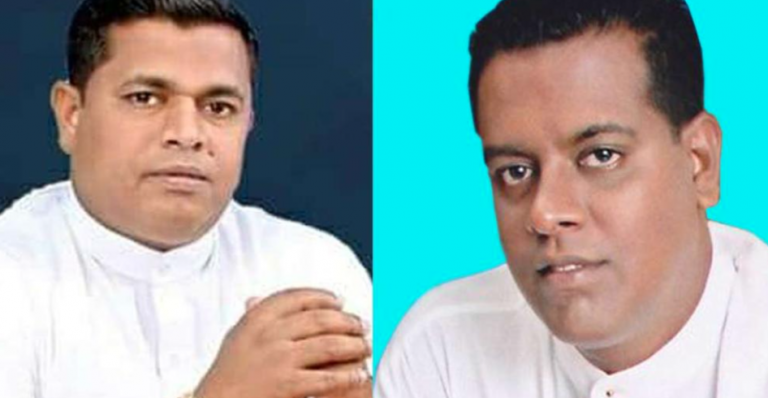
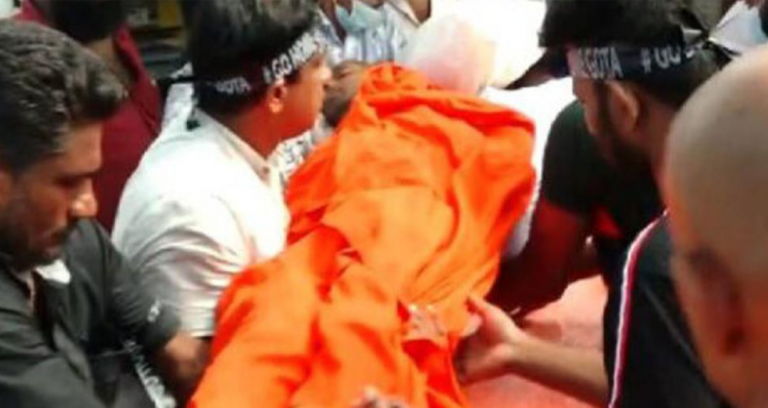
Ministers Wimal Weerawansa and Udaya Gammanpila were removed from their posts yesterday in accordance with the powers of President Gotabhaya Rajapaksa.

They also held a media briefing in Colombo today (04) to raise awareness about the removal, after which Wimal Weerawansa had gone there to bid farewell to the ministry.

The former Minister stated at the time of leaving the Ministry premises that he would move forward as he had worked happily during his tenure as Minister.

Wimal Weerawansa said that he, Udaya Gammanpila and Vasudeva Nanayakkara would also meet the Prime Minister.

The crimes committed by Wimal and Gammanpila are unforgivable – Pathirana

0

The crimes committed by Wimal Weerawansa and Udaya Gammanpila using their powerful ministerial portfolios to the innocent people of the country are unforgivable, said Dr. Mahinda Pathirana, a theorist of the SLPP and also the Chairman of the Sri Lanka Press Council.

Following are the comments made by him on social media.

Ravi and other accused acquitted of public property charges in 2016 bond case

0

The majority of the three-judge bench of the Colombo High Court has ruled that the charges filed under the Public Property Act in the case filed against Former Finance Minister Ravi Karunanayake who was been accused of criminal breach of trust over Rs. 36 billion worth of bonds at a Central Bank bond auction in 2016.

Accordingly, the bench today (04) ordered that the accused be acquitted only of the charges filed under the Public Property Act.

The verdict on the preliminary objections filed by the accused in this case was announced today and the presiding judge said that only natural persons can file charges under Section 7 of the Public Property Act. Accordingly, the defendant in this case, Purchasing Treasury, is not a natural person and cannot be prosecuted under the Public Property Act. The judge also said that the charges filed against 11 defendants, including Aloysius, under the Public Property Act could not be continued.

Accordingly, the bench directed that the case be re-called on May 04 for a “pre-trial hearing” to proceed with the case only on the other charges.

Ukraine conflict: Shares fall after nuclear plant attack

0

Share prices have fallen after a fire broke out at the Zaporizhzhia nuclear power plant in Ukraine, the largest in Europe.

London’s FTSE 100 share index opened down 0.6%, while Japan’s Nikkei index closed down 2.2%.

Oil prices continued to fluctuate, with Brent crude selling for $112 a barrel.

The fire happened after Russia troops shelled the plant. Some investor concerns were eased after officials said the plant’s safety was “secured”.

The International Atomic Energy Agency (IAEA) later said that it had spoken to Ukraine’s leadership and had been told important equipment at the plant was still working.

The shelling has drawn international condemnation, with the US President Joe Biden joining Ukrainian President Volodymyr Zelensky in urging Russia to cease the shelling and allow firefighters to access the site.

In recent days, Russia’s invasion of Ukraine has sent shockwaves through the global financial and energy markets, as investors try to understand the implications of sanctions and supply chain disruptions.

This week, the price of Brent crude – the global oil benchmark – surged to more than $119 a barrel at one point, the highest since May 2012.

The cost of natural gas and coal have also jumped on global markets.

Soaring wholesale energy prices have pushed the average cost of petrol and diesel on UK forecourts to record highs.

Commodities traders – who buy and sell everything from copper, nickel and aluminium to coffee and wheat – have also seen prices soar since fighting broke out in Ukraine.

These higher commodity prices are set to trickle down to UK shoppers, the chief executive of the London Metals Exchange, Matthew Chamberlain, told the BBC’s Today programme.

“We’ve seen aluminium and nickel up 30% since the beginning of the year, and that will ultimately be passed on to consumers when you buy your drinks can made of aluminium, or when you make renovations to your house and you need copper for your wiring, all of those prices do go into the overall inflationary pressure.”

Panmure Gordon economist Simon French told the BBC that the UK’s inflation rate could now hit 10% because of higher costs, and on Thursday an industry body warned that UK household energy bills could reach as high as £3,000 a year.

The price of gold, which is regarded as a safer asset in times of uncertainty, has increased by 7.3% in a month to $1,938 per ounce.

The Russian rouble has hit a record low against the US dollar as countries around the world impose tough sanctions on the country.

Biden administration shields Ukrainians in US from deportation

0

The United States is shielding Ukrainian citizens already in the country from deportation, as the Russian invasion continues to drive hundreds of thousands of people out of Ukraine.

The US Department of Homeland Security (DHS) said on Thursday that it was extending temporary protected status (TPS) to Ukrainians for 18 months because of the “ongoing armed conflict and extraordinary and temporary conditions” in the country.

The decision comes after immigration advocates and US legislators called on President Joe Biden to protect Ukrainians who are in the US on a temporary basis, such as students and visitors.

“Russia’s premeditated and unprovoked attack on Ukraine has resulted in an ongoing war, senseless violence, and Ukrainians forced to seek refuge in other countries,” DHS Secretary Alejandro Mayorkas said in a statement announcing the decision.

“In these extraordinary times, we will continue to offer our support and protection to Ukrainian nationals in the United States.”

Senate Majority Leader Chuck Schumer welcomed the announcement, saying he had been pushing for the TPS designation. “The United States stands with the people of Ukraine,” the senator wrote on Twitter.

Earlier this week, more than 40 members of the US House of Representatives also signed a letter urging Biden to designate Ukraine for TPS.

Democratic Congressman Jamie Raskin, one of the letter’s signatories, lauded the TPS designation on Thursday. “It is a privilege to support Ukrainians here as they defend democracy against fascist aggression,” he tweeted.

Russia launched an all-out invasion on Ukraine last week, which DHS described on Thursday as “the largest conventional military action in Europe since World War II”.

The department said Ukrainians who have been in the US as recently as March 1 will be eligible for protection. The designation also allows Ukrainians to apply for work permits.

AL JAZEERA

The Commonwealth Heads of Government Meeting (CHOGM) – Rwanda 2022.

0

The Commonwealth Heads of Government Meeting (CHOGM) will take place in Rwanda in 2022.

Please find attached a Note on Media Arrangements sent by the Commonwealth Secretariat containing details of key events, facilities and points of contact to all members of media who wish to participate.
Members of the media who wish to cover CHOGM must apply for accreditation. 

An online portal for media accreditation will open in March 2022.
All inquiries to the Government of Rwanda on CHOGM 2022 should be addressed to the CHOGM 2022 Communications and Media team at –  [email protected].

The Commonwealth Secretariat point of contact for all media activities is the CHOGM Communications Team at [email protected]

Sri Lanka: UN Report Describes Alarming Rights Situation

0

Governments Should Impose Targeted Sanctions, Press for Justice

(Geneva, March 3, 2022) – The report by the United Nations High Commissioner for Human Rights on Sri Lanka shows the rights situation in alarming decline and contradicts government claims of improvement, Human Rights Watch said today. The report, issued on February 25, 2022, documents discrimination against religious and ethnic minorities and security forces’ targeting of civil society groups, while accountability for past abuses has been blocked.

UN member states should carry out High Commissioner Michelle Bachelet’s recommendations, including by imposing targeted sanctions on alleged Sri Lankan rights violators, pursuing justice for international crimes committed in Sri Lanka through universal jurisdiction, providing asylum for Sri Lankans at risk of persecution, and supporting the UN Accountability Project mandated by the Human Rights Council in 2021. The UN should apply human rights due diligence standards in its engagement with the Sri Lankan security forces, and review Sri Lanka’s contributions to UN peacekeeping operations.

“The Sri Lankan government has responded to international scrutiny of its rights record with a false and misleading public relations offensive,” said Meenakshi Ganguly, South Asia director at Human Rights Watch. “UN member countries should redouble their efforts to press the Sri Lankan government to make real progress on rights.”

Sri Lanka’s devastating civil war, from 1983 to 2009, between the government and the separatist Liberation Tigers of Tamil Elam (LTTE) resulted in numerous abuses by both sides. The UN documented large-scale war crimes by government forces and the LTTE in the final months of the war. Instead of providing accountability for abuses, the current government, led by President Gotabaya Rajapaksa, is pursuing policies that are hostile to the Tamil and Muslim communities, while using the security forces to intimidate and suppress human rights activists and the families of victims of enforced disappearance. Abuses, including torture, arbitrary detention, and extrajudicial killings, have continued.

The High Commissioner noted in her report that the current government “has continued to demonstrate its unwillingness to recognise those serious international crimes and pursue accountability,” and instead has appointed “some military officials who may have been implicated in alleged war crimes into the highest levels of Government.” Those who held command responsibility for alleged violations include President Rajapaksa, Defense Secretary Kamal Gunaratne, and the army chief, Gen. Shavendra Silva.

The UN report highlights the case of former Admiral Wasantha Karannagoda, who was charged in connection with the enforced disappearance of 11 people in 2008 and 2009 until the attorney general dropped the charges in August 2021. In December, President Rajapaksa appointed him a provincial governor.

The High Commissioner described a growing militarization of civilian government functions, including law enforcement. She highlighted the large number of military checkpoints in the Tamil majority Northern Province, where there are “complaints of discriminatory treatment or harassment… particularly for women.” In the Eastern Province, the UN recorded 45 land disputes involving government officials and members of minority communities between January and November 2021. Bachelet found that minority communities fear that a government program to identify and construct Buddhist sites is “being used to change the demographic landscape of the [eastern] region.”

In addition to Tamils and Muslims, Christians also face abuses and discrimination. Bachelet wrote that the victims of the 2019 Easter Sunday bombings, in which a militant Islamist group targeted churches and hotels, killing over 260 people, “continue to call urgently for truth, justice, reparation for victims and a full account of the circumstances that permitted those attacks, in particular the role of the security establishment.” On February 18, a former senior police investigator filed a petition in the Supreme Court alleging that military intelligence officers had sought to protect the bombers prior to the attacks.

The authorities have continued to target civil society groups, including human rights defenders and the families of victims of past violations who are campaigning for justice, Bachelet found. Activists are “regularly visited in their offices or homes or called by the police for inquiries,” while, in the north and east, “[o]rganisations report being unable to work without surveillance” and have to “get approval from the [government] district secretariat for any activity.”

Bachelet also detailed how the authorities have repeatedly sought to prevent members of the Tamil community from commemorating those who died in the civil war, while “[r]eports indicate that at least 70 people have been arrested under the Prevention of Terrorism Act (PTA) for sharing social media posts commemorating victims of the war.”

The PTA has been used for decades to enable prolonged arbitrary detention and torture. A recent Human Rights Watch report documented that the Rajapaksa administration has used the law to target Tamils and Muslims, as well as civil society figures, including lawyers, journalists, and opposition politicians. On February 10, amid growing international pressure, including from the European Union, the Sri Lankan government submitted amendments to the law.

In her report, High Commissioner Bachelet found that the “proposed amendments do not comply fully with Sri Lanka’s international human rights obligations and leave intact some of the most problematic provisions of the PTA,” and said that the government should address the “five key benchmarks identified by seven Special Procedures [UN experts] mandates… as ‘necessary prerequisites’ to ensure the PTA is amended to be compliant with international law obligations.”

On March 2, UN rights experts said the proposed amendments fell short of Sri Lanka’s international human rights obligations. They said there should be an immediate moratorium on the use of the law and that “[t]he actions of the Sri Lankan Government call into question its commitment to reform.”

Foreign Minister G.L. Peiris has told diplomats that the Office of Missing Persons, which was set up in 2017 to establish what happened to victims of enforced disappearance, and the Human Rights Commission of Sri Lanka, are part of a domestic effort to provide “accountability” and “meaningful reconciliation.”

However, the UN High Commissioner found that the policy of the Office of Missing Persons “seems to be aimed at reducing the case load and closing files rather than a comprehensive approach to establish the truth and ensure justice and redress to families.” In October, the Global Alliance of National Human Rights Institutions found that the status of the Human Rights Commission of Sri Lanka should be downgraded, due to its lack of independence from the government.

“The Sri Lankan government is actively targeting minorities and civil society groups, while it protects alleged rights violators and undermines the rule of law,” Ganguly said. “Victims of abuses and vulnerable groups are depending on the United Nations and Sri Lanka’s international partners to keep up the pressure, to help protect what remains of civil society space, and to push for justice and accountability.”