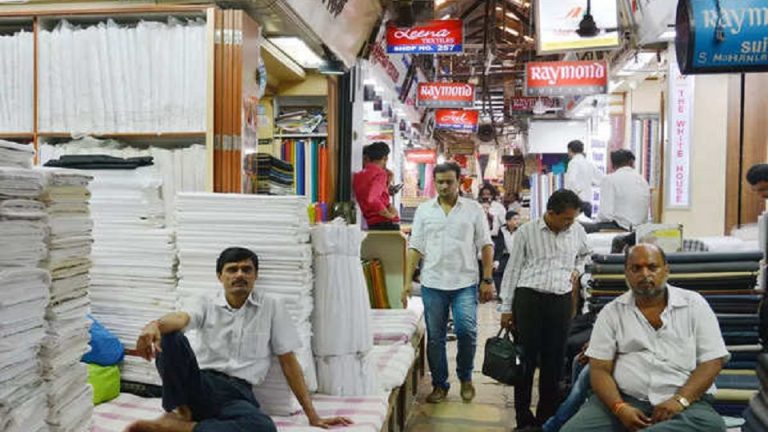
Countries importing textile products from Sri Lanka have now started moving towards Indian exporters as Sri Lanka continues to reel under its worst economic crisis, said the Ministry of Textile official on Friday.
Speaking to ANI, UP Singh, Secretary, Ministry of Textile said, “Some countries who were earlier importing from Sri Lanka, have started contacting India, as Sri Lanka is under its worst economic crises. Some orders have already been given to companies in the Tirupur district of Tamil Nadu. Tirupur is the hub of the textile industry in Tamil Nadu.”
Singh said that last year’s textile sector export was around USD 43 billion and this year the target has been set for 100 billion. He said India currently produces more than 340 lakh bells of cotton, but consumption is going to be more than production due to the order diversion from Sri Lanka due to the crisis.
“Conversely, our importers had to pay 11 per cent duty leading to high input cost which makes them uncompetitive. So our importers were demanding the government to lift the import duty. Vietnam, Bangladesh, Sri Lanka and Pakistan were getting the advantage in certain markets like European Union and the UK and our exporters were at disadvantage,” Singh said.
“Our exporters have to pay 9.5 per cent export duty which these countries do not have to pay. Now adding these 11 per cent import duty and 9.5 per cent export duty on cotton, it becomes very difficult for our textile exporters to compete with such countries. Since now we do not have to pay import duty on cotton, this will certainly make our exporters more competitive,” emphasized the Textile Secretary.
A Sakthivel, President, Federation of Indian Exporters Organisation said, “Buyers are now started making queries with Tirupur Exporters Association and other places in India because the situation in Sri Lanka is bad. Some queries may turn into orders. This is an opportunity. Good talks are happening and we expect some orders to divert from Sri Lanka to India.”
He said Indian exporters are getting queries from countries like the United Kingdom and European Union Countries. “Their queries are mainly for woven items, shirts, t-shirts and some baby garments. We are hopeful that these queries will turn in orders,” Sakthivel hoped.
Sri Lanka is facing its worst economic crisis since independence with food and fuel shortages, soaring prices and power cuts affecting a large number of the people in the island nation.
Sri Lanka’s economy has been in a free-fall since the onset of the COVID-19 pandemic, leading to the crash of the tourism sector.
Sri Lanka is also facing a foreign exchange shortage, which has affected its capacity to import food and fuel. The shortage of essential goods forced Sri Lanka to seek assistance from friendly countries.
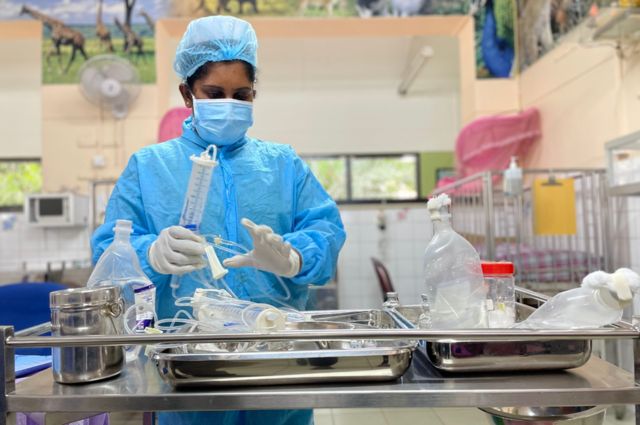
Image caption, Lady Ridgeway hospital is one of Sri Lanka’s biggest healthcare facilities for children
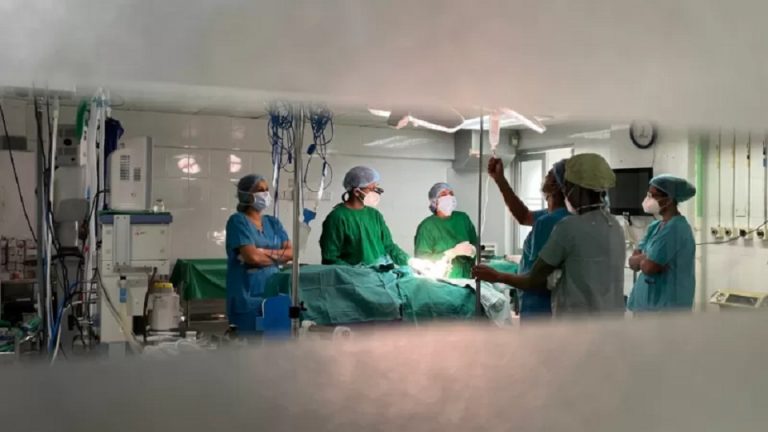
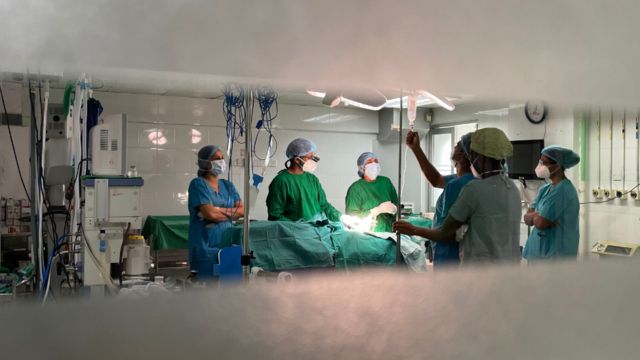
Doctors across Sri Lanka say hospitals are running out of medicines and essential supplies as the country’s economic crisis worsens. They fear a health catastrophe if international help doesn’t arrive soon.
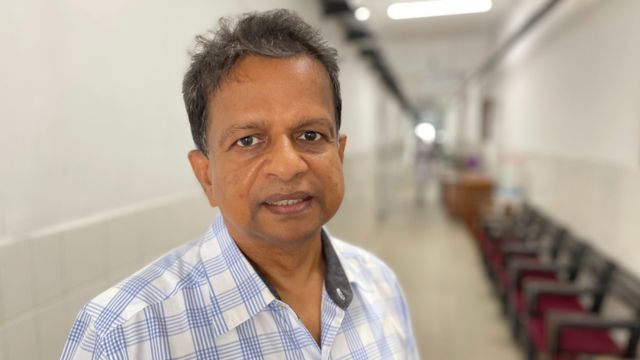
“Day by day things are running out. If we get to the point where it’s zero, then I don’t know what will happen,” says Dr Gnanasekaram anxiously.
As secretary of Sri Lanka’s Association of Medical Specialists, the surgeon has been busy compiling lists of which medicines are running low at hospitals in the capital Colombo.
“We are short of medical drugs, anaesthetic drugs, implants, suture materials. We are nearly exhausting the stock.
“Healthcare services are going to collapse unless there’s immediate relief,” he says.
I meet Dr Gnanasekaram between consultations – he says he’s hoping this interview will encourage international donors to come forward.
Image caption, Doctors say hospitals are running out of medicines and essential supplies
If supplies aren’t replenished soon, the doctor warns of dire consequences.
“If that happens there may be a situation where we won’t be able to save patients’ lives.”
Sri Lanka is in the midst of its worst economic crisis in history. The country imports around 85% of its medical supplies. But with foreign currency reserves running low, essential drugs are now difficult to obtain.
At his office in Sri Lanka’s largest children’s hospital, Lady Ridgeway, medical director Dr Wijesuriya shows me a piece of paper with a list of essential drugs on it.
Image caption, Dr Wijesuriya has a list of vital drugs running short – and in some cases out of stock
Next to the name of the medicine, there’s a column showing availability.
Some like atracurium – used in anaesthetics – have only two months of stock left. But as I scan the list further, other drugs are in even shorter supply.
There’s only two weeks left of the painkiller fentanyl, while three different types of antibiotics are already “out of stock”.
For now Dr Wijesuriya says he’s managing these shortages with substitutions. He remains optimistic that the government will find a way to get him what is needed for his patients.
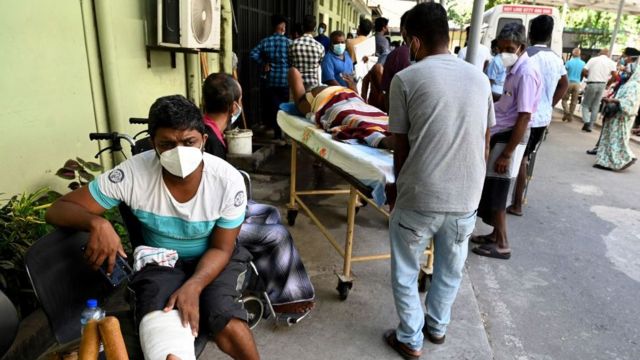
Image caption, Patients wait for treatment at a Colombo hospital amid a health worker strike over shortages in February
Frontline doctors are far less upbeat. Many say they’ve been told by the government they can’t speak openly to the media about the situation, with only union representatives and hospital directors authorised to do so.
In a statement Sri Lanka’s government initially denied medicines were running out, even as doctors reported problems.
A day later the Department of Government Information issued a correction, admitting there is a shortage of some drugs and equipment.
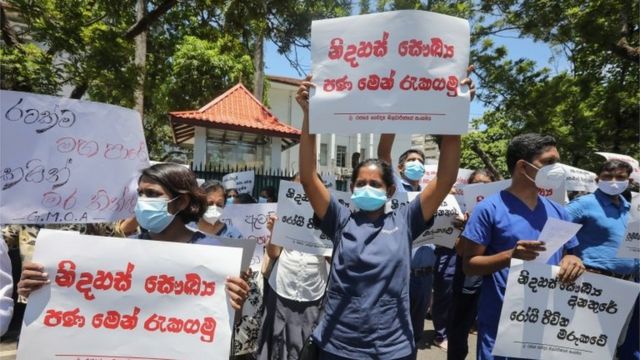
Image caption, Doctors and nurses have taken part in the protests during the worsening crisis
Documents seen by the BBC, interviews with medical unions and testimony from frontline doctors reveal that hospitals across the nation are in desperate need of a range of life-saving drugs and equipment.
Medical staff have told the BBC the crunch in supplies has forced them to suspend non-essential operations, and reuse or ration some equipment.
Dr Nishan (not his real name) works at a cancer hospital in the Eastern province.
“In two weeks’ time we may have to stop most surgeries and only do emergencies,” he told me as he reeled off a list of essentials like IV fluids, paracetamol, and antibiotics that his team are struggling to get hold of.
“There may be a time when we have to even stop treating cancer patients,” he warned.
Dr Nishan is from an area hit hard by the country’s civil war. Working as a doctor in conflict has its many challenges, but this economic crisis comes with many others.
“During the war we had limitations, but we could still get things from the ministry in Colombo,” he said.
“But now even the health ministry doesn’t have supplies. During wartime we were not so frustrated and desperate as we are now.”
Sri Lanka runs a free national healthcare system, which millions of people on the island rely on.
Kasun (not his real name), who works at a hospital in the Southern province, said it’s only a matter of days before drugs run out unless supplies come in.
“We are being told to use what we have sparingly, but there’s no real solution. I feel helpless.”
The largest doctor’s union on the island, the Government Medical Officers’ Association (GMOA), has blamed the crisis on poor financial and economic management and is calling on people from overseas to donate supplies.
It has published an extensive list of items which are desperately needed, which includes antibiotics, paracetamol, blood pressure medicine and anti-depressants.
WhatsApp groups of Sri Lankan doctors around the world are busily trying to source drugs, as the diaspora pitches in to help at this desperate time.
Dr Saman Kumara, president of the Perinatal Society of Sri Lanka, recorded a desperate video message last week, pleading for ET tubes to help newborn babies breathe.
“We have almost used all the stocks and no ET tubes will be available in a few weeks,” he said. Dr Kumara said he had instructed staff to clean and sterilise tubes in case they needed to be reused.
After his message went out, doctors around the world sprang into action to help. Within 24 hours, he said he was donated an “adequate amount” of ET tubes for his hospital.
But he says other shortages remain, and is working with the Save A Baby charity to help co-ordinate efforts.
Dr Anver Hamdani, who was recently appointed by the Sri Lankan health ministry to co-ordinate efforts to keep healthcare services running, told the BBC he and his colleagues are working to overcome the shortages.
He’s hoping pledges from overseas governments including a credit line from India, the main supplier of Sri Lanka’s medicines, plus donations which are coming in, will prevent the looming crisis.
“We have to admit this is a challenging period – there is a reasonable amount of shortage of certain things.
“It is not yet under control, it in the process of being controlled,” he said conceding that once the short term supply problem was fixed, a sustainable financing solution will still need to be found.
Sri Lanka’s medical crisis is compounded by the added pressure staff themselves are having to face.
Kasun says workers at his hospital have been told overtime payments will be cut as budgets are strained.
Like millions across the country doctors are struggling to obtain the basics. Many say they are queuing for hours to get fuel for their cars to get to hospital.
“It’s becoming very difficult to live, salaries aren’t going up but the cost of living has skyrocketed,” he said.
As millions have taken to the streets to protest at rising food and fuel prices, doctors, nurses and medical students have joined the demonstrations.
Back at his office Dr Gnanaksekaran pleaded to the world for help.
“We need supplies to come in whatever form, whether it’s another country’s government, or an individual donation.
“As professionals we are apolitical, but we are concerned about our patients.
“We just want to be able to treat them – we don’t want them to die.”
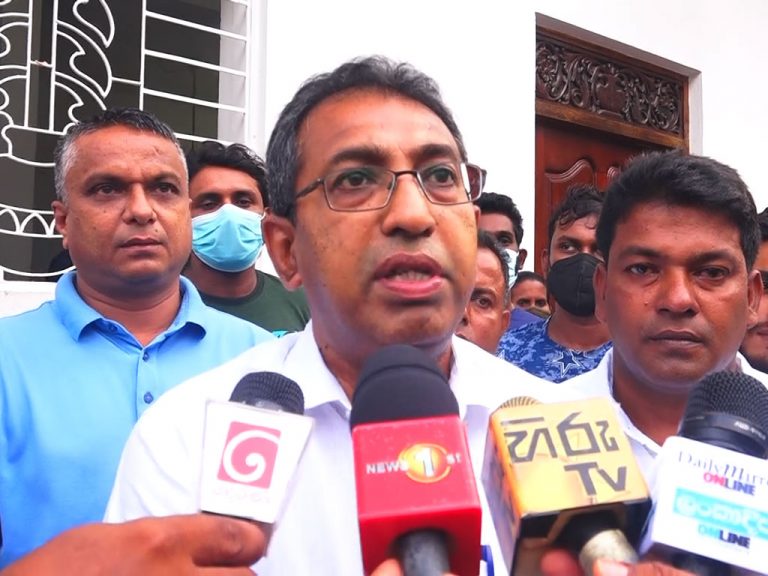
The Opposition has the 113-majority in Parliament and the no-confidence motion against the government, therefore, will be tabled on time, said Samagi Jana Balawegaya (SJB) MP Dr. Harsha De Silva, speaking to reporters today (18).
The President and the Prime Minister, on the other hand, should be thinking about what the public demands, the Opposition MP pointed out.
Any no-confidence motion against the Prime Minister, the Cabinet and even the President can be tabled as a people’s no-confidence motion in the event that there are provisions secured by the Constitution to do so, he added
The Opposition MP further noted that they are ready to come forward on behalf of the people and that the President and the Prime Minister have driven themselves to a position in which they have to resign.
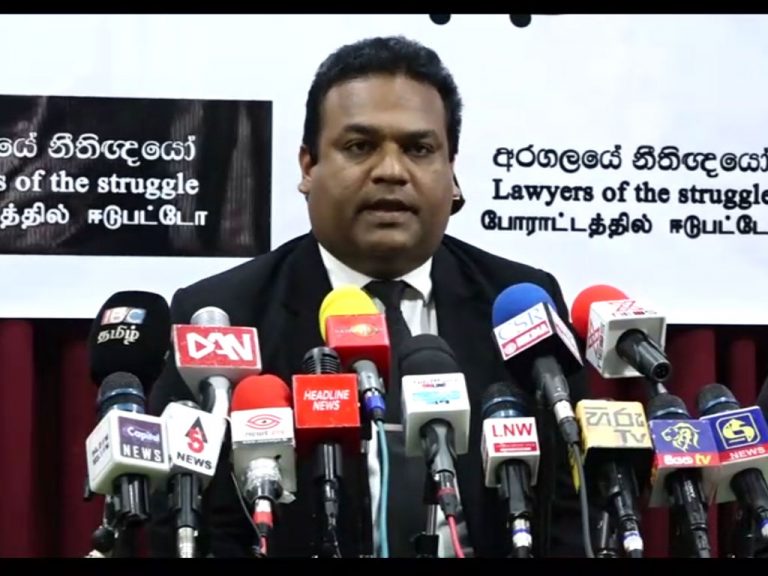
The legal support required to lead the struggle initiated by the youth to victory at the hand of the youth itself will be provided, said the Lawyers of the Struggle movement speaking to a briefing held yesterday (17).
The protest initiated by the youth is appreciated in a manner unlike any other political movement in the history managed to be, Attorney at law Manoj Nanayakkara said.
Accordingly, the change should be made by using the fullest of the people’s appreciation received before the struggle, he emphasised.
Gotabaya Rajapaksa is a failed person and he should be banished from the country in the same manner in which he was ousted from the Presidential Secretariat, he went on, adding that nevertheless, the stolen money should be reclaimed by arresting him prior to any deportation, should it come to that point.
The Fort Police is seeking a court order barring the anti-government protest currently being held at Galleface for 10 consecutive days.
The Fort Police is expecting to obtain an injunction against the protesters to reopen the entrance to the Presidential Secretariat in the event that these protests are blocking the entrance since April 09, sources said.
The Police are awaiting the injunction from the Colombo Magistrate Court and the Chief Magistrate of Colombo is formerly a controversial Judge, Thilina Gamage.
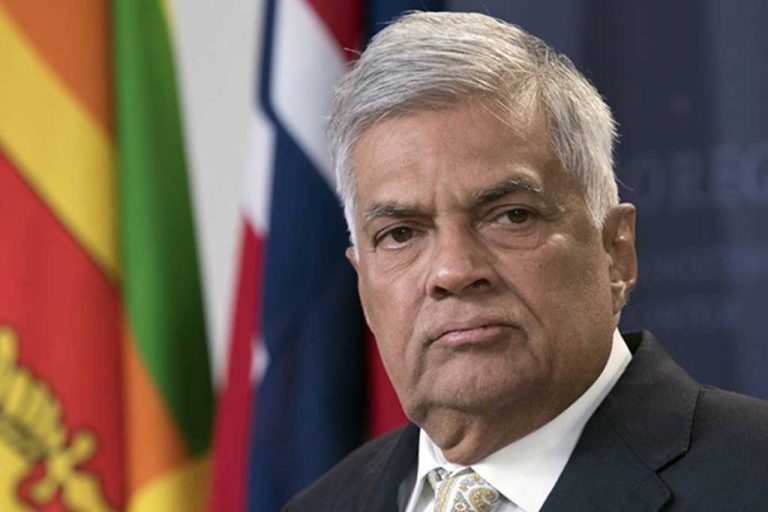
The Road Map to revive Sri Lanka from its economic abyss introduced by Leader of the United National Party (UNP) former Prime Minister Ranil Wickremesinghe is due to be launched tomorrow (19).
Wickremesinghe is believed to be demonstrating his programme in Parliament tomorrow.
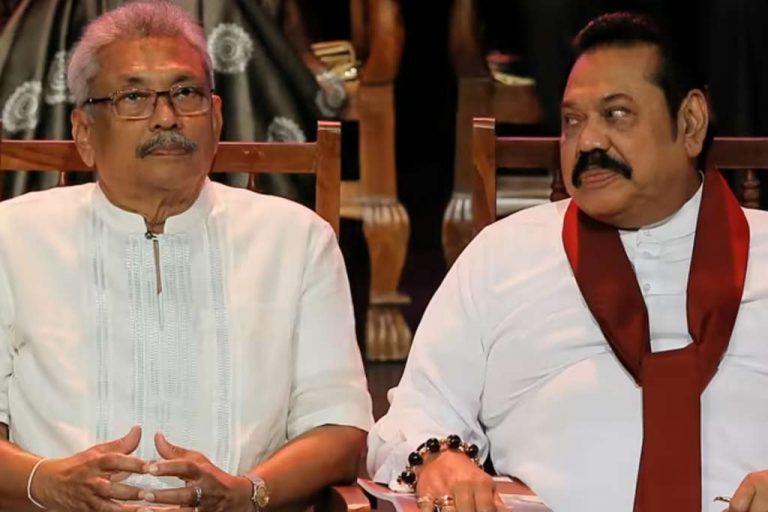
Mahinda Rajapaksa has reportedly informed President Gotabaya Rajapaksa that he will not resign from his post as the Prime Minister.
We earlier reported that the independent MP group led by Wimal Weerawansa, Udaya Gammanpila and the Sri Lanka Freedom Party (SLFP) has informed the President that they would be ready to rejoin the government if Mahinda Rajapaksa chooses to resign. The matter was also briefed to the Prime Minister by the President, we learned.
In response, the Prime Minister has informed the President that he will not resign and may he be dismissed from the post should it be necessary, sources told LNW.
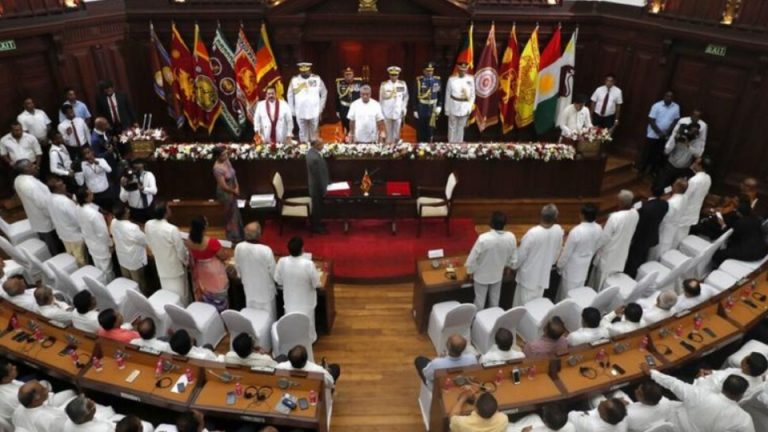
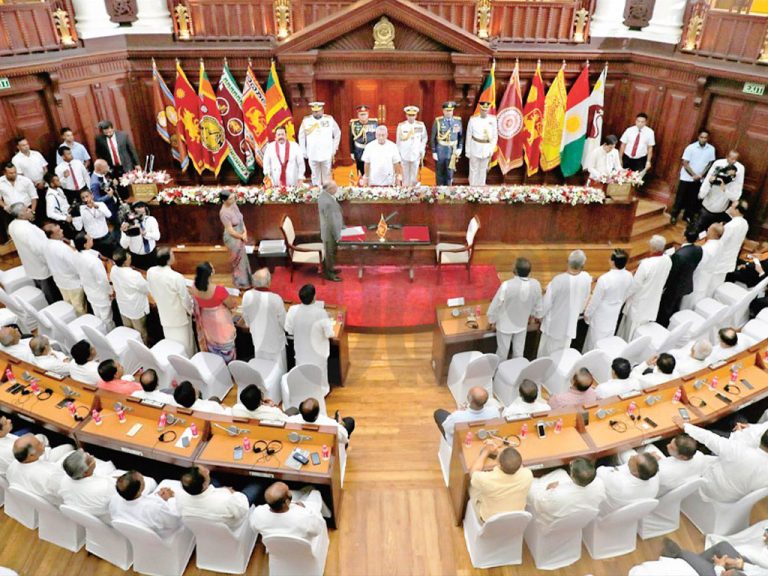
The new Cabinet of Ministers is to be sworn in today (18) sources said.
Comprising 22 Ministers, the new Cabinet is believed to be having many new faces.
Many young public representatives who served as state ministers up to this point are believed to be given positions in the Cabinet.
Many senior politicians who held Cabinet positions have already informed the President that they do not wish to continue the Cabinet in the face of the political situation of the country and the growing objection from the public.