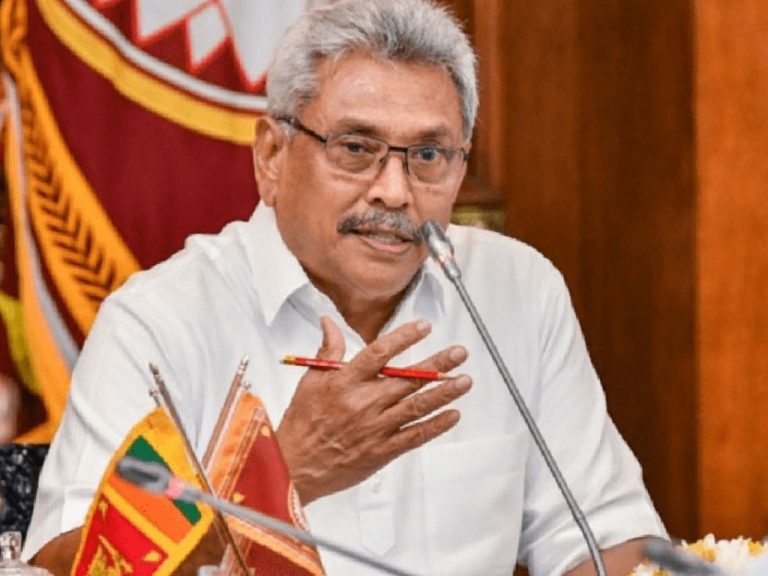
The Top 20 Companies in Sri Lanka are set to meet President Gotabaya Rajapaksa tomorrow (21).
Accordingly, the owners, chairmen and chief executive officers of these companies have been called in to join the meeting with the President, to directly address the problems and needs of the business community.
No government can avoid the business community and continue to administer the country in the event that the Private Sector is the spine of Sri Lanka’s economy. Whoever comes to power must join forces with this business community to contribute more effectively to boosting the domestic production.
No foundation to such allegiance was ever created during the two year tenure of P.B. Jayasundara as the President’s Secretary. Gamini Senarath, the incumbent President’s Secretary, on the other hand, has managed to knot the tie within a very short period of time upon his appointment, which should be appreciated without debate.
Cases, deaths, and hospitalizations have plummeted – but transmission remains high across the nation
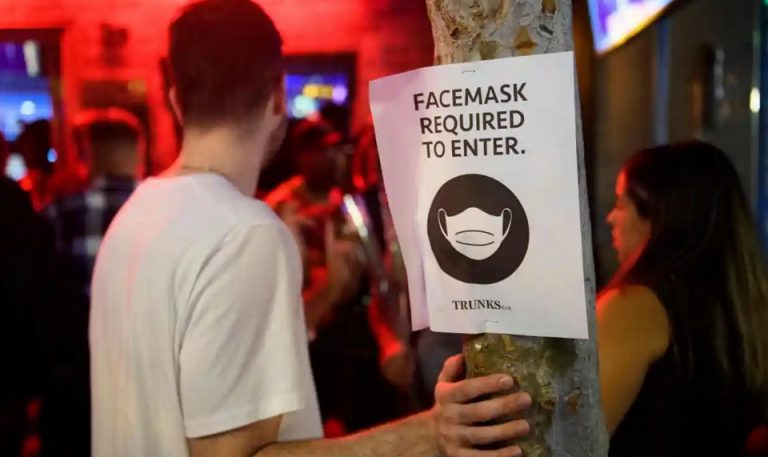
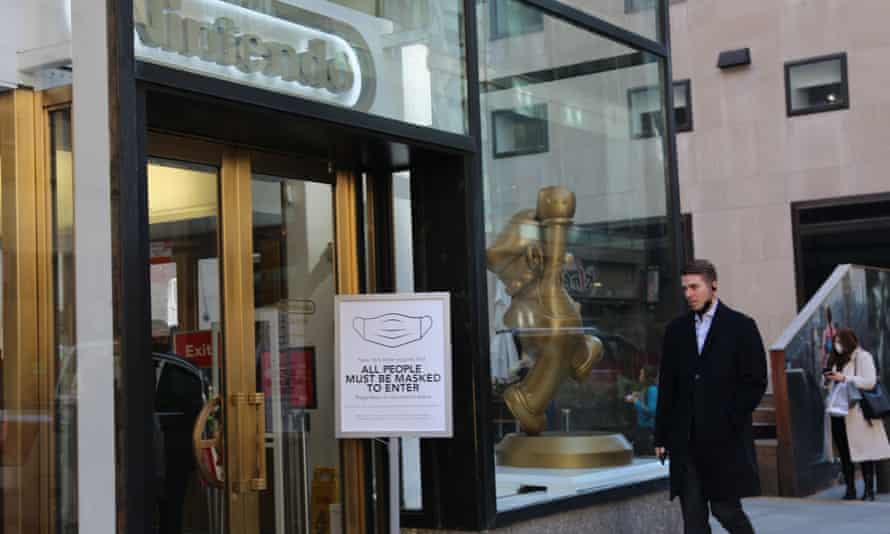
As some US companies begin asking people to return to the office and governors lift mask mandates, talk has emerged of life after the Covid-19 pandemic in America.
But infectious disease experts aren’t quite ready to declare that it’s safe for individuals, rather than governments and health officials, to determine whether precautions such as masking indoors are necessary.
“I think it’s probably reasonable not to get too cocky at this point,” said Jennifer Nuzzo, an epidemiologist at the Johns Hopkins Center for Health Security. “I welcome the decline in cases that we are seeing in the US and a number of other countries, and I think you can both celebrate the sunshine while also keeping an umbrella close by for the possibility that rain could occur.”
The numbers of Covid cases and hospitalizations in the United States have decreased by 67% and 38% over the last two weeks, according to data from the New York Times.
Amid that decline, Democratic governors in Massachusetts, Illinois, New York, Rhode Island, California, Connecticut, Delaware, New Jersey and Oregon have recently lifted at least some parts of the masking mandates.
California governor Gavin Newsom on Thursday announced a plan based on the idea that we are entering an endemic stage, meaning the virus is no longer a significant threat in some areas, rather than a pandemic, meaning a global outbreak.
That new approach includes a focus on countering misinformation and disinformation and mass testing to spot new variants and surges, according to the Associated Press.
US companies, most notably, Microsoft, have also announced plans to reopen their facilities and asked employees to return. And Amazon, where many people already worked in person, announced that it would not require fully vaccinated employees to wear masks, according to the Wall Street Journal.
“While the world has changed, our dedication to the safety and wellbeing of our employees has remained constant,” Microsoft said in a blogpost about the reopening. “As we navigate this new phase of work, we’ll continue to take a data-driven approach to decision making that follows the guidance of public health authorities.”
But Justin Lessler, an epidemiology professor at the University of North Carolina, says that while the numbers of Covid cases, deaths and hospitalizations have recently plummeted, the fact that the Omicron spike was so much higher than previous waves has misled people into thinking that they no longer need to wear masks or avoid mass gatherings. The US daily average of cases and hospitalizations on 16 February were about 124,000 and 81,000, according to the Times.
Before removing precautions, Lessler said he would like to see Covid levels like late June 2021 – before the Delta wave – when the daily averages of new cases and hospitalizations were about 12,000 and 16,000.
Modeling shows the US could achieve that around late March, he said.
“In most of the country, cases, deaths and hospitalizations are still extremely high, and I certainly hope that’s not the new normal, and I don’t believe it’s the new normal,” Lessler said. “I worry that the perception that we are already there is going to lead people to act in ways that is going to draw this out longer than it needs to be drawn out.”
William Schaffner, an infectious diseases expert at Vanderbilt University School of Medicine, also thinks that we cannot yet treat the virus as though it is endemic.Advertisement
“Some governors think we are almost there are already – they are dropping mask mandates – and my response is: good luck to you,” said Schaffner. “My fingers are crossed on your behalf.”
‘The option not to care is not an option, but how we try to address the virus can and should change with the data,’ said epidemiologist Jennifer Nuzzo. Photograph: Xinhua/REX/Shutterstock
Almost the entire country remains at what the Centers for Disease Control and Prevention defines as high transmission of the virus, meaning a seven-day daily average of more than 100 new Covid cases per 100,000 residents.
Anna Bershteyn, assistant professor in the department of population health at New York University, thinks more companies will ask employees to return once their surrounding county drops at least to a level of “substantial transmission,” meaning less than 100 new cases per 100,000 residents. Companies will also consider the vaccination levels of their workforce and the severity of a new variant, among other factors, Bershteyn said.
She recommends employers use a framework of “always measures,” such as increasing clean air exchanges in indoor spaces; and ensuring that workers are fully vaccinated and stay home when sick; “sometimes measures,” when case numbers are higher, such as mandating masks and proof of vaccination to be on the premises; and “rarely measures,” such as temporarily closing a business.
Also, “people can reduce their risk in the long term for Covid-19 by improving general health, so taking the opportunity when transmission is low to catch up on any health care that has been missed … staying on top of weight, exercise and diet; and recovering economic losses and educational losses; and really importantly, restoring some of the social connections and those activities that are really important to a person’s wellbeing,” said Bershteyn.
Nuzzo, the Johns Hopkins epidemiologist, also thinks that the country needs to end its binary thinking on precautions, “that we either care about the virus and are trying to do something about it – or we’re not,” she said.
“The option not to care is not an option, but how we try to address the virus can and should change with the data,” she said. “That may include shifting from mandatory measures to recommended measures … It may mean that we put masks at the front of the entrance to the coffee shop for people to take if they so choose, but we don’t have the poor barista have to yell at somebody and call the police if somebody is not wearing a mask.”
Nuzzo and other epidemiologists also do not take it as a given that a new variant won’t emerge that overcomes the population’s immunity against the virus.
“It’s not like you are going down on a rollercoaster and are just going to keep on cruising. We could see the cases go up again, and I think we have to be mentally and socially prepared that if we are experiencing another surge, we may have to dust off some measures that we got to take a break from,” she said.
Dr Celine Gounder, an infectious disease specialist and epidemiologist at New York University, also thinks the pandemic will be shaped by individuals’ risk tolerance and how well we protect demographics such as low-income populations and residents of long-term care facilities. That means, for example, ensuring that everyone at a nursing home is vaccinated and boosted.
“Instead of having top-down recommendations for everyone, we are entering a phase soon where what we need to be doing is arming people with the information and tools to protect themselves and their loved ones,” she said. “And as opposed to blanket recommendations for the whole population, we need to really focus our public health efforts on the most vulnerable.”
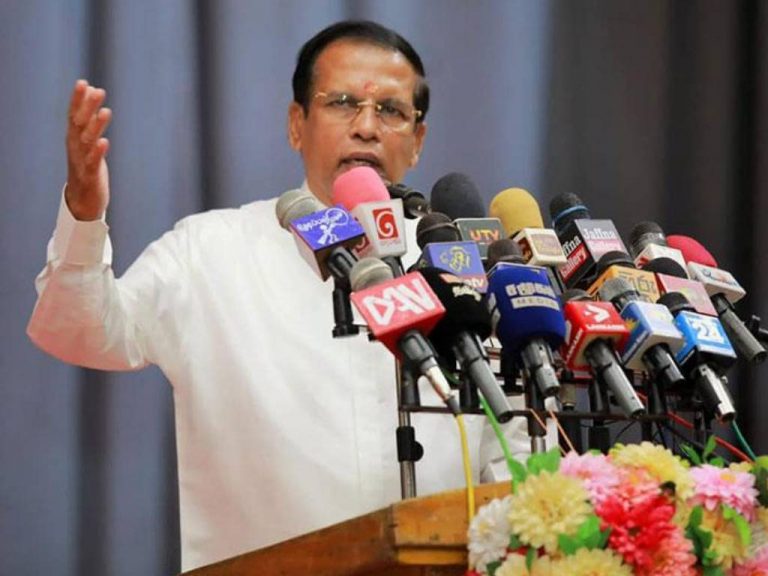
Sri Lanka Freedom Party (SLFP) as a key stakeholder of the government extends its maximum support for every conduct of goodwill of the government, said SLFP Chairman and former President MP Maithripala Sirisena, addressing the SLFP District Convention held at the Urban Council Cultural Hall in Vavuniya yesterday (19).
The former President emphasised that the SLFP, nevertheless, will not be hesitant to address the problems of the government openly.
Expressing his deep concern over the country’s current situation, Sirisena added that it is very regretful that people, especially those of agriculture, are suffering from great difficulties.
The former President reminded that in the past the Northern Province was known as the Sahal Neliya and that the people of the North are most affected by these problems.
An initiative has been launched to strengthen the SLFP aiming the upcoming elections, Sirisena went on, adding that the SLFP will be converted into a strong political force capable of finding solutions to all problems affecting the country and the people.
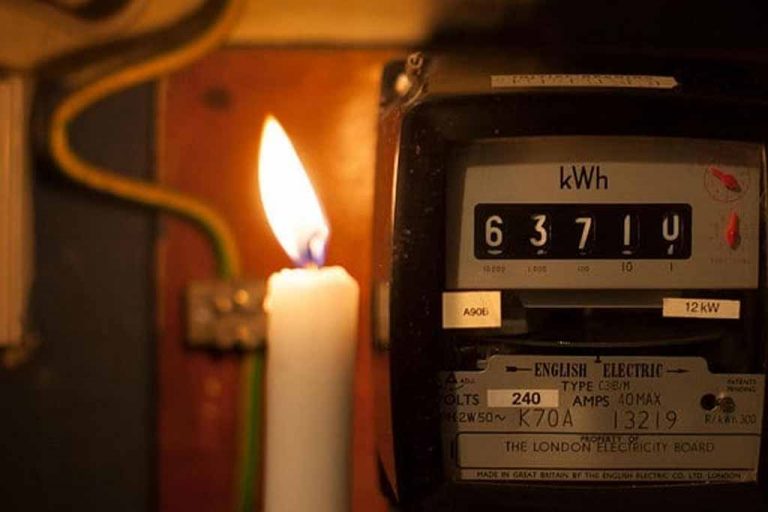
It is reported that the two power plants Sapugaskanda and Yugadanavi have been shut down due to lack of fuel.
Accordingly, it is stated that the power loss to the national grid today (20) is 370 MW. 270 MW from Yugadanavi power plant and 100 MW from Sapugaskanda A and B power plants.
The shortage will be covered by hydropower during the day but it is reported that it could disrupt the power supply during the night.
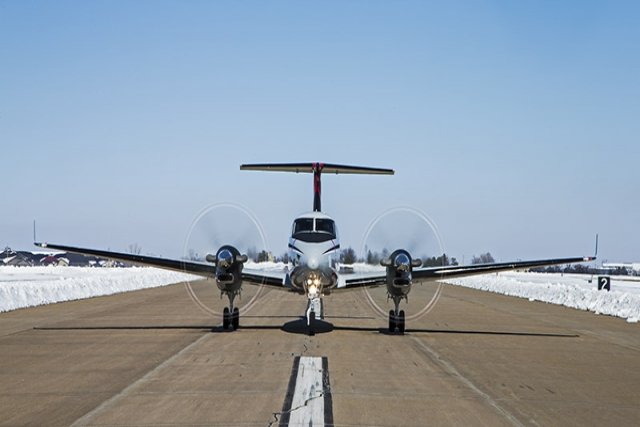
US Company Textron Aviation has been awarded an $11 million contract for its new Beechcraft King Air 360ER aircraft. Built in Wichita, Kansas, the plane will be delivered through a foreign military sales contract to Sri Lanka with production set to be completed by September 2025.
The aircraft will be handed over to the US Army, which will install sensors before delivering it to the Sri Lankan Air Force.
Textron Vice President of Sales for Europe, the Middle East, and Africa Tom Perry said “The King Air has been the turboprop of choice throughout this region for more than five decades, and the new 260 and 360 will build on that legendary reputation.”
“We have incorporated innovative and next-generation technologies that enhance the flying experience for an already proven aircraft,” he added.
The Beechcraft King Air family of planes is among the twin-turboprops manufactured by the company since 1974, the longest-ever production run for any civilian turboprop aircraft.
About the Beechcraft King Air 360ER.
Measuring 46.6 feet (14.2 meters) long and 14.3 feet (4.35 meters) high, the Beechcraft King Air 360ER has been designed to reduce pilot workload with features such as “ThrustSense Autothrottle,” which provides precision control for optimized power output and efficient takeoff.
It has been developed to offer flexible and reconfigurable interiors to accommodate passengers and cargo, function as an air ambulance, or conduct other missions.
The aircraft includes three 14-inch touchscreen displays, a multi-scan weather radar system, a dual flight management system, graphic flight planning, and a crew alert system.
Introduced in 2020, the jet has a maximum range of 3,345 kilometers (2078.4 miles) and can carry 11 people. It has a top speed of 560 kilometers (348 miles) per hour and a maximum altitude of 35,000 feet (10,668 meters).
Textron Aviation also manufactures the 350ER for government, military and commercial purposes, aerial survey, and surveillance.
In September last year, the aircraft received certification from the European Aviation Safety Agency, enabling the company to deliver to customers throughout the EU.
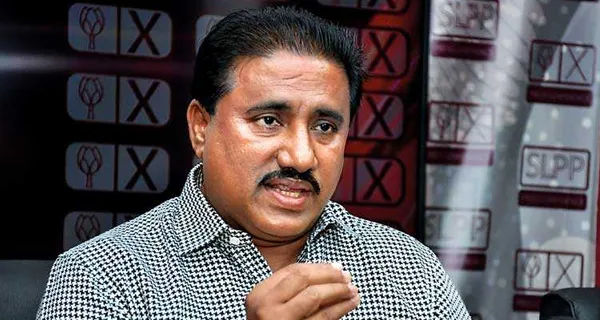
Minister Rohitha Abeygunawardena says that the present government has been able to bring fuel and provide electricity in this manner despite the dollar crisis and that the people should understand the situation and use electricity sparingly.
“Between 2015 and 2020, nobody thought about new power generation. There was no talk of a renewable energy program. Despite the dollar crisis, we have been able to bring in some of this fuel and carry it this way.
Now let’s say if the Opposition took over this responsibility tomorrow, how would they do this? Will they print dollars all at once?
We have to make a decision on our own. We have to turn off one light bulb in our house and use it sparingly at this time. ”
Minister Rohitha Abeygunawardena stated this addressing a women’s meeting of the SLPP held yesterday (19).
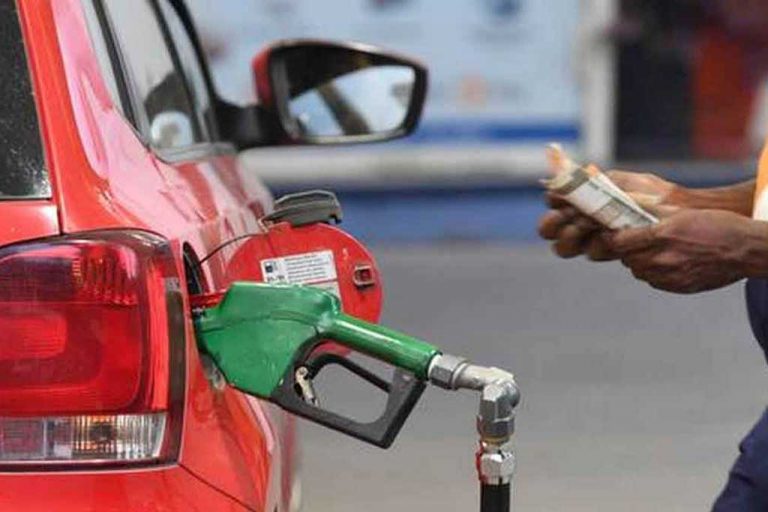
The price of a liter of petrol will increase by Rs. 20 today and the price of diesel by Rs. 22 a liter today or tomorrow, says Samagi Jana Balawega MP Ashok Abeysinghe.
“I predict that today or tomorrow petrol will increase by 20 rupees and diesel by 22 rupees. It may even increase tonight.
Remember when those MPs used to go to Parliament on bicycles when petrol was increased by 2 rupees? It has increased by 20 rupees for months now. Now it is increasing by 20 again.
Yesterday Gammanpila said ‘I have nothing to do now, our country is the lowest country in the world, the Central Bank says they cannot give dollars to bring fuel, there are no rupees either, so this cannot continue for more than a month and a half’ But he is laughing when he is telling all this. Whose fault is it? Who came to power to bring prosperity? Is this the vision of prosperity? ”
Ashok Abeysinghe stated this addressing a meeting of the Samagi Jana Balawega held yesterday (19).
Sri Lankan banks are likely to face continued asset-quality pressure in 2022 as rising macroeconomic stresses stemming from the sovereign credit profile pose a threat to borrowers’ repayment capacity, alongside the conclusion of most relief measures in 2021, says Fitch Ratings.
Fitch-rated banks’ stage 3 (impaired) loans ratio has remained broadly unchanged since 2019 (9M21: 9.4%, 2019: 9.5%), as relief measures prevented deterioration in lending quality.
However, asset-quality pressure was evident in elevated loan-impairment charges and a rising share of stage 2 loans in gross loans. The share of loans under moratorium at Fitch-rated banks declined, estimated at 10% of gross loans at end-September 2021 (end-1H20: 26%).
Fitch expects Sri Lanka’s economic performance to weaken in 2022, forecasting growth to slow to 2.0%, although downside risks to forecasts remain. Stage 3 loans are likely to increase in 2022 but a sharp rise in the ratio may not be apparent due to robust loan growth. Credit costs are likely to remain high, although below 2021.
We believe Sri Lankan banks face added asset-quality pressure from their government securities holdings, particularly those denominated in foreign currency which accounted for around 6.5% of Fitch-rated banks’ total assets at end-9M21.
The Ceylon Motor Traders Association (CMTA) raised concerns on the unofficial restrictions made by banks to cripple the country’s vehicle fleet maintenance, which would have a direct impact on goods and people transportation as well as the overall economy.
The association revealed the plight of opening Letter of Credit (LC) facilities with regards to spare parts orders and difficulties faced by the vehicle users in the country.
“If the transportation sector grinds to a halt, it would have a severe impact on the main revenue lines of the country such as exports, tourism, which are heavily reliant on the availability of transport,” the CTMA said.
It urged policy makers to pay attention to the plight of the automotive industry and identify spare parts as an essential goods category to keep Sri Lanka’s ageing vehicle fleet functioning.
Noting that many vehicle owners are resorting to dangerous patch repairs, usage of non-genuine spare parts and used spare parts imported from overseas junkyards, they cautioned that these practices place the safety of vehicle users and the public in great danger.
In addition to public safety concerns, these restrictions and delays of LC facilities have resulted in the inability for legitimate franchise holders to predict the supply or price of spare parts creating uncertainty and panic across the automotive market.
The franchise holders who have been battered by the import ban of almost two years, are now facing difficulties in managing their after-sales operations, which is the only revenue stream left to sustain their staff and overheads.
“Inability to maintain these vehicles according to their manufacturer recommended schedules will result in greater repairs and breakdowns in the future, causing even greater foreign currency drain,” the association warned.
Founded in 1920, the CMTA is the only Ceylon Chamber of Commerce affiliated trade body that represents vehicle manufacturers through their locally appointed franchise holders (commonly called ‘agents’). It is the most senior automotive trade association in the region.
The members of the CMTA collectively employ and train thousands of Sri Lankan citizens while bringing in international best practices in engineering and management, developing a talent pool that is trained and employable internationally.
CMTA members are all audited by the manufacturers they represent, and the vehicles they import are shipped directly from the factory, designed to meet country specific requirements.
Udaya Gammanpila, Minister of Energy has stated that the loss incurred by the Ceylon Petroleum Corporation in the sale of fuel will not be covered by the President or his comrades from Medamulana and that the people will have to bear the burden in the end.
Minister Udaya Gammanpila stated this addressing a meeting held yesterday (19).
Udaya Gammanpila, the most failed Minister of Energy in history, is not preparing to provide relief to the people but to increase fuel prices and further oppress the people. At the same time, he wants to be a hero by poking Mahinda Rajapaksa and his family. He is doing all this while imposing the burden of the luxury of his ministry on the people.