With scant oversight, registered agents have long been seen as a weak point in the U.S. financial system.
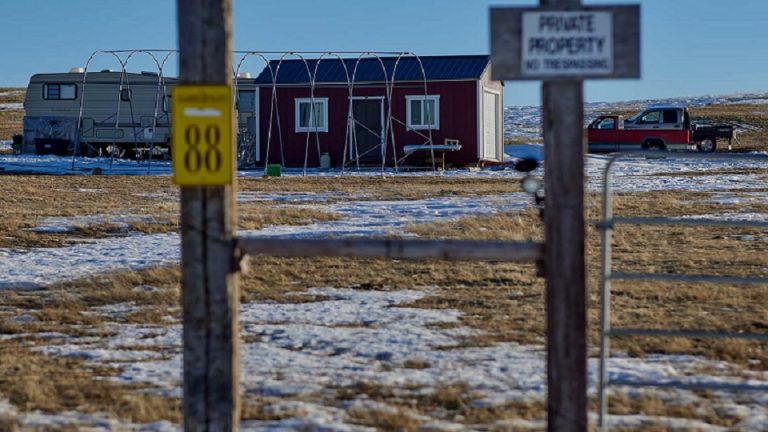
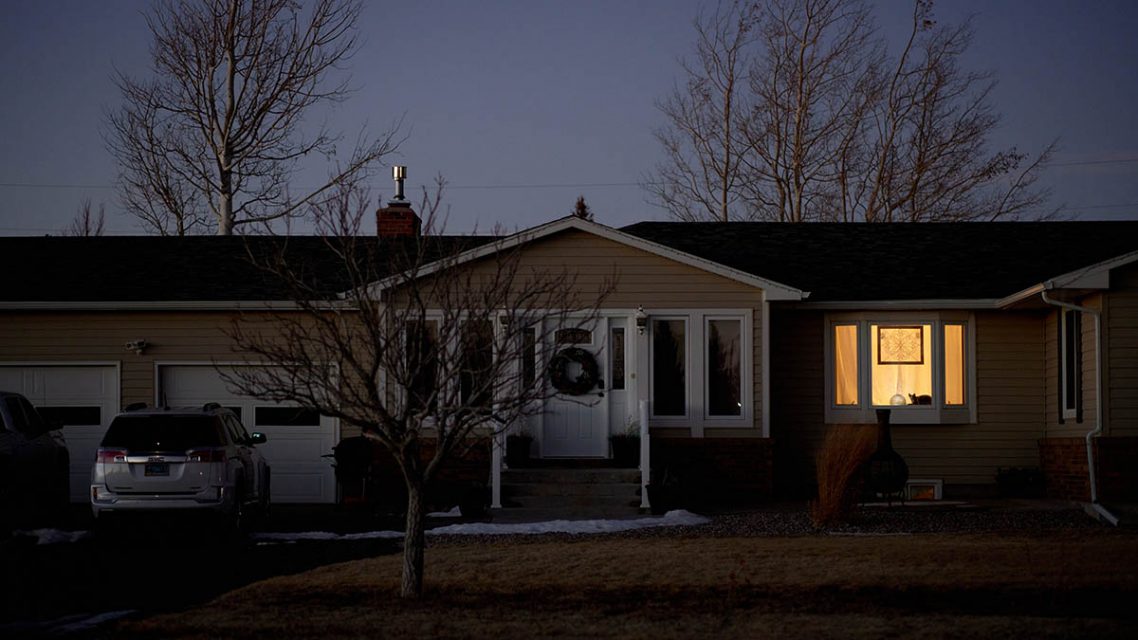
CHEYENNE, Wyoming – The clapboard house sits off a gravel road on the outskirts of town, partly hidden behind a fence and a heaping pile of trash. Here, amid grassland that stretches for miles, 77-year-old Cyndy Jackson is the official gatekeeper for more than 350 companies that operate in the United States and around the world.
The state doesn’t require any training for company representatives like Jackson, known as registered agents. She said she uses the internet and gut instinct to size up the owners she represents, but has no formal procedures for examining their backgrounds. The state doesn’t require that, either.
“You just have to kind of go on trust,” said Jackson, an agent for 30 years. “Nobody knows who anybody is anymore.”
Few other facilitators in the U.S. financial system operate with as little oversight as the thousands of registered agents who often serve as the only publicly known contact for companies with anonymous owners.
Oligarchs, criminals and online scammers have reaped the benefits.
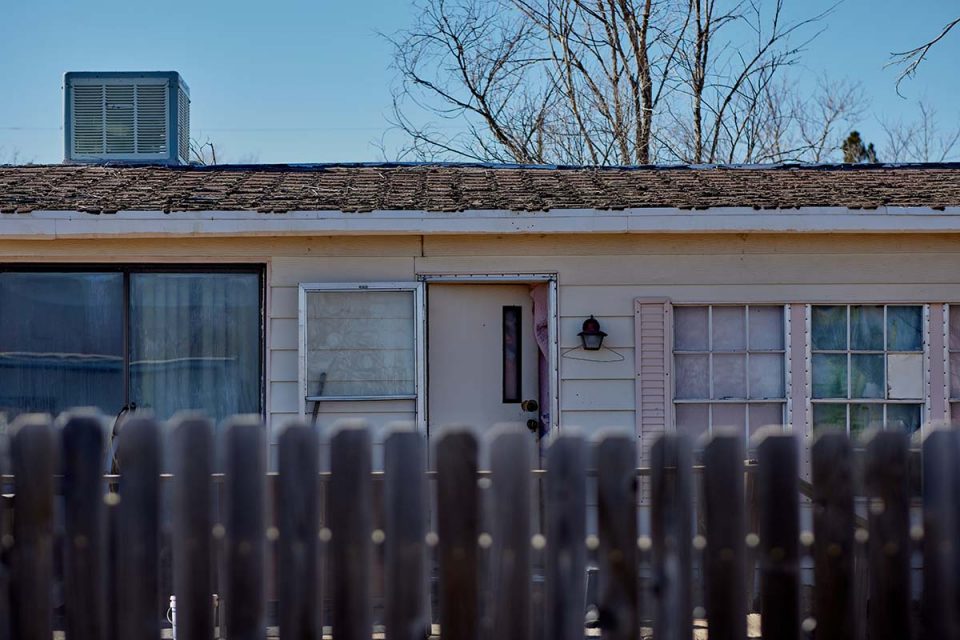
have to kind of go on trust. Nobody knows who anybody is anymore.” Image: Stephen Speranza for The Washington Post
Jackson has represented companies tied to a disbarred lawyer convicted in California of “pimping and pandering” at massage parlors, a felon who served time in New York for defrauding investors and a Ukrainian tycoon accused of stealing billions of dollars from one of his nation’s largest banks.
Their names and others turned up in an extensive examination by the International Consortium of Investigative Journalists and The Washington Post of thousands of company records filed with the state of Wyoming, one of America’s most secretive tax havens. The records came primarily from limited liability companies (LLCs), a business structure that offers tax breaks, legal protections and privacy safeguards.
On most of the records, the only names listed were those of registered agents. In Wyoming, the owners of LLCs are not required to identify themselves, although some choose to do so on corporate filings. ICIJ and The Post found additional names linked to LLCs and other companies by scouring court documents and other government records.
Across the United States, registered agents provide routine corporate services, filing incorporation documents and annual reports. In many cases, they are the lone contact for anyone looking to sue companies or lodge a complaint.
Experts have warned for years that the nation’s sprawling industry — comprising attorneys, part-time participants and multistate speciality operations that represent thousands of companies — is a weak point in the U.S. financial system. While banks must vet customers, registered agents aren’t uniformly required to verify their identities.
“If I were a criminal or ran a criminal enterprise, I would have a field day with registered agents because I just need to find another adult with a pulse,” said Sarah Beth Felix, a former banking compliance executive. “Who’s going to make sure they are doing the right thing?”
Wyoming, Delaware and Nevada have been at the forefront of a national debate about whether to ramp up oversight of registered agents. Those states and a handful of others are havens for hidden wealth, prized by company owners for their low incorporation fees, scant regulation and offers of anonymity. During a 2009 Congressional hearing, an official with the National Association of Secretaries of State noted registered agents in Wyoming and Nevada had been seen as “poster children…in a bad way” for lapses within the industry.
In October, a bipartisan group of lawmakers proposed federal legislation that would require registered agents to scrutinize clients and report suspicious transactions. They drafted the measure, dubbed the Enablers Act, following publication of the Pandora Papers, a global investigation by ICIJ, The Post and other media partners exposing how the global elite shield riches from taxing authorities, criminal probes and public accountability.
“Some of these states have failed to ensure that the United States of America is not the number one destination for dirty money in the world,” said Rep. Tom Malinowski (D-N.J.), a key sponsor. “If they had been doing their jobs, we wouldn’t need to act in this area.”
The matter has taken on fresh urgency since Russia invaded Ukraine, prompting governments to trace and freeze assets held by oligarchs close to Russian President Vladimir Putin. After the war began on Feb. 24, a coalition of experts called on Congress to pass the Enablers Act and other measures, pointing to revelations in the Pandora Papers that Russian billionaire Igor Makarov secretly held real estate and a 13-seat private jet through an LLC and trust in Wyoming. Makarov has previously said through his attorney that he has no personal relationship with Putin and that his trust was properly disclosed.
Last January, a federal law for the first time required LLCs and similar business entities to provide the names and birth dates of their owners to a new government database. But that registry is not accessible to the public, and transparency advocates argue that the sheer volume of information may leave federal authorities unable to identify many fraudulent entries and the owners behind them. Delaware alone recorded more than 180,000 new LLCs in 2020, records show.
It’s like dealing with a three-card monte dealer. Can you find the card? — litigator Stuart Rossman
The proposed Enablers Act would go further, requiring every registered agent not only to identify company owners but also to look for and report red flags.
Some agents, however, have massive client lists — one operation in Delaware notes that it has represented more than 300,000 companies. Smaller agents may not have the means or ability to track down clients, particularly those who live abroad, experts say. Wyoming doesn’t keep a comprehensive list of registered agents, and some can be as elusive as the company owners they represent.
“It’s like dealing with a three-card monte dealer. Can you find the card?” said Stuart Rossman, litigation director at the National Consumer Law Center who said he often has to hunt for registered agents when filing fraud complaints against companies with no known address or other point of contact. “I’m chasing smoke, and it’s intentional.”
In Wyoming, the number of LLCs has soared in the past decade from about 4,200 to more than 220,000, state data shows. Companies established in the state have been listed in overseas lawsuits alleging medical fraud in Russia, tax dodging in Hungary and bank theft in Zimbabwe, foreign court records show.
Jackson and other registered agents acknowledge that they know little or nothing about the owners of companies they are paid to front, nor what function those companies serve.
Companies established in Wyoming have been listed in overseas lawsuits alleging medical fraud in Russia, tax dodging in Hungary and bank theft in Zimbabwe, foreign court records show.
Representing every LLC is a registered agent, drawn from a diverse group that includes Wyoming’s House majority whip, a municipal court judge and a former Cheyenne city council president. One agent represents more than 250 companies — dozens linked to foreign owners — from a beige camper parked at a barren crossroads north of Cheyenne, records and interviews show.
Another agent, Candice Dillmon, compiled a roster of clients through a company that promotes Wyoming to business owners in Poland. “Pełna anonimowość,” the company says on its website — “Full anonymity.”
Dillmon, who also works full time in human resources for the state, said she has represented 1,200 companies. One was linked to a politician in Poland who resigned in December amid reports that the company tried to sell unproven and dangerous medical treatment to patients with incurable diseases.
Dillmon said she is doing what the law allows: representing companies without question or judgment.
“It’s not my responsibility what a business does,” she said. “It’s a fraud-friendly state by the laws that are created. Unless the state changes that, I’m just doing my part.”
The Wyoming Secretary of State’s office provided ICIJ and The Post with information about the number of LLCs in the state and the rules for registered agents but did not respond to questions about individual agents or oversight of the industry.
In an interview, Wyoming Treasurer Curt Meier (R) said the state should require agents to identify and screen company owners.
“Financial institutions have regulations in place prohibiting them from doing business with terrorist organizations, criminal organizations and specific countries,” Meier said. “Perhaps we should look at doing something similar to that with registered agents to help identify and prohibit business agreements with any…bad actors.”
‘Blinded by his promises’
More than 15 years ago, a registered agent in Delaware helped set up an LLC for a cousin of Russian aluminum magnate Oleg Deripaska, a key Putin ally later hit with U.S sanctions.
The company bought a $15 million mansion near Embassy Row in Northwest Washington, a half mile from the vice president’s home at the Naval Observatory. In October, the FBI searched the mansion as part of an unspecified federal investigation.

The search drew headlines, but no public scrutiny to the registered agent who set up the LLC. Incorporating Services Ltd., which has an office between a Dairy Queen and a plumbing supply store in Dover, did not respond to requests for comment. Neither did Deripaska, who has denied owning the mansion.
“Registered agents are seen as the least sexy enablers because they are seen as simply receiving the mail,” said Felix, the former banking compliance executive. “But if they get it wrong, if they don’t care about the profile of the business owner, especially one from a high risk country, then all kinds of things can go wrong.”
In Wyoming, Dillmon said she spent a decade working for the Secretary of State’s office, processing corporate paperwork. She later decided to start her own business as a registered agent, setting up shop under the names Wyoming Means Business and 1 Accurate Agent while continuing to work for the state.
Dillmon said she makes about $50,000 a year as an agent, charging $150 for company formation services and $50 annually after that. “Anyone you ask who knows me will say I’m a hardworking, honest person, and I take pride in having a good reputation, both personally and professionally,” she said.
Records show that some of Dillmon’s business comes from Kancelaria Wyoming, an LLC that advertises it helps Polish business owners establish companies in Wyoming and bank accounts in the Cayman Islands and Belize, both notorious tax havens.
“Wyoming is a unique state that allows you to set up and run a company … without revealing the data of its owners,” Kancelaria Wyoming says on its website. “You can live anywhere in the world and manage the company remotely.”
In a statement, Kancelaria Wyoming described Dillmon as a “manager” for the LLC and said its marketing accurately describes Wyoming law. The firm added that it is “not obliged to perform due diligence” on company owners and lacks the “appropriate legal tools to do it.”
“We cannot be held accountable for their business activities,” the firm said.
Dillmon said she has no ownership interest in Kancelaria Wyoming but declined to elaborate. She said Wyoming law does not require her to research her clients.
In one case, records show, Dillmon told the state that companies she had represented — including holymolyroler356 llc, uncle freds dreaded machine maker 34 llc and funfearandmoney3 llc — were based at an address on 20th Street in Vero Beach, Fla., near a dental office and a park. Vero Beach and Indian River County officials said they have no such address on record.
Dillmon said she simply reported the address she was given. “I cannot confirm or deny the address is or was valid at that time,” she told The Post and ICIJ.
Even if she learns of wrongdoing by a company she represents, Dillmon said she is under no obligation to stop providing services.
One company on Dillmon’s roster was sued last year by the Securities and Exchange Commission, which alleged that the owners had targeted inexperienced investors at churches and falsely promised financial windfalls that would also provide humanitarian relief in West Africa, records show. EarthSource Minerals International, which settled the fraud case without admitting wrongdoing, did not respond to requests for comment.
Dillmon was also the registered agent for Vinci Neo Clinic LLC, which drew scrutiny in Poland late last year for allegedly promising questionable medical care to sick patients. The Polish news outlet Wirtualna Polska reported the company was connected to Lukasz Mejza, a deputy sports and tourism minister who has since resigned.
“He tried to take advantage of sick people,” said Paulina Materna, a Polish mother who said she spent a year believing there was a doctor in Mexico capable of treating her now 6-year-old daughter, Pola, who has cystic fibrosis.
Materna said she had never heard of the state of Wyoming until she received a $170,000 invoice from Vinci Neo Clinic LLC for Pola’s care.
At her home in western Poland, Materna held on to the invoice, which was stamped with Dillmon’s home address in Cheyenne and carried a bank identification code for JPMorgan Chase on Madison Avenue in New York.
Warned that she had been taken in by empty promises, Materna did not pay the invoice and did not take her daughter to Mexico.

Though she didn’t lose any money, she said, she had to explain the situation to her daughter, who had written to Santa Claus: “My wish is to recover.”
“Every mom wants to believe there is a chance for her child to be healthy. I was blinded by his promises,” Materna said of Mejza. “I would have gone to the devil to get help,” she said.
Mejza did not respond to requests for comment. On social media, he has denied wrongdoing, calling the allegations an attempt to “overthrow the government.” Mejza said he invested in the clinic after receiving a proposal to establish and expand the company but cut ties when he became aware of medical and moral concerns.
“I suffered the financial costs. I treated the invested funds as my own losses,” he wrote on Facebook.
Dillmon said she was not personally involved in Vinci Neo Clinic. She said she was aware of the allegations; a photo of her house in Cheyenne had appeared in the Polish press. She said she resigned as the company’s agent in December after her $50 bill for corporate services went unpaid. She has continued to represent EarthSource Minerals, records show.
“I’m not doing anything wrong,” Dillmon said. “If I had friends and family who wanted to get into the registered agent business, I’d say, ‘Go for it.’ ”
Jackson, the 77-year-old registered agent, said she has opted to look into her clients’ backgrounds despite the lack of guidance from the state. But her searches, she said, are limited.
“Generally, it’s only Wyoming-wide,” she said. “I don’t search across the whole world to see what they might have been doing.”
In 2016, Jackson became the registered agent for Ferrost LLC, a Wyoming company linked to a Ukrainian oligarch accused of stealing billions from one of Ukraine’s largest banks. Ihor Kolomoisky, a former politician, is under investigation in the United States and Ukraine for allegedly laundering bank proceeds through shell companies around the world.
In a civil complaint alleging fraud and corruption, the bank said Ferrost was connected to Kolomoisky and that $2.2 million in laundered bank funds were wired to the company. Last year, the United States imposed sanctions on Kolomoisky for what it called “significant corruption.”
Kolomoisky, who has denied wrongdoing and said there was no fraud or losses to the bank, did not respond to requests for comment.
In 2019, Jackson helped establish MaDaon Group LLC for a convicted felon who New York court records show had helped defraud investors by promising access to a $1 billion line of credit through an agent of the Nigerian government.
Jackson did not respond to questions about her representation of Ferrost or MaDaon, including what she knew about her clients.
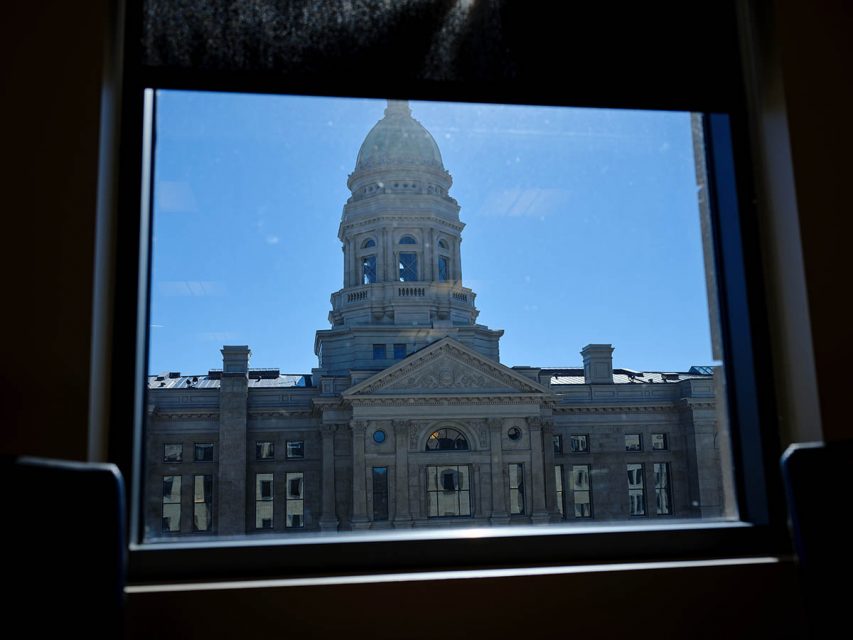
Lapses in oversight
Stung by reports of anonymous companies financing arms dealers, human traffickers and other criminals, some states have tightened requirements for registered agents.
In 2013, Wyoming, Delaware and Nevada reported changes that officials said would fight fraud and create best practices, including requiring agents to maintain a physical address in those states. In 2019, Delaware began requiring that registered agents scrutinize potential customers and check their names against the U.S. Treasury Department’s list of people under sanction.
Regulators also have taken action. In 2014, Nevada officials threatened to shut down more than 800 agents who did not have a street address or who had failed to identify themselves properly as agents, according to local media When asked whether Nevada forced any of the registered agents to close shop, a spokesperson for the Secretary of State responded: “unknown.”
In Wyoming last year, regulators fined an agent in Casper more than $500,000 for failing to produce records for 1,130 companies, state records show. Another agent in the same building failed to produce records for 525 companies.
But such oversight has been inconsistent.
In 2011, Wyoming shuttered a registered agent operation linked to disbarred lawyer David DeLoach after auditors found the firm failed to maintain and produce records for 457 companies, records show. DeLoach, however, had a second registered agent company with a similar name that stayed active in Wyoming until earlier this year.
DeLoach lost his law license in the 1970s after the State Bar of California found, among other things, that he had misappropriated settlement money owed to a client who had been injured in a car accident. He also spent three years on probation for hiring women to work as prostitutes — described as “pimping and pandering activities” — in massage parlors, records show. DeLoach died in 2020.
In 2016, some Wyoming lawmakers sought a more universal reform, introducing a proposal that would have prohibited registered agents from touting the state as a haven for “anonymity,” “secrecy” and “hidden owners.” A similar measure was already in place in Delaware.
Wyoming lawmakers rejected the idea. Treasurer Meier, then a state senator, said opponents successfully argued that the measure would impinge on the right to free speech.
“I ran it up the flagpole but it never did get in the air,” he said. “We left ourselves a little bit short on this.”
Many complaints, no resolution
Fixing the system of agents is critical not only to the country’s efforts to prevent money laundering, reformers say, but also to protecting consumers from fraud.
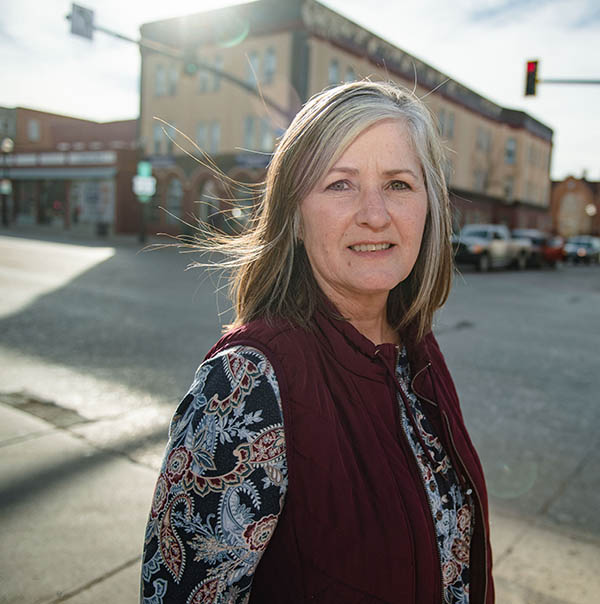
In Sheridan, at the base of the Bighorn Mountains in northern Wyoming, Chamber of Commerce CEO Dixie Johnson has fielded dozens of calls in the past year from law enforcement officers and angry consumers struggling to reach companies that list as their only published address a building downtown on North Gould Street.
Brazilian lawmakers accused one of the companies of helping to launder COVID-19 funds from the government, according to a Senate inquiry in Brazil. Customers have sued another company, alleging it sold a nutritional supplement made of mud that was found by the Food and Drug Administration to contain elevated levels of lead and arsenic. The civil case is ongoing.
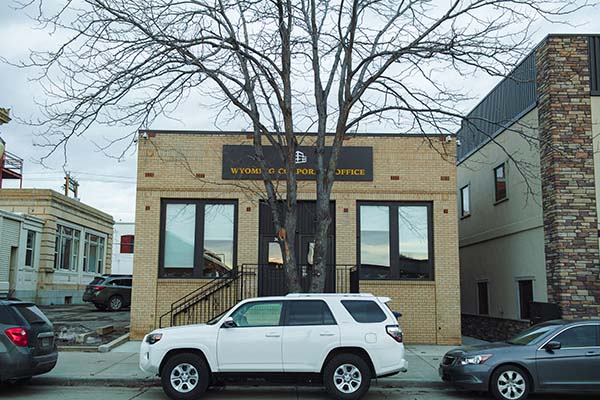
Those companies and others have no physical presence in Sheridan apart from their registered agents in the building on North Gould Street.
As one of the agents advertises online: “If we can put our address on a document instead of yours, we do.”
Time and again, Johnson said consumers and others with complaints have received no help from the agents. “When we’ve given out the phone number there, nobody has gotten any resolution,” she said.
Johnson said she has spoken to the office of state Attorney General Bridget Hill about the situation. The office did not respond to a request for comment by ICIJ and The Post.
Public records show that the agents appear to be connected to Registered Agents Inc., which identifies as its “world wide headquarters” the building on North Gould Street.
Until last month, the company listed “Bill Havre” as board president and executive director. Havre was described on the company’s website as a longtime Wyoming resident who grew up on a ranch and eventually became “intrigued by the business entity formation process.” His name appears on dozens of corporate documents provided to the state on behalf of various companies.
ICIJ and The Post searched public records in Wyoming and across the United States, including voter registration and property records, and found no one listed by that name.
On a windy afternoon in February, several women working on computers in an office at the North Gould Street building described Havre as the company’s “assistant secretary” and declined to comment further.
That same day, Johnson, at the chamber of commerce, said she had received another call from a frustrated customer, this time a woman who said her husband was charged for tractor parts he didn’t order by a company that operates a website designed to look like Home Depot’s. The only contact information was a registered agent on North Gould Street.
“‘I think you might have a business in Sheridan that is scamming people,’” Johnson recalled the woman telling her. “And I thought, ‘Here we go.’”
“The chamber has spent years … wanting to have the best community for all of us to live, work and play. I feel like this kind of undoes some of that,” she said.“It hurts my heart and makes me very sad.”
A local newspaper, The Sheridan Press, began investigating the North Gould Street operation in 2020. It found that consumers could not reach anyone at the building. As the newspaper prepared to publish another story late last year, a lawyer for Registered Agents Inc. threatened to sue, calling the coverage “sensationalism and a blatant attempt to smear our company’s good name.”
The newspaper published anyway.
After inquiries by ICIJ and The Post, Registered Agents Inc. removed Havre’s name from the company’s website. Company lawyer Bryce Myrvang said the change was made after an internal audit and that the updated website reflects “current leadership.” He did not respond to questions about Havre, saying the company does not share personal information about current or former employees.
In a statement, Myrvang said the agents follow Wyoming regulations and share information with state and federal agencies when required. He said the firm is not responsible for scams that may be committed by its clients.
“It would be impossible to find a commercial registered agent that does not have companies they provide services to that are not named as defendants in lawsuits on occasion,” he said.
He added that Registered Agents Inc. voluntarily screens clients against lists of foreigners under sanction by the U.S. government.
Three hundred miles from Sheridan, in a beige camper on a windblown prairie near Cheyenne, longtime registered agent Melodie Hill has her own way of checking out her clients.
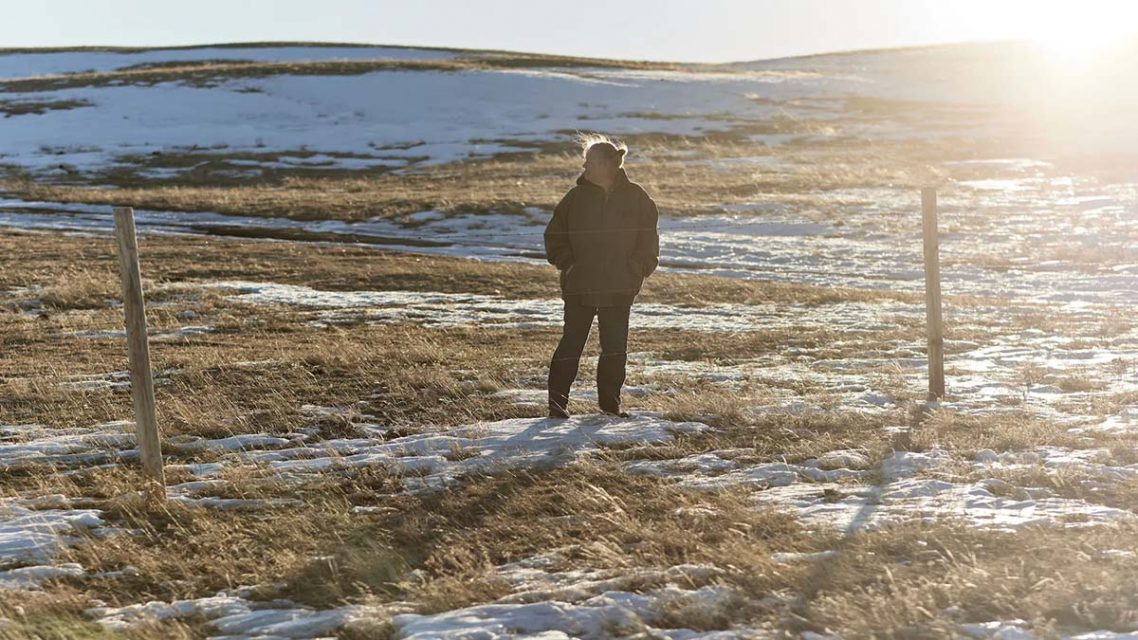
from Cheyenne. Image: Stephen Speranza For The Washington Post
Hill, who previously sold crystals, herbs and pendulum readings, said she represents more than 250 companies — including some from Brazil, Germany and India. She said she asks each new client to provide basic information, including a photo, a name and an address.
Only one has ever struck her as suspicious, she said, a potential client from Canada whom she turned away. That was years ago.
“It’s rare,” she said, “that anyone will cross my spidey sense.”
Debbie Cenziper is a reporter and Alice Crites is a researcher and librarian at The Washington Post.
Contributors: Dominika Maciejasz (Gazeta Wyborcza, Poland); Emily Anderson Stern, Michael Korsh, Jordan Anderson, Dhivya Sridar, Eva Herscowitz, Quinn Clark, Hannah Feuer, Grace Wu, Linus Hoeller, Henry Roach and Michelle Liu (Northwestern University’s Medill Investigative Lab); Delphine Reuter, Miguel Fiandor, Karrie Kehoe and Kathleen Cahill.