Home Blog Page 2422

The verdict of Shashi Weerawansa’s passport case due on March 10

0

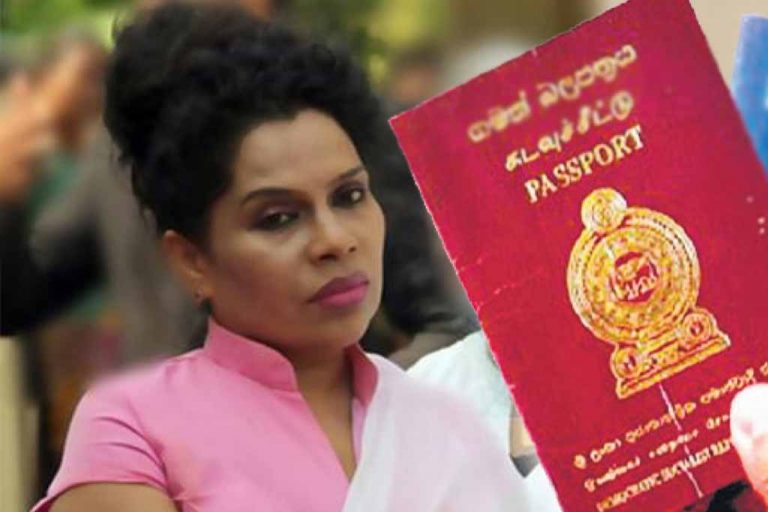
The Colombo Chief Magistrate’s Court yesterday (11) ordered that the verdict in the case filed against Minister Wimal Weerawansa’s wife Shashi Weerawansa alias Ranasinghe Randunu Mudiyansela’s Shirsha Udayanthi for obtaining a diplomatic passport by presenting false information be announced on March 10.

That was when the case was taken up before Colombo Chief Magistrate Buddhika C. Ragala yesterday.

Following the conclusion of the hearing of the evidence of the plaintiff and the defendant in the case, the case was adjourned to give its verdict.

Shashi Weerawansa’s ordinary passport stated that her date of birth was 1967, but the CID has filed a case against her for obtaining a diplomatic passport by submitting forged documents stating that her date of birth was 1971.

US extends funding to empower youth to protect human rights in Sri Lanka

0

The United States is offering funding for projects to empower youth to protect human rights in Sri Lanka.

The US Department of State, Bureau of Democracy, Human Rights, and Labor (DRL) announced an open competition for organisations interested in submitting applications for projects that empower young people in the protection of human rights and fundamental freedoms in Sri Lanka.

DRL’s goal is expanded youth mobilisation, engagement, and participation in democratic reforms to uphold the protection of human rights in Sri Lanka. 

The bureau seeks proposals that support and enable Sri Lankan youth to play a critical role in ensuring an inclusive democratic society that is responsive to all its citizens. 

The program objectives are: 1) youth and youth-led organisations are empowered to address and respond to existing and new challenges to fundamental freedoms in Sri Lanka; and 2) youth and youth-led organisations have increased leadership skills and participation in addressing accountability, transparency, and inclusive governance processes.

Program activities could include, but are not limited to:

·         strengthening youth-led networks and broader civil society coalitions across political groups and marginalised communities

·         increasing the capacity of youth to take on leadership roles within civil society structures, including mentor-ship opportunities for youth;

·         supporting youth to be more meaningfully engaged in decision making processes in their communities, including peace building activities, constructive political engagement, and community-based problem solving;

·         providing youth skills-building opportunities such as: public fiscal management, procurement, and budget research; coalition building; negotiation; policy analysis, advocacy, and media and journalistic skills that strengthen critical analysis skills to counter the proliferation of mis- and disinformation;

·         peer-to-peer exchange program for young people to visit other parts of the country;

·         small grants for youth and marginalised groups to conduct smaller activities within their neighbourhoods, youth organisations, schools, and community groups;

·         inter generational dialogues to prepare youth to leverage their voices for advocacy and policy change.

For this program, the target demographic is youth between the ages of 18-30.  Competitive proposals will target youth with intersecting marginalised identities and youth beyond Colombo.

Where appropriate, competitive proposals may include:

·         Opportunities for beneficiaries to apply their new knowledge and skills in practical efforts;

·         Solicitation of feedback and suggestions from beneficiaries when developing activities in order to strengthen the sustainability of programs and participant ownership of project outcomes;

·         Input from participants on sustainability plans and systematic review of the plans throughout the life of the project, with adjustments made as necessary;

·         Inclusion of vulnerable populations;

·         Joint identification and definition of key concepts with relevant stakeholders and stakeholder input into project activities;

·         Systematic follow up with beneficiaries at specific intervals after the completion of activities to track how beneficiaries are retaining new knowledge as well as applying their new skills.

Activities that are not typically allowed include, but are not limited to:

·         The provision of humanitarian assistance;

·         English language instruction;

·         Development of high-tech computer or communications software and/or hardware;

·         Purely academic exchanges or fellowships;

·         External exchanges or fellowships lasting longer than six months;

·         Off-shore activities that are not clearly linked to in-country initiatives and impact or are not necessary per security concerns;

·         Theoretical explorations of human rights or democracy issues, including projects aimed primarily at research and evaluation that do not incorporate training or capacity-building for local civil society;

·         Micro-loans or similar small business development initiatives;

·         Initiatives directed towards a diaspora community rather than current residents of targeted countries.

Applications are due no later than 11:59 PM Eastern Standard Time (EST), on Tuesday, April 12, 2022 on https://www.grants.gov/ or SAMS Domestic (https://mygrants.servicenowservices.com) under the announcement title “DRL Youth Empowered to Protect Human Rights and Fundamental Freedoms in Sri Lanka”
The EU and IFC accelerate Infrastructure Investments in SA including SL  

0

Six South Asian nations, including India, are set to benefit from a new USD$ 21.5 million (EUR 18 million) funding from the European Union (EU), to accelerate climate-smart, inclusive infrastructure investments in their regions. 

IFC, the largest global development institution, focused on the private sector in emerging markets, will implement the project under the program, Accelerating Climate-Smart and Inclusive Infrastructure in South Asia (ACSIIS).

ACSIIS is a five-year program (2021-2026) to help spur investments in energy, water, waste management, transport, logistics, and green buildings to benefit people and businesses in Bangladesh, Bhutan, India, Maldives, Nepal, and Sri Lanka. ACSIIS would leverage USD$ 850 million of private sector investments in the region.

The impact of COVID-19 on investments in infrastructure has been widespread and severe. Investment commitments in infrastructure with private participation in 2020 dropped by an unprecedented 52 percent from 2019 levels. 

IFC estimates that South Asian countries can unlock more than US$3 trillion of climate-smart investment opportunities by fully meeting the national targets under the Paris Agreement by 2030.

“Attracting private capital for climate-smart infrastructure in a sustainable and inclusive manner will be critical for post-COVID-19 recovery in South Asia,” said Hector Gomez Ang, Regional Director for South Asia at IFC.

“The EU’s support for the program could not come at a better time as it is vital to act now to unblock obstacles to spurring sustainable infrastructure projects. This program will leverage IFC’s experience and expertise in supporting climate-smart infrastructure development in the region,” he added.

The program will also support the development of climate-smart investments in agriculture, manufacturing, tourism, health, and education while focusing on key themes such as cities, gender, and green finance. The latest initiative builds on IFC’s previous partnership with the EU to support the Eco-Cities Program in India and other programs in the region.

“The ACSIIS project will support a green and inclusive recovery in South Asia. We are happy to see the existing EU cooperation in India broadening into a regional intervention with multi-sector coverage, in line with the objectives of the EU Green Deal, to promote sustainable development, the fight against climate change and the transition to renewable energy,” said Ugo Astuto, Ambassador of the European Union to India and Bhutan.

“The program will also support capacity building of private and government sectors to improve their ability to design, structure, and implement sustainable infrastructure projects. Several of these components are part of IFC’s Upstream strategy, which aims to create markets in the most challenging environments, laying the foundation for future investment projects.

Japan thinks twice in granting credit to Sri Lanka   

0

Japanese government is in second thoughts of granting financial assistance for Sri Lanka as it is terribly hurt by the government’s cancellation of Light RailRail Transit (LRT)  project funded by JICA on the directions of the President in 2020, reliable official sources revealed.

The Finance Ministry is holding discussions with donor countries in its efforts towards foreign finance mobilisation by entering into agreements this year. 

 The majority of the foreign exchange disbursements of donor countries and international funding agencies   were from the loan agreements signed with China, which is almost 60 percent, followed by World Bank (16 percent), Asian Development Bank (13 percent) and Japan (5 percent) during the year of 2021.

The cash strapped government has sought more funding from Japan this year as it is burdened with foreign debt unbearably, official sources said.

According to Finance Ministry data, Japanese financial assistance to Sri Lanka has come down drastically by 94 percent in 2020 compared to 2019, a senior official said adding that this significant drop in funding from Japan was a reflection of the government’a action to cancel the LRT project in 2020.

Japan has reduced its credit to Sri Lanka to Yen 1.4 bilion (US$ 12.04 million in 2020 from Yen 42.7 billion ( $ 367.22 million)in 2019 but it has increased to US $74.9 million in 2021

President Gotabaya Rajapaksa has directed Sri Lanka’s Ministry of Transport to terminate a Japan International Cooperation Agency (JICA)-funded light railway transit (LRT) project with immediate effect in September 2020.

In March 2019, the Sri Lankan Government signed an agreement with JICA for a loan of 30 billion Yen (US$ 285mn at prevailing rates) to meet part of the cost of the Colombo LRT. 

The total project cost was estimated to be 246,641 billion yen (US$ 2.3 billion) but this includes land acquisition, administration, interest and taxes which are not financed by the loan.

The consultants started work in early 2019. Their seven-year contract was signed with the Ministry of Megapolis and covers detailed design and related engineering services, procurement assistance, construction supervision, testing and commissioning as well as defect liability check

The Government has not yet settled a claim of around Rs 5bn from the project consultants for the Japan International Cooperation Agency-funded Light Rail Transit (LRT) for work already done, expenses and loss of profit caused by the cancellation of the project in 2020.

The consultants are a joint venture between Oriental Consultants Global of Japan and Sri Lanka’s Consulting Engineers & Architects Associated. The payments must either be made by a Government institution or through the JICA loan which remains active despite the project cancellation.

Any disbursements already made by JICA will have to be settled, despite the project being called off.For the first two years, the focus was to work out the detailed design and procurement.

The consultants have not been paid since mid-2020 despite sending the bills to the UDA. A negotiating committee appointed to deal with them has gone back and forth.

JICA was issued a letter saying the project was cancelled owing to a change of priorities with no mention of it being too costly. 

And while the Government said it would implement the LRT as a public-private partnership (PPP)–there are three other LRT lines they can use this model for–there’s been little movement on this front since JICA funding was called off.

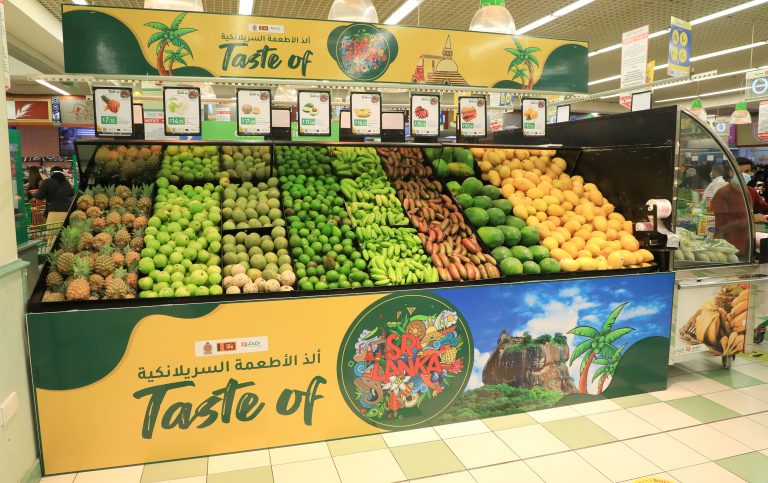
Embassy of Sri Lanka in Doha joins hands with LuLu to launch “Taste of Sri Lanka” Sri Lankan Produce and Food Mart

0

The Embassy of Sri Lanka in Doha, in coordination with Lulu Group, launched a multifaceted Sri Lanka Promotional Event titled “Taste of Sri Lanka” “Sri Lanka Handloom and Batik Saree Fest”, with a view to augment the image of the country, amongst the nationals of Qatar and foreign expatriates, residing in the State of Qatar.

The event was organized to coincide with the celebrations of the 74th anniversary of Independence of Sri Lanka.   Ambassador of Sri Lanka to the State of Qatar Mafaz Mohideen inaugurated this mega event on 06 February 2022 along with Director Lulu Group at LuLu Hypermarket in D-Ring Road in Doha Dr. Mohamed Althaf Musliam Veetil. A large number of invitees and guests including corporate leaders and businessmen, importers of goods and services from Sri Lanka, members of the media, among others, attended the ceremony. The event will showcase in all 17 Lulu Hypermarket Stores in Qatar until 12 February 2022. Lulu Group International is one of the largest retail chains in Asia and the largest in the Middle East region.

This week-long Sri Lanka produce and food mart presents a unique experience to local and expatriate customers with a wide variety of fresh vegetables, fruits, specially imported from Sri Lanka, offered at promotional prices. This year’s event has a number of new products and goods displayed and marketed such as Kithul flour with Cinnamon, preserved food items, authentic spices, various kinds of biscuits and confectionary products. Many diversities of healthy organic coconut products such as coconut cream, coconut milk and cold-pressed coconut oil were displayed with discounted prices. A variety of tea and tea-based herbal infusions with turmeric, chamomile and other herbs from signature plantations around Sri Lanka, were also marketed at the event.

The event aims to bring alive the unique culinary heritage of Sri Lanka, which is a blend of many colonial influences — British, Dutch and Portuguese as well as pan-Asian with Indian (especially South Indian) influences. Many of the invitees were highly impressed of the authentic Sri Lankan cuisine showcased at the inaugural ceremony.

Another main attraction of this mega event was the “Sri Lanka Handloom and Batik Saree Fest”. The promotion of Sri Lankan Handloom and Batik Sarees was a result of discussions held by the State Minister of Regional Cooperation during his visit to Qatar in October 2021 and by Ambassador of Sri Lanka to Qatar Mafaz Mohideen with the Lulu Group. The stall consisted of a number of Sri Lankan handloom and batik sarees along with eco-friendly handicrafts. The initiative was aimed at facilitating local handloom and batik producers to access untapped overseas markets whilst augmenting the export basket.

The Embassy facilitated Sri Lanka’s participation at this event as a way forward in bolstering trade, tourism and cultural promotion in the State of Qatar.

Ambassador Amza meets Secretary  General of GCC

0

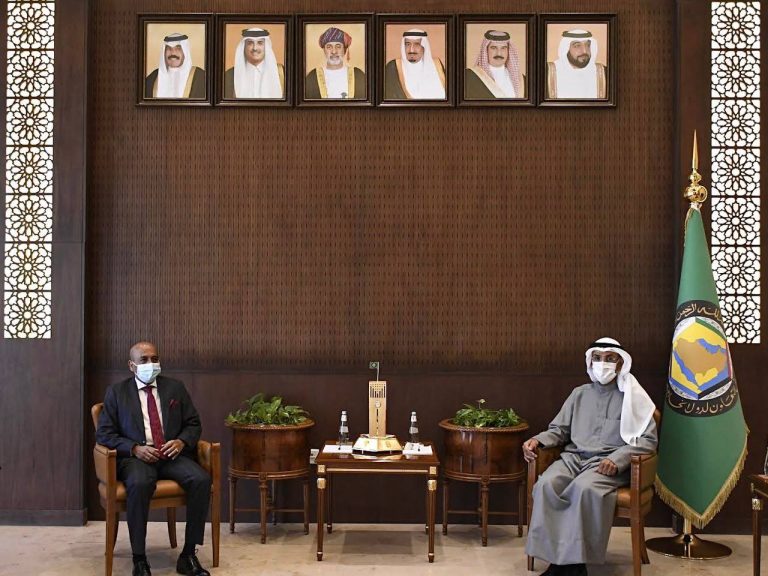
Ambassador of Sri Lanka to the Kingdom of Saudi Arabia P.M Amza met  Secretary General of the Gulf Cooperation Council (GCC) Dr. Nayef Falah M. Al. Hajraf at the Council Headquarters in Riyadh on 8February, 2022.

At a cordial meeting, both sides discussed the matters of mutual interest ranging from expanding trade, employment, tourism and investment between the member countries of the GCC and Sri Lanka.

The Ambassador and Secretary General also explored the possibilities of entering into a framework agreement between Sri Lanka and GCC with the view to further expand the cooperation between Sri Lanka and GCC countries.

SRI LANKA: What Is The Greater Wrong – Contempt Of Court Or Illegal Detention?

0

By Basil Fernando

In two occasions, the United Nations Human Rights Committee (UNHRC) held in two separate cases decided by the Sri Lankan Supreme Court related to contempt of court that the punishment imposed by the Court amounted to disproportionate punishment and that such punishment amounted to illegal detention. The UNHRC held that on both occasions that the petitioners right to be free from illegal detention guaranteed under Article 9 of the International Covenant on Civil and Political Rights (ICCPR) has been violated. It further held that the State is liable for the violation of this right by the Court and that the petitioners are entitled to compensation.

Findings of the two cases are as follows:

On Michael Anthony Emmanuel Fernando case –

“…….the only disruption indicated by the State Party is the repetitious filing of motions by the author, for which an imposition of financial penalties would have evidently been sufficient, and one instance of ‘raising his voice’ in the presence of the Court and refusing thereafter to apologize. The penalty imposed was a one year term of ‘rigourous imprisonment’. No reasoned explanation has been provided by the Court or the State Party as to why such a severe and summary penalty was warranted, in the exercise of a Court’s power to maintain orderly proceedings. Article 9, Paragraph 1, of the Covenant forbids any ‘arbitrary’ deprivation of liberty. The imposition of a draconian penalty without adequate explanation and without independent procedural safeguards falls within that prohibition. The fact that an act constituting a violation of Article 9, Paragraph 1, is committed by the judicial branch of Government cannot prevent the engagement of the responsibility of the State Party as a whole. The Committee concludes that the author’s detention was arbitrary, in violation of Article 9, Paragraph 1” (CPR/C/83/D/1189/2003. (Jurisprudence)

D.M. Dissanayake v. Sri Lanka, Comm. 1373/2005, U.N. Doc. A/63/40, Vol. II, at 109 (HRC 2008)

“In this jurisprudence, the Committee also observed that the imposition of a draconian penalty without adequate explanation and without independent procedural safeguards falls within the prohibition of the “arbitrary” deprivation of liberty, and within the meaning of Article 9, Paragraph 1, of the Covenant. The fact that an act constituting a violation of Article 9, Paragraph 1, is committed by the judicial branch of Government cannot prevent the engagement of the responsibility of the State Party as a whole.”

Fernando v. Sri Lanka, supra

In the current case, the author was sentenced to two years rigorous imprisonment for having stated at a public meeting that he would not accept any “disgraceful decision” of the Supreme Court, in relation to a pending opinion on the exercise of defence powers between the President and the Minister of Defence. As argued by the State Party, and confirmed on a review of the judgement itself, it would appear that the word “disgraceful” was considered by the Court as a “mild” translation of the word uttered. The State Party refers to the Supreme Court’s argument that the sentence was “deterrent” in nature, given the fact that the author had previously been charged with contempt but had not been convicted because of his apology. It would thus appear that the severity of the author’s sentence was based on two contempt charges, of one of which he had not been convicted. In addition, the Committee notes that the State Party has provided no explanation of why summary proceedings were necessary in this case, particularly in light of the fact that the incident leading to the charge had not been made in the “face of the Court”. The Committee finds that neither the Court nor the State Party has provided any reasoned explanation as to why such a severe and summary penalty was warranted, in the exercise of the Court’s power to maintain orderly proceedings,“

The Sri Lankan Constitution has enshrined that the freedom from illegal detention is a fundamental human right.

The Supreme Court of Sri Lanka has a duty of guaranteeing the protection of this fundamental right.

No court is entitled to act in violation of the fundamental rights of the people.

Thus, this contradiction between the State duty to prevent illegal detention and the Court’s jurisdiction to deal with contempt of court needs to be removed by restating that the Court’s discretion does not extend to the granting of disproportionate punishments violative of the Constitutional right to freedom against illegal detention or any other such fundamental right.

An Article by the Asian Human Rights Commission

Pressure Mounts on Sri Lanka to Reform Abusive Law

0

 
Cosmetic Edits Insufficient; EU Trade Benefits Hang in Balance 

By Claudio Francavilla


Sri Lanka’s government has recently unveiled a bill to amend its abusive Prevention of Terrorism Act (PTA), the Foreign Ministry hailing it as a “most progressive step” towards bringing the notorious law in line with “international best practice”. But the European Union is not buying it, and that may mean trouble for the government.

The proposed amendments were an attempt to salvage Sri Lanka’s tariff-free access to the EU market under the bloc’s GSP+ trading scheme, which is conditioned on respect for international human rights. But in a meeting in Brussels with their Sri Lankan counterparts, EU officials made it clear that “important elements had not been included in the Amendment Bill” and urged “further steps to make the PTA fully compliant with international norms.”

The EU also called for “practical and administrative steps to release on bail those detained under the PTA without charges.” Some detainees were released or bailed over recent weeks, but many more remain in arbitrary detention, often held for months or years, as a recent Human Rights Watch report shows.

Sri Lankan activists, lawyers, and victims of past abuses and their families have campaigned for decades urging the repeal of the PTA, which is used to enable arbitrary detention and torture, targeting the minority Tamil and Muslim communities, and suppressing civil society. The previous government had promised to repeal the law, but failed to deliver.

At risk of losing their GSP+ benefits, the administration of President Gotabaya Rajapaksa published in January the flimsy set of proposed amendments, only a few days ahead of a key meeting with the EU. Prior to the meeting, Sri Lanka’s Foreign Ministry issued a grossly inaccurate and threatening statement against recent testimony by a prominent human rights lawyer, Ambika Satkunanathan, to the European Parliament.

In December, UN experts identified five “necessary prerequisites” for Sri Lanka’s counterterrorism legislation to comply with international standards. The EU should continue to insist that those benchmarks be met: the freedom of countless Sri Lankans hangs in the balance, as does the country’s GSP+ status, which is vital to the economy. To safeguard it, the Rajapaksa government needs to uphold its human rights obligations, starting with genuine reform of the PTA, accompanied by a moratorium on its use and the release of those unjustly jailed in its application. Cosmetic interventions won’t suffice.

Human Rights Watch

Tourism sector gets a wave off from annual registration

0

The Government has decided to waive off the annual registration fee of all tourist establishments and individuals listed under the Sri Lanka Tourism Development Authority (SLTDA) for this year, extending

Tourism Minister Prasanna Ranatunga said the number of registered accommodation providers has increased by 39%, while the registration in the service providing entities have increased by 26% compared to 2019.

Pointing out that the Government had to face many difficulties in granting relief provided to the stakeholders as many were not registered with SLTDA, he said steps have been taken to expedite the registration of tourism establishments and service providers this year.

As of 30 June 2021, the total establishments registered with  SLTDA was at 5,821, comprising 3,686 accommodation sector entities and 2,135 in the service sector. 

The Minister said that the authorities have been instructed to expedite the registration of tourist hotels, service providers, guides and drivers. 

According to the Tourism Act, all tourist establishments and individuals engaged in the sector are required to register with the SLTDA, but many of them are still not adhering to the law.

In this backdrop, the SLTDA has made it mandatory to allow only licensed tour guides for services.

The SLTDA has informed all tour operators that it will take legal action against companies that assign unregistered and unlicensed tour guides to international travellers. Investigations are being carried out by the Tourist Police.

In August 2021, Sri Lanka Tourism launched a drive to register informal sector operators with the help of iconic cricketer Kumar Sangakkara.

The key objective of the initiative was to absorb the informal sector tourism services and establishments to the SLTDA registration process. 

A unique video featuring Sangakkara with a core message: “Come, together let’s rebuild the industry we all love!.”

Currently, around 5,000 tour guides are registered with the SLTDA and of that 1,680 are national guides, 1,388 driving guides, 1,667 regional guides and 98 local guides. All the guides have obtained the relevant licenses after formal training.

Meanwhile, the first week of February received 22,412 tourists, pushing the cumulative figure to 104,739. Arrivals were led by Russian travellers, followed by India and the UK.

Aitken Spence Travels facilitates first Charter Flight from Uzbekistan

0

Sri Lanka Tourism is now in the process of a new resurgence attracting tourists from countries which were under the former Soviet Union creating novel trends in the region, official sources said.

Following the dissolution of the Soviet Union, it declared independence as the Republic of Uzbekistan on 31 August 1991. 

Uzbekistan is a secular state, with a presidential constitutional government in place. Uzbekistan comprises 12 regions (vilayats), Tashkent City and one autonomous republic, Karakalpakstan

Travellers from Uzbekistan are visiting Sri Lanka in large numbers with the new trend promoting the tourists from Europe to look into Sri Lanka as an attractive tourist destination.      

Aitken Spence Travels, the leading DMC in Sri Lanka welcomed the country’s first charter flight from Uzbekistanon Wednesday 09. There will be a weekly flight operating every Wednesday until the end of March. 

This charter airline operation will be partnered with a leading tour operator of Uzbekistan and generate approximately 1,200 guests to Sri Lanka.

All charter flights of Uzbekistan Airways will land at the Mattala Rajapaksa International Airport (MRIA), Mattala from where all passengers would depart on their tours. 

A special welcome has been arranged at the Mattala airport, as this is the first international flight from this source market. 

Further, necessary arrangements have been made to welcome all Uzbekistani visitors, in accordance with the Ministry of Health’s and the Tourism Authority’s health and safety guidelines and rules.

Aitken Spence Travels Managing Director Nalin Jayasundera said: “He is delighted to welcome visitors from Uzbekistan to Sri Lanka. This is a new market for us and for Sri Lanka as well. 

While the world is still fighting the COVID 19 pandemic, we managed to break into this new source market after conducting a marketing campaign, making presentations, and organising promotions among a large group of agents in Tashkent, Uzbekistan, which is a landlocked country in Central Asia.” 

“It’s a historical country linked to the Silk Road. Our efforts were rewarded when we won the confidence of the Uzbekistan agents as they saw Sri Lanka as a safe and secure travel destination to be explored and enjoyed by their holiday makers. 

“We are happy to support the stakeholders of the tourism industry and contribute to the Sri Lankan economy at this critical moment as this step will lead to the road to recovery of tourism in Sri Lanka as a whole,” he added.

Aitken Spence said travellers from Uzbekistan are particularly interested in visiting Sri Lanka because of the country’s rich heritage as well as basking in the sun kissed golden sandy beaches.

 In addition, the Uzbekistani accommodation options range from four to five-star properties. Hence, Uzbekistani tourists can be classified as high-value tourists. 

More of these types of new source markets need to be identified and explored by Sri Lanka, as it would assist in reviving the industry’s much needed tourism related jobs and contribute to the country’s economic stabilisation through foreign income.

Aitken Spence Travels will also open its brand-new travel counter at the Mattala airport in pursuit of welcoming visitors who land in Mattala.

 The counter will have facilities to book tours, private transfers, and accommodation options as well.