Home Blog Page 2423

Private sector lobby groups up in arms against 25 percent surcharge tax 

0

Concerns were raised regarding the dampening impact the new taxes may have on investor confidence, particularly since many of the new measures are one-off in nature, and in the case of the surcharge tax, it is retroactive in operation. 

The misalignment between the allocations provided in the budget speech and the priorities of the economy has become the talk of the town at present. 

The high allocations for defence, road development, and generally high levels of capital expenditure over allocations for education, healthcare, and skill development were identified as being problematic.

Under this et up the lobby groups within the country’s engine of growth – private sector – are reigniting protest against the controversial 25% surcharge tax on companies who had made profit of over Rs. 2 billion in FY21.

Apart from the ad-hoc nature of the taxation, concerns are being renewed as it goes against the principles of fair and best local and global practices. 

Private sector warned that surcharge tax unless revoked or injustice rectified would deal a severe blow to Sri Lanka’s already embattled reputation among international and local business 
communities.

“Firstly, slapping a 25% surcharge on already taxed past profit is unethical,” they warned, adding that Sri Lanka is facing global ridicule of being a nation resorting to taxing retained earnings/reserves. 

They argued that it also insults international best accounting standards and practices which Sri Lanka incorporated firms have been complying with. 

The surcharge tax being of retrospective effect also violates the very basic tenant of law that a company is entitled to conduct its affairs based on the taxes then prevalent.

“We understand that the Government needs money but collect it the proper way,” they emphasised. “Ideally the Government should raise the desired amount by an across the board new tax applicable to all.” 

Announced in the 2022 Budget the one-off tax aims to raise Rs. 100 billion. “Even if it is an unkind tax the Government needs to be fair in its administration rather than singling out a class of companies based on a threshold of Rs. 2 billion and above,” it was pointed out.

Tax analysts suggested that the Government should exclude profits of Rs.1 to Rs.1,999 million made by companies when computing the 25% surcharge tax liability. 

The basis for this recommendation is that companies coming under the new tax must be given the same benefit (zero tax) enjoyed by those who had made a profit of less than Rs. 2 billion. 

Citing an example, they said a company that made a profit of Rs. 2,500 million in FY21, should be taxed only on the basis of 25% of Rs. 501 million and not Rs. 2,500 million.

Private sector sources also said that the Government, by imposing 25% surcharge tax was being inconsiderate of the capital employed by the companies to earn such profit or the return on investment. 

There has been no consideration to the fact whether the profit had been earned through borrowed funds that need to be serviced. Companies had paid dividends too based on FY21 profits made.

Analysts also said Sri Lanka’s credibility on consistency in taxation is tarnished by the surcharge. 

Companies and investors had respite for about five years after the previous regime imposed the merciless “super gains tax” also in retrospective effect irking the private sector and as a sovereign assured it will be one off.

However, come 2022 the same sovereign entity, the Government of Sri Lanka, breaks its promise with the latest surcharge tax.

“From 2016 up to 2022 no such tax was imposed and accordingly; government has created a legitimate expectation to the taxpaying community no such surcharge will be imposed. 

Therefore, the latest surcharge is a violation of the rule of natural justice that has been guaranteed by the sovereign (Sri Lanka) and also amounted to breach of such cardinal principle by the Government itself,” opined analysts. 

Plans devised to promote Sri Lanka as a safe wedding destination

0

Plans are underway to promote Sri Lanka as a safe wedding destination, which would not only help uplift the hard-hit tourism industry but also the event management, fashion design and other supporting sectors that were impacted by the COVID-19 pandemic, tourism ministry sources said.

In addition to focusing on the high-potential MICE market, Sri Lanka Tourism will provide fresh impetus for ‘wedding tourism’ as well.

A separate portal will be launched by the Sri Lanka Tourism Development Authority (SLTDA) to support the endeavour.

SLTDA official said efforts would be taken to list event management companies, wedding planners, photographers, fashion designers and others under one platform, so that the experience of having a wedding in Sri Lanka can be convenient.“

Sri Lanka has immense potential in the wedding segment and sites such as those in the vicinity of the Sinharaja forest and Cultural Triangle can be promoted, ministry officials said.

While Sri Lanka needs to firm up relationships with regional peers such as India, the Maldives and Pakistan to promote wedding tourism, they  said adding that  Sri Lanka has already made a name for itself as a wedding destination in many markets, including Europe, Asia and the Middle East.

Future Market Insights, a premium market intelligence provider, in its latest update shared that with the increasing access to affordable travel options and a large number of scenic locations, destination weddings have rapidly gained popularity.

A market analysis shows that the destination wedding market will generate revenue over US $ 290 billion by 2031.

China does not always collect its debts on time

0

China’s lending boom to poor countries is turning sour, as governments struggle to repay their debts to its state-owned lenders like the Export-Import Bank of China and China Development Bank. So how will China handle countries on the brink of default? Will it show the solidarity one developing country might expect from another? Or will it insist on its pound of flesh?

Some think defaults would be good for China. It is often accused of “debt-trap diplomacy”: lending heavily to poor countries with an eye to seizing their strategic assets, such as ports, when they cannot repay. The truth is more prosaic. A fresh effort to count China’s debt restructurings finds that when faced with a debtor that cannot repay, China mostly just kicks the can down the road.

The new paper by Sebastian Horn and Carmen Reinhart of the World Bank and Christoph Trebesch of the Kiel Institute for the World Economy counts 261 instances of debt relief or renegotiation since 2000. Since China is far from open about its lending, the number is probably an underestimate. It includes 149 cancellations or reschedulings of small, interest-free loans by China’s commerce ministry, mostly in the 2000s when debt relief became a cause célèbre, embraced by g7 governments and Irish rock stars. Another 28 were payment holidays granted to countries in no great debt distress as part of the g20’s response to the pandemic. That leaves 84 restructurings proper (of which 30 were also part of the g20 initiative, but to countries under financial strain).

China’s 84 credit mishaps compare with 158 in total by all 22 members of the Paris Club, an informal group of rich-country governments including America, Japan and Britain (see chart). China was perhaps unlucky in lending a lot at a bad time, just before the prices of oil and other commodities exported by African countries began to drop in 2014. In almost all these cases, China simply gave borrowers more time to repay. In only four did it reduce the face value of the debt (Cuba, Iraq and Serbia, twice). Its approach thus resembles that of Western lenders in the 1980s, when they seldom provided deep debt relief.

The pandemic may force China to move from forbearance to forgiveness. Otherwise the authors fear that a debt “overhang” may inhibit growth in poor countries. China has joined the g20’s “common framework” for debt relief, which is meant to bring it into line with the Paris Club. In becoming a big lender to poor countries, China has followed in the footsteps of the club’s leading economic powers. It has also repeated a number of their blunders. Now it must follow them in writing off some of its past mistakes. Who is China’s Bono?

For more expert analysis of the biggest stories in economics, business and markets, sign up to Money Talks, our weekly newsletter.

This article appeared in the Finance & economics section of the print edition under the headline “How to default on China”

THE ECONOMIST

Murutthettuwe Thera’s Nurses’ Association joins the strike!

0

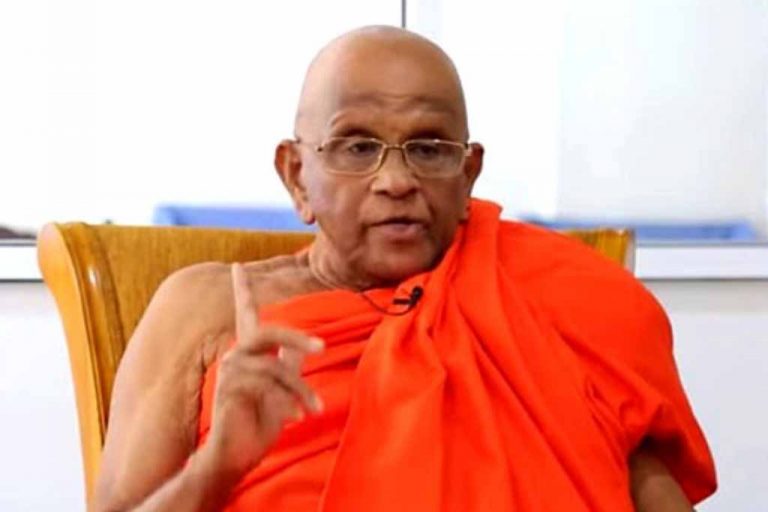
At present members of the Public Service United Nurses Association are also joining the active health workers’ strike. The president of the association is Ven. Murutthettuwe Ananda Thera.

Despite the president opinion, a group of union members is currently supporting the strike.

They say Murutthettu Thera is joining the government and gaining privileges, but not advocating for the professional rights of nurses.

We trust the ruler at this moment – Murutthettuwe Thero (VIDEO)

0

The President of the Public Service United Nurses’ Union Ven. Murutthettuwe Ananda Thero said that the Union could not be accused of not supporting the active strike at the moment as it had intervened to find solutions to seven burning issues that had been discussed with the President.

This was stated at a media briefing held in Colombo today (11).

He said that the Public Service United Nurses’ Association had not taken any action to prevent a struggle for fair service rights anywhere.

Thero said the only hope was to resolve the issues through dialogue, thinking about the lives of the people as much as possible during a period of epidemic and economic hardship, and that he would take steps forward with confidence in the ruler.

Lata Mangeshkar was the soundtrack of newly independent India

0

The scene is the garden of a palace in Allahabad where a young woman, ghostly in the twilight, is singing on a swing. Inside, in the grand ballroom, the owner of the palace sees a chandelier swaying in time to the song. The haunting beauty of this voice draws him out into the garden, but as he approaches the young woman disappears. All that is left is the empty swing and the song, “Aayega Aanewala”, “He will come, he who is to come”:

The world is at rest, but lovers are restless
In the stillness, footsteps are approaching,
As if someone is passing through my soul.
Or is it only my heart beating?

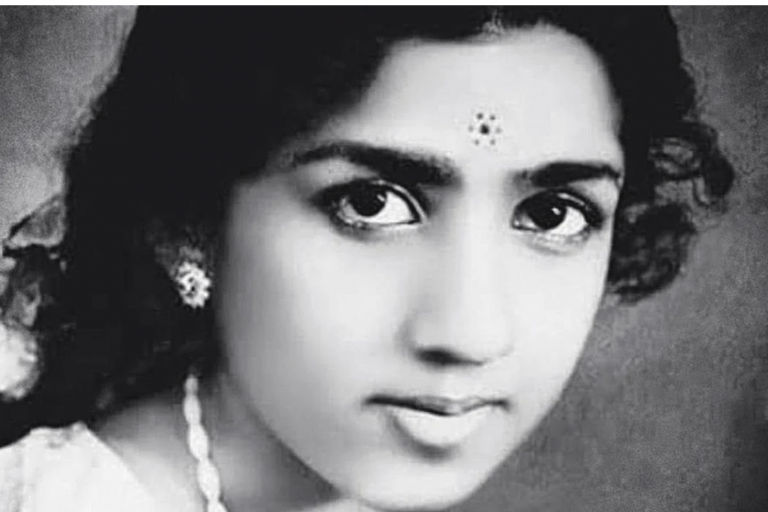
The young woman in “Mahal” (The Palace), made in 1949, was the great actress Madhubala, then still a teenager. But she was not the one singing. In trademark Bollywood fashion she lip-synched the words to a song recorded by a short, slightly dumpy, barefoot girl in a sweltering studio with the fans turned off, because they made too much noise. For “Aayega Aanewala” she crept towards the microphone from 20 feet away, mimicking the echoes of the song. The combination of her passionate voice with the elegant beauty of Madhubala was a peak of Bollywood’s art.

Her name, mentioned only as the song drew wide acclaim, was Lata Mangeshkar. She came from Indore in central India, the daughter of a touring theatre producer. From “Mahal” on, over seven decades of playback singing, her fame grew exponentially. She performed for every Indian prime minister, sang for actresses from Madhubala to Kajol, did duets with all the famous actors and built a catalogue of more than 5,000 songs, half of them solos. Directors fought to have her in their films, and she sang in more than a thousand. Inevitably, her voice also became the soundtrack of newly independent India. Through pa systems in malls and factories, from radios in chai stalls and barbers’ stands, out of the windows of idling, hooting cars, at funerals and weddings, her songs wove India together. She seemed to be always there, describing love’s joy and pain, famously as the defiant courtesan Anarkali in “Pyar Kiya to Darna Kya” (“Why Fear to be in Love?”) from the film “Mughal e Azam”, “The Emperor of the Moghuls”:

Why fear to be in love?
I’ve loved, not stolen anything.
Why hide and sigh?

She could never have imagined fame on such a scale. It meant that she could support her mother and her siblings and, later, get a second-hand Mercedes, indulge her love of Test cricket, buy diamonds and take holidays in Las Vegas, where she played the slots all night. But when, at five, she had begun to sing in her father’s productions, she feigned headaches to avoid his stern teaching. And when he died and she, at 13, took up acting to support the family, she could not bear to be in front of the camera. It did not love her, with her plumpness and her eyebrows, which one director told her were “too broad”. Nor could she bear to be directed what to say. By contrast to be an unseen playback singer, freely adding high emotions to the drama, felt exactly right.

Not that it was always easy. Her voice at first struck many as too high and thin, when the vogue was for a gutsier sound. With practice she made it fuller, improved the vital coloratura and developed her own honeyed way of singing, which others quickly copied. Languages other than Hindi or her native Marathi (she sang in dozens), were tricky, but she worked hard to perfect them. Practise, practise, was her mantra; and then get tough. She fought doggedly for playback singers to share in the royalties given to composers, as well as for higher fees for herself. There were frosty spells in that dispute when she refused to work with Mohammed Rafi, the playback partner with whom she sang 450 duets, and the director Raj Kapoor, whom she usually counted as a friend.

Nor did she stay behind the scenes for long. By the 1970s she was touring the world, bringing Bollywood’s music to the West and to proper concert halls. In 1974 she sang at the Royal Albert Hall, the first Indian to do so. Her early training had been classical, including playing sitar and composing, but she was confident that Bollywood’s music could stand beside the older kind. Her father would never have agreed, but now both she and her sister Asha Bhosle were playback superstars.

She also featured in most concerts the song she had sung in 1963 in front of Jawaharlal Nehru, then prime minister. India had just lost a border war with China, and her song, “Aye Mere Watan ke Logon” (“Ye People of my Land”) was for the martyrs.

When the great Himalayas were wounded and our freedom in danger,
They fought until their last breath and fell to the ground…
Some were Sikh, Jaat or Marathi; some Gurkha or Madrasi,
But each man who died there was an Indian….

As she sang Nehru cried, and afterwards he thanked her.

Her ardent, simple patriotism made some think that she belonged in politics, and in 1999 she was appointed to the Rajya Sabha, the upper house of parliament. She did not go much and did not take any mp’s perks, which included a free phone and cooking-gas connection. What did she know about politics? Her world was music, and it was wide enough to contain Mozart, Beethoven, Chopin, the Beatles and Nat King Cole. Music was her god and her husband too, for she never married.

In a way (though Pakistan embraced her, too) she was also married to her country. She was everyone’s “Didi”, sister, and divya, divine. When she died, of covid, people wept in the streets. Flags flew at half-mast, and there were two days of national mourning. At her funeral Narendra Modi himself laid flowers on her coffin. Her last song had been a tribute to him and to the Indian army.

All that was left was the empty swing. The swing, and the songs; the pain and the joy. ■

This article appeared in the Obituary section of the print edition under the headline “India’s nightingale”

THE ECONOMIST

Dr. Bellana stands by the request made by the paramedics to set a separate salary scale for graduates

0

Dr. Rukshan Bellana, Chairman of the Government Medical Officers’ Forum (GMOF) says that he too will stand by the request made by the paramedics to set a separate salary scale for graduates, which is a reasonable request.

Dr. Bellana states that this is a reasonable request.

He says such demands should be met without delay.

However, Bellana says that there are no trade unions that take the side of the people in this country.

Easter attack: CID resumes the interrogation of Hadiya from tomorrow

0

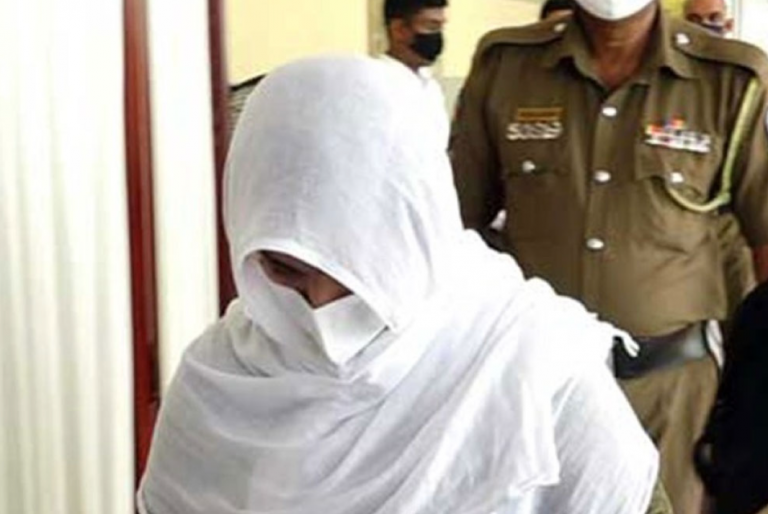
The Special Investigation Unit of the Criminal Investigation Department (CID), which is investigating the Easter Sunday terror attack, is due to start questioning the wife of Abdul Cader Fatima Hadiya, the wife of the deceased Saharan Hashim, who is currently in remand custody over the incident, tomorrow.

She is being questioned following a request made by the CID to the Kuliyapitiya Magistrate’s Court.

Accordingly, the relevant request was granted and the court issued an order to the Superintendent of Welikada Prisons to provide the necessary facilities to the CID.

This was according to a request made by the department before Kuliyapitiya Magistrate Janani Shashikala Wijetunga. The CID has decided to record further statements to confirm the findings of the series of attacks and the persons who carried out the series of attacks, the persons associated with Saharan Hashim.

Accordingly, the CID is scheduled to visit the Welikada Prison from tomorrow (12) to the 25th of February for 14 days to record her statement.

Mohamed Saharan’s wife has given statements to the CID on several occasions and she was remanded in custody after being detained and interrogated under the Prevention of Terrorism Act.

I think Saman Ratnapriya will respect the judiciary – Keheliya

0

Health Minister Keheliya Rambukwella says he believes the Government Nurses Association, chaired by Saman Ratnapriya, conducts respecting the judiciary.

Accordingly, inconveniences that the people come across during these few days will stop, the Minister said.

The Minister was commenting on the enjoining order issued by the Colombo District Court against the Government Nurses Association. The Minister pointed out that the Attorney General’s Department has submitted facts to the court within the legal framework considering the legal situation prevailing in the country and the court has issued this enjoining order after inquiring into the matter.

The no. of seats to be elected for each district in the general election revised!

0

The number of seats to be elected for each district in the general election has been revised. That is according to the 2021 Electoral Roll.

Accordingly, the number of seats in the Gampaha District will be reduced by one and that number will be included in the Jaffna District. So far 19 members have been elected from the Gampaha district and this will be reduced to 18 members. The number of seats in the Jaffna District will increase from 06 to 07.