Home Blog Page 2433

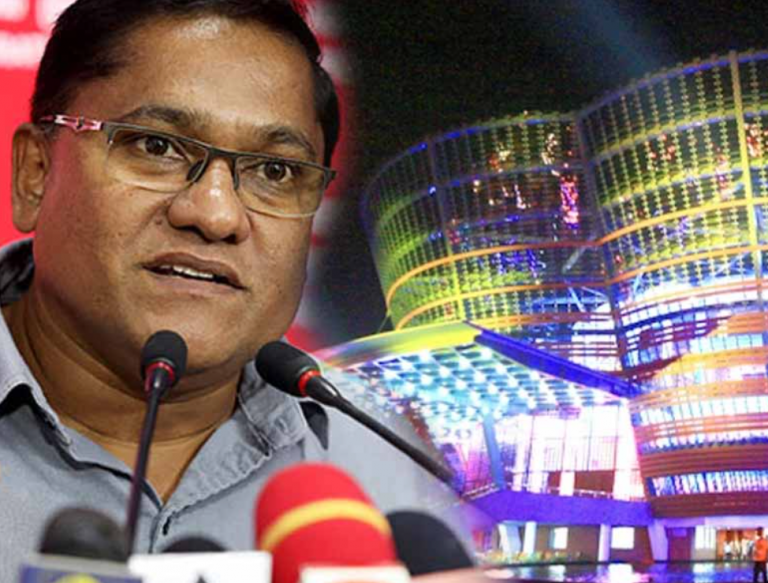
I am the one who started the work at Nelum Pokuna Theatre – But MR came to power and named it after him – Vijitha Herath

0

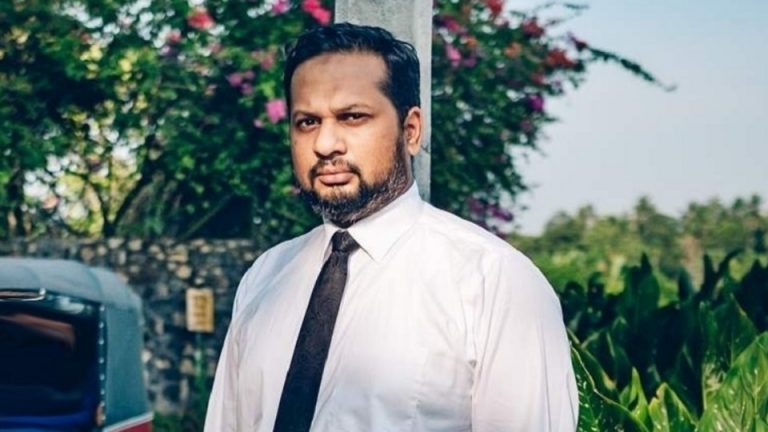
Janatha Vimukthi Peramuna (JVP) MP Vijitha Herath says that the work on the Nelum Pokuna Theatre was not started by Mahinda Rajapaksa but by him as the then Minister of Culture in 2004 and by the end, Mahinda Rajapaksa came and named it after him.

He said the Chinese government at the time had come up with a different building plan, but by arguing with them, even by threatening to stop work, he persuaded them to build it in the structure which it is today.

“Take a look at the countries of the world. There is no country as fortunate as Sri Lanka. Sri Lanka has the largest gem in the world – the blue diamond. The man who can give economic advice to build Singapore is in Sri Lanka today. As you may have seen, the man who recently got involved in planning to build the cities of the United Arab Emirates – Dubai and Abu Dhabi was none other than a man born in Hikkaduwa in the Galle District and now living in Canada. So these are the people of our country.

When Gotabhaya Rajapaksa became President, they spent their own money and paid for the ticket to come to Sri Lanka. Because they thought such a country would be formed. They voted with confidence. But now it has broken down. We guarantee, there will be no theft, no fraud under our control. We have proven it by practice.

We also had responsibilities in the Ministries. To this day, no one can accuse us of stealing. We have not done so.

It was not Mahinda Rajapaksa who started the Nelum Pokuna Theater. In 2003 we at the Ministry of Culture started it. We took over the Nomads ground for the Ministry of Culture and then build the Theater there. We negotiated with China and signed the agreement. China promised to bring us loans and aid. Then they made a model like the BMICH.

I said; ‘No, this is our country. Even though it is your money, this is the cultural headquarters of our country, it should be done according to our architecture. ‘

The Chinese said, ‘No, we provide the money, we have to build it in the way we want it.’

I said ‘then let’s stop the work’.

They took the model to President Chandrika Bandaranaike. She observed it and said, ‘He is right. This is our country. The National Art Theater should be according to the Sri Lankan architecture.’ Then they agreed to build it according to our architecture.

After that, we sent a team including Professor Nimal de Silva of the University of Moratuwa to China for two weeks. The Chinese architecture team brought to Sri Lanka. The two teams sat together and did the drawing. In fact, the concept of the Lotus Pond was conceived by an unknown person- A Supervisor working at the Polonnaruwa Cultural Fund. The Yapahuwa lion is quite similar to the Chinese Lion. Mixing both together we started the work at Nelum Pokuna National Art Theater. Chandrika Bandaranaike brought the Tsunami Relief Board to divide the country. We left the government. In September 2005, President Chandika Bandaranaike laid the foundation stone. Then in November Mahinda Rajapaksa became President, he came and opened it, the building was named The Nelum Pokuna (Lotus Pond) – Mahinda Rajapakse Theatre”

Vijitha Herath said this addressing a meeting held in Galle recently.

A new DG appointed to the BOI

0

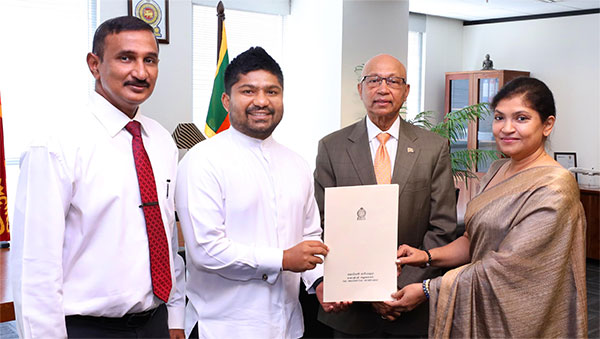
Renuka Weerakoon has been appointed as the new Director General of the Board of Investment of Sri Lanka.

The appointment was made by President Gotabhaya Rajapaksa and was handed over to Renuka Weerakoon by State Minister of Aviation and Investment Zone Development D.V. Chanaka yesterday (07).

Renuka Weerakoon is one of the most senior officers in the Board of Investment of Sri Lanka who has served in various capacities for over 27 years.

A lawyer by profession, she holds a Master’s Degree in Business Administration and a Master’s Degree in Project Management from the University of Sri Jayewardenepura.

Minister of Energy says CPC is doing their best not to increase fuel prices

0

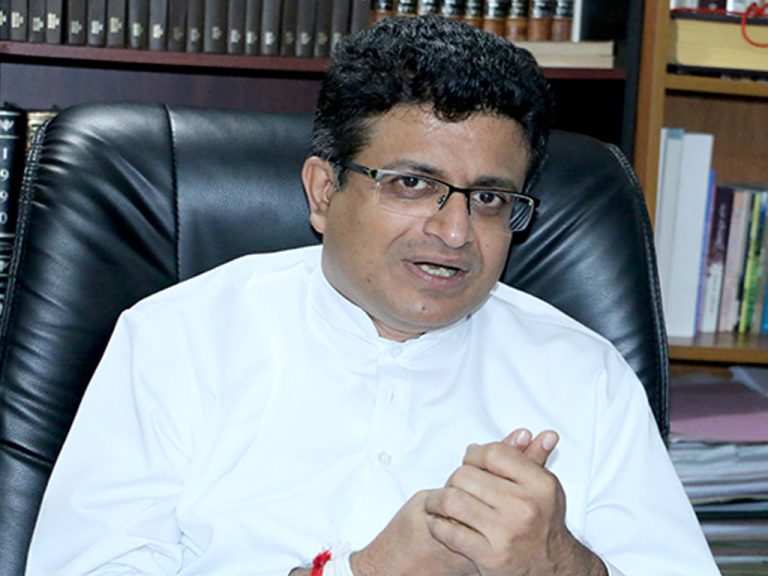
Udaya Gammanpila, Minister of Energy says that they will try their best not to increase fuel prices.

“Lanka IOC has historically set its own fuel prices. What they have done by setting a higher price is to direct their customers to the CPC. These people kept saying that we would lose Rs. 6 per liter of petrol and Rs. 35 per liter of diesel. Now the CPC has to bear the losses of their customers as well

The Ceylon Petroleum Corporation has no intention of increasing fuel prices. But we have to admit that with the continuous rise in fuel prices in the world market, on the one hand, it is the highest fuel price in eight years, and on the other hand, the dollar was much lower when crude oil prices had risen earlier. We are in an extremely difficult place. We try not to give the burden of loss to the people as much as possible ”

Minister Udaya Gammanpila stated this while expressing his views to the media in Colombo yesterday (07).

Sri Lanka’s relations with China not at the expense of India : Foreign Minister

0

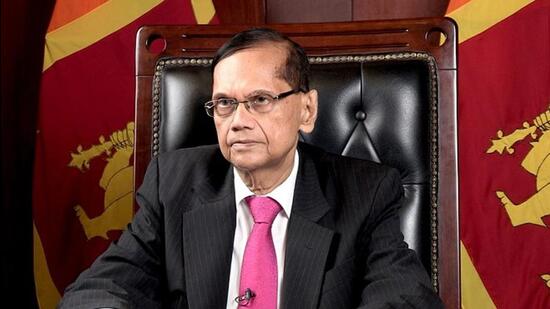
India’s support has made a “world of difference” to Sri Lanka’s economic situation, said Sri Lankan Foreign Minister G.L. Peiris, on his first visit to India since he was appointed last year, making it clear that the flurry of agreements announced in recent weeks have allowed the neighbours to move on from the problems of the “immediate past”.

In an interview to The Hindu, he cautioned, however that the unresolved conflict over fishing rights is a “constant irritant” in bilateral relations, and the recent clashes between Indian and Sri Lankan fishermen that led to the death of two Sri Lankans, was a “flashpoint” in ties that he hopes to resolve through talks.

“There’s no doubt whatsoever that Indian support at this critical juncture has made a world of difference. It has helped us to tide over the immediate difficulties which were obviously acute,” Mr. Peiris told The Hindu, referring to a series of announcements, including one billion dollars in various lines of credit, a currency swap arrangement of $400 million and a debt deferral of $515 million for two months from India.

In addition, India and Sri Lanka concluded a long pending agreement to jointly develop oil tank facilities in Trincomalee, and have planned a number of infrastructure projects involving the private sector, which will be further discussed when Finance Minister Basil Rajapaksa visits Delhi in the next few weeks.

 Sri Lanka has also invited Prime Minister Narendra Modi to attend the BIMSTEC summit in Colombo on March 30, and hold “substantive” bilateral talks.

CEB fails to accord priority to mini hydro power plants    

0

Sri Lanka’s Mini Hydro power plants have not been given priority by the Ceylon Electricity Board (CEB ) as it has not signed a single standardised power purchasing agreement with such power suppliers  during the past seven years. 

This was reiterated by the Small Hydro Power Developers Association (SHPDA) President Thusitha Peiris when he addressed the 25th anniversary of the grid-connected mini hydropower industry.

 He noted that if SPAAs were offered, an average of 150 MW could have been connected to the national grid through small hydropower plants.

Recommendations from 19 Government agencies will be needed to build a mini hydro power plant he said adding that a fter obtaining those recommendations, it usually takes about three-and-a-half years to complete a project. 

Accordingly, during the last 18 years, an average capacity of about 25 MW was only connected to the national grid through SHPs. 

Pieris mentioned that only 12 to 14 projects had been constructed per year on an average where at least 7,500 workers have been employed for the construction work.

 In addition, 65% of the total cost of projects has been added into the flow of the national economy, helping that valuable contribution circulated within the rural economy to elevate people’s livelihood.

“We have completed projects with a capacity of more than 440 MW in as little as 18 years. If SPPAs had been issued during the last seven years, we believe that another 150 MW could have been added to the national grid. Projects that more than 472 local entrepreneurs initiated have been held since 2015,” said Peiris.

According to SHPDA, local entrepreneurs have invested more than Rs. 2.2 billion on small hydropower projects, which have been idle for the last seven years. 

If SPPAs were signed for these projects, the association estimates that Sri Lanka would have received investments worth over Rs. 6.5 billion and over 6,000 direct and indirect employment opportunities.

PPAs are generally signed for 15 to 20-year durations, and most of the PPAs that are under avoided cost tariff structure, have expired in the recent past. 

Given the financial position of the CEB, initially, it was considering to review the PPAs upon their expiry, as a measure to improve its financial position. 

Hence, the renewals of such expired PPAs were delayed. However, these power plants continued to supply energy to the national grid at a lower tariff structure, which was generally offered for expired PPAs. 

. Therefore, the CEB’s decision to renew expired PPAs is a credit positive for mini-hydro power producers, whose PPAs had expired in the recent past.

From 2018 – 2037, Sri Lanka plans to add 842 MW of major hydro, 215 MW of mini hydro, 1,389 MW of solar, 1,205 MW of wind, 85 MW of biomass, 425 MW of oil-based power, 1,500 MW of natural gas and 2,700 MW of coal power into the electricity generation system.  

The annual total electricity demand is about 14,150 gigawatt hours (GWH).  The annual demand for electricity is expected to increase by 4.9 percent over the next 20 years, a number constrained by high prices.

EU welcomes release of those detained under PTA

0

 The European Union (EU) has welcomed the recent releases on bail of those detained under the Prevention of Terrorism Act (PTA).  

The EU also said that civil society’s critical engagement on PTA reforms and human rights issues should be welcomed rather than met with hostility.

“Welcomes the recent releases on bail of those detained under the Prevention of Terrorism Act (PTA). Civil society’s Critical engagement on PTA reforms and human rights issues should be welcomed rather than met with hostility,” the EU office in Colombo tweeted.

Meanwhile, Human Rights Watch claimed in a report that the Sri Lankan Government is using the discredited Prevention of Terrorism Act  to commit prolonged arbitrary detention and torture.

HRW said that the European Union, other trading partners, and donors, should press for time-bound action to repeal the abusive law and reject the government’s vague pledges of reform.

The 59-page report, ‘“In a Legal Black Hole’: Sri Lanka’s Failure to Reform the Prevention of Terrorism Act,” documents the Gotabaya Rajapaksa administration’s misuse of the PTA against the minority Tamil and Muslim communities, and to suppress civil society groups. 

The administration rejected pledges by the previous government to repeal the law after it was readmitted to the EU’s Generalized Scheme of Preferences plus (GSP+), which grants Sri Lanka special tariff-free access to EU markets.

“Sri Lankan authorities continue to use the Prevention of Terrorism Act to sweep away targeted people’s basic rights, reneging on past government promises to repeal the law,” said Meenakshi Ganguly, South Asia director at Human Rights Watch. “EU members and other countries should reject the Rajapaksa administration’s unconvincing promises to reform the PTA and press for the law’s prompt repeal.”

This report is based on Human Rights Watch research on the Prevention of Terrorism Act carried out since 2018, interviews conducted between January and December 2021, and a review of newly available court documents. Human Rights Watch wrote to the attorney general of Sri Lanka and to the Human Rights Commission of Sri Lanka, and received a response from the commission which is included in the report.

The PTA allows the authorities to arrest people without warrants for unspecified “unlawful activities,” and to detain suspects for up to 18 months without producing them before a court. This denies suspects’ basic due process rights and removes safeguards that would help protect them from abuse, effectively creating a legal black hole, Human Rights Watch said.

Between 1983 and 2009, during the civil war between the government and the separatist Liberation Tigers of Tamil Eelam (LTTE), the authorities used the law primarily against suspected members or supporters of the LTTE or other armed groups. 

Since the deadly 2019 Easter Sunday bombings by a little-known Islamist militant group that targeted churches and hotels, the authorities have used the law to arbitrarily detain hundreds of Muslims. In the past three years the authorities have arrested over 600 people under the PTA, according to Human Rights Commission of Sri Lanka data.

Many suspects have been held for years awaiting trial. Statistics indicate that most are tortured in custody, and convictions frequently rely on confessions obtained under torture

Meanwhile the Court of Appeal has ordered the release of Attorney-at-Law Hejaaz Hizbullah on bail.The Puttalam High Court had earlier refused to grant bail to Hizbullah.

However, the Court of Appeal today ordered that Hizbullah be granted bail.Hizbullah was arrested on 14 April 2020 by members of the Criminal Investigation Department (CID) of the Sri Lankan Police.

After initially not being informed of the reason for his arrest, the authorities later accused him in the media of aiding and abetting the individuals involved in 21 April bombings in Sri Lanka—an accusation that has since been withdrawn. The authorities later charged him with speech related offenses under the notorious Prevention of Terrorism Act (PTA).

Refuting the allegation of “Tamil Genocide” in the final phase of the conflict in Sri Lanka

0

The term genocide is used to describe one of the gravest crimes against humanity, comprising of specific acts committed with intent to destroy, in whole or in part, a national, ethnical, racial or religious group. Therefore, the Sri Lanka High Commission in Canada notes with serious concern attempts by certain parties in Canada trying to portray the final phase of the conflict in Sri Lanka which ended in 2009 as a ‘genocide’ against the Tamil people of Sri Lanka.

The Sri Lanka community in Canada is multi-ethnic and multi-religious. In this context, the Private Member Bill 104 on ‘Tamil Genocide Education Week’ passed in the province of Ontario in Canada has caused strain in intercommunity relations among the Sri Lankan community by the depiction of a false narrative against one community.

In addition, while appreciating the various Canadian Government focused  programmes for Sri Lankan Tamil Canadians, we are disappointed to note that on 31 January, 2022 at an event  announcing  funding for Tamil students with targeted mental health and wellness programmes and resources, Ontario’s Minister of Education Stephen Lecce, made comments including we are very deliberate in our choice of words that we recognise a genocide that transpired against the innocent Tamil people” and “in a genocide that has left over 140,000 innocents perished at the hands of the regime in Colombo”. MPP Scarborough – Rouge Park Vijay Thanigasalam, who was also present referred to “Tamil genocide’ in his remarks.

We are appreciative that the Department of Foreign Affairs, Trade and Development, Canada in a Diplomatic Note dated 7 April, 2021 responding to a clarification stated “that the Department of Foreign Affairs, Trade and Development clarify Canada’s official position with regard to allegations of genocide in Sri Lanka, the department can officially confirm that the Government of Canada has not made a finding that there was genocide in Sri Lanka.” Further, the Government of Canada has proscribed the Liberation Tamil Tigers Eelam (LTTE) as a terrorist organisation.

In this background, the repeated use of the word “Tamil Genocide” only generates dissention and prejudice amongst the children and community of Sri Lankan Canadians living in Ontario. Therefore, such allegations need to be refuted in the interest of social harmony and to prevent the spread of fallacies about Sri Lanka in the international community.

During the final phase of the conflict in Sri Lanka, the government forces confronted the internationally proscribed terrorist group Liberation Tigers of Tamil Eelam (LTTE), one of the most brutal terror groups the world has witnessed. The aim of the LTTE was to divide Sri Lanka on ethnic lines and carve out a separate State. With this objective, they conducted a three decades long terrorist campaign which brought much suffering and destruction to all communities.

During the last stages of the military conflict in 2009, when the LTTE was facing inevitable defeat, it resorted to holding Tamil civilians hostage as human shields and refused all efforts to move civilians away from conflict areas. The allegation of civilian casualties and the exaggeration of the numbers was the means by which the LTTE sought to force foreign intervention to halt the government’s advance.

Nevertheless, the government forces managed to rescue approximately 290,000 Tamil civilians from the clutches of the LTTE, cared for them and resettled them. In addition, over 12,000 armed LTTE cadres were rehabilitated and released, proving thereby that the Sri Lankan government had avoided causing unnecessary deaths even among enemy combatants, not to speak of               non-combatant civilians.

Therefore, there is absolutely no evidence to suggest that there was any act and/or intent of the spurious allegations of “genocide” during the military engagement with the LTTE. Neither was there a pattern of events even to suggest “genocide”. Military experts have noted that the tactical options were justifiable and proportionate, given the situation in the last phase of the military conflict.

Some parties, including LTTE remnant groups and sympathisers, have seized on hypothetical figures of civilian casualties contained in certain seriously flawed reports commissioned by the UN, to push a claim of genocide of Tamil people in Sri Lanka during the final stage of the military conflict. However, not even the much disputed UN Secretary General’s Panel of Experts (PoE) report carries the accusation of “genocide” against the Government of Sri Lanka. The principal findings of the OHCHR Investigation on Sri Lanka (OISL) in 2015 in to the alleged “war crimes” of Sri Lanka, does not even suggest “genocide”.

Groups espousing the claim of genocide have seized the claim, made without any proof, in the PoE report “that there could have been as many as 40,000 civilian deaths” during the final months of the conflict. The PoE report came up with the hypothetical figure of 40,000 civilian deaths by setting off the actual number of people finally rescued by the Sri Lanka Army which was approximately 290,000 against the hypothetical figure of 330,000 which they deemed to be the number of civilians who had been in the area (Vanni) before military operations commenced in that region. This hypothetical number of 330,000 civilians used by the PoE is a purely arbitrary construct. Nobody, in Sri Lanka or outside, really knew exactly how many civilians the LTTE was holding in captivity during those months in 2009.

Further, the PoE report mentions a lower figure of 7,721 deaths (up until 13 May, 2009) reported by the United Nations Country Team in Sri Lanka. However, this figure is later disputed by the PoE report without explaining how it is that over 30,000 people could have been killed in the final days up until 18 May, 2009 when the conflict ended, if the figure of 40,000 is ever to be correct and accurate.

It may be noted that in July 2011, the data collected by the Department of Census and Statistics of Sri Lanka in the Northern Province, found that in 2008 and 2009 when the final battles raged in the Northern Province, the total number of persons who died of causes other than natural causes, was 9,283. The field data collection required for the project, the first enumeration of its kind in that part of the country since the census of 1981, was carried out by the predominantly ethnic Tamil government employees serving in the Northern Province. The number of fatalities suffered by the Sri Lanka Army during the final war against the LTTE between July 2006 and May 2009 was 5,876. It would only be logical to assume that the LTTE would have suffered a greater number of fatalities than the armed forces of Sri Lanka and that of those reported (9,283) to have died in the Northern Province due to causes other than natural, in 2008 and 2009 and the vast majority would have been LTTE cadres or those directly involved in hostilities.

Legal experts have identified that the use of the disputed figure, which is the central weakness in the PoE report, is exacerbated by the standard of proof that it professed to adopt. A non-legal analysis (‘I felt sure’, I felt reasonably confident’, I was absolutely convinced’, ‘I had my suspicions’ etc.) is used in a document dealing with alleged criminality on a major scale – that name those who may be responsible and who merit further judicial and other process. They note that international courts and tribunals have not placed reliance on reports of this nature as being probative evidence to prove allegations in trials for war crimes and crimes against humanity.

Since the end of the conflict in 2009, Sri Lanka has pursued a policy of restoration, reparation,    re–integration, rehabilitation and reconciliation within the overall concept of restorative justice.  At a time when Sri Lanka is moving ahead with these processes, certain groups, including remnants of the LTTE international network, have been trying to discredit and destabilise the efforts undertaken by Sri Lanka by pushing agendas such as ‘Tamil genocide’.

As seen in the comments made by Ontario’s Minister of Education Stephen Lecce, who cited a figure of 140,000 deaths, the contents of unverified reports have succeeded in misleading the international community and influencing opinion-formers and decision makers. If, with the passage of time, the dubious nature of the evidence on which the UN reports are based on is forgotten, their accusations, which are in fact unproven, may become potent over repeated use.

The allegations of genocide impacts Sri Lanka’s relations with the international community at a time when it is engaged in a long-standing cooperation with the UN human rights mechanisms and the UN Human Rights Council and is delivering on its commitment to address accountability and reconciliation through domestic processes and institutions.

Therefore, the High Commissioner of Sri Lanka extends an open invite to all those who are committed to the peace and reconciliation process in Sri Lanka to visit, meet and have a dialogue with him on this subject.

Sri Lanka High Commission
Ottawa
7 February, 2022
Sri Lanka: Authorities must review all ‘terrorism’ cases after granting bail to Hejaaz Hizbullah

0

Responding to the news that Hejaaz Hizbullah, a Sri Lankan lawyer and prisoner of conscience, was granted bail today after almost two years of pre-trial detention under Sri Lanka’s draconian Prevention of Terrorism Act (PTA), Yamini Mishra, Amnesty International’s South Asia Director, said:

“The court’s decision to grant bail to Hejaaz Hizbullah is a welcome development. Ever since he was arrested in April 2020, prosecutors have only brought baseless accusations against him. Hejaaz is a respected lawyer and minority rights activist who should have never been detained in the first place.  

“Today’s news comes two months after the authorities also granted bail to Ahnaf Jazeem, a poet who was detained for 19 months over concerns that his poems and teachings could cause ‘communal disharmony’. While we welcome the developments in each case, hundreds of others remain in detention for charges related to ‘terrorism’, which the authorities have repeatedly used to target minority groups and state critics.

“The Sri Lankan authorities must ensure that all those still detained under the PTA have access to fair bail hearings and release those who have not been charged with recognizable crimes under international law. They must also repeal the PTA and issue an immediate moratorium on its use, as repeated attempts to amend the law have proved futile.”

Background

Amnesty International has extensively documented not only the cases of Hejaaz Hizbullah and Ahnaf Jazeem, but also the increased marginalization, discrimination and targeting of Sri Lanka’s Muslim community.

Ahnaf Jazeem was arrested in May 2020 but only granted bail in December 2021. While in detention, the authorities made him sign statements in a language he does not understand and tried to extract forced confessions from him.

Amnesty International

Proposed amendment to PTA a progressive step towards securing, advancing and protecting fundamental rights

0

The proposed amendment to the present Prevention of Terrorism Act is a progressive step towards securing, advancing and protecting fundamental rights guaranteed under the Constitution

The proposed Bill to amend the present Prevention of Terrorism Act  (PTA) which the Government of Sri Lanka intends to introduce in Parliament and upon it being passed into law, would be a salutary piece of legislation that would amend the present Prevention of Terrorism Act, after almost 43 years since it was enacted and would be the most progressive step that would give persons subject to the said law, tangible protection towards securing, advancing and protecting their fundamental rights guaranteed under the Constitution.

Attempts in the past to amend the present PTA, through the Counter Terrorism Bill, did not materialize in view of strong opposition to the proposed Bill before the Supreme Court by several persons including Trade Unions and Civil Society Organizations. 

The process followed to finalize the amendments to the PTA includes a Joint Cabinet Memorandum that was submitted in June 2021 by the President as the Minister of Defence, Foreign Minister and Minister of Justice, titled Appointment of a Cabinet Sub Committee to revisit the Prevention of Terrorism (Temporary Provisions) Act No. 48 of 1979. Further, approval was granted by the Cabinet of Ministers on 21 May, 2021, pursuant to the aforementioned Joint Cabinet Memorandum, inter alia, authorizing the President to appoint a Cabinet Sub-Committee to recommend to the Cabinet of Ministers whether to amend the existing PTA or to introduce a new law,  appoint an officials’ committee comprising representatives of the Ministries of Defence, Foreign Affairs, Justice and Public Security and authorizing the Cabinet Sub Committee to submit its report with recommendation to the Cabinet of Ministers within three months.

Following the Cabinet approval, the Secretary to the President appointed an Officials’ Committee in June 2021, comprising  officials from the Ministries of Justice, Public Security and Foreign Affairs, Defence as well as Police, AG’s Department, Legal Draftsman and the Chief of National Intelligence.

Further, extensive consultations were conducted among different Ministries and agencies in the context of the Officials Committee, where further expertise was called from additional institutions relating to the matters of discussion.

The Cabinet Sub Committee which was appointed by the President in October 2021 was chaired by the Foreign Minister to review the recommendations of the Officials Committee and the report of the Officials’ Committee was submitted to the President and the members of the Cabinet Sub-Committee and Secretary to the President on 15 November, 2021.

Having reviewed the proposals of the Officials’ Committee, the Cabinet Sub Committee conducted further consultations with selected Parliamentarians and other government agencies and experts. The Cabinet Sub Committee also conducted discussions on the proposed amendments to the PTA with the Law Commission of Sri Lanka, Bar Association of Sri Lanka and civil society groups. Proposals were received for consideration verbally and through written submissions.  

At the conclusion of this process, the Cabinet Sub Committee finalized the proposed amendments to the PTA and the Cabinet granted approval on 24 January, 2022 to gazette the Bill containing the proposed amendments and thereafter to table the same in Parliament for approval. They include, reduction of the period of detention, Magistrate expressly empowered to visit places of detention of the suspects in the detention to address and eliminate allegations of torture, express recognition of Judicial review of acts under the PTA, Attorneys-at – Law to have access to a person in remand or in detention and right of the person so remanded or detained to communicate with his relatives, repeal of provisions regarding prohibition of publications, conduct of trials on a day to day basis for offences under the PTA, to ensure the expeditions disposal of cases and the introduction of a new Section 15B to make provision to grant bail to persons in remand or in detention under the PTA.

The Bill was published in the Government Gazatte on 27 January, 2022. Thereafter, the Foreign Minister as the Chair of the Cabinet Sub-Committee has written to the Leader of the House in the Parliament requesting to table the Bill in the Parliament.

It may be noted that the Prevention of Terrorism (Temporary Provisions) Act, No. 48 of 1979 has been in operations since its certification in Parliament on 24 July, 1979 and was subject to minor amendments in 1982 and 1988.

Therefore, the proposed amendment, after much deliberation, is a progressive step in advancing, securing and protecting the rights of persons subject to investigation and judicial review under the said law and is an important move towards the realization of enforcing international best practices to address counter terrorism legislation.

Foreign Ministry

Colombo

07 February, 2022

CaFFE to commence regional workshops of the Janani Project

0

Campaign for Free and Fair Elections (CaFFE) will soon commence regional workshops of the Janani Project, an initiative to build digital literacy and empowerment among grassroots female politicians. CaFFE Executive Director, Manas Makeen and the research team have already met with Assistant Elections Commissioners of the areas in which the workshops will be held to discuss the digital issues that grassroots female politicians face in the areas. CaFFE Executive Director and the research team have also met with representatives from the civil society, trade unions and CaFFE’s long term collaborators to further understand the unique challenges in each area as well as to lobby for their support for the successful implementation of the project.

CaFFE has officially requested the assistance of the Elections Commission and Assistant Elections Commissioners as well, and had received positive responses. The workshops will be held in three rounds, targeting the same group of women.

The first round of workshops will be an introduction to social media and digital safety and it will also act as a brainstorming session. CaFFE has conducted a research on the issues faced by  grassroots female politicians in December last year and these sessions will complement that research. The second round of the workshops will focus on the legal aspects of digital media use and using existing laws to counter harassment, while the third round of workshops will focus on building the technical capacity of participants.

The workshops will be conducted by experts in the area with the support of the Elections Commission, Assistant Elections Commissioners, civil society organizations and a number of senior female political and social leaders. CaFFE has also established an Advisory Council including Former Minister Ferial Ashroff (UPFA), Former State Minister Vijayakala Maheswaran (UNP), MP Rohini Kavirathne (SJB), MP Thalatha Atukorale (SJB), Former MP Hirunika Premachandra (SJB), Urban Councillor Samanmali Gunasinghe (JVP), Senior Research Fellow at LIRNEasia, Dr. Sujata Gamage and CaFFE Director Surangi Ariyawansha.

For further information or if you are a grassroots female politician interested in taking part in the workshops, please contact us at [email protected] (More Details : Manas Makeen Executive Director – 0776539793)

Media Unit CaFFE Organization